Who was Alexander Balas in the Bible?
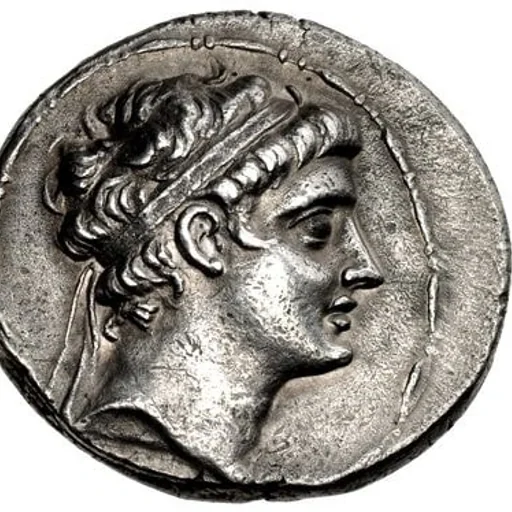
Alexander Balas was a man who claimed the Seleucid throne and won Jonathan’s support by honoring him as high priest.
Seleucid claimant king
2nd century BC
Alexander Balas was a man who claimed the Seleucid throne and won Jonathan’s support by honoring him as high priest.
Follow the reading trailBEYOND THE NAME
Alexander, called Balas, rose up claiming to be the son of King Antiochus and seized power against Demetrius. Seeking allies, he wrote to Jonathan and appointed him high priest, sending him a purple robe and a crown of gold, and Jonathan accepted, putting on the holy garments at the Feast of Tabernacles. Alexander defeated Demetrius in battle and reigned for a time, but he was later overthrown and killed when his fortunes turned.
Themes in the authored commentary
FOLLOW THE PASSAGES
These are chapter studies associated with this record. Their order follows the books and chapters, rather than a reconstructed timeline of the person’s life.
claimant to the Seleucid throne who offers Jonathan the high priesthood and the title king's friend
Power had splintered in the Greek empire that ruled over Judea, and out of that splintering came an opportunity no one in Jonathan’s family could have predicted. A challenger named Alexander rose against the reigning king Demetrius, and the contest between them turned, of all things, on a single Jewish leader. Jonathan had inherited the cause of his brothers Judas and Eleazar, men who had fought and died to keep Israel faithful under persecution. Now the armies that once hunted him had given way to kings writing him letters.
Chapter overview from the authored study guide.Seleucid king betrayed by Ptolemy, defeated, and killed as his father-in-law takes his kingdom
This chapter reads like a newsreel of empires falling over each other. Ptolemy of Egypt comes up into Syria with an army "like the sand that lieth upon the sea shore," speaking peace while he plots to seize the whole kingdom of his son-in-law Alexander. He garrisons the cities, takes back the daughter he had given in marriage, sets two crowns on his head, and stands for one shining moment as master of two realms. Three days later he is dead, and the empire he stole is gone with him. The thrones change hands so fast the reader can barely keep count, and that dizzying speed is part of the point.
Chapter overview from the authored study guide.THE PEOPLE AROUND THE PERSON
Relationships follow the source graph. Some are interpretive or uncertain, and individual verse citations are not yet available for every connection.
STUDY & INTERPRETATION
Alexander Balas illustrates how the high priesthood of Israel had become entangled in the rivalries of foreign thrones, granted as a reward for political loyalty rather than received as a sacred trust. His courtship of Jonathan brought the Maccabean house both honor and danger, for to gain standing in the eyes of empires was also to be drawn into their unstable struggles for power. His swift rise and violent fall reveal the fragility of kingdoms built on claims and alliances rather than on God’s covenant. Against the backdrop of such shifting thrones, Scripture sustains the hope of a kingdom that cannot be shaken and a priest-king whose authority comes not from any earthly crown but from the oath of God.
From the Learn of Christ person commentary. Read alongside the linked Scripture passages.KEEP SCRIPTURE CLOSE
2 authored chapter guides feature this person. This is guide coverage, not an exhaustive count of biblical mentions.
ASK A BETTER QUESTION
Identity, story, early-life sources, family, and where to read.
Alexander Balas was a man who claimed the Seleucid throne and won Jonathan’s support by honoring him as high priest.
Alexander, called Balas, rose up claiming to be the son of King Antiochus and seized power against Demetrius. Seeking allies, he wrote to Jonathan and appointed him high priest, sending him a purple robe and a crown of gold, and Jonathan accepted, putting on the holy garments at the Feast of Tabernacles. Alexander defeated Demetrius in battle and reigned for a time, but he was later overthrown and killed when his fortunes turned.
Our authored studies connect Alexander Balas with 1 Maccabees. The linked chapters provide reading context, not proof that an unnamed or inferred identity is explicitly named there. A verified, identity-specific verse index is not yet available for this record, so these chapter tags should not be treated as an exhaustive list of mentions.
A separate childhood account for Alexander Balas is not provided in our current authored profile sources. Begin with 1 Maccabees 10 and the passages linked here for the evidence that is available. The first indexed reference to a name is not a birth record. This profile does not establish a birth date, schooling, or childhood events beyond what its sources state.
The current source graph does not list immediate family for Alexander Balas. That is a limit of this data, not evidence that Alexander Balas had no relatives. Read the cited passages for the details they actually give.
Alexander Balas illustrates how the high priesthood of Israel had become entangled in the rivalries of foreign thrones, granted as a reward for political loyalty rather than received as a sacred trust. His courtship of Jonathan brought the Maccabean house both honor and danger, for to gain standing in the eyes of empires was also to be drawn into their unstable struggles for power.
Answers draw on our existing authored biography and linked chapter studies. Where supplied, verse assignments come from the individualized STEP Bible index. Childhood answers distinguish documented events from gaps in the available sources.
YOUR OWN OBSERVATIONS
Notes, saved people, and study marks stay in this browser. They do not sync to your account.
KEEP EXPLORING
People featured in the same study guides. Sharing a chapter does not establish a family relationship.