Who was Ehud in the Bible?
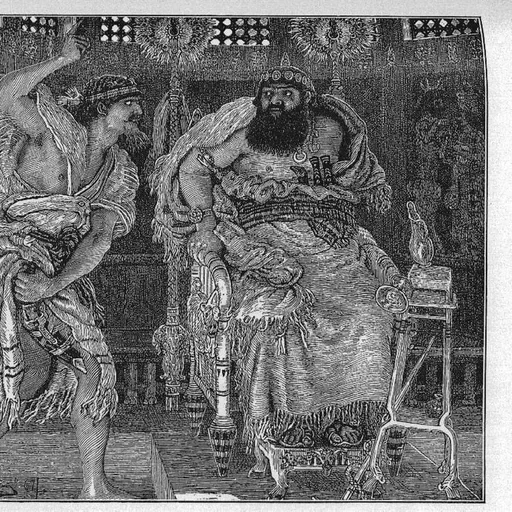
Ehud was a left-handed judge who freed Israel from Moab by killing King Eglon with a sword he had hidden on his side.
Judge and Deliverer of Israel
Period of the Judges
Ehud was a left-handed judge who freed Israel from Moab by killing King Eglon with a sword he had hidden on his side.
Follow the reading trailBEYOND THE NAME
Ehud son of Gera, a Benjamite who was left-handed, was raised up by the Lord to deliver Israel after eighteen years under Moab. He made a two-edged dagger, concealed it under his clothing, and gained a private audience with King Eglon under the pretense of a secret message, then struck him down. He rallied Israel in the hill country of Ephraim, seized the fords of the Jordan, and led the people to a victory that brought eighty years of rest.
Themes in the authored commentary
These are other entries using this name. Compare their source passages before treating them as the same or different historical people.
These entries connect the study to the source’s recorded family context. Read their cautions when the family records or identifications differ.
FOLLOW THE PASSAGES
These are chapter studies associated with this record. Their order follows the books and chapters, rather than a reconstructed timeline of the person’s life.
left-handed judge who assassinates Eglon and leads Israel to victory
Judges 3 follows the pattern laid out in the previous chapter. Israel turns to other gods, comes under foreign rule, and receives help when the people cry to the LORD. The chapter tells how the LORD delivers Israel through Othniel, Ehud, and Shamgar. It says the Spirit of the LORD comes upon Othniel.
Chapter overview from the authored study guide.THE PEOPLE AROUND THE PERSON
Relationships follow the source graph. Some are interpretive or uncertain, and individual verse citations are not yet available for every connection.
STUDY & INTERPRETATION
Ehud appears at a low point in Israel’s story, when the people had again done evil and fallen under a foreign king, and he is introduced as the answer to their cry for help. The narrative makes much of his left-handedness and his cunning, showing how God works deliverance through the unexpected and the overlooked. The long peace that followed his daring act marks him as one of the deliverers through whom the Lord kept faith with His covenant people in their distress. His story belongs to the larger witness that God raises up rescuers for those who turn to Him, a pattern that finds its fullest expression in the deliverer who would save His people from a deeper bondage than any foreign king, the bondage of sin itself.
From the Learn of Christ person commentary. Read alongside the linked Scripture passages.KEEP SCRIPTURE CLOSE
1 authored chapter guide features this person. This is guide coverage, not an exhaustive count of biblical mentions.
ASK A BETTER QUESTION
Identity, story, early-life sources, family, and where to read.
Ehud was a left-handed judge who freed Israel from Moab by killing King Eglon with a sword he had hidden on his side.
Ehud son of Gera, a Benjamite who was left-handed, was raised up by the Lord to deliver Israel after eighteen years under Moab. He made a two-edged dagger, concealed it under his clothing, and gained a private audience with King Eglon under the pretense of a secret message, then struck him down. He rallied Israel in the hill country of Ephraim, seized the fords of the Jordan, and led the people to a victory that brought eighty years of rest.
The individualized passage index associates this Ehud record with Judges, 1 Chronicles. There are 8 distinct indexed verse references in the 66-book Bible. Browse the book-by-book list below; it separates this identity from other people who share the name. Source assignments and textual identifications can require interpretation.
A separate childhood account for Ehud is not provided in our current authored profile sources. Begin with Judges 3:15 and the passages linked here for the evidence that is available. The first indexed reference to a name is not a birth record. This profile does not establish a birth date, schooling, or childhood events beyond what its sources state.
The current source graph does not list immediate family for Ehud. That is a limit of this data, not evidence that Ehud had no relatives. Read the cited passages for the details they actually give.
Ehud appears at a low point in Israel’s story, when the people had again done evil and fallen under a foreign king, and he is introduced as the answer to their cry for help. The narrative makes much of his left-handedness and his cunning, showing how God works deliverance through the unexpected and the overlooked.
Answers draw on our existing authored biography and linked chapter studies. Where supplied, verse assignments come from the individualized STEP Bible index. Childhood answers distinguish documented events from gaps in the available sources.
FIND THE PERSON IN THE TEXT
8 distinct verse references in the source’s 66-book index. These are indexed name assignments, rather than every indirect allusion to this person. A name may also refer to descendants, a tribe, or a nation; read each passage to distinguish that usage from the individual.
“But when the children of Israel cried unto the LORD, the LORD raised them up a deliverer, Ehud the son of Gera, a Benjamite, a man lefthanded: and by him the children of Israel sent a present unto Eglon the king of Moab.”
Judges 3:15 · King James Version
“And Ehud came unto him; and he was sitting in a summer parlour, which he had for himself alone. And Ehud said, I have a message from God unto thee. And he arose out of his seat.”
Judges 3:20 · King James Version
“And Ehud escaped while they tarried, and passed beyond the quarries, and escaped unto Seirath.”
Judges 3:26 · King James Version
“And these are the sons of Ehud: these are the heads of the fathers of the inhabitants of Geba, and they removed them to Manahath:”
1 Chronicles 8:6 · King James Version
References are adapted from STEP Bible / Tyndale House TIPNR (CC BY 4.0). Deduplicated, matched to this identity, and checked against the bundled KJV’s verse bounds. Interpretive assignments and translation/versification differences may remain. This index is separate from evidence for individual family relationships.
YOUR OWN OBSERVATIONS
Notes, saved people, and study marks stay in this browser. They do not sync to your account.
KEEP EXPLORING
People featured in the same study guides. Sharing a chapter does not establish a family relationship.