Who was Menahem in the Bible?
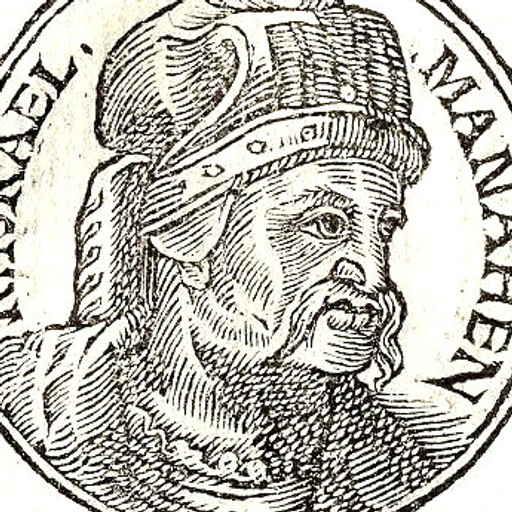
Menahem was a harsh king of Israel who killed Shallum to take the throne and paid heavy tribute to the king of Assyria to keep his power.
King of Israel
c. 752-742 BC
Menahem was a harsh king of Israel who killed Shallum to take the throne and paid heavy tribute to the king of Assyria to keep his power.
Follow the reading trailBEYOND THE NAME
Menahem came up from Tirzah, struck down Shallum, and reigned ten years in Samaria, doing evil and clinging to the calf worship of the northern kings. The record remembers his cruelty, including a brutal assault on a town that would not open to him. When Pul, king of Assyria, came against the land, Menahem gave him a thousand talents of silver, exacting the sum from the wealthy of Israel, so that Assyria withdrew and confirmed him on the throne.
Themes in the authored commentary
FOLLOW THE PASSAGES
These are chapter studies associated with this record. Their order follows the books and chapters, rather than a reconstructed timeline of the person’s life.
brutal king of Israel who pays tribute to Tiglath-pileser to secure his throne
Five kings take the northern throne in a single chapter. Three are murdered by men they trusted. Zechariah, Shallum, Menahem, Pekahiah, Pekah - the names blur, the knives keep coming, and each one “did evil in the sight of the Lord.” Three centuries after Solomon, the Ten Tribes are coming apart. And from the north, Assyria has begun carrying them away.
Chapter overview from the authored study guide.THE PEOPLE AROUND THE PERSON
Relationships follow the source graph. Some are interpretive or uncertain, and individual verse citations are not yet available for every connection.
STUDY & INTERPRETATION
Menahem’s reign marks the moment Assyria’s shadow falls openly across Israel, as the king buys peace with silver and binds his people to a foreign power that would one day devour them. His willingness to oppress his own to satisfy the empire reveals a leadership grounded in fear and force rather than trust in God. The tribute he paid did not save Israel but only delayed and deepened the reckoning that the prophets had warned was coming. In a kingdom that sought security in money and might, Scripture points the reader toward a different deliverance, won not by paying off the oppressor but by the King who would Himself pay the ransom for His people.
From the Learn of Christ person commentary. Read alongside the linked Scripture passages.KEEP SCRIPTURE CLOSE
1 authored chapter guide features this person. This is guide coverage, not an exhaustive count of biblical mentions.
ASK A BETTER QUESTION
Identity, story, early-life sources, family, and where to read.
Menahem was a harsh king of Israel who killed Shallum to take the throne and paid heavy tribute to the king of Assyria to keep his power.
Menahem came up from Tirzah, struck down Shallum, and reigned ten years in Samaria, doing evil and clinging to the calf worship of the northern kings. The record remembers his cruelty, including a brutal assault on a town that would not open to him. When Pul, king of Assyria, came against the land, Menahem gave him a thousand talents of silver, exacting the sum from the wealthy of Israel, so that Assyria withdrew and confirmed him on the throne.
The individualized passage index associates this Menahem record with 2 Kings. There are 8 distinct indexed verse references in the 66-book Bible. Browse the book-by-book list below; it separates this identity from other people who share the name. Source assignments and textual identifications can require interpretation.
A separate childhood account for Menahem is not provided in our current authored profile sources. Begin with 2 Kings 15:14 and the passages linked here for the evidence that is available. The first indexed reference to a name is not a birth record. This profile does not establish a birth date, schooling, or childhood events beyond what its sources state.
Menahem’s source record lists Gadi (father), Pekahiah (child). These are source-graph relationships; legal family, uncertain identifications, and ancestral language require the cautions below. Individual verse evidence is not yet retained for every family edge.
Menahem’s reign marks the moment Assyria’s shadow falls openly across Israel, as the king buys peace with silver and binds his people to a foreign power that would one day devour them. His willingness to oppress his own to satisfy the empire reveals a leadership grounded in fear and force rather than trust in God.
Answers draw on our existing authored biography and linked chapter studies. Where supplied, verse assignments come from the individualized STEP Bible index. Childhood answers distinguish documented events from gaps in the available sources.
FIND THE PERSON IN THE TEXT
8 distinct verse references in the source’s 66-book index. These are indexed name assignments, rather than every indirect allusion to this person. A name may also refer to descendants, a tribe, or a nation; read each passage to distinguish that usage from the individual.
“For Menahem the son of Gadi went up from Tirzah, and came to Samaria, and smote Shallum the son of Jabesh in Samaria, and slew him, and reigned in his stead.”
2 Kings 15:14 · King James Version
“In the nine and thirtieth year of Azariah king of Judah began Menahem the son of Gadi to reign over Israel, and reigned ten years in Samaria.”
2 Kings 15:17 · King James Version
“And the rest of the acts of Menahem, and all that he did, are they not written in the book of the chronicles of the kings of Israel?”
2 Kings 15:21 · King James Version
“In the fiftieth year of Azariah king of Judah Pekahiah the son of Menahem began to reign over Israel in Samaria, and reigned two years.”
2 Kings 15:23 · King James Version
References are adapted from STEP Bible / Tyndale House TIPNR (CC BY 4.0). Deduplicated, matched to this identity, and checked against the bundled KJV’s verse bounds. Interpretive assignments and translation/versification differences may remain. This index is separate from evidence for individual family relationships.
YOUR OWN OBSERVATIONS
Notes, saved people, and study marks stay in this browser. They do not sync to your account.
KEEP EXPLORING
People featured in the same study guides. Sharing a chapter does not establish a family relationship.