Who was Titus in the Bible?
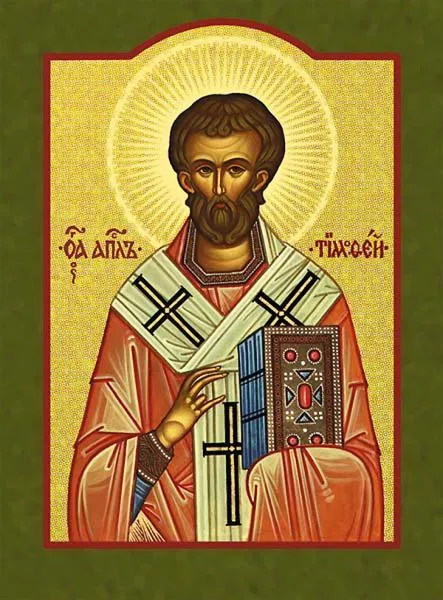
Titus was a Greek Christian and trusted helper of the apostle Paul who later led the church on the island of Crete.
Gentile coworker of Paul
1st century AD
Titus was a Greek Christian and trusted helper of the apostle Paul who later led the church on the island of Crete.
Follow the reading trailBEYOND THE NAME
Titus was a Gentile believer whom Paul came to regard as a true son in the faith and a dependable partner in ministry. Paul brought him to Jerusalem as living proof that Gentiles could belong to Christ without first taking on the whole law of Moses, and Titus was not compelled to be circumcised. He later carried difficult letters to Corinth, encouraged that troubled church, and was left in Crete to appoint elders and set the congregations in order.
Themes in the authored commentary
FOLLOW THE PASSAGES
These are chapter studies associated with this record. Their order follows the books and chapters, rather than a reconstructed timeline of the person’s life.
implied as the planned travel companion Paul intended to bring through Corinth
Something happened to Paul in Asia that nearly killed him. He never tells us what. He only says he was crushed past his own strength, pressed so hard that he gave up on staying alive. This is where his most personal letter begins - in the dark, before he can do a single thing to earn it, God comforts him .
Chapter overview from the authored study guide.the messenger whose arrival brought Paul comfort and who reported the Corinthians' grief and zeal for Paul
Paul has spent much of 2 Corinthians speaking about comfort - the comfort God gives, the comfort that overflows from Christ through suffering, the comfort that Paul himself carries as an apostle. In chapter 7, he turns a sharp corner. He speaks of comfort that comes through pain, of sorrow that saves, of a wound that heals.
Chapter overview from the authored study guide.the co-worker whose earnest care for the Corinthians Paul commends as he sends him ahead
Paul has spoken of reconciliation and new identity in Christ. Now he turns to a practical expression of that identity: generosity. The Corinthians are comparatively wealthy. The saints in Jerusalem are suffering from famine. Paul doesn’t appeal with guilt or obligation - he appeals with grace. He holds up two shining examples: the Macedonian churches, whose generosity exceeded their means, and Christ Himself, whose self-emptying poverty became the means of our enrichment.
Chapter overview from the authored study guide.Gentile co-worker whom Paul brought to Jerusalem as a test case against circumcision
Paul faced the Jerusalem church at a moment of crisis. False brethren had crept in unaware, demanding that Gentiles become Jewish to be fully Christian. Paul did not waver. He went up to Jerusalem as a defender of the gospel. The apostles recognized his calling. The gospel to the Gentiles is valid. Gentile believers do not need the law.
Chapter overview from the authored study guide.Paul's representative left in Crete to appoint elders and correct false teachers
Crete had a reputation - and it was earned. A saying ran among the Greeks: "Cretans are always liars." It was a joke everywhere but in Crete, where Paul is sending Titus to finish what Paul started. The work is not ceremonies or nice words. It is urgent, spiritual surgery: appoint elders of such integrity they can hold back the tide of false teaching flooding the island.
Chapter overview from the authored study guide.Paul's delegate charged to settle church affairs and meet Paul at Nicopolis
Paul has given instructions throughout the letter. Now he reaches bedrock. Believers are not saved because they are good, not because they have earned God’s favor. They are saved because God showed mercy. This doctrine must reshape the church’s stance toward the world, toward the unbelieving, toward one another.
Chapter overview from the authored study guide.THE PEOPLE AROUND THE PERSON
Relationships follow the source graph. Some are interpretive or uncertain, and individual verse citations are not yet available for every connection.
STUDY & INTERPRETATION
Titus stands as an early sign that the gospel was for all peoples, Jew and Gentile alike, gathered into one family through faith in Christ. His presence in Jerusalem, uncircumcised yet fully received, helped settle the question of how Gentiles enter the people of God, anchoring the truth that righteousness comes through Christ. As Paul’s envoy he proved faithful in conflict and in the patient work of building up churches. His life embodies the wideness of God’s promise to Abraham, that in his offspring all nations would be blessed, a promise brought to fulfillment in Jesus, in whom every barrier between peoples is overcome.
From the Learn of Christ person commentary. Read alongside the linked Scripture passages.KEEP SCRIPTURE CLOSE
9 authored chapter guides feature this person. This is guide coverage, not an exhaustive count of biblical mentions.
ASK A BETTER QUESTION
Identity, story, early-life sources, family, and where to read.
Titus was a Greek Christian and trusted helper of the apostle Paul who later led the church on the island of Crete.
Titus was a Gentile believer whom Paul came to regard as a true son in the faith and a dependable partner in ministry. Paul brought him to Jerusalem as living proof that Gentiles could belong to Christ without first taking on the whole law of Moses, and Titus was not compelled to be circumcised. He later carried difficult letters to Corinth, encouraged that troubled church, and was left in Crete to appoint elders and set the congregations in order.
The individualized passage index associates this Titus record with 2 Corinthians, Galatians, 2 Timothy, Titus. There are 12 distinct indexed verse references in the 66-book Bible. Browse the book-by-book list below; it separates this identity from other people who share the name. Source assignments and textual identifications can require interpretation.
A separate childhood account for Titus is not provided in our current authored profile sources. Begin with 2 Corinthians 2:13 and the passages linked here for the evidence that is available. The first indexed reference to a name is not a birth record. This profile does not establish a birth date, schooling, or childhood events beyond what its sources state.
The current source graph does not list immediate family for Titus. That is a limit of this data, not evidence that Titus had no relatives. Read the cited passages for the details they actually give.
Titus stands as an early sign that the gospel was for all peoples, Jew and Gentile alike, gathered into one family through faith in Christ. His presence in Jerusalem, uncircumcised yet fully received, helped settle the question of how Gentiles enter the people of God, anchoring the truth that righteousness comes through Christ.
Answers draw on our existing authored biography and linked chapter studies. Where supplied, verse assignments come from the individualized STEP Bible index. Childhood answers distinguish documented events from gaps in the available sources.
FIND THE PERSON IN THE TEXT
12 distinct verse references in the source’s 66-book index. These are indexed name assignments, rather than every indirect allusion to this person. A name may also refer to descendants, a tribe, or a nation; read each passage to distinguish that usage from the individual.
“I had no rest in my spirit, because I found not Titus my brother: but taking my leave of them, I went from thence into Macedonia.”
2 Corinthians 2:13 · King James Version
“Insomuch that we desired Titus, that as he had begun, so he would also finish in you the same grace also.”
2 Corinthians 8:6 · King James Version
“I desired Titus, and with him I sent a brother. Did Titus make a gain of you? walked we not in the same spirit? walked we not in the same steps?”
2 Corinthians 12:18 · King James Version
“To Titus, mine own son after the common faith: Grace, mercy, and peace, from God the Father and the Lord Jesus Christ our Saviour.”
Titus 1:4 · King James Version
References are adapted from STEP Bible / Tyndale House TIPNR (CC BY 4.0). Deduplicated, matched to this identity, and checked against the bundled KJV’s verse bounds. Interpretive assignments and translation/versification differences may remain. This index is separate from evidence for individual family relationships.
YOUR OWN OBSERVATIONS
Notes, saved people, and study marks stay in this browser. They do not sync to your account.
KEEP EXPLORING
People featured in the same study guides. Sharing a chapter does not establish a family relationship.