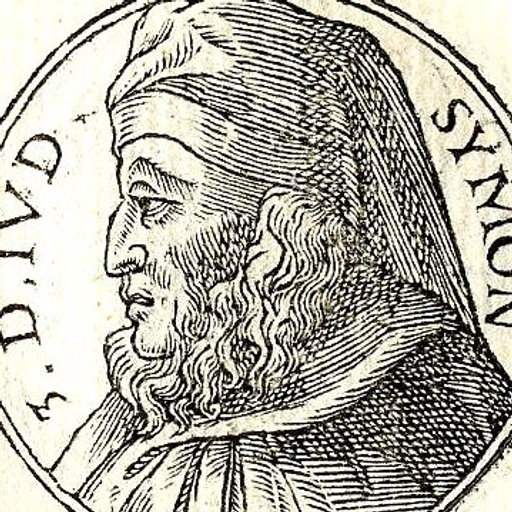
Who was Arsaces in the Bible?
Arsaces was the king of Parthia who captured the Seleucid king Demetrius during his eastern campaign.
King of Parthia
2nd century BC
Arsaces was the king of Parthia who captured the Seleucid king Demetrius during his eastern campaign.
Follow the reading trailBEYOND THE NAME
Arsaces was the king of the Persians and Medes, ruling the Parthian realm to the east of the Seleucid lands. When Demetrius II marched into his territory seeking aid and allies, Arsaces sent a general who defeated and captured him, taking the Seleucid king alive. With Demetrius held in the east, the western empire fell into further turmoil, opening the way for new claimants and shifting the balance among the nations.
Themes in the authored commentary
FOLLOW THE PASSAGES
These are chapter studies associated with this record. Their order follows the books and chapters, rather than a reconstructed timeline of the person’s life.
Persian king who defeats and imprisons Demetrius II, freeing Judea from Seleucid pressure
For most of 1 Maccabees the page is loud with armies, sieges, and the deaths of brothers. Then comes chapter 14, and the noise stops. A foreign king is taken captive far to the east, and in the small land of Judea something almost forgotten returns: rest. The chapter steps back from the battlefield to paint a single sustained picture of peace under Simon, the last of the Maccabee brothers. The fields bear fruit, the cities are provisioned, the harbor at Joppa opens the nation to the sea, and the ancient phrase comes true again, that every man sits under his vine and under his fig tree, and there is none to make them afraid.
Chapter overview from the authored study guide.THE PEOPLE AROUND THE PERSON
Relationships follow the source graph. Some are interpretive or uncertain, and individual verse citations are not yet available for every connection.
STUDY & INTERPRETATION
Arsaces represents the rising power of the east that pressed against the Seleucid empire from the far side, a reminder that the great kingdoms of the age were hemmed in by rivals on every border. His capture of Demetrius reshaped the struggles that surrounded Israel, for the weakening of one empire gave room for the Maccabean house to strengthen its hold on the land. The collision of these kingdoms shows how the nations rose and fell while a small covenant people quietly grew toward independence. In the wider testimony of Scripture, the churning of Persia, Greece, and the kingdoms between them belongs to the providence by which God ordered the times, preparing the world for the coming of the one whose dominion would outlast them all.
From the Learn of Christ person commentary. Read alongside the linked Scripture passages.KEEP SCRIPTURE CLOSE
1 authored chapter guide features this person. This is guide coverage, not an exhaustive count of biblical mentions.
ASK A BETTER QUESTION
Identity, story, early-life sources, family, and where to read.
Arsaces was the king of Parthia who captured the Seleucid king Demetrius during his eastern campaign.
Arsaces was the king of the Persians and Medes, ruling the Parthian realm to the east of the Seleucid lands. When Demetrius II marched into his territory seeking aid and allies, Arsaces sent a general who defeated and captured him, taking the Seleucid king alive. With Demetrius held in the east, the western empire fell into further turmoil, opening the way for new claimants and shifting the balance among the nations.
Our authored studies connect Arsaces with 1 Maccabees. The linked chapters provide reading context, not proof that an unnamed or inferred identity is explicitly named there. A verified, identity-specific verse index is not yet available for this record, so these chapter tags should not be treated as an exhaustive list of mentions.
A separate childhood account for Arsaces is not provided in our current authored profile sources. Begin with 1 Maccabees 14 and the passages linked here for the evidence that is available. The first indexed reference to a name is not a birth record. This profile does not establish a birth date, schooling, or childhood events beyond what its sources state.
The current source graph does not list immediate family for Arsaces. That is a limit of this data, not evidence that Arsaces had no relatives. Read the cited passages for the details they actually give.
Arsaces represents the rising power of the east that pressed against the Seleucid empire from the far side, a reminder that the great kingdoms of the age were hemmed in by rivals on every border. His capture of Demetrius reshaped the struggles that surrounded Israel, for the weakening of one empire gave room for the Maccabean house to strengthen its hold on the land.
Answers draw on our existing authored biography and linked chapter studies. Where supplied, verse assignments come from the individualized STEP Bible index. Childhood answers distinguish documented events from gaps in the available sources.
YOUR OWN OBSERVATIONS
Notes, saved people, and study marks stay in this browser. They do not sync to your account.
KEEP EXPLORING
People featured in the same study guides. Sharing a chapter does not establish a family relationship.