1 Corinthians 2
People in this chapter
When Paul arrived in Corinth, he came not as the eloquent orator the Greeks admired. He came in weakness, in fear, in trembling. This was no accident. It was strategy. Paul refused to let his own eloquence become the foundation of the Corinthians' faith. If they believed because Paul was persuasive, their faith would rest on the sand of his personality. Instead, Paul preaches in the demonstration of the Spirit and power, so that faith rests on Christ alone.
Tap any highlighted phrase to jump to the commentary that unpacks it.
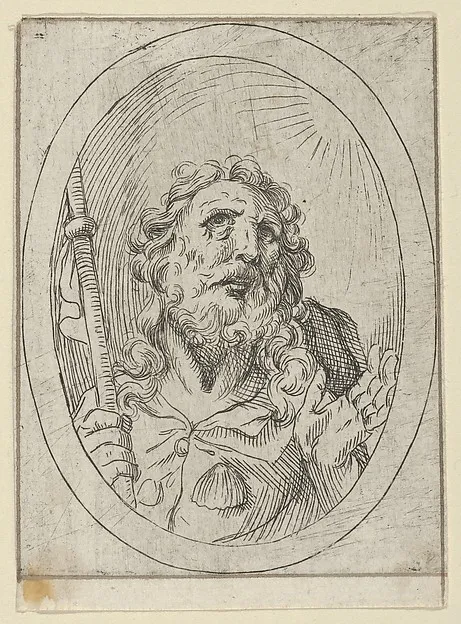
1 Corinthians 2:1-2Not with Excellency of Speech
1And I, brethren, when I came to you, came not with excellency of speech or of wisdom, declaring unto you the testimony of God. 2For I determined not to know any thing among you, save Jesus Christ, and him crucified.
Paul makes a deliberate choice rooted in conviction. Corinth was a city of rhetoricians and philosophers1. A speaker with eloquence could build a following. But eloquence carries a subtle danger: people begin to believe because the preacher is impressive, and the foundation cracks when the preacher is gone. Paul refuses this trap. He will not be the foundation.
1 Corinthians 2:2Jesus Christ, and Him Crucified
2For I determined not to know any thing among you, save Jesus Christ, and him crucified.
This is laser focus. Paul does not say he will preach Christ and some other things too. He says he will know only one thing - Jesus Christ crucified. The crucifixion is the story, the center from which everything else radiates.
1 Corinthians 2:3Weakness, Fear, and Trembling
3And I was with you in weakness, and in fear, and in much trembling.
Paul is telling the Corinthians the truth about himself: he was scared. He came to a great city, one of the empire's intellectual centers, and he was trembling. This trembling is a requirement for what God wants to do. When Paul's own strength runs out, God's strength can run in.
There is a paradox at the heart of Paul's preaching. He is weak. The Corinthians are powerful, educated, confident. Yet when Paul speaks, something breaks open in them - because of his humility. He is standing with them, both of them helpless before God's Spirit.
1 Corinthians 2:4-5Demonstration of the Spirit and Power
4And my speech and my preaching was not with enticing words of man’s wisdom, but in demonstration of the Spirit and of power: 5That your faith should not stand in the wisdom of men, but in the power of God.
Paul deliberately avoids "enticing words." The Greek word suggests words designed to please, to seduce, to draw people in by their sweetness and polish. Paul refuses the preacher's easiest tool. Instead, he comes with demonstration: the power of the Spirit and the transformation it produces.
Paul makes something clear: faith's foundation matters. If your faith rests on human wisdom - on a pastor's eloquence, on your own intellectual assent, on a system of logic - then it is only as strong as that foundation. But if your faith rests on the power of God, on the Spirit's work in your own life, then it is unshakeable. You have encountered God yourself.
1 Corinthians 2:6-9Wisdom Among the Perfect
6Howbeit we speak wisdom among them that are perfect: yet not the wisdom of this world, nor of the princes of this world, that come to nought: 7But we speak the wisdom of God in a mystery, even the hidden wisdom, which God ordained before the world unto our glory: 8Which none of the princes of this world knew: for had they known it, they would not have crucified the Lord of glory. 9But as it is written, Eye hath not seen, nor ear heard, neither have entered into the heart of man, the things which God hath prepared for them that love him.
The "perfect" here does not mean sinless. It means mature, those who have grown in understanding of God's ways. They are contrasted not with the immature in faith, but with those who pride themselves on worldly wisdom. To the worldly wise, the gospel looks like foolishness. But to those mature enough to see with God's eyes, it is the very deepest wisdom.
Paul says something staggering: the rulers and powers of the age "would not have crucified the Lord of glory" if they had known who He was. Their blindness was their undoing. They saw Jesus and thought they saw a dangerous rabbi. They did not see the Lord of glory. And so they did what no power should ever do - they murdered God.
Paul quotes Isaiah (64:4)2: eye has not seen, ear has not heard, no one's heart has imagined what God has prepared for those who love Him. The cross seems like the end of everything. But it is the gateway to glories no human mind can picture. God's plan is not just larger than what we can see; it is of a different order entirely.
1 Corinthians 2:10-12The Spirit Searches the Deep Things
10But God hath revealed them unto us by his Spirit: for the Spirit searcheth all things, yea, the deep things of God. 11For what man knoweth the things of a man, save the spirit of man which is in him? even so the things of God knoweth no man, but the Spirit of God. 12Now we have received, not the spirit of the world, but the spirit which is of God; that we might know the things that are freely given to us of God.
God reveals His hidden wisdom to believers - by His Spirit. The Spirit is the revealer. He is the one who makes the invisible visible, the unknowable knowable. He brings the mystery out of darkness into light.
Paul uses a simple analogy: you know your own mind because your own spirit lives inside you. In the same way, only the Spirit of God knows the things of God. And when the Spirit comes to dwell in you, you begin to know what the Spirit knows. You are not left guessing about who God is. You have an inside witness.
The things God has given believers are freely given. Not earned. Not purchased. Not deserved. Grace is the operative word. You have access to the deep things of God not because you are smart enough or good enough, but because God's Spirit chooses to dwell in you and make known what cannot otherwise be known.
1 Corinthians 2:14The Natural Man
14But the natural man receiveth not the things of the Spirit of God: for they are foolishness unto him: neither can he know them, because they are spiritually discerned.
The "natural man" is a person living by their own resources, their own wisdom, their own perception - whatever their religious standing. Such a person finds the things of the Spirit incomprehensible. The gospel sounds absurd: God became human, died a shameful death, rose again, and calls you to die to yourself and live for Him. To the natural mind, this is nonsense.
To the natural person, the cross is foolishness. It violates every principle of self-preservation and honor. You sacrifice yourself for others? You lose your life to save it? You trust God when you cannot see Him? The natural mind calls this desperation. But Paul insists: it is the only wisdom that works.
Spiritual truth is "spiritually discerned." Discerned - perceived, intuited, known from the inside by the work of the Spirit. The highest truths lie beyond the reach of the mind alone. They require the whole person opened to God's Spirit.
1 Corinthians 2:15-16We Have the Mind of Christ
15But he that is spiritual judgeth all things, yet he himself is judged of no man. 16For who hath known the mind of the Lord, that he may instruct him? But we have the mind of Christ.
The spiritual person - the one indwelt by the Spirit - has a new faculty: spiritual discernment. They can look at the world and see through its lies. They can read circumstances and understand God's hand in them. They are not trapped in the limited perspective of the natural mind. Yet this person remains humble, knowing they stand under God's judgment, not above it.
This is the astonishing conclusion. You have the mind of Christ. Not figuratively. Not eventually. Now. The Spirit who searched the deep things of God, who knows the Father's heart completely, dwells in you. You are beginning to think God's thoughts after Him. You are beginning to see as Christ sees. This is union. This is resurrection.
You are not your own anymore. You have been bought with a price. And the price was the blood of the Lord of glory.
Research trail
Sources & further study
These references support the historical, linguistic, manuscript, and contextual notes in this chapter. Scripture remains the primary text; external sources are provided so readers can inspect the research directly.
- Corinth Archaeological SiteRoman-era Corinth as a thriving commercial and intellectual hub - the cosmopolitan city Paul addressed with the gospel of weakness and the cross.
- Isaiah 64:4 - The Source of Paul's QuotationThe Isaiah passage Paul quotes in 1 Corinthians 2:9 with full Hebrew and English, showing the original context of divine mystery and hiddenness.
- Pneumatikos & Sophia in Greek TextsSearch interface for ancient Greek texts containing pneumatikos (spiritual) and sophia (wisdom) - key terms in Paul's theology of the Spirit.