1 Timothy 1
People in this chapter
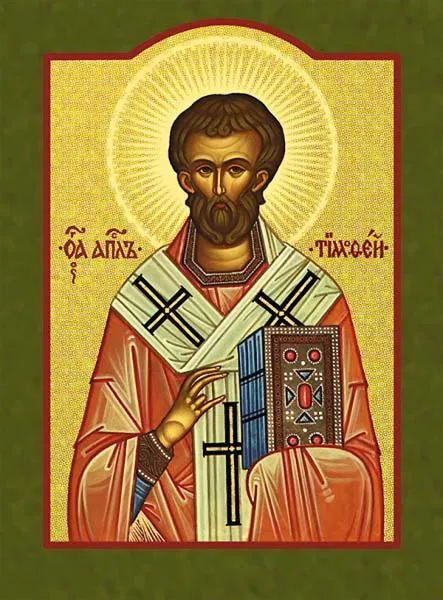
Paul addresses Timothy not as a subordinate to be commanded, but as a fellow worker - someone he has trained, tested, and trusted with the life of an entire congregation. The church at Ephesus was no isolated village gathering. It was a city caught between pagan sophistication and the claims of the gospel. Into this tension, Timothy is sent to "charge some that they teach no other doctrine."
Tap any highlighted phrase to jump to the commentary that unpacks it.
1 Timothy 1:1-2The Greeting
1Paul, an apostle of Jesus Christ by the commandment of God our Saviour, and Lord Jesus Christ, which is our hope; 2Unto Timothy, my own son in the faith: Grace, mercy, and peace, from God our Father and Jesus Christ our Lord.
Paul opens not with personal opinion but with apostolic authority. He is commissioned "by the commandment of God our Saviour" - not self-appointed. Timothy is his "own son in the faith," a designation of deep spiritual kinship. This is a father's urgent care for a child he has trained.
1 Timothy 1:3-7Charge Some That They Teach No Other Doctrine
3As I besought thee to abide still at Ephesus, when I went into Macedonia, that thou mightest charge some that they teach no other doctrine, 4Neither give heed to fables and endless genealogies, which minister questions, rather than godly edifying which is in faith: so do.
First-century Ephesus was awash in gnostic speculation - endless tracing of cosmic genealogies, secret names of angels, layers of knowledge reserved for the elite. These false teachers promised a shortcut to God. What they delivered was confusion. Paul names the fruit of false doctrine clearly: questions, division, pride. True doctrine produces something different entirely. 1
1 Timothy 1:5The End of the Commandment Is Charity
5Now the end of the commandment is charity out of a pure heart, and of a good conscience, and of faith unfeigned:
Paul identifies three components of spiritual health: a pure heart (singlemindedness toward God), a good conscience (alignment between belief and action), and genuine faith (not theater, not borrowed conviction). Together they produce agapē - love that is other-oriented and self-giving. This is the real fruit of sound doctrine. 2
1 Timothy 1:8-11The Law and the Lawless
8But we know that the law is good, if a man use it lawfully; 9Knowing this, that the law is not made for a righteous man, but for the lawless and disobedient, for the ungodly and for sinners, for unholy and profane, for murderers of fathers and murderers of mothers, for manslayers, 10For whoremongers, for them that defile themselves with mankind, for menstealers, for liars, for perjured persons, and if there be any other thing that is contrary to sound doctrine; 11According to the glorious gospel of the blessed God, which was committed to my trust.
The law itself is "good." Paul does not disdain it. But it must be used for its intended purpose. The law is a mirror that shows us our guilt and drives us toward grace. When teachers abuse the law - when they turn it into a system of rules and shame - they misuse it.
Paul lists specific transgressions - murderers, the sexually immoral, slave traders, liars, perjurers - not to shame the church but to illustrate what the law addresses. These are people far from God, living in opposition to His design. The law says "no." The gospel says "there is mercy, there is a way back."
1 Timothy 1:12-14I Am Chief Among Sinners
12And I thank Christ Jesus our Lord, who hath enabled me, for that he counted me faithful, putting me into the ministry; 13Who was before a blasphemer, and a persecutor, and injurious: but I obtained mercy, because I did it ignorantly in unbelief. 14And the grace of our Lord was exceeding abundant with faith and love which is in Christ Jesus.
Paul is not boasting about his calling. He is amazed by it. He had hunted Christians. He voted for their deaths. He blasphemed the Christ he now serves. By every standard of justice, he deserved exactly what he sought for others. Yet Christ "counted me faithful." This is the grace of God working backward through a man's entire history and rewriting it.
Grace was not merely extended to Paul - it was "exceeding abundant." It overflowed with both faith and love "which is in Christ Jesus." This abundance is not isolated to Paul's past. It continues in the present, sustaining him in ministry, and it is available to anyone who trusts Christ.
Paul says he "did it ignorantly in unbelief." This is crucial. He is acknowledging blindness: I did not understand what I was doing. Grace opened my eyes. This is why Paul can later call himself "chief" among sinners without despair - because his worst actions came from ignorance, not from final rejection of God.
1 Timothy 1:15Christ Jesus Came Into the World to Save Sinners
15This is a faithful saying, and worthy of all acceptation, that Christ Jesus came into the world to save sinners; of whom I am chief.
Paul marks this as doctrinal bedrock. "Faithful saying" - not speculation, not philosophy, not the opinion of one teacher. This is the core truth: Christ came into the world to save sinners. Those who know they are lost.
1 Timothy 1:16A Pattern of Longsuffering
16Howbeit for this cause I obtained mercy, that in me first Jesus Christ might shew forth all longsuffering, for a pattern to them which should hereafter believe on him to life everlasting.
God did not have to save Paul. He could have struck him dead on the Damascus Road and been entirely just. Instead, God rescued him specifically so that Paul's transformation could become a sign to future generations. Look at Paul's story and see what Christ's longsuffering looks like. This is not an abstract doctrine. It is a person.
1 Timothy 1:17The Doxology
17Now unto the King eternal, immortal, invisible, the only wise God, be honour and glory for ever and ever. Amen.
Paul pauses his instruction to worship. He has just laid out a problem - false teachers, confused doctrine, lives heading in the wrong direction. Before he moves forward, he reorients everything toward God. The King is eternal. He is beyond corruption. He is invisible yet infinitely wise. Whatever chaos surrounds Timothy in Ephesus, this reality does not change.
1 Timothy 1:18-20War a Good Warfare
18This charge I commit unto thee, son Timothy, according to the prophecies which went before on thee, that thou by them mightest war a good warfare; 19Holding faith, and a good conscience; which some having put away concerning faith have made shipwreck: 20Of whom is Hymenaeus and Alexander; whom I have delivered unto Satan, that they may learn not to blaspheme.
Paul frames Timothy's calling as "warfare" - not in the sense of violence but of struggle, of standing firm against opposition. The "prophecies which went before" suggest that others in the church had spoken blessing and direction over Timothy before Paul ever wrote this letter. He is not alone in this task. The church has already designated him.
The resources for this warfare are two: "faith, and a good conscience." Faith in Christ and a cleared conscience before God. These are what enable a leader to stand against false doctrine without wavering. Without them, a leader is vulnerable to compromise.
Some "have made shipwreck" of their faith. Paul names two: Hymenaeus and Alexander. They "put away" faith and a good conscience - they deliberately rejected both. The result was catastrophe. A shipwrecked life is total loss.
Research trail
Sources & further study
These references support the historical, linguistic, manuscript, and contextual notes in this chapter. Scripture remains the primary text; external sources are provided so readers can inspect the research directly.