2 Kings 22
People in this chapter
Josiah became king at eight years old. The text tells us he did right in the sight of the Lord and turned not aside to the right hand or to the left - a portrait of a child-king who chose obedience. But for decades, the Temple had fallen into disrepair. The Book of the Law - the sacred scroll that had been the anchor of Israel's covenant with the Lord - had been lost, buried perhaps intentionally, perhaps through neglect. The people had drifted. The Word had been forgotten.
Tap any highlighted phrase to jump to the commentary that unpacks it.
2 Kings 22:1-2A Child King Sets His Heart
1Josiah was eight years old when he began to reign, and he reigned thirty and one years in Jerusalem. And his mother’s name was Jedidah, the daughter of Adaiah of Boscath. 2And he did that which was right in the sight of the LORD, and walked in all the way of David his father, and turned not aside to the right hand or to the left.
Josiah ascends to the throne before he can read. Yet the text immediately affirms that he did right in the sight of the Lord. Even as a child, his heart was inclined toward obedience. He set his will toward the way of David, toward covenant faithfulness. From his earliest days as king, he chose the narrow path: no turning to the right hand or to the left. This is the portrait of a ruler formed by the fear of God.123
2 Kings 22:3-7Restoring the House of the Lord
3And it came to pass in the eighteenth year of king Josiah, that the king sent Shaphan the son of Azaliah, the son of Meshullam, the scribe, to the house of the LORD, saying, 4Go up to Hilkiah the high priest, that he may sum the silver which is brought into the house of the LORD, which the keepers of the door have gathered of the people: 5And let them deliver it into the hand of the doers of the work, that have the oversight of the house of the LORD: and let them give it to the doers of the work which is in the house of the LORD, to repair the breaches of the house, 6Unto carpenters, and builders, and masons, and to buy timber and hewn stone to repair the house. 7Howbeit there was no reckoning made with them of the money that was delivered into their hand, because they dealt faithfully.
In his eighteenth year - when he is twenty-six years old - Josiah gives a straightforward command: gather the money brought into the Temple and use it to repair the sanctuary. The language is administrative, practical. The Temple has fallen into disrepair. It needs carpenters, builders, masons, timber, and stone. The work must be done.
The text notes that there was no need to audit the accounts, because "they dealt faithfully." This small phrase speaks volumes. In a culture where corruption was common, where officials skimmed from the sacred treasury, these workers were faithful. They took the money and used it exactly as commanded. The Temple was restored through honest hands.
2 Kings 22:8-10The Book of the Law Discovered
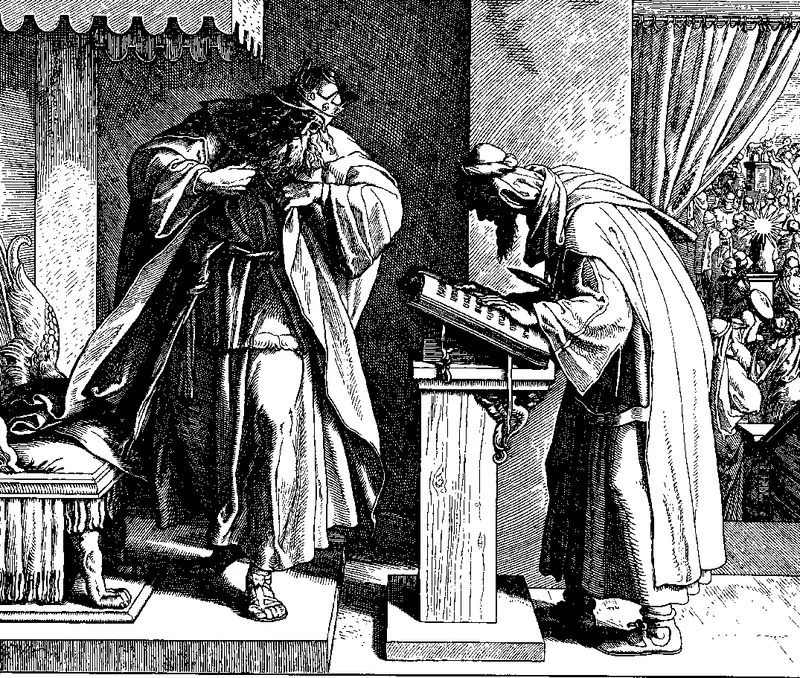
8And Hilkiah the high priest said unto Shaphan the scribe, I have found the book of the law in the house of the LORD. And Hilkiah gave the book to Shaphan, and he read it. 9And Shaphan the scribe came to the king, and brought the king word again, and said, Thy servants have gathered the money that was found in the house, and have delivered it into the hand of them that do the work, that have the oversight of the house of the LORD. 10And Shaphan the scribe shewed the king, saying, Hilkiah the priest hath delivered me a book. And Shaphan read it before the king.
Hilkiah's words are brief but profound: "I have found the Book of the Law in the house of the Lord." How does the Book of the Law become lost in the house of the Lord itself? Through neglect. Through generations of drifting. Through a people who no longer consulted the Word. It was there all along, buried in the sanctuary, waiting to be discovered. And now a high priest, overseeing repairs, has found it. This is the Lord's work.
Shaphan reads the book immediately - first to himself, then before the king. He becomes the messenger of the Word, the link between the sanctuary and the throne. His reading is an act of transmission. The Law moves from the hidden place where it had been lost, through Shaphan's voice, to the ears of the king.
2 Kings 22:11-13A King's Tender Heart Breaks Open
11And it came to pass, when the king had heard the words of the book of the law, that he rent his clothes. 12And the king commanded Hilkiah the priest, and Ahikam the son of Shaphan, and Achbor the son of Michaiah, and Shaphan the scribe, and Asahiah a servant of the king’s, saying, 13Go ye, enquire of the LORD for me, and for the people, and for all Judah, concerning the words of this book that is found: for great is the wrath of the LORD that is kindled against us, because our fathers have not hearkened unto the words of this book, to do according unto all that which is written concerning us.
The king hears the words of the Law and immediately tears his clothes. This is the tearing of a man confronted with the abyss between God's demands and his people's unfaithfulness. He has done right in his own life; he has turned not aside. But his nation - his fathers before him - have forsaken the Lord. The Law speaks, and the king's heart breaks open.
Josiah recognizes the gravity of what he is hearing. The wrath of the Lord is kindled. The covenant has been broken. The people have not hearkened to the words written in the Book. He understands instinctively what many modern readers miss: the Law is a covenant document, written to show a people how to live in relationship with the Holy God. To break it is to break covenant itself.
Josiah does not rest in his own interpretation. He sends his five most trusted officials to "enquire of the Lord" - to seek prophetic guidance about what this discovery means for Judah's future. He acts like a man who knows that his kingdom is not ultimately his. It belongs to the Lord. The Law belongs to the Lord. And only the Lord can speak to what comes next.
2 Kings 22:14-20The Prophetess Huldah Pronounces Judgment and Mercy
14So Hilkiah the priest, and Ahikam, and Achbor, and Shaphan, and Asahiah, went unto Huldah the prophetess, the wife of Shallum the son of Tikvah, the son of Harhas, keeper of the wardrobe; (now she dwelt in Jerusalem in the college;) and they communed with her. 15And she said unto them, Thus saith the LORD God of Israel, Tell the man that sent you to me, 16Thus saith the LORD, Behold, I will bring evil upon this place, and upon the inhabitants thereof, even all the words of the book which the king of Judah hath read:
The king's officials go to Huldah the prophetess, and she sends back the word of the Lord: He will bring on this place and its people all the evil written in the book, the very judgment the king has just heard read aloud.
17Because they have forsaken me, and have burned incense unto other gods, that they might provoke me to anger with all the works of their hands; therefore my wrath shall be kindled against this place, and shall not be quenched. 18But to the king of Judah which sent you to enquire of the LORD, thus shall ye say to him, Thus saith the LORD God of Israel, As touching the words which thou hast heard; 19Because thine heart was tender, and thou hast humbled thyself before the LORD, when thou heardest what I spake against this place, and against the inhabitants thereof, that they should become a desolation and a curse, and hast rent thy clothes, and wept before me; I also have heard thee, saith the LORD. 20Behold therefore, I will gather thee unto thy fathers, and thou shalt be gathered into thy grave in peace; and thine eyes shall not see all the evil which I will bring upon this place. And they brought the king word again.
Huldah the prophetess speaks with the authority of God. She delivers a message in two parts: judgment on the nation, and mercy for the king. She is not present in the Temple. She is not a priest. She is a woman, living in the college in Jerusalem. Yet when the king needs to know the Lord's word, he sends his most trusted officials to her. This tells us something clear: God's word is not confined to institutional office. The Spirit speaks through those whom the Spirit chooses.
The oracle turns from judgment to mercy when it speaks of Josiah: "Because thine heart was tender." The Hebrew word for tender suggests something easily moved, vulnerable, capable of being pierced. In a culture that often celebrated warrior kings and invulnerable rulers, Josiah's tenderness of heart becomes the very thing that moves God's mercy. A tender heart - that is what the Lord seeks.
Huldah directly references Josiah's tearing of his clothes and weeping. These outward signs of inward conviction matter. They are not wasted. The Lord sees them. The Lord counts them. And because Josiah humbled himself, because he wept, because his heart was tender, the Lord promises him peace - not for the nation, but for him.
Isaiah 53 & John 1The Book Lost and Found in the Word Made Flesh
The Book of the Law was lost in the house of the Lord - hidden away, forgotten. And when it was found, it pierced the heart of a king and called a nation back to covenant. But there is a deeper pattern here, one that echoes through the whole of Scripture: the Word itself, made flesh, would be the final Book that restores the broken covenant.
1Josiah was eight years old when he began to reign, and he reigned thirty and one years in Jerusalem. And his mother’s name was Jedidah, the daughter of Adaiah of Boscath.
John opens his gospel with the astonishing declaration that the Word - the divine Logos, the thought and will of God - became flesh. The Book that was lost and found in a temple now walks the earth as a person. He is the Law made incarnate, grace and truth come to restore.
1Josiah was eight years old when he began to reign, and he reigned thirty and one years in Jerusalem. And his mother’s name was Jedidah, the daughter of Adaiah of Boscath.
When Josiah heard the words of the Book of the Law, his heart was pierced. He tore his clothes. He wept. This is what it means to encounter the Word: to be pierced through, to have the deepest parts of us examined and laid bare. And yet - it pierces as a surgeon's knife, intent on healing. The Word that pierces the heart is sharper than any sword, and it comes to separate what is false from what is true, what is self-serving from what is holy.
Research trail
Sources & further study
These references support the historical, linguistic, manuscript, and contextual notes in this chapter. Scripture remains the primary text; external sources are provided so readers can inspect the research directly.
- Elisha the ProphetElisha's ministry of miraculous healing and prophecy succeeding Elijah.
- Elisha: Miracles and MinistryElisha's role as prophet in Israel's northern kingdom during the period of decline.
- Archaeology of Northern KingdomExcavation evidence for cities and settlements in the northern kingdom of Israel.