Ezra 7
People in this chapter
The book of Ezra opens with a return from exile. Cyrus frees the captives, the Temple foundation is laid, and opposition arises. Then comes silence. Decades pass. The work stalls. The walls remain broken, and the community struggles to hold its identity in a foreign land.
Tap any highlighted phrase to jump to the commentary that unpacks it.
Ezra 7:1-6The Ready Scribe
1Now after these things, in the reign of Artaxerxes king of Persia, Ezra the son of Seraiah, the son of Azariah, the son of Hilkiah, 2The son of Shallum, the son of Zadok, the son of Ahitub, 3The son of Amariah, the son of Azariah, the son of Meraioth, 4The son of Zerahiah, the son of Uzzi, the son of Bukki, 5The son of Abishua, the son of Phinehas, the son of Eleazar, the son of Aaron the chief priest: 6This Ezra went up from Babylon; and he was a ready scribe in the law of Moses, which the LORD God of Israel had given: and the king granted him all his request, according to the hand of the LORD his God upon him.
Artaxerxes reigns, and the exile has now lasted decades. Between the dedication of the Temple (chapter 6) and this moment, eighty years have passed - a generation and more. The work of rebuilding, begun with such hope, has faltered. The walls still lie broken. The community is discouraged. And now, in the reign of Artaxerxes, a new chapter begins. 1
The genealogy traces Ezra back through the priestly line to Aaron himself. He is no outsider, no upstart. He is of the chief priests, son of a long line of those who stood between God and the people. His authority flows from the covenant heritage he carries2.
Ezra is called "a ready scribe in the law of Moses." Ready: prepared, skillful, eager to employ his knowledge. The Hebrew sofer speaks of one who writes and preserves the Word. Ezra is one who knows the law, teaches it, and lives it. He is the kind of person Scripture searches out: one whose preparation matches God's purpose.
Ezra 7:6-10A Heart Prepared
7And there went up some of the children of Israel, and of the priests, and the Levites, and the singers, and the porters, and the Nethinims, unto Jerusalem, in the seventh year of Artaxerxes the king. 8And he came to Jerusalem in the fifth month, which was in the seventh year of the king. 9For upon the first day of the first month began he to go up from Babylon, and on the first day of the fifth month came he to Jerusalem, according to the good hand of his God upon him. 10For Ezra had prepared his heart to seek the law of the LORD, and to do it, and to teach in Israel statutes and judgments.
The journey occurs in the seventh year of Artaxerxes' reign. Seven - a number of completion and covenant. In God's pattern, the seventh year is a year of release, of restoration, of God's work coming to its season. Ezra travels to Jerusalem in the very year marked for God's purposes.
The journey takes four months - from the first day of the first month (Nisan) until the first day of the fifth month (Ab). The text emphasizes the exactness of timing: "according to the good hand of his God upon him." This is no accident of circumstances. This is divine providence guiding the steps of one whose heart is aligned with God's purpose.
The heart of Ezra is the center of this story. His heart, his deepest will and commitment, has been prepared. Preparation is a discipline, cultivated over time. Ezra did not wait until he arrived in Jerusalem to make his covenant with the Law. His heart was already prepared. This is the shape of faithfulness: a heart shaped in solitude, in prayer, in study, until it aligns with God's purposes.
To seek the law is the first step. It is to pursue understanding, to make God's Word the object of your study and longing. Ezra has made the Law his quest. He seeks it the way a merchant seeks treasure, the way a lover seeks the beloved - with his whole attention.
But seeking alone is not enough. Ezra commits not only to know the Law, but to do it. This is the second step: obedience. To understand the Word and then to live by it, to let it shape your choices, your judgments, your character. The Law is covenantal - a way of life.
And the third step: to teach. To take what you have sought and done, and to make it known to others. Teaching is the outward expression of an inward covenant. Ezra imparts what he has received, helping others see the beauty and truth of the Law of Moses. The three steps - seek, do, teach - are inseparable.
Ezra 7:11-26The King Turns His Heart
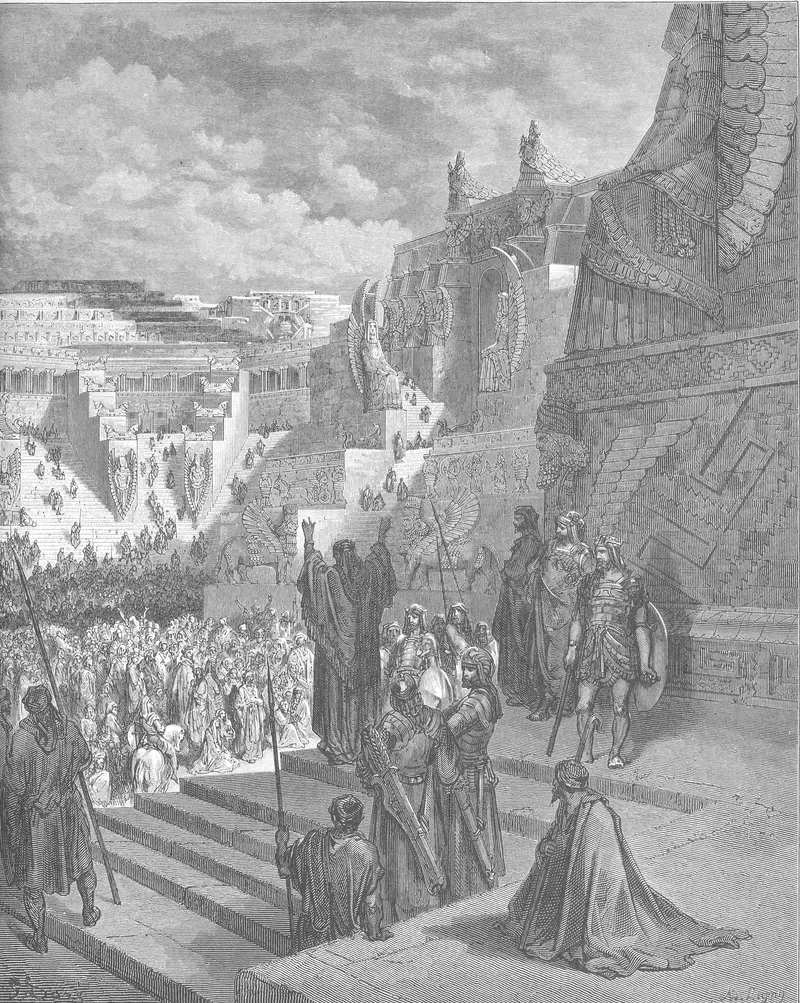
11Now this is the copy of the letter that the king Artaxerxes gave unto Ezra the priest, the scribe, even a scribe of the words of the commandments of the LORD, and of his statutes to Israel. 12Artaxerxes, king of kings, unto Ezra the priest, a scribe of the law of the God of heaven, perfect peace, and at such a time. 13I make a decree, that all they of the people of Israel, and of his priests and Levites, in my realm, which are minded of their own freewill to go up to Jerusalem, go with thee.
The chapter records the copy of the letter Artaxerxes gave to Ezra. In it the king decrees that any Israelite who wishes may return to Jerusalem with Ezra, and he sends Ezra to inquire into the state of Judah according to the law of his God. Ezra is to carry the silver and gold that the king and his counsellors have freely offered to the God of Israel, and to use it to buy bullocks, rams, and lambs and offer them on the altar of God's house.
14Forasmuch as thou art sent of the king, and of his seven counsellors, to enquire concerning Judah and Jerusalem, according to the law of thy God which is in thine hand; 15And to carry the silver and gold, which the king and his counsellors have freely offered unto the God of Israel, whose habitation is in Jerusalem, 16And all the silver and gold that thou canst find in all the province of Babylon, with the freewill offering of the people, and of the priests, offering willingly for the house of their God which is in Jerusalem: 17That thou mayest buy speedily with this money bullocks, rams, lambs, with their meat offerings and their drink offerings, and offer them upon the altar of the house of your God which is in Jerusalem.
Artaxerxes has granted Ezra remarkable freedom: “Whatsoever shall seem good to thee... do after the will of your God.” This is trust. The king recognizes that Ezra's discernment is guided by God's Law. What follows - the vessels, the additional treasures - flows from this foundation of trust in Ezra's judgment.
18And whatsoever shall seem good to thee, and to thy brethren, to do with the rest of the silver and the gold, that do after the will of your God. 19The vessels also that are given thee for the service of the house of thy God, those deliver thou before the God of Jerusalem. 20And whatsoever more shall be needful for the house of thy God, which thou shalt have occasion to bestow, bestow it out of the king’s treasure house. 21And I, even I Artaxerxes the king, do make a decree to all the treasurers which are beyond the river, that whatsoever Ezra the priest, the scribe of the law of the God of heaven, shall require of you, it be done speedily,
The king gives Ezra freedom to use the rest of the silver and gold as he and his brethren see fit, according to the will of their God, and to deliver the temple vessels before the God of Jerusalem. He orders the royal treasurers beyond the River to supply promptly whatever more Ezra requires from the king's treasury for the house of God.
22Unto an hundred talents of silver, and to an hundred measures of wheat, and to an hundred baths of wine, and to an hundred baths of oil, and salt without prescribing how much. 23Whatsoever is commanded by the God of heaven, let it be diligently done for the house of the God of heaven: for why should there be wrath against the realm of the king and his sons? 24Also we certify you, that touching any of the priests and Levites, singers, porters, Nethinims, or ministers of this house of God, it shall not be lawful to impose toll, tribute, or custom, upon them. 25And thou, Ezra, after the wisdom of thy God, that is in thine hand, set magistrates and judges, which may judge all the people that are beyond the river, all such as know the laws of thy God; and teach ye them that know them not.
The king grants Ezra a letter - a formal commission that does three things: it allows the return of those who wish to go, it provides silver and gold for the Temple, and it gives Ezra authority to appoint judges and teachers. This is not a small thing. A pagan king, moved by something he cannot name, grants authority to the Law of Israel.
The letter speaks of "the law of thy God which is in thine hand." This phrase appears again and again - the Law is in Ezra's hand. He carries it. He possesses it. He is responsible for it. And the king recognizes this: you are the one who holds the Law. Therefore, let your Law be the standard for judgment.
The king provides abundantly - silver, gold, wheat, wine, oil, salt. He gives generously. "Whatsoever shall seem good to thee... do after the will of your God." Artaxerxes is providing for the return with his whole treasury behind it. His heart has been turned by something beyond politics - by the hand of God upon Ezra.
The king decrees that the priests and Levites shall not be taxed. They are freed from tribute and custom, that they may give themselves fully to the service of God's house. This exemption is recognition that those who serve God should not be impeded by earthly burdens.
Here is the deepest authority granted: Ezra is to set magistrates and judges according to the Law of God. These judges will adjudicate disputes, execute justice, teach the statutes. This is the power to shape a society according to God's Law.
The judges are to teach those who do not know the Law. This is the reach of the covenant: among the learned and among all people. The Law is taught, made available to any who will listen. This reflects Ezra's own three-fold covenant: seek, do, teach.
Ezra 7:27-28Blessed Be the Lord
27Blessed be the LORD God of our fathers, which hath put such a thing as this in the king’s heart, to beautify the house of the LORD which is in Jerusalem: 28And hath extended mercy unto me before the king, and his counsellors, and before all the king’s mighty princes. And I was strengthened as the hand of the LORD my God was upon me, and I gathered together out of Israel chief men to go up with me.
Ezra blesses the Lord. "Blessed be the Lord God of our fathers." In this blessing, Ezra recognizes the source of everything that has been granted: the king's turned heart, the provision, the authority - all are from God. Praise is the natural response of a heart prepared.
The purpose is clear: to beautify the house of the Lord. God has put this very purpose into the king's heart. The king, without knowing the God of Israel, has become an instrument of His will.
Ezra says, "I was strengthened as the hand of the Lord my God was upon me." Strength flows from the presence of God. The hand of the Lord that was upon him in verse 6 is now the source of his strength, his courage, his ability to lead. He is a vessel, and God is the source.
Research trail
Sources & further study
These references support the historical, linguistic, manuscript, and contextual notes in this chapter. Scripture remains the primary text; external sources are provided so readers can inspect the research directly.