Psalms 134
Psalm 134 carries the heading A Song of degrees, and it is the last of them - the fifteenth and final psalm (120-134) of the great pilgrim songbook sung on the way up to Jerusalem.1 The collection began far off, among the tents of Kedar, with a traveller longing for peace; it has climbed verse by verse, song by song, up the long road into the hills, up to the city, up to the temple gates.
And here, at the very top of the ascent, it ends - not with a fanfare, but with three quiet verses spoken in the dark, after the journey is over and the night has come.
Tap any highlighted phrase to jump to the commentary that unpacks it.
Psalm 134:1-3 · A Song of degreesThe Night Watch of Blessing
1Behold, bless ye the LORD, all ye servants of the LORD, which by night stand in the house of the LORD. 2Lift up your hands in the sanctuary, and bless the LORD. 3The LORD that made heaven and earth bless thee out of Zion.
The psalm opens with a summons that begins in the dark: Behold, bless ye the LORD, all ye servants of the LORD, which by night stand in the house of the LORD (v. 1). To feel the weight of it, picture where the song sits. This is the last of fifteen pilgrim psalms; the climb to Jerusalem is finished, the feast is over, the courts that rang with crowds all day have gone quiet, and most have lain down to sleep.
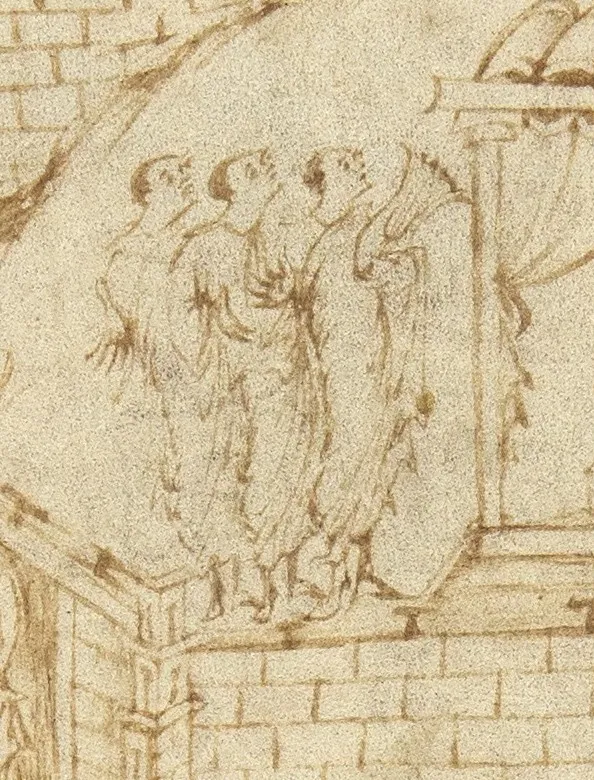
But not everyone. A few remain - the servants of the LORD whose duty does not end when the sun goes down, the keepers and singers who, as Chronicles records, were employed in that work day and night (1 Chron. 9:33). The word Behold turns the whole company toward them: look at these, the ones still on their feet in the house of God when everyone else has gone home. And the verb is precise - they stand. Not slump, not drowse, but stand, the posture of a servant on duty, awake and ready in the place of God's presence.
The psalm is about to ask the most natural and the most demanding thing of them: that the long night-watch itself become an act of worship.
Twice in two verses the same charge sounds: bless ye the LORD (v. 1), and bless the LORD (v. 2). The doubling is not accident; it is the drumbeat of this little psalm, and the third verse will sound the same word a final time in answer. To bless the LORD is not to add anything to Him - He lacks nothing - but to bend the whole self toward Him in praise, to name His worth out loud, to give Him the honour that is His due.
Between the two calls stands the gesture that carries them: Lift up your hands in the sanctuary (v. 2). In the world of the psalm this was the body's plainest language of prayer and praise - hands raised, palms open, lifted toward the place of God's dwelling. And notice what those raised hands hold: nothing. They are empty. The night-watchers bring no sacrifice of bull or grain in this hour; they bring only themselves, only the blessing.
That emptiness is not a poverty but the very shape of praise - hands that grasp at nothing, lifted up simply to honour the One who gives everything. The margin even lets the word for sanctuary be read as holiness: hands lifted up in holiness, the gesture matching the place.
Then the psalm turns, and the whole point of it lands: The LORD that made heaven and earth bless thee out of Zion (v. 3). For two verses the servants have been told to bless the LORD; now the LORD blesses them back. The blessing they sent up returns upon their own heads - and it comes from no small source. The One who answers is named the LORD that made heaven and earth. This is the very title the pilgrims had sung at the foot of the climb, far down the road, when they needed help on dangerous ground: My help cometh from the LORD, which made heaven and earth (Ps. 121:2), Our help is in the name of the LORD, who made heaven and earth (Ps. 124:8).
What they had reached for as rescue on the way up is now pronounced over them as blessing at the top. The Maker of the whole created order - every star, every sea, the ground beneath the temple itself - bends to bless a handful of servants keeping watch in the dark. And the blessing comes out of Zion, from the very house where they stand: the place of God's presence is not only where blessing is offered up, but where blessing flows back down.
The songbook of the ascent, which began with a sojourner far from home, ends with that sojourner's God blessing His servants from the holy hill.1
Research trail
Sources & further study
These references support the historical, linguistic, manuscript, and contextual notes in this chapter. Scripture remains the primary text; external sources are provided so readers can inspect the research directly.
- Psalm 134 - Translators' NotesThe NET Bible's detailed footnotes on Psalm 134 - the place of this closing psalm in the Songs of degrees, the meaning of the night-watch in the house of the LORD, the lifted hands as a posture of blessing, and the reciprocal blessing “out of Zion” that answers the call of the first two verses.
- Psalm 134 · Hebrew + classical Jewish commentaryThe Hebrew text of Psalm 134 with Rashi, Ibn Ezra, and other classical commentators side by side - useful for the three soundings of barak (vv. 1-3, “bless”), for 'avadim (v. 1, the “servants” on watch), and for the long Jewish discussion of who the night-standers in the sanctuary were and how the closing blessing answers the call.
- Psalm 134 ↔ Luke 12 · 1 Timothy 2 · Hebrews 13 · Revelation 22Traces the threads tying Psalm 134 to the New Testament - the watching servants the Lord calls blessed (Luke 12:37), the lifted holy hands of prayer (1 Tim. 2:8), the continual sacrifice of praise (Heb. 13:15), and the throne where God's servants serve Him day and night (Rev. 22:3-4).
Where this echoes in Scripture
The Night Watch of Blessing
- Luke 12:35-37Blessed are those servants, whom the lord when he cometh shall find watching... he shall gird himself, and make them to sit down to meat, and will come forth and serve them.The night-watching servants of verse 1 made the very ones the Lord calls blessed - and comes forth to serve.
- 1 Timothy 2:8I will therefore that men pray every where, lifting up holy hands, without wrath and doubting.The lifted hands of verse 2 become the church's posture of prayer in every place.
- Hebrews 13:15By him therefore let us offer the sacrifice of praise to God continually, that is, the fruit of our lips giving thanks to his name.The night-watch of praise (vv. 1-2) made the continual sacrifice of a people made priests.
- Numbers 6:24The LORD bless thee, and keep thee.The same verb (barak, “bless”) that sounds three times through the psalm - Israel's great benediction.
- Psalm 121:2My help cometh from the LORD, which made heaven and earth.The title of verse 3 - “which made heaven and earth” - first sung at the foot of the climb, now the blessing at its top.