Psalms 21
People in this chapter
Psalm 21 cannot really be read alone, because it is the second half of a conversation. Psalm 20 is the prayer the people pray before the king rides out: The LORD hear thee in the day of trouble… grant thee according to thine own heart, and fulfil all thy counsel. Psalm 21 is the song sung after - the king home from the field, the danger past, the prayer answered.
And the first thing it does is the most important thing it does: it refuses to plant the joy in the king's own achievement. The king shall joy in thy strength, O LORD; and in thy salvation how greatly shall he rejoice! The victory was real, but the strength was borrowed, and the singer knows it.1
Tap any highlighted phrase to jump to the commentary that unpacks it.
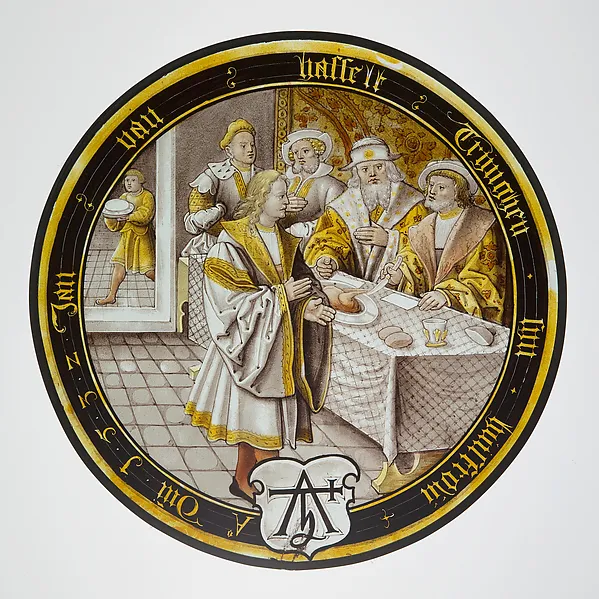
Psalm 21:1-7 · To the chief Musician, A Psalm of DavidThe King Shall Joy in Thy Strength
1The king shall joy in thy strength, O LORD; and in thy salvation how greatly shall he rejoice! 2Thou hast given him his heart’s desire, and hast not withholden the request of his lips. Selah. 3For thou preventest him with the blessings of goodness: thou settest a crown of pure gold on his head. 4He asked life of thee, and thou gavest it him, even length of days for ever and ever. 5His glory is great in thy salvation: honour and majesty hast thou laid upon him. 6For thou hast made him most blessed for ever: thou hast made him exceeding glad with thy countenance. 7For the king trusteth in the LORD, and through the mercy of the most High he shall not be moved.
The first line tells you everything about where this psalm stands. The king shall joy in thy strength, O LORD; and in thy salvation how greatly shall he rejoice! A victory has been won - the chapter before this one was a prayer for exactly this day - and now the king comes home to celebrate.
But watch what he does not say. He does not say, “the king rejoices in his army,” or “in his strategy,” or “in his own right arm.” He says the king rejoices in thy strength, in thy salvation - the strength and the rescue were God's, given and not generated.
There is a world of difference between the two. A man who rejoices in his own strength is only ever as secure as that strength holds out; a man who rejoices in God's strength has anchored his joy to something that never runs dry. That is why the joy here is so unguarded - how greatly shall he rejoice! You can afford to celebrate without reservation when you know the victory was never riding on you in the first place.
Verse 2 opens the great list of gifts, and it is tender as well as generous: Thou hast given him his heart's desire, and hast not withholden the request of his lips. Notice the two layers. There is the request of his lips - the thing the king actually put into words and prayed - and behind it, the heart's desire, the deeper longing that may never have made it all the way to speech. God answered both. He met not only the spoken petition but the unspoken ache beneath it.
That is a striking picture of how God hears: not as a clerk filling a written order to the letter, but as one who knows the heart well enough to give what it was truly reaching for. And the word withholden carries its own quiet comfort - God did not hold back, did not give grudgingly or in part.
The little word Selah at the end is most likely a musical direction, a pause; and a pause is exactly right here. Before the list goes on, the singer lets that first gift land: every desire of the heart, every request of the lips, fully met.
The gifts grow richer. For thou preventest him with the blessings of goodness: thou settest a crown of pure gold on his head. The old word preventest does not mean “hinder” here - in the English of the KJV it means to go before, to come out to meet someone. So the picture is of God hurrying ahead of the king to meet him with blessings of goodness, the way a host runs out to greet an honoured guest before he can even reach the door. The blessing arrives before it is asked for.
And then the crown: thou settest a crown of pure gold on his head. The point of the line is not the gold but the hand that sets it there. A crown can be seized, or bought, or taken by force; this one is placed on the king's head by God Himself. His royalty is not self-made. The highest honour a man can wear comes down to him as a gift, set in place by the One who alone has the right to give it.
The list keeps building: His glory is great in thy salvation: honour and majesty hast thou laid upon him. For thou hast made him most blessed for ever: thou hast made him exceeding glad with thy countenance. Read the verbs again - every one of them has God as the subject and the king as the object. The king's glory is great, but it is great in thy salvation; the honour and majesty are real, but they were laid upon him by another's hand; the blessedness reaches for ever, but it was God who made him so.
And the crown of it all is not any external honour but a relationship: thou hast made him exceeding glad with thy countenance. The deepest gladness the king knows is not the gold on his head or the enemies at his feet, but the face of God turned toward him - the light of God's favour, His personal presence. All the other gifts are wonderful; this one is the fountain the others flow from. To be made glad by the very face of God is to have arrived at the thing every other blessing was only pointing toward.
Verse 7 quietly explains the entire first half: For the king trusteth in the LORD, and through the mercy of the most High he shall not be moved. After six verses cataloguing what God has given, the psalm pauses to name what the king has done - and it is the smallest, most fundamental thing: he trusteth. That single posture is the hinge on which all the blessings turn. And notice it is matched on God's side by God's mercy - through the mercy of the most High he shall not be moved. Two things hold the king steady: his trust reaching up, and God's mercy reaching down.
He shall not be moved - the same confident phrase the Psalms use of a tree planted by water, of the city of God, of the one whose heart is fixed. The king stands unshaken not because he is strong but because the One he leans on is, and because the mercy he leans into does not fail.
Psalm 21:8-13Be Thou Exalted in Thine Own Strength
8Thine hand shall find out all thine enemies: thy right hand shall find out those that hate thee. 9Thou shalt make them as a fiery oven in the time of thine anger: the LORD shall swallow them up in his wrath, and the fire shall devour them. 10Their fruit shalt thou destroy from the earth, and their seed from among the children of men. 11For they intended evil against thee: they imagined a mischievous device, which they are not able to perform. 12Therefore shalt thou make them turn their back, when thou shalt make ready thine arrows upon thy strings against the face of them. 13Be thou exalted, LORD, in thine own strength: so will we sing and praise thy power.
The psalm turns, and the air changes. From the warm catalogue of blessings it pivots to the certain undoing of every enemy: Thine hand shall find out all thine enemies: thy right hand shall find out those that hate thee. Read the verse carefully and you notice something important about whose battle this is. The hand that finds out the enemies is not the king's hand - it is thine, God's. The judgment of evil is handed back to the One to whom it belongs.
And the word find out is worth pausing on: it means to reach, to locate, to lay hold of wherever they have run. No one hides from this hand. The phrase quietly rules out the two false comforts the guilty reach for - that they might be overlooked, or that they might escape. There is no corner of the earth outside the reach of God's right hand.
It is sober imagery, and the psalm does not soften it. But notice the relief buried in it too: vengeance is not left in human hands, with all their cruelty and error. It is God's, and therefore it will be exact, and it will be just.
The judgment is drawn in the strongest images the language has: Thou shalt make them as a fiery oven in the time of thine anger: the LORD shall swallow them up in his wrath, and the fire shall devour them. Their fruit shalt thou destroy from the earth, and their seed from among the children of men. This is hard reading, and it is meant to be. But two things keep it from being mere savagery.
First, it is set entirely in God's hands, not the king's - it is the LORD who swallows up, the fire of his wrath that devours, the time of thine anger that sets the hour. This is not a king indulging a taste for revenge; it is the just judgment of God against entrenched evil.
Second, the language of fire and consuming is the Bible's standard picture of how evil finally ends - not endlessly tolerated, but truly answered and removed from the earth. A world in which the “fruit” and “seed” of evil were never destroyed would be a world without hope. The verses are fierce because they are promising something the suffering and the wronged desperately need to hear: that evil does not get the last word, and that the God who reigns will not let it stand for ever.
Verse 11 names exactly why this judgment falls, and the reason matters: For they intended evil against thee: they imagined a mischievous device, which they are not able to perform. These are not the merely unlucky or the honestly mistaken. They intended evil; they imagined a mischievous device - they sat down and plotted, deliberately, with their eyes open. And then comes the quiet hammer-blow at the end of the line: which they are not able to perform. The plot was real, the malice was real - and it simply could not be carried out.
There is deep comfort in that short clause for anyone who has ever felt the weight of schemes set against them. The malice of the wicked is not all-powerful. They can imagine the device; they cannot always perform it. God stands between the intent and the execution, and again and again the evil that was fully meant is never fully done. Verse 12 completes the reversal: the very ones who set their face against the king are made to turn their back - the plot recoils on the plotters, and the attackers become the fugitives.
Research trail
Sources & further study
These references support the historical, linguistic, manuscript, and contextual notes in this chapter. Scripture remains the primary text; external sources are provided so readers can inspect the research directly.
- Psalm 21 - Translators' NotesThe NET Bible's detailed footnotes on Psalm 21 - its pairing with Psalm 20 as petition-and-thanksgiving, the sense of the archaic verb “preventest” (v. 3) as God going before the king to meet him with blessing, and the hyperbole of royal long-life language pressed in verse 4 to “length of days for ever and ever.”
- Psalm 21 · Hebrew + classical Jewish commentaryThe Hebrew text of Psalm 21 with Rashi, Ibn Ezra, and other classical commentators side by side - useful for oz (v. 1, “strength, might”), the verb qiddamta behind “thou preventest” (v. 3, “to come to meet, to go before”), and the arresting chayyim of verse 4 (“life,” given as “length of days for ever and ever”).
- Psalm 21 ↔ Psalm 20 · Hebrews 2 · Revelation 19Traces the verbal threads tying Psalm 21's answered prayer back to the petition of Psalm 20, its crown of pure gold and endless life forward to the King “crowned with glory and honour” (Heb. 2:9) who “ever liveth,” and its triumphant King forward to the One whose head bears “many crowns” (Rev. 19:12).
Where this echoes in Scripture
The King Shall Joy in Thy Strength
- Psalm 20:4-5Grant thee according to thine own heart, and fulfil all thy counsel. We will rejoice in thy salvation.The prayer Psalm 21 answers: the petition before the battle, now sung as thanksgiving after it.
- Hebrews 2:9We see Jesus, who was made a little lower than the angels for the suffering of death, crowned with glory and honour.The crown of pure gold (v. 3) and honour and majesty (v. 5) set on the head of the King who first suffered.
- Psalm 61:6-7Thou wilt prolong the king's life: and his years as many generations... he shall abide before God for ever.The same royal prayer for life (v. 4), stretched again toward a reign that does not end.
- Psalm 16:11In thy presence is fulness of joy; at thy right hand there are pleasures for evermore.The gladness of God's countenance (v. 6) - the face of God as the deepest gift of all.
Be Thou Exalted in Thine Own Strength
- Philippians 2:9-11God also hath highly exalted him, and given him a name which is above every name.The prayer of verse 13 - Be thou exalted - answered in the King lifted above every name.
- Psalm 2:1-2Why do the heathen rage... the kings of the earth set themselves... against the LORD, and against his anointed.The plotted evil of verse 11 - a device imagined against the LORD and His king that cannot stand.
- Revelation 5:12-13Worthy is the Lamb that was slain to receive power... blessing, and honour, and glory, and power.The song of verse 13 - sing and praise thy power - widened to the worship of heaven and earth.
- Psalm 46:10Be still, and know that I am God: I will be exalted among the heathen, I will be exalted in the earth.The same cry as verse 13 - God lifted high in His own strength above all the earth.