Romans 16
People in this chapter
The great epistle closes not with abstract doctrine but with people. Paul names them one by one: a deacon who carries the letter, a husband and wife who laid down their own necks, a woman who labored without counting the cost, leaders and workers both celebrated and forgotten. These are not names in a ledger. They are the gospel made visible - the invisible God working through visible hands, feet, voices, sacrifices.
Tap any highlighted phrase to jump to the commentary that unpacks it.
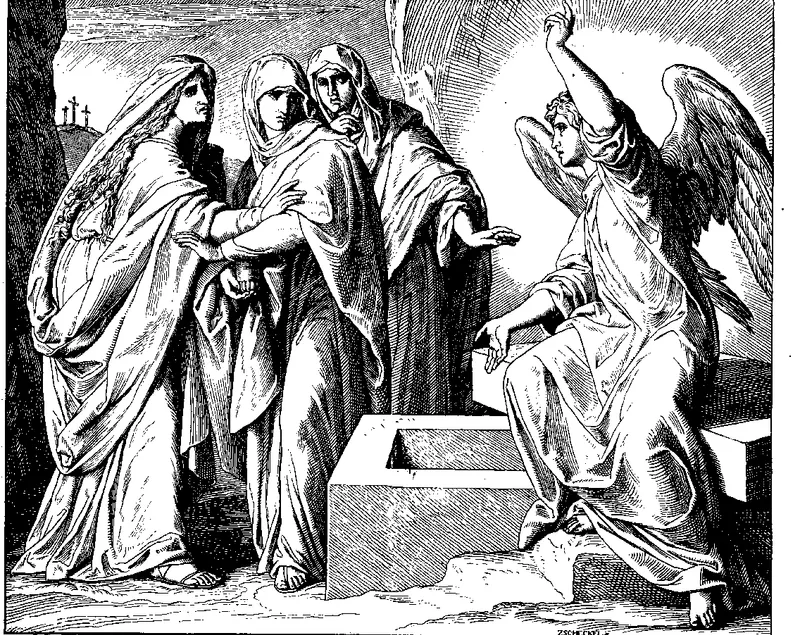
Romans 16:1-2Phebe, Deacon and Patroness
1I commend unto you Phebe our sister, which is a servant of the church which is at Cenchrea: 2That ye receive her in the Lord, as becometh saints, and that ye assist her in whatsoever business she hath need of you: for she hath been a succourer of many, and of myself also.
Phebe arrives in Rome carrying the letter you have just read - this entire epistle to the Romans. She does not arrive as a messenger; she arrives as a deacon of the church at Cenchrea1, a port city east of Corinth2. Paul commends her to the Roman church with the weight of apostolic authority. Receive her. Help her. She has earned it.
The Greek word here is paristemi - to stand beside, to support, to assist. Paul is not asking for small kindness. He is asking the Roman church to stand beside Phebe as she stands beside others. To become, for her, what she has become for so many.
Romans 16:3-5Priscilla and Aquila: Risk and Hospitality
3Greet Priscilla and Aquila my helpers in Christ Jesus: 4Who have for my life laid down their own necks: unto whom not only I give thanks, but also all the churches of the Gentiles. 5Likewise greet the church that is in their house. Salute my well-beloved Epaenetus, who is the firstfruits of Achaia unto Christ.
Priscilla and Aquila are Paul's partners in the gospel. They are tentmakers like him, working with their hands while proclaiming Christ. They have traveled with him, prayed with him, taught Apollos to know Christ more accurately. And at some point in some city - the text does not say where - they risked execution to save Paul's life. The apostle never forgets it.
Epenetus is named as "the firstfruits of Achaia unto Christ" - he was the first convert in that region to believe in Jesus. Someone saw him turn to Christ and thought it worth remembering. Someone in the Roman church carries that memory: you remember when Epenetus first believed. You were there for it. God was there for it.
The church at Rome gathers in Priscilla and Aquila's house. They do not rent a cathedral. They open their home, their table, their roof to the body of Christ. The early church had no buildings - it had homes. It had hospitality. It had people willing to say, "the church will meet here, and we will feed them."
Romans 16:6-11The Workers and the Hidden Saints
6Greet Mary, who bestowed much labour on us. 7Salute Andronicus and Junia, my kinsmen, and my fellow-prisoners, who are of note among the apostles, who also were in Christ before me. 8Greet Amplias my beloved in the Lord. 9Salute Urbane, our helper in Christ, and Stachys my beloved. 10Salute Apelles approved in Christ. Salute them which are of Aristobulus’ household. 11Salute Herodion my kinsman. Greet them that be of the household of Narcissus, which are in the Lord.
Mary. We know nothing about her except that she "bestowed much labour" on the Roman church. Some commentators guess she may have been a leader, a teacher, a counselor - but the text simply records her labor. It is a remarkable thing in ancient literature: a woman named for her work, not her family or her beauty or her virtue, but simply her labor, her kopiao. The work is enough.
Andronicus and Junia - probably a husband and wife - have been Paul's fellow prisoners (they have been arrested alongside him for the gospel), and they are called "of note among the apostles." The Greek phrase is episemos en tois apostolois. That can mean they are "well-known to the apostles" or that they themselves are "well-known apostles." The text is genuinely ambiguous, and that ambiguity has generated centuries of argument. But one thing is clear: they are believers of standing, imprisoned for Christ, and named with honor by the apostle Paul.
Whether Andronicus and Junia are apostles themselves or simply known to the apostles, Paul marks them as episemos - distinguished, of note, marked out as significant. They have given their freedom, their safety, their bodies to the gospel alongside the apostle. That is enough for Paul to commend them.
Then come the names we have no story for: Amplias, Urbanus, Stachys, Apelles. Some are described as "approved in Christ" - meaning their faith is tested and found genuine. Some are listed as helpers, as beloved. The text does not tell their stories. But God records their names. The point of naming so many is to say: the gospel is not carried by famous people alone. It is carried by Amplias and Urbanus and Stachys and Apelles. It is carried by the faithful whose names we will never know.
Romans 16:12-16The Living Community of Saints
12Salute Tryphena and Tryphosa, who labour in the Lord. Salute the beloved Persis, which laboured much in the Lord. 13Salute Rufus chosen in the Lord, and his mother and mine. 14Salute Asyncritus, Phlegon, Hermas, Patrobas, Hermes, and the brethren which are with them. 15Salute Philologus, and Julia, Nereus, and his sister, and Olympas, and all the saints which are with them. 16Salute one another with an holy kiss. The churches of Christ salute you.
Tryphena and Tryphosa - the names suggest they are sisters or perhaps twins - "labour in the Lord." Then Persis is greeted as "beloved" and noted that she "laboured much." The repetition of labour is intentional. The gospel work in Rome is being done by women. Not alone, but prominently, visibly, without apology.
Rufus is "chosen in the Lord." The word does not refer to Judas's betrayal but to election, to the sense that God has set him apart, marked him, called him out for His own purposes. And then Paul adds, "and his mother and mine" - Rufus's mother has mothered Paul too. She has opened her home, her table, her heart to the apostle. Even in a salutation, relationship is visible.
The holy kiss is how the early church greeted one another in the gatherings for worship. Not a formal handshake but an embrace, a kiss of peace, a physical expression of koinonia - communion, shared life. When this letter is read aloud in the Roman church, the congregation turns to one another and kisses. They receive Paul through that kiss. They become, in that moment, one body scattered across the Mediterranean.
Then something remarkable happens: "The churches of Christ salute you." Paul does not say "I greet you on behalf of the churches." He says the churches themselves are greeting the Romans. The boundary between the Roman church and the other churches dissolves. They are one communion. One body. One spirit. The letter has become a vehicle for the whole church to embrace the part of it in Rome.
Romans 16:17-20Guard Against Divisions; Crush Satan
17Now I beseech you, brethren, mark them which cause divisions and offences contrary to the doctrine which ye have learned; and avoid them. 18For they that are such serve not our Lord Jesus Christ, but their own belly; and by good words and fair speeches deceive the hearts of the simple. 19For your obedience is come abroad unto all men. I am glad therefore on your behalf: but yet I would have you wise unto that which is good, and simple concerning evil. 20And the God of peace shall bruise Satan under your feet shortly. The grace of our Lord Jesus Christ be with you. Amen.
Paul's warning is not abstract. False teachers have already infiltrated the church. They use flattery and smooth words - they are manipulative, they are strategic, they are dangerous. "Mark" them means to notice, to identify, to remember who they are. Do not give them your trust.
The command is not to debate them, not to refute them endlessly, but to avoid them. Separate from them. Do not let them have a seat in your assembly. Do not drink from their well. The early church was not naive about wolves, and neither should you be.
Then - suddenly - Paul lifts his eyes from the wolves and fastens them on God. "The God of peace shall bruise Satan under your feet shortly." This is an echo of Genesis 3:15, where the seed of the woman will bruise the serpent's head. Paul is telling the Romans: you think you are fighting alone. You are not. God is with you. And the victory is already won. Satan's head will be crushed - shortly, soon, imminently. Not a thousand years away. Now.
Romans 16:25-27The Mystery Revealed; Glory to God
25Now to him that is of power to stablish you according to my gospel, and the preaching of Jesus Christ, according to the revelation of the mystery, which was kept secret since the world began, 26But now is made manifest, and by the scriptures of the prophets, according to the commandment of the everlasting God, made known to all nations for the obedience of faith: 27To God only wise, be glory through Jesus Christ for ever. Amen.
Paul calls it "my gospel" - not that he invented it, but that it has become the fire of his life. His whole being is consumed with the news that Christ died for sinners and rose again. This gospel is the power by which God will establish the Romans - the foundation they stand on, the rock that will not move.
"Kept secret since the world began" - the plan of salvation through Christ was hidden in God's mind from the foundation of creation. Not because God was playing games, but because the time had not yet come. Then Jesus came. He died. He rose. And the secret poured out into the world.
Paul closes by directing all glory, all honor, all wisdom to God. Not to the churches, not to the apostles, not to teachers or prophets - to God alone. And not to God in isolation, but to God as He works through Jesus Christ. All the glory flows back to the Father through the Son. The source and the channel, the beginning and the One through whom all things move.
This phrase - "through Jesus Christ" - is the hinge upon which the entire Bible turns. Every temple, every priesthood, every offering in Israel's worship pointed toward this One: God relates to His people through the One who is Himself God incarnate, who died, who rose, who stands at the right hand of the Father and opens access to the throne of grace.
Research trail
Sources & further study
These references support the historical, linguistic, manuscript, and contextual notes in this chapter. Scripture remains the primary text; external sources are provided so readers can inspect the research directly.