Painter of the Bible
Follower of Rogier van der Weyden (Master of the Saint Ursula Legend Group, Netherlandish, active late 15th century)
Rogier van der Weyden is the great early-Netherlandish painter of the Passion.
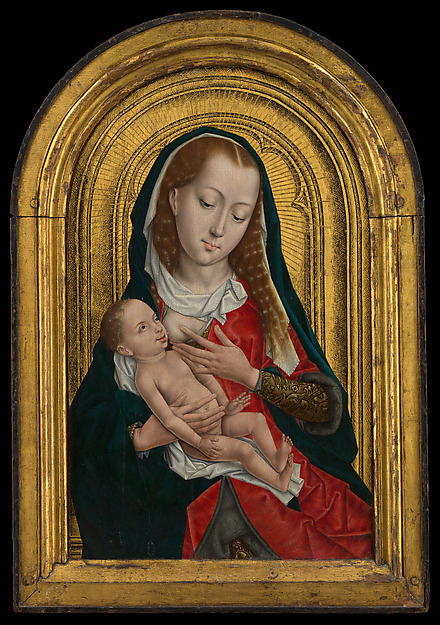
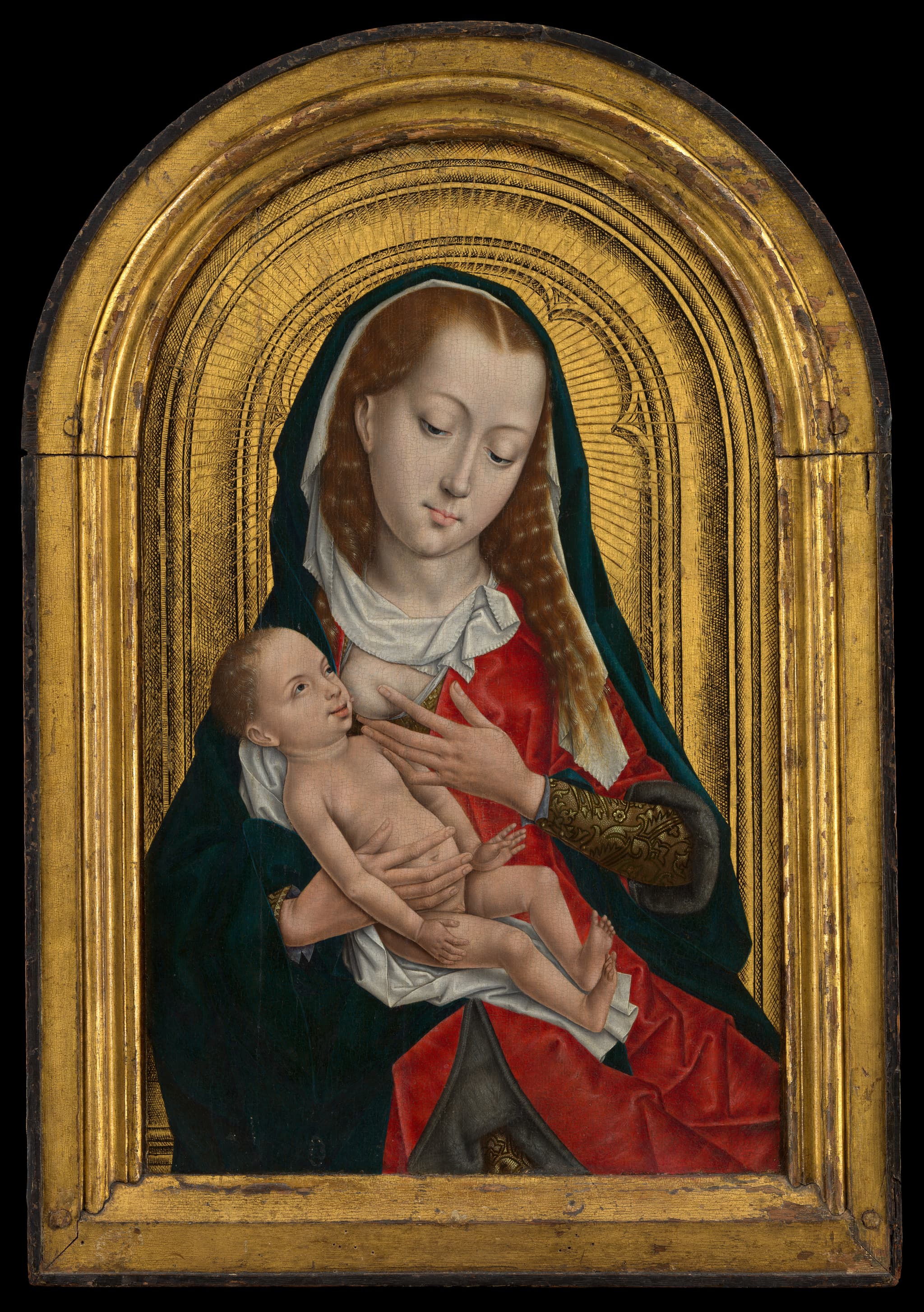 Virgin and Child
Their faith
Why Follower of Rogier van der Weyden (Master of the Saint Ursula Legend Group, Netherlandish, active late 15th century) painted Christ
The Follower of Rogier van der Weyden, active in the late 15th century, was deeply influenced by the devout faith of his master, Rogier van der Weyden, who was renowned for his poignant portrayals of the Passion of Christ. This artist, like his mentor, likely embraced the Catholic faith, which was central to the artistic culture of the time. The reverence for scripture and the spiritual discipline of prayerful contemplation were integral to their artistic practice. The workshop environment fostered a commitment to sacred subjects, with artists often engaging in devotional habits that shaped their creative output. The legacy of van der Weyden's faith and artistry undoubtedly permeated the works produced by his followers, as they sought to capture the divine and the human experience of faith through their paintings.
The Follower of Rogier van der Weyden's works reflect a profound spiritual vision, particularly in his depictions of the Crucifixion and scenes from the life of Christ. Paintings such as the Crucifixion Triptych and the Madonna portray not only technical mastery but also an emotional depth that invites viewers to engage with the sacred narrative. Through the careful arrangement of figures and the use of light and shadow, the artist conveys the weight of grief and the hope of redemption, echoing the themes found in van der Weyden's own masterpieces. This devotion to depicting Christ’s suffering and glory continues to inspire viewers today, reminding us of the enduring power of faith and the beauty of the divine story captured on canvas.
Life & work
Rogier van der Weyden is the great early-Netherlandish painter of the Passion. Born around 1399 in Tournai (then part of the County of Hainaut), he probably trained in the workshop of Robert Campin, qualified as a master painter in Tournai in 1432, and within a few years moved to Brussels, where he was named city painter and remained for the rest of his life. He died in Brussels in 1464 and was buried in the cathedral of Saint Michael and Saint Gudula.
His most influential work is the Descent from the Cross (Prado, c. 1435), painted as the central panel of an altarpiece for the Chapel of Our Lady Outside the Walls of Leuven. Within a shallow gilded niche the size of a stage box, ten figures fold around the lifeless body of Christ as it is lowered from the cross; the Virgin collapses below in a near-mirroring of his pose, and the whole composition reads like a freeze-frame from a Passion play in which every body is twisted into the same line of grief. No other early Northern panel reshaped European Passion iconography to the same degree; copies, derivations, and pastiches turn up across Flanders, France, Germany, and Spain into the seventeenth century.
He painted Crucifixion triptychs and panels through his career — the great Crucifixion Diptych in the Escorial, the Crucifixion Triptych in the Kunsthistorisches Museum in Vienna, the Abegg Triptych in Riggisberg — and a body of independent Madonnas and donor portraits commissioned by Burgundian, Italian, and Spanish patrons. The Seven Sacraments Altarpiece (Royal Museum of Fine Arts, Antwerp, c. 1448) sets the seven sacraments inside a single Gothic church interior, with the Crucifixion towering over the central nave. The Last Judgment polyptych at the Hôtel-Dieu in Beaune, painted for Nicolas Rolin between 1443 and 1452, is one of the largest Northern panel paintings of the fifteenth century and still hangs in the chapel of the hospital it was made for.
Almost no original drawings or signed paintings survive, and the chronology of his work is reconstructed from documentary records, contemporary copies, and stylistic comparison. His workshop trained or influenced almost every major Netherlandish painter of the next generation, and he is the documented teacher (or formative example) of Hans Memling.
Bible scenes Follower of Rogier van der Weyden (Master of the Saint Ursula Legend Group, Netherlandish, active late 15th century) painted
Luke