Luke 2
People in this chapter
Luke roots the most famous birth in history in plain, datable fact. There went out a decree from Caesar Augustus, that all the world should be taxed (v. 1) - a census from the most powerful man alive - and the machinery of an empire bends, all unknowing, to carry a carpenter and his espoused wife from Nazareth to Bethlehem, the city of David, exactly where the prophet had said the ruler of Israel would be born.
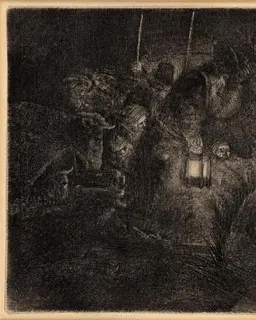
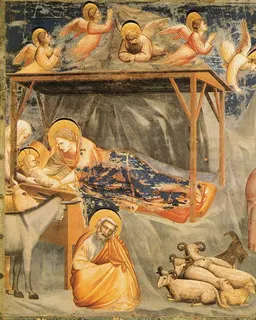
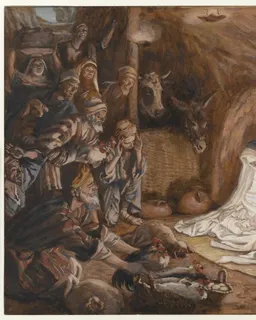
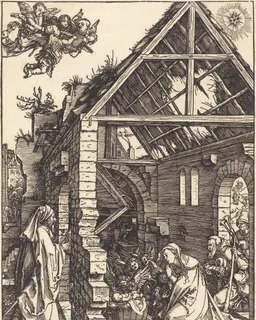
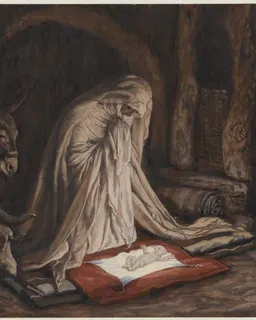
There is no fanfare. The days were accomplished that she should be delivered. And she brought forth her firstborn son, and wrapped him in swaddling clothes, and laid him in a manger; because there was no room for them in the inn (vv. 6-7). Luke does not soften the poverty of it or explain it away. He simply lets it stand: the One the whole chapter will call Saviour, Christ, and Lord enters the world with nowhere to be laid.1
Tap any highlighted phrase to jump to the commentary that unpacks it.
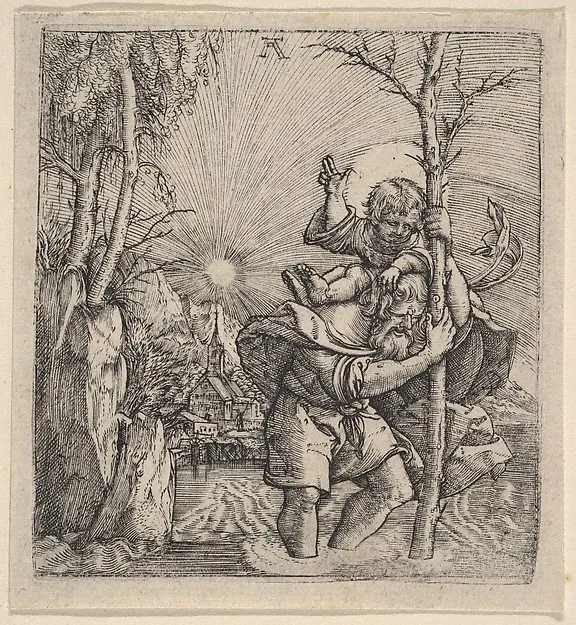
Luke 2:1-7No Room in the Inn
1And it came to pass in those days, that there went out a decree from Caesar Augustus, that all the world should be taxed. 2(And this taxing was first made when Cyrenius was governor of Syria.) 3And all went to be taxed, every one into his own city. 4And Joseph also went up from Galilee, out of the city of Nazareth, into Judaea, unto the city of David, which is called Bethlehem; (because he was of the house and lineage of David:) 5To be taxed with Mary his espoused wife, being great with child. 6And so it was, that, while they were there, the days were accomplished that she should be delivered. 7And she brought forth her firstborn son, and wrapped him in swaddling clothes, and laid him in a manger; because there was no room for them in the inn.
Luke opens not in heaven but in the records office of an empire: there went out a decree from Caesar Augustus, that all the world should be taxed (v. 1). Augustus was the most powerful man then living, the emperor at whose word the Roman world moved; a census meant counting heads for taxes and conscription, the machinery of imperial control. And yet from the first verse Luke is quietly telling us who is really in charge.
The most powerful man alive signs an order for his own purposes - revenue, reach, the pride of numbering what he rules - and the only lasting thing that order accomplishes is to carry one obscure couple the eighty-odd miles from Nazareth to Bethlehem at exactly the right moment. The prophet had said the ruler of Israel would come out of Bethlehem; here is Caesar, the lord of the world, unknowingly serving as the errand-boy of that prophecy.
Empires think they are writing history. Luke shows a deeper hand turning the page.1
The detail that Joseph went unto the city of David, which is called Bethlehem; (because he was of the house and lineage of David) is not throwaway genealogy; it is the chapter's spine (v. 4). Bethlehem is not just any town. It is David's town, the place the shepherd-king was anointed, and the place the prophet Micah had named centuries before as the birthplace of the coming ruler. Joseph belongs to David's line, and so the child carried to Bethlehem is born into the royal house, in the royal city, by way of a pagan emperor's tax form.
Notice too the weight of the human picture Luke draws in a single phrase: Mary is Joseph's espoused wife, being great with child (v. 5), traveling in the last days of pregnancy over hard country because a distant ruler willed it. There is nothing easy or staged about it. The promises of God come to pass through real roads, real fatigue, real obedience to circumstances no one would have chosen.
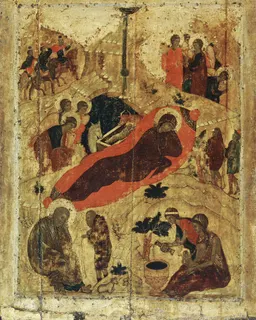
Then the sentence the whole world half-remembers: And she brought forth her firstborn son, and wrapped him in swaddling clothes, and laid him in a manger; because there was no room for them in the inn (v. 7). Every clause is plain, and Luke neither dresses it up nor apologizes for it. A manger is an animal's feeding trough; the inn was the crowded common lodging, with no space left for a woman in labour.
The swaddling clothes are the ordinary strips a mother wound around any newborn - the most common care imaginable, given to the most uncommon child. Luke states the poverty of it with such restraint that the wonder of it lands all the harder. This is the One the angel is about to call Saviour, Christ, and Lord, and there is no room for Him in the world He is entering. The whole gospel is already folded into that one phrase: He comes to His own, and the door is full.1
Luke 2:8-20Good Tidings of Great Joy
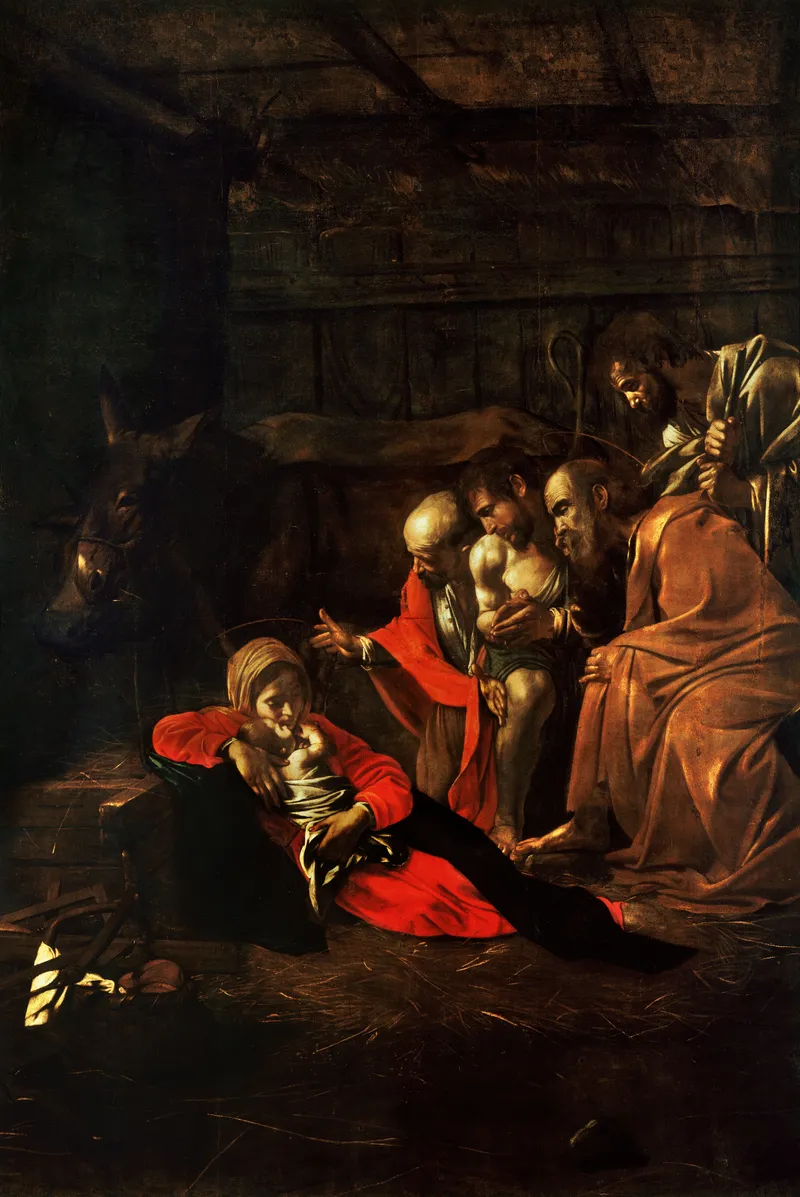
8And there were in the same country shepherds abiding in the field, keeping watch over their flock by night. 9And, lo, the angel of the Lord came upon them, and the glory of the Lord shone round about them: and they were sore afraid. 10And the angel said unto them, Fear not: for, behold, I bring you good tidings of great joy, which shall be to all people. 11For unto you is born this day in the city of David a Saviour, which is Christ the Lord. 12And this shall be a sign unto you; Ye shall find the babe wrapped in swaddling clothes, lying in a manger. 13And suddenly there was with the angel a multitude of the heavenly host praising God, and saying, 14Glory to God in the highest, and on earth peace, good will toward men. 15And it came to pass, as the angels were gone away from them into heaven, the shepherds said one to another, Let us now go even unto Bethlehem, and see this thing which is come to pass, which the Lord hath made known unto us. 16And they came with haste, and found Mary, and Joseph, and the babe lying in a manger. 17And when they had seen it, they made known abroad the saying which was told them concerning this child. 19But Mary kept all these things, and pondered them in her heart. 20And the shepherds returned, glorifying and praising God for all the things that they had heard and seen, as it was told unto them.
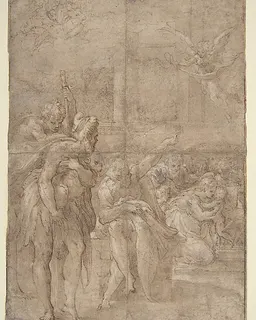
The first audience for the news that changes the world is a knot of shepherds abiding in the field, keeping watch over their flock by night (v. 8). Luke is deliberate. The announcement does not go to the temple, to the priests, to Caesar's court, or to the scholars of the law. It goes to working men on the night shift, low on the social ladder, ceremonially on the margins, out under the cold sky with the sheep.
And to them the heavens open: the angel of the Lord came upon them, and the glory of the Lord shone round about them: and they were sore afraid (v. 9). The glory that filled the tabernacle of old now blazes over a hillside pasture. Their first response is the right one before such holiness - terror. But notice the angel's first word in reply, the same word God's messengers so often bring trembling people: Fear not. The glory that overwhelms them has come to bring them joy.
Then the announcement itself, every word of it deliberate: Fear not: for, behold, I bring you good tidings of great joy, which shall be to all people. For unto you is born this day in the city of David a Saviour, which is Christ the Lord (vv. 10-11). Hear how wide the joy is thrown - to all people, not to one nation or class alone. Hear the urgency - this day, not someday. And hear the three titles stacked without a pause: a Saviour (the one who saves), which is Christ (the anointed one, the long-promised Messiah), the Lord. An angel does not waste words, and these are the highest words there are, laid on a newborn in a stable.
Then comes the sign, and it is gloriously strange: Ye shall find the babe wrapped in swaddling clothes, lying in a manger (v. 12). The proof that the Saviour has come will be a poor infant in a feeding trough. Heaven points the shepherds to humility, and tells them that is the sign.2
No sooner is the announcement made than the single messenger is joined by an army: suddenly there was with the angel a multitude of the heavenly host praising God, and saying, Glory to God in the highest, and on earth peace, good will toward men (vv. 13-14). The word for host is a military one - the armies of heaven - and yet they come to sing. The song has two halves that belong together. Upward: Glory to God in the highest - this birth is, before it is anything else, the glory of God, the unveiling of who He is and what He will do.
Downward: on earth peace, good will toward men - and the peace is not a vague sentiment but the very thing the Saviour has come to bring, the mending of the breach between heaven and earth. The shepherds had been keeping watch in the dark; now the dark is full of light and the silence is full of song. For one night, the wall between the seen and the unseen world goes thin, and they hear what the angels are always saying.
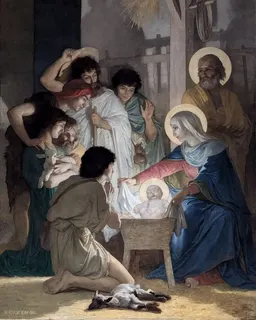
The shepherds do not debate; they go. Let us now go even unto Bethlehem, and see this thing which is come to pass (v. 15) - and they came with haste, and found Mary, and Joseph, and the babe lying in a manger (v. 16). The sign was exactly as told; the word of heaven proved true on the ground. And then, having seen, they cannot keep it: when they had seen it, they made known abroad the saying which was told them concerning this child (v. 17).
These uneducated night-workers become the first evangelists of the gospel, the first to carry the news from house to house. They had nothing to commend them but that they had heard, believed, gone, seen, and could not stay quiet. Luke sets this against one still figure at the center: But Mary kept all these things, and pondered them in her heart (v. 19). The shepherds proclaim; Mary treasures. Both are right responses to the same wonder - the loud telling and the quiet keeping - and the chapter holds them side by side without choosing.
Luke 2:21-39A Light to Lighten the Gentiles
21And when eight days were accomplished for the circumcising of the child, his name was called JESUS, which was so named of the angel before he was conceived in the womb. 22And when the days of her purification according to the law of Moses were accomplished, they brought him to Jerusalem, to present him to the Lord; 24And to offer a sacrifice according to that which is said in the law of the Lord, A pair of turtledoves, or two young pigeons. 25And, behold, there was a man in Jerusalem, whose name was Simeon; and the same man was just and devout, waiting for the consolation of Israel: and the Holy Ghost was upon him. 28Then took he him up in his arms, and blessed God, and said, 29Lord, now lettest thou thy servant depart in peace, according to thy word: 30For mine eyes have seen thy salvation, 31Which thou hast prepared before the face of all people; 32A light to lighten the Gentiles, and the glory of thy people Israel. 34And Simeon blessed them, and said unto Mary his mother, Behold, this child is set for the fall and rising again of many in Israel; and for a sign which shall be spoken against; 35(Yea, a sword shall pierce through thy own soul also,) that the thoughts of many hearts may be revealed. 36And there was one Anna, a prophetess, the daughter of Phanuel, of the tribe of Aser: she was of a great age, and had lived with an husband seven years from her virginity; 37And she was a widow of about fourscore and four years, which departed not from the temple, but served God with fastings and prayers night and day. 38And she coming in that instant gave thanks likewise unto the Lord, and spake of him to all them that looked for redemption in Jerusalem.
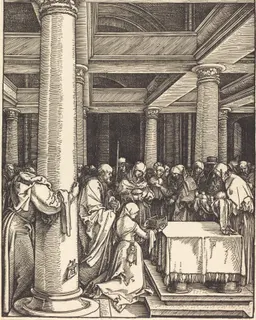
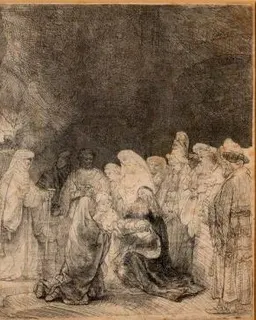
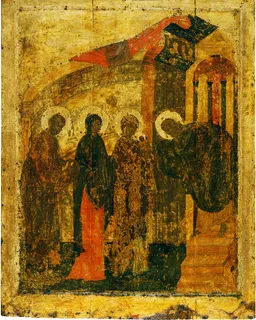
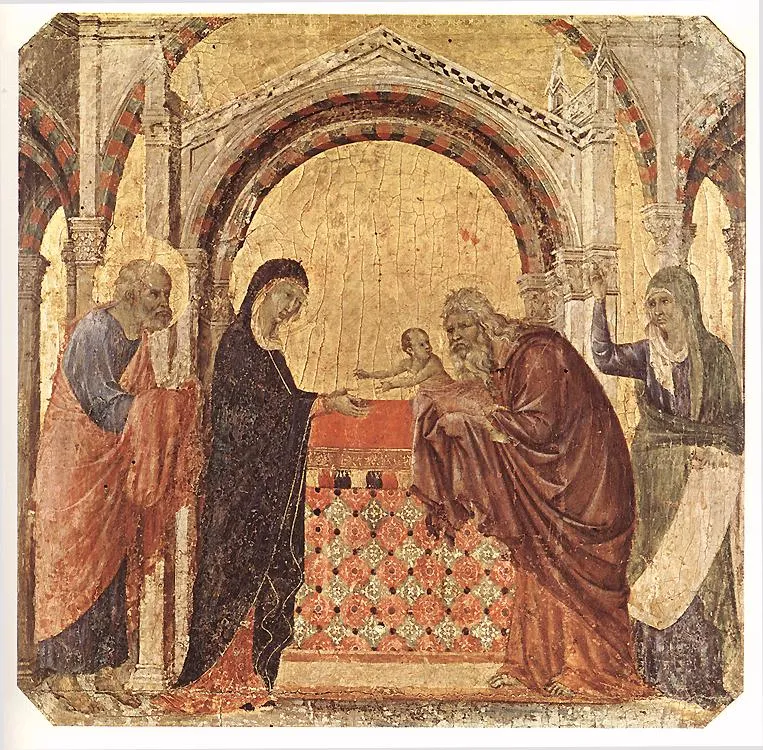
On the eighth day the child is circumcised and named: his name was called JESUS, which was so named of the angel before he was conceived in the womb (v. 21). The naming is not the parents' invention; it was given from heaven before He was ever conceived, and Luke prints it in capitals. The name means the LORD saves, and it announces His whole mission in a word. Then His parents do the most ordinary faithful thing: they brought him to Jerusalem, to present him to the Lord and to offer the appointed sacrifice (v. 22).
And the sacrifice itself is quietly telling - a pair of turtledoves, or two young pigeons (v. 24), which the law allowed for those too poor to bring a lamb. The Saviour is born into a family that cannot afford the lamb, because He Himself is the Lamb. From His earliest days He is found inside the covenant of His people, obedient to its law, fulfilling all righteousness from the cradle on. He stands inside the law He came to keep, obedient to it from the beginning.
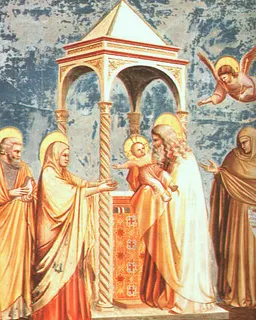
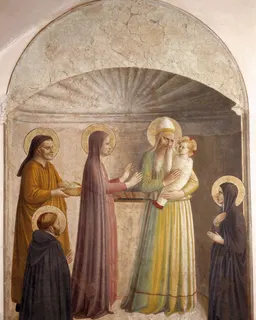
In the temple waits an old man named Simeon, just and devout, waiting for the consolation of Israel: and the Holy Ghost was upon him (v. 25). He has been promised he will not die before he has seen the Lord's Christ, and now the Spirit leads him in at the very moment the child is brought. He takes the infant up in his arms, and blessed God (v. 28), and the words that follow are among the most peaceful in all Scripture: Lord, now lettest thou thy servant depart in peace, according to thy word: for mine eyes have seen thy salvation (vv. 29-30).
Here is a man ready to die because his eyes have seen what generations longed to see. And mark what he calls the baby: thy salvation. Salvation itself, held in his arms. Simeon does not see merely a remarkable child; he sees, in this infant, God's saving work made present and personal. A lifetime of waiting ends not in a doctrine but in an embrace.3
Simeon's song widens until it takes in the whole world: this salvation is prepared before the face of all people; a light to lighten the Gentiles, and the glory of thy people Israel (vv. 31-32). The child is glory for Israel and light for the nations - salvation that will not stay within one border. But then Simeon turns to Mary, and the cradle-song darkens into prophecy: this child is set for the fall and rising again of many in Israel; and for a sign which shall be spoken against; (Yea, a sword shall pierce through thy own soul also,) that the thoughts of many hearts may be revealed (vv. 34-35).
He will divide as well as save; He will be spoken against; He will lay bare what hearts truly hold. And to the young mother holding the baby, Simeon speaks the first open word of the cost: a sword will one day pass through her own soul. The shadow of the cross falls across the manger from the very beginning. The joy of this child is real, but it is not cheap; the salvation Simeon held in his arms would be wrought through suffering, and his mother would feel its blade.1
Beside the old man stands an old woman, and Luke gives her name and her history with care: Anna, a prophetess… of a great age, a widow of many decades who departed not from the temple, but served God with fastings and prayers night and day (vv. 36-37). Hers has been a long obedience - years of worship with no spectacle, no reward she could see, faithfulness kept up in the quiet. And at the appointed hour she too is given the sight: she coming in that instant gave thanks likewise unto the Lord, and spake of him to all them that looked for redemption in Jerusalem (v. 38).
Like the shepherds, having seen, she cannot keep silent - she becomes a herald to everyone still waiting. Between Simeon and Anna, Luke gives us two witnesses, a man and a woman, both aged, both faithful through long years, both rewarded at the last. The chapter has now gathered its recognizers: the poor and the young at the manger, the old and the waiting in the temple. All of them, the unlikely and the long-faithful alike, see in this child the thing they had hoped for.
Luke 2:40-52About My Father's Business
40And the child grew, and waxed strong in spirit, filled with wisdom: and the grace of God was upon him. 41Now his parents went to Jerusalem every year at the feast of the passover. 42And when he was twelve years old, they went up to Jerusalem after the custom of the feast. 43And when they had fulfilled the days, as they returned, the child Jesus tarried behind in Jerusalem; and Joseph and his mother knew not of it. 46And it came to pass, that after three days they found him in the temple, sitting in the midst of the doctors, both hearing them, and asking them questions. 47And all that heard him were astonished at his understanding and answers. 48And when they saw him, they were amazed: and his mother said unto him, Son, why hast thou thus dealt with us? behold, thy father and I have sought thee sorrowing. 49And he said unto them, How is it that ye sought me? wist ye not that I must be about my Father’s business? 50And they understood not the saying which he spake unto them. 51And he went down with them, and came to Nazareth, and was subject unto them: but his mother kept all these sayings in her heart. 52And Jesus increased in wisdom and stature, and in favour with God and man.
Luke draws a curtain over the silent years with a single, astonishing sentence: And the child grew, and waxed strong in spirit, filled with wisdom: and the grace of God was upon him (v. 40). The One the angels called Saviour, Christ, and Lord truly grew. He was a real child, who learned to walk and speak, who got taller and stronger, who increased in wisdom, genuinely living every stage of it. This is the heart of the wonder Luke keeps pressing: the Saviour took on the whole of our growing, from the manger forward, year by ordinary year in a Galilean village.
And over all of it, the grace of God was upon him. Then Luke lifts the curtain just once, on a single scene from those hidden years - a Passover, a temple, and a boy of twelve - as if to give us one window into how that growing looked from the inside.
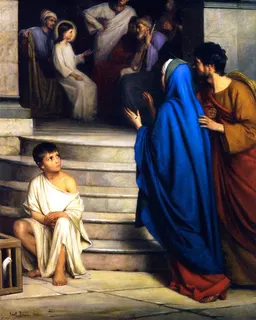
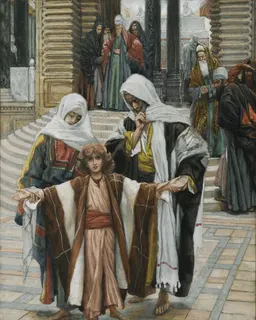
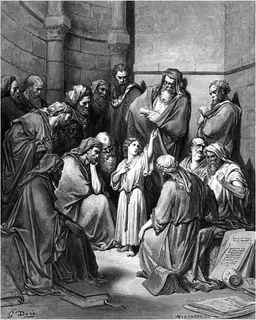
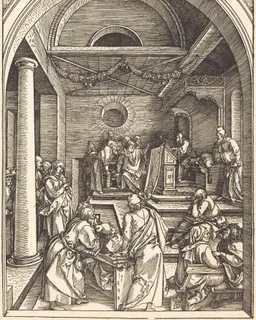
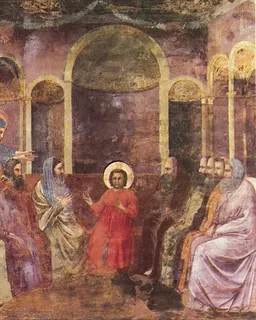
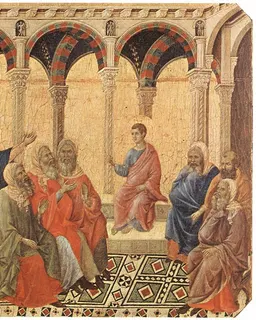
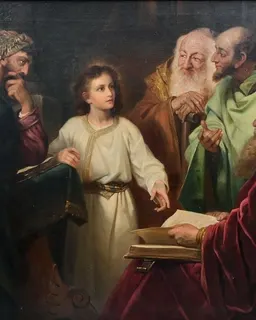
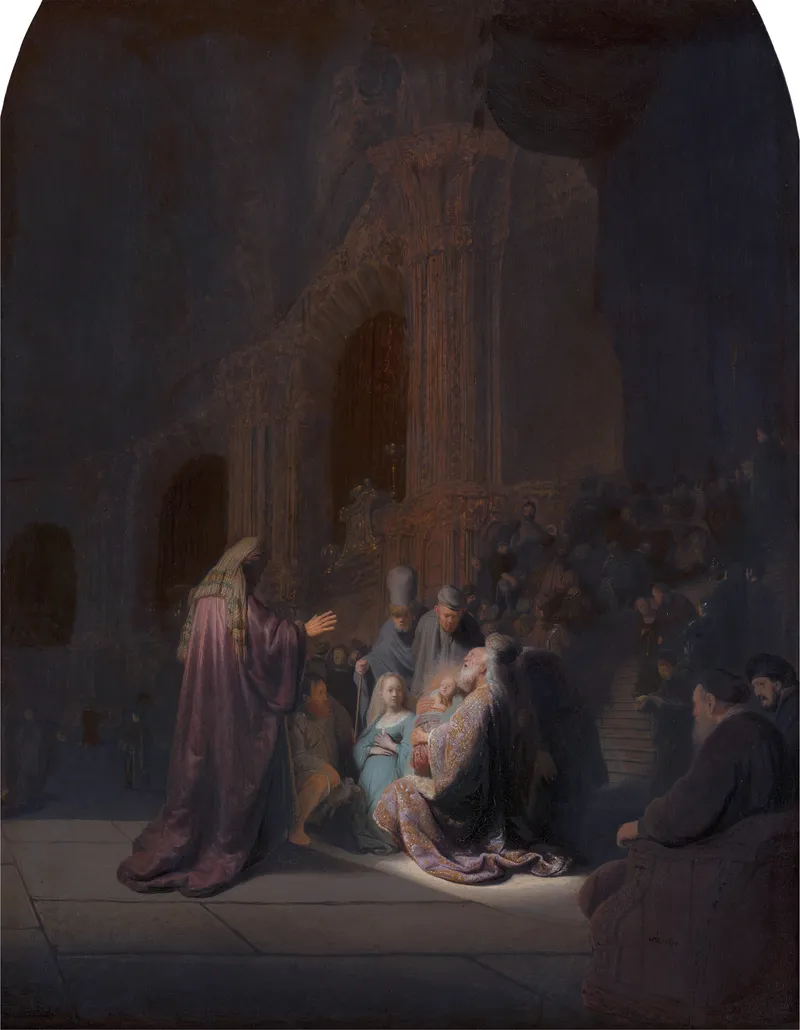
Every year the family went up to Jerusalem for the Passover, and when Jesus was twelve they went as usual (vv. 41-42). On the way home, His parents discover He is not with them; they had supposed Him among the company of travelers. After an anxious return and three days' searching, they found him in the temple, sitting in the midst of the doctors, both hearing them, and asking them questions: and all that heard him were astonished at his understanding and answers (vv. 46-47).
Notice what He is doing. He is sitting among them in the posture of a learner, hearing and asking - and yet His questions and answers reveal an understanding that leaves the experts amazed. There is something fitting in where He has stayed: not the marketplace, not the festivities, but the temple, His Father's house, drawn there as naturally as a child stays near home. The boy who got left behind was exactly where, of all places, He most belonged.
Mary's words carry all a mother's relief and reproach: Son, why hast thou thus dealt with us? behold, thy father and I have sought thee sorrowing (v. 48). And the boy's reply - the first recorded words of Jesus in the Gospels - gently corrects the very terms she used: How is it that ye sought me? wist ye not that I must be about my Father's business? (v. 49). Mary said thy father and I, meaning Joseph; Jesus answers by speaking of another Father, and of a must that comes from Him.
At twelve years old He already knows whose He is. The word must is doing quiet, weighty work - it is the same necessity that will later drive Him to Jerusalem, to the cross, and through the grave; His whole life is lived under a divine must, and here it surfaces for the first time. He is not being defiant; He is telling them where He truly belongs. And yet - this is crucial - they understood not the saying (v. 50), and He went down with them, and came to Nazareth, and was subject unto them (v. 51).
The awareness of His unique sonship and His perfect obedience as a son do not collide. The boy who must be about His Father's business goes home and submits to His parents. Both are true at once.1
The chapter ends as quietly as it began in glory, and the last two notes are worth weighing. First, of the mother: his mother kept all these sayings in her heart (v. 51). Twice now Luke has told us Mary treasured and pondered what she could not yet understand - at the manger, and now at the temple - and here she does it even after a saying she explicitly did not grasp. Faith, Luke quietly teaches, does not require full understanding; it can keep and ponder in the meantime.
Second, of the boy: And Jesus increased in wisdom and stature, and in favour with God and man (v. 52). It is a sentence of perfect balance. He grew in wisdom (mind) and stature (body), and in favour with God (upward) and man (outward) - a whole, rounded, healthy growing, true God and true man maturing as a man among men. Luke will not say another word about the next eighteen years. This single verse is meant to cover them all: the Saviour quietly growing toward His hour in an ordinary town, until the day His Father's business would call Him out.
Research trail
Sources & further study
These references support the historical, linguistic, manuscript, and contextual notes in this chapter. Scripture remains the primary text; external sources are provided so readers can inspect the research directly.
- Luke 2 - Translators' NotesThe NET Bible's detailed footnotes on Luke 2 - the census under Caesar Augustus (vv. 1-3), the meaning of the “manger” and the crowded “inn” (v. 7), the angel's wording in verses 10-14, and the difficult phrase Simeon speaks to Mary in verse 35.
- Luke 2 · Greek interlinear + lexiconThe Greek text of Luke 2 word by word, each term linked to its lexicon entry - useful for sôtêr (v. 11, the “Saviour,” the one who saves), euangelizô (v. 10, the angel “bringing good tidings”), and doxa (v. 14, the “glory” the host ascribes to God in the highest).
- Luke 2 ↔ Micah 5 · Isaiah 49 · Philippians 2Traces the threads tying Luke 2 to the rest of Scripture - the ruler born in Bethlehem Ephratah (Mic. 5:2), the light to the Gentiles and salvation unto the end of the earth (Isa. 49:6) that Simeon names, and the One who made himself of no reputation (Phil. 2:7) read beside the manger with no room.
Where this echoes in Scripture
No Room in the Inn
- Micah 5:2But thou, Bethlehem Ephratah... out of thee shall he come forth unto me that is to be ruler in Israel; whose goings forth have been from of old, from everlasting.The prophecy fulfilled in verses 4-7 - the ruler of Israel born in David's own city, Bethlehem.
- Philippians 2:7-8made himself of no reputation, and took upon him the form of a servant... he humbled himself, and became obedient unto death.The descent that begins at the manger (v. 7) - the King who emptied Himself to come and save.
- 2 Corinthians 8:9though he was rich, yet for your sakes he became poor, that ye through his poverty might be rich.The meaning of the manger with no room (v. 7) - the riches given up for the sake of those He came to save.
- 1 Samuel 16:1I will send thee to Jesse the Bethlehemite: for I have provided me a king among his sons.Bethlehem as the city of David (v. 4) - where the first shepherd-king was anointed, and where the true King is born.
- John 1:11He came unto his own, and his own received him not.The “no room” of verse 7 in summary - the One who made the world entering it with the door already full.
Good Tidings of Great Joy
- Matthew 1:21thou shalt call his name JESUS: for he shall save his people from their sins.The meaning of the title Saviour in verse 11 - the name itself declares what He came to do.
- Ephesians 2:14For he is our peace, who hath made both one, and hath broken down the middle wall of partition between us.The peace the angels sing in verse 14 named in person - the Saviour who is Himself our peace.
- Isaiah 9:6For unto us a child is born, unto us a son is given... and his name shall be called Wonderful, Counsellor, The mighty God... The Prince of Peace.The child and the peace of verses 11 and 14 foretold - the son given, the Prince of Peace.
- Luke 24:36Jesus himself stood in the midst of them, and saith unto them, Peace be unto you.The risen Christ speaking the very word the angels sang at His birth (v. 14) - the peace made and given.
- Luke 1:46-47My soul doth magnify the Lord, And my spirit hath rejoiced in God my Saviour.Mary's own song foreshadowing her pondering in verse 19 - the heart that treasures God her Saviour.
A Light to Lighten the Gentiles
- Isaiah 49:6I will also give thee for a light to the Gentiles, that thou mayest be my salvation unto the end of the earth.The prophecy Simeon sings in verse 32 - the salvation reaching every nation, a light to the Gentiles.
- Isaiah 9:2The people that walked in darkness have seen a great light: they that dwell in the land of the shadow of death, upon them hath the light shined.The light Simeon names in verse 32 - the great light promised to those in darkness.
- John 19:25Now there stood by the cross of Jesus his mother, and his mother's sister.The sword of verse 35 reaching its hour - the mother who pondered the manger standing at the cross.
- Luke 2:21 · Genesis 17:12And he that is eight days old shall be circumcised among you, every man child in your generations.The covenant sign Jesus receives in verse 21 - the Saviour born under the law His people kept.
- Haggai 2:7the desire of all nations shall come: and I will fill this house with glory, saith the LORD of hosts.The temple filled with glory as Simeon and Anna receive the child (vv. 27-38) - the desire of all nations come at last.
About My Father's Business
- John 2:16make not my Father's house an house of merchandise.The same claim as verse 49 - the temple is His Father's house, and He belongs there as a Son.
- John 4:34My meat is to do the will of him that sent me, and to finish his work.The grown Christ living the must of verse 49 - His whole life given to His Father's business.
- Hebrews 5:8Though he were a Son, yet learned he obedience by the things which he suffered.The Son who was subject and increased (vv. 51-52) - the true man maturing in obedience.
- 1 Samuel 2:26And the child Samuel grew on, and was in favour both with the LORD, and also with men.The pattern echoed in verse 52 - a child growing in favour with God and man, set apart from the start.
- Luke 9:51he stedfastly set his face to go to Jerusalem.The same divine must first heard in verse 49 - carried at last all the way to the cross.