1 Samuel 16
People in this chapter
Samuel is still grieving the king who failed when the LORD cuts in: fill thine horn with oil, and go… I have provided me a king among his sons. The prophet slips into Bethlehem under cover of a sacrifice, and Jesse's sons pass before him one by one. The eldest looks every inch a king - tall, striking, firstborn - and even Samuel nearly anoints him on sight. Then heaven corrects the prophet himself: the LORD looketh on the heart.1
Tap any highlighted phrase to jump to the commentary that unpacks it.
1 Samuel 16:1-5Fill Thine Horn with Oil, and Go
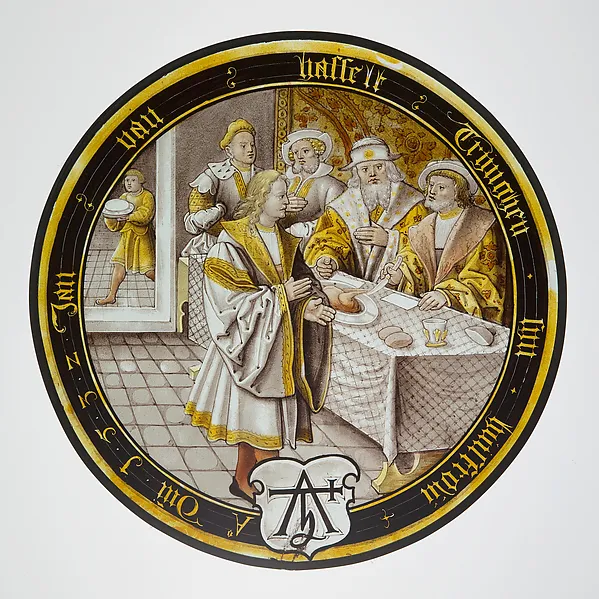
1And the LORD said unto Samuel, How long wilt thou mourn for Saul, seeing I have rejected him from reigning over Israel? fill thine horn with oil, and go, I will send thee to Jesse the Bethlehemite: for I have provided me a king among his sons.
The chapter opens on grief, and on a God who will not let His prophet stay there. How long wilt thou mourn for Saul, seeing I have rejected him from reigning over Israel? Samuel had loved Saul, anointed him, hoped in him, and the loss of him has lain heavy on the old prophet. The mourning is real and understandable, but it is gently overruled by a purpose that has already moved on. God is not finished with Israel because He is finished with Saul.
Fill thine horn with oil, and go, He says, and the very word that ends the verse is the quiet hinge of the whole story: I have provided me a king among his sons. Before Samuel sets out, before any son of Jesse is seen, the king has already been chosen.1 The choosing is God's alone, settled in heaven before it is revealed on earth. And there is a tender lesson folded into the rebuke: prolonged grief over what God has set aside can blind us to the new thing He is already providing.
The horn of oil is to be filled for what God is doing ahead.
Notice where Samuel is sent. To Jesse the Bethlehemite - a shepherd's household in a small Judean town. Bethlehem is an unremarkable place, easy to overlook, and that is precisely the point. The God who chooses begins in obscurity. His king comes from a hillside flock, from a family unknown to the wider nation. And the word provided is worth weighing - the king is something God Himself has supplied, the way He provides a ram in the thicket or bread in the wilderness.
Israel had demanded a king and been given Saul, tall and impressive and chosen partly to their taste; this king is different from the start, provided by God for God's own purpose, before the people know to want him. The whole drama that follows - the brothers paraded, the prophet corrected, the shepherd fetched - is only the slow unveiling of a choice already made in the counsel of God.
2And Samuel said, How can I go? if Saul hear it, he will kill me. And the LORD said, Take an heifer with thee, and say, I am come to sacrifice to the LORD. 3And call Jesse to the sacrifice, and I will shew thee what thou shalt do: and thou shalt anoint unto me him whom I name unto thee.
Samuel's answer is honest fear: How can I go? if Saul hear it, he will kill me. This is no small admission. The prophet who confronted Saul to his face, who hewed Agag in pieces, now speaks plainly of his dread - for to anoint a rival king while Saul still reigns is treason in the eyes of a jealous and unraveling man, and Samuel knows it. The Scripture does not hide the fear of its greatest servants; it sets it down beside their faith.
And the LORD does not scorn the fear - He provides for it. Take an heifer with thee, and say, I am come to sacrifice to the LORD. The errand is real: there genuinely will be a sacrifice, and Samuel genuinely will offer it. But its deeper purpose is veiled, hidden under an act of true worship. God gives His servant a way to obey that does not require him to court needless danger. The anointing will be done quietly, under the cover of the altar, and only when Samuel arrives will the rest be shown: I will shew thee what thou shalt do. He is to go not knowing the name, trusting that the word will come in its hour.
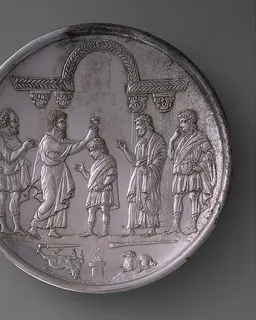
4And Samuel did that which the LORD spake, and came to Bethlehem. And the elders of the town trembled at his coming, and said, Comest thou peaceably? 5And he said, Peaceably: I am come to sacrifice unto the LORD: sanctify yourselves, and come with me to the sacrifice. And he sanctified Jesse and his sons, and called them to the sacrifice.
The single line of obedience is quietly weighty: Samuel did that which the LORD spake. Fear and all, he goes. And his arrival sends a tremor through Bethlehem: the elders of the town trembled at his coming, and said, Comest thou peaceably? A prophet does not pass through a small town for nothing, and the presence of the man who had broken with Saul could mean judgment or trouble. Their trembling is the instinctive awe of ordinary people before a man who carries the weight of God.
Samuel answers, Peaceably, and calls them to sanctify themselves - to set themselves apart, to make themselves ready - for the sacrifice. There is a gentle irony in the scene. The townsfolk prepare for a worship service; one household among them is being prepared for a throne. Jesse and his sons sanctify themselves for a meal at the altar, with no idea that the prophet's true business is with them, and that before the day is out the youngest of the house will be a king.
They ready themselves for the visible thing while the invisible thing - the real reason Samuel came - waits hidden in the wings.
1 Samuel 16:6-13Man Looketh on the Outward Appearance, but the LORD Looketh on the Heart
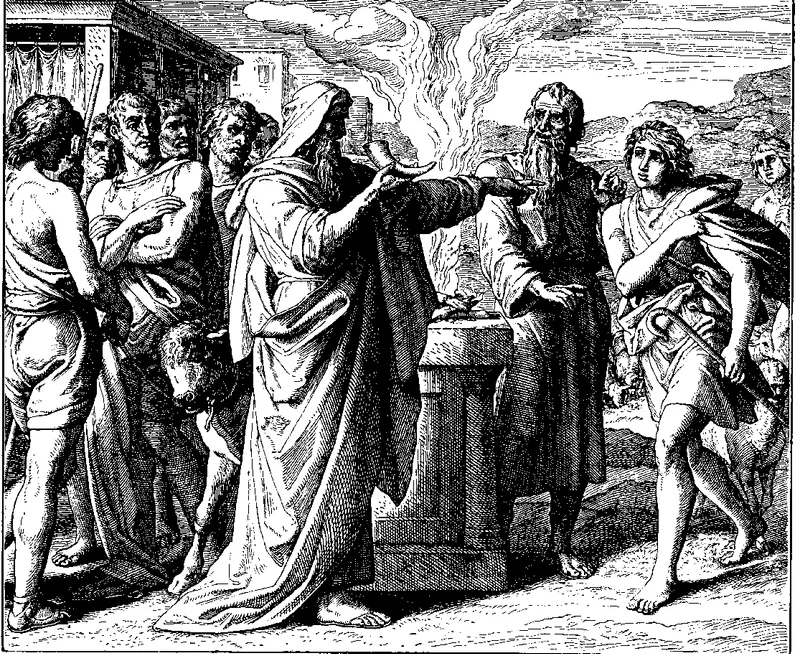
6And it came to pass, when they were come, that he looked on Eliab, and said, Surely the LORD’s anointed is before him. 7But the LORD said unto Samuel, Look not on his countenance, or on the height of his stature; because I have refused him: for the LORD seeth not as man seeth; for man looketh on the outward appearance, but the LORD looketh on the heart.
Here is the sobering thing: it is Samuel who is fooled. The seasoned prophet, the man who hears God, takes one look at Eliab and concludes, Surely the LORD's anointed is before him. Eliab is the firstborn, and he has the look of a king - tall, of striking countenance, the very qualities that had once recommended Saul, who stood head and shoulders above the people. The man who confronted a king to his face is undone by a tall young man at a feast.
If even Samuel can be swayed by appearance, none of us is safe from it. The eye runs ahead of the word; the visible crowds out the discernment that waits for God to speak. Samuel has not yet been told the name - he was to anoint the one God would name unto him - and already he is sure he has found him. It is the oldest mistake in the chapter, and it is about to be corrected from heaven.
The correction is swift and total, and the famous line at the heart of it says more than it first seems: the LORD seeth not as man seeth; for man looketh on the outward appearance, but the LORD looketh on the heart. The line is a statement about what God values. Men see the surface - the height, the face, the bearing, the polish - and judge by it, because the surface is all the eye can reach.
God sees the inward reality, the true self that no one else can see, and judges by that. The two standards differ in kind altogether. What impresses a watching crowd and what weighs with God may have almost nothing to do with each other. Eliab is refused because the tallness is irrelevant to the LORD; the LORD has looked where Samuel cannot, into the heart, and what He found there is His own to know.
The verse quietly dismantles the way we appraise one another - and the way we appraise ourselves.
8Then Jesse called Abinadab, and made him pass before Samuel. And he said, Neither hath the LORD chosen this. 9Then Jesse made Shammah to pass by. And he said, Neither hath the LORD chosen this. 10Again, Jesse made seven of his sons to pass before Samuel. And Samuel said unto Jesse, The LORD hath not chosen these.
What the Scripture withholds is the point. Abinadab passes, Shammah passes, son after son, and each time the verdict falls the same - neither hath the LORD chosen this - but we are never told why. Not that they were proud, or weak, or unworthy; only that the LORD had not chosen them. The choosing is sheer divine prerogative, resting on what God sees and on His own purpose, not on any defect the narrator feels obliged to expose.
Seven is the number of fullness, and the full complement of Jesse's presented sons has now been weighed and set aside. Samuel, who an hour ago was certain about Eliab, has learned to wait for the word; with each son he listens before he speaks. The prophet who began by trusting his eyes is now refusing to trust them at all. And the suspense builds with every refusal - if not these, the strong and the present and the obvious, then who?
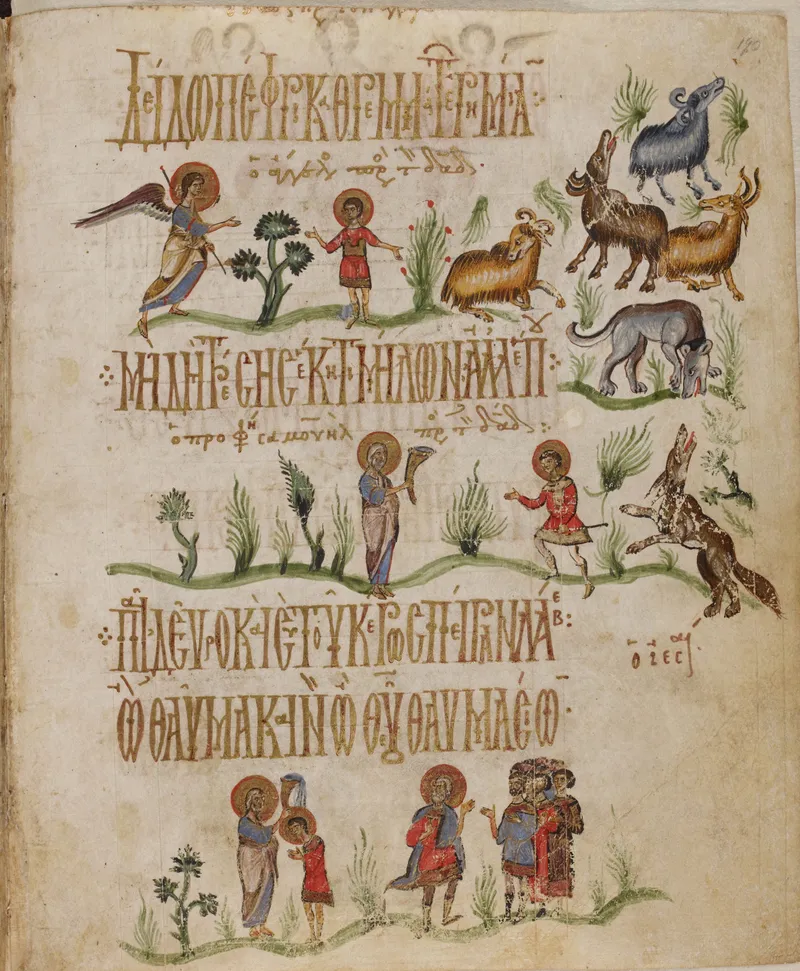
11And Samuel said unto Jesse, Are here all thy children? And he said, There remaineth yet the youngest, and, behold, he keepeth the sheep. And Samuel said unto Jesse, Send and fetch him: for we will not sit down till he come hither.
When the seven are exhausted, Samuel asks the question that uncovers the hidden one: Are here all thy children? And the answer reveals how thoroughly the chosen king had been overlooked, even by his own family: There remaineth yet the youngest, and, behold, he keepeth the sheep. There is a whole world in that sentence. David was not summoned to the sacrifice with his brothers; he was left in the field with the flock, the task that fell to the least of the household.
His own father, gathering his sons before the prophet of God, did not think to count him in. The youngest, the smallest, the one out of sight tending the sheep - he is an afterthought even in his own home. If you have ever stood just outside the circle where the important things were happening, you know that field. And it is exactly this one whom God has chosen. Samuel's response is firm and urgent: Send and fetch him: for we will not sit down till he come hither. Nothing will proceed without him; the whole company, the prophet and the elders and the seven sons, must wait on the arrival of the shepherd boy.
The one the world forgot is the one heaven has been waiting for, and the feast itself is held in suspense until he comes.
12And he sent, and brought him in. Now he was ruddy, and withal of a beautiful countenance, and goodly to look to. And the LORD said, Arise, anoint him: for this is he.
A reader might stumble here. If God does not choose by the outward appearance, why does the narrator pause, the moment David is brought in, to call him ruddy, and withal of a beautiful countenance, and goodly to look to? But the description is not the reason for the choice - it is set down to forestall a misunderstanding. We are not to imagine that God chose David because the others were handsome and David was plain; David is, in fact, fair to look upon.
The point of verse 7 is that God chooses by the heart, and appearance carries no weight in that reckoning. David's beauty is mentioned and then left to the side, weightless. What settles the matter is the word that falls the instant he enters: Arise, anoint him: for this is he. No deliberation, no comparison - the very directness of it shows that the choosing had nothing to do with the looking. God had already seen the heart; the eyes of the company are only now catching up to a decision long since made.
13Then Samuel took the horn of oil, and anointed him in the midst of his brethren: and the Spirit of the LORD came upon David from that day forward. So Samuel rose up, and went to Ramah.
Samuel pours the oil, and the act that has been waiting since the first verse is done: anointed him in the midst of his brethren. It is done in their sight - the seven who passed before the prophet now watch the youngest receive what was withheld from them all. There is no public proclamation to the nation; this is not yet a coronation, and Saul still sits on the throne. But within the family circle the thing is unmistakable, and the brother left with the sheep is marked out before them as the chosen of God.
Then comes the line that lifts the whole scene from ceremony to power: the Spirit of the LORD came upon David from that day forward. The oil is the outward sign; the Spirit is the substance - God Himself coming upon the shepherd, equipping him, claiming him, abiding with him from that day on. And as quietly as he came, Samuel goes: So Samuel rose up, and went to Ramah. The prophet's work is finished.
He returns home, leaving behind a boy who is suddenly more than a boy - anointed, Spirit-filled, and known to no one outside that house as the king the LORD has provided.
1 Samuel 16:14-23The Spirit Departs from Saul, and the Shepherd's Harp
14But the Spirit of the LORD departed from Saul, and an evil spirit from the LORD troubled him.
The verse turns on a single word - But. In the same breath that the Spirit comes upon David, the Spirit departs from Saul. The two movements are bound together; the narrator sets them back to back so that we cannot miss it. One king is being raised as another is set aside, and the dividing line is the Spirit of the LORD. What had rested on Saul at the beginning of his reign now lifts, and the throne he still occupies is, in the deepest sense, already emptied.
This is the somber underside of David's anointing: the kingdom is not large enough for two anointings, and as the Spirit moves to the shepherd it withdraws from the man who has been weighed and found wanting. Saul will go on reigning for years, but from this verse onward he reigns as a man the Spirit has left - and the rest of his story is the long, grievous outworking of that departure.
The harder phrase - the evil spirit that from the LORD troubled him - is best received exactly as plainly as it is given, without building a system on it that the Scripture itself does not build. The narrator's concern is to show that nothing falls outside the LORD's sovereign reach, even Saul's torment. With the Spirit of God withdrawn, Saul is left exposed, and into that emptiness comes a spirit that troubled him - the word means to terrify, to vex, to fall upon with dread.1 It is part of the judgment that has come upon him: the king who would not be ruled by the Spirit of God is now harassed by a darkness he cannot master.
Scripture does not invite us to probe the mechanics or to resolve every question the phrase raises; it simply lets the sober fact stand - that Saul's undoing is under God's hand, and that a man emptied of the Spirit of the LORD is left in trouble. The reverent response is holy fear of that departing.
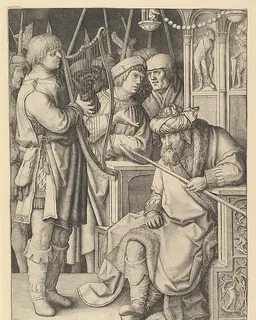
15And Saul’s servants said unto him, Behold now, an evil spirit from God troubleth thee. 16Let our lord now command thy servants, which are before thee, to seek out a man, who is a cunning player on an harp: and it shall come to pass, when the evil spirit from God is upon thee, that he shall play with his hand, and thou shalt be well.
Saul's servants see his torment and propose a remedy, and there is a gentle wisdom in what they suggest. They reach for music. Seek out a man, who is a cunning player on an harp… and thou shalt be well. They understand something true about the troubled soul - that it can be reached and soothed by beauty where it cannot be reached by argument or command. The skilled hand upon the strings, they believe, will quiet the dread that falls upon the king.
It is a humble prescription for a royal affliction: a harp and the hands of a gifted player. And though the servants speak only of the king's comfort, their counsel is the door through which the whole future of Israel will walk, for the player they will seek is the very one God has just anointed. The remedy they devise for Saul's present trouble is the means by which David is brought to the court he will one day inherit.
17And Saul said unto his servants, Provide me now a man that can play well, and bring him to me. 18Then answered one of the servants, and said, Behold, I have seen a son of Jesse the Bethlehemite, that is cunning in playing, and a mighty valiant man, and a man of war, and prudent in matters, and a comely person, and the LORD is with him.
One of the servants knows just the man, and the way he describes him is striking. He names David as cunning in playing - the gift they sought - but then he keeps going: a mighty valiant man, and a man of war, and prudent in matters, and a comely person. This is far more than a harpist; the servant sees in David strength, courage, wisdom, and bearing, the whole stamp of a man marked for great things.
And he ends with the words that explain all the rest: and the LORD is with him. Here is the outward evidence of the inward anointing. The Spirit that came upon David in Bethlehem is not hidden; it shows. Something about the young shepherd makes even a king's servant say, almost in passing, that God is with him - and that, more than the music or the courage, is the true reason David belongs near a throne.
The world looks on the outward appearance, but even the world cannot help noticing when the LORD is with a man.
19Wherefore Saul sent messengers unto Jesse, and said, Send me David thy son, which is with the sheep. 20And Jesse took an ass laden with bread, and a bottle of wine, and a kid, and sent them by David his son unto Saul. 21And David came to Saul, and stood before him: and he loved him greatly; and he became his armourbearer.
The irony of the chapter now reaches its height. Saul sends to Jesse for the young man which is with the sheep - not knowing that this shepherd has already been anointed to take his throne - and so the king summons his own successor into his own house. David comes, stands before Saul, and the king loved him greatly, and made him his armourbearer. The position is one of trust and nearness, a place at the king's very side in the day of battle; the man the LORD has chosen is brought into the closest intimacy with the man the LORD has rejected, and Saul welcomes him with affection.
There is something almost unbearable in it. Saul loves the very one who will replace him, draws him near, leans on him, finds rest in his presence - all in ignorance of what God has done in Bethlehem. The hidden king rises quietly within the household of the failing king, honored and beloved, while the kingdom turns invisibly from the one to the other. God's purpose advances by a shepherd standing faithfully before a troubled master.
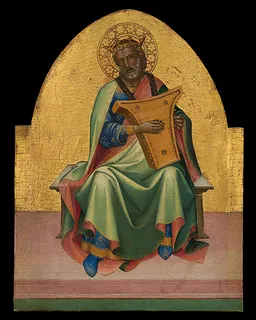
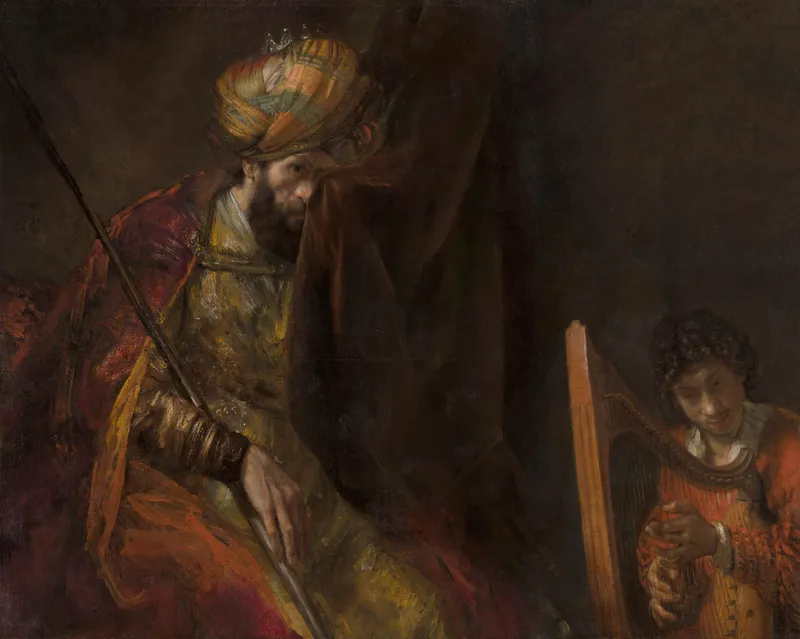
22And Saul sent to Jesse, saying, Let David, I pray thee, stand before me; for he hath found favour in my sight. 23And it came to pass, when the evil spirit from God was upon Saul, that David took an harp, and played with his hand: so Saul was refreshed, and was well, and the evil spirit departed from him.
The same hand that will one day hold a sling and a sword, and at last a scepter, first holds the strings - and at its playing the darkness lifts. Whenever the troubling spirit fell upon Saul, David took the harp, and the king was refreshed, and was well, and the evil spirit departed from him. The word refreshed means to be given breath again, to revive; under the music the tormented king comes back to himself, and the oppressing spirit withdraws.
It is a quiet picture of enormous things. The anointed one, full of the Spirit of the LORD, brings rest to a man harassed by a spirit of trouble; the presence and the gift of the shepherd drive back the dark. This is the last note of harmony between Saul and David - soon enough the king's jealousy will rise, and the hand that soothed him will be the hand he hurls a spear at.
But here, for now, the chapter rests on grace: the future king ministering to the present one, the music of the anointed quieting the soul that no power could quiet, and the evil departing at the sound of a shepherd's playing.
Research trail
Sources & further study
These references support the historical, linguistic, manuscript, and contextual notes in this chapter. Scripture remains the primary text; external sources are provided so readers can inspect the research directly.
- 1 Samuel 16 - Translators' NotesThe NET Bible's detailed footnotes on 1 Samuel 16 - the horn of oil and the sacrifice that veils Samuel's errand (vv. 1-5), the contrast of the outward appearance with the heart (v. 7), the meaning of “ruddy” (v. 12), and the much-discussed phrase describing the troubling spirit that comes upon Saul (vv. 14-16, 23).
- 1 Samuel 16 · Hebrew + classical Jewish commentaryThe Hebrew text of 1 Samuel 16 with Rashi, Radak, and other classical commentators side by side - useful for levav (v. 7, the “heart” the LORD looks upon), for mashach (vv. 12-13, the verb “anoint,” the root of mashiach), and for the ruach that comes upon David (v. 13) and departs from Saul (v. 14).
- 1 Samuel 16 ↔ Acts 10 · Luke 4 · 1 Corinthians 1 · Psalm 118Traces the threads tying the anointed shepherd of Bethlehem to God anointed Jesus of Nazareth with the Holy Ghost and with power (Acts 10:38) and the Spirit of the Lord is upon me, because he hath anointed me (Luke 4:18), and the choosing of the overlooked youngest (vv. 7, 11) to God hath chosen… things which are despised (1 Cor. 1:27-28) and the rejected stone made head of the corner (Ps. 118:22).
Where this echoes in Scripture
Fill Thine Horn with Oil, and Go
- Micah 5:2But thou, Bethlehem Ephratah, though thou be little among the thousands of Judah, yet out of thee shall he come forth unto me that is to be ruler in Israel.The little town to which Samuel is sent (v. 1) - obscure now, but the place from which Israel's true Ruler would one day come.
- 1 Samuel 15:35And Samuel came no more to see Saul until the day of his death: nevertheless Samuel mourned for Saul.The grief the LORD cuts short in verse 1 - the prophet's long mourning for the king he had anointed.
- Genesis 22:8My son, God will provide himself a lamb for a burnt offering.The same word as “I have provided me a king” (v. 1) - the king, like the lamb, is something God Himself supplies.
- Psalm 78:70-71He chose David also his servant, and took him from the sheepfolds… to feed Jacob his people, and Israel his inheritance.The hidden choosing of verse 1 sung in retrospect - God taking His king from the sheepfold.
Man Looketh on the Outward Appearance, but the LORD Looketh on the Heart
- 1 Corinthians 1:27-28God hath chosen the foolish things of the world to confound the wise… and things which are despised, hath God chosen.The pattern of verses 7 and 11 made a principle - God choosing the overlooked and the lowly.
- Psalm 118:22The stone which the builders refused is become the head stone of the corner.The rejected one made chief - the youngest brother, refused by the eye, chosen by God for the throne.
- 1 Samuel 9:2A choice young man, and a goodly: … from his shoulders and upward he was higher than any of the people.Saul chosen for the very height and stature the LORD now tells Samuel to disregard (v. 7).
- Proverbs 4:23Keep thy heart with all diligence; for out of it are the issues of life.Why the heart is what God looks upon (v. 7) - it is the hidden spring from which the whole life flows.
- Acts 13:22I have found David… a man after mine own heart, which shall fulfil all my will.What the LORD saw in the heart He looked upon (v. 7) - the ground of David's choosing, named long after.
- Matthew 3:16He saw the Spirit of God descending like a dove, and lighting upon him.The Spirit that rushed on David (v. 13) coming down on the greater Anointed - and this time abiding without end.
The Spirit Departs from Saul, and the Shepherd's Harp
- Acts 10:38How God anointed Jesus of Nazareth with the Holy Ghost and with power: who went about doing good, and healing all that were oppressed of the devil.The anointing of verse 13 fulfilled - the true Anointed, the Spirit upon Him, casting out the dark that David's harp could only soothe.
- Luke 4:18The Spirit of the Lord is upon me, because he hath anointed me… to preach deliverance to the captives… to set at liberty them that are bruised.The ministry foreshadowed in verse 23 - the Anointed One sent to set free the troubled and oppressed.
- Matthew 8:16He cast out the spirits with his word, and healed all that were sick.Where David's harp soothed the spirit for an hour (v. 23), the greater Son of David broke its grip with a word.
- Matthew 11:28Come unto me, all ye that labour and are heavy laden, and I will give you rest.The rest David's music gave Saul for an hour (v. 23), held out without end by the greater Son of David.
- Psalm 51:11Cast me not away from thy presence; and take not thy holy spirit from me.David's own prayer, having seen in Saul (v. 14) what it is to have the Spirit of the LORD depart.
- 1 Samuel 18:10-11David played with his hand… and Saul cast the javelin… to smite David even to the wall.The harmony of verse 23 soon broken - the hand that soothed the king becomes the target of his spear.