1 Samuel 18
People in this chapter
Goliath is dead, and overnight the shepherd belongs to the palace. Two people watch him rise, and the same rising star pulls their hearts in opposite directions. The king's son loves him at first sight - the soul of Jonathan was knit with the soul of David - cuts a covenant with him, and strips off his own robe, sword, bow, and belt to lay them on the shepherd. The heir gives away the marks of his throne to clothe a rival.1
Tap any highlighted phrase to jump to the commentary that unpacks it.
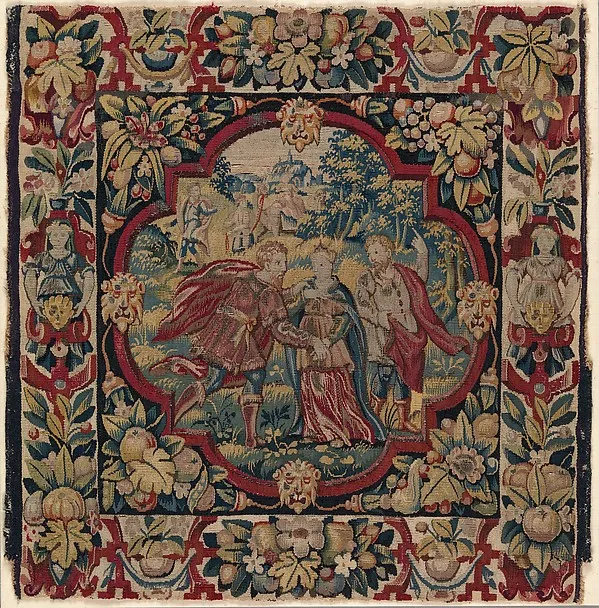
1 Samuel 18:1-4The Soul Knit, the Covenant, the Robe Given
1And it came to pass, when he had made an end of speaking unto Saul, that the soul of Jonathan was knit with the soul of David, and Jonathan loved him as his own soul. 2And Saul took him that day, and would let him go no more home to his father’s house. 3Then Jonathan and David made a covenant, because he loved him as his own soul. 4And Jonathan stripped himself of the robe that was upon him, and gave it to David, and his garments, even to his sword, and to his bow, and to his girdle.
The friendship is born in an instant, and at the deepest possible level. Three times in these four verses the word soul binds the two men together: Jonathan's soul knit to David's, Jonathan loving David as his own soul, and the covenant cut because he loved him as his own soul. One whole self reaching out and binding itself to another whole self. And consider who Jonathan is. He is the king's firstborn, the heir, a valiant warrior in his own right who had once routed a Philistine garrison with only his armor-bearer (1 Sam. 14).
By every earthly reckoning, the shepherd who just outshone the whole army should be his rival - the very threat to his crown. The first thing Jonathan does is love him. The text does not pause to explain the wonder of it; it simply lets it stand, and moves to what that love does.
Then the love takes off its own clothes. The robe, the garments, the sword, the bow, the girdle - these are the marks and instruments of a prince. The robe is the sign of his royal standing; the sword, bow, and girdle are the weapons and belt of a warrior-heir.2 Item by item, Jonathan takes off everything that distinguishes him as the king's son and the kingdom's future, and he lays it on the shepherd.
The gesture is almost unbearably generous. It is as if Jonathan is saying, without a word, what is mine is yours - my rank, my arms, my place. And there is a quiet prophecy in it that Jonathan may not fully grasp: by clothing David in the garments of the heir, he is acting out the very transfer of the kingdom that God has already decreed. The crown is moving from Saul's house to David, and the first one to enact it - gladly, lovingly, with his own hands - is the very son who stands to lose the most.
1 Samuel 18:5-9The Song That Turns a King's Eye
5And David went out whithersoever Saul sent him, and behaved himself wisely: and Saul set him over the men of war, and he was accepted in the sight of all the people, and also in the sight of Saul’s servants. 6And it came to pass as they came, when David was returned from the slaughter of the Philistine, that the women came out of all cities of Israel, singing and dancing, to meet king Saul, with tabrets, with joy, and with instruments of musick. 7And the women answered one another as they played, and said, Saul hath slain his thousands, and David his ten thousands. 8And Saul was very wroth, and the saying displeased him; and he said, They have ascribed unto David ten thousands, and to me they have ascribed but thousands: and what can he have more but the kingdom? 9And Saul eyed David from that day and forward.
Before the trouble begins, the text lays down what will become the chapter's steady refrain: David behaved himself wisely. Wherever Saul sends him, he succeeds; he is set over the men of war and accepted in the sight of all the people, and also in the sight of Saul's servants. The favor is open, manifest, undeniable - the whole court and the whole people can see that everything this young man touches prospers. And here lies the seed of the conflict.
David has done nothing wrong; he has only done well. His success is the fruit of obedience and of the LORD's hand upon him. Yet it is precisely his success, honestly earned, that will become unbearable to the man above him. Some resentments are provoked by wrongdoing. This one will be provoked by goodness - which is the most dangerous kind of all, because there is nothing the innocent party can repent of to make it stop.
Then comes the song that changes everything. The women pour out of every city to celebrate the victory, and they sing in the back-and-forth way of Hebrew praise: Saul hath slain his thousands, and David his ten thousands. In the parallel lines of such a refrain the second phrase heightens the first; the women may have meant simply to magnify a great national triumph.1 But Saul hears arithmetic.
He hears his own glory cut to a tenth and the rest handed to the youth he brought into his own house. They have ascribed unto David ten thousands, and to me they have ascribed but thousands. And then the fear beneath the wrath shows its face: what can he have more but the kingdom? No one has said a word about the kingdom. David has made no claim, raised no faction, spoken no ambition.
The threat is entirely in Saul's own mind - which is exactly how envy works. It hears in another's honest praise a verdict against itself, and begins at once to defend a crown that no one was reaching for.
One of the most ominous short sentences in Scripture closes the scene. The verb is colorless on the surface - to eye, to watch, to regard - but everything depends on the spirit behind the look, and the spirit has just changed. Up to this day Saul had looked on David with favor: he had loved him, made him his armor-bearer, set him over the men of war. From this day the same eyes follow him with suspicion, measuring him as a rival to be watched.
Nothing in David has altered; everything in the way Saul sees him has. That is the quiet horror of envy: a change in the one who watches, a darkening of the gaze itself, triggered by nothing in the one being watched. And the phrase from that day and forward marks it as a turning that will not reverse. The look that settles on David here will harden into a javelin, and then into a lifelong hunt.3
1 Samuel 18:10-12The Spear Cast, and the King Who Fears
10And it came to pass on the morrow, that the evil spirit from God came upon Saul, and he prophesied in the midst of the house: and David played with his hand, as at other times: and there was a javelin in Saul’s hand. 11And Saul cast the javelin; for he said, I will smite David even to the wall with it. And David avoided out of his presence twice. 12And Saul was afraid of David, because the LORD was with him, and was departed from Saul.
The very next day the inward darkness becomes an outward act. Saul prophesied in the midst of the house - the same word used elsewhere for the ecstatic speech of the prophets, but here it has curdled. This is the raving of a man whom the Spirit of the LORD has left (1 Sam. 16:14). And there beside him is David, doing the very thing that once brought Saul peace, playing with his hand, as at other times, trying again to soothe the storm in the king with music.
The contrast could not be sharper: David offering comfort, Saul gripping a spear. The young man who had calmed Saul again and again is now in the same room with him - only this time the king does not want to be calmed. The note that there was a javelin in Saul's hand hangs in the air like a held breath. We know what is coming before it comes.
David slips aside - avoided out of his presence twice - and then the text names the strange root of Saul's violence: Saul was afraid of David, because the LORD was with him, and was departed from Saul. This is one of the most penetrating sentences in the chapter, because it locates Saul's fear exactly where most readers would not. His fear is theological at its core: he can see the presence of God resting on David, and he can feel the absence of God in himself, and the contrast is unbearable.
He had lost the one thing that made him king - the favor of God - and here stood a young man visibly carrying it. The same fact could have driven Saul to repentance. He might have fallen on his face, asked why the LORD had departed, and sought His face again - the road that is still open to you whenever you sense God closer to someone else than to yourself. Instead, fear turns to hatred. This is the dark hinge of the whole tragedy: when a man cannot bear that God is with another, and will not seek God for himself, he begins to hate the very evidence of God's favor.
The presence of God on David becomes the thing Saul most wants to destroy.
1 Samuel 18:13-16Behaved Himself Wisely, and All Israel Loved Him
13Therefore Saul removed him from him, and made him his captain over a thousand; and he went out and came in before the people. 14And David behaved himself wisely in all his ways; and the LORD was with him. 15Wherefore when Saul saw that he behaved himself very wisely, he was afraid of him. 16But all Israel and Judah loved David, because he went out and came in before them.
What Saul does next is almost comic in its self-defeat. Unable to kill David in the house, he removed him from him, and made him his captain over a thousand - he sends David away from the court and out among the people, into command in the field. The aim, surely, is to get the unsettling young man out of his sight and into harm's way. But the result is the opposite of what Saul intends.
David behaved himself wisely in all his ways; and the LORD was with him - and so the very promotion meant to remove him only spreads his renown wider, until all Israel and Judah loved David. And Saul's response to this is the clearest sign yet of how far gone he is: when Saul saw that he behaved himself very wisely, he was afraid of him. Read that again. David's wisdom frightens Saul - his goodness, his competence, the obvious blessing of God on all he does.
Saul has reached the point where another man's virtue is itself a threat. Every effort Saul makes to diminish David becomes another occasion for David to rise, because no scheme of man can work against the one the LORD is with.
1 Samuel 18:17-24The Snare of Marriage, and an Enemy Continually
17And Saul said to David, Behold my elder daughter Merab, her will I give thee to wife: only be thou valiant for me, and fight the LORD’s battles. For Saul said, Let not mine hand be upon him, but let the hand of the Philistines be upon him. 18And David said unto Saul, Who am I? and what is my life, or my father’s family in Israel, that I should be son in law to the king? 19But it came to pass at the time when Merab Saul’s daughter should have been given to David, that she was given unto Adriel the Meholathite to wife. 20And Michal Saul’s daughter loved David: and they told Saul, and the thing pleased him. 21And Saul said, I will give him her, that she may be a snare to him, and that the hand of the Philistines may be against him. Wherefore Saul said to David, Thou shalt this day be my son in law in the one of the twain.
Having failed to kill David openly, Saul turns to a subtler weapon: his own daughters. He offers David his elder daughter Merab, dressing the bait in the language of honor and piety - only be thou valiant for me, and fight the LORD'S battles. It sounds like a father-in-law's blessing, a call to noble service. But the narrator pulls back the curtain on the real thought: Let not mine hand be upon him, but let the hand of the Philistines be upon him. Saul has found a way to attempt David's death without the guilt of throwing the spear himself.
If he can keep David fighting on the front lines, perhaps the enemy will accomplish what the king's own hand has twice failed to do. It is murder by delegation - the cowardice of a man who wants someone dead but wants his own hands to look clean. And David's reply only deepens the picture of the two men: where Saul schemes for a throne, David answers in genuine lowliness - Who am I? and what is my life, or my father's family in Israel, that I should be son in law to the king? Then, in a quiet act of treachery, the promised marriage simply evaporates: Merab… was given unto Adriel the Meholathite. Saul breaks his word without explanation, as a man drowning in envy will.
A second opening presents itself: Michal Saul's daughter loved David: and they told Saul, and the thing pleased him. It pleased him as a schemer, not a father. The text immediately exposes why: I will give him her, that she may be a snare to him, and that the hand of the Philistines may be against him. Saul looks at his own daughter's genuine love and sees only a trap to be set.
He will use Michal's heart as bait in the same scheme that failed with Merab, hoping the bride-price he demands will send David to his death. There is something chilling in a father who can regard his child's love as a weapon - who is so consumed by his hatred of David that even his own family becomes mere material for the hunt. This is what envy does when it is allowed to rule: it corrupts everything it touches, turning gifts into traps and even love into a means of murder.
Yet the word snare hangs over the scene with an irony Saul cannot see. He is laying a snare; but Scripture has a way of catching the schemer in his own net, and the trap Saul sets will spring shut on no one but himself.
22And Saul commanded his servants, saying, Commune with David secretly, and say, Behold, the king hath delight in thee, and all his servants love thee: now therefore be the king’s son in law. 23And Saul’s servants spake those words in the ears of David. And David said, Seemeth it to you a light thing to be a king’s son in law, seeing that I am a poor man, and lightly esteemed? 24And the servants of Saul told him, saying, On this manner spake David.
1 Samuel 18:25-30The Bride-Price of Blood, and an Enemy Continually
25And Saul said, Thus shall ye say to David, The king desireth not any dowry, but an hundred foreskins of the Philistines, to be avenged of the king’s enemies. But Saul thought to make David fall by the hand of the Philistines. 26And when his servants told David these words, it pleased David well to be the king’s son in law: and the days were not expired. 27Wherefore David arose and went, he and his men, and slew of the Philistines two hundred men; and David brought their foreskins, and they gave them in full tale to the king, that he might be the king’s son in law. And Saul gave him Michal his daughter to wife.
The trap is now baited with great care. Saul works through intermediaries - commune with David secretly - flattering him with talk of the king's delight and the servants' love, drawing him in. David's answer is again the answer of a humble man who cannot quite believe the honor: Seemeth it to you a light thing to be a king's son in law, seeing that I am a poor man, and lightly esteemed? He has no dowry to offer a princess, and he says so plainly.
This is exactly the gap Saul means to exploit. The king sends word that he wants no ordinary bride-price - only an hundred foreskins of the Philistines. The demand is calculated: it sends David deep into mortal danger against the very enemy Saul hopes will kill him, while wrapping the whole deadly errand in the appearance of zeal - to be avenged of the king's enemies.2 Once more the narrator strips away the disguise so the reader cannot miss it: But Saul thought to make David fall by the hand of the Philistines. Every courteous word, every flattering message, every pious phrase about the king's enemies, is in service of one hidden aim - David's death.
It is the most elaborate of all Saul's attempts, and it will be the most thorough of all his failures.
David goes, and the trap collapses utterly. The bride-price Saul set as a death sentence, David pays double: David arose and went, he and his men, and slew of the Philistines two hundred men. He brings back twice what was demanded, in full tale - the full count, leaving no room for the king to quibble - and Saul has no choice but to give him Michal to wife. Read the scene against Saul's intention and the irony is overwhelming.
Saul meant the errand to end David's life; instead it ends with David more victorious, more honored, and now bound by marriage into the royal house itself - one step nearer the very throne Saul is so desperate to protect. The snare set to destroy David has become the ladder by which he climbs. This is what happens again and again when a man fights against the one the LORD is with: his weapons turn in his hand.
Saul keeps reaching for instruments of David's ruin - a spear, a battlefield, a marriage - and every one of them, in the providence of God, becomes an instrument of David's rise. Against his own will, the king is helping to build the house that will replace his own.
28And Saul saw and knew that the LORD was with David, and that Michal Saul’s daughter loved him. 29And Saul was yet the more afraid of David; and Saul became David’s enemy continually. 30Then the princes of the Philistines went forth: and it came to pass, after they went forth, that David behaved himself more wisely than all the servants of Saul; so that his name was much set by.
The chapter draws toward its close with a sentence that gathers up everything: Saul saw and knew that the LORD was with David. This is settled, conscious knowledge. Saul sees it and knows it. Every scheme has failed in a way that only confirms it; the favor of God on David is now undeniable even to the man trying hardest to deny it. And here the tragedy reaches its full depth, because such knowledge ought to have broken Saul to repentance.
To see plainly that the LORD has chosen another, and that one's own house is being set aside, could drive a man to his knees to seek the God he has lost. Saul does the opposite. The clearer it becomes that God is with David, the harder Saul sets himself against him. He has made his choice: if he cannot have the favor of the LORD, he will at least pursue the man who does.
It is the most futile war anyone can wage - to fight against a person precisely because God is with him - for it is, in the end, to fight against God.
And so the chapter ends where Saul's ruin will run out its whole length: Saul became David's enemy continually. Continually - settled, fixed, without pause. From this point the hunting of David becomes the defining obsession of Saul's reign; he will chase him through wilderness and cave and foreign country, pouring out the years and strength of his kingdom on a single purpose that can never succeed. The word marks a heart that has hardened past turning.
Yet the very next sentence quietly tells the outcome of the whole war: David behaved himself more wisely than all the servants of Saul; so that his name was much set by. While Saul's enmity grows, David's renown grows faster. The more Saul hates, the higher David rises. The chapter that opened with a robe lovingly given by the king's son closes with the king himself set in permanent enmity - and the contrast is the whole point.
Two men met the same rising star. One gave him everything and is remembered for love; the other tried to destroy him and is remembered for the long, wasted hatred that purchased him nothing but his own undoing.
Research trail
Sources & further study
These references support the historical, linguistic, manuscript, and contextual notes in this chapter. Scripture remains the primary text; external sources are provided so readers can inspect the research directly.
- 1 Samuel 18 - Translators' NotesThe NET Bible's detailed footnotes on 1 Samuel 18 - the idiom behind the soul being “knit,” the meaning of the women's refrain and its “thousands… ten thousands” parallelism, the sense of Saul “eyeing” David, and the grim bride-price of verse 25.
- Art of the Ancient Near East · Heilbrunn TimelineThe Met's survey of the ancient Near Eastern world that frames Saul's court - the robe and girdle as marks of royal rank (v. 4), the spear as a king's ready instrument (vv. 10-11), and the giving of a daughter with a bride-price (vv. 17-27) as the binding of houses together.
- 1 Samuel 18 · Hebrew + classical Jewish commentaryThe Hebrew text of 1 Samuel 18 with Rashi, Radak, and other classical commentators side by side - useful for qashar (v. 1, the soul “knit” to David), for the berith (v. 3, the covenant Jonathan cut), and for the language of Saul's eye turning against David from that day forward.
- 1 Samuel 18 ↔ Philippians 2 · John 15 · Matthew 27Traces the threads tying Jonathan's self-emptying robe-gift (v. 4) to the One who made himself of no reputation (Phil. 2:7), and David, hated by the king without cause, to they hated me without a cause (John 15:25) and the rulers who for envy… had delivered him (Matt. 27:18).
Where this echoes in Scripture
The Soul Knit, the Covenant, the Robe Given
- Philippians 2:6-7Who, being in the form of God… made himself of no reputation, and took upon him the form of a servant.The self-emptying Jonathan's robe-gift only foreshadows - the Prince laying aside His glory to clothe the lowly.
- John 15:13Greater love hath no man than this, that a man lay down his life for his friends.Jonathan laid down his robe and his royal claim; the Lord names the love that lays down life itself.
- Proverbs 17:17A friend loveth at all times, and a brother is born for adversity.The covenant love of Jonathan - a loyalty that holds when feeling alone would give way.
- 1 Samuel 23:18And they two made a covenant before the LORD: and David abode in the wood, and Jonathan went to his house.Jonathan keeps the covenant of verse 3 even as his father hunts David - love made durable by oath.
The Song That Turns a King's Eye
- Matthew 27:18For he knew that for envy they had delivered him.The same root sin that turns Saul's eye against David - the rulers who handed over the innocent out of envy.
- Proverbs 27:4Wrath is cruel, and anger is outrageous; but who is able to stand before envy?The force that takes hold of Saul here - an envy no kingdom or comfort could satisfy.
- James 3:16For where envying and strife is, there is confusion and every evil work.The harvest of Saul's eyeing - from a song to a spear to a lifelong hunt.
Behaved Himself Wisely, and All Israel Loved Him
- John 15:25But this cometh to pass, that the word might be fulfilled that is written in their law, They hated me without a cause.David hated for the favor of God upon him - the very pattern the Lord claims as His own.
- 1 Samuel 16:14But the Spirit of the LORD departed from Saul, and an evil spirit from the LORD troubled him.The departure that explains Saul's fear - he feels God's absence in himself and God's presence in David.
- Psalm 91:2I will say of the LORD, He is my refuge and my fortress: my God; in him will I trust.The shelter David knew in deed - the presence of God as a real shield against the spear.
- Romans 8:31If God be for us, who can be against us?The truth beneath “the LORD was with him” - no scheme prevails against the one God upholds.
The Bride-Price of Blood, and an Enemy Continually
- Psalm 2:2The kings of the earth set themselves, and the rulers take counsel together, against the LORD, and against his anointed.Saul's war on the anointed David - the pattern of every ruler who sets himself against the LORD's chosen.
- Genesis 50:20But as for you, ye thought evil against me; but God meant it unto good.The providence at work in the snare - the trap meant for ruin turned into David's rise.
- Philippians 2:9Wherefore God also hath highly exalted him, and given him a name which is above every name.The end of the matter - the Anointed One no ruler's enmity could finally stop, raised and exalted.
- 1 Samuel 31:4Then said Saul unto his armourbearer, Draw thy sword, and thrust me through therewith.Where Saul's continual enmity ends - in despair on the battlefield, while David lives to reign.