Matthew 27
People in this chapter
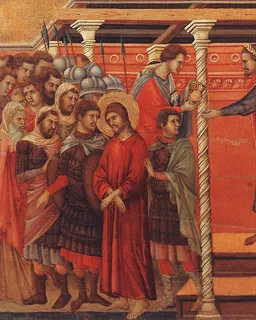
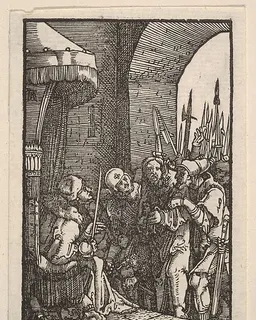
Everything in Matthew has been moving toward this chapter, and it opens at first light with the verdict already settled: When the morning was come, all the chief priests and elders of the people took counsel against Jesus to put him to death (v. 1). They bind Him and hand Him over to Pontius Pilate, the Roman governor - the only man in Jerusalem who can authorize an execution.
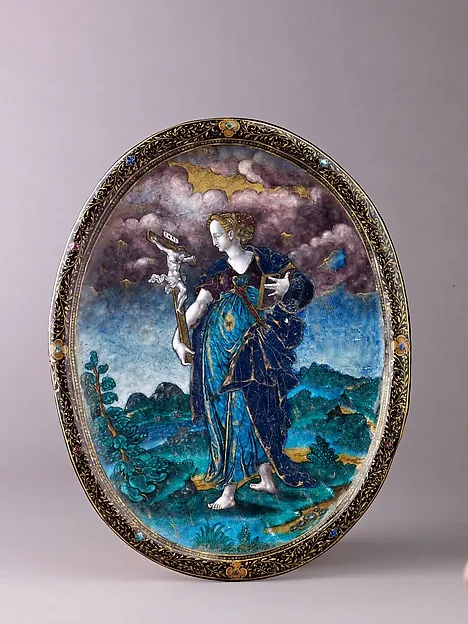
But before the trial proper begins, the chapter turns aside to Judas, who has watched what his betrayal set in motion and cannot live with it. He brings the thirty pieces of silver back, throws them down in the temple, and goes out to his death, while the priests, too scrupulous to put blood-money in the treasury, use it to buy a field to bury strangers in.1
Tap any highlighted phrase to jump to the commentary that unpacks it.
Matthew 27:1-10I Have Betrayed the Innocent Blood
1When the morning was come, all the chief priests and elders of the people took counsel against Jesus to put him to death: 2And when they had bound him, they led him away, and delivered him to Pontius Pilate the governor. 3Then Judas, which had betrayed him, when he saw that he was condemned, repented himself, and brought again the thirty pieces of silver to the chief priests and elders, 4Saying, I have sinned in that I have betrayed the innocent blood. And they said, What is that to us? see thou to that. 5And he cast down the pieces of silver in the temple, and departed, and went and hanged himself. 6And the chief priests took the silver pieces, and said, It is not lawful for to put them into the treasury, because it is the price of blood. 7And they took counsel, and bought with them the potter’s field, to bury strangers in. 8Wherefore that field was called, The field of blood, unto this day. 9Then was fulfilled that which was spoken by Jeremy the prophet, saying, And they took the thirty pieces of silver, the price of him that was valued, whom they of the children of Israel did value; 10And gave them for the potter’s field, as the Lord appointed me.
The chapter opens at daybreak with the machinery of death already running: When the morning was come, all the chief priests and elders of the people took counsel against Jesus to put him to death (v. 1). The night had held the questioning; the morning brings the formal resolution and the handover. Israel's leaders cannot carry out an execution on their own authority, so they bind Jesus and delivered him to Pontius Pilate the governor (v. 2).
That single word delivered will toll through the whole chapter like a bell - Judas delivered Him to the priests, the priests deliver Him to Pilate, Pilate will deliver Him to be crucified. He is passed from hand to hand, bound and silent, as the powers of the world move Him toward the cross.
And yet nothing here is out of control. The same Gospel that records this betrayal has already recorded that Jesus foretold it in plain words: the Son of man shall be betrayed unto the chief priests… and they shall condemn him to death, and shall deliver him to the Gentiles (Matt. 20:18-19). What looks like a man being swept away by forces too strong for Him is, underneath, the road He set His face to walk.
Matthew turns aside from the trial to follow Judas, and the scene is one of the saddest in all of Scripture: Then Judas, which had betrayed him, when he saw that he was condemned, repented himself, and brought again the thirty pieces of silver to the chief priests and elders (v. 3).
Something in him breaks when the verdict comes down. He had perhaps not believed it would go this far; now he sees the innocent blood his silver has bought, and the money turns to fire in his hands. His words are a true confession as far as words go: I have sinned in that I have betrayed the innocent blood (v. 4). It is striking that the man who handed Jesus over testifies, before the priests, that the blood is innocent.
But his confession finds no mercy from them - What is that to us? see thou to that - and, finding none, he does not bring it to the One who could have given it. He cast down the pieces of silver in the temple, and departed, and went and hanged himself (v. 5).
Here is the difference between remorse and repentance laid bare. Judas was sorry; he despaired; he could not undo what he had done and would not believe it could be forgiven. The tragedy is not only that he betrayed his Lord but that, having betrayed Him, he turned away from the very One whose blood was being shed for sins exactly like his.
The priests are left holding the silver, and their handling of it is a small masterpiece of strained conscience: It is not lawful for to put them into the treasury, because it is the price of blood (v. 6). They will spill innocent blood, but they will not let the wages of it touch the temple funds - men who strain at a gnat while they swallow a camel.
So they buy with it the potter's field, to bury strangers in (v. 7), and the place takes the name the deed deserves: The field of blood, unto this day (v. 8). Matthew sees in all of this the fulfillment of prophecy: And they took the thirty pieces of silver, the price of him that was valued… and gave them for the potter's field (vv. 9-10). The words gather up the strange detail of Zechariah, where thirty pieces of silver - the price of a slave - are weighed out and cast to the potter in the house of the LORD (Zech. 11:12-13)2, along with the imagery of the potter and the field of burial from Jeremiah.
The point is that even the price of the betrayal, even the field bought with it, was foreseen. Nothing in this betrayal fell outside the long reach of God's word.1
Matthew 27:11-26I Am Innocent of the Blood of This Just Person
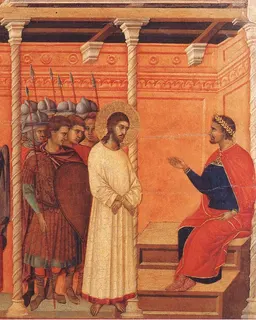
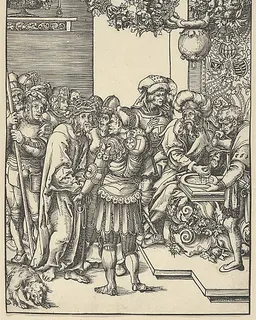
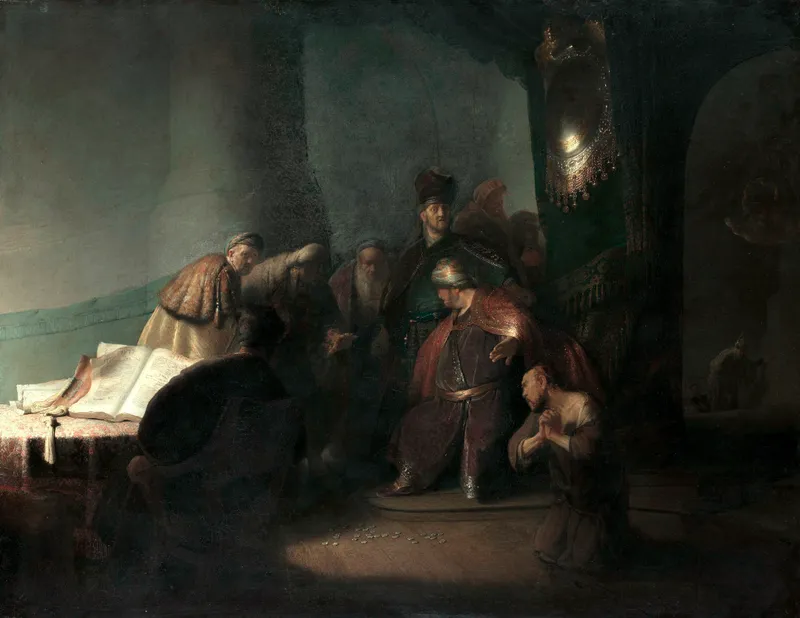
11And Jesus stood before the governor: and the governor asked him, saying, Art thou the King of the Jews? And Jesus said unto him, Thou sayest. 12And when he was accused of the chief priests and elders, he answered nothing. 13Then said Pilate unto him, Hearest thou not how many things they witness against thee? 14And he answered him to never a word; insomuch that the governor marvelled greatly. 15Now at that feast the governor was wont to release unto the people a prisoner, whom they would. 16And they had then a notable prisoner, called Barabbas. 17Therefore when they were gathered together, Pilate said unto them, Whom will ye that I release unto you? Barabbas, or Jesus which is called Christ? 18For he knew that for envy they had delivered him. 19When he was set down on the judgment seat, his wife sent unto him, saying, Have thou nothing to do with that just man: for I have suffered many things this day in a dream because of him. 20But the chief priests and elders persuaded the multitude that they should ask Barabbas, and destroy Jesus. 21The governor answered and said unto them, Whether of the twain will ye that I release unto you? They said, Barabbas. 22Pilate saith unto them, What shall I do then with Jesus which is called Christ? They all say unto him, Let him be crucified. 23And the governor said, Why, what evil hath he done? But they cried out the more, saying, Let him be crucified. 24When Pilate saw that he could prevail nothing, but that rather a tumult was made, he took water, and washed his hands before the multitude, saying, I am innocent of the blood of this just person: see ye to it. 25Then answered all the people, and said, His blood be on us, and on our children. 26Then released he Barabbas unto them: and when he had scourged Jesus, he delivered him to be crucified.
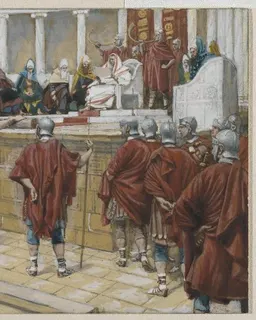
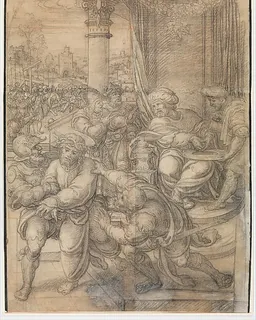
Pilate puts the one question that matters to Rome: Art thou the King of the Jews? And Jesus answers, Thou sayest (v. 11) - a reply that neither denies nor explains, that hands the words back to the questioner and leaves them standing. To everything else - the heaping accusations of the chief priests and elders - he answered nothing (v. 12), so that the governor marvelled greatly (v. 14).
The silence is a kind of testimony louder than any defense. An innocent man with the gift of speech who could have torn their charges to pieces stands wordless before His accusers. Isaiah had foreseen exactly this bearing in the Servant of the LORD: he was oppressed, and he was afflicted, yet he opened not his mouth: he is brought as a lamb to the slaughter, and as a sheep before her shearers is dumb, so he openeth not his mouth (Isa. 53:7)2.
The Roman governor marvels because he has never seen a prisoner like this - one who will not plead, will not rage, will not bargain for His life. The silence says what words could not: that He is not being taken, but giving Himself.
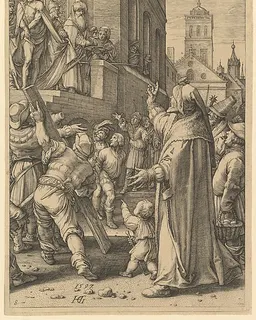
Pilate, convinced of Jesus' innocence and knowing that for envy they had delivered him (v. 18), reaches for a way out. There is a custom: at the feast he releases one prisoner the people choose. So he sets two men side by side - Barabbas, or Jesus which is called Christ (v. 17) - expecting the crowd to choose the gentle teacher over the notorious prisoner.
The other Gospels tell us what kind of man Barabbas was: one who had committed murder and sedition, a violent man, guilty and condemned. The choice could not be starker, and the crowd, worked on by the chief priests, makes the unthinkable choice: They said, Barabbas (v. 21). When Pilate presses, What shall I do then with Jesus which is called Christ?, they answer with a single, terrible refrain - Let him be crucified (v. 22) - and when he asks Why, what evil hath he done?, they only cry it louder (v. 23).
There is no charge they can name. There is only the verdict they have already reached. And so the picture is set that the gospel will never stop pointing to: a guilty man walks out free, and the innocent One is led away to die in his place.
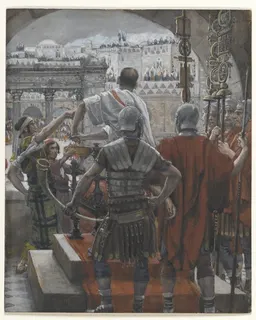
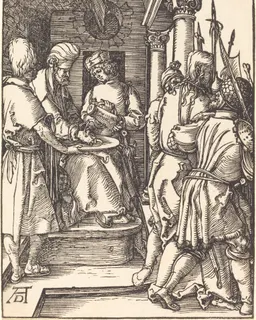
Pilate makes one last gesture, and it is the gesture of a man trying to keep clean hands in a thing he knows is wrong. His own wife has sent an urgent warning - Have thou nothing to do with that just man (v. 19) - and he himself has said three times that he finds no fault.
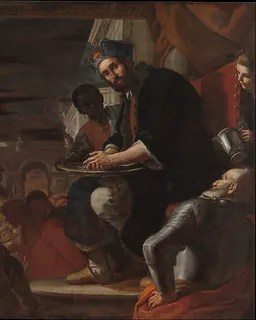
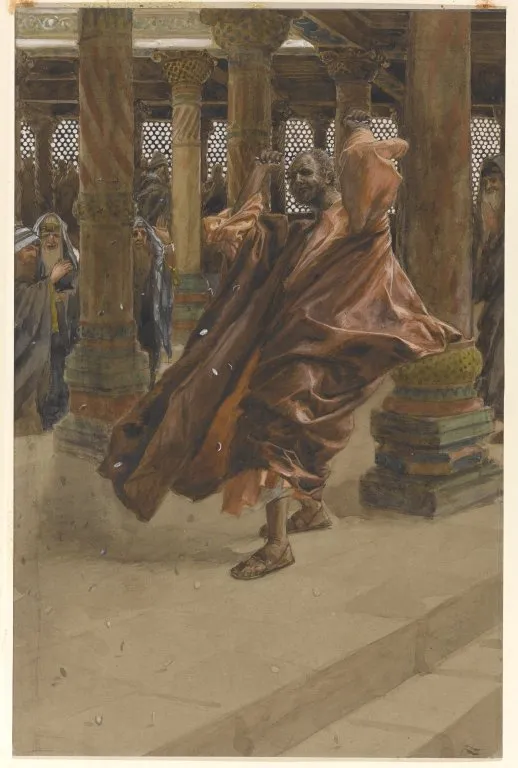
Yet when he sees that he could prevail nothing, but that rather a tumult was made, he took water, and washed his hands before the multitude, saying, I am innocent of the blood of this just person: see ye to it (v. 24). It is the second time in this chapter the One condemned is called innocent - first by Judas, now by the judge himself.
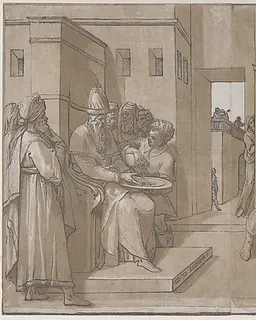
But water cannot wash off a decision. Pilate has the authority to release Jesus and the conviction that He is guiltless, and he uses neither; he hands the innocent over to keep the peace and protect his position. The washed hands are a kind of lie a man tells himself - that he can stand aside from a wrong he has the power to stop, that ceremony can substitute for courage. Justice was his to do, and he chose the crowd instead. No basin in the world makes that choice innocent.
Then comes the most sorrowful line in the chapter. To Pilate's disclaimer the crowd answers, His blood be on us, and on our children (v. 25) - words that have been read with terrible carelessness across the centuries, and must be read here with great care and great sorrow.
This is the cry of one crowd, on one morning, swept up and stirred up, taking upon themselves a responsibility Pilate was trying to shed. It is not a sentence God passes on a people; it is a tragic thing a frightened mob says in a moment, and the right response to it is grief, never blame laid on anyone for the sins of that hour.
And there is in it an irony almost too deep for words. They mean it as the language of guilt - let the responsibility fall on us. But the blood of Christ falling upon a person is the very thing that saves. His blood does not stain those it touches; it cleanses them. It is, the New Testament says, the blood of sprinkling, that speaketh better things than that of Abel (Heb. 12:24) - Abel's blood cried from the ground for justice, but Christ's blood cries for mercy.
The thing the crowd called down on themselves in fear is precisely the thing held out to them, and to all of us, in grace. There is no one anywhere - not in that crowd, not in this one - whom His blood, received, would not cleanse.
Matthew 27:27-44Hail, King of the Jews
27Then the soldiers of the governor took Jesus into the common hall, and gathered unto him the whole band of soldiers. 28And they stripped him, and put on him a scarlet robe. 29And when they had platted a crown of thorns, they put it upon his head, and a reed in his right hand: and they bowed the knee before him, and mocked him, saying, Hail, King of the Jews! 30And they spit upon him, and took the reed, and smote him on the head. 31And after that they had mocked him, they took the robe off from him, and put his own raiment on him, and led him away to crucify him. 32And as they came out, they found a man of Cyrene, Simon by name: him they compelled to bear his cross. 33And when they were come unto a place called Golgotha, that is to say, a place of a skull, 34They gave him vinegar to drink mingled with gall: and when he had tasted thereof, he would not drink. 35And they crucified him, and parted his garments, casting lots: that it might be fulfilled which was spoken by the prophet, They parted my garments among them, and upon my vesture did they cast lots. 36And sitting down they watched him there; 37And set up over his head his accusation written, THIS IS JESUS THE KING OF THE JEWS. 38Then were there two thieves crucified with him, one on the right hand, and another on the left. 39And they that passed by reviled him, wagging their heads, 40And saying, Thou that destroyest the temple, and buildest it in three days, save thyself. If thou be the Son of God, come down from the cross. 41Likewise also the chief priests mocking him, with the scribes and elders, said, 42He saved others; himself he cannot save. If he be the King of Israel, let him now come down from the cross, and we will believe him. 43He trusted in God; let him deliver him now, if he will have him: for he said, I am the Son of God. 44The thieves also, which were crucified with him, cast the same in his teeth.
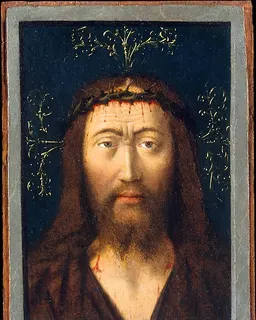
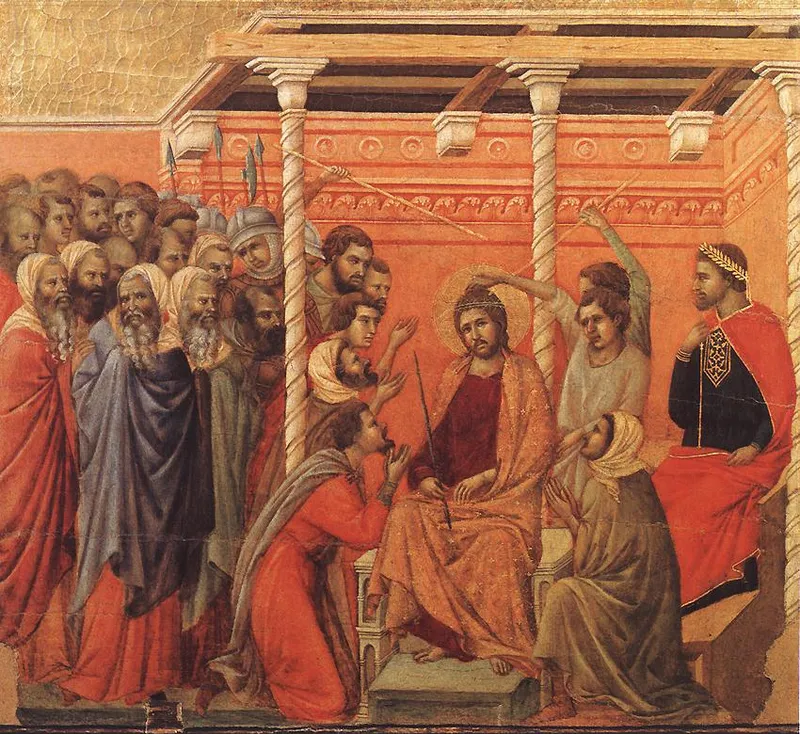
The soldiers take Jesus into the hall, gather the whole band, and turn His kingship into a game: they stripped him, and put on him a scarlet robe. And when they had platted a crown of thorns, they put it upon his head, and a reed in his right hand (vv. 28-29). Every piece of it is a cruel parody of royalty - the robe for the purple of an emperor, the thorns for a golden diadem, the reed for a king's scepter - and they bow the knee and jeer, Hail, King of the Jews!
Then they spit on Him and take the reed and beat the crown of thorns into His head (v. 30). It is mockery layered on torture, the casual cruelty of soldiers toward a condemned man who cannot fight back. And yet, as so often in this chapter, the mockers tell the truth without knowing it. He is the King.
The thorns are no accident, either: thorns came into the world with the curse, when the ground was cursed for man's sake and told to bring forth thorns also and thistles (Gen. 3:18). Now the King wears the very emblem of the curse pressed into His brow - bearing on His own head the thing that fell on all of us. They meant it as a joke. It was a coronation.
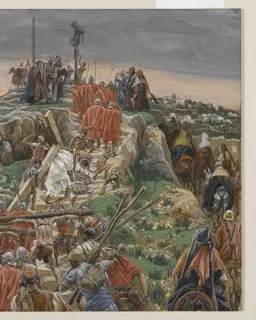
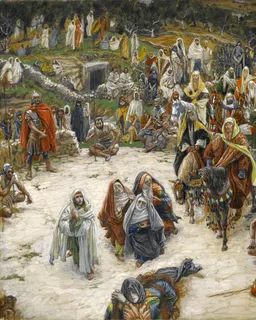
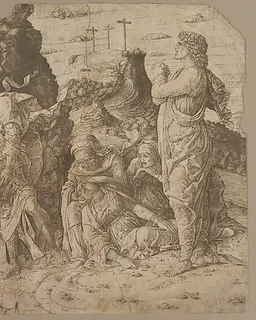
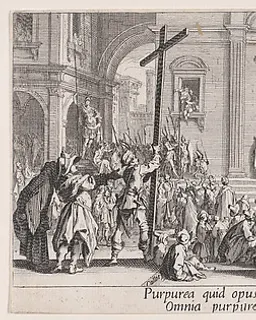
They lead Him out to die, and the weight of the cross is more than the scourged man can carry: as they came out, they found a man of Cyrene, Simon by name: him they compelled to bear his cross (v. 32). A stranger from North Africa, in Jerusalem perhaps for the feast, is seized out of the crowd and made to carry the beam behind Jesus on the road to Golgotha, a place of a skull (v. 33).
There is something quietly telling in this conscripted man. Jesus had said that whoever would follow Him must take up his cross (Matt. 16:24), and here is a man literally doing it - not by choice, but pressed into it, walking the road to the skull-place a step behind the Lord. We are not told what it did to Simon's soul to carry that cross; the other Gospels remember his sons by name, which may be a hint that this forced burden became, in time, the best thing that ever happened to him.
At Golgotha He is offered vinegar to drink mingled with gall (v. 34) - a bitter draught, perhaps meant to dull the senses - and having tasted it, He would not drink. He will meet the cross with a clear mind. He will not be numbed to what He has come to bear.
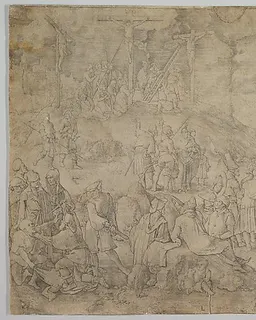
The details of the crucifixion are told with terrible economy - And they crucified him (v. 35) - four words for the cruelest death the ancient world devised.
Matthew lingers on how the scene answers the old Scriptures line by line. The soldiers parted his garments, casting lots (v. 35), and the words of the twenty-second Psalm come true to the letter: They part my garments among them, and cast lots upon my vesture (Ps. 22:18)2. The vinegar and gall offered Him answer another psalm of suffering: they gave me also gall for my meat; and in my thirst they gave me vinegar to drink (Ps. 69:21).
The soldiers sit down and keep watch, indifferent, gambling for a dying man's clothes at the foot of His cross. None of them know they are inside a prophecy.
The Gospel writer wants us to see that this is not a story spinning out of control but the deliberate unfolding of something long foretold - that the One who hangs here is the very Sufferer the Psalms had been singing about for a thousand years, down to the casting of lots for His coat.
Over His head they fasten the charge that justifies the execution: THIS IS JESUS THE KING OF THE JEWS (v. 37). It is meant as the legal cause of death - this man claimed a kingship that belongs to Caesar - and perhaps as one more mockery, a placard to jeer at the crucified pretender.
But, like the soldiers' Hail, King of the Jews, it tells the truth over the head of everyone who reads it. Nailed there in the open, for every passerby and every accuser to see, is the plain announcement of who He is: JESUS THE KING. The world thought it was writing an indictment. It was writing a proclamation.
Then come those who pass by, wagging their heads (v. 39), throwing His own words back at Him - Thou that destroyest the temple, and buildest it in three days, save thyself. If thou be the Son of God, come down from the cross (v. 40). It is the wilderness temptation come round again at the end: if thou be the Son of God, use your power, prove it, save yourself. The cross is ringed with voices daring Him to step down from it. He could have. That He did not is the measure of His love.
The religious leaders join the jeering crowd, and in their mockery they speak, without meaning to, the deepest truth of the cross: He saved others; himself he cannot save (v. 42). They intend it as a sneer - look at this would-be savior who cannot even rescue himself - but it is, word for word, the gospel.
He could have saved Himself; twelve legions of angels were a prayer away. The reason He does not come down is precisely that He is saving others, and the two cannot both happen. To save us, He must not save Himself. Their taunt, If he be the King of Israel, let him now come down from the cross, and we will believe him (v. 42), offers a bargain He will not take, because a King who came down to win their applause would have left them in their sins.
And their final jab borrows the language of the psalm they are unwittingly fulfilling: He trusted in God; let him deliver him now, if he will have him (v. 43) - nearly the very words of Psalm 22:8, He trusted on the LORD that he would deliver him: let him deliver him. Even the two thieves crucified beside Him take up the reviling (v. 44). On every side - soldiers, passersby, rulers, criminals - the verdict of the world rolls in against Him. And He bears it all, and saves the very people mocking Him.
Matthew 27:45-56My God, My God, Why Hast Thou Forsaken Me?
45Now from the sixth hour there was darkness over all the land unto the ninth hour. 46And about the ninth hour Jesus cried with a loud voice, saying, Eli, Eli, lama sabachthani? that is to say, My God, my God, why hast thou forsaken me? 47Some of them that stood there, when they heard that, said, This man calleth for Elias. 48And straightway one of them ran, and took a spunge, and filled it with vinegar, and put it on a reed, and gave him to drink. 49The rest said, Let be, let us see whether Elias will come to save him. 50Jesus, when he had cried again with a loud voice, yielded up the ghost. 51And, behold, the veil of the temple was rent in twain from the top to the bottom; and the earth did quake, and the rocks rent; 52And the graves were opened; and many bodies of the saints which slept arose, 53And came out of the graves after his resurrection, and went into the holy city, and appeared unto many. 54Now when the centurion, and they that were with him, watching Jesus, saw the earthquake, and those things that were done, they feared greatly, saying, Truly this was the Son of God. 55And many women were there beholding afar off, which followed Jesus from Galilee, ministering unto him: 56Among which was Mary Magdalene, and Mary the mother of James and Joses, and the mother of Zebedee’s children.
At the height of the day the light fails: Now from the sixth hour there was darkness over all the land unto the ninth hour (v. 45) - from noon until three, when the sun should be at its strongest, a darkness covers everything. The Gospel does not explain it; it simply records it, the way it records the earthquake and the rent veil - as a sign too large for words, the creation itself recoiling at what is being done to its Maker.
There is an old and fitting echo here. When God brought judgment on Egypt, He sent a darkness that could be felt, three days of it (Ex. 10:21-22); and the prophets spoke of a coming day of the LORD as a day of darkness (Joel 2:2; Amos 5:18). Now darkness wraps the cross for three hours, and into that darkness the deepest suffering of all is gathered.
We are not shown what passes in those hours; we are shown only the dark, and then the cry that comes out of it. Whatever it means that the world went black while the Son of God hung dying, Matthew lets the darkness stand as what it is - the visible shadow of an anguish we can witness but cannot fathom.
Out of the darkness comes the loudest, rawest cry in all the Gospels: Eli, Eli, lama sabachthani? that is to say, My God, my God, why hast thou forsaken me? (v. 46). It must be heard first for exactly what it is - the opening line of the twenty-second Psalm, prayed aloud from the cross. Jesus is reaching for the oldest words of God-forsaken anguish that His people had, and making them His own.
And this is the thing to hold steady: the cry is real, the genuine voice of a suffering so deep that the only language equal to it is the cry of dereliction itself. He truly bears the weight; He truly feels the forsakenness; the “why” is not rhetorical.
Here is the cost of our redemption made audible - the One who had always known the nearness of His Father now crying out of a darkness, for our sake, in words no one else could ever fully understand. We should be slow to say more than the text says about what passes between the Father and the Son in that hour; Scripture does not draw back the veil on it, and neither should we. What we are given is the cry - and the Psalm it opens.
For the very psalm Jesus quotes does not end in the dark. It begins, My God, my God, why hast thou forsaken me?, and it travels, through anguish, all the way to triumph: all the ends of the world shall remember and turn unto the LORD… for the kingdom is the LORD's (Ps. 22:27-28)2. By taking its first line on His lips, He takes up the whole of it - the forsakenness, and the deliverance the forsakenness gives way to.
Some standing by mishear, thinking He calls for Elijah (v. 47); one runs with a sponge of vinegar (v. 48); the rest wait, jeering, to see if rescue will come (v. 49). They are watching the answer to the psalm being written, and they do not know it.
Then the end: Jesus, when he had cried again with a loud voice, yielded up the ghost (v. 50). Even here the wording is telling. He cries with a loud voice - the cry of one still in possession of His strength - and then He yields up His spirit, as one who gives rather than merely loses.
The other Gospels fill in what that final cry was: a word of completion, It is finished, and a word of trust, Father, into thy hands I commend my spirit. Matthew gives us the loud voice and the yielding, and it matches what Jesus had said of His own life all along: No man taketh it from me, but I lay it down of myself. I have power to lay it down, and I have power to take it again (John 10:18).
The soldiers think they are killing Him; in truth He is offering Himself. The death that looks like the world's victory over Him is His own deliberate act - the laying down of a life that no one had the power to take. He bows His head because His work is done.
At the instant He dies, three things break open at once, and the first is the most astonishing: And, behold, the veil of the temple was rent in twain from the top to the bottom (v. 51). The veil was the great curtain that closed off the holiest place in the temple, the inner sanctuary where the presence of God was, into which only the high priest could go, only once a year, only with blood.
It was the standing sign that the way to God was not yet open - that a barrier hung between a holy God and a sinful people. And at the moment of Jesus' death it tears - not from the bottom, as if human hands had ripped it, but from the top to the bottom, torn from above, opened from God's side. The barrier is gone, and the meaning is overwhelming: the way into the presence of God is thrown open by the death of Christ.
Then the earth quakes and the rocks split (v. 51); and the graves are opened, and after His resurrection many of the holy dead come out and are seen in the city (vv. 52-53). The whole creation answers His death - the temple, the rocks, the very graves. Even in dying, He is shaking the powers of death; the tombs cannot hold their dead once He has entered death to break it.
The first human confession after the death of Jesus comes from the unlikeliest mouth in the scene - the Roman officer in charge of the execution. Now when the centurion, and they that were with him, watching Jesus, saw the earthquake, and those things that were done, they feared greatly, saying, Truly this was the Son of God (v. 54).
This is a man who has watched many men die; killing is his trade. He has stood guard through the mockery and the darkness and the cry, and now, with the ground shaking under him, something breaks open in him too. The very title the soldiers had jeered - If thou be the Son of God - he now speaks in awe and fear as plain truth: Truly this was the Son of God. It is the confession the chapter has been driving toward, and it falls not from a priest or a disciple but from a Gentile soldier at the foot of the cross.
What the religious authorities had refused to see, and what the crowd had mocked, this hardened executioner saw in the dying.
Near him, faithful where the others had fled, stand the women who had followed Jesus from Galilee and ministered to Him - Mary Magdalene and the others (vv. 55-56) - watching, not turning away. They will be there at the tomb. The men have scattered; the women keep the watch; and a Roman centurion speaks the truth of the whole Gospel over the body of the Lord.
Matthew 27:57-66The New Tomb and the Sealed Stone
57When the even was come, there came a rich man of Arimathaea, named Joseph, who also himself was Jesus’ disciple: 58He went to Pilate, and begged the body of Jesus. Then Pilate commanded the body to be delivered. 59And when Joseph had taken the body, he wrapped it in a clean linen cloth, 60And laid it in his own new tomb, which he had hewn out in the rock: and he rolled a great stone to the door of the sepulchre, and departed. 61And there was Mary Magdalene, and the other Mary, sitting over against the sepulchre. 62Now the next day, that followed the day of the preparation, the chief priests and Pharisees came together unto Pilate, 63Saying, Sir, we remember that that deceiver said, while he was yet alive, After three days I will rise again. 64Command therefore that the sepulchre be made sure until the third day, lest his disciples come by night, and steal him away, and say unto the people, He is risen from the dead: so the last error shall be worse than the first. 65Pilate said unto them, Ye have a watch: go your way, make it as sure as ye can. 66So they went, and made the sepulchre sure, sealing the stone, and setting a watch.
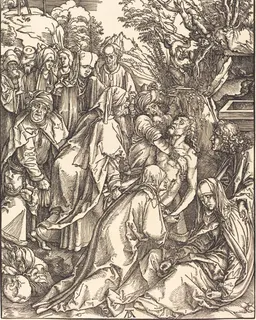
As evening falls, courage shows up from an unexpected quarter: there came a rich man of Arimathaea, named Joseph, who also himself was Jesus' disciple (v. 57). The other Gospels tell us he was a member of the very council that had condemned Jesus, and that he had been a secret disciple for fear of the Jews - but now, with Jesus dead and the cause apparently lost, he steps into the open.
He went to Pilate, and begged the body of Jesus (v. 58), a bold and costly request that publicly aligns him with a crucified man. It is a striking turn: through the whole chapter the powerful have handed Jesus over and washed their hands of Him; now a powerful man asks to take Him up. The disciples who walked with Him openly have fled; a hidden disciple comes forward at the darkest hour. Often it is so - that grief and loss draw out a courage that comfort never could.
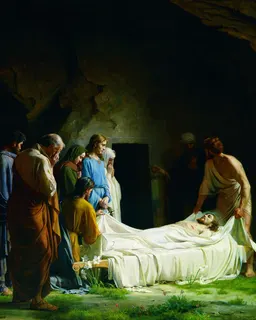
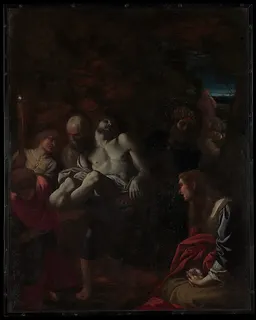
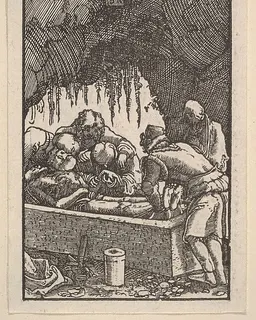
Joseph wraps the body in a clean linen cloth (v. 59), tending with reverent care the Lord whom the soldiers had stripped and gambled over. The hands that handle Him now are gentle, and they are the hands of one who, when it cost the most, was no longer ashamed to be His.
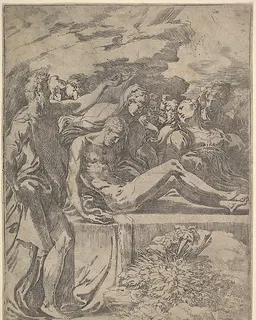
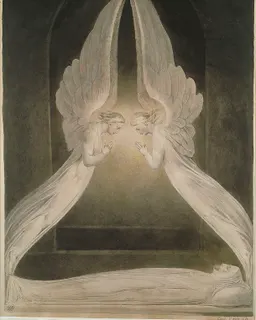
Joseph lays Jesus in his own new tomb, which he had hewn out in the rock: and he rolled a great stone to the door of the sepulchre, and departed (v. 60). Every word of it carries quiet meaning. The tomb is new - no one has ever lain in it - and it is his own, the grave a rich man had prepared for himself, now given to his Lord.
There is an old prophecy folded into the detail: the Servant of Isaiah, though numbered with transgressors in His death, would be with the rich in his death (Isa. 53:9), and here it comes true - the One crucified between thieves is buried in a wealthy man's rock-hewn tomb. The great stone rolled across the door is the world's full stop, the seal of finality: it is over, He is dead, the grave is closed.
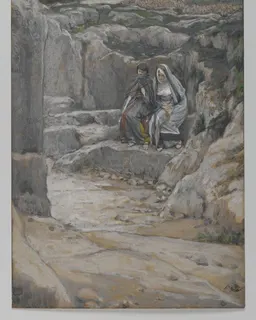
And two faithful women remain to mark the place - Mary Magdalene, and the other Mary, sitting over against the sepulchre (v. 61). They had watched Him die; now they watch where He is laid. They are not done with Him; love keeps its vigil even at a sealed grave. They will remember the place, and they will come back - and it will matter beyond anything they can imagine that they saw exactly where He was laid, and that the tomb they saw closed was new and had held no one but Him.
The chapter ends with the enemies of Jesus doing something that will, against all their intent, become a gift to the truth. They go to Pilate, remembering a word of His they could not forget: Sir, we remember that that deceiver said, while he was yet alive, After three days I will rise again (v. 63). They do not believe it - they call Him a deceiver - but they fear what His disciples might do, so they ask that the tomb be made sure until the third day (v. 64), lest the body be stolen and a resurrection claimed.
Pilate gives them a guard: make it as sure as ye can (v. 65). And so they went, and made the sepulchre sure, sealing the stone, and setting a watch (v. 66).
The irony is deep enough to smile at. The very men who want to bury the story forever take the steps that make it unanswerable. An official Roman seal; a posted guard; a great stone over a tomb that everyone knows holds the body - they have, with their own hands, made it impossible to later say the grave was never really closed or the body simply mislaid. They mean to shut the matter down for good.
What they have actually done is set an official seal on the place where, on the third day, the impossible will happen - and arrange for sworn Roman witnesses to be standing there when it does.1
Research trail
Sources & further study
These references support the historical, linguistic, manuscript, and contextual notes in this chapter. Scripture remains the primary text; external sources are provided so readers can inspect the research directly.
- Matthew 27 - Translators' NotesThe NET Bible's detailed footnotes on Matthew 27 - the difficulty of the prophecy attributed to “Jeremy” in verses 9-10, the legal setting of Pilate's tribunal, the meaning of the rent veil in verse 51, and the textual and historical questions around the sealing of the tomb.
- Matthew 27 ↔ Psalm 22 · Psalm 69 · Isaiah 53 · Zechariah 11Traces the threads tying Matthew 27 to the rest of Scripture - the parted garments (v. 35) and the cry of dereliction (v. 46) read against Psalm 22, the gall and vinegar against Psalm 69:21, the silent sufferer against Isaiah 53, and the thirty pieces of silver and the potter's field (vv. 6-10) against Zechariah 11:12-13.
- Matthew 27 · Greek interlinear + lexiconThe Greek text of Matthew 27 word by word, with parsing and lexical entries - useful for the verb behind “forsaken” in verse 46 (egkataleipo), for the phrase “yielded up the ghost” in verse 50 (apheken to pneuma), and for the Aramaic sabachthani that echoes the opening of Psalm 22.
Where this echoes in Scripture
I Have Betrayed the Innocent Blood
- Zechariah 11:12-13So they weighed for my price thirty pieces of silver... and cast them to the potter in the house of the LORD.The thirty pieces of silver and the potter, weighed out and cast down - the prophecy gathered up in verses 6-10.
- Isaiah 53:7he is brought as a lamb to the slaughter, and as a sheep before her shearers is dumb, so he openeth not his mouth.The innocent Servant led silently to death - the One Judas calls “innocent blood” in verse 4.
- 2 Corinthians 7:10For godly sorrow worketh repentance to salvation... but the sorrow of the world worketh death.The two sorrows set side by side - the worldly sorrow that drove Judas to despair (v. 5) against the godly sorrow that leads to life.
- Matthew 26:24woe unto that man by whom the Son of man is betrayed! it had been good for that man if he had not been born.Jesus' own word over the betrayal that verse 3 now carries out.
- 1 Peter 1:18-19ye were not redeemed with corruptible things, as silver and gold... but with the precious blood of Christ.The contrast at the heart of the scene - the silver that bought a field of blood against the blood that buys back the world.
I Am Innocent of the Blood of This Just Person
- Isaiah 53:7he was oppressed, and he was afflicted, yet he opened not his mouth... so he openeth not his mouth.The silence of verses 12-14 foreseen - the Servant who will not answer His accusers.
- 2 Corinthians 5:21For he hath made him to be sin for us, who knew no sin; that we might be made the righteousness of God in him.The exchange of verse 26 stated plainly - the innocent in the place of the guilty.
- 1 Peter 3:18For Christ also hath once suffered for sins, the just for the unjust, that he might bring us to God.The pattern of the Barabbas exchange (vv. 17-26) - the just suffering for the unjust.
- Hebrews 12:24And to Jesus the mediator of the new covenant, and to the blood of sprinkling, that speaketh better things than that of Abel.Why the crowd's cry in verse 25 turns from doom to mercy - His blood speaks for grace, for the forgiveness of sins.
- John 19:11Thou couldest have no power at all against me, except it were given thee from above.The deeper truth beneath Pilate's authority (v. 24) - even the governor's power is held within God's purpose.
Hail, King of the Jews
- Psalm 22:18They part my garments among them, and cast lots upon my vesture.Fulfilled word for word in verse 35 - the soldiers gambling for His clothes a thousand years after the psalm was written.
- Psalm 22:7-8All they that see me laugh me to scorn... He trusted on the LORD that he would deliver him: let him deliver him.The wagging heads and the rulers' taunt of verses 39-43, foreseen in the psalm of the Sufferer.
- Genesis 3:17-18cursed is the ground for thy sake... Thorns also and thistles shall it bring forth to thee.The origin of the thorns - the curse whose emblem is pressed onto the King's head in verse 29.
- Galatians 3:13Christ hath redeemed us from the curse of the law, being made a curse for us.What the crown of thorns (v. 29) means - the One bearing the curse on our behalf.
- 1 Peter 2:24Who his own self bare our sins in his own body on the tree... by whose stripes ye were healed.The saving the mockers could not see in verse 42 - the One who would not save Himself, bearing our sins instead.
My God, My God, Why Hast Thou Forsaken Me?
- Psalm 22:1My God, my God, why hast thou forsaken me? why art thou so far from helping me, and from the words of my roaring?The very words of the cry in verse 46 - the opening of the psalm Jesus prays from the cross.
- Psalm 22:27-28All the ends of the world shall remember and turn unto the LORD... for the kingdom is the LORD's.Where the psalm of verse 46 ends - in the nations turning to God, the harvest the cross begins.
- Isaiah 53:4-6he hath borne our griefs, and carried our sorrows... the LORD hath laid on him the iniquity of us all.What is gathered into the darkness and the cry (vv. 45-46) - the Servant bearing our sorrows and our sin.
- Hebrews 10:19-20boldness to enter into the holiest by the blood of Jesus, by a new and living way... through the veil, that is to say, his flesh.The meaning of the rent veil in verse 51 - the way into God's presence opened by His death.
- John 10:17-18I lay down my life... No man taketh it from me, but I lay it down of myself.What “yielded up the ghost” (v. 50) reveals - a life laid down by His own act, surrendered from within.
The New Tomb and the Sealed Stone
- Isaiah 53:9And he made his grave with the wicked, and with the rich in his death; because he had done no violence.Fulfilled in verse 60 - the One crucified with criminals buried in a rich man's new tomb.
- Matthew 16:21how that he must... be killed, and be raised again the third day.The promise the enemies quote in verse 63 - spoken plainly by Jesus to His own beforehand.
- Matthew 12:40For as Jonas was three days and three nights in the whale's belly; so shall the Son of man be three days and three nights in the heart of the earth.The sign of the three days behind verses 63-64 - the burial that is not the end.
- John 19:38-40Joseph of Arimathaea, being a disciple of Jesus, but secretly for fear of the Jews, besought Pilate that he might take away the body of Jesus.The fuller account of Joseph in verses 57-60 - the secret disciple who steps into the open.
- 1 Corinthians 15:3-4how that Christ died for our sins according to the scriptures; And that he was buried, and that he rose again the third day.The death and burial of this chapter set within the gospel itself - with the third day to which it points.