1 Peter 3
People in this chapter
The believers Peter writes to are scattered, watched, and slandered for a faith the empire has no category for. He does not hand them a strategy for winning the argument. He hands them a way of living so quiet it cannot be argued with. A wife who wins her husband without a word. A heart adorned where no one can see it. A church that blesses the mouth that curses it.1
Tap any highlighted phrase to jump to the commentary that unpacks it.
1 Peter 3:1-2Wives: Beauty That Speaks Without Words
1Likewise, ye wives, be in subjection to your own husbands; that, if any obey not the word, they also may without the word be won by the conversation of the wives; 2While they behold your chaste conversation coupled with fear.
A woman in this house has no legal voice. She cannot divorce, cannot inherit on her own terms, cannot out-argue a husband who holds every card. Peter does not tell her to seize a voice she will not be given. He hands her something the law cannot touch: a life so changed that it preaches. The husband who will not hear the word may yet be undone by watching her live it. This is the quietest kind of power there is - the gospel working where no one can shout it down.
The word for “reverent” is phobos (fear) - the kind of awe that comes from recognizing holiness, a weight no outward approval can counterfeit. When a woman's life is anchored in reverence toward God, her conduct becomes magnetic. The chaste conduct speaks of integrity, purity of intention, and moral seriousness - qualities no amount of outward ornamentation can fake.
1 Peter 3:3-4Hidden Beauty: The Precious Self
3Whose adorning let it not be that outward adorning of plaiting the hair, and of wearing of gold, or of putting on of apparel; 4But let it be the hidden man of the heart, in that which is not corruptible, even the ornament of a meek and quiet spirit, which is in the sight of God of great price.
1 Peter 3:5-7Husbands: Understanding and Honor
5For after this manner in the old time the holy women also, who trusted in God, adorned themselves, being in subjection unto their own husbands: 6Even as Sara obeyed Abraham, calling him lord: whose daughters ye are, as long as ye do well, and are not afraid with any amazement. 7Likewise, ye husbands, dwell with them according to knowledge, giving honour unto the wife, as unto the weaker vessel, and as being heirs together of the grace of life; that your prayers be not hindered.
The command to husbands is to live together in understanding - to have knowledge of your wife, to study her, to know her mind and heart. A man of genuine strength protects and honors the one he could dominate. This is the real measure of power.
1 Peter 3:8-9One Mind, One Heart: The Community
8Finally, be ye all of one mind, having compassion one of another, love as brethren, be pitiful, be courteous: 9Not rendering evil for evil, or railing for railing: but contrariwise blessing; knowing that ye are thereunto called, that ye should inherit a blessing.
Peter shifts from household instruction to the assembly of believers - the church gathering in a hostile world. Unity of mind does not mean uniformity of opinion. It means a shared orientation toward Christ, a common understanding that Christ is Lord and that his kingdom transcends all earthly hierarchies.
1 Peter 3:10-11Guard Your Tongue: Life and Blessing
10For he that will love life, and see good days, let him refrain his tongue from evil, and his lips that they speak no guile: 11Let him eschew evil, and do good; let him seek peace, and ensue it.
To make his point about a church under fire, Peter reaches back to a psalm and lets David say it for him.2 The man who wants to love life and see good days is handed one place to start, and it is small enough to fit behind your teeth: keep the tongue from evil. Everything large turns on this hinge. A word can build a person up or take them apart, can carry blessing or carry poison, and the day you wreck with your mouth was the day you wanted to be good.
Loving life means choosing, word by ordinary word, the road that actually leads somewhere good.
1 Peter 3:12-14Ready to Answer: Hope and Gentleness
12For the eyes of the Lord are over the righteous, and his ears are open unto their prayers: but the face of the Lord is against them that do evil. 13And who is he that will harm you, if ye be followers of that which is good? 14But and if ye suffer for righteousness’ sake, happy are ye: and be not afraid of their terror, neither be troubled;
This is a rhetorical question, not a promise of immunity from suffering. Peter knows persecution is real. The worst harm that can come to you is moral compromise, the loss of your own conscience. The one who clings to good - even when it costs - cannot be truly harmed.
1 Peter 3:15-18Christ's Suffering and Justification
15But sanctify the Lord God in your hearts: and be ready always to give an answer to every man that asketh you a reason of the hope that is in you with meekness and fear: 16Having a good conscience; that, whereas they speak evil of you, as of evildoers, they may be ashamed that falsely accuse your good conversation in Christ. 17For it is better, if the will of God be so, that ye suffer for well doing, than for evil doing. 18For Christ also hath once suffered for sins, the just for the unjust, that he might bring us to God, being put to death in the flesh, but quickened by the Spirit:
The defense (apologia) that Peter calls believers to make is a ready, gentle explanation for the hope that is in you. The foundation of this readiness is fear of God: an awe that steadies you when human opposition rises.
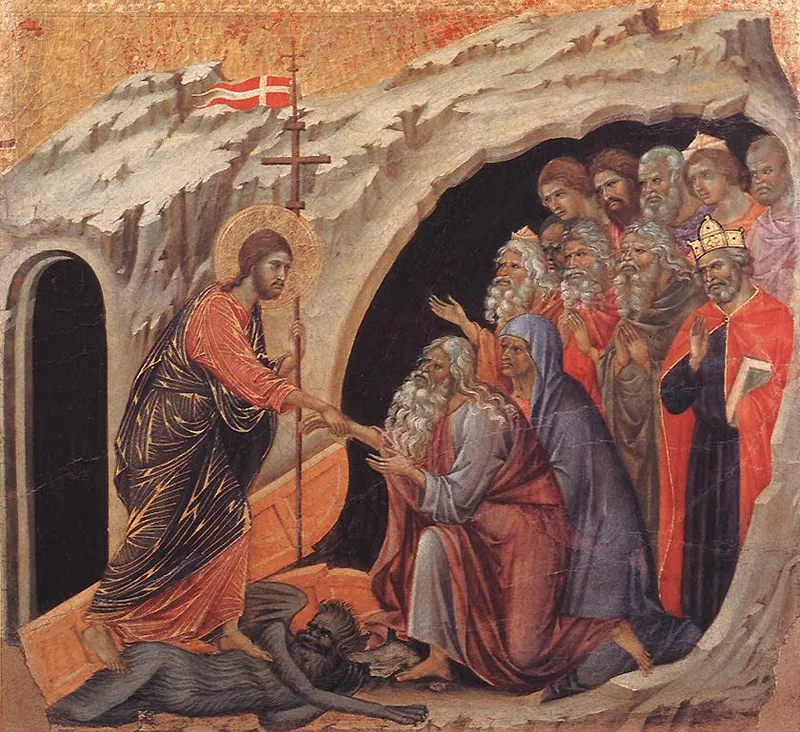
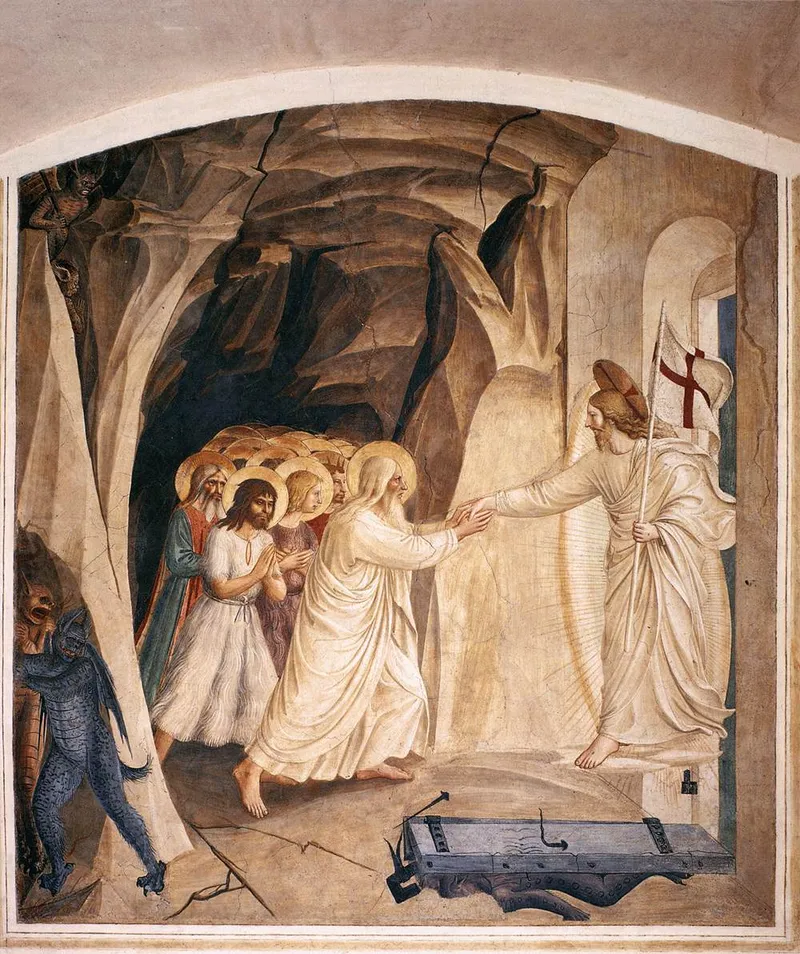
1 Peter 3:18-20 & 20-22Descent to Sheol and Exaltation
19By which also he went and preached unto the spirits in prison; 20Which sometime were disobedient, when once the longsuffering of God waited in the days of Noah, while the ark was a preparing, wherein few, that is, eight souls were saved by water. 21The like figure whereunto even baptism doth also now save us (not the putting away of the filth of the flesh, but the answer of a good conscience toward God,) by the resurrection of Jesus Christ: 22Who is gone into heaven, and is on the right hand of God; angels and authorities and powers being made subject unto him.
These are among the most pondered verses in the New Testament, and the way to read them well is to let the words say exactly what they say and no more. The text gives a sequence and leaves much in shadow. Christ, put to death and made alive, went and preached unto the spirits in prison. It identifies who they are by when they refused: the disobedient of Noah's day, while the ark was being built and God's patience waited.
Peter does not pause to spell out what was preached, or when the going took place, or what came of it. He sets the scene and moves on. The honest reader does the same, sitting with the verse, letting it breathe - and noticing that the link Peter does draw is to Noah, whose small household was carried through the water that drowned the rest.
Peter draws a line from Noah's flood straight to the font: the water that bore the ark up while it drowned the world is, he says, the figure to which baptism doth also now save us. He states it plainly and does not soften it. Then he says, with equal care, what he does not mean: not the putting away of the filth of the flesh - this is no mere washing of the body - but the answer of a good conscience toward God, and he adds the ground on which it all rests, by the resurrection of Jesus Christ.
The verse holds those phrases together and weighs them against each other. The reader is meant to hold them together too, letting each clause stand without forcing the others to mean less than they say.3
Research trail
Sources & further study
These references support the historical, linguistic, manuscript, and contextual notes in this chapter. Scripture remains the primary text; external sources are provided so readers can inspect the research directly.
- Genesis 18:19 - Keeping the Way of the LordOT foundation for living righteously and influencing household - Sarah learned this way.
- Psalm 34:12-16 ↔ 1 Peter 3:10-12 (Sanctified Living)Cross-reference linking Peter's call to righteous living with the psalmist's counsel.
- Baptism in the Early ChurchSBL study on baptism as covenant sign and death-to-life transformation in apostolic practice.
Where this echoes in Scripture
Wives: Beauty That Speaks Without Words
- Matthew 5:16Let your light so shine before men, that they may see your good works, and glorify your Father which is in heaven.The same logic as verses 1-2 - a life others can see, winning them without a word.
- 1 Corinthians 7:13-14the woman which hath an husband that believeth not... the unbelieving husband is sanctified by the wife.The believing spouse as the gospel's quiet foothold inside an unbelieving home.
- Titus 2:5discreet, chaste, keepers at home, good, obedient to their own husbands, that the word of God be not blasphemed.Conduct guarding the reputation of the word - the “chaste conduct” of verse 2.
Hidden Beauty: The Precious Self
- 1 Samuel 16:7man looketh on the outward appearance, but the LORD looketh on the heart.The reordering of verses 3-4 - God's gaze rests where no mirror reaches.
- Matthew 11:29Take my yoke upon you, and learn of me; for I am meek and lowly in heart.The “gentle and quiet spirit” of verse 4 named by the One who embodied it.
- 1 Timothy 2:9-10adorn themselves... not with broided hair, or gold... but (which becometh women professing godliness) with good works.The same contrast as verse 3 - adornment that fades against adornment that lasts.
Husbands: Understanding and Honor
- Romans 8:17And if children, then heirs; heirs of God, and joint-heirs with Christ.The inheritance behind verse 7 - believers made co-heirs with Christ himself.
- Galatians 3:28There is neither Jew nor Greek... neither male nor female: for ye are all one in Christ Jesus.The leveled floor of verse 7 - one standing in Christ across every human divide.
- Ephesians 5:25Husbands, love your wives, even as Christ also loved the church, and gave himself for it.The husband's charge of verse 7 measured against Christ's self-giving.
- 1 Peter 3:7that your prayers be not hindered.The sobering hinge - how a man treats his wife reaches all the way to his prayers.
One Mind, One Heart: The Community
- Romans 12:17Recompense to no man evil for evil. Provide things honest in the sight of all men.The same charge as verse 9 - refusing to return the blow.
- Luke 6:28Bless them that curse you, and pray for them which despitefully use you.The blessing of verse 9 spoken first by Christ - good returned for evil.
- Philippians 2:2that ye be likeminded, having the same love, being of one accord, of one mind.The “unity of mind” of verse 8 - one heart bent toward the same Lord.
Guard Your Tongue: Life and Blessing
- Psalm 34:12-14keep thy tongue from evil, and thy lips from speaking guile. Depart from evil, and do good; seek peace, and pursue it.The psalm Peter quotes in verses 10-11 - the words traced back to their source.
- James 3:5-6the tongue is a little member... how great a matter a little fire kindleth! And the tongue is a fire.The small hinge of verse 10 that turns a whole life.
- Proverbs 18:21Death and life are in the power of the tongue.The stakes behind verse 10 - speech that carries life or carries death.
Ready to Answer: Hope and Gentleness
- 1 Corinthians 15:20But now is Christ risen from the dead, and become the firstfruits of them that slept.The resurrection that anchors the hope of verses 13-14 - Christ first, then his own.
- Isaiah 8:12-13neither fear ye their fear... Sanctify the LORD of hosts himself; and let him be your fear.The passage Peter draws on - fear of God displacing fear of man.
- Romans 8:31If God be for us, who can be against us?The question of verse 13 answered - no opposition outweighs the God who is for you.
Christ's Suffering and Justification
- Romans 5:6For when we were yet without strength, in due time Christ died for the ungodly.The substitution of verse 18 - Christ dying for those who could not save themselves.
- 2 Corinthians 5:21he hath made him to be sin for us, who knew no sin; that we might be made the righteousness of God in him.The exchange behind “the just for the unjust” in verse 18.
- Hebrews 9:28So Christ was once offered to bear the sins of many.The “once” of verse 18 - a single sufficient offering.
- Ephesians 2:18For through him we both have access by one Spirit unto the Father.The purpose of verse 18 fulfilled - brought to God, given access.
Descent to Sheol and Exaltation
- Genesis 7:23Noah only remained alive, and they that were with him in the ark.The few brought safely through water in verse 20 - the figure Peter reaches for.
- Romans 6:4we are buried with him by baptism into death: that... even so we also should walk in newness of life.Baptism bound to Christ's death and rising - read alongside verse 21.
- Ephesians 1:20-21set him at his own right hand... far above all principality, and power, and might, and dominion.The exaltation of verse 22 - every power set beneath the risen Christ.
- Psalm 110:1The LORD said unto my Lord, Sit thou at my right hand, until I make thine enemies thy footstool.The seat at God's right hand named in verse 22 - the reign Peter points to.