
Genesis 7
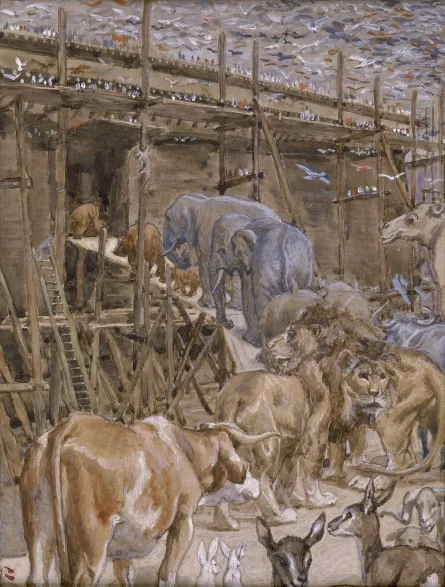
After the long labour of building, Genesis 7 begins with a word of welcome rather than a command barked from a distance: And the LORD said unto Noah, Come thou and all thy house into the ark; for thee have I seen righteous before me in this generation (v. 1). It is the first time in Scripture that God says come in this way - an invitation to enter a place of safety He has already provided. The instructions are precise: the clean beasts by sevens, the unclean by twos, the fowls of the air by sevens, to keep seed alive upon the face of all the earth (v. 3); and seven days' warning before the rain. Then the verdict that hangs over the whole chapter is named without flinching - every living substance that I have made will I destroy from off the face of the earth (v. 4) - and against it stands one line of obedience: And Noah did according unto all that the LORD commanded him (v. 5).3
Then the waters come, and they come from two directions at once. The same day were all the fountains of the great deep broken up, and the windows of heaven were opened. And the rain was upon the earth forty days and forty nights (vv. 11-12). This is no ordinary storm; it is the world being unmade, water pressing in from above and below as it had been parted at the beginning. Noah and his sons and their wives go in, and every living thing wherein is the breath of life goes in with them, two and two of all flesh (vv. 13-15). And when they are all aboard, the chapter sets down a sentence as quiet as it is enormous: and the LORD shut him in (v. 16). The door does not swing closed on its own, and Noah does not bolt it. God closes it. From that moment, the safety of everyone inside rests not on Noah's vigilance but on the hand that sealed the door.
What follows is told with a kind of unhurried gravity. The flood prevails, and the word is repeated until it becomes a drumbeat - the waters prevailed, and were increased greatly… and the waters prevailed exceedingly upon the earth; and all the high hills… were covered (vv. 18-19). All flesh died that moved upon the earth (v. 21); everything in whose nostrils was the breath of life, in the dry land, perished. The chapter does not moralize over the dead, does not soften the loss; it lets the reader feel the full weight of a world swept away. And against that vast emptiness it holds up a single surviving clause - and Noah only remained alive, and they that were with him in the ark (v. 23) - before the waters settle into their long dominion: and the waters prevailed upon the earth an hundred and fifty days (v. 24).2
Tap any highlighted phrase to jump to the commentary that unpacks it.

Genesis 7:1-9Come Thou Into the Ark
1And the LORD said unto Noah, Come thou and all thy house into the ark; for thee have I seen righteous before me in this generation. 2Of every clean beast thou shalt take to thee by sevens, the male and his female: and of beasts that are not clean by two, the male and his female. 3Of fowls also of the air by sevens, the male and the female; to keep seed alive upon the face of all the earth. 4For yet seven days, and I will cause it to rain upon the earth forty days and forty nights; and every living substance that I have made will I destroy from off the face of the earth. 5And Noah did according unto all that the LORD commanded him. 6And Noah was six hundred years old when the flood of waters was upon the earth. 7And Noah went in, and his sons, and his wife, and his sons' wives with him, into the ark, because of the waters of the flood. 8Of clean beasts, and of beasts that are not clean, and of fowls, and of every thing that creepeth upon the earth, 9There went in two and two unto Noah into the ark, the male and the female, as God had commanded Noah.
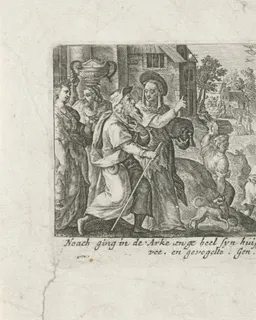
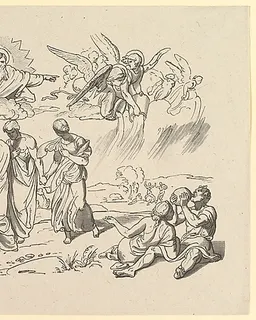
The chapter opens not with a shove but with a summons: And the LORD said unto Noah, Come thou and all thy house into the ark (v. 1). The word is come, not go - and the difference matters. Go sends a person off toward a place; come calls a person toward the one who speaks, as though He stands inside the refuge and bids Noah join Him there. After the long years of building under a clear sky, with a watching world that would not listen, this is the turn: the door is ready, the time has come, and God Himself opens the invitation. And it is an invitation to a whole household - thou and all thy house - not Noah alone but his wife, his sons, their wives, gathered in with him. The single reason given is sobering in its plainness: for thee have I seen righteous before me in this generation. Noah is not called because he is faultless beyond all men but because, in a generation given over to violence, he walked with God and was found faithful. The mercy is real and the welcome is warm, but it is held out in the shadow of what is coming. To be called into the ark is to be called out of a world under judgment.3
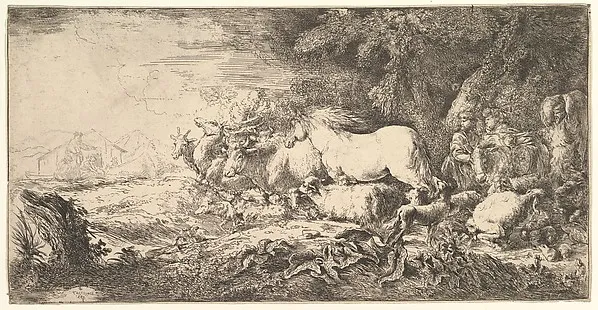
The instructions about the animals are exact, and every detail is bent toward the future. Of every clean beast thou shalt take to thee by sevens… and of beasts that are not clean by two… Of fowls also of the air by sevens… to keep seed alive upon the face of all the earth (vv. 2-3). Notice first that the distinction between clean and unclean is simply assumed - it is here, long before Sinai and the law of Moses spelled such categories out, taken for granted that Noah already knows which beasts are fit and which are not. The extra clean animals are no accident: the sevens leave a margin, so that some may be offered in sacrifice once the waters recede without endangering the survival of the kind, as indeed Noah will do in the next chapter. And the stated aim gathers up the whole rescue in a phrase: to keep seed alive upon the face of all the earth. This is not merely a few creatures saved from drowning; it is the living world preserved in miniature, a remnant carried through so that the earth can be filled again. Even as judgment gathers, God is already provisioning for life on the far side of it. The ark is not only an escape from death; it is a seedbed of the world to come.
God tells Noah plainly what is about to happen, and the candor is itself a mercy: For yet seven days, and I will cause it to rain upon the earth forty days and forty nights; and every living substance that I have made will I destroy from off the face of the earth (v. 4). There is a fixed delay - yet seven days - a final, measured space of grace before the rain. The world is given one more week. And the LORD does not hide the severity of what is coming behind vague language; He names it: every living substance that I have made will I destroy. The verb is heavy, and the text does not lighten it. Yet there is something to weigh even in the wording. The thing to be undone is that I have made - God speaks of the creation as His own, the work of His hands, and its undoing is no small or careless thing to Him. The flood is not the rage of an indifferent power but the grief-laden judgment of the One who made it all and watched it fill with violence. Seven days of warning, forty days of rain, and the candor of a God who tells His servant exactly what He is about to do: the judgment is sure, but it does not fall without word, without warning, without time.
Against the vast announcement of judgment stands one short, steady line: And Noah did according unto all that the LORD commanded him (v. 5). It is a sentence Genesis has used of Noah before, and it carries his whole character in it. No record is given here of argument or hesitation, no bargaining, no demand for further proof - only obedience, full and exact. According unto all the LORD commanded: not the parts that made sense, not the easy half, but everything. And then the doing is spelled out so the reader cannot miss it: at six hundred years old Noah went in, and his sons, and his wife, and his sons' wives, and the clean and the unclean and the fowls and the creeping things, two and two unto Noah into the ark, as God had commanded Noah (vv. 6-9). Twice in these verses the entering creatures are described as coming unto Noah - they come to him, gathered to the man God had appointed, and through him into the ark. There is a quiet dignity in it. Faith here is not a feeling or a speech; it is a man and his family walking through a door while the sky is still dry, trusting the word of God against the testimony of their own eyes.
Genesis 7:10-16The Windows of Heaven · And the LORD Shut Him In
10And it came to pass after seven days, that the waters of the flood were upon the earth. 11In the six hundredth year of Noah's life, in the second month, the seventeenth day of the month, the same day were all the fountains of the great deep broken up, and the windows of heaven were opened. 12And the rain was upon the earth forty days and forty nights. 13In the selfsame day entered Noah, and Shem, and Ham, and Japheth, the sons of Noah, and Noah's wife, and the three wives of his sons with them, into the ark; 14They, and every beast after his kind, and all the cattle after their kind, and every creeping thing that creepeth upon the earth after his kind, and every fowl after his kind, every bird of every sort. 15And they went in unto Noah into the ark, two and two of all flesh, wherein is the breath of life. 16And they that went in, went in male and female of all flesh, as God had commanded him: and the LORD shut him in.
When the rain comes, the text records it with the precision of an eyewitness and the scope of an undoing: In the six hundredth year of Noah's life, in the second month, the seventeenth day of the month, the same day were all the fountains of the great deep broken up, and the windows of heaven were opened. And the rain was upon the earth forty days and forty nights (vv. 11-12). The exactness of the date - the year, the month, the very day - tells us this is no myth set in a vague once-upon-a-time but an event the writer wants nailed to the calendar. And the water comes from two directions at once. The fountains of the great deep burst from below; the windows of heaven open from above. To anyone who has read the opening of Genesis, the language is unmistakable. On the second day God had divided the waters above from the waters below and set the sky as a barrier between them; now those waters rush back together, the boundary God once drew unmade by the God who drew it. This is not merely bad weather; it is the ordered world dissolving back toward the deep over which the Spirit hovered in the beginning. The flood is creation run in reverse - and the only thing that floats upon that returning chaos is the ark, bearing its small cargo of life across the face of the unmade world.
As the waters rise, the text lingers, almost tenderly, over who goes in. It names them: Noah, and Shem, and Ham, and Japheth… and Noah's wife, and the three wives of his sons (v. 13) - eight people, counted out, the whole human remnant of the world fitting in a single sentence. And then the creatures, ordered as the creation account ordered them: every beast after his kind, and all the cattle after their kind, and every creeping thing… and every fowl after his kind (v. 14). The repeated phrase after his kind is the language of Genesis 1, where God made the living things each after its kind and called them good; here those kinds are gathered and preserved, the goodness of creation carried through the judgment intact. They go in two and two of all flesh, wherein is the breath of life (v. 15). That last phrase marks the boundary of the rescue: what is saved is the world of creatures that breathe, that carry the breath of life God Himself first breathed into man. The ark is full of breath - of living things sustained by the gift of life from their Maker - floating above a world where that breath is about to be stilled. The contrast is the whole point. Inside: life, named, gathered, kept. Outside: the breath of life soon to depart from all flesh.
Everything in the chapter has been moving toward a door, and here it closes - but watch carefully whose hand is on it. And they that went in, went in male and female of all flesh, as God had commanded him: and the LORD shut him in (v. 16). Noah does not shut the door. He has built the ark, gathered the animals, loaded his family, done everything commanded - and then, at the last, the one thing he does not do is close it himself. The LORD shut him in. The sentence is short to the point of starkness, and it changes the whole posture of what follows. Noah does not spend the next forty days braced against the door, holding it shut by main strength, terrified that a slackened grip will let the waters in. The God who invited him in is the God who seals it. From this moment, the security of everyone aboard does not rest on Noah's vigilance, his strength, his ability to keep holding on; it rests on the hand that closed the door and will not be moved. This is what trust finally looks like in Genesis: you enter where you are bidden, and then you rest in what Someone stronger has sealed. The same act shuts the world out and shuts the faithful in - and both the keeping out and the keeping in are God's doing, not Noah's.
Genesis 7:17-24The Waters Prevailed · Noah Only Remained Alive
17And the flood was forty days upon the earth; and the waters increased, and bare up the ark, and it was lift up above the earth. 18And the waters prevailed, and were increased greatly upon the earth; and the ark went upon the face of the waters. 19And the waters prevailed exceedingly upon the earth; and all the high hills, that were under the whole heaven, were covered. 20Fifteen cubits upward did the waters prevail; and the mountains were covered. 21And all flesh died that moved upon the earth, both of fowl, and of cattle, and of beast, and of every creeping thing that creepeth upon the earth, and every man: 22All in whose nostrils was the breath of life, of all that was in the dry land, died. 23And every living substance was destroyed which was upon the face of the ground, both man, and cattle, and the creeping things, and the fowl of the heaven; and they were destroyed from the earth: and Noah only remained alive, and they that were with him in the ark. 24And the waters prevailed upon the earth an hundred and fifty days.
The chapter's last movement is dominated by a single word, repeated until it becomes a kind of dreadful rhythm: the waters prevailed. The waters increased, and bare up the ark… And the waters prevailed, and were increased greatly… And the waters prevailed exceedingly upon the earth… Fifteen cubits upward did the waters prevail; and the mountains were covered (vv. 17-20). The text does not look away from the scale of it, and it does not let the reader look away either. Step by step the water climbs - bearing up the ark, then rising greatly, then exceedingly, until even all the high hills, that were under the whole heaven, were covered, and the very mountaintops vanish beneath fifteen cubits of water. There is nowhere left to climb, no refuge of high ground, no corner of the earth the flood does not claim. And yet, threaded through these same verses, is one upward motion that is not destruction: the waters increased, and bare up the ark, and it was lift up above the earth… and the ark went upon the face of the waters. The very flood that drowns the world lifts the ark. The same rising water that is judgment to everything outside is the thing that carries the faithful safely above it all. What buries one bears up the other. The ark does not escape the flood by avoiding it; it rides on top of the very waters that destroy.
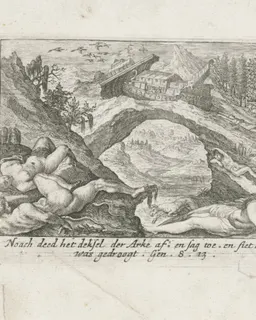
Then the text says the thing it has been moving toward, and it says it without a single word of softening: And all flesh died that moved upon the earth, both of fowl, and of cattle, and of beast, and of every creeping thing that creepeth upon the earth, and every man: all in whose nostrils was the breath of life, of all that was in the dry land, died (vv. 21-22). The sentence is sober and total. All flesh. Every man. All in whose nostrils was the breath of life. The breath that God breathed into the first man in the garden is now drawn back from the whole living world outside the ark. And notice what the chapter refuses to do. It does not moralize over the dead; it does not pause to argue their guilt or rehearse their sins or invite the reader to feel satisfied at their end. It simply records, with grave restraint, that they died. This is not coldness; it is reverence before something terrible. The judgment of God on a world given over to violence is real, and the text will not trivialize it by editorializing. It lets the weight of all flesh died sit fully on the page. To read this verse rightly is to feel the loss - a whole world of breathing creatures, gone - and to understand that the God who made that world did not undo it lightly. The flood is not a tale told for comfort. It is the sober truth about what sin finally costs and what holiness, at last, will not abide.
Against the vast, drowned silence of the world, the chapter lifts up one surviving clause, and it shines all the brighter for the darkness around it: and Noah only remained alive, and they that were with him in the ark (v. 23). Noah only. Of all the earth, this one household. The phrasing is almost stark - it does not soften the smallness of the remnant but underlines it. Everything is gone; this alone remains. And yet that alone is not abandonment but preservation: Noah… and they that were with him in the ark. The ark held. The door God shut did not give way. The vessel that seemed so fragile against so much water carried its cargo of breath safely through, exactly as it was built to do. Here is the seed of every rescue Scripture will go on to tell - a remnant kept alive through judgment, a thread of life drawn unbroken across the catastrophe, a people saved not by their numbers or their strength but by being in the place God provided. The chapter ends not with a flourish but with the long, heavy patience of waiting: and the waters prevailed upon the earth an hundred and fifty days (v. 24). The flood does not recede the moment the rain stops. There are months of floating on a shoreless sea, of trusting that the God who shut the door has not forgotten the ones inside. But they are alive. The world has ended, and life remains - held, kept, carried - because of an ark and a door and the mercy of God.
Further study
- The Hebrew text of Genesis 7 with Rashi, Ibn Ezra, and other classical commentators side by side - useful for tevah (vv. 1, 7, 9, the “ark,” the same word later used of Moses' basket), for sagar (v. 16, “shut him in”), and for the doubled gavar (vv. 18-20, the waters that “prevailed”).
- Genesis 7 ↔ 1 Peter 3 · Matthew 24 · John 10Intertextual BibleTraces the threads tying Genesis 7 to the rest of Scripture - the ark that saves through water (vv. 1, 16) read beside baptism doth also now save us… by the resurrection of Jesus Christ (1 Pet. 3:21), the suddenness of the flood (vv. 21-23) read beside so shall also the coming of the Son of man be (Matt. 24:37-39), and the one door read beside I am the door: by me if any man enter in, he shall be saved (John 10:9).
- Genesis 7 - Translators' NotesNET BibleThe NET Bible's detailed footnotes on Genesis 7 - the clean and unclean distinction before Sinai (v. 2), the “fountains of the great deep” and “windows of heaven” (v. 11), the difficult arithmetic of forty days and a hundred and fifty days, and the verb behind “shut him in” (v. 16).
Where this echoes in Scripture
Come Thou Into the Ark
- Hebrews 11:7By faith Noah, being warned of God of things not seen as yet, moved with fear, prepared an ark to the saving of his house.The obedience of verse 5 named as faith - Noah acting on God’s word against the evidence of his eyes.
- 1 Peter 3:20-21eight souls were saved by water. The like figure whereunto even baptism doth also now save us... by the resurrection of Jesus Christ.The ark of verse 1 read as a figure of salvation - the few carried safely through the waters of judgment.
- Matthew 11:28Come unto me, all ye that labour and are heavy laden, and I will give you rest.The same call as verse 1 - <em>come</em>, not <em>go</em>; an invitation into a refuge already provided.
- Exodus 2:3she took for him an ark of bulrushes... and put the child therein; and she laid it in the flags by the river’s brink.The only other “ark” (<em>tevah</em>) in Scripture - another fragile vessel carrying a deliverer safely through deadly water.
The Windows of Heaven · And the LORD Shut Him In
- Genesis 1:6-7Let there be a firmament in the midst of the waters, and let it divide the waters from the waters.The boundary God set at creation - the very division undone in verse 11 as the waters above and below rush back together.
- Revelation 3:7he that openeth, and no man shutteth; and shutteth, and no man openeth.The authority behind verse 16 - the LORD shuts the door of the ark, and what He shuts no power can open.
- John 10:28-29they shall never perish, neither shall any man pluck them out of my hand... no man is able to pluck them out of my Father’s hand.The keeping pictured in verse 16 - the safety of the saved resting in God’s hand, not their own grip.
- 1 Peter 1:5Who are kept by the power of God through faith unto salvation ready to be revealed in the last time.What “the LORD shut him in” teaches (v. 16) - the faithful kept by God’s power, not by their own vigilance.
The Waters Prevailed · Noah Only Remained Alive
- Matthew 24:37-39as the days of Noe were, so shall also the coming of the Son of man be... and knew not until the flood came, and took them all away.The Lord’s own use of this chapter - the suddenness of judgment and the call to be found in the refuge (vv. 21-23).
- John 10:9I am the door: by me if any man enter in, he shall be saved, and shall go in and out, and find pasture.One ark, one door (v. 23) - the single appointed way of salvation held open to all who will enter.
- 2 Peter 3:6-7the world that then was, being overflowed with water, perished: But the heavens and the earth, which are now... reserved unto fire against the day of judgment.The flood of verses 17-24 read as a pattern - a real past judgment pointing toward a coming one.
- Genesis 8:1And God remembered Noah, and every living thing, and all the cattle that was with him in the ark.The answer to the long waiting of verse 24 - through the hundred and fifty days, God had not forgotten the ones He shut in.
- 1 Peter 3:20when once the longsuffering of God waited in the days of Noah, while the ark was a preparing, wherein few... were saved by water.The remnant of verse 23 - the few carried alive through the waters that swept all flesh away.