John 10
People in this chapter
The healing of the man born blind is barely over, and the shepherds of Israel have just thrown that healed man out of the synagogue (ch. 9). So Jesus turns to a picture his hearers knew in their bones - the sheepfold, its door, and the rival figures who approach it. He that entereth not by the door into the sheepfold, but climbeth up some other way, the same is a thief and a robber (v. 1).
The true shepherd comes openly through the door; the porter opens to him; he calleth his own sheep by name, and leadeth them out (v. 3). The sheep know his voice and follow, and they will not follow a stranger. Then Jesus presses the image onto Himself in a way no one expected: I am the door: by me if any man enter in, he shall be saved, and shall go in and out, and find pasture (v. 9).
He is not only the shepherd; He is the one way of entrance into life.1
Tap any highlighted phrase to jump to the commentary that unpacks it.
John 10:1-10I Am the Door of the Sheep
1Verily, verily, I say unto you, He that entereth not by the door into the sheepfold, but climbeth up some other way, the same is a thief and a robber. 2But he that entereth in by the door is the shepherd of the sheep. 3To him the porter openeth; and the sheep hear his voice: and he calleth his own sheep by name, and leadeth them out. 4And when he putteth forth his own sheep, he goeth before them, and the sheep follow him: for they know his voice. 5And a stranger will they not follow, but will flee from him: for they know not the voice of strangers. 6This parable spake Jesus unto them: but they understood not what things they were which he spake unto them. 7Then said Jesus unto them again, Verily, verily, I say unto you, I am the door of the sheep. 8All that ever came before me are thieves and robbers: but the sheep did not hear them. 9I am the door: by me if any man enter in, he shall be saved, and shall go in and out, and find pasture. 10The thief cometh not, but for to steal, and to kill, and to destroy: I am come that they might have life, and that they might have it more abundantly.
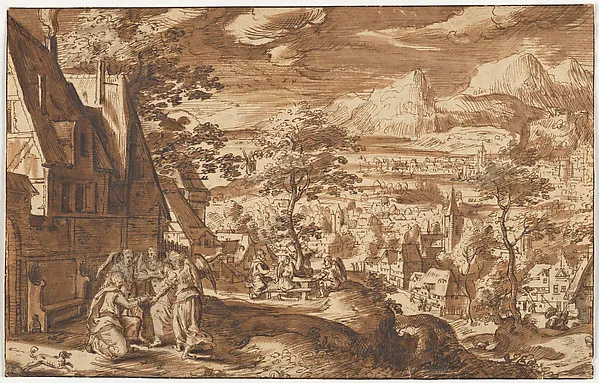
The picture comes straight from ordinary life in Jesus' world. At night the flocks of a village were often gathered into a single walled enclosure - the sheepfold - with one guarded entrance. A man who would not come in by that door but climbed the wall some other way announced what he was: a thief and a robber (v. 1). The true shepherd had nothing to hide; he came through the door, the porter knew him and opened to him, and then comes the detail the whole chapter turns on: he calleth his own sheep by name, and leadeth them out (v. 3).
Eastern shepherds did not drive their flocks from behind; they walked in front and the sheep came after, knowing the particular voice. And the relationship was personal down to the single animal - each one called by name. The sheep proved whose they were by whom they followed: a stranger will they not follow, but will flee from him: for they know not the voice of strangers (v. 5). It is a quiet rebuke of the leaders who had just driven a healed man out of the synagogue (ch. 9).
They climbed in by another way and scattered the flock; the true Shepherd calls His own by name and leads them to pasture.1
His hearers understood not the figure (v. 6), so Jesus says it without a veil - and the claim is startling: I am the door of the sheep (v. 7). He is not merely a guide among guides; He is the entrance itself. All that ever came before me are thieves and robbers (v. 8) - not a sweep against the prophets, who pointed forward to Him, but against the false shepherds and self-appointed deliverers who came to use the flock rather than save it, and whom the true sheep did not hear. Then the door opens onto salvation: I am the door: by me if any man enter in, he shall be saved, and shall go in and out, and find pasture (v. 9).
Notice how wide the welcome is - any man - and how complete the safety: to be inside through this door is to be saved, to come and go in freedom, and to be fed. A door is the one point where the inside and the outside meet; everyone who enters the fold passes through the same place. Jesus says that place is Himself. There is no climbing the wall into this fold; there is a door, and He is it.
The contrast in verse 10 is total, and it sorts every voice that calls to the sheep into one of two columns. The thief has exactly three aims: to steal, and to kill, and to destroy. Whatever he promises, that is all he can finally do - take, and ruin, and leave the flock the poorer. Over against that stands the Shepherd's whole purpose: I am come that they might have life, and that they might have it more abundantly. The word translated abundantly means more than enough, life to overflowing - not a bare survival but a fullness.
And it is worth seeing what He does not say. He does not say He came that they might have an easier life, or a richer one by the world's measure. He says life, and life in fullness - the deep, lasting kind that the thief can never give and can never finally take. This is the difference between every counterfeit shepherd and the true one: the false come to drain the flock for themselves; the true One comes to give Himself for the flock, that they might live.
Everything that follows in the chapter unfolds how far He will go to make good on that one sentence.
John 10:11-21The Good Shepherd Giveth His Life for the Sheep
11I am the good shepherd: the good shepherd giveth his life for the sheep. 12But he that is an hireling, and not the shepherd, whose own the sheep are not, seeth the wolf coming, and leaveth the sheep, and fleeth: and the wolf catcheth them, and scattereth the sheep. 13The hireling fleeth, because he is an hireling, and careth not for the sheep. 14I am the good shepherd, and know my sheep, and am known of mine. 15As the Father knoweth me, even so know I the Father: and I lay down my life for the sheep. 16And other sheep I have, which are not of this fold: them also I must bring, and they shall hear my voice; and there shall be one fold, and one shepherd. 17Therefore doth my Father love me, because I lay down my life, that I might take it again. 18No man taketh it from me, but I lay it down of myself. I have power to lay it down, and I have power to take it again. This commandment have I received of my Father. 19There was a division therefore again among the Jews for these sayings. 20And many of them said, He hath a devil, and is mad; why hear ye him? 21Others said, These are not the words of him that hath a devil. Can a devil open the eyes of the blind?
Now Jesus moves from being the door to being the Shepherd, and He defines the title by what it costs: I am the good shepherd: the good shepherd giveth his life for the sheep (v. 11). The mark of a good shepherd, in His mouth, is not skill or strength but self-spending love - he giveth his life. To make it unmistakable, He sets the hireling beside Himself (vv. 12-13). A hired hand watches the flock for wages; the sheep are not his own, and so when the wolf comes he does the only sane thing for a man with no stake - leaveth the sheep, and fleeth, and the wolf scatters them.
The line that exposes him is quiet and devastating: he… careth not for the sheep. His flight in the moment of danger reveals what was true all along - the sheep were a job, not a love. The contrast lays bare what kind of shepherd Jesus is. He does not calculate His own safety against the cost; when the wolf comes He steps into its path. The leaders who had abandoned and expelled the flock were hirelings at heart.
The One speaking is the Shepherd whose own the sheep are - and who will prove it by not fleeing.
Twice now He has said it, and now He says why it can be trusted: I am the good shepherd, and know my sheep, and am known of mine, As the Father knoweth me, even so know I the Father: and I lay down my life for the sheep (vv. 14-15). The knowing here is not the cool recognition of a face in a crowd; it is the deep, mutual knowing of a bond.
And Jesus measures it by the highest standard there is - as the Father knoweth me, even so know I the Father. The way the Son and the Father know each other is the pattern for the way the Shepherd and His sheep know each other. That is an astonishing thing to lay over an ordinary believer's relationship to Christ: you are known by Him with a knowing that reaches back into the life He shares with the Father.
And the sentence does not end in contemplation; it ends at the cross: and I lay down my life for the sheep. The knowing and the dying are bound together. He does not lay down His life for strangers He has merely counted; He lays it down for sheep He knows, each one, by name (v. 3). To be known by this Shepherd is to be known by One willing to die for you.
Then the fold suddenly grows wider than anyone listening had imagined: And other sheep I have, which are not of this fold: them also I must bring; and they shall hear my voice; and there shall be one fold, and one shepherd (v. 16). To His hearers, the flock of God meant Israel. Jesus says He has sheep not of this fold - and the word must carries the weight of a settled purpose: them also I must bring. They too will hear His voice and come, until the dividing wall between the folds is gone and there is one fold, and one shepherd. This is the in-gathering the prophets had glimpsed from far off - a day when the LORD would set over His people one shepherd (Ezek. 37:24)2 and gather those who were not His people.
The apostle later names plainly what Jesus here only opens: that in Christ the long division is ended, to make in himself of twain one new man (Eph. 2:15). The point is not many flocks loosely allied but one flock under one Shepherd. The same voice that calls the sheep of this fold by name is even now calling others, far off, who will hear it and come.
Three times in two verses Jesus circles the same staggering claim about His own death - that it is something He does freely: I lay down my life, that I might take it again. No man taketh it from me, but I lay it down of myself. I have power to lay it down, and I have power to take it again (vv. 17-18). This guards the whole story from being misread. When the soldiers come and the cross is raised, it will look like a man overpowered - arrested, condemned, killed.
Jesus says ahead of time that the appearance is false. No man taketh it from me. He is a Shepherd freely giving Himself, in His own time and of His own will. And the same will that lays the life down has power… to take it again - the dying is not the end of the sentence. He adds one thing more: This commandment have I received of my Father. So His free choice and the Father's will are not in tension; the laying down is at once fully His own act and fully in accord with the Father.
This is why the Father loves Him in it (v. 17): a gift He chose to give.
John 10:22-39I and My Father Are One
22And it was at Jerusalem the feast of the dedication, and it was winter. 23And Jesus walked in the temple in Solomon’s porch. 24Then came the Jews round about him, and said unto him, How long dost thou make us to doubt? If thou be the Christ, tell us plainly. 25Jesus answered them, I told you, and ye believed not: the works that I do in my Father’s name, they bear witness of me. 26But ye believe not, because ye are not of my sheep, as I said unto you. 27My sheep hear my voice, and I know them, and they follow me: 28And I give unto them eternal life; and they shall never perish, neither shall any man pluck them out of my hand. 29My Father, which gave them me, is greater than all; and no man is able to pluck them out of my Father’s hand. 30I and my Father are one. 31Then the Jews took up stones again to stone him. 33The Jews answered him, saying, For a good work we stone thee not; but for blasphemy; and because that thou, being a man, makest thyself God. 34Jesus answered them, Is it not written in your law, I said, Ye are gods? 38But if I do, though ye believe not me, believe the works: that ye may know, and believe, that the Father is in me, and I in him.
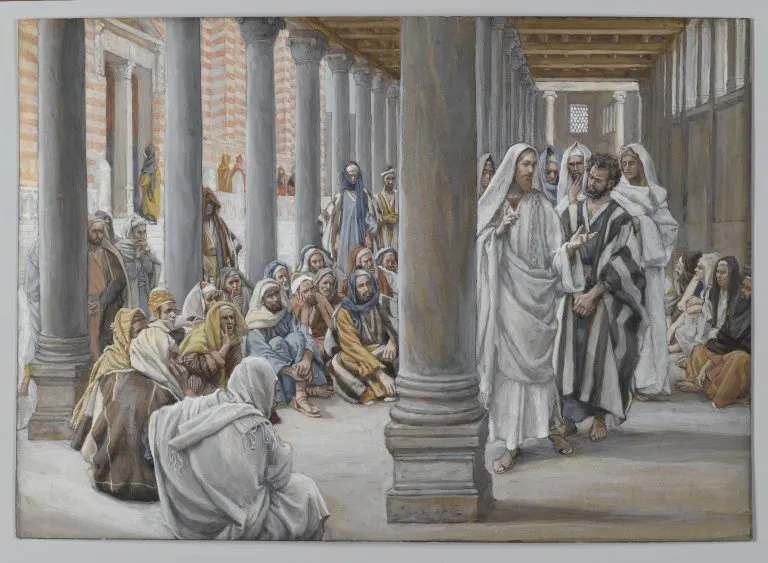
Some weeks pass, and the scene shifts to the feast of the dedication… and it was winter (v. 22) - the festival recalling the rededication of the temple after it had been defiled. Fittingly, Jesus is walking in the temple in Solomon's porch (v. 23) when the crowd closes round Him with a demand that sounds like sincerity: How long dost thou make us to doubt? If thou be the Christ, tell us plainly (v. 24).
His answer cuts beneath the question: I told you, and ye believed not: the works that I do in my Father's name, they bear witness of me (v. 25). The problem was never a shortage of evidence - the words had been spoken, the works had been done. Then He says something that reaches back to the whole shepherd discourse: ye believe not, because ye are not of my sheep (v. 26). It is easy to hear this as cold, but the shepherd figure itself explains it: the sheep are known by the fact that they hear his voice and follow (vv. 4, 27).
Their unbelief was a settled refusal to hear the Shepherd's voice - the same refusal that drove out the healed man in chapter 9. The demand to be told plainly rings hollow from people who have already decided not to follow whatever they hear.1
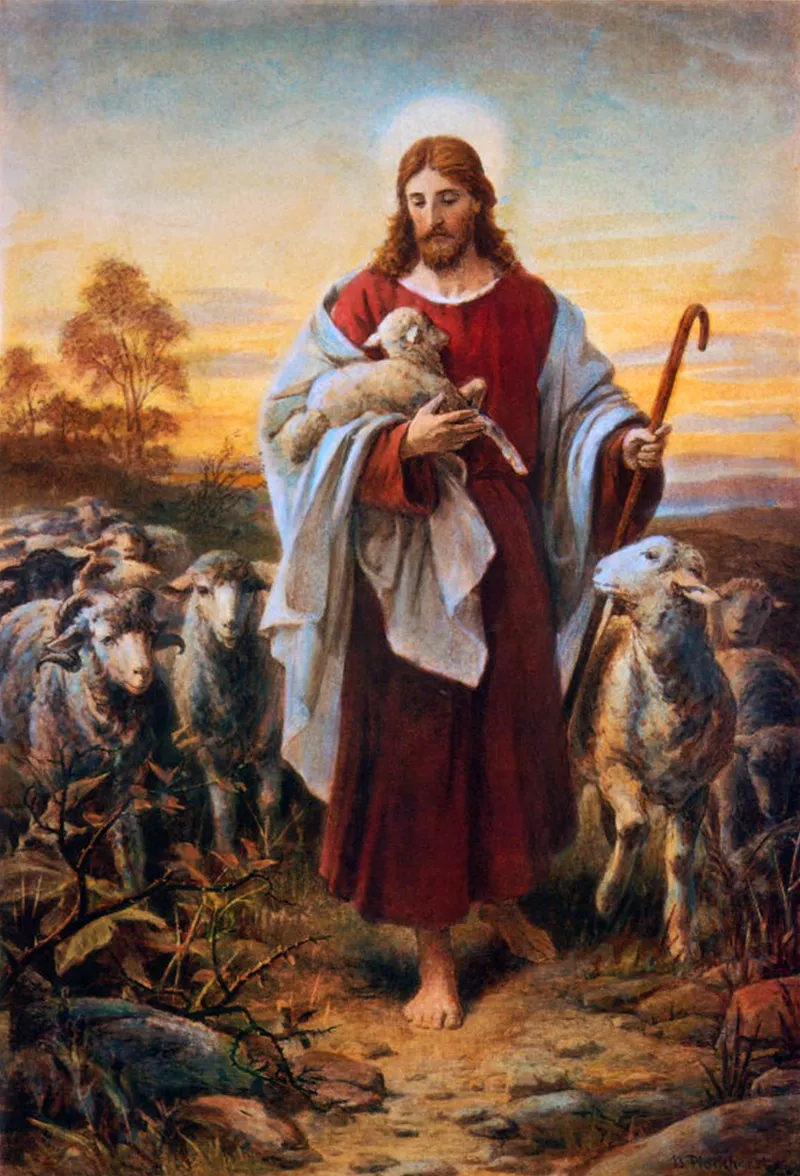
Out of that hard moment comes one of the most steadying promises in all of Scripture, and it flows straight from the shepherd picture: My sheep hear my voice, and I know them, and they follow me: And I give unto them eternal life; and they shall never perish, neither shall any man pluck them out of my hand (vv. 27-28). Trace the order. First the marks of the sheep - they hear, He knows, they follow.
Then the gift - eternal life, freely given. Then the security - a double promise piled up for emphasis: they shall never perish, and no one pluck them out of my hand. And the safety is not single but doubled: My Father, which gave them me, is greater than all; and no man is able to pluck them out of my Father's hand (v. 29). The sheep are held in two hands at once - the Shepherd's and the Father's - and the Father's hand belongs to the One who is greater than all. Let the comfort be exactly what Jesus made it.
To a frightened follower wondering whether they can hold on tightly enough, the answer here is that the holding is not finally theirs to do. They are gripped by a hand stronger than every threat. That is the assurance He sets before His sheep - spoken not as a debate to be won but as a comfort to be rested in.
Then comes the sentence the whole confrontation had been moving toward: I and my Father are one (v. 30). It crowns what He has just said about the two hands - the sheep are equally safe in the Shepherd's hand and the Father's hand because the Shepherd and the Father are one. The next verses tell us, beyond any doubt, how His hearers heard the claim: Then the Jews took up stones again to stone him (v. 31), and when He asks for which good work, they answer: For a good work we stone thee not; but for blasphemy; and because that thou, being a man, makest thyself God (v. 33).
This is the plain witness of the text, and it must be allowed to stand. They did not hear a teacher claiming mere agreement with God, or close fellowship; they heard a man claiming what belongs to God alone, and they reached for the punishment the law assigned to blasphemy. The chapter does not soften the force of the words or the reaction. It records the saying - I and my Father are one - and it records that those who heard it understood Him to be making Himself God.
The reader is left holding the sentence as Jesus spoke it, and the response it provoked, without anything added to it.
Jesus does not retreat from what He said, but He answers the charge with Scripture: Is it not written in your law, I said, Ye are gods? (v. 34) - a quotation from the Psalms (Ps. 82:6), where those unto whom the word of God came are addressed in that high language. His argument runs from the lesser to the greater. If the Scripture - which cannot be broken (v. 35) - could use such a word of others, then why is it blasphemy for the One whom the Father hath sanctified, and sent into the world to say I am the Son of God (v. 36)?
He is not retracting verse 30; He is exposing the inconsistency of stoning Him for words their own Scripture could use of others. Then He points them back, as before, to the evidence they keep refusing: If I do not the works of my Father, believe me not. But if I do, though ye believe not me, believe the works: that ye may know, and believe, that the Father is in me, and I in him (vv. 37-38).
The works are meant to lead the eye to the deepest truth of all - the mutual indwelling of the Father and the Son, the Father is in me, and I in him. It is the same oneness of verse 30, stated again. And again it splits the crowd: they sought again to take him: but he escaped out of their hand (v. 39). The hand that holds the sheep so securely cannot itself be seized before its hour.
John 10:40-42And Many Believed on Him There
40And went away again beyond Jordan into the place where John at first baptized; and there he abode. 41And many resorted unto him, and said, John did no miracle: but all things that John spake of this man were true. 42And many believed on him there.
After the stones and the failed arrest, Jesus withdraws with purpose - to the place where John at first baptized (v. 40), back across the Jordan where His public ministry had begun. It is a quiet, deliberate retreat to the spot where the first witness had pointed to Him. And the contrast with Jerusalem could not be sharper. In the temple court, surrounded by the religious establishment, He met demands and stones. Here, in the wilderness place by the river, many resorted unto him. They remember the Baptist, and they reason their way to faith with striking simplicity: John did no miracle: but all things that John spake of this man were true (v. 41).
John had worked no signs of his own, yet everything he had said about Jesus was proving true before their eyes - and that was enough. It is a beautiful vindication of faithful witness. The Baptist had insisted he was only a voice, only the friend of the bridegroom, only the one preparing the way (John 1:23; 3:29). He performed no wonders. But his words about Christ were true, and years later, in the place where he had spoken them, those words were still drawing people to the One he had named.
A witness does not need to dazzle; he needs to tell the truth about Jesus.
Research trail
Sources & further study
These references support the historical, linguistic, manuscript, and contextual notes in this chapter. Scripture remains the primary text; external sources are provided so readers can inspect the research directly.
- John 10 - Translators' NotesThe NET Bible's detailed footnotes on John 10 - the sheepfold imagery of verses 1-5, the double “I am” sayings (the door, v. 7; the good shepherd, v. 11), the legal force of “makest thyself God” (v. 33), and the citation of Psalm 82 in verses 34-36.
- John 10 ↔ Ezekiel 34 · Psalm 23 · Ezekiel 37Traces the shepherd threads tying John 10 to the rest of Scripture - the LORD who promises to seek His scattered flock and feed them Himself (Ezek. 34), the psalm that calls Him shepherd (Ps. 23), and the promise of one shepherd over a regathered people (Ezek. 37:24) set beside one fold, and one shepherd (v. 16).
- John 10 · Greek interlinear + parsingThe Greek text of John 10 word by word, with parsing and lexical links - useful for ho poimên ho kalos (v. 11, “the good shepherd”), the verb harpazô (vv. 28-29, “pluck”), and the neuter hen (v. 30, “one”).
Where this echoes in Scripture
I Am the Door of the Sheep
- Psalm 23:1-2The LORD is my shepherd; I shall not want. He maketh me to lie down in green pastures: he leadeth me beside the still waters.The shepherd who leads to pasture (vv. 3, 9) - the psalm Israel had sung of the LORD long before the Shepherd stood among them.
- John 14:6I am the way, the truth, and the life: no man cometh unto the Father, but by me.The same claim as “I am the door” (vv. 7, 9) - the one appointed way of entrance.
- Acts 4:12Neither is there salvation in any other: for there is none other name under heaven given among men, whereby we must be saved.The apostles preaching the single door of verse 9 - salvation through Him and no other.
- Ezekiel 34:2-4Woe be to the shepherds of Israel that do feed themselves! ... but ye feed not the flock.The thieves and hirelings of verses 1, 8 - the false shepherds who use the flock instead of feeding it.
- John 6:37him that cometh to me I will in no wise cast out.How wide the single door stands - the “any man” of verse 9 turned away by nothing.
The Good Shepherd Giveth His Life for the Sheep
- Ezekiel 34:11-12I will both search my sheep, and seek them out... and will deliver them out of all places where they have been scattered.The promise the good shepherd fulfills (vv. 11, 14) - the LORD Himself coming to seek and feed His scattered flock.
- Isaiah 53:6All we like sheep have gone astray; we have turned every one to his own way; and the LORD hath laid on him the iniquity of us all.The Shepherd who lays down His life for straying sheep (vv. 11, 15, 18) - bearing what they could not.
- Hebrews 13:20that great shepherd of the sheep, through the blood of the everlasting covenant.The title of verse 11 carried into glory - the Shepherd whose laid-down life is the blood of the covenant.
- Ephesians 2:14-16For he is our peace, who hath made both one... to make in himself of twain one new man.The “other sheep” and “one fold” of verse 16 - the two made one flock in Christ.
- 1 Peter 2:25For ye were as sheep going astray; but are now returned unto the Shepherd and Bishop of your souls.The straying sheep gathered to the Shepherd of verses 11-16 - returned to the One who keeps their souls.
I and My Father Are One
- Romans 8:38-39neither death, nor life... nor any other creature, shall be able to separate us from the love of God, which is in Christ Jesus our Lord.The unbreakable hold of verses 28-29 - nothing in all creation able to snatch the sheep away.
- John 6:39this is the Father's will... that of all which he hath given me I should lose nothing.The keeping of verse 28 as the Father's own will - the Son loses none whom the Father gives.
- John 1:1In the beginning was the Word, and the Word was with God, and the Word was God.The oneness of verse 30 sounded from the Gospel's first line - the Word with God and God.
- John 14:9-11he that hath seen me hath seen the Father... I am in the Father, and the Father in me.The mutual indwelling of verse 38 stated again - the Son and the Father one, yet distinguished.
- Psalm 82:6I have said, Ye are gods; and all of you are children of the most High.The Scripture Jesus cites in verse 34 - the “law” that called others gods, answering the charge of blasphemy.
And Many Believed on Him There
- John 1:29Behold the Lamb of God, which taketh away the sin of the world.The Baptist's true word about Jesus (v. 41) - spoken near this same place, still drawing people to Him.
- John 3:30He must increase, but I must decrease.The faithful witness vindicated in verses 41-42 - John pointed away from himself to Christ, and Christ increased.
- John 20:31these are written, that ye might believe that Jesus is the Christ, the Son of God; and that believing ye might have life through his name.The purpose the chapter's last line answers (v. 42) - written that you might believe and have life.
- John 8:30As he spake these words, many believed on him.The same response as verse 42 - the Shepherd's voice heard, and the sheep believing.
- Romans 10:17So then faith cometh by hearing, and hearing by the word of God.How the many came to believe (vv. 41-42) - faith born of the true word once spoken about Christ.