John 20
People in this chapter
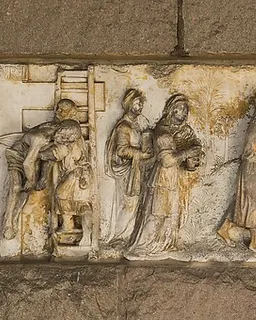
John has told the story of seven great signs, of long nights of teaching, of a cross and a sealed tomb. Now he tells the eighth and final sign, the one all the others pointed to. The first day of the week cometh Mary Magdalene early, when it was yet dark, unto the sepulchre, and seeth the stone taken away (v. 1). She runs to Peter and to the disciple whom Jesus loved with the only explanation she can imagine: They have taken away the Lord… and we know not where they have laid him. The two men race to the tomb and find it open and empty - but not ransacked.
The linen clothes lie where the body had been, and the napkin from His head is wrapped together in a place by itself (v. 7). The beloved disciple looks, and he saw, and believed.1
Tap any highlighted phrase to jump to the commentary that unpacks it.
John 20:1-10He Saw, and Believed
1The first day of the week cometh Mary Magdalene early, when it was yet dark, unto the sepulchre, and seeth the stone taken away from the sepulchre. 2Then she runneth, and cometh to Simon Peter, and to the other disciple, whom Jesus loved, and saith unto them, They have taken away the LORD out of the sepulchre, and we know not where they have laid him. 3Peter therefore went forth, and that other disciple, and came to the sepulchre. 4So they ran both together: and the other disciple did outrun Peter, and came first to the sepulchre. 5And he stooping down, and looking in, saw the linen clothes lying; yet went he not in. 6Then cometh Simon Peter following him, and went into the sepulchre, and seeth the linen clothes lie, 7And the napkin, that was about his head, not lying with the linen clothes, but wrapped together in a place by itself. 8Then went in also that other disciple, which came first to the sepulchre, and he saw, and believed. 9For as yet they knew not the scripture, that he must rise again from the dead. 10Then the disciples went away again unto their own home.
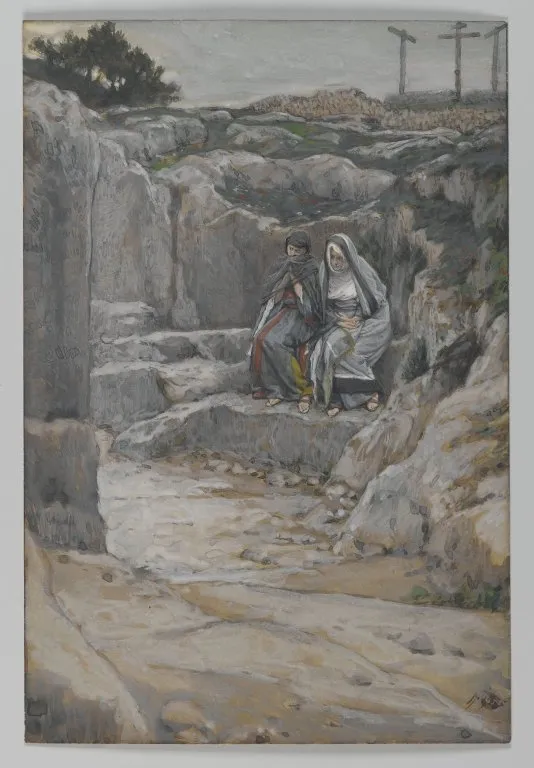
The Gospel that opened in eternity - In the beginning was the Word - comes now to a particular morning in a particular garden, and the detail is exact: The first day of the week cometh Mary Magdalene early, when it was yet dark (v. 1). She comes while it was yet dark, both the dark before dawn and the darkness of grief, expecting only a corpse to tend. What she finds undoes her: the stone taken away from the sepulchre. She does not leap to resurrection; no one did.
The empty tomb by itself preaches nothing but theft to a heart that has buried its Lord, and so she runs to Peter and the beloved disciple with the only sentence that makes sense to her: They have taken away the Lord out of the sepulchre, and we know not where they have laid him (v. 2). Notice the we - the other Gospels remember she did not come alone. Her witness will become the first proclamation of Easter, but at this hour it is only a wound and a question.
It is worth sitting with how the greatest news in history arrives: as bewildered grief stumbling in the dark toward an open grave.
Two men hear her and run. Peter therefore went forth, and that other disciple… So they ran both together: and the other disciple did outrun Peter, and came first to the sepulchre (vv. 3-4). It is one of the most human touches in all the Gospels - the younger man outpaces the older, reaches the tomb first, but then hesitates at the threshold, stooping to look in without going in. Peter, true to everything we know of him, arrives second and barrels straight inside.
The two of them, breathless at the mouth of the grave, stand for every reader who has ever run toward a hope too large to name. And what stops them is not an absence but an arrangement. They had braced themselves, perhaps, for an empty shelf and a stolen body. Instead they find the tomb furnished with a silent, eloquent order - the wrappings still there, undisturbed, as though the body they had bound had simply passed through them and gone.
John lingers on the grave-clothes with a care that is meant to be noticed: Peter seeth the linen clothes lie, And the napkin, that was about his head, not lying with the linen clothes, but wrapped together in a place by itself (vv. 6-7). This is not the scene a grave-robbery leaves behind. Thieves do not unwrap a body and abandon costly linen and a fortune in spices; and if some authority had moved the corpse, they would have carried it wrappings and all.
But here the linen lies where the body had been, and the face-cloth is set apart, folded, in its own place. The picture is of a body that did not leave but rose - that passed out of the wrappings and left them collapsed and orderly behind it. The careful word wrapped together - folded, rolled up - is the detail of someone who has finished and tidied, not of violence or haste. John, who was there, wants us to see exactly what he saw: a grave emptied from the inside.
The order of the linen is the first quiet evidence that death has been not cheated but conquered.1
Then comes a sentence John could only have written about himself, told with a disciple's wonder: the other disciple went in also… and he saw, and believed. For as yet they knew not the scripture, that he must rise again from the dead (vv. 8-9). He believed before he understood. He had no risen Lord in front of him yet, no angel's announcement, no grasp of how the Scriptures had foretold this - only the testimony of folded linen in an empty tomb, and on that evidence alone faith was born in him.
There is something deeply hopeful in the order of it. Understanding came later; belief came first, prompted by quiet signs honestly looked at. And the admission that they knew not the scripture is candid and freeing: even those closest to Jesus did not see it all at once. Faith does not require that every question be answered before the first step is taken. It often begins, as it began here, with an honest heart looking at the evidence in front of it and daring to believe what it suggests.
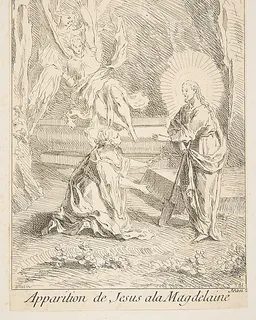
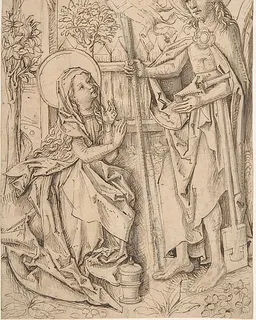
John 20:11-18Mary · Rabboni
11But Mary stood without at the sepulchre weeping: and as she wept, she stooped down, and looked into the sepulchre, 12And seeth two angels in white sitting, the one at the head, and the other at the feet, where the body of Jesus had lain. 13And they say unto her, Woman, why weepest thou? She saith unto them, Because they have taken away my LORD, and I know not where they have laid him. 14And when she had thus said, she turned herself back, and saw Jesus standing, and knew not that it was Jesus. 15Jesus saith unto her, Woman, why weepest thou? whom seekest thou? She, supposing him to be the gardener, saith unto him, Sir, if thou have borne him hence, tell me where thou hast laid him, and I will take him away. 16Jesus saith unto her, Mary. She turned herself, and saith unto him, Rabboni; which is to say, Master. 17Jesus saith unto her, Touch me not; for I am not yet ascended to my Father: but go to my brethren, and say unto them, I ascend unto my Father, and your Father; and to my God, and your God. 18Mary Magdalene came and told the disciples that she had seen the LORD, and that he had spoken these things unto her.
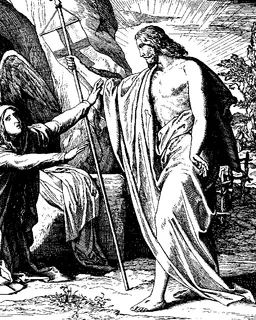
Peter and John have gone home; Mary stays. But Mary stood without at the sepulchre weeping (v. 11). She has nothing to go home to, for her Lord is gone, and so she keeps the post of grief, looking again into the tomb she has already seen is empty - the way mourners return to a loss, hoping it will read differently the second time. And it does: she seeth two angels in white sitting, the one at the head, and the other at the feet, where the body of Jesus had lain (v. 12).
The detail is tender and exact - one at the head, one at the feet, framing the place the body had been like the two cherubim that bowed toward the mercy-seat over the ark. Yet even angels do not break her grief. When they ask why she weeps, she answers them as she answered the disciples, only now it is more personal still: Because they have taken away my Lord, and I know not where they have laid him (v. 13).
My Lord. Her love has not lessened; she simply cannot find Him. Hers is the sorrow of one who loves and has lost, and it will not be comforted by anything less than His own presence.
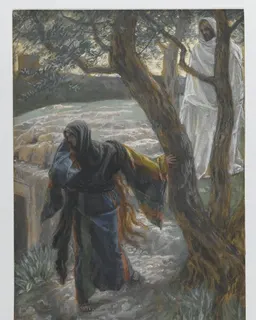
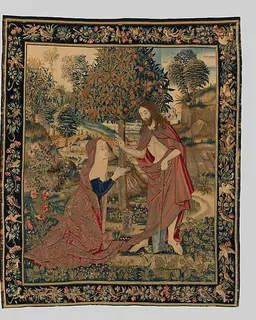
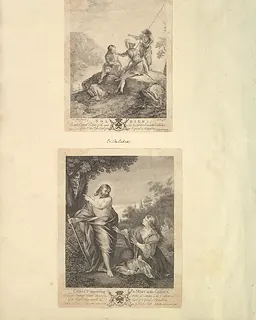
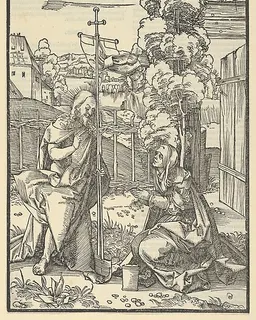
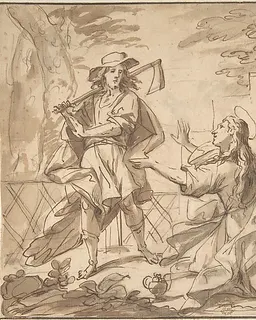
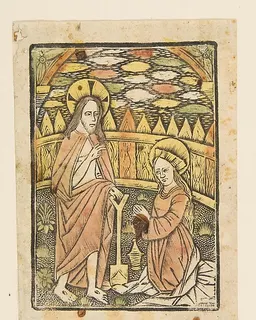
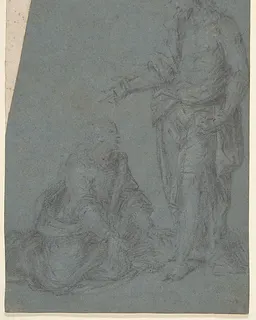
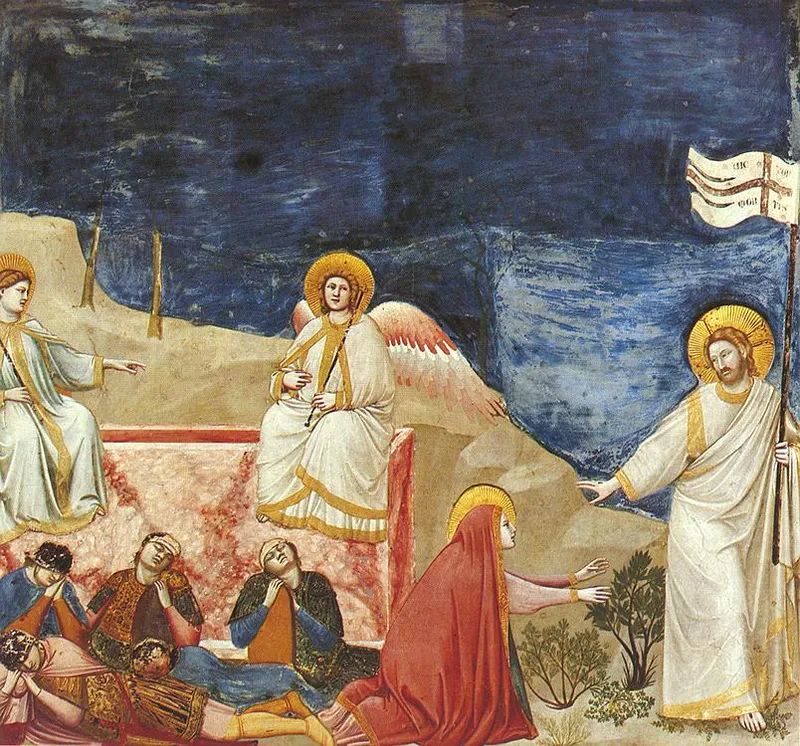
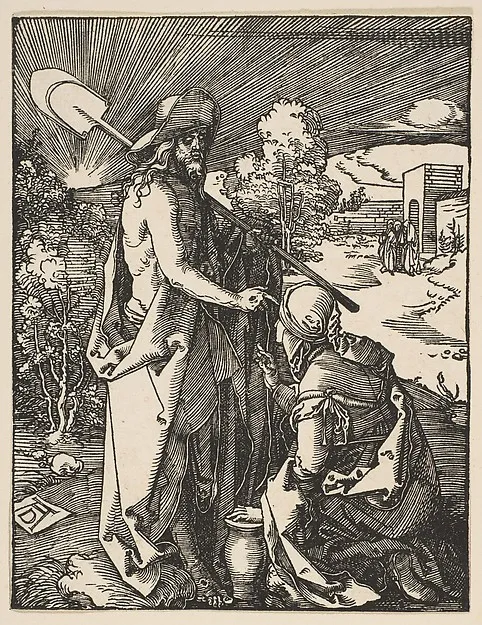
Then comes one of the great moments in all of Scripture, and it begins in confusion: she turned herself back, and saw Jesus standing, and knew not that it was Jesus (v. 14). The risen Lord is standing right in front of her, and she does not know Him. Her tears blur Him, her grief has already buried Him, and she has no category for a living Jesus - so she takes Him for the gardener.
There is a quiet beauty in even the mistake: on the first day of a new week, in a garden, the new creation's first gardener stands unrecognized, as a kind of second Adam in a second garden. He asks her the questions that draw out the heart - Woman, why weepest thou? whom seekest thou? - and she, still seeing only a stranger, pours out her devotion in a single unguarded sentence: Sir, if thou have borne him hence, tell me where thou hast laid him, and I will take him away (v. 15).
She does not even name who she means; love assumes the whole world knows her loss. She is ready to carry a dead body herself. She wants only to find Him - and He is the one she is speaking to.
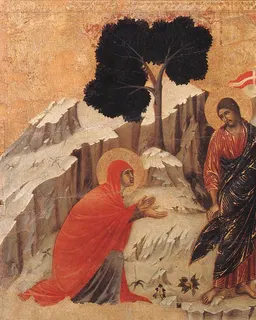
He speaks one word, and it is enough. Jesus saith unto her, Mary. She turned herself, and saith unto him, Rabboni; which is to say, Master (v. 16). He does not announce Himself, does not say I am risen, does not display His wounds. He simply says her name - and at the sound of it, in the voice she knew, recognition floods in. This is the Shepherd of the tenth chapter doing exactly what He said He would: he calleth his own sheep by name… and the sheep follow him: for they know his voice (John 10:3-4).
Mary did not recognize His face, but she knew His voice the instant it spoke her name. She turns - she had already half-turned toward the angels and away - and turns now fully to Him with a cry that is part worship and part homecoming: Rabboni. The whole exchange teaches something the rest of the chapter will confirm: the risen Christ is known not by sight alone, nor by argument, but by His voice calling the one who is His - personally, by name, as one already known and loved.
Her first instinct is to hold on, and His first word to her gently redirects it: Touch me not; for I am not yet ascended to my Father (v. 17). It is a teaching, and a tender one - days later He will invite Thomas to reach out and touch. Mary wants to seize the old relationship and keep Him as He was, the Master walking the roads of Galilee. He tells her that is not how it will be now; He is going to the Father, and the bond she clings to is about to be deepened, not lost.
Then He gives her a commission, making her the first to carry the news: go to my brethren, and say unto them, I ascend unto my Father, and your Father; and to my God, and your God (v. 17). Two things shine here. He calls the disciples who had fled my brethren - not servants, not failures, but family. And He does not say our Father, flattening the difference between Himself and them; He says my Father, and your Father… my God, and your God - His by eternal right, theirs now by gift through Him.
Mary, who came seeking a dead body, leaves as the first preacher of the resurrection: she had seen the Lord (v. 18).
John 20:19-23As My Father Hath Sent Me, Even So Send I You
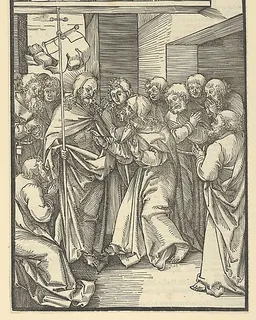
19Then the same day at evening, being the first day of the week, when the doors were shut where the disciples were assembled for fear of the Jews, came Jesus and stood in the midst, and saith unto them, Peace be unto you. 20And when he had so said, he shewed unto them his hands and his side. Then were the disciples glad, when they saw the LORD. 21Then said Jesus to them again, Peace be unto you: as my Father hath sent me, even so send I you. 22And when he had said this, he breathed on them, and saith unto them, Receive ye the Holy Ghost: 23Whose soever sins ye remit, they are remitted unto them; and whose soever sins ye retain, they are retained.
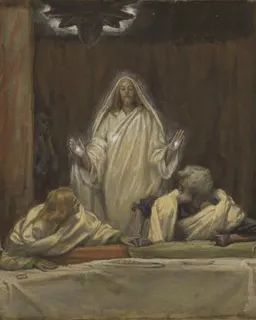
The same day, after dark, the disciples are huddled together behind locked doors - for fear of the Jews (v. 19) - men who had run when their Lord was taken and now wait, ashamed and afraid, for the knock that might come for them too. Into that locked, frightened room the risen Christ simply stood in the midst. The shut doors are no barrier to His risen body; He is suddenly there. And His first word is not reproach for their desertion, not a single syllable about how they had failed Him, but Peace be unto you. It was the ordinary Hebrew greeting, shalom, the word for hello - but on these lips, in this room, after this week, it is freighted with everything.
He had promised it before He died: Peace I leave with you, my peace I give unto you… let not your heart be troubled, neither let it be afraid (John 14:27). Now He delivers it in person. The first gift of the risen Lord to the men who abandoned Him is peace - the peace of sins not counted, of a relationship not broken, of fear answered by His own presence in the room.
Before they can even take it in, He gives them proof: when he had so said, he shewed unto them his hands and his side (v. 20). He shows the wounds - the nail-marks in the hands, the spear-wound in the side that John himself had watched be opened on the cross. This is the same body that was crucified, now alive; the very One who died, bearing the very marks of His death in His living flesh.
And the wounds are not erased. The risen Christ carries them still, the permanent credentials of His love. The disciples' response is recorded with beautiful simplicity: Then were the disciples glad, when they saw the Lord. The fear that had locked the doors gives way to joy - not because their circumstances had changed, the authorities outside were no less hostile, but because the Lord they had lost was standing among them, scarred and alive. He had told them this very turn would come: ye shall weep and lament… and ye shall be sorrowful, but your sorrow shall be turned into joy (John 16:20).
Now He says it again - Peace be unto you - and on that peace He builds a commission: as my Father hath sent me, even so send I you (v. 21). The whole movement of the Gospel turns outward here. All through these pages Jesus has spoken of Himself as the one sent - him that sent me is His constant phrase for the Father. Now He makes His disciples sent ones in their turn, and binds their sending to His own: as the Father sent Him, even so He sends them.
The pattern of their mission is His mission - the same Father's purpose, the same self-giving love, the same word of reconciliation carried into a hostile world. They are not commissioned because they are brave or worthy; the men being sent are the men who had just been hiding behind locked doors. They are sent because He sends them, and because He goes with them. The risen Lord does not appear merely to comfort His own and leave them where they are.
He appears to commission them - to turn a frightened, grieving band into the ones who will carry His name to the world.
A commission needs power, and He gives it in the most intimate way: when he had said this, he breathed on them, and saith unto them, Receive ye the Holy Ghost (v. 22). He does not lay on hands or pronounce from a distance; He breathes - close enough to feel, a gesture out of the very beginning of things. The Gospel began deliberately echoing Genesis, In the beginning, and here at the dawn of the new creation it echoes Genesis again.
As the LORD God had breathed into the man the breath of life and he became a living soul (Gen. 2:7), so the risen Lord breathes on His own and imparts the Spirit who is life. This is resurrection life passing from the risen Head to His body; the new creation begins, as the first did, with the breath of God. Then He fits the gift to the sending: Whose soever sins ye remit, they are remitted unto them; and whose soever sins ye retain, they are retained (v. 23).
The sent ones are entrusted with the gospel of forgiveness - to go into the world announcing in His name that sins are remitted to those who receive Him, and held against those who refuse Him. The message they carry is the message of remission of sins through the risen Christ.
John 20:24-31My Lord and My God
24But Thomas, one of the twelve, called Didymus, was not with them when Jesus came. 25The other disciples therefore said unto him, We have seen the LORD. But he said unto them, Except I shall see in his hands the print of the nails, and put my finger into the print of the nails, and thrust my hand into his side, I will not believe. 26And after eight days again his disciples were within, and Thomas with them: then came Jesus, the doors being shut, and stood in the midst, and said, Peace be unto you. 27Then saith he to Thomas, Reach hither thy finger, and behold my hands; and reach hither thy hand, and thrust it into my side: and be not faithless, but believing. 28And Thomas answered and said unto him, My LORD and my God. 29Jesus saith unto him, Thomas, because thou hast seen me, thou hast believed: blessed are they that have not seen, and yet have believed. 30And many other signs truly did Jesus in the presence of his disciples, which are not written in this book: 31But these are written, that ye might believe that Jesus is the Christ, the Son of God; and that believing ye might have life through his name.
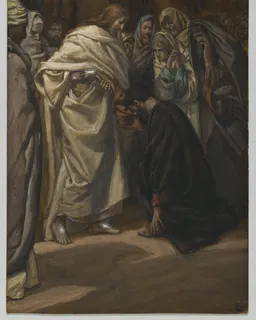
One of the Twelve had missed it all: But Thomas, one of the twelve, called Didymus, was not with them when Jesus came (v. 24). When the others tell him - We have seen the Lord - he refuses flatly, and his refusal is vivid and physical: Except I shall see in his hands the print of the nails, and put my finger into the print of the nails, and thrust my hand into his side, I will not believe (v. 25).
It is easy to be hard on Thomas, but his demand is honest, and it is not for less than the others got - they had been shewn the hands and the side (v. 20); Thomas asks only to see what they had seen. He will not pretend a faith he does not have. He wants the crucified Jesus, the One with the wounds, not a rumor or a comforting idea. For a week he carries that ache - in the room with the others, hearing their joy, unable to share it.
There is no scolding from the rest, and there will be none from the Lord. Thomas stands for every honest doubter who cannot make himself believe on someone else's word, and who waits, wanting it to be true and unable to say it is.
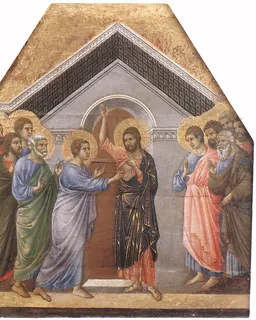
And after eight days again his disciples were within, and Thomas with them: then came Jesus, the doors being shut, and stood in the midst, and said, Peace be unto you (v. 26). The note of time is quietly significant. It is again the first day of the week - the disciples have gathered once more on the day of the resurrection - and once more the risen Lord comes through the shut doors and stands among them with the same word, Peace. But this time He has come for one man.
He had not abandoned Thomas to his doubt; He waited a week and then walked through a locked door for the sake of the one who could not believe. There is great tenderness in the timing. The Lord does not write off the doubter or leave him behind while the others move on in their joy. He comes again, on the same day, with the same peace, and turns straight to the one who needs Him most.
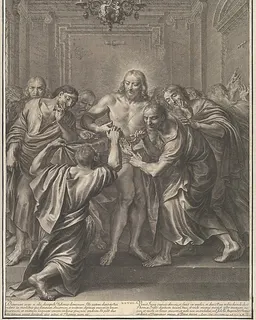
Jesus turns to Thomas and meets the demand word for word: Reach hither thy finger, and behold my hands; and reach hither thy hand, and thrust it into my side (v. 27). He had not been present a week earlier when Thomas spoke those exact words - yet He repeats them back to him precisely, showing Thomas that He had heard every syllable of his doubt. And He offers, freely, the very proof Thomas had set as his condition.
There is no rebuke for asking. The wounds are still there to be touched; the risen body still bears the marks of the nails and the spear. Then comes the gentle charge: be not faithless, but believing. The word is not be not doubtful but be not faithless - do not stay in unbelief, do not let the doubt harden into refusal, but come over into faith. It is an invitation more than a reprimand. The same Lord who showed the others His hands and side without their asking now shows them to the one who asked, and bids him cross from his honest doubt into honest belief.1
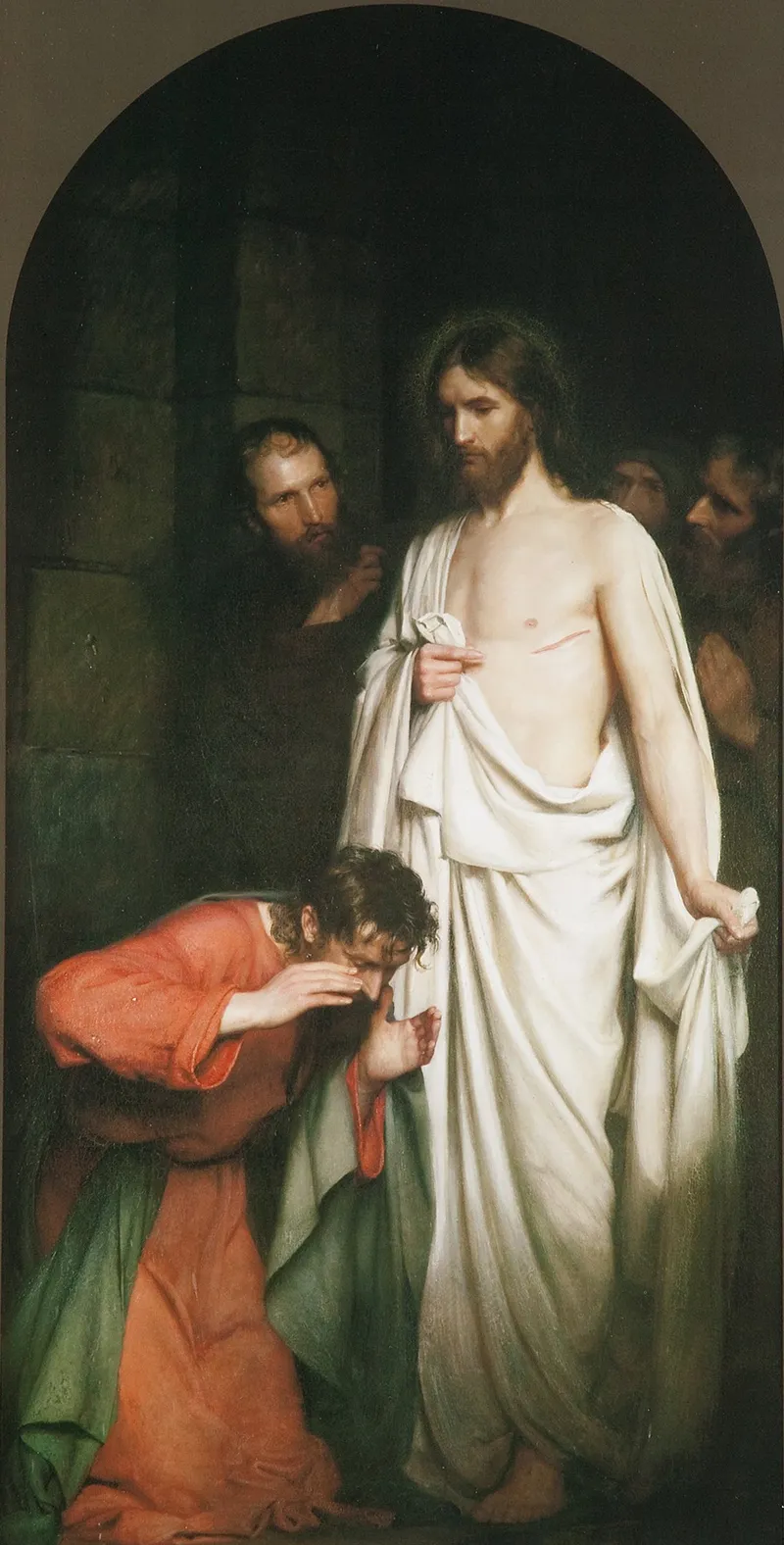
Thomas does not even need to touch. Faced with the wounds and the One who bears them, the doubter speaks the highest word in the Gospel: And Thomas answered and said unto him, My Lord and my God (v. 28). It is not an exclamation thrown into the air; John says he answered and said unto him - the words are addressed straight to Jesus. Thomas, looking at the risen, wounded Christ standing in front of him, calls Him my Lord and my God. The Gospel opened by declaring that the Word was God (John 1:1); now, at its climax, a man who had refused to believe falls into the very same confession, spoken not as doctrine but as worship to the One before him.
And Jesus does not correct it. He does not say, as a mere prophet or angel would, see thou do it not… worship God; He receives the confession and answers it with a blessing. The whole journey of Thomas - from I will not believe to my Lord and my God - is the journey the Gospel was written to produce. The deepest doubt has become the deepest confession, and it is laid at the feet of the risen Christ.
Jesus receives the confession and then lifts His eyes past Thomas to everyone who will ever read these words: Thomas, because thou hast seen me, thou hast believed: blessed are they that have not seen, and yet have believed (v. 29). Thomas believed by sight; but a blessing is pronounced over all who will believe without it - which is to say, over the reader. And John makes the purpose of his whole book explicit, the only place he steps out to address us directly: And many other signs truly did Jesus in the presence of his disciples, which are not written in this book: But these are written, that ye might believe that Jesus is the Christ, the Son of God; and that believing ye might have life through his name (vv. 30-31).
Here is why the Gospel exists. Not to satisfy curiosity, not as a biography for its own sake, but to bring the reader to faith and through faith to life. The signs were chosen and recorded for one end: that ye might believe… and that believing ye might have life. You who have not seen the risen Lord with your eyes hold in your hands the very thing written so that you might believe Him without seeing - and in believing, have life through His name.2
Research trail
Sources & further study
These references support the historical, linguistic, manuscript, and contextual notes in this chapter. Scripture remains the primary text; external sources are provided so readers can inspect the research directly.
- John 20 - Translators' NotesThe NET Bible's detailed footnotes on John 20 - the precise sense of the linen clothes and the separately folded napkin (vv. 5-7), the much-discussed touch me not of verse 17, the breathing of the Spirit in verse 22, and the grammar of Thomas's confession in verse 28 with its definite articles, “the Lord of me and the God of me.”
- John 20 ↔ Genesis 2 · Psalm 16 · John 10Traces the threads tying John 20 to the rest of Scripture - the breath of life in the garden (Gen. 2:7) read beneath the breath of the Spirit (v. 22), the Shepherd who calleth his own sheep by name (John 10:3) read beside Mary in the garden (v. 16), and the hope that God wilt not leave my soul in hell, neither… suffer thine Holy One to see corruption (Ps. 16:10) read against the empty tomb.
- John 20 · Greek interlinear, word by wordThe Greek text of John 20 set under the English word by word - useful for the folded grave-cloth of verse 7 (entylissō, “wrapped together”), for the breath Jesus breathes in verse 22 (emphysaō, the same verb the Greek Old Testament uses when God breathes life into the man in Gen. 2:7), and for Thomas's words in verse 28, ho kurios mou kai ho theos mou.
Where this echoes in Scripture
He Saw, and Believed
- Luke 24:12Then arose Peter, and ran unto the sepulchre; and stooping down, he beheld the linen clothes laid by themselves, and departed, wondering.Luke's record of the same morning - Peter running to the tomb and marvelling at the linen clothes (vv. 3-7).
- Psalm 16:10For thou wilt not leave my soul in hell; neither wilt thou suffer thine Holy One to see corruption.The hope fulfilled by the empty tomb of verses 1-9 - the Holy One not abandoned to death.
- John 2:19-21Destroy this temple, and in three days I will raise it up... he spake of the temple of his body.The promise the empty tomb keeps - the body raised in three days, just as He had foretold.
- Acts 2:24Whom God hath raised up, having loosed the pains of death: because it was not possible that he should be holden of it.What the apostles would preach of this morning - that death could not hold the One the tomb could not keep.
- 1 Corinthians 15:3-4Christ died for our sins according to the scriptures; And that he was buried, and that he rose again the third day according to the scriptures.The gospel in summary - the burial and rising that verses 1-10 narrate as eyewitness.
Mary · Rabboni
- John 10:3-4He calleth his own sheep by name, and leadeth them out... the sheep follow him: for they know his voice.The Shepherd's promise lived out in verse 16 - Mary knowing His voice the instant He speaks her name.
- Romans 8:15Ye have received the Spirit of adoption, whereby we cry, Abba, Father.The gift of verse 17 - His Father become our Father, His people made sons.
- Galatians 4:6Because ye are sons, God hath sent forth the Spirit of his Son into your hearts, crying, Abba, Father.The adoption opened by “my Father, and your Father” (v. 17) - the Son's Father now ours.
- Hebrews 2:11For both he that sanctifieth and they who are sanctified are all of one: for which cause he is not ashamed to call them brethren.Why the risen Lord calls the disciples “my brethren” (v. 17) - unashamed to name them His own family.
- Song of Solomon 3:4I found him whom my soul loveth: I held him, and would not let him go.The love that would cling, gently redirected in verse 17 - the seeking heart that finds the One it loves.
As My Father Hath Sent Me, Even So Send I You
- Genesis 2:7The LORD God formed man of the dust of the ground, and breathed into his nostrils the breath of life; and man became a living soul.The first breath of life, echoed when the risen Christ breathes the Spirit on His own (v. 22).
- John 14:27Peace I leave with you, my peace I give unto you... let not your heart be troubled, neither let it be afraid.The peace He promised before the cross, delivered in person in verses 19-21.
- John 17:18As thou hast sent me into the world, even so have I also sent them into the world.The commission of verse 21 He had already prayed the night before - the sent One sending His own.
- Luke 24:47And that repentance and remission of sins should be preached in his name among all nations.The message entrusted in verse 23 - remission of sins proclaimed in His name to the nations.
- 1 Corinthians 15:45The first man Adam was made a living soul; the last Adam was made a quickening spirit.Why the breath of verse 22 is new-creation - the risen Christ giving the life the first Adam never could.
My Lord and My God
- John 1:1In the beginning was the Word, and the Word was with God, and the Word was God.The Gospel's opening confession, answered at its climax by Thomas's “My Lord and my God” (v. 28).
- John 10:30I and my Father are one.One of the claims along the way that Thomas's confession in verse 28 brings to its summit.
- 1 Peter 1:8Whom having not seen, ye love; in whom, though now ye see him not, yet believing, ye rejoice with joy unspeakable.The blessing of verse 29 lived out - love and joy in the One believed without being seen.
- John 17:3And this is life eternal, that they might know thee the only true God, and Jesus Christ, whom thou hast sent.The life promised in verse 31 - eternal life found in knowing the Father and the Son.
- Revelation 19:10And I fell at his feet to worship him. And he said unto me, See thou do it not... worship God.What an angel refuses, set against what the risen Christ receives in verse 28 - the confession not rebuked but blessed.