Luke 24
People in this chapter
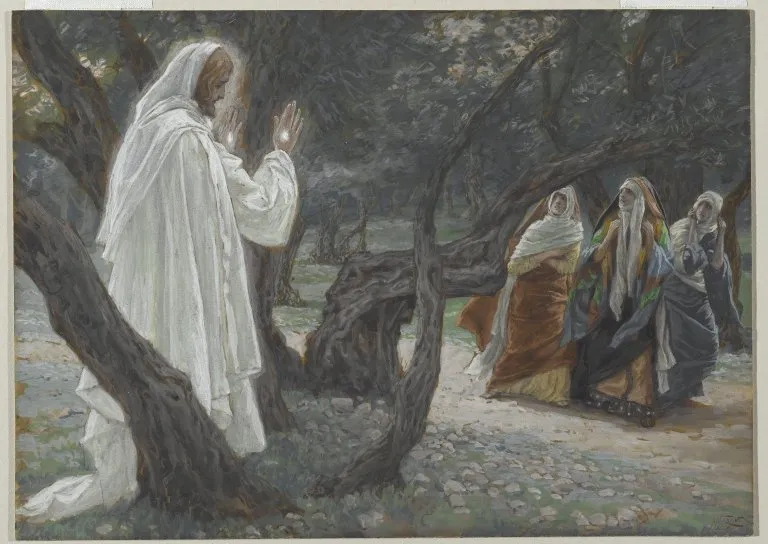
Luke has carried us from an angel in the temple to a cross outside the city, and now to a stone rolled away. Now upon the first day of the week, very early in the morning (v. 1), the women who had followed Jesus come to the sepulchre with the spices they had prepared, expecting to finish the burial of a dead man. Instead they find the stone moved, the body gone, and two men… in shining garments (v. 4) who put to them the question that turns the whole story over: Why seek ye the living among the dead? He is not here, but is risen: remember how he spake unto you when he was yet in Galilee (vv. 5-6).
They had forgotten His own words; the angels give them back. And here is Luke's quiet, deliberate scandal: the first witnesses of the resurrection are these women, whose report the apostles dismiss as idle tales (v. 11), until Peter runs to see the empty grave-clothes for himself.1
Tap any highlighted phrase to jump to the commentary that unpacks it.
Luke 24:1-12He Is Not Here, but Is Risen
1Now upon the first day of the week, very early in the morning, they came unto the sepulchre, bringing the spices which they had prepared, and certain others with them. 2And they found the stone rolled away from the sepulchre. 3And they entered in, and found not the body of the Lord Jesus. 4And it came to pass, as they were much perplexed thereabout, behold, two men stood by them in shining garments: 5And as they were afraid, and bowed down their faces to the earth, they said unto them, Why seek ye the living among the dead? 6He is not here, but is risen: remember how he spake unto you when he was yet in Galilee, 7Saying, The Son of man must be delivered into the hands of sinful men, and be crucified, and the third day rise again. 8And they remembered his words,
Luke opens the new day with the most ordinary of errands and the most extraordinary of discoveries. Now upon the first day of the week, very early in the morning, they came unto the sepulchre, bringing the spices which they had prepared (v. 1). These are the women who had followed Jesus from Galilee, who had watched where He was laid; they come at first light to do the last service love can do for the dead - to anoint a body for its rest.
They are not expecting a miracle. They are carrying spices, not hope. And then the discovery comes in stages, each one stranger than the last: they found the stone rolled away (v. 2); they entered in, and found not the body of the Lord Jesus (v. 3); and as they were much perplexed thereabout, behold, two men stood by them in shining garments (v. 4). The word for their state is exact - much perplexed. An empty tomb does not, by itself, announce a resurrection; it announces a problem.
Where is He? Who has taken Him? The grave they came to tend is open and bare, and they have no category for what they see. Into that confusion the two shining messengers speak.1
The angels do not begin with an announcement but with a question, and it is one of the great questions of all Scripture: Why seek ye the living among the dead? (v. 5). The women had come to the right place to find a dead man and the wrong place entirely to find Jesus, because Jesus is no longer among the dead. The question gently rebukes the whole frame they brought with them. They came looking for a corpse to honour; they are told they are searching in the realm of death for One who belongs now to the realm of life.
And the messengers do something more than report a fact - they hand the women back the words they had forgotten: He is not here, but is risen: remember how he spake unto you when he was yet in Galilee, Saying, The Son of man must be delivered into the hands of sinful men, and be crucified, and the third day rise again (vv. 6-7). He had told them. More than once on the road to Jerusalem He had said the Son of man would be killed and rise the third day, and they had not been able to hold it.
Now the angels press it on them: remember. The resurrection is not a new and unheralded surprise; it is the keeping of a promise they had heard with their own ears. And they remembered his words (v. 8). Faith here begins as memory - the dawning recognition that what has happened is exactly what He said would happen.
9And returned from the sepulchre, and told all these things unto the eleven, and to all the rest. 10It was Mary Magdalene, and Joanna, and Mary the mother of James, and other women that were with them, which told these things unto the apostles. 11And their words seemed to them as idle tales, and they believed them not. 12Then arose Peter, and ran unto the sepulchre; and stooping down, he beheld the linen clothes laid by themselves, and departed, wondering in himself at that which was come to pass.
Now Luke records something he need not have included, and the fact that he keeps it tells you a great deal. The women run from the tomb and tell the eleven everything - It was Mary Magdalene, and Joanna, and Mary the mother of James, and other women that were with them, which told these things unto the apostles (v. 10) - and the apostles do not believe them. And their words seemed to them as idle tales, and they believed them not (v. 11).
The phrase idle tales is dismissive, even contemptuous; it is the word for the ravings of the delirious, the nonsense one does not take seriously. The first preachers of the resurrection were women, and the first response of the men was to write them off. Two things are worth weighing here. First, Luke is not flattering the apostles; he shows their unbelief plainly, which is exactly what a fabricated triumph would not do. The disciples did not invent a resurrection they were eager to believe - they had to be dragged to it against their own doubt.
Second, in a world that did not count a woman's testimony as weighty, God entrusted the first witness of the risen Christ to women. Their report is true; the doubt is on the side of the men. Then arose Peter, and ran unto the sepulchre (v. 12) - for the doubt could not quite hold its ground - and he sees the linen clothes laid by themselves, the grave-clothes left behind as though the body had simply passed out of them, and goes away wondering. Not yet believing.
But no longer able to dismiss it.
Luke 24:13-27Ought Not Christ to Have Suffered These Things?
13And, behold, two of them went that same day to a village called Emmaus, which was from Jerusalem about threescore furlongs. 14And they talked together of all these things which had happened. 15And it came to pass, that, while they communed together and reasoned, Jesus himself drew near, and went with them. 16But their eyes were holden that they should not know him. 17And he said unto them, What manner of communications are these that ye have one to another, as ye walk, and are sad? 18And the one of them, whose name was Cleopas, answering said unto him, Art thou only a stranger in Jerusalem, and hast not known the things which are come to pass there in these days? 19And he said unto them, What things? And they said unto him, Concerning Jesus of Nazareth, which was a prophet mighty in deed and word before God and all the people: 20And how the chief priests and our rulers delivered him to be condemned to death, and have crucified him. 21But we trusted that it had been he which should have redeemed Israel: and beside all this, to day is the third day since these things were done.
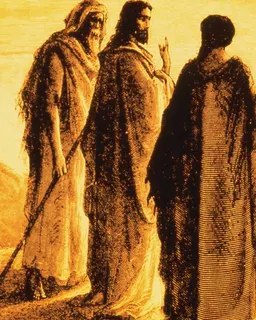
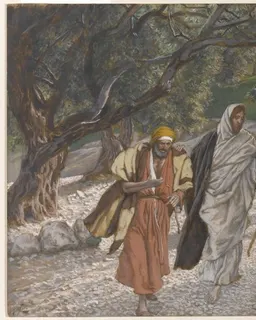
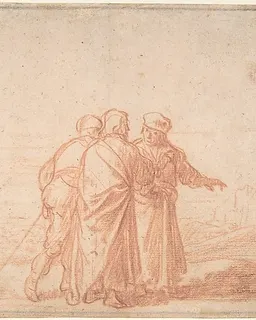
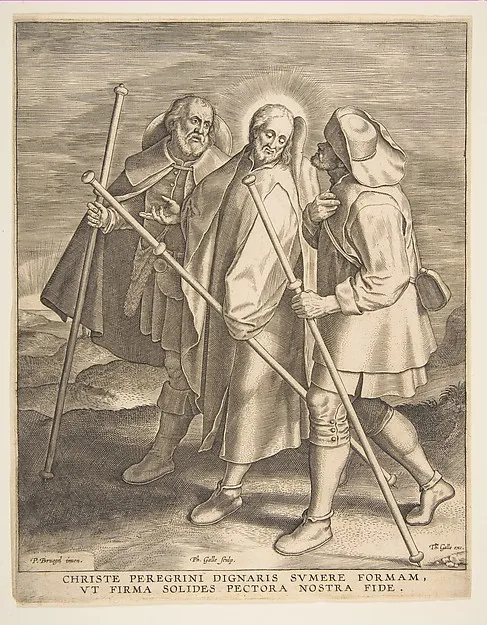
The scene now shifts from the tomb to a road, and to the longest and most tender of all the resurrection appearances. And, behold, two of them went that same day to a village called Emmaus… And they talked together of all these things which had happened (vv. 13-14). Two ordinary disciples - not apostles, one named Cleopas, one left unnamed - are walking the seven miles home, going over and over the wreckage of the past three days.
And then: while they communed together and reasoned, Jesus himself drew near, and went with them (v. 15). This is the heart of the picture before a word of theology is spoken - the risen Lord, on the very day of His rising, spends His time not enthroned in glory but walking a dusty road beside two heartbroken nobodies, listening to them work through their grief. But their eyes were holden that they should not know him (v. 16).
The hiding is deliberate - something keeps them from recognizing Him - and it is a mercy, because it means He can do for them what a flash of glory could not: He can teach them, patiently, before He lets them see. He even draws out their sorrow with a question, What manner of communications are these that ye have one to another, as ye walk, and are sad? (v. 17), and lets them tell Him, the One they are grieving, all about their grief.
Their answer is one of the saddest sentences in the Gospels, and one of the most honest. They rehearse the facts plainly: Concerning Jesus of Nazareth, which was a prophet mighty in deed and word before God and all the people: And how the chief priests and our rulers delivered him to be condemned to death, and have crucified him (vv. 19-20). And then the wound underneath the facts: But we trusted that it had been he which should have redeemed Israel (v. 21).
Hear the tense. We trusted - past tense, a hope now spoken of as over. They had believed He was the Redeemer; the cross, as they read it, had ended that belief. To them, a crucified Messiah was a contradiction in terms; the death they had watched was the death of their hope along with their Lord. And there is a heartbreaking irony in the words which should have redeemed Israel, because He had redeemed Israel - that very weekend, on that very cross - in a way deeper than any they had imagined.
Their disappointment was real, but it was built on too small a hope. They had wanted a Redeemer who would break Rome; what they had been given was a Redeemer who would break the power of sin and death. They were sad over the very event that was their salvation. How often grief reads the hand of God exactly backwards - mourning as defeat the thing that was, all along, the victory.
22Yea, and certain women also of our company made us astonished, which were early at the sepulchre; 23And when they found not his body, they came, saying, that they had also seen a vision of angels, which said that he was alive. 24And certain of them which were with us went to the sepulchre, and found it even so as the women had said: but him they saw not. 25Then he said unto them, O fools, and slow of heart to believe all that the prophets have spoken: 26Ought not Christ to have suffered these things, and to enter into his glory? 27And beginning at Moses and all the prophets, he expounded unto them in all the scriptures the things concerning himself.
They even report the news of the empty tomb - certain women… made us astonished… a vision of angels, which said that he was alive (vv. 22-23) - but they report it as one more bewildering thing, not as the answer to their grief; but him they saw not (v. 24). They have all the facts and none of the meaning. And so Jesus answers, and His answer is bracing: O fools, and slow of heart to believe all that the prophets have spoken (v. 25).
It is not an insult to their intelligence; the word is closer to senseless, and the diagnosis is precise - they are slow of heart to believe… the prophets. Their problem was never a shortage of information; it was that they had not believed all that the prophets said. They had held the promises of the Messiah's glory and quietly skipped the prophecies of His suffering. They wanted Isaiah 9 without Isaiah 53, the reigning King without the smitten Servant.
Then comes the question that reframes the entire cross: Ought not Christ to have suffered these things, and to enter into his glory? (v. 26). Ought not - was it not necessary, was it not written, was it not always the way the Redeemer would go? The suffering they read as the ruin of the plan was the plan. The cross was not the failure of the Messiah's mission but the appointed road into His glory.
Suffering then glory - that is the pattern, and they had missed it because they would not read the whole book.
And then Luke gives us the most tantalizing sentence in the chapter: beginning at Moses and all the prophets, he expounded unto them in all the scriptures the things concerning himself (v. 27). We are not told the contents - what a thing to have overheard - but we are told the scope, and the scope is everything. Beginning at Moses: the promised seed who would bruise the serpent's head, the lamb provided in Isaac's place, the Passover blood, the bronze serpent lifted up, the prophet like Moses yet to come.
And all the prophets: the Servant wounded for our transgressions, the One pierced whom they would look upon, the shepherd smitten, the king coming lowly. In all the scriptures the things concerning himself. This is Luke's great statement, and it governs how the whole Bible is to be read: the Old Testament is not a collection of detached laws and stories with a Messiah tacked on at the end, but a single book that is, from Genesis forward, about Him. He is its subject.
He is the thread that runs from Eden to the prophets, and the suffering-then-glory pattern is written through all of it. The two disciples had the Scriptures by heart and had still missed their meaning - until the risen Christ Himself walked them through, and showed them that every page had been pointing to this Friday and this Sunday all along. The key to the whole library was the Person walking beside them.2
Luke 24:28-35Their Eyes Were Opened in the Breaking of Bread
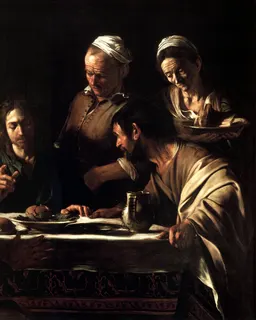
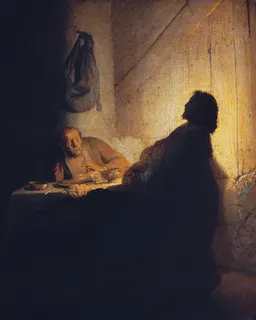
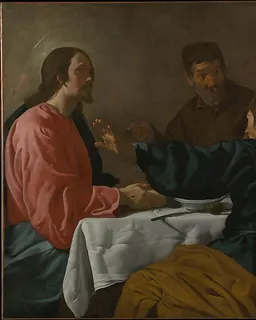
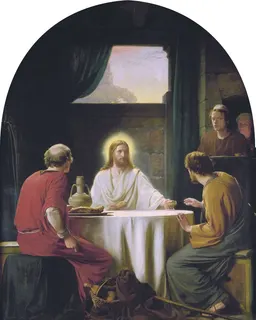
28And they drew nigh unto the village, whither they went: and he made as though he would have gone further. 29But they constrained him, saying, Abide with us: for it is toward evening, and the day is far spent. And he went in to tarry with them. 30And it came to pass, as he sat at meat with them, he took bread, and blessed it, and brake, and gave to them. 31And their eyes were opened, and they knew him; and he vanished out of their sight. 32And they said one to another, Did not our heart burn within us, while he talked with us by the way, and while he opened to us the scriptures?
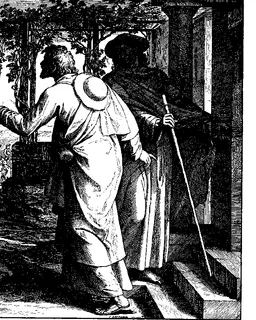
They reach Emmaus, and Jesus tests their hunger for more: he made as though he would have gone further (v. 28). He does not force Himself on them; He gives them the chance to let Him pass or to keep Him. And the burning that had begun in them spills into an urgent request: they constrained him, saying, Abide with us: for it is toward evening, and the day is far spent. And he went in to tarry with them (v. 29).
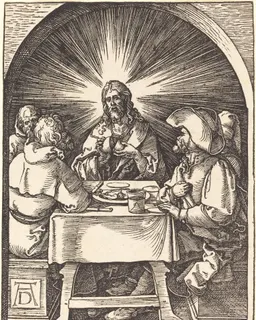
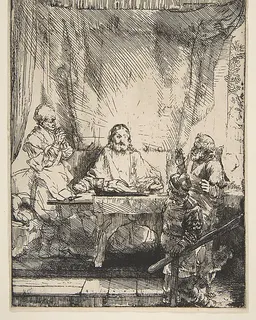
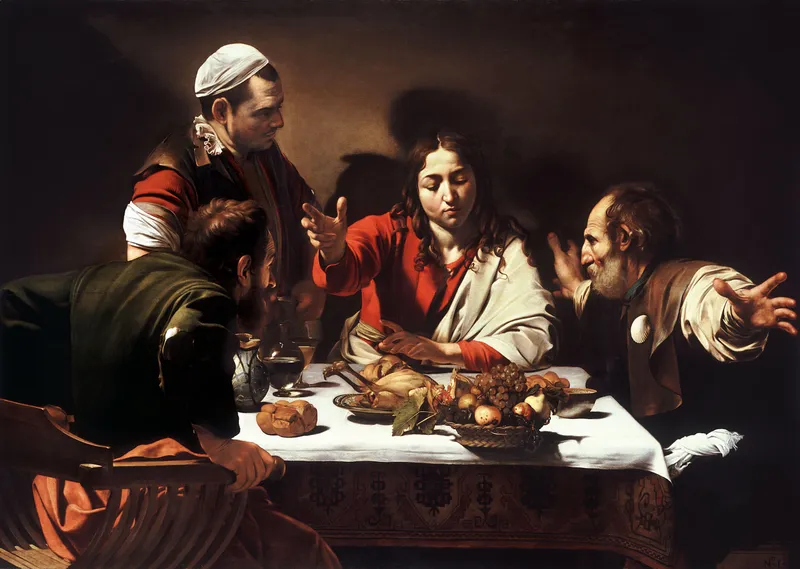
They do not yet know who He is, but they cannot bear to let this stranger go. Constrained is a strong word - they pressed Him, urged Him, would not take a polite refusal. There is a lesson hidden in the manners of it: the One who seems about to pass on stays where He is invited in. Then comes the moment everything turns on. As he sat at meat with them, he took bread, and blessed it, and brake, and gave to them (v. 30).
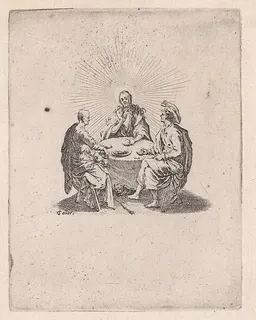
The Guest becomes the Host. The four verbs - took, blessed, brake, gave - are the very actions of the One who had fed the multitudes and, days before, had taken bread in an upper room and said this is my body. Whether it was the familiar gesture, or perhaps the sight of His hands as He broke the loaf, something in that act undid the veil.
And then: their eyes were opened, and they knew him; and he vanished out of their sight (v. 31). The same verb used in verse 16 - their eyes had been holden - is now reversed: their eyes are opened. Recognition floods in at the breaking of the bread, in the very instant He gives Himself to them at the table - and in that same instant He is gone. He does not stay to be examined or clung to; He vanishes, and leaves them with the knowledge that the stranger who had set their hearts on fire was the Lord Himself, alive.
The disappearing is not cruelty but completion: they no longer need Him visibly at the table, for now they know. The whole episode has a shape worth noticing. He came near in their grief, walked the road with them unrecognized, opened the Scriptures until their hearts burned, accepted their welcome, broke the bread - and was known. The risen Christ is found in the meeting of the opened word and the shared table, in the company of the One who walks the road and breaks the bread.
They thought they were giving hospitality to a stranger. They were entertaining the Lord of life.
The moment He vanishes, they understand what had been happening to them the whole way: And they said one to another, Did not our heart burn within us, while he talked with us by the way, and while he opened to us the scriptures? (v. 32). The burning heart is one of the most memorable images in all the Gospels, and it is worth dwelling on. They had not recognized His face, but something in them had responded to His words long before their eyes were opened - a kindling, a warmth, a fire lit in the inward parts as the Scriptures were unfolded to them.
That is what the living word of Christ does in a heart that is being met by Him: it burns. And notice precisely when it burned - while he opened to us the scriptures. The fire was not lit by a sign or a wonder; it was lit by the Old Testament rightly read, by the things concerning Himself drawn out of Moses and the prophets. This is Luke's quiet promise to every reader who comes after: you cannot walk the Emmaus road in the flesh, but the same Christ still opens the same Scriptures, and the burning heart is the sign that He is doing it.
When the word of God comes alive and warm and personal - when a passage you have read a hundred times suddenly burns - that is not mere emotion. That is the risen Lord, opening the scriptures, near.
33And they rose up the same hour, and returned to Jerusalem, and found the eleven gathered together, and them that were with them, 34Saying, The Lord is risen indeed, and hath appeared to Simon. 35And they told what things were done in the way, and how he was known of them in breaking of bread.
Joy will not sit still. They rose up the same hour, and returned to Jerusalem (v. 33) - the same hour, in the dark, back over the seven miles they had just walked in sorrow, because news like this cannot wait for morning. And when they reach the eleven, they are met with the report rather than bringing it: The Lord is risen indeed, and hath appeared to Simon (v. 34). While they were on the road, the Lord had also appeared to Peter - the Peter who had denied Him three times, sought out and met personally by the risen Christ.
The doubt of verse 11 has broken into confession: risen indeed. Then the two add their own witness: they told what things were done in the way, and how he was known of them in breaking of bread (v. 35). The believing community is being built witness by witness - the women, then Peter, then the two from Emmaus - each adding their testimony to the growing certainty. The sorrow that had scattered them into private grief on lonely roads is turning into a gathered, joyful church, comparing notes on the living Lord.
And it is fitting that the Emmaus two summarize their encounter as how he was known of them in breaking of bread - for that is how He would go on being known, by all who welcome Him in and find Him at the table of His word.
Luke 24:36-49Handle Me, and See
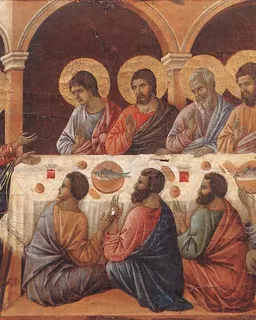
36And as they thus spake, Jesus himself stood in the midst of them, and saith unto them, Peace be unto you. 37But they were terrified and affrighted, and supposed that they had seen a spirit. 38And he said unto them, Why are ye troubled? and why do thoughts arise in your hearts? 39Behold my hands and my feet, that it is I myself: handle me, and see; for a spirit hath not flesh and bones, as ye see me have. 40And when he had thus spoken, he shewed them his hands and his feet. 41And while they yet believed not for joy, and wondered, he said unto them, Have ye here any meat? 42And they gave him a piece of a broiled fish, and of an honeycomb. 43And he took it, and did eat before them.
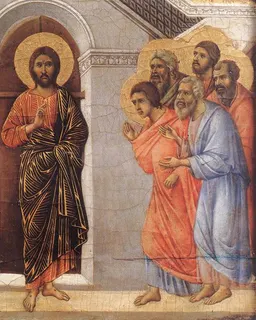
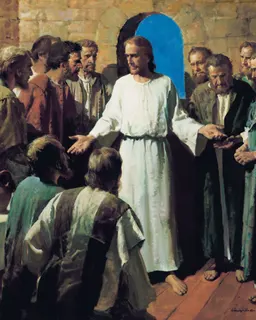
While the Emmaus two are still telling their story, the Lord Himself appears: as they thus spake, Jesus himself stood in the midst of them, and saith unto them, Peace be unto you (v. 36). The first word of the risen Christ to His gathered disciples is Peace - to the very men who had fled and denied and doubted, no rebuke, but peace. Yet peace is not their first response: they were terrified and affrighted, and supposed that they had seen a spirit (v. 37).
They could more easily believe in a ghost than in a resurrection. A disembodied apparition, a spirit of the dead, fit their categories; a body raised did not. So Jesus sets out, with great patience, to prove that He is exactly what they fear He is not - not a phantom, but Himself, bodily. Why are ye troubled? and why do thoughts arise in your hearts? (v. 38). He does not despise their doubt; He addresses it, and then He answers it with the most physical evidence imaginable.
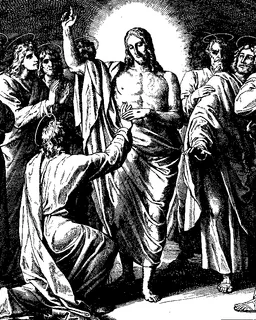
Behold my hands and my feet, that it is I myself: handle me, and see; for a spirit hath not flesh and bones, as ye see me have (v. 39). Every word here insists on the bodily reality of the resurrection. Behold my hands and my feet - the very hands and feet that had been nailed, still marked, so that they would know it was the same body that had hung on the cross. That it is I myself - not a substitute, not an appearance, not a vision, but the same Person who had died, now alive.
Handle me, and see - touch Me, take hold of Me; a spirit cannot be grasped, but I can. For a spirit hath not flesh and bones, as ye see me have - the plainest possible denial that the risen Christ is a mere ghost. He has flesh and bones; the resurrection is the raising of a body, not the survival of a soul. And when he had thus spoken, he shewed them his hands and his feet (v. 40).
Then, because they could scarcely take it in - while they yet believed not for joy, and wondered (v. 41), a beautiful phrase, doubt now mingled with a joy almost too great to trust - He gives them one final proof: Have ye here any meat? And they gave him a piece of a broiled fish, and of an honeycomb. And he took it, and did eat before them (vv. 42-43). A ghost does not eat broiled fish.
The risen Lord takes ordinary food and eats it in front of them, and the matter is settled. The resurrection is not a metaphor, not a vision, not the living-on of His influence or His spirit. It is His body, raised, real, able to be touched and to eat - transformed and glorious, yes, but bodily and true.
44And he said unto them, These are the words which I spake unto you, while I was yet with you, that all things must be fulfilled, which were written in the law of Moses, and in the prophets, and in the psalms, concerning me. 45Then opened he their understanding, that they might understand the scriptures, 46And said unto them, Thus it is written, and thus it behoved Christ to suffer, and to rise from the dead the third day: 47And that repentance and remission of sins should be preached in his name among all nations, beginning at Jerusalem. 48And ye are witnesses of these things. 49And, behold, I send the promise of my Father upon you: but tarry ye in the city of Jerusalem, until ye be endued with power from on high.
Having proved the resurrection to their eyes and hands, Jesus now does for the gathered disciples what He had done on the Emmaus road - He opens the Scriptures. These are the words which I spake unto you, while I was yet with you, that all things must be fulfilled, which were written in the law of Moses, and in the prophets, and in the psalms, concerning me (v. 44). He names the whole Hebrew Bible in its three parts - the law, the prophets, the psalms - and says all of it had to be fulfilled concerning me. But this time Luke tells us something he did not say of the road: Then opened he their understanding, that they might understand the scriptures (v. 45).
It is not enough to have the Scriptures explained from the outside; the risen Christ opens the understanding from within. The same Lord who opens the book opens the mind that reads it, so that the words become not merely heard but grasped. And the summary He gives is the gospel in miniature: thus it behoved Christ to suffer, and to rise from the dead the third day (v. 46) - suffering, then glory, the very pattern, now behoved, necessary, written.
The cross and the empty tomb are not the interruption of the Scriptures' story but its fulfillment. The disciples are being commissioned with an understanding the risen Christ Himself unlocks in them.
Then the scope opens out to the ends of the earth. And that repentance and remission of sins should be preached in his name among all nations, beginning at Jerusalem (v. 47). The fulfillment of the Scriptures was not to end with His rising; it was to overflow into a worldwide proclamation. In his name - on the ground of who He is and what He has done - repentance and remission of sins, the turning of the heart and the wiping away of guilt, is to be preached among all nations. Not Israel only; all nations.
And yet beginning at Jerusalem - the very city that had crucified Him is offered forgiveness first. And ye are witnesses of these things (v. 48). The disciples are not merely beneficiaries of the resurrection; they are its appointed witnesses, sent to tell. But not yet, and not in their own strength: behold, I send the promise of my Father upon you: but tarry ye in the city of Jerusalem, until ye be endued with power from on high (v. 49).
They are to wait. The same men who had run away in fear cannot carry the gospel to the nations on their own resolve; they must be endued with power from on high - clothed, as the word pictures it, with a strength sent down upon them from God. The commission is enormous and the workers are weak, and so the Lord seals His charge with a promise: the power to do what He commands will be given.
They are to go to all nations - but first they are to wait for the gift that will make the going possible.
Luke 24:50-53Carried Up Into Heaven, with Great Joy
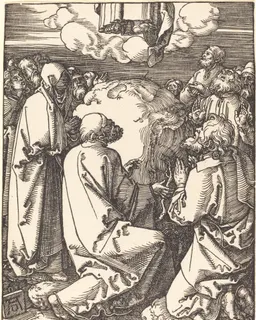
50And he led them out as far as to Bethany, and he lifted up his hands, and blessed them. 51And it came to pass, while he blessed them, he was parted from them, and carried up into heaven. 52And they worshipped him, and returned to Jerusalem with great joy: 53And were continually in the temple, praising and blessing God. Amen.
Luke brings his Gospel to its close with a scene of pure benediction. And he led them out as far as to Bethany, and he lifted up his hands, and blessed them (v. 50). Bethany - the village on the eastern slope of the Mount of Olives, the home of Mary and Martha and Lazarus, a place of friendship and of resurrection - is where the Lord chooses to part from them. And the last act of the earthly Jesus is not a command, not a warning, not a farewell speech, but a blessing.
He lifted up his hands - the gesture of priestly blessing, the very posture in which Aaron and his sons were to bless Israel: The LORD bless thee, and keep thee… The LORD lift up his countenance upon thee, and give thee peace. The hands lifted in blessing are the same hands He had shown them days before, the pierced hands - so that the very marks of the cross are raised over the disciples in benediction.
He leaves them not under a frown but under a blessing; the last thing they see Him doing is blessing them. And then, in the middle of the blessing, the parting: while he blessed them, he was parted from them, and carried up into heaven (v. 51). He does not fade or vanish as at Emmaus; He is carried up, taken visibly into heaven, the ascent matching the descent of His coming. The blessing is not interrupted by the Ascension; the Ascension carries the blessing into heaven, where He continues it.
And then the response that makes Luke's ending so unexpected and so right: And they worshipped him, and returned to Jerusalem with great joy: and were continually in the temple, praising and blessing God. Amen (vv. 52-53). They worshipped him - not a prophet now venerated, but their Lord adored as the Ascension reveals who He truly is. And they returned with great joy. Consider how strange that is: their Master has just left them, and they go home rejoicing.
A departure should bring grief; this one brings great joy. For they have understood at last that this is no abandonment - the Lord is alive, exalted, gone to the Father, and the promised power is coming; His leaving is His enthronement, and theirs is the joy of those who know the story has ended in triumph. So they go back to the temple - and here Luke's great circle closes. His Gospel opened in the temple, with an old priest named Zacharias struck silent at an altar; it ends in the same temple, with a community of worshippers continually… praising and blessing God. The silence of the opening has become the praise of the close.
The book that began with one man unable to speak ends with a whole people unable to stop blessing God. That is where the Gospel of Luke leaves us - not at a grave, not in fear, but in the temple, in worship, in great joy, waiting for the power from on high, under the lifted hands of the risen and ascended Lord.
Research trail
Sources & further study
These references support the historical, linguistic, manuscript, and contextual notes in this chapter. Scripture remains the primary text; external sources are provided so readers can inspect the research directly.
- Luke 24 - Translators' NotesThe NET Bible's detailed footnotes on Luke 24 - the women as first witnesses whose report was dismissed (vv. 10-11), the distance and route to Emmaus (v. 13), the broken bread by which Jesus is recognized (vv. 30-31), and the bodily proofs of the resurrection in the upper room (vv. 39-43).
- Luke 24 ↔ Isaiah 53 · Psalm 22 · Acts 1Traces the threads tying Luke 24 to the rest of Scripture - the suffering-then-glory pattern Jesus reads out of Moses and all the prophets (v. 27) set beside the smitten servant of Isaiah 53 and the forsaken-then-vindicated sufferer of Psalm 22, and the Ascension (vv. 50-51) read alongside its retelling in Acts 1.
- Luke 24 · Greek interlinear + lexiconThe Greek text of Luke 24 word by word, with parsing and lexicon links - useful for egerthe (“he is risen,” v. 6), for dianoigo (the verb “opened” used of the scriptures and of the disciples' understanding, vv. 31, 32, 45), and for martys (the “witnesses” the disciples are called to be, v. 48).
Where this echoes in Scripture
He Is Not Here, but Is Risen
- Luke 9:22The Son of man must be... slain, and be raised the third day.The very words the angels tell the women to remember (vv. 6-7) - the resurrection foretold long before the tomb.
- 1 Corinthians 15:3-4Christ died for our sins according to the scriptures... and that he rose again the third day according to the scriptures.The empty tomb of verses 2-6 as the heart of the gospel - the death and rising the apostles preached.
- 1 Corinthians 15:20now is Christ risen from the dead, and become the firstfruits of them that slept.The meaning of “he is risen” (v. 6) - His resurrection the firstfruits and pledge of ours.
- Acts 2:24Whom God hath raised up, having loosed the pains of death: because it was not possible that he should be holden of it.The truth behind verse 6 - death could not hold the One whom God raised.
- John 20:3-8Peter therefore went forth... and seeth the linen clothes lie... and he saw, and believed.Peter at the tomb of verse 12 - the grave-clothes left behind, witness to a body raised, not removed.
Ought Not Christ to Have Suffered These Things?
- Isaiah 53:3-5He is despised and rejected of men... wounded for our transgressions... and with his stripes we are healed.The suffering Jesus reads to them (vv. 26-27) - the smitten Servant the prophets foretold.
- Psalm 22:16they pierced my hands and my feet.Among “the things concerning himself” in all the scriptures (v. 27) - the cross written long before.
- John 5:39Search the scriptures... they are they which testify of me.The claim of verse 27 stated plainly - the whole of Scripture bears witness to Christ.
- Luke 18:31-33all things that are written by the prophets concerning the Son of man shall be accomplished... and the third day he shall rise again.What the disciples should have remembered (vv. 25-26) - the suffering and rising foretold and now fulfilled.
- 1 Peter 1:10-11the Spirit of Christ which was in them... testified beforehand the sufferings of Christ, and the glory that should follow.The suffering-then-glory pattern of verse 26 - the very order the prophets foresaw.
Their Eyes Were Opened in the Breaking of Bread
- Luke 22:19he took bread, and gave thanks, and brake it, and gave unto them, saying, This is my body which is given for you.The act by which He is recognized in verses 30-31 - the broken bread, the sign of His given body.
- Jeremiah 20:9his word was in mine heart as a burning fire shut up in my bones.The burning heart of verse 32 - the word of God alight within a person.
- John 21:1-14Jesus then cometh, and taketh bread, and giveth them, and fish likewise.The risen Christ again known at a meal - the table where He is recognized, as in verses 30-31.
- Revelation 3:20if any man hear my voice, and open the door, I will come in to him, and will sup with him, and he with me.The pattern of verses 29-30 - the One welcomed in, known at the shared table.
- 1 Corinthians 15:5And that he was seen of Cephas, then of the twelve.The appearance to Simon reported in verse 34 - the risen Lord seeking out the one who had denied Him.
Handle Me, and See
- 1 Corinthians 15:20now is Christ risen from the dead, and become the firstfruits of them that slept.The meaning of the touchable, eating body of verses 39-43 - His resurrection the firstfruits of ours.
- 1 John 1:1which our hands have handled, of the Word of life.The invitation of verse 39 taken up - the risen Christ truly touched and handled by His witnesses.
- Acts 1:8ye shall receive power, after that the Holy Ghost is come upon you: and ye shall be witnesses unto me.The promise of verses 48-49 - the power from on high that makes the witnesses able to go.
- Acts 2:38Repent... in the name of Jesus Christ for the remission of sins.The commission of verse 47 carried out - repentance and remission preached in His name at Jerusalem.
- Philippians 3:21Who shall change our vile body, that it may be fashioned like unto his glorious body.The hope grounded in the risen body of verse 39 - our bodies to be made like His.
Carried Up Into Heaven, with Great Joy
- Acts 1:9-11while they beheld, he was taken up... this same Jesus... shall so come in like manner as ye have seen him go into heaven.The Ascension of verses 50-51 retold - and the promise that He will return as He went.
- Hebrews 7:25he ever liveth to make intercession for them.What the ascended Christ of verse 51 does now - the great High Priest interceding for His people.
- Numbers 6:23-26The LORD bless thee, and keep thee... The LORD lift up his countenance upon thee, and give thee peace.The priestly blessing behind the lifted hands of verse 50 - Christ blessing His people as He ascends.
- Ephesians 1:20-21set him at his own right hand in the heavenly places, far above all principality, and power.The exaltation the Ascension of verse 51 begins - the risen Christ enthroned, rightly worshipped (v. 52).
- Psalm 47:5-6God is gone up with a shout... Sing praises to God, sing praises.The ascent and the praise of verses 51-53 - God gone up, His people singing.