Luke 22
People in this chapter
The feast of unleavened bread draws near, and the chief priests look for a way to kill Jesus without stirring up the crowds. Their opening comes from inside the circle: Then entered Satan into Judas surnamed Iscariot, being of the number of the twelve (v. 3). Judas goes to the priests and agrees to hand Jesus over for money. Meanwhile Jesus sends Peter and John to make ready the Passover, giving them a sign to follow - a man bearing a pitcher of water - and a furnished upper room where the meal will be eaten.1
Tap any highlighted phrase to jump to the commentary that unpacks it.
Luke 22:1-13Then Entered Satan into Judas
1Now the feast of unleavened bread drew nigh, which is called the Passover. 2And the chief priests and scribes sought how they might kill him; for they feared the people. 3Then entered Satan into Judas surnamed Iscariot, being of the number of the twelve. 4And he went his way, and communed with the chief priests and captains, how he might betray him unto them. 5And they were glad, and covenanted to give him money. 6And he promised, and sought opportunity to betray him unto them in the absence of the multitude.
The chapter opens in shadow. The Passover is near - the feast that remembered the night God brought Israel out of Egypt - and the chief priests are casting about for a way to kill Jesus quietly, for they feared the people (vv. 1-2). The crowds who loved Him were the one thing holding the plot back. Then comes a sentence that names the true scale of what is happening: Then entered Satan into Judas surnamed Iscariot, being of the number of the twelve (v. 3).
Luke does not soften it. The betrayer is not an outsider but one of the twelve, a man who had walked the roads with Jesus, eaten at His table, watched the sick made well. And the hand that moves him is darker than mere greed. Behind the bargaining is the adversary himself, who had left Jesus in the wilderness for a season (Luke 4:13) and now returns at the appointed hour. Yet notice what Satan can and cannot do.
He can enter where a door is opened to him; he cannot force the outcome he wants except through a willing human hand. Judas goes his way - the verb is his own - and strikes the deal.1
The transaction is chillingly ordinary. Judas communed with the chief priests and captains, how he might betray him unto them. And they were glad, and covenanted to give him money (vv. 4-5). The men charged with guarding Israel's worship are glad at the chance to destroy the One who is the heart of all that worship pointed toward. And the price is money - a covenant of silver set against the covenant of blood Jesus is about to make at the table.
From that moment Judas carries a hidden errand: he sought opportunity to betray him unto them in the absence of the multitude (v. 6). The crowd that pressed around Jesus by day was his obstacle; he needed Him alone, at night, away from the people. So the betrayal must wait for darkness, for a garden, for the quiet hour after the supper. Sin so often looks for the absence of witnesses, the cover of night, the moment no one is watching.
But there is One who sees in the dark, and Jesus walks into the trap with His eyes fully open, as a Lamb who has chosen the path.
7Then came the day of unleavened bread, when the passover must be killed. 8And he sent Peter and John, saying, Go and prepare us the passover, that we may eat. 9And they said unto him, Where wilt thou that we prepare? 10And he said unto them, Behold, when ye are entered into the city, there shall a man meet you, bearing a pitcher of water; follow him into the house where he entereth in. 11And ye shall say unto the goodman of the house, The Master saith unto thee, Where is the guestchamber, where I shall eat the passover with my disciples? 12And he shall shew you a large upper room furnished: there make ready. 13And they went, and found as he had said unto them: and they made ready the passover.
Against the secret plotting, Luke sets the calm command of Jesus. Then came the day of unleavened bread, when the passover must be killed (v. 7) - and that small word must sounds quietly through the whole chapter. The lamb must be killed; the Son of man must suffer; the Scriptures must be fulfilled. Jesus sends Peter and John ahead with strange, specific instructions: a man bearing a pitcher of water will meet them, and they are to follow him to a house whose owner has a furnished upper room ready (vv. 8-12).
It is the kind of detail that shows Jesus is not being swept along by events but moving through them with foreknowledge and command. The disciples obey, and found as he had said unto them: and they made ready the passover (v. 13). The contrast with the opening verses could not be sharper. Judas schemes in the dark to take Jesus by surprise; Jesus, knowing all of it, calmly arranges the very meal at which He will give Himself away.
The Lamb is preparing His own last supper. Everything here He has already taken into His own hands.
Luke 22:14-23This Is My Body Which Is Given for You
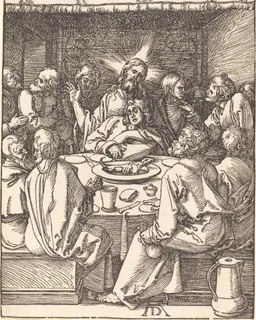
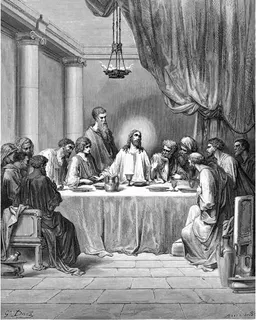
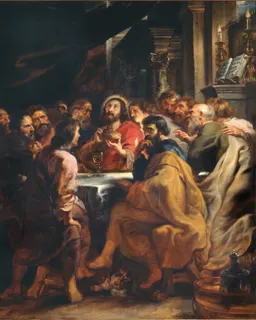
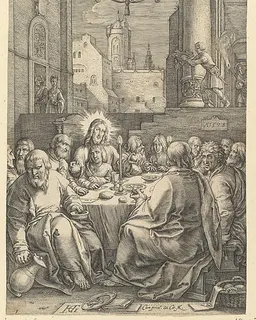
14And when the hour was come, he sat down, and the twelve apostles with him. 15And he said unto them, With desire I have desired to eat this passover with you before I suffer: 16For I say unto you, I will not any more eat thereof, until it be fulfilled in the kingdom of God. 17And he took the cup, and gave thanks, and said, Take this, and divide it among yourselves: 18For I say unto you, I will not drink of the fruit of the vine, until the kingdom of God shall come. 19And he took bread, and gave thanks, and brake it, and gave unto them, saying, This is my body which is given for you: this do in remembrance of me. 20Likewise also the cup after supper, saying, This cup is the new testament in my blood, which is shed for you.
There is a depth of feeling in the way Jesus begins. With desire I have desired to eat this passover with you before I suffer (v. 15). The doubled phrase - with desire I have desired - is a Hebrew way of pressing a thing to its utmost: He has longed for this meal with all His heart. And the longing is bound up with what is coming: before I suffer. This is no ordinary Passover, and He knows it; it is His last meal with them before the cross, and He has ached to share it.
Twice He speaks of a future when the feast will be complete: I will not any more eat thereof, until it be fulfilled in the kingdom of God (v. 16), and I will not drink of the fruit of the vine, until the kingdom of God shall come (v. 18). So this table looks two directions at once. It looks back to Egypt and the night of deliverance, and it looks forward to a feast not yet kept, the great gathering of His people in the kingdom.
The supper He is about to give is the hinge between them - the meal that closes the old and opens the new, and that His people will keep till he come (1 Cor. 11:26).
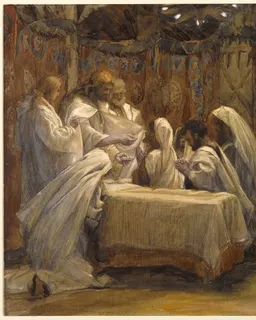
Then come the words that have been spoken at Christian tables ever since. He took bread, and gave thanks, and brake it, and gave unto them, saying, This is my body which is given for you: this do in remembrance of me (v. 19). Every verb matters: He took, He gave thanks, He brake, He gave. Over the unleavened bread of the Passover - bread that for a thousand years had spoken of the haste of the exodus - He now says a thing no one had said before: this is my body. And He fixes its meaning with a phrase that returns over the cup: which is given for you. Likewise, after supper, the cup: This cup is the new testament in my blood, which is shed for you (v. 20).
The bread is His body given; the cup is His blood shed; and both are for you. He does not pause to explain the manner of it. He simply takes the most sacred meal of His people, sets Himself at its center, and hands it to them with the command to keep doing this in remembrance of Him. What He gives them is Himself - broken, poured out, and offered.2
21But, behold, the hand of him that betrayeth me is with me on the table. 22And truly the Son of man goeth, as it was determined: but woe unto that man by whom he is betrayed! 23And they began to enquire among themselves, which of them it was that should do this thing.
Luke places the betrayal exactly where it is hardest to bear: right at the table, in the same breath as the cup. But, behold, the hand of him that betrayeth me is with me on the table (v. 21). In that world a shared meal was the deepest sign of trust and friendship; to eat someone's bread and then betray him was a treachery the Psalms had already wept over - mine own familiar friend… which did eat of my bread, hath lifted up his heel against me (Ps. 41:9).
The betrayer's hand is on the very table where Jesus has just given His body and blood for you - and Judas is included in that you, served the same bread, offered the same cup. Then Jesus holds two truths together without letting go of either: the Son of man goeth, as it was determined: but woe unto that man by whom he is betrayed (v. 22). What happens is within God's settled purpose - as it was determined - and yet the betrayer is not thereby excused; the woe is real and personal.
The disciples, stricken, begin asking one another which of them it was that should do this thing (v. 23). Not one of them points at Judas. Each looks first into his own heart.
Luke 22:24-38I Am Among You as He That Serveth
24And there was also a strife among them, which of them should be accounted the greatest. 25And he said unto them, The kings of the Gentiles exercise lordship over them; and they that exercise authority upon them are called benefactors. 26But ye shall not be so: but he that is greatest among you, let him be as the younger; and he that is chief, as he that doth serve. 27For whether is greater, he that sitteth at meat, or he that serveth? is not he that sitteth at meat? but I am among you as he that serveth. 28Ye are they which have continued with me in my temptations. 29And I appoint unto you a kingdom, as my Father hath appointed unto me; 30That ye may eat and drink at my table in my kingdom, and sit on thrones judging the twelve tribes of Israel.
It is hard to believe the timing. Jesus has just given His body and blood, and in almost the same moment there was also a strife among them, which of them should be accounted the greatest (v. 24). At the table of self-giving, they argue over rank. Rather than shame them, Jesus turns the whole notion of greatness inside out. The kings of the Gentiles exercise lordship over them; and they that exercise authority upon them are called benefactors (v. 25).
That is how the world reckons greatness - power over others, with a flattering title to dress it up. But ye shall not be so, He says, and lays down a different rule entirely: he that is greatest among you, let him be as the younger; and he that is chief, as he that doth serve (v. 26). In that culture the younger served the elder and the servant served the household; Jesus says His people are to seek the lower place, not the higher.
Greatness in His kingdom is not measured by how many serve you but by how you serve. The ladder the world climbs, He turns into a stair that goes down - and the way down, in His kingdom, is the way up.
Jesus grounds the call to serve in His own example and then in a startling promise. First the example: whether is greater, he that sitteth at meat, or he that serveth? is not he that sitteth at meat? but I am among you as he that serveth (v. 27). By every ordinary reckoning the one reclining at the table outranks the one waiting on it - and yet here is the Lord of all, taking the servant's place among them.
Then the promise: Ye are they which have continued with me in my temptations. And I appoint unto you a kingdom, as my Father hath appointed unto me; that ye may eat and drink at my table in my kingdom, and sit on thrones judging the twelve tribes of Israel (vv. 28-30). To these very men - who were quarreling over rank one moment before, who would scatter that very night - He gives a kingdom and seats at His table.
The honour they grasped at is freely promised to those who take the lower place. But the order is unmistakable: first the towel, then the throne; first continuing with Him through trial, then the kingdom. The path to reigning with Him runs through serving like Him.
31And the Lord said, Simon, Simon, behold, Satan hath desired to have you, that he may sift you as wheat: 32But I have prayed for thee, that thy faith fail not: and when thou art converted, strengthen thy brethren. 33And he said unto him, Lord, I am ready to go with thee, both into prison, and to death. 34And he said, I tell thee, Peter, the cock shall not crow this day, before that thou shalt thrice deny that thou knowest me. 35And he said unto them, When I sent you without purse, and scrip, and shoes, lacked ye any thing? And they said, Nothing. 36Then said he unto them, But now, he that hath a purse, let him take it, and likewise his scrip: and he that hath no sword, let him sell his garment, and buy one. 37For I say unto you, that this that is written must yet be accomplished in me, And he was reckoned among the transgressors: for the things concerning me have an end. 38And they said, Lord, behold, here are two swords. And he said unto them, It is enough.
Jesus turns to Peter with a tenderness that doubles his name: Simon, Simon, behold, Satan hath desired to have you, that he may sift you as wheat (v. 31). The adversary who entered Judas has set his sights on the others too - the you here is plural; Satan has asked to put them all through the sieve. And then the words that hold a man over the abyss: But I have prayed for thee, that thy faith fail not: and when thou art converted, strengthen thy brethren (v. 32).
Notice what Jesus does not pray. He does not pray that Peter will be spared the sifting - he will not be. He prays that through it Peter's faith will not finally fail, that the sifting will not become a falling-away. And He speaks past the failure to the recovery on its far side: when thou art converted - not if - strengthen thy brethren. The very man about to deny Him is appointed to steady the others once he is restored.
Peter, sure of himself, protests that he is ready for prison and death (v. 33); Jesus quietly tells him the truth he cannot yet see - before the cock crows, he will three times deny that he even knows his Lord (v. 34).2
Jesus then prepares them for a changed season. Earlier He had sent them out with nothing - without purse, and scrip, and shoes - and they had lacked nothing (v. 35). But now the days of welcome are ending and hostility is closing in: he that hath a purse, let him take it… and he that hath no sword, let him sell his garment, and buy one (v. 36). The reason follows at once, and it is the key to the whole saying: this that is written must yet be accomplished in me, And he was reckoned among the transgressors (v. 37) - a line drawn straight from Isaiah's portrait of the suffering servant numbered with the transgressors (Isa. 53:12).
Jesus is about to be treated as an outlaw, arrested among men with swords as though He were one. When the disciples answer woodenly, Lord, behold, here are two swords, He closes the conversation: It is enough (v. 38). Two swords could never arm a band for battle; that was never the point. The very next scene will show what He meant, when a disciple draws one of those swords and Jesus heals the wound and tells him to put it away.
They have heard His words about a sword and reached, as we so often do, for the most literal and least spiritual reading.
Luke 22:39-53Not My Will, but Thine, Be Done
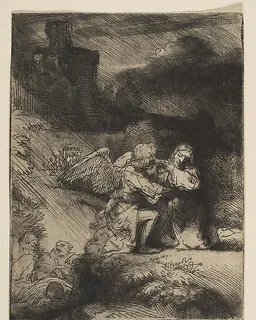
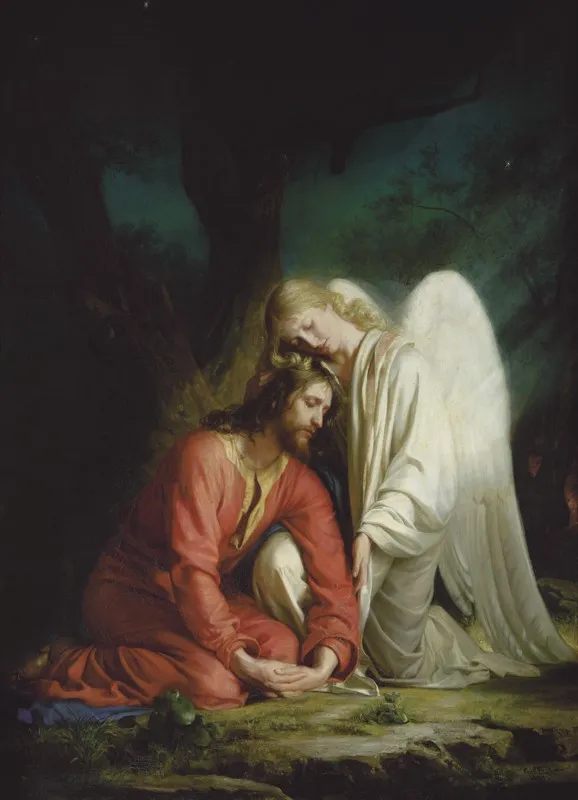
39And he came out, and went, as he was wont, to the mount of Olives; and his disciples also followed him. 40And when he was at the place, he said unto them, Pray that ye enter not into temptation. 41And he was withdrawn from them about a stone’s cast, and kneeled down, and prayed, 42Saying, Father, if thou be willing, remove this cup from me: nevertheless not my will, but thine, be done. 43And there appeared an angel unto him from heaven, strengthening him. 44And being in an agony he prayed more earnestly: and his sweat was as it were great drops of blood falling down to the ground. 45And when he rose up from prayer, and was come to his disciples, he found them sleeping for sorrow, 46And said unto them, Why sleep ye? rise and pray, lest ye enter into temptation.
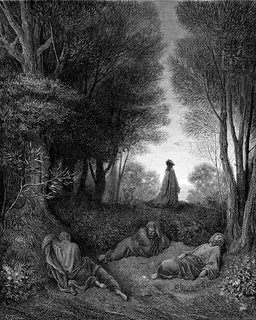
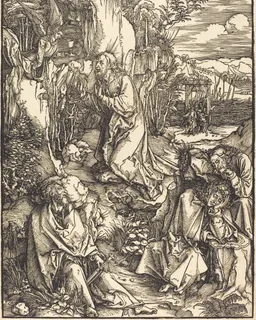
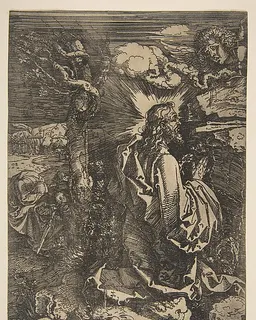
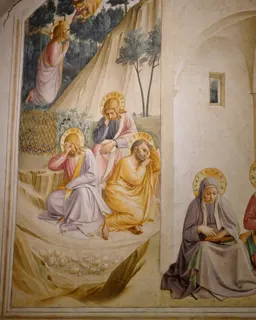
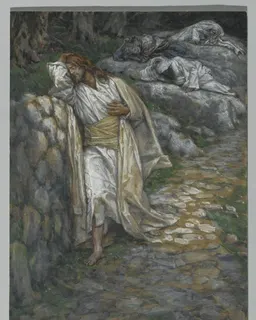
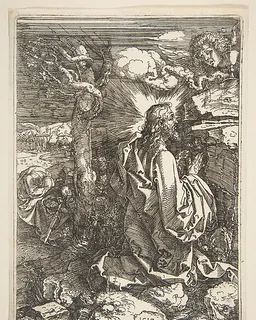
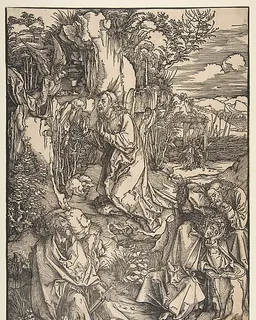
On the Mount of Olives the agony begins. Jesus tells the disciples to pray that ye enter not into temptation - the same warning twice over, bracketing the scene (vv. 40, 46) - and withdraws a stone's throw to pray alone. What He prays is the most searching prayer in all of Scripture: Father, if thou be willing, remove this cup from me: nevertheless not my will, but thine, be done (v. 42). The cup is the suffering of the cross, all that the next hours hold.
And Jesus does not pretend He wants it. He asks plainly, as a child asks a father, that if there is another way the cup might pass. There is no false serenity here, no playing of a part - the request is genuine, the recoil from the cross is real. And yet the prayer does not end in His own wish. It bends, in the very same breath, to the Father's will: nevertheless not my will, but thine, be done. This is the hinge of the whole night, and the pattern of all faithful prayer.
He asks honestly for what He longs for; He surrenders fully to what the Father wills. The asking is real, and the surrender is real, and the surrender wins.
Luke, the physician, records what the agony cost. There appeared an angel unto him from heaven, strengthening him. And being in an agony he prayed more earnestly: and his sweat was as it were great drops of blood falling down to the ground (vv. 43-44). Two details stand out. First, the Father does not remove the cup, but He does send help: an angel comes to strengthen Him for what must be borne. Heaven's answer to the prayer is strength to go through, not the removal of the cup.
Second, the cost is written in His body. His sweat falls as it were great drops of blood - the toll of a sorrow that pressed Him to the ground. This is no serene philosopher meeting death with a shrug. This is real human dread, real anguish, the weight of the cup felt to the full. And it deepens, rather than diminishes, what comes next: He rises from this - from the bloody sweat and the wrestling - and walks straight toward the betrayer.
The submission of verse 42 was not easy resignation; it was won on His knees, in agony, and then carried out to the end. Meanwhile He finds the disciples sleeping for sorrow (v. 45) - their grief has worn them out - and He wakes them again to pray, because the testing is already at the gate.1
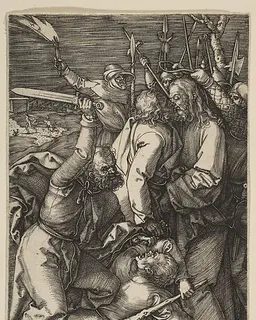
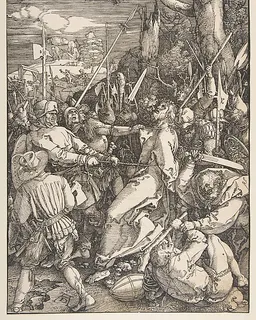
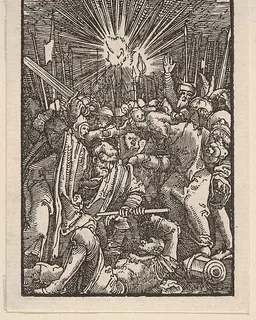
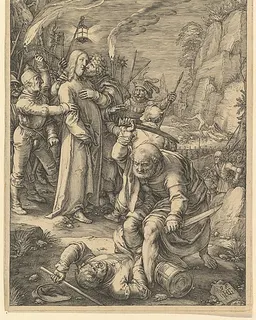
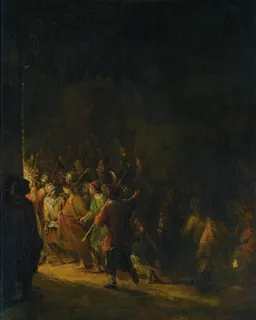
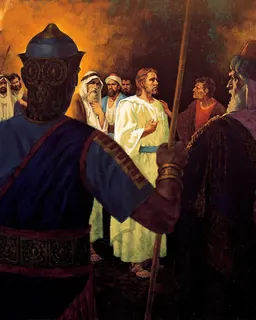
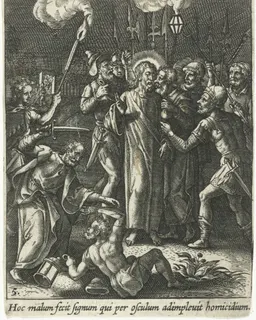
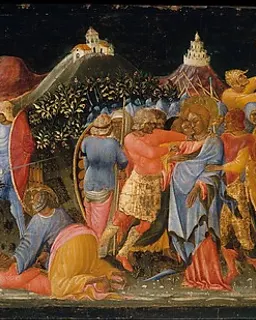
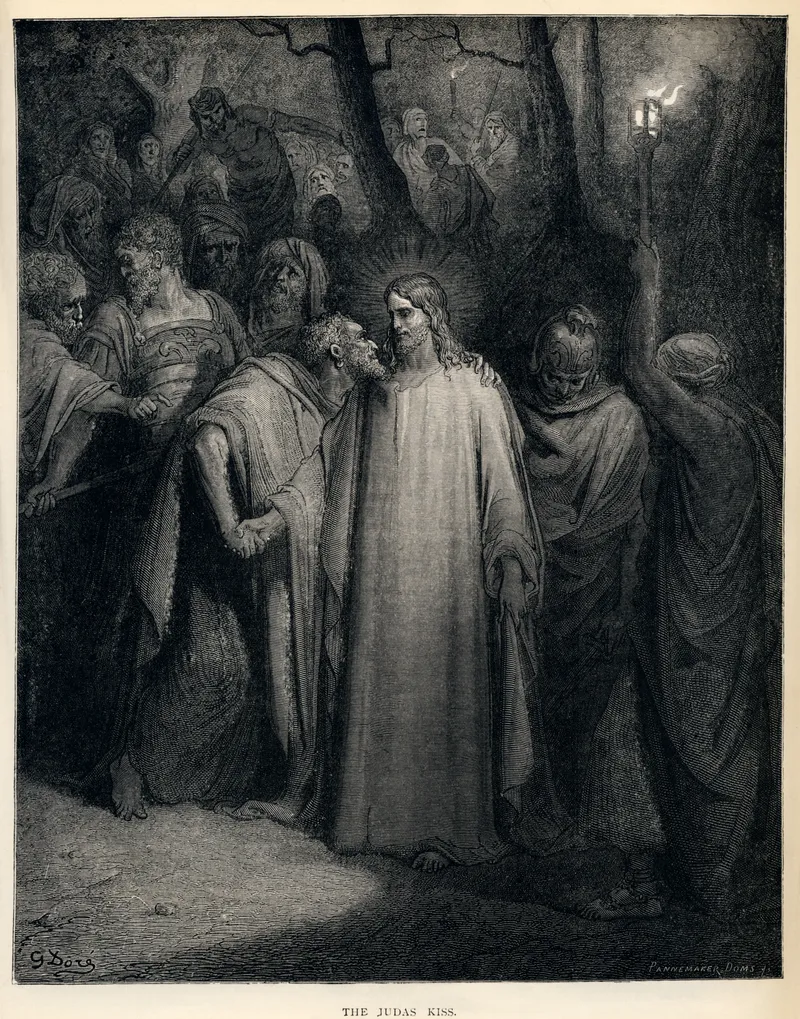
47And while he yet spake, behold a multitude, and he that was called Judas, one of the twelve, went before them, and drew near unto Jesus to kiss him. 48But Jesus said unto him, Judas, betrayest thou the Son of man with a kiss? 49When they which were about him saw what would follow, they said unto him, Lord, shall we smite with the sword? 50And one of them smote the servant of the high priest, and cut off his right ear. 51And Jesus answered and said, Suffer ye thus far. And he touched his ear, and healed him. 52Then Jesus said unto the chief priests, and captains of the temple, and the elders, which were come to him, Be ye come out, as against a thief, with swords and staves? 53When I was daily with you in the temple, ye stretched forth no hands against me: but this is your hour, and the power of darkness.
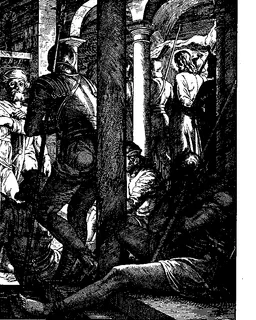
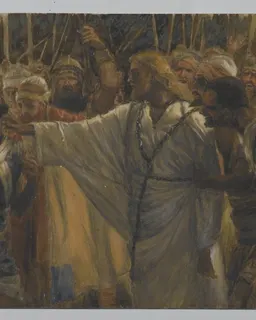
The crowd arrives, and Judas comes forward to give his sign - a kiss, the gesture of a friend. Jesus meets it with a question that lays the treachery bare without a trace of malice: Judas, betrayest thou the Son of man with a kiss? (v. 48). The sign of love is made the signal of betrayal, and Jesus names it for what it is. The disciples, still holding the night's words about a sword, ask whether to strike - and one of them does not wait for an answer, cutting off the right ear of the high priest's servant (vv. 49-50).
Here Jesus shows, in the very moment of His arrest, the heart of the kingdom He has been describing. Suffer ye thus far, He says - let it be, no more of this - and he touched his ear, and healed him (v. 51). The last miracle before the cross is a healing done for one of the men who came to seize Him. The hand that is about to be bound reaches out to mend an enemy's wound.
Then He turns to the priests and captains: they have come for Him in the dark, as against a thief, with swords and staves, though He sat teaching openly in the temple day after day (v. 52). But this is your hour, and the power of darkness (v. 53). He has not lost control; He is yielding to a darkness whose hour He Himself has appointed it.
Luke 22:54-71The Lord Turned and Looked upon Peter
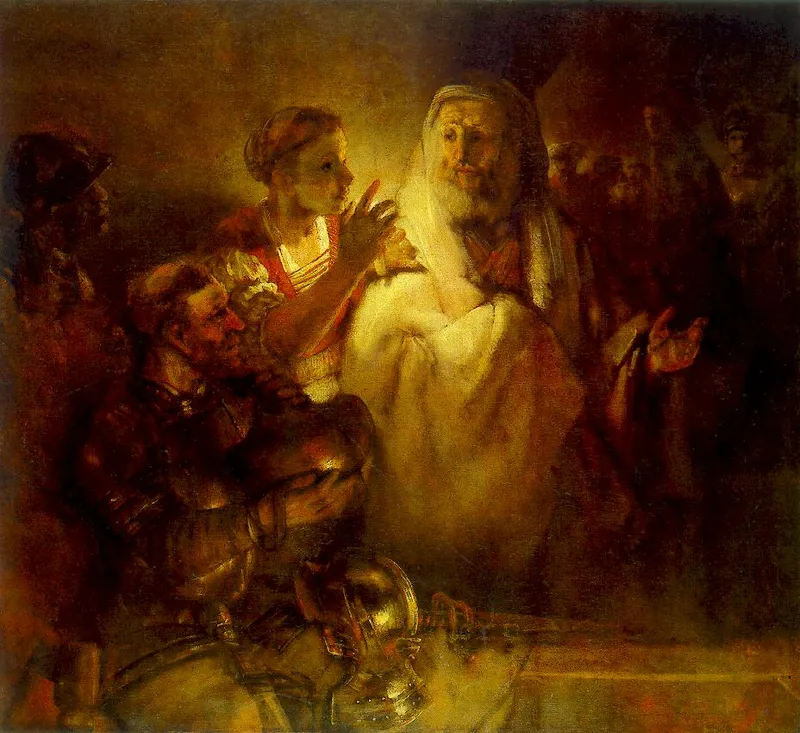
54Then took they him, and led him, and brought him into the high priest’s house. And Peter followed afar off. 55And when they had kindled a fire in the midst of the hall, and were set down together, Peter sat down among them. 56But a certain maid beheld him as he sat by the fire, and earnestly looked upon him, and said, This man was also with him. 57And he denied him, saying, Woman, I know him not. 58And after a little while another saw him, and said, Thou art also of them. And Peter said, Man, I am not. 59And about the space of one hour after another confidently affirmed, saying, Of a truth this fellow also was with him: for he is a Galilaean. 60And Peter said, Man, I know not what thou sayest. And immediately, while he yet spake, the cock crew.
Peter does not flee, but he does not stand close either: he followed afar off (v. 54) - near enough to watch, too far to be counted with Jesus. He sits down at a fire in the courtyard among the very people who have seized his Lord, and there the testing he was warned of comes, not as a sword or a trial, but as the casual words of bystanders around a fire. A servant girl looks at him and says, This man was also with him, and Peter answers, Woman, I know him not (vv. 56-57).
A little later another presses, and Peter says, Man, I am not (v. 58). About an hour after, a third insists - he must be a Galilean, his accent gives him away - and Peter says, Man, I know not what thou sayest (vv. 59-60). Three times, just as Jesus foretold, the man who swore he would die at his Lord's side denies that he so much as knows Him. Notice how ordinary the pressure is: no torture, no threat of the cross, only the fear of being known, the wish not to be associated, the small cowardice that overtakes us at a fire among strangers.
And immediately, while he yet spake, the cock crew (v. 60). The sound he had been told to listen for cuts through the night.
61And the Lord turned, and looked upon Peter. And Peter remembered the word of the Lord, how he had said unto him, Before the cock crow, thou shalt deny me thrice. 62And Peter went out, and wept bitterly. 63And the men that held Jesus mocked him, and smote him. 64And when they had blindfolded him, they struck him on the face, and asked him, saying, Prophesy, who is it that smote thee? 65And many other things blasphemously spake they against him.
Then comes one of the most piercing moments in the Gospels, told by Luke in a single line: And the Lord turned, and looked upon Peter (v. 61). Jesus, in the midst of His own ordeal, turns and meets Peter's eyes across the courtyard. Scripture does not describe the look, and the silence is right; we are left to imagine what passed in it. There is no recorded word of rebuke - only the gaze of the One Peter has just denied.
And the look does its work: Peter remembered the word of the Lord… And Peter went out, and wept bitterly (vv. 61-62). This is the difference between Peter and Judas, drawn in a single scene. Both betrayed; both broke faith that night. But Judas went out to despair, and Peter went out to weep. The same Lord who had said I have prayed for thee, that thy faith fail not (v. 32) now looks at him - and the look is not the end of Peter but the beginning of his return.
The tears are bitter, but they are the tears of a man whose faith, though shaken to the ground, has not failed. The prayer of verse 32 is being answered before our eyes. Meanwhile the men holding Jesus begin to mock and strike Him, blindfolding Him and jeering, Prophesy, who is it that smote thee? (v. 64) - mocking, without knowing it, the very prophet whose word about Peter has just come true a few feet away.
66And as soon as it was day, the elders of the people and the chief priests and the scribes came together, and led him into their council, saying, 67Art thou the Christ? tell us. And he said unto them, If I tell you, ye will not believe: 68And if I also ask you, ye will not answer me, nor let me go. 69Hereafter shall the Son of man sit on the right hand of the power of God. 70Then said they all, Art thou then the Son of God? And he said unto them, Ye say that I am. 71And they said, What need we any further witness? for we ourselves have heard of his own mouth.
At daybreak Jesus is led before the council, and they put the question straight: Art thou the Christ? tell us (v. 67). He answers first with the futility of the asking - If I tell you, ye will not believe - for their minds are already made up; the question is the building of a charge, not a search for truth. Yet He does not leave the matter there. He makes a claim that lifts their prisoner far above the dock: Hereafter shall the Son of man sit on the right hand of the power of God (v. 69), drawing on Daniel's vision of one like the Son of man brought before the Ancient of days and given everlasting dominion (Dan. 7:13-14).
The bound man before them, He says, will be seated at God's own right hand. Then the council asks the deepest question of the night: Art thou then the Son of God? And Jesus answers, Ye say that I am (v. 70). It is not a denial and not an evasion; in the idiom of the moment it is an acknowledgment - you yourselves are saying it. He owns the claim, knowing exactly what it will cost Him.
The council needs nothing further: What need we any further witness? for we ourselves have heard of his own mouth (v. 71). The confession they treat as His crime is in truth the simple truth, spoken plainly at the very hour it would condemn Him.1
Research trail
Sources & further study
These references support the historical, linguistic, manuscript, and contextual notes in this chapter. Scripture remains the primary text; external sources are provided so readers can inspect the research directly.
- Luke 22 - Translators' NotesThe NET Bible's detailed footnotes on Luke 22 - the bargain with Judas (vv. 3-6), the textual history of the words over the cup (vv. 19-20), the angel and the bloody sweat in Gethsemane (vv. 43-44), and the council's question and answer at daybreak (vv. 66-71).
- Luke 22 · Greek interlinear + parsingThe Greek text of Luke 22 word by word, with parsing and Strong's numbers - useful for anamnesis (v. 19, the “remembrance” of the supper), for diatheke (v. 20, the “new testament” or covenant in His blood), and for the verb behind “sift you as wheat” (v. 31).
- Luke 22 ↔ Exodus 12 · Jeremiah 31 · 1 Corinthians 11 · HebrewsTraces the threads tying Luke 22 to the rest of Scripture - the Passover of Exodus 12 fulfilled in the bread and cup (vv. 19-20), the new covenant promised in Jeremiah 31:31 sealed in His blood, the supper handed on in 1 Corinthians 11:23-26, and the obedient suffering of Hebrews 5:7-8 in Gethsemane.
Where this echoes in Scripture
Then Entered Satan into Judas
- Exodus 12:21Draw out and take you a lamb according to your families, and kill the passover.The feast of verse 7 - the lamb killed at Passover, the night Jesus transforms.
- John 13:2the devil having now put into the heart of Judas Iscariot, Simon's son, to betray him.The same dark moment as verse 3 - the betrayer's heart entered and moved.
- Zechariah 11:12they weighed for my price thirty pieces of silver.The bargain of verses 4-5 - the shepherd's worth set at a slave's price.
- 1 Corinthians 5:7Christ our passover is sacrificed for us.The meaning of the lamb “that must be killed” in verse 7 - the Passover fulfilled in Christ.
- John 10:18No man taketh it from me, but I lay it down of myself.Why Jesus can calmly prepare the feast (vv. 8-13) - the Lamb lays His life down freely.
This Is My Body Which Is Given for You
- Jeremiah 31:31, 34I will make a new covenant with the house of Israel... I will forgive their iniquity.The new covenant Jesus names over the cup in verse 20 - promised long beforehand through the prophet.
- 1 Corinthians 11:23-26This is my body, which is broken for you: this do in remembrance of me... ye do shew the Lord's death till he come.The same words of verses 19-20 handed on to the whole church as its meal.
- Hebrews 9:15he is the mediator of the new testament, that by means of death... they which are called might receive the promise.The “new testament in my blood” of verse 20 - the covenant made by His death.
- Psalm 41:9mine own familiar friend... which did eat of my bread, hath lifted up his heel against me.The betrayer's hand on the table (v. 21) - the friend who shares the bread and turns.
- Exodus 24:8Behold the blood of the covenant, which the LORD hath made with you.The pattern behind verse 20 - a covenant sealed in blood, now the blood of Christ.
I Am Among You as He That Serveth
- Mark 10:45the Son of man came not to be ministered unto, but to minister, and to give his life a ransom for many.The servant-King of verse 27 - the One among them as he that serveth.
- Philippians 2:5-9he humbled himself, and became obedient unto death... Wherefore God also hath highly exalted him.The pattern of verses 26-30 - the lower place first, then exaltation, walked by Christ Himself.
- Hebrews 7:25he ever liveth to make intercession for them.The prayer of verse 32 made unending - Christ interceding still for those who come to God by Him.
- Romans 8:34It is Christ... who is even at the right hand of God, who also maketh intercession for us.What held Peter (v. 32) - the risen Christ praying for His own.
- Isaiah 53:12he was numbered with the transgressors; and he bare the sin of many.The Scripture Jesus quotes in verse 37 - the servant reckoned among transgressors.
Not My Will, but Thine, Be Done
- Hebrews 5:7-8in the days of his flesh, when he had offered up prayers and supplications with strong crying and tears... learned he obedience by the things which he suffered.The agony of verses 42-44 - the Son's real suffering and learned obedience.
- Matthew 26:53Thinkest thou that I cannot now pray to my Father, and he shall presently give me more than twelve legions of angels?Why He healed rather than fought (vv. 50-51) - He yields by choice, not weakness.
- Isaiah 51:17thou hast drunken the dregs of the cup of trembling, and wrung them out.The “cup” of verse 42 - the cup of suffering Jesus consents to drink.
- John 18:11the cup which my Father hath given me, shall I not drink it?The resolve on the far side of the prayer (v. 42) - the cup taken up willingly.
- Philippians 2:8he humbled himself, and became obedient unto death, even the death of the cross.The obedience of verse 42 carried to its end - the will surrendered all the way to the cross.
The Lord Turned and Looked upon Peter
- John 21:15-17Simon, son of Jonas, lovest thou me?... Feed my sheep.Where the look of verse 61 leads - three questions of love for three denials, and Peter restored.
- John 10:28they shall never perish, neither shall any man pluck them out of my hand.Why Peter's denial was not the end (vv. 60-62) - the Shepherd keeps His own.
- Daniel 7:13-14one like the Son of man came... and there was given him dominion, and glory, and a kingdom.The vision behind verse 69 - the Son of man seated at the right hand of power.
- Luke 9:20He said unto them, But whom say ye that I am? Peter answering said, The Christ of God.The confession Jesus seals in verse 70 - what Peter once declared, the Lord now owns before His judges.
- 2 Corinthians 7:10godly sorrow worketh repentance to salvation... but the sorrow of the world worketh death.The two roads of that night (vv. 62) - Peter's bitter weeping unto life, set against despair unto death.