Luke 9
People in this chapter
Luke 9 is the hinge on which the whole Gospel turns. It opens with Jesus handing His own work to His followers: he called his twelve disciples together, and gave them power and authority over all devils, and to cure diseases (v. 1), and sent them out to preach the kingdom of God, and to heal the sick (v. 2). Word of all this travels, and reaches the throne. Now Herod the tetrarch heard of all that was done by him: and he was perplexed (v. 7) - the same Herod who had beheaded John the Baptist, now haunted by a question he cannot put down: who is this, of whom I hear such things? And he desired to see him (v. 9).
That question - who is this? - is the question of the chapter.1
Tap any highlighted phrase to jump to the commentary that unpacks it.
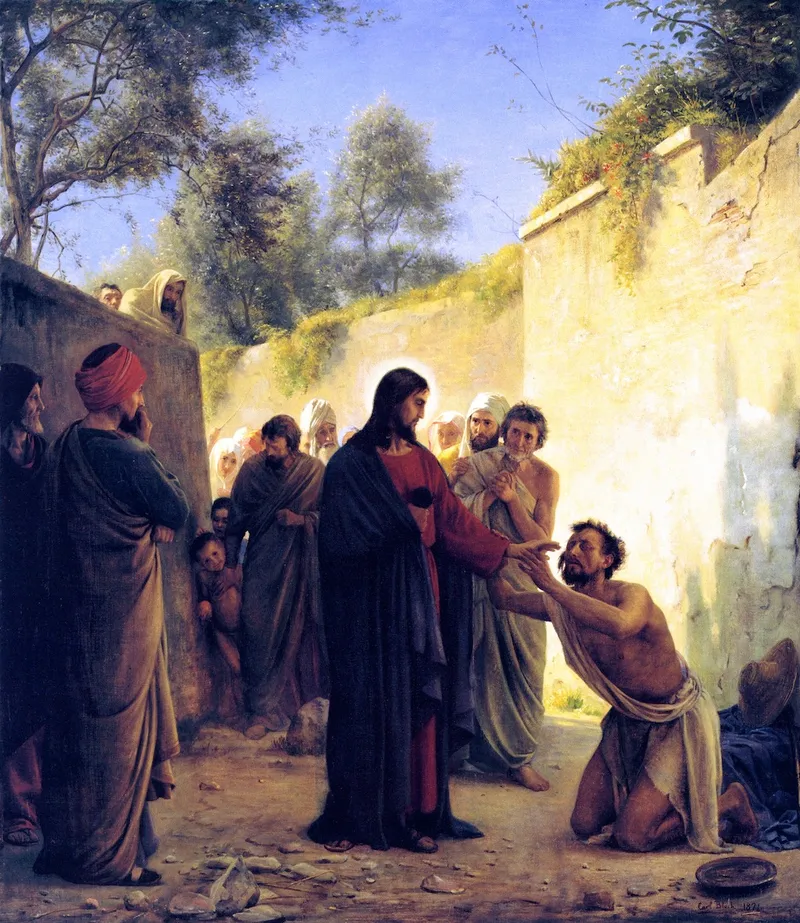
Luke 9:1-17Sent With Power · Give Ye Them to Eat
1Then he called his twelve disciples together, and gave them power and authority over all devils, and to cure diseases. 2And he sent them to preach the kingdom of God, and to heal the sick. 3And he said unto them, Take nothing for your journey, neither staves, nor scrip, neither bread, neither money; neither have two coats apiece. 4And whatsoever house ye enter into, there abide, and thence depart. 5And whosoever will not receive you, when ye go out of that city, shake off the very dust from your feet for a testimony against them. 6And they departed, and went through the towns, preaching the gospel, and healing every where.
The chapter opens with a remarkable handing-over. Everything Jesus has been doing through the early chapters of Luke - casting out unclean spirits, healing the sick, preaching the kingdom - He now entrusts to the Twelve: he… gave them power and authority over all devils, and to cure diseases. And he sent them to preach the kingdom of God, and to heal the sick (vv. 1-2). The authority is not theirs by nature; it is given.
They go out as His representatives, doing His work in His name, and the kingdom He has been announcing now advances through more than one pair of hands. His instructions are striking for their starkness: Take nothing for your journey, neither staves, nor scrip, neither bread, neither money (v. 3). They are to travel light and lean hard on the providence of the One who sent them, dependent on hospitality and on God. And they are warned that not every door will open: where a town will not receive them, they are to shake off the very dust and move on.
The messengers are not to force a hearing; they are to deliver the word faithfully and leave the response in other hands. So they departed… preaching the gospel, and healing every where (v. 6).1
7Now Herod the tetrarch heard of all that was done by him: and he was perplexed, because that it was said of some, that John was risen from the dead; 8And of some, that Elias had appeared; and of others, that one of the old prophets was risen again. 9And Herod said, John have I beheaded: but who is this, of whom I hear such things? And he desired to see him.
As the disciples fan out across the land, the news climbs all the way to the throne, and there it lands on a guilty conscience. Now Herod the tetrarch heard of all that was done by him: and he was perplexed (v. 7). Herod is the ruler who had John the Baptist beheaded, and the reports of Jesus rattle him: some are saying John has risen from the dead, others that Elijah has appeared, others that one of the old prophets is back.
His response is one of the most important lines in the chapter: John have I beheaded: but who is this, of whom I hear such things? And he desired to see him (v. 9). The whole chapter circles around that question - who is this? - and Luke is careful to show us first the wrong way to ask it. Herod's curiosity is real, but it is the curiosity of a man who wants a spectacle, not a Lord.
He desired to see him, yet he had silenced the last prophet who told him the truth. The crowds' guesses are not contemptible - a prophet, an Elijah figure, someone sent from God - but they all fall short of the answer Peter will give. Luke lets the question hang in the air, unanswered by the powerful and the popular, until it is put to those who actually follow Him.
10And the apostles, when they were returned, told him all that they had done. And he took them, and went aside privately into a desert place belonging to the city called Bethsaida. 11And the people, when they knew it, followed him: and he received them, and spake unto them of the kingdom of God, and healed them that had need of healing. 12And when the day began to wear away, then came the twelve, and said unto him, Send the multitude away, that they may go into the towns and country round about, and lodge, and get victuals: for we are here in a desert place. 13But he said unto them, Give ye them to eat. And they said, We have no more but five loaves and two fishes; except we should go and buy meat for all this people. 14For they were about five thousand men. And he said to his disciples, Make them sit down by fifties in a company. 15And they did so, and made them all sit down. 16Then he took the five loaves and the two fishes, and looking up to heaven, he blessed them, and brake, and gave to the disciples to set before the multitude. 17And they did eat, and were all filled: and there was taken up of fragments that remained to them twelve baskets.
The apostles return and report, and Jesus draws them aside to a quiet place near Bethsaida - but the crowds find Him, and instead of turning them away He received them, and spake unto them of the kingdom of God, and healed them that had need of healing (v. 11). As evening comes the Twelve see only a logistical crisis: thousands of people, a remote place, no food, and they urge Him to send the multitude away (v. 12).
His answer reverses the whole problem onto them: Give ye them to eat (v. 13). It is a command they cannot possibly obey on their own resources - they have only five loaves and two fishes for five thousand men - and that is exactly the point. What they cannot do, they bring to Him; what they bring to Him, He multiplies. Then he took the five loaves and the two fishes, and looking up to heaven, he blessed them, and brake, and gave to the disciples to set before the multitude (v. 16).
The gestures - taking, blessing, breaking, giving - are quiet and deliberate, and they will be echoed at another table on the last night. They did eat, and were all filled (v. 17). Not merely fed: filled. And the leftover fragments fill twelve baskets - one, perhaps, for each of the disciples who had just protested that there was not enough. The lesson is laid in their hands: when His people put their little into His hands, the lack becomes abundance, with more left over than they began with.2
Luke 9:18-27The Christ of God · Take Up His Cross Daily
18And it came to pass, as he was alone praying, his disciples were with him: and he asked them, saying, Whom say the people that I am? 19They answering said, John the Baptist; but some say, Elias; and others say, that one of the old prophets is risen again. 20He said unto them, But whom say ye that I am? Peter answering said, The Christ of God. 21And he straitly charged them, and commanded them to tell no man that thing; 22Saying, The Son of man must suffer many things, and be rejected of the elders and chief priests and scribes, and be slain, and be raised the third day.
Now the question Herod could not answer and the crowds could only guess at is put to those who walk with Him - and Luke notes carefully that Jesus asks it as he was alone praying (v. 18). First the survey: Whom say the people that I am? The answers gather up all the rumors - John the Baptist, Elias, one of the old prophets risen again. Each guess honors Jesus as a man of God, yet each is too small; it puts Him in a line of prophets rather than at the end of all the prophets pointed toward.
Then comes the question that every reader of the Gospel must finally face for himself: But whom say ye that I am? (v. 20). The pronoun lands hard - not what others say, but ye. Peter answers for them all in four words that turn the whole Gospel: The Christ of God - the Anointed One, the long-promised Messiah, the One in whom Israel's hope comes to rest. This is the hinge. Everything before it has been building the question; everything after it will unfold what the answer costs.
And strikingly, Jesus immediately straitly charged them… to tell no man that thing (v. 21). The title is true, but it is dangerously open to misunderstanding - a “Christ” the crowds would gladly crown as a conqueror. Before the word can be spoken safely, its meaning must be remade. And so He remakes it at once.
The moment Peter confesses Him as Christ, Jesus begins to fill that title with a content no one expected: The Son of man must suffer many things, and be rejected of the elders and chief priests and scribes, and be slain, and be raised the third day (v. 22). This is the first of the chapter's two plain announcements of the cross, and it is jarring precisely because it follows the high point of the confession.
The crowds had hoped for a Messiah who would overthrow Rome; the disciples likely shared the hope. Jesus takes the cherished word Christ and binds it, in the same breath, to suffering, rejection, and death. Notice the weight of the word must. This is not a tragic accident that befalls Him, a plan that goes wrong; it is the very thing the Christ came to do, a necessity at the heart of His mission. The religious leaders - elders and chief priests and scribes, the most respected authorities in the land - will be the very ones to reject Him.
And yet the sentence does not end in the grave: and be raised the third day. From the first time He speaks of the cross, Jesus speaks of the resurrection on its other side. The road He describes runs down into death, but it does not stop there.
23And he said to them all, If any man will come after me, let him deny himself, and take up his cross daily, and follow me. 24For whosoever will save his life shall lose it: but whosoever will lose his life for my sake, the same shall save it. 25For what is a man advantaged, if he gain the whole world, and lose himself, or be cast away? 26For whosoever shall be ashamed of me and of my words, of him shall the Son of man be ashamed, when he shall come in his own glory, and in his Father’s, and of the holy angels. 27But I tell you of a truth, there be some standing here, which shall not taste of death, till they see the kingdom of God.
Having named the road He Himself must walk, Jesus turns and tells His followers it is also theirs: If any man will come after me, let him deny himself, and take up his cross daily, and follow me (v. 23). Each phrase deserves to be weighed. To deny himself is not to despise oneself or to take up some grim self-punishment; it is to surrender the self's claim to the throne of one's own life - to stop being the final authority over it.
To take up his cross is the language of a condemned man carrying the beam to the place of his own execution; it speaks of a death - the death of the old, self-ruled life. And the word Luke alone adds is the most searching: daily. The cross here is not one heroic moment of sacrifice but a steady, repeated, ordinary thing - a yielding renewed every morning. Then Jesus presses the logic with a paradox that overturns all worldly accounting: whosoever will save his life shall lose it: but whosoever will lose his life for my sake, the same shall save it (v. 24).
The grasping, self-protecting life is the one that slips away; the life laid down for His sake is the one truly kept. To follow the crucified Christ is to find that the way down is the only way up.
Jesus drives the paradox home with a question that has echoed down every century since: For what is a man advantaged, if he gain the whole world, and lose himself, or be cast away? (v. 25). It is framed in the language of profit and loss, the kind of calculation a merchant makes - and it exposes the worst bargain a person can strike. Imagine gaining absolutely everything the world can offer: every pleasure, every possession, every honor, the whole earth in your grasp.
Set against that total gain is a single loss - himself. And Jesus declares the trade ruinous. The self, the soul, the person you actually are, is worth more than the entire world combined; to forfeit it for any worldly gain is to be left, in the end, with nothing of value at all. The verse quietly reorders every ambition. We are taught to measure a life by what it accumulates; Jesus measures it by whether the one living it is finally lost or saved.
He goes further still: to be ashamed of me and of my words now is to be disowned by the Son of man when He comes in his own glory (v. 26). The choice the chapter keeps pressing - will you confess Him, or shrink from Him? - turns out to be the choice on which everything hangs.
Luke 9:28-36The Transfiguration · Hear Him
28And it came to pass about an eight days after these sayings, he took Peter and John and James, and went up into a mountain to pray. 29And as he prayed, the fashion of his countenance was altered, and his raiment was white and glistering. 30And, behold, there talked with him two men, which were Moses and Elias: 31Who appeared in glory, and spake of his decease which he should accomplish at Jerusalem. 32But Peter and they that were with him were heavy with sleep: and when they were awake, they saw his glory, and the two men that stood with him.
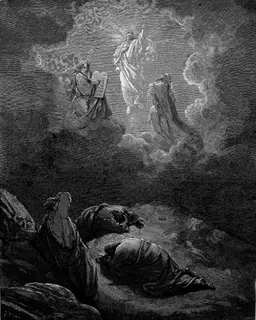
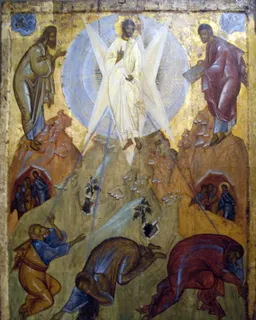
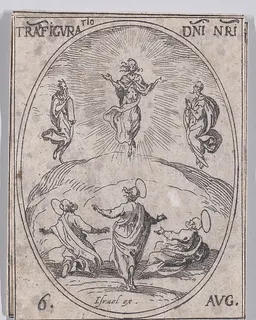
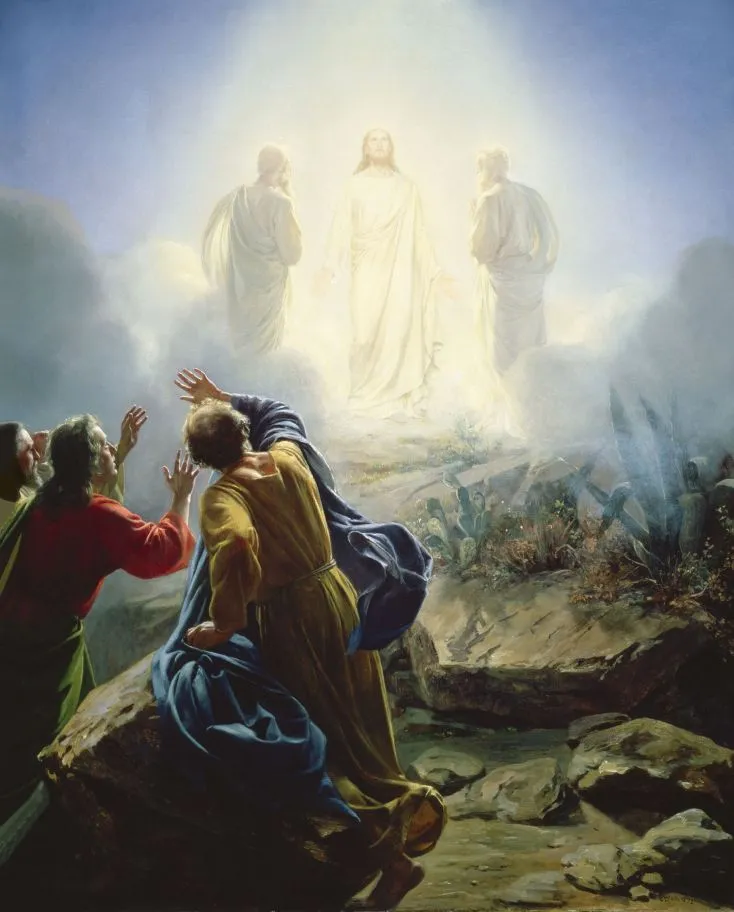
About a week after the hard words about the cross, Jesus takes His three closest companions - Peter, John, and James - up a mountain to pray (v. 28). Luke alone tells us that the transfiguration happens in the act of prayer: as he prayed, the fashion of his countenance was altered, and his raiment was white and glistering (v. 29). The veil of ordinary humanity grows thin, and for a few moments the glory that has been hidden within Him shines out.
His face changes; His clothing blazes with a light not borrowed from sun or lamp but radiating from within. This is no transformation into something He was not; it is the unveiling of what He has been all along, walking the dusty roads of Galilee unrecognized. The disciples who have just been told their Master must suffer and be rejected now see, with their own eyes, that the One bound for a cross is robed in the light of heaven.
Luke adds a human detail that grounds the wonder: Peter and they that were with him were heavy with sleep (v. 32). The men chosen to witness the glory nearly slept through it - and only on waking saw his glory. The greatest sights are often given to those barely awake enough to receive them.
Into this blaze of glory come two figures from Israel's deep past: there talked with him two men, which were Moses and Elias: who appeared in glory (vv. 30-31). The choice of these two is rich with meaning. Moses is the great lawgiver, through whom God gave the covenant at another mountain; Elijah is the great prophet, the foremost of those who called Israel back to the LORD. Together they stand for the whole of the older Scriptures - the Law and the Prophets - and here they appear not to be honored as rivals to Jesus but to speak with Him, and to speak of one thing in particular.
They spake of his decease which he should accomplish at Jerusalem (v. 31). This is the astonishing center of the scene. At the very summit of glory, with His face shining and heaven's light upon Him, the subject of conversation is His death. The Law and the Prophets, personified in these two men, converge on the cross - as if everything they had spoken and written had been pointing toward this “decease” all along. The glory does not bypass the cross; it surrounds it.
The brightest moment in the Gospel before the resurrection is spent in conversation about Jerusalem and what He must accomplish there.1
33And it came to pass, as they departed from him, Peter said unto Jesus, Master, it is good for us to be here: and let us make three tabernacles; one for thee, and one for Moses, and one for Elias: not knowing what he said. 34While he thus spake, there came a cloud, and overshadowed them: and they feared as they entered into the cloud. 35And there came a voice out of the cloud, saying, This is my beloved Son: hear him. 36And when the voice was past, Jesus was found alone. And they kept it close, and told no man in those days any of those things which they had seen.
Peter, overwhelmed and not knowing what to say, reaches for a way to hold the moment: Master, it is good for us to be here: and let us make three tabernacles; one for thee, and one for Moses, and one for Elias (v. 33). Luke gently notes he was not knowing what he said. The impulse is understandable - to build, to stay, to keep the glory from fading - but it makes a quiet mistake, setting Jesus alongside Moses and Elijah as if the three belonged on one level, each needing his own shelter.
Heaven itself corrects the error. There came a cloud, and overshadowed them (v. 34) - the same cloud of God's presence that had filled the tabernacle of old and rested on Sinai - and the disciples are afraid as it enwraps them. Then the Father's own voice settles the question that has run through the whole chapter: This is my beloved Son: hear him (v. 35). Not three equal figures - one Son, and a command to listen to Him.
And when the voice has spoken, the lesson is sealed by what they see: Jesus was found alone (v. 36). Moses and Elijah have done their work and withdrawn; the Law and the Prophets have pointed to Him and stepped back. He alone remains, and He alone is to be heard.
Luke 9:37-50Down From the Mountain · The Least Shall Be Great
37And it came to pass, that on the next day, when they were come down from the hill, much people met him. 38And, behold, a man of the company cried out, saying, Master, I beseech thee, look upon my son: for he is mine only child. 39And, lo, a spirit taketh him, and he suddenly crieth out; and it teareth him that he foameth again, and bruising him hardly departeth from him. 40And I besought thy disciples to cast him out; and they could not. 41And Jesus answering said, O faithless and perverse generation, how long shall I be with you, and suffer you? Bring thy son hither. 42And as he was yet a coming, the devil threw him down, and tare him. And Jesus rebuked the unclean spirit, and healed the child, and delivered him again to his father. 43And they were all amazed at the mighty power of God. But while they wondered every one at all things which Jesus did, he said unto his disciples,
The descent from the mountain lands at once in the world's suffering. On the next day, when they were come down from the hill, much people met him (v. 37), and out of the crowd a desperate father cries for his only child, seized and convulsed by a tormenting spirit. He had already brought the boy to the disciples - the very nine who had not been on the mountain - and they had failed: I besought thy disciples to cast him out; and they could not (v. 40).
The contrast with the chapter's opening is sharp: these are the men once given power and authority over all devils (v. 1), now standing helpless before one. Jesus' lament is striking in its weariness: O faithless and perverse generation, how long shall I be with you, and suffer you? (v. 41). It is the cry of One whose glory has just been unveiled, now back among the unbelief and brokenness He came to bear.
Yet the lament does not end in rejection; it ends in mercy: Bring thy son hither. Even as the boy approaches, the spirit makes a last violent assault - the devil threw him down, and tare him - but Jesus rebuked the unclean spirit, and healed the child, and delivered him again to his father (v. 42). The tender last phrase is easy to pass over: He gave the boy back to the father who had pleaded for him.
They were all amazed at the mighty power of God (v. 43).
44Let these sayings sink down into your ears: for the Son of man shall be delivered into the hands of men. 45But they understood not this saying, and it was hid from them, that they perceived it not: and they feared to ask him of that saying. 46Then there arose a reasoning among them, which of them should be greatest. 47And Jesus, perceiving the thought of their heart, took a child, and set him by him, 48And said unto them, Whosoever shall receive this child in my name receiveth me: and whosoever shall receive me receiveth him that sent me: for he that is least among you all, the same shall be great.
In the middle of the crowd's amazement, Jesus turns to His disciples with the second plain word about the cross, and prefaces it with unusual urgency: Let these sayings sink down into your ears: for the Son of man shall be delivered into the hands of men (v. 44). The phrase sink down into your ears is a plea to let the hard truth lodge deep, not slide off - precisely because it cut against everything they wanted to believe just as the wonders were piling up.
But the warning lands on closed ground: they understood not this saying, and it was hid from them… and they feared to ask him (v. 45). It is a poignant note. They have seen the glory on the mountain, watched the boy delivered, witnessed the mighty power of God - and still the word about suffering is more than they can take in, so they do not even ask. Luke places this failure deliberately, for what comes next exposes the root of it: while their Master speaks of being delivered up to die, there arose a reasoning among them, which of them should be greatest (v. 46).
The jarring juxtaposition is the whole point. The cross cannot “sink down” into hearts busy competing for rank. The way of self-giving is hidden from those still grasping for self-advancement.
Jesus answers the quarrel about greatness not with a rebuke alone but with a living parable. Perceiving the thought of their heart - He did not need to overhear the argument; He read it - He took a child, and set him by him (v. 47). In that world a child had no status, no power, nothing to offer in the economy of importance the disciples were trading in. Jesus places this small, unranked person at His side and overturns the whole scale: Whosoever shall receive this child in my name receiveth me: and whosoever shall receive me receiveth him that sent me: for he that is least among you all, the same shall be great (v. 48).
Greatness, He says, is not seized by climbing over others; it is found in the willingness to stoop, to welcome the lowly, to take the last place. The one who receives a child - who has time and honor for the person of no account - is in fact receiving Christ, and through Christ the Father. The measure of a person in the kingdom is inverted from the measure of the world: he that is least… the same shall be great. And the example could not be more pointed, set as it is on the road to Jerusalem, where the Master Himself is about to become least of all - delivered into the hands of men - and so be exalted above all.
49And John answered and said, Master, we saw one casting out devils in thy name; and we forbad him, because he followeth not with us. 50And Jesus said unto him, Forbid him not: for he that is not against us is for us.
The disciples' jostling for rank shows itself again, in a subtler form, the moment John speaks: Master, we saw one casting out devils in thy name; and we forbad him, because he followeth not with us (v. 49). The complaint reveals the same spirit that had just been arguing over greatness - a possessiveness about Jesus, a desire to police who belongs to the inner circle. The man was doing good in Jesus' name, but he was not part of their company, and that was enough for them to try to stop him.
There is a quiet irony, too: these are the disciples who moments before could not cast out the spirit in the tormented boy (v. 40), now forbidding another who evidently could. Jesus will have none of it: Forbid him not: for he that is not against us is for us (v. 50). The kingdom is wider than the disciples' band, and the work of Christ is not the private property of those nearest Him. Where His name is honored and the powers of darkness are driven back, that is to be welcomed, not shut down out of jealousy for one's own group.
It is one more correction of the grasping, status-guarding instinct the whole section has been exposing - the very instinct that keeps the word of the cross from sinking down into the heart.
Luke 9:51-62He Stedfastly Set His Face to Go to Jerusalem
51And it came to pass, when the time was come that he should be received up, he stedfastly set his face to go to Jerusalem, 52And sent messengers before his face: and they went, and entered into a village of the Samaritans, to make ready for him. 53And they did not receive him, because his face was as though he would go to Jerusalem. 54And when his disciples James and John saw this, they said, Lord, wilt thou that we command fire to come down from heaven, and consume them, even as Elias did? 55But he turned, and rebuked them, and said, Ye know not what manner of spirit ye are of. 56For the Son of man is not come to destroy men’s lives, but to save them. And they went to another village.
Now comes the great turn of the entire Gospel, the sentence everything has been moving toward: when the time was come that he should be received up, he stedfastly set his face to go to Jerusalem (v. 51). From this point Luke's whole narrative will be a journey - Jesus walking, with deliberate purpose, toward the city where He will be crucified. The phrase set his face is a Hebrew way of speaking of fixed, unbending resolve; the word stedfastly presses it further.
He is not swept along by events or trapped by His enemies; He goes by His own steady choice, eyes set on Jerusalem and on what awaits Him there. And Luke names what that destination truly is: the time that he should be received up - the cross is in view, but so is the glory beyond it, the exaltation to which the cross is the door. This is the answer the chapter has been building toward all along.
The One whom Herod could not place, whom Peter confessed, whom the Father called His beloved Son, now turns His face toward death - freely, resolutely, for the sake of the very people who will reject Him. Everything from here to the cross is the working out of this one settled resolve.
The journey's first scene tests at once what kind of road this will be. Jesus sends messengers ahead into a village of the Samaritans, but they will not receive Him - because his face was as though he would go to Jerusalem (v. 53). The old hostility between Samaritans and Jews flares; a traveler bound for the Jerusalem temple was unwelcome here. James and John, the same two who had stood in the mountain's glory, react with startling violence: Lord, wilt thou that we command fire to come down from heaven, and consume them, even as Elias did? (v. 54).
They have just seen Elijah on the mountain; now they want to wield Elijah's fire. But Jesus turned, and rebuked them, and said, Ye know not what manner of spirit ye are of (v. 55). It is a searching rebuke. Their zeal feels righteous to them, but it springs from a spirit utterly foreign to His - a readiness to destroy those who reject Him. And He names His own mission against theirs: For the Son of man is not come to destroy men's lives, but to save them (v. 56).
He is on His way to Jerusalem precisely to save, not to consume; the One walking toward His own death will not call down death on a village that turned Him away. And they went to another village - the rejection absorbed, not avenged.
57And it came to pass, that, as they went in the way, a certain man said unto him, Lord, I will follow thee whithersoever thou goest. 58And Jesus said unto him, Foxes have holes, and birds of the air have nests; but the Son of man hath not where to lay his head. 59And he said unto another, Follow me. But he said, Lord, suffer me first to go and bury my father. 60Jesus said unto him, Let the dead bury their dead: but go thou and preach the kingdom of God. 61And another also said, Lord, I will follow thee; but let me first go bid them farewell, which are at home at my house. 62And Jesus said unto him, No man, having put his hand to the plough, and looking back, is fit for the kingdom of God.
The chapter ends with three would-be followers met on the road, and to each Jesus speaks a word about the true cost of coming after Him. The first volunteers eagerly: Lord, I will follow thee whithersoever thou goest (v. 57). Jesus does not flatter the enthusiasm; He tells the plain truth about the life he is offering to join: Foxes have holes, and birds of the air have nests; but the Son of man hath not where to lay his head (v. 58).
The One now bound for Jerusalem owns less security than a wild animal - no settled home, no soft place to rest. To follow Him “whithersoever” He goes is to follow Him into that homelessness, all the way to a cross. The second man is called directly - Follow me - but answers, Lord, suffer me first to go and bury my father (v. 59). However reasonable it sounds, the telling word is first. Jesus' reply, Let the dead bury their dead: but go thou and preach the kingdom of God (v. 60), is not contempt for honoring one's parents; it is a declaration that the call of the kingdom is so urgent and so alive that it cannot be made to wait in line behind even the gravest of ordinary duties.
The summons of the living Lord takes the first place, or it is not really obeyed at all.
The third man frames his “but first” most gently of all: Lord, I will follow thee; but let me first go bid them farewell, which are at home at my house (v. 61). It sounds like the smallest of requests - a goodbye. Yet it carries the same word that undid the second man: first. Jesus answers with an image drawn from the fields: No man, having put his hand to the plough, and looking back, is fit for the kingdom of God (v. 62).
A plowman who keeps glancing over his shoulder cannot cut a straight furrow; the work demands eyes fixed forward. The saying gathers up the whole chapter. Jesus has just set his face toward Jerusalem (v. 51), looking neither back nor aside; now He asks the same single-hearted forward look of any who would follow Him. The point is not that affection for home and family is wrong - it is that the kingdom cannot have a divided heart, one hand on the plough and one eye on what was left behind.
There is a quiet echo here of an older calling: when Elijah called Elisha from his oxen, Elisha did look back to kiss his parents - but then he burned his plough and followed without reserve. Jesus calls for that same undivided going forward, the heart fully turned toward the One whose own face is set, unwavering, on the road to the cross.1
Research trail
Sources & further study
These references support the historical, linguistic, manuscript, and contextual notes in this chapter. Scripture remains the primary text; external sources are provided so readers can inspect the research directly.
- Luke 9 - Translators' NotesThe NET Bible's detailed footnotes on Luke 9 - the sending of the Twelve (vv. 1-6), Herod's perplexity (vv. 7-9), the much-discussed “decease” / exodus of verse 31, and the three sayings on the cost of discipleship that close the chapter (vv. 57-62).
- Luke 9 ↔ Psalm 23 · Deuteronomy 18 · Hebrews 1 · 2 Peter 1Traces the threads tying Luke 9 to the rest of Scripture - the Shepherd feeding the multitude (vv. 13-17) read beside The LORD is my shepherd (Ps. 23), Moses and Elias on the mountain (vv. 30-31) beside a Prophet… like unto me (Deut. 18:15), and hear him (v. 35) beside the eyewitness account in 2 Peter 1:16-18.
- Luke 9 · Greek interlinear + lexiconThe Greek text of Luke 9 word by word, each term linked to its lexicon entry - useful for exousia (v. 1, “authority”), aparneomai (v. 23, the “deny himself” that renounces self's claim to rule), exodos (v. 31, the “decease” spoken of on the mountain), and akouete autou (v. 35, the Father's command, “hear him”).
Where this echoes in Scripture
Sent With Power · Give Ye Them to Eat
- Psalm 23:1-2The LORD is my shepherd; I shall not want. He maketh me to lie down in green pastures.The Shepherd who feeds His flock - the picture behind Jesus spreading a table in the wilderness (vv. 13-17).
- John 6:35I am the bread of life: he that cometh to me shall never hunger.The feeding of verses 13-17 named in person - the One who gives bread is Himself the bread of life.
- Ezekiel 34:23I will set up one shepherd over them, and he shall feed them, even my servant David.The promised shepherd of God's scattered flock - fulfilled as Jesus feeds the multitude.
- Matthew 28:18All power is given unto me in heaven and in earth.The authority Jesus lends to the Twelve in verse 1 - His own, to wield and to give.
- 2 Kings 4:42-44Give unto the people, that they may eat... They shall eat, and shall leave thereof.Elisha's feeding of a hundred from twenty loaves - a smaller foreshadow of the abundance in verses 16-17.
The Christ of God · Take Up His Cross Daily
- Isaiah 53:5He was wounded for our transgressions, he was bruised for our iniquities... and with his stripes we are healed.The suffering foretold - the Christ Peter confesses (v. 20) is the Servant who must be slain (v. 22).
- Galatians 2:20I am crucified with Christ: nevertheless I live; yet not I, but Christ liveth in me.The self denied and the cross taken up daily (v. 23) - the old self dethroned, Christ enthroned.
- Matthew 16:16Thou art the Christ, the Son of the living God.Peter's confession of verse 20 in its fuller form - the hinge of the Gospel.
- Philippians 3:8I count all things but loss for the excellency of the knowledge of Christ Jesus my Lord.The trade of verse 25 made rightly - counting every worldly gain as loss for the sake of Christ.
- John 12:25He that loveth his life shall lose it; and he that hateth his life in this world shall keep it unto life eternal.The paradox of verse 24 restated - the life grasped is lost, the life surrendered is kept.
The Transfiguration · Hear Him
- Deuteronomy 18:15The LORD thy God will raise up unto thee a Prophet... like unto me; unto him ye shall hearken.The promise behind the Father's command in verse 35 - the Prophet to come, whom Israel must hear.
- 2 Peter 1:16-18We were eyewitnesses of his majesty... when there came such a voice... This is my beloved Son.An eyewitness remembering the mountain - the glory and the voice of verses 29-35.
- Hebrews 1:1-2God... hath in these last days spoken unto us by his Son.Why the Father says “hear him” (v. 35) - the Son is God's final and fullest word.
- Luke 3:22Thou art my beloved Son; in thee I am well pleased.The same witness, at the Jordan - the Father twice declaring Jesus His beloved Son (v. 35).
- Exodus 24:15-16A cloud covered the mount... and the glory of the LORD abode upon mount Sinai.The cloud of God's presence on another mountain - the same glory that overshadows them in verse 34.
Down From the Mountain · The Least Shall Be Great
- Philippians 2:8-9He humbled himself, and became obedient unto death... Wherefore God also hath highly exalted him.The pattern of verse 48 in Christ Himself - the least made greatest, the humbled exalted.
- Matthew 20:26-28Whosoever will be great among you, let him be your minister... the Son of man came... to minister.Greatness redefined as in verse 48 - the road up runs down, through service.
- Mark 9:24Lord, I believe; help thou mine unbelief.The father's cry in the same scene (vv. 38-42) - faith reaching out of its own weakness.
- Numbers 11:27-29Eldad and Medad do prophesy in the camp... Enviest thou for my sake? would God that all the LORD's people were prophets.Moses' openness foreshadows Jesus' answer in verse 50 - do not forbid the work done in My name.
- James 4:1-2From whence come wars and fightings among you?... ye lust, and have not.The root of the quarrel over greatness in verse 46 - the craving for what is above us.
He Stedfastly Set His Face to Go to Jerusalem
- Isaiah 50:6-7I hid not my face from shame and spitting... therefore have I set my face like a flint.The Servant's resolve foreseen - the set face of verse 51, fixed like flint toward suffering.
- John 10:17-18I lay down my life... No man taketh it from me, but I lay it down of myself.Why the face is set freely (v. 51) - the cross is chosen, not merely suffered.
- 1 Kings 19:19-21Elisha... was plowing... Let me, I pray thee, kiss my father and my mother, and then I will follow thee.The plough and the call behind verses 61-62 - Elisha left all to follow without looking back.
- Philippians 3:13-14Forgetting those things which are behind... I press toward the mark.The forward gaze of verse 62 - hand to the plough, eyes fixed ahead, not behind.
- Hebrews 12:2Looking unto Jesus... who for the joy that was set before him endured the cross, despising the shame.The set face of verse 51 named - the cross endured for the joy beyond it.