John 12
People in this chapter
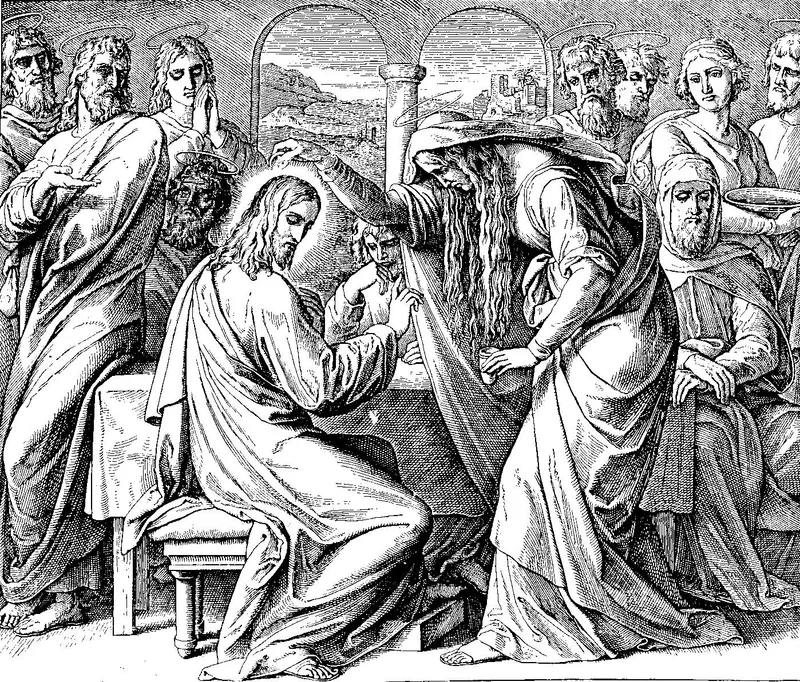
Six days before the Passover, Jesus comes again to Bethany, where Lazarus was which had been dead, whom he raised from the dead (v. 1). They make Him a supper; Martha serves; Lazarus - a living miracle - reclines at the table. And Mary takes a pound of ointment of spikenard, very costly, anoints His feet, and wipes them with her hair, until the house was filled with the odour of the ointment (v. 3). Judas objects that the perfume should have been sold for three hundred pence and given to the poor - though John tells us the real reason, that he was a thief, and had the bag, and bare what was put therein (v. 6).
Jesus answers for her: Let her alone: against the day of my burying hath she kept this (v. 7). It is love that has sensed the cross, pouring out its best on Christ while He may yet be anointed.1
Tap any highlighted phrase to jump to the commentary that unpacks it.
John 12:1-11Against the Day of My Burying
1Then Jesus six days before the passover came to Bethany, where Lazarus was, which had been dead, whom he raised from the dead. 2There they made him a supper; and Martha served: but Lazarus was one of them that sat at the table with him. 3Then took Mary a pound of ointment of spikenard, very costly, and anointed the feet of Jesus, and wiped his feet with her hair: and the house was filled with the odour of the ointment. 4Then saith one of his disciples, Judas Iscariot, Simon’s son, which should betray him, 5Why was not this ointment sold for three hundred pence, and given to the poor? 6This he said, not that he cared for the poor; but because he was a thief, and had the bag, and bare what was put therein.
The scene is set with care, and every figure at the table means something. It is six days before the passover (v. 1) - the clock of the cross is already running - and the place is Bethany, named here precisely as the house where Lazarus was which had been dead, whom he raised from the dead. The shadow of one grave already conquered hangs over a supper given to the One soon to enter another. At the table are the three we have met before, each true to form.
Martha served - the worker, busy with the needs of the room. Lazarus was one of them that sat at the table with him - a living testimony to resurrection, simply present, breathing proof of what Jesus can do with the dead. And Mary, as in Luke's account, is found at Jesus' feet. The household that has received life from Him now gives Him a feast; and into that feast Mary brings something startling.
Mary takes a pound of ointment of spikenard, very costly, pours it over the feet of Jesus, and wipes those feet with her hair (v. 3). The details press in on us one by one. A pound - not a few drops but the whole flask, emptied at once. Spikenard - a fragrant oil pressed from a plant of the far mountains, imported, rare. Very costly - Judas will price it at three hundred pence, near a labourer's wage for a year.
And she pours it not on His head, as one might honour a guest, but on His feet, the lowest place, and dries them with her own hair, unbound in a room full of men - an act of humility that throws dignity to the wind. The house was filled with the odour of the ointment. The fragrance touches everyone present; love this lavish cannot be kept private. Mary does not calculate the cost against the return.
She simply gives her best, all of it, on Him.
Against Mary's open-handed love John sets a closed and grasping heart. Then saith one of his disciples, Judas Iscariot, Simon's son, which should betray him, Why was not this ointment sold for three hundred pence, and given to the poor? (vv. 4-5). On its face the question sounds righteous - what a waste; think of the poor who might have been fed. It is the voice that can always find a more practical use for someone else's devotion.
But John, writing long after and knowing how the story ended, lifts the mask: This he said, not that he cared for the poor; but because he was a thief, and had the bag, and bare what was put therein (v. 6). Judas kept the common purse and helped himself from it; what grieved him was not the poor going hungry but the money slipping past his fingers. It is a sobering portrait. The same act can wear the language of compassion and hide the love of money underneath.
Mary, who counts nothing, and Judas, who counts everything, sit at the one table - and the chapter quietly asks which of them we resemble.
7Then said Jesus, Let her alone: against the day of my burying hath she kept this. 8For the poor always ye have with you; but me ye have not always. 9Much people of the Jews therefore knew that he was there: and they came not for Jesus’ sake only, but that they might see Lazarus also, whom he had raised from the dead. 10But the chief priests consulted that they might put Lazarus also to death; 11Because that by reason of him many of the Jews went away, and believed on Jesus.
Jesus steps between Mary and her accuser: Let her alone: against the day of my burying hath she kept this (v. 7). He does not merely permit her act; He interprets it, and lifts it higher than she could have known. What looked to Judas like waste, Jesus calls preparation for His burial. Mary loved Him with everything she had, and her love turned out to be truer to the moment than all the disciples' sensible plans - for while they were still expecting a throne, her instinct reached toward a tomb.
Then He sets the matter in its right proportion: For the poor always ye have with you; but me ye have not always (v. 8). This is no dismissal of the poor; the care of the poor is a constant, lifelong duty that will never lack occasion. But the window to anoint Him, in the flesh, on the eve of His death, is closing fast and will not come again. Some loves are for always; this one was for now.
Meanwhile the raising of Lazarus is drawing crowds - and hardening enemies, who now plot to kill the living proof as well as the One who raised him (vv. 9-11). The fragrance and the conspiracy rise together.
John 12:12-19Blessed Is the King of Israel
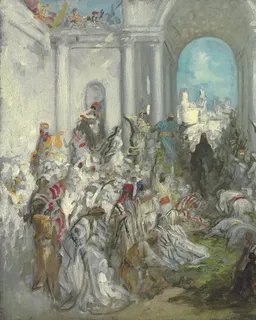
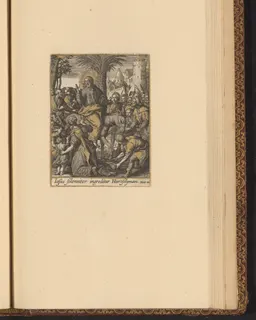
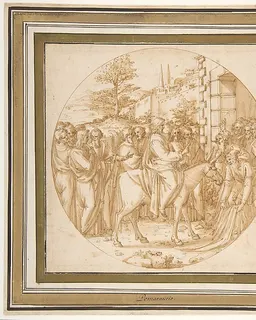
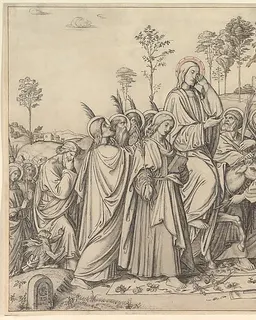
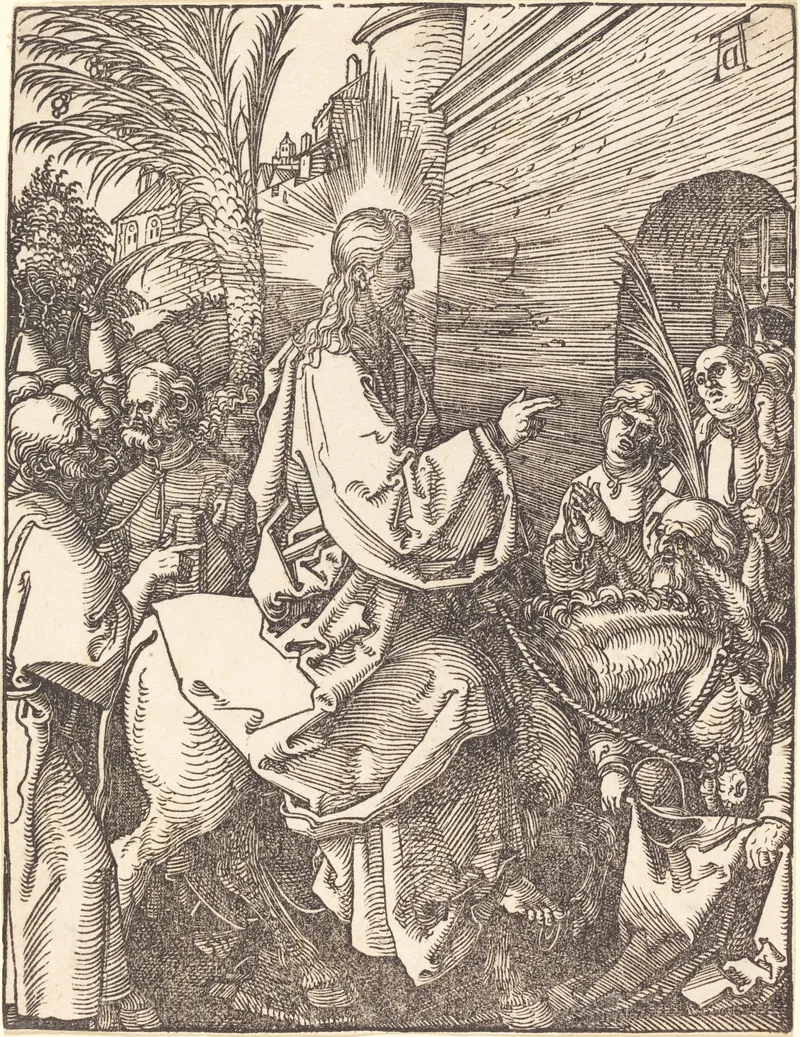
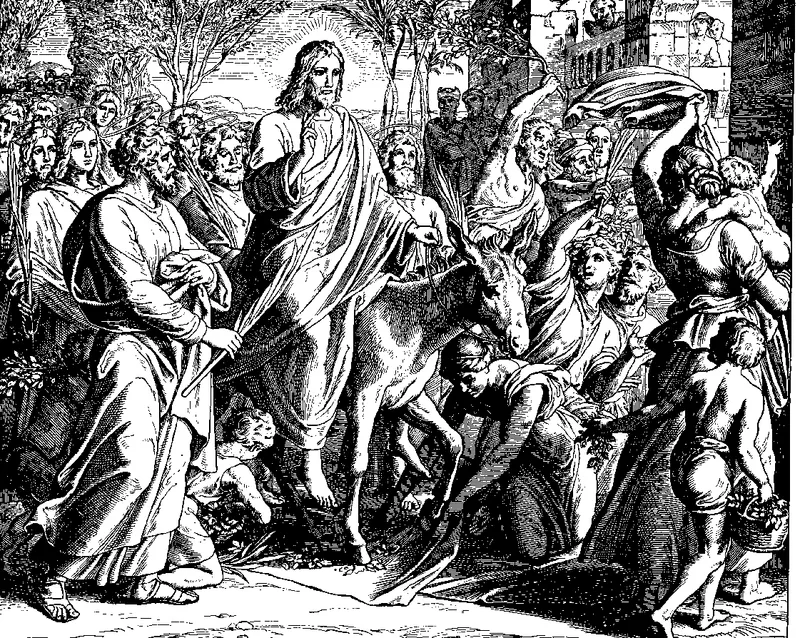
12On the next day much people that were come to the feast, when they heard that Jesus was coming to Jerusalem, 13Took branches of palm trees, and went forth to meet him, and cried, Hosanna: Blessed is the King of Israel that cometh in the name of the Lord. 14And Jesus, when he had found a young ass, sat thereon; as it is written, 15Fear not, daughter of Sion: behold, thy King cometh, sitting on an ass’s colt.
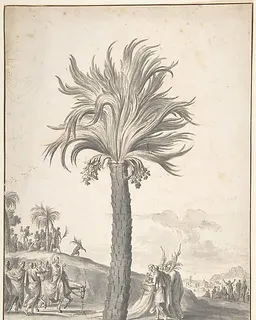
The Passover pilgrims, crowding the city by the tens of thousands, hear that Jesus is on His way and pour out to meet Him. Took branches of palm trees, and went forth to meet him, and cried, Hosanna: Blessed is the King of Israel that cometh in the name of the Lord (vv. 12-13). Every part of the scene is loaded. The palm branches were a symbol of national victory and deliverance, waved in the memory of past liberations.
Hosanna is a cry lifted straight from Psalm 118 - it means save now, a plea that had hardened into a shout of welcome.2 And the title they give Him says exactly what they hope for: the King of Israel. They are right that He is a King; they are wrong about the kind. Their minds are full of Rome thrown off and a kingdom restored, a conqueror riding to set the nation free by force.
The hope is real and the welcome is loud - and within the week most of these same voices will fall silent or turn. A crowd that crowns a King for the wrong reasons can uncrown Him just as fast when He turns out to be a different King than they ordered.
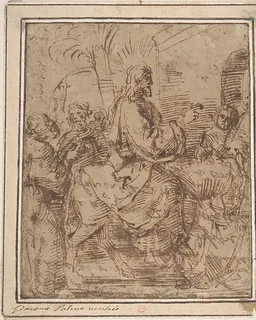
Jesus answers the crowd's shout with a deliberate, quiet act that gently corrects it. And Jesus, when he had found a young ass, sat thereon; as it is written, Fear not, daughter of Sion: behold, thy King cometh, sitting on an ass's colt (vv. 14-15). A conqueror enters a city on a war-horse, with soldiers and the spoils of victory behind him. Jesus chooses the opposite: a borrowed young donkey, the mount of peace and lowliness, an animal no general would ride to war.
In doing so He steps straight into an ancient promise from the prophet Zechariah, of a King who would come to Zion exactly this way - lowly, and riding upon an ass, bringing not conquest but peace (Zech. 9:9). He accepts the title King the crowd has given Him, but redefines it before their eyes. He is indeed the King come to His city - but His throne will be a cross, His victory will look like defeat, and the deliverance He brings is far deeper than the one the palm branches were waving for.
The word to the daughter of Sion is Fear not: her King has come, gentle and saving, just as the prophets foretold.
16These things understood not his disciples at the first: but when Jesus was glorified, then remembered they that these things were written of him, and that they had done these things unto him. 17The people therefore that was with him when he called Lazarus out of his grave, and raised him from the dead, bare record. 18For this cause the people also met him, for that they heard that he had done this miracle. 19The Pharisees therefore said among themselves, Perceive ye how ye prevail nothing? behold, the world is gone after him.
John then tells us something honest about the disciples and something unwitting about the Pharisees. First, the disciples: These things understood not his disciples at the first: but when Jesus was glorified, then remembered they that these things were written of him (v. 16). In the moment, they did not grasp that they were watching prophecy come true; only later, after the resurrection, did the pieces fall into place and the old Scripture light up.
This is a quiet comfort - understanding often comes after obedience. The crowd, meanwhile, has gathered largely on the strength of the Lazarus miracle: those who saw the dead man called from his grave kept telling it, and the report drew the multitudes out (vv. 17-18). And then the Pharisees, exasperated, say more than they mean: Perceive ye how ye prevail nothing? behold, the world is gone after him (v. 19). They mean it as a complaint - our efforts are useless, everyone is following Him.
But the words are truer than they know. The Greeks are about to arrive (v. 20); the world really is beginning to come, and it will not stop at Israel. The enemies of Jesus keep stumbling into prophecy even as they oppose Him.
John 12:20-36aExcept a Corn of Wheat Fall Into the Ground and Die
20And there were certain Greeks among them that came up to worship at the feast: 21The same came therefore to Philip, which was of Bethsaida of Galilee, and desired him, saying, Sir, we would see Jesus. 22Philip cometh and telleth Andrew: and again Andrew and Philip tell Jesus. 23And Jesus answered them, saying, The hour is come, that the Son of man should be glorified. 24Verily, verily, I say unto you, Except a corn of wheat fall into the ground and die, it abideth alone: but if it die, it bringeth forth much fruit. 25He that loveth his life shall lose it; and he that hateth his life in this world shall keep it unto life eternal. 26If any man serve me, let him follow me; and where I am, there shall also my servant be: if any man serve me, him will my Father honour.
A small, easily-missed request sets the whole movement going. And there were certain Greeks among them that came up to worship at the feast… The same came therefore to Philip… saying, Sir, we would see Jesus (vv. 20-21). These are not Jews but Greeks - outsiders, drawn from the wider world toward the God of Israel, now reaching toward Jesus. They come a little timidly, through Philip and Andrew, asking simply to see Him.
And their knock at the door triggers something momentous. Up to now Jesus has said again and again that His hour had not yet come; but at the arrival of these Gentiles, the first trickle of the world coming to Him, He declares: The hour is come, that the Son of man should be glorified (v. 23). It is as if the coming of the Greeks is the sign that the time has arrived - for the world cannot truly come to Him until He has died and risen.
The little request, we would see Jesus, opens onto the cross, because that is the only door through which the nations can finally see Him as He is.
The word hour has been a thread running through the whole Gospel, always pointing forward to this. At Cana He told His mother mine hour is not yet come (John 2:4); twice men sought to seize Him but could not, because his hour was not yet come (John 7:30; 8:20). Now, at last, it strikes: The hour is come, that the Son of man should be glorified (v. 23). But notice what that glorifying turns out to mean.
We might expect “glorified” to point to the crown the crowds wanted - thrones, acclaim, the world at His feet. The very next words speak of a seed falling into the ground to die (v. 24). In John's Gospel the glory of Jesus is revealed precisely in the cross; the lifting up on the tree and the lifting up into glory are, mysteriously, one act. The hour of His death is the hour of His glory.
This overturns every ordinary notion of glory. The Son of man is most gloriously displayed not in escaping suffering but in laying down His life - and that is the hour that has now come.1
Now comes the great principle, weighted with the solemn Verily, verily: Except a corn of wheat fall into the ground and die, it abideth alone: but if it die, it bringeth forth much fruit (v. 24). Jesus reads His coming death not as defeat but as the deepest kind of fruitfulness. A seed clutched and kept dry stays a single seed forever; only by being buried and broken open does it become a harvest. So with Him: were He to refuse the cross and save Himself, He would remain gloriously alone - one perfect life, and no more.
By dying, He becomes the source of life for a world. Then He turns the principle from His own death toward all who would follow Him: He that loveth his life shall lose it; and he that hateth his life in this world shall keep it unto life eternal (v. 25). The same law that governs the seed governs the disciple. The life gripped tightly, hoarded, made the centre of everything, is the life that slips away and comes to nothing.
The life held loosely, even “hated” in the sense of not clung to, spent and surrendered for Christ's sake, is the life that is truly kept - unto life eternal. And He adds the cost and the honour together: If any man serve me, let him follow me… if any man serve me, him will my Father honour (v. 26). To follow Him is to walk His road of self-giving - and to be where He is, and honoured by His Father.
27Now is my soul troubled; and what shall I say? Father, save me from this hour: but for this cause came I unto this hour. 28Father, glorify thy name. Then came there a voice from heaven, saying, I have both glorified it, and will glorify it again. 29The people therefore, that stood by, and heard it, said that it thundered: others said, An angel spake to him. 30Jesus answered and said, This voice came not because of me, but for your sakes. 31Now is the judgment of this world: now shall the prince of this world be cast out.
For a moment the curtain is drawn back on what this hour costs Him. Now is my soul troubled; and what shall I say? Father, save me from this hour: but for this cause came I unto this hour (v. 27). The seed does not fall lightly. He who speaks so steadily of dying and bearing fruit is no stranger to dread; His soul is troubled, shaken to its depths at what lies ahead. We hear Him weigh the prayer a suffering heart longs to pray - Father, save me from this hour - and then turn from it, because escape would unmake the very reason He came: but for this cause came I unto this hour. Here, before the garden of Gethsemane, is the same surrender that the garden will make again.
And out of the trouble rises not a plea for rescue but a prayer of self-offering: Father, glorify thy name (v. 28). That is the whole of His will pressed into four words - glorify thy name, whatever it costs Me. Then heaven itself answers aloud: I have both glorified it, and will glorify it again. The Father's name has been glorified in the Son's life and works, and will be glorified again in His death and rising.
Even the cost is held inside the Father's purpose; the troubled soul is not abandoned but answered.
The voice divides those who hear it - The people therefore, that stood by, and heard it, said that it thundered: others said, An angel spake to him (v. 29) - and Jesus tells them it came not because of me, but for your sakes (v. 30). He needed no reassurance; they needed a witness. Then He announces what His hour will accomplish in the unseen realm: Now is the judgment of this world: now shall the prince of this world be cast out (v. 31).
This is one of the great paradoxes of the cross. To every watching eye it will look like the world judging and defeating Jesus - condemned, mocked, nailed up, finished. John says the truth is the exact reverse: in that very hour it is the world that is judged and its dark ruler who is overthrown. The cross is the throne from which the strong man is bound and cast out, the decisive blow struck against the power that has held humanity.
What looks like Jesus' defeat is the defeat of everything that opposes Him. The seed falling into the ground is, at the same moment, the King winning the world back.
32And I, if I be lifted up from the earth, will draw all men unto me. 33This he said, signifying what death he should die. 34The people answered him, We have heard out of the law that Christ abideth for ever: and how sayest thou, The Son of man must be lifted up? who is this Son of man? 35Then Jesus said unto them, Yet a little while is the light with you. Walk while ye have the light, lest darkness come upon you: for he that walketh in darkness knoweth not whither he goeth. 36While ye have light, believe in the light, that ye may be the children of light. These things spake Jesus, and departed, and did hide himself from them.
Then comes the word that gathers the whole chapter: And I, if I be lifted up from the earth, will draw all men unto me (v. 32). And lest there be any doubt what He means by “lifted up,” John tells us outright, in his own voice: This he said, signifying what death he should die (v. 33). The lifting up is the cross - being raised up on the tree, in plain sight, between earth and sky.
That is the plain sense the Gospel itself gives, and it must be heard first: Jesus is speaking of His crucifixion. And it is from that lifting up - from the cross - that He says He will draw all men unto me. The crucified Christ becomes the great gathering-point of the world: the Greeks who came asking to see Him, and the multitudes beyond them, will be drawn not to a throne of conquest but to a man lifted up to die for them.
The death that looks like the end is the very thing that pulls all peoples toward Him. The crowd, who knew their Scriptures said the Christ would abide for ever, are baffled - how can the Son of man be lifted up, and who is this Son of man? (v. 34). They sense the talk of death and cannot square it with their hope of a Messiah who never dies. Jesus does not untangle the riddle for them directly; instead He presses the urgency of the moment.
With the cross now in view, Jesus speaks not as a debater but as one pleading with people while there is still time. Yet a little while is the light with you. Walk while ye have the light, lest darkness come upon you… While ye have light, believe in the light, that ye may be the children of light (vv. 35-36). He is the Light, and the Light will not stand in their streets much longer; soon He will be lifted up, and then hidden.
So the appeal is to walk and to believe now, in the daylight of His presence, before the chance closes. There is a kind of darkness that comes on a person who keeps refusing the light - a losing of the way, until one knoweth not whither he goeth. The remedy is to come to the Light while it shines and so become a child of it. Then, with poignant finality, the public ministry ends: These things spake Jesus, and departed, and did hide himself from them (v. 36).
The Light He urged them to walk in withdraws. The long day of His open teaching is over; what remains is the cross, and the chapter's closing reckoning with those who would not believe.
John 12:36b-50I Am Come a Light Into the World
37But though he had done so many miracles before them, yet they believed not on him: 38That the saying of Esaias the prophet might be fulfilled, which he spake, Lord, who hath believed our report? and to whom hath the arm of the Lord been revealed? 39Therefore they could not believe, because that Esaias said again, 40He hath blinded their eyes, and hardened their heart; that they should not see with their eyes, nor understand with their heart, and be converted, and I should heal them. 41These things said Esaias, when he saw his glory, and spake of him.
John pauses to face an honest and painful fact head-on: But though he had done so many miracles before them, yet they believed not on him (v. 37). The signs had been overwhelming - water to wine, the blind seeing, five thousand fed, Lazarus called from the grave - and still the response of so many was unbelief. How could this be? John's answer is to reach for the prophet Isaiah, who long before had cried out at the same heartbreak: Lord, who hath believed our report? and to whom hath the arm of the Lord been revealed? (v. 38; Isa. 53:1).2 The prophet of the suffering servant had asked that very question - who believes the message? - and now his words come true again, in front of John's eyes.
The unbelief that met Jesus was the same unbelief Isaiah had wept over centuries earlier, the report that so few receive. John wants his readers to know that even the rejection of Christ stands written in Scripture - that the strange refusal of so many does not mean the word failed, but that it ran exactly along the grain the prophets had already traced.
John then quotes Isaiah a second time, and these are among the most solemn words in the Gospel: Therefore they could not believe, because that Esaias said again, He hath blinded their eyes, and hardened their heart; that they should not see with their eyes, nor understand with their heart, and be converted, and I should heal them (vv. 39-40; Isa. 6:9-10). The text is meant to be received as John gives it, not pressed into a tidy system.
He sets it down as the fulfilment of Isaiah's own words - the same vision Isaiah received when he was sent to a people who would hear and not understand, see and not perceive. It is sobering and strange, and Scripture does not soften it. Yet the same Gospel that records this also records, in the very next breath, that many… believed on him (v. 42), and presses on every reader the open and tender call to believe in the light while it shines (v. 36) and to come and be healed.
John holds the hard word and the open invitation side by side without resolving the tension for us - and we do best to hold them as he does. What he adds is breathtaking: These things said Esaias, when he saw his glory, and spake of him (v. 41). When Isaiah, in the temple, beheld the LORD high and lifted up and the train of His glory filling the house (Isa. 6:1-3), John tells us it was Christ's glory he saw, and of Christ he spoke.
The One the prophet beheld enthroned in glory is the One now lifted up on a cross.2
42Nevertheless among the chief rulers also many believed on him; but because of the Pharisees they did not confess him, lest they should be put out of the synagogue: 43For they loved the praise of men more than the praise of God.
Then a gentler but searching note: Nevertheless among the chief rulers also many believed on him; but because of the Pharisees they did not confess him, lest they should be put out of the synagogue (v. 42). Here is a different and more familiar tragedy than outright unbelief - faith that is real but afraid. These were not scoffers; they believed. But they kept it hidden, because confessing Christ openly would cost them their standing, their place in the synagogue, their good name among the powerful.
And John names the root of it plainly: For they loved the praise of men more than the praise of God (v. 43). It is one of the most quietly convicting sentences in the chapter, because it exposes a fear that touches almost everyone - the fear of what people will think, the love of human approval that can keep a believing heart silent. They believed in Jesus and would not say so, because the opinion of the crowd weighed more with them than the opinion of God.
The verse does not thunder; it simply holds up a mirror. To value the praise of people above the praise of God is to let a true faith be muzzled by fear - and to lose, in the keeping of one's reputation, the very thing Christ honours: open confession of His name.
44Jesus cried and said, He that believeth on me, believeth not on me, but on him that sent me. 45And he that seeth me seeth him that sent me. 46I am come a light into the world, that whosoever believeth on me should not abide in darkness. 47And if any man hear my words, and believe not, I judge him not: for I came not to judge the world, but to save the world. 48He that rejecteth me, and receiveth not my words, hath one that judgeth him: the word that I have spoken, the same shall judge him in the last day. 49For I have not spoken of myself; but the Father which sent me, he gave me a commandment, what I should say, and what I should speak. 50And I know that his commandment is life everlasting: whatsoever I speak therefore, even as the Father said unto me, so I speak.
The chapter ends with one last public cry from Jesus, gathering the great themes of His whole ministry. Jesus cried and said, He that believeth on me, believeth not on me, but on him that sent me. And he that seeth me seeth him that sent me (vv. 44-45). To the very end He points away from Himself to the Father, yet in a way that binds the two together inseparably: to believe in Him is to believe in the One who sent Him; to see Him is to see the Father.
There is no reaching the Father around Jesus; He is the One in whom the Father is met. Then He names His errand once more, and it is mercy: I am come a light into the world, that whosoever believeth on me should not abide in darkness (v. 46). He is the Light, and His coming is so that whosoever - that wide, open word again - believing in Him need not stay in the dark. And lest the talk of judgment be misheard, He says plainly why He came: I came not to judge the world, but to save the world (v. 47).
The first purpose of His coming is rescue, not condemnation. The Light comes to save.
Yet there is a sober flip side, and Jesus states it without flinching: He that rejecteth me, and receiveth not my words, hath one that judgeth him: the word that I have spoken, the same shall judge him in the last day (v. 48). He Himself comes not to judge but to save - but to turn away from the Light is not therefore a matter without consequence. The very word He spoke, the offer of life refused, will stand as the measure on the last day.
His word, once given and rejected, has its own weight before God. And He grounds the authority of that word in its source: I have not spoken of myself; but the Father which sent me, he gave me a commandment, what I should say… And I know that his commandment is life everlasting (vv. 49-50). His words are not His private opinions; they are the Father's own commandment entrusted to Him - and that commandment, He says, is life everlasting. Here the chapter that began with a flask of perfume and ran through palms and a falling seed and a cross comes to rest: the words of Jesus are the words of the Father, and to receive them is to receive everlasting life.
The Light has spoken; the only question left for every hearer is whether they will walk in it.
Research trail
Sources & further study
These references support the historical, linguistic, manuscript, and contextual notes in this chapter. Scripture remains the primary text; external sources are provided so readers can inspect the research directly.
- John 12 - Translators' NotesThe NET Bible's detailed footnotes on John 12 - the value of the spikenard in verse 5, the sense of “the hour” that has now come (v. 23), the meaning of “lifted up” that John himself interprets in verse 33, and where the quoted words of Jesus may end as the chapter closes in verses 44-50.
- John 12 ↔ Zechariah 9 · Psalm 118 · Isaiah 6 & 53Traces the threads tying John 12 to the rest of Scripture - the King on the colt (v. 15) read against Zechariah 9:9, the crowd's Hosanna… Blessed is he that cometh (v. 13) against Psalm 118:25-26, and the unbelief of verses 38-41 quoted straight out of Isaiah 53:1 and Isaiah 6:9-10.
- John 12 · Greek interlinear + lexiconThe Greek text of John 12 word by word, with parsing and lexical links - useful for kokkos (v. 24, the “corn of wheat” that must fall and die), hupsoo (vv. 32, 34, “lifted up,” which carries both the cross and exaltation in one word), psyche (v. 25, the “life” a man may lose or keep), and doxazo (vv. 23, 28, the “glorify” that John ties to the cross).
Where this echoes in Scripture
Against the Day of My Burying
- Matthew 26:12-13she did it for my burial. Verily I say unto you, Wheresoever this gospel shall be preached... there shall also this... be told for a memorial of her.The same anointing (vv. 3, 7) - Jesus reads it as preparation for His burial and makes it her lasting memorial.
- Luke 7:37-38a woman... stood at his feet behind him weeping, and... wiped them with the hairs of her head, and... anointed them with the ointment.Love at Jesus' feet, poured out in costly ointment - the same posture of devotion Mary takes in verse 3.
- John 13:4-5he riseth from supper, and laid aside his garments; and... began to wash the disciples' feet.The Lord whom Mary anoints at the feet (v. 3) soon stoops to wash feet Himself - love at the lowest place.
- 2 Corinthians 8:9ye know the grace of our Lord Jesus Christ, that... for your sakes he became poor, that ye through his poverty might be rich.Mary's costly outpouring (v. 3) answers, in advance, the far costlier self-giving of Christ Himself.
- Mark 14:8She hath done what she could: she is come aforehand to anoint my body to the burying.Jesus' verdict on the anointing of verse 7 - love that did what it could, before the burial.
Blessed Is the King of Israel
- Zechariah 9:9behold, thy King cometh unto thee: he is just, and having salvation; lowly, and riding upon an ass.The prophecy Jesus fulfils in verses 14-15 - the King who comes to Zion not in conquest but in lowliness.
- Psalm 118:25-26Save now, I beseech thee, O Lord... Blessed be he that cometh in the name of the Lord.The exact words the crowd cries in verse 13 - “Hosanna… Blessed is he that cometh.”
- Philippians 2:6-8made himself of no reputation, and took upon him the form of a servant... and became obedient unto death, even the death of the cross.The lowliness of the King on the colt (v. 15) - majesty hidden in humility, all the way to the cross.
- Matthew 21:8-9a very great multitude spread their garments in the way... crying, Hosanna to the Son of David.The same entry as verses 12-13 - the crowds hailing Jesus as King with palms and Hosannas.
- Revelation 7:9a great multitude... stood before the throne... clothed with white robes, and palms in their hands.The palm branches of verse 13 lifted again - the redeemed of every nation acclaiming the King.
Except a Corn of Wheat Fall Into the Ground and Die
- John 3:14-15as Moses lifted up the serpent in the wilderness, even so must the Son of man be lifted up: That whosoever believeth in him should not perish.The same “lifted up” as verse 32 - the cross as the place the dying look to and live.
- Numbers 21:8-9Make thee a fiery serpent, and set it upon a pole... when he beheld the serpent of brass, he lived.The picture behind “lifted up… will draw all men” (v. 32) - a thing raised on high, and the dying drawn to look.
- Philippians 3:10That I may know him... and the fellowship of his sufferings, being made conformable unto his death.The law of the seed (vv. 24-25) lived out - the disciple conformed to Christ's death to share His life.
- Matthew 26:38-39My soul is exceeding sorrowful... O my Father... let this cup pass from me: nevertheless not as I will, but as thou wilt.The trouble and surrender of verses 27-28 in fuller form - the same will bent to the Father in Gethsemane.
- Colossians 2:15having spoiled principalities and powers, he made a shew of them openly, triumphing over them in it.The truth of verse 31 - on the cross the prince of this world is cast out and the powers are overthrown.
I Am Come a Light Into the World
- Isaiah 53:1Who hath believed our report? and to whom is the arm of the Lord revealed?The prophet's cry John quotes in verse 38 - the same unbelief that met the suffering servant meets Christ.
- Isaiah 6:9-10Hear ye indeed, but understand not... Make the heart of this people fat... lest they... understand with their heart, and convert, and be healed.The words John quotes in verses 39-40 - given as the fulfilment of Isaiah's own commission.
- John 8:12I am the light of the world: he that followeth me shall not walk in darkness, but shall have the light of life.The same claim as verse 46 - Jesus the Light, in whom no follower need abide in darkness.
- John 3:17God sent not his Son into the world to condemn the world; but that the world through him might be saved.Verse 47 sounded earlier in the Gospel - the Son sent to save the world.
- John 1:4-5In him was life; and the life was the light of men. And the light shineth in darkness; and the darkness comprehended it not.Where the Light first appears (vv. 46) - the Gospel's opening, now Jesus' closing cry.