Matthew 26
People in this chapter
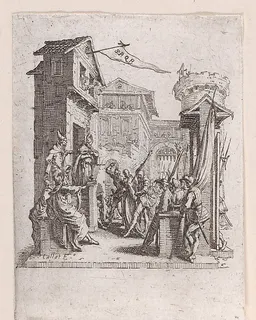
The hour Matthew has been pointing toward since the first shadow of the cross now arrives. Jesus says it plainly to His disciples: Ye know that after two days is the feast of the passover, and the Son of man is betrayed to be crucified (v. 2). He is not overtaken by events; He names them in advance. Meanwhile the chief priests and the elders gather in the palace of the high priest, Caiaphas, plotting how to take Him by subtilty and kill Him - though not, they decide, during the feast, for fear of the crowds.
The chapter opens with the machinery of death quietly turning, and with Jesus walking into it on purpose.1
Tap any highlighted phrase to jump to the commentary that unpacks it.
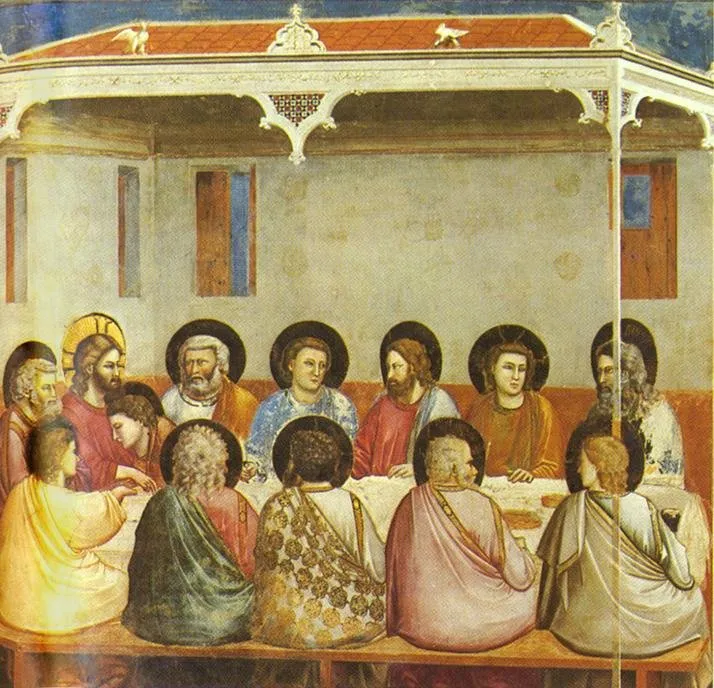
Matthew 26:1-16A Good Work for My Burial
1And it came to pass, when Jesus had finished all these sayings, he said unto his disciples, 2Ye know that after two days is the feast of the passover, and the Son of man is betrayed to be crucified. 3Then assembled together the chief priests, and the scribes, and the elders of the people, unto the palace of the high priest, who was called Caiaphas, 4And consulted that they might take Jesus by subtilty, and kill him. 5But they said, Not on the feast day, lest there be an uproar among the people. 6Now when Jesus was in Bethany, in the house of Simon the leper, 7There came unto him a woman having an alabaster box of very precious ointment, and poured it on his head, as he sat at meat. 8But when his disciples saw it, they had indignation, saying, To what purpose is this waste? 9For this ointment might have been sold for much, and given to the poor. 10When Jesus understood it, he said unto them, Why trouble ye the woman? for she hath wrought a good work upon me. 11For ye have the poor always with you; but me ye have not always. 12For in that she hath poured this ointment on my body, she did it for my burial. 13Verily I say unto you, Wheresoever this gospel shall be preached in the whole world, there shall also this, that this woman hath done, be told for a memorial of her. 14Then one of the twelve, called Judas Iscariot, went unto the chief priests, 15And said unto them, What will ye give me, and I will deliver him unto you? And they covenanted with him for thirty pieces of silver. 16And from that time he sought opportunity to betray him.
The chapter opens on a hinge. When Jesus had finished all these sayings (v. 1) closes the last of the great teaching blocks of Matthew - the long discourse on the end of the age - and turns the whole Gospel toward the cross. And the first words out of His mouth are foreknowledge: after two days is the feast of the passover, and the Son of man is betrayed to be crucified (v. 2). Notice the precision.
He names the festival, He names the manner of His death, and He sets His own dying inside the Passover, the feast of the lamb whose blood once spared Israel. He is not a victim swept along by events He cannot see. Across the city the chief priests and elders gather in the palace of Caiaphas to plot how they might take Jesus by subtilty, and kill him (vv. 3-4) - and they decide against the feast, lest there be an uproar among the people (v. 5).
They mean to control the timing. But the timing is already in other hands. He will die at Passover, as the Lamb, exactly when He said.1
Into the gathering shadow Matthew sets a scene of pure devotion. At Bethany, in the house of Simon the leper (v. 6) - a man whose very name carries the memory of uncleanness and, perhaps, of healing - a woman comes with an alabaster box of very precious ointment and breaks it open over the Lord's head as He reclines at the table (v. 7). The alabaster flask was sealed; to use the ointment at all, she had to shatter the neck of the jar.
There is no half-measure in what she does. She pours out the whole of something costly, holding nothing back. The disciples see only the arithmetic: To what purpose is this waste? For this ointment might have been sold for much, and given to the poor (vv. 8-9). It is not an unreasonable objection - the ointment was worth nearly a year's wages, and care for the poor is a genuine good. But they have weighed the moment wrongly, and Jesus says so.
Jesus rises to the woman's defense: Why trouble ye the woman? for she hath wrought a good work upon me (v. 10). His answer is careful and tender. He does not dismiss the poor - ye have the poor always with you (v. 11), and the duty toward them never lapses. But there is a moment that will not come again: me ye have not always. The One reclining at the table is about to be taken and killed, and this woman, alone in the room, has grasped it.
While the Twelve argue over cost, she has understood the hour. Her extravagance is not waste at all; it is the only fitting response to who He is and where He is going. Devotion that the world calls excessive is often simply devotion that has seen clearly what others have missed.
Then Jesus lifts her act into something permanent: Verily I say unto you, Wheresoever this gospel shall be preached in the whole world, there shall also this, that this woman hath done, be told for a memorial of her (v. 13). It is a staggering promise. Kings raise monuments and they crumble; here a single act of love, performed by an unnamed woman in a leper's house, is woven into the gospel itself, told wherever the good news is told, for as long as it is told.
And the promise has come true: you are reading of her now. The contrast Matthew is building could not be sharper. She pours out a treasure and is remembered forever for it; in the very next verse a man will sell the Lord for silver and be remembered forever for that. The gospel, wherever it goes, carries both stories - the one who gave everything, and the one who sold everything away.
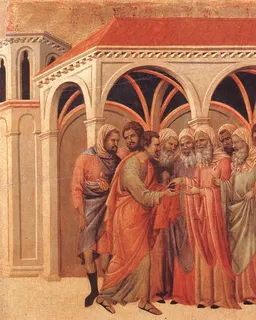
The hinge from love to betrayal turns in a single word: Then. Then one of the twelve, called Judas Iscariot, went unto the chief priests, and said unto them, What will ye give me, and I will deliver him unto you? (vv. 14-15). Matthew lets the placement do the work. Set against the woman who counted no cost, Judas opens with a price: What will ye give me? The treachery is not only that he betrays Jesus, but that he reduces Him to a transaction, a thing to be sold for whatever the market will bear.
The priests covenanted with him for thirty pieces of silver - the price the law set for a slave gored by an ox (Ex. 21:32), and the very sum Zechariah named when the flock weighed out the shepherd's wage with contempt (Zech. 11:12-13). And from that time he sought opportunity to betray him (v. 16). The wheel of the plot, stuck for fear of the crowds, now has the inside man it needed.
Sin, having named its price, goes looking for its moment.
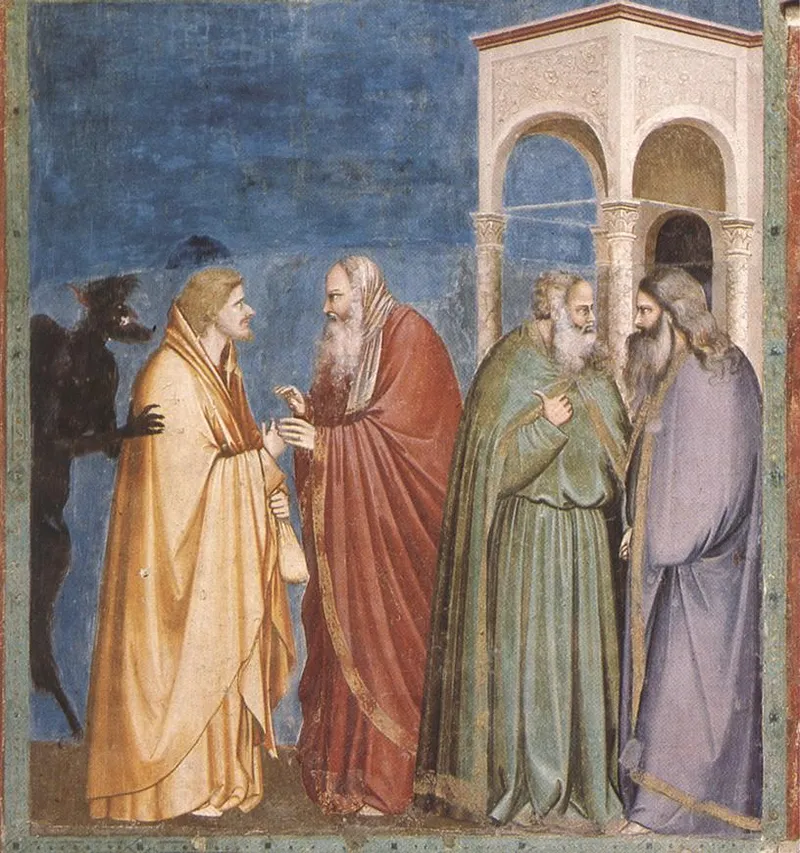
Matthew 26:17-30This Is My Blood of the New Testament
17Now the first day of the feast of unleavened bread the disciples came to Jesus, saying unto him, Where wilt thou that we prepare for thee to eat the passover? 18And he said, Go into the city to such a man, and say unto him, The Master saith, My time is at hand; I will keep the passover at thy house with my disciples. 19And the disciples did as Jesus had appointed them; and they made ready the passover. 20Now when the even was come, he sat down with the twelve. 21And as they did eat, he said, Verily I say unto you, that one of you shall betray me. 22And they were exceeding sorrowful, and began every one of them to say unto him, Lord, is it I? 23And he answered and said, He that dippeth his hand with me in the dish, the same shall betray me. 24The Son of man goeth as it is written of him: but woe unto that man by whom the Son of man is betrayed! it had been good for that man if he had not been born. 25Then Judas, which betrayed him, answered and said, Master, is it I? He said unto him, Thou hast said. 26And as they were eating, Jesus took bread, and blessed it, and brake it, and gave it to the disciples, and said, Take, eat; this is my body. 27And he took the cup, and gave thanks, and gave it to them, saying, Drink ye all of it; 28For this is my blood of the new testament, which is shed for many for the remission of sins. 29But I say unto you, I will not drink henceforth of this fruit of the vine, until that day when I drink it new with you in my Father’s kingdom. 30And when they had sung an hymn, they went out into the mount of Olives.
The meal is a Passover. Now the first day of the feast of unleavened bread the disciples came to Jesus, saying… Where wilt thou that we prepare for thee to eat the passover? (v. 17). This matters for everything that follows. Passover was the yearly remembrance of the night the LORD brought Israel out of Egypt - the night a lamb was killed for each household and its blood struck on the doorposts, so that the destroyer passed over and the firstborn were spared (Ex. 12).
Every detail of the supper carries that memory. Jesus sends the disciples to a man in the city with a strange and weighty word: The Master saith, My time is at hand; I will keep the passover at thy house with my disciples (v. 18). My time is at hand - the hour He has spoken of all through the Gospel has come. He keeps the ancient feast one last time, on the very night He will become its fulfillment.
As they eat, He speaks the words that fall like a stone into the room: Verily I say unto you, that one of you shall betray me (v. 21). The response is a flood of self-doubt: they were exceeding sorrowful, and began every one of them to say unto him, Lord, is it I? (v. 22). It is a searching detail. No one points across the table; each man looks inward and fears it might be himself.
Jesus answers with a sign that names the nearness of the betrayer without exposing him to the others: He that dippeth his hand with me in the dish, the same shall betray me (v. 23). The treachery comes from inside the circle, from one sharing the same bowl. Then He holds together two truths the chapter never lets go of: The Son of man goeth as it is written of him: but woe unto that man by whom the Son of man is betrayed! (v. 24).
His death is according to the Scriptures, long foretold - and yet the betrayer is not thereby excused. Divine purpose and human guilt stand side by side, neither cancelling the other. When Judas himself asks, Master, is it I?, Jesus answers quietly, Thou hast said (v. 25).
Then, in the middle of the ancient feast, Jesus does something new. As they were eating, Jesus took bread, and blessed it, and brake it, and gave it to the disciples, and said, Take, eat; this is my body (v. 26). Four verbs carry the weight: He took, He blessed, He brake, He gave. They are the ordinary motions of a host at any meal - and they become the shape of the cross. The bread is broken; His body will be broken.
The bread is given; His body will be given. For centuries the unleavened bread of Passover had pointed back to deliverance from Egypt; now Jesus takes that same bread into His hands and points it forward, to Himself. This is my body. He sets the meaning Himself, in His own words, the night before He dies. The disciples are not asked to explain it; they are told to take and eat - to receive what He is giving.
The host of the feast is also its offering.
He takes the cup the same way: he took the cup, and gave thanks, and gave it to them, saying, Drink ye all of it; For this is my blood of the new testament, which is shed for many for the remission of sins (vv. 27-28). Every phrase is freighted. My blood of the new testament reaches back to Sinai, where Moses sealed the covenant by sprinkling the people with blood and saying, Behold the blood of the covenant (Ex. 24:8) - and reaches forward to the new covenant Jeremiah foretold, written on the heart, with sins forgiven (Jer. 31:31-34).
Shed for many recalls the Servant of Isaiah 53 who bare the sin of many. And for the remission of sins names the purpose of it all: this blood is poured out to forgive. Drink ye all of it - the cup is not for one but for everyone at the table. What Jesus gives here is not a lecture about His death but a participation in it: He hands them the cup and tells them to drink.
The supper takes the cross, still a day away, and sets it already in their hands.
The Supper closes with a promise that looks clean through death to the far side of it: I will not drink henceforth of this fruit of the vine, until that day when I drink it new with you in my Father's kingdom (v. 29). On the night He is betrayed, with Gethsemane an hour away and the cross a day away, Jesus speaks of a future feast as something certain. He is not merely bracing to endure; He is looking past the cross to the table beyond it, where He will drink the cup new with His own, in the kingdom of the Father.
The Scriptures elsewhere picture that day as a great supper, the marriage feast of the Lamb (Rev. 19:9), and Jesus, on this darkest night, is already counting on it. So the meal that remembers His death also rehearses a reunion. Then comes one of the most quietly moving lines in the Gospels: when they had sung an hymn, they went out into the mount of Olives (v. 30). They sing - almost certainly the Passover psalms - and then walk out into the dark toward the garden.
He goes to His agony with a song still on His lips.
Matthew 26:31-46Not As I Will, But As Thou Wilt
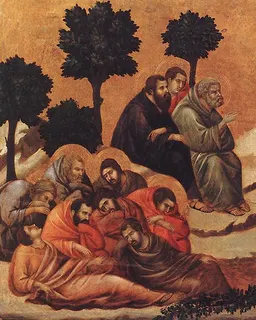
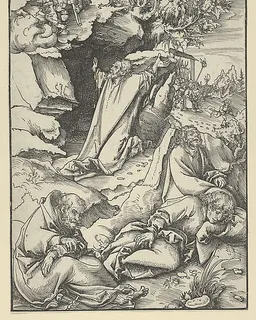
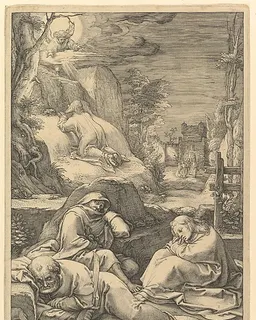
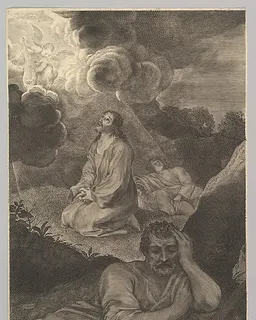
31Then saith Jesus unto them, All ye shall be offended because of me this night: for it is written, I will smite the shepherd, and the sheep of the flock shall be scattered abroad. 32But after I am risen again, I will go before you into Galilee. 33Peter answered and said unto him, Though all men shall be offended because of thee, yet will I never be offended. 34Jesus said unto him, Verily I say unto thee, That this night, before the cock crow, thou shalt deny me thrice. 35Peter said unto him, Though I should die with thee, yet will I not deny thee. Likewise also said all the disciples. 36Then cometh Jesus with them unto a place called Gethsemane, and saith unto the disciples, Sit ye here, while I go and pray yonder. 37And he took with him Peter and the two sons of Zebedee, and began to be sorrowful and very heavy. 38Then saith he unto them, My soul is exceeding sorrowful, even unto death: tarry ye here, and watch with me. 39And he went a little farther, and fell on his face, and prayed, saying, O my Father, if it be possible, let this cup pass from me: nevertheless not as I will, but as thou wilt. 40And he cometh unto the disciples, and findeth them asleep, and saith unto Peter, What, could ye not watch with me one hour? 41Watch and pray, that ye enter not into temptation: the spirit indeed is willing, but the flesh is weak. 42He went away again the second time, and prayed, saying, O my Father, if this cup may not pass away from me, except I drink it, thy will be done. 43And he came and found them asleep again: for their eyes were heavy. 44And he left them, and went away again, and prayed the third time, saying the same words. 45Then cometh he to his disciples, and saith unto them, Sleep on now, and take your rest: behold, the hour is at hand, and the Son of man is betrayed into the hands of sinners. 46Rise, let us be going: behold, he is at hand that doth betray me.
On the way out, Jesus tells them plainly what the night will do to them: All ye shall be offended because of me this night: for it is written, I will smite the shepherd, and the sheep of the flock shall be scattered abroad (v. 31). He quotes Zechariah 13:7 - a prophecy of a shepherd struck down and his flock scattered - and applies it to Himself and to them. He is the Shepherd; they are the sheep about to scatter.
But He does not stop at the scattering: after I am risen again, I will go before you into Galilee (v. 32). Even as He foretells their failure, He promises to gather them again on the far side of resurrection. The Shepherd will be smitten, the sheep will scatter - and the same Shepherd, risen, will go before them to bring them home. Peter cannot bear the prediction: Though all men shall be offended because of thee, yet will I never be offended (v. 33).
His love is real; his confidence is not. Jesus answers with painful precision: this night, before the cock crow, thou shalt deny me thrice (v. 34). Peter doubles down - Though I should die with thee, yet will I not deny thee - and likewise also said all the disciples (v. 35). They mean every word. By morning every word will have failed.
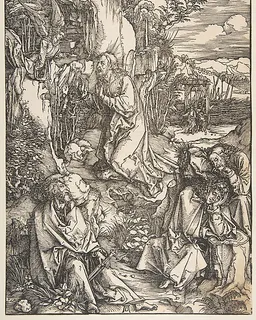
They come to a place called Gethsemane - an olive grove on the slope of the mount, its name meaning oil-press, where olives were crushed to yield their oil. The name turns out to be terribly fitting, for here the Lord Himself is pressed to the breaking point. He takes the inner three - Peter, James, and John - farther in, and began to be sorrowful and very heavy (v. 37). Then He says it outright: My soul is exceeding sorrowful, even unto death: tarry ye here, and watch with me (v. 38).
This is no calm martyr's composure. The words are raw and human - a grief so deep it feels as if it could kill Him, a soul crushed nearly to death. And He asks for company in it: watch with me. The eternal Son, fully sharing our flesh, does not want to be alone in His sorrow. Whatever else the cross is, it is borne by One who truly felt the full weight of what was coming, who recoiled from it as any of us would, and who still went forward.
He does not pretend the cup is easy. He calls it by its name - sorrowful, even unto death - and then He prays.
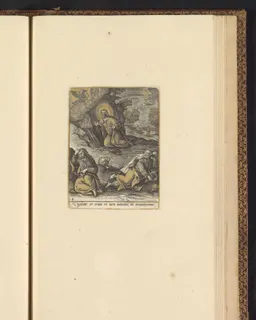
The prayer itself is the heart of the chapter, perhaps of the Gospel. He went a little farther, and fell on his face, and prayed, saying, O my Father, if it be possible, let this cup pass from me: nevertheless not as I will, but as thou wilt (v. 39). Hold the two halves together, for the gospel lives in the seam between them. The first half is utterly honest: if it be possible, let this cup pass. He does not want to drink it.
He asks, as a true man in true anguish, to be spared. There is no false serenity here, no suppression of the dread. But the second half does not cancel the first; it surrenders it: nevertheless not as I will, but as thou wilt. He has a will, and it shrinks from the cup; and He lays that will down before the Father's. This is what perfect obedience looks like - not the absence of struggle, but the offering up of the struggle.
He prays it not once but three times, the third time saying the same words (v. 44), each time rising to find His friends asleep. The cup will not pass; so He takes it.1
Between the prayers, Jesus comes back to the three and finds them asleep, and His word to Peter is more grieved than angry: What, could ye not watch with me one hour? (v. 40). Then He gives them, and us, a sentence to live by: Watch and pray, that ye enter not into temptation: the spirit indeed is willing, but the flesh is weak (v. 41). It is a tender diagnosis. He does not doubt that their spirit is willing - Peter has just sworn he would die rather than deny, and meant it.
The trouble is that willing spirits are housed in weak flesh, and good intentions wilt under the weight of a real and exhausting hour. The remedy He names is not greater self-confidence but watch and pray. The disciples sleep when they should be praying, and in a few hours they will scatter and deny. The contrast is stark and deliberate: in the same garden, the Lord prays through His agony into surrender, while His friends sleep through theirs into failure.
The difference between standing and falling, He tells them, often comes down to whether we watched and prayed while we still could.
The third return is different. Sleep on now, and take your rest: behold, the hour is at hand, and the Son of man is betrayed into the hands of sinners (v. 45). The time for watching is past; the betrayer is already on the road. And then, having wrestled the matter through with the Father and risen from His knees with His will fixed, Jesus turns to meet what is coming: Rise, let us be going: behold, he is at hand that doth betray me (v. 46).
The change in Him is unmistakable. The One who fell on His face in dread now stands and walks toward the torches. He does not flee into the dark of the olive grove, though He easily could. He goes out to meet His betrayer. The agony has not been removed - the cup is still full - but the wrestling is finished, and what remains is obedience in motion. Gethsemane is where the will was settled; from here on, He simply does what He resolved on His knees.
Matthew 26:47-56More Than Twelve Legions of Angels
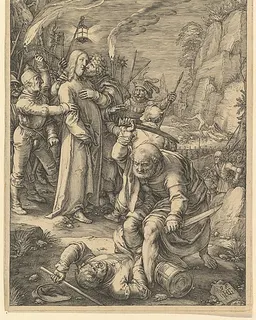
47And while he yet spake, lo, Judas, one of the twelve, came, and with him a great multitude with swords and staves, from the chief priests and elders of the people. 48Now he that betrayed him gave them a sign, saying, Whomsoever I shall kiss, that same is he: hold him fast. 49And forthwith he came to Jesus, and said, Hail, master; and kissed him. 50And Jesus said unto him, Friend, wherefore art thou come? Then came they, and laid hands on Jesus, and took him. 51And, behold, one of them which were with Jesus stretched out his hand, and drew his sword, and struck a servant of the high priest’s, and smote off his ear. 52Then said Jesus unto him, Put up again thy sword into his place: for all they that take the sword shall perish with the sword. 53Thinkest thou that I cannot now pray to my Father, and he shall presently give me more than twelve legions of angels? 54But how then shall the scriptures be fulfilled, that thus it must be? 55In that same hour said Jesus to the multitudes, Are ye come out as against a thief with swords and staves for to take me? I sat daily with you teaching in the temple, and ye laid no hold on me. 56But all this was done, that the scriptures of the prophets might be fulfilled. Then all the disciples forsook him, and fled.
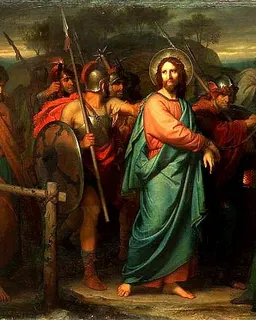
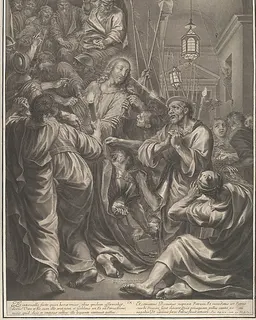
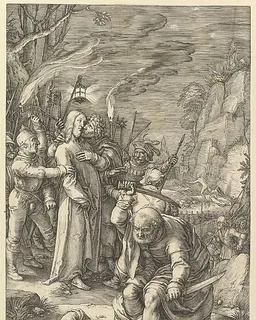
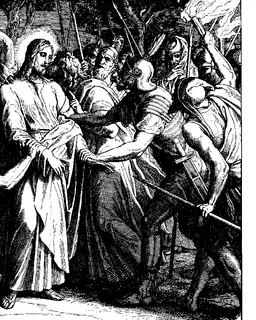
The garden's quiet breaks: while he yet spake, lo, Judas, one of the twelve, came, and with him a great multitude with swords and staves, from the chief priests and elders of the people (v. 47). Matthew will not let us forget the phrase - one of the twelve. This is not a stranger; it is a man who shared the bread an hour ago. The arranged signal is a thing of horror precisely because of its tenderness: Whomsoever I shall kiss, that same is he: hold him fast (v. 48).
A kiss was a greeting of affection and honor, the warm sign between friends and between a disciple and his teacher. Judas turns it into a weapon. Hail, master; and kissed him (v. 49). And Jesus' answer is almost unbearable in its restraint: Friend, wherefore art thou come? (v. 50). He calls the betrayer friend. There is no curse, no recoil - only a question that holds the door of repentance open even now. Then the hands close: they came, and laid hands on Jesus, and took him. The plot that began with a price and a kiss has its man.
One of His own reacts the way flesh always wants to: one of them which were with Jesus stretched out his hand, and drew his sword, and struck a servant of the high priest's, and smote off his ear (v. 51). It is an act of loyalty and panic together - a desperate attempt to defend the Lord by force. Jesus stops it at once: Put up again thy sword into his place: for all they that take the sword shall perish with the sword (v. 52).
The kingdom He brings will not be defended by the sword, and those who live by violence are swept away by it. He says why in the most arresting terms: Thinkest thou that I cannot now pray to my Father, and he shall presently give me more than twelve legions of angels? (v. 53). A Roman legion numbered some six thousand soldiers; more than twelve legions is an army of angels beyond counting, instantly available at a word to the Father.
He is not overpowered. He could, this instant, call down a host that would scatter the multitude like dust. The chains on Him are not iron strong enough to hold Him; they are the chains of His own willing obedience.
Then comes the question that explains the whole arrest: But how then shall the scriptures be fulfilled, that thus it must be? (v. 54). Here is the reason He will not summon the angels: He has chosen the way written long beforehand in the prophets. He turns to the armed crowd with a quiet rebuke: Are ye come out as against a thief with swords and staves for to take me? I sat daily with you teaching in the temple, and ye laid no hold on me (v. 55).
They take Him by night, with weapons, as though He were a dangerous criminal - though He taught openly among them day after day and they never touched Him. The timing and the manner are not theirs to dictate after all. All this was done, that the scriptures of the prophets might be fulfilled (v. 56). And then the line that empties the garden: Then all the disciples forsook him, and fled. The scattering He foretold in verse 31 happens exactly as He said.
The Shepherd is taken, and every last sheep runs. He goes on alone - which, in the end, He always meant to do.
Matthew 26:57-75Thou Hast Said · The Son of Man Coming in the Clouds
57And they that had laid hold on Jesus led him away to Caiaphas the high priest, where the scribes and the elders were assembled. 58But Peter followed him afar off unto the high priest’s palace, and went in, and sat with the servants, to see the end. 59Now the chief priests, and elders, and all the council, sought false witness against Jesus, to put him to death; 60But found none: yea, though many false witnesses came, yet found they none. At the last came two false witnesses, 61And said, This fellow said, I am able to destroy the temple of God, and to build it in three days. 62And the high priest arose, and said unto him, Answerest thou nothing? what is it which these witness against thee? 63But Jesus held his peace. And the high priest answered and said unto him, I adjure thee by the living God, that thou tell us whether thou be the Christ, the Son of God. 64Jesus saith unto him, Thou hast said: nevertheless I say unto you, Hereafter shall ye see the Son of man sitting on the right hand of power, and coming in the clouds of heaven. 65Then the high priest rent his clothes, saying, He hath spoken blasphemy; what further need have we of witnesses? behold, now ye have heard his blasphemy. 66What think ye? They answered and said, He is guilty of death. 67Then did they spit in his face, and buffeted him; and others smote him with the palms of their hands, 68Saying, Prophesy unto us, thou Christ, Who is he that smote thee? 69Now Peter sat without in the palace: and a damsel came unto him, saying, Thou also wast with Jesus of Galilee. 70But he denied before them all, saying, I know not what thou sayest. 71And when he was gone out into the porch, another maid saw him, and said unto them that were there, This fellow was also with Jesus of Nazareth. 72And again he denied with an oath, I do not know the man. 73And after a while came unto him they that stood by, and said to Peter, Surely thou also art one of them; for thy speech bewrayeth thee. 74Then began he to curse and to swear, saying, I know not the man. And immediately the cock crew. 75And Peter remembered the word of Jesus, which said unto him, Before the cock crow, thou shalt deny me thrice. And he went out, and wept bitterly.
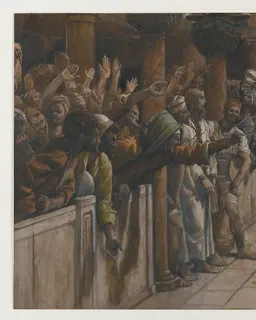
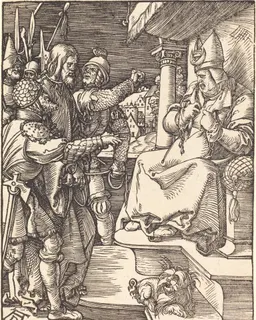
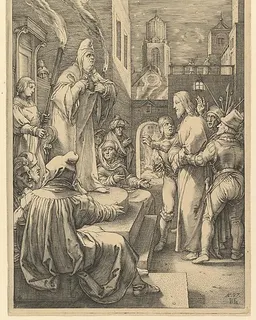
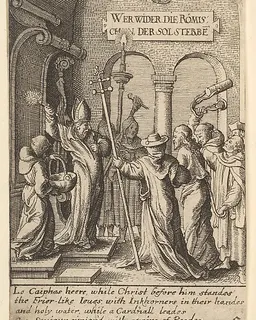
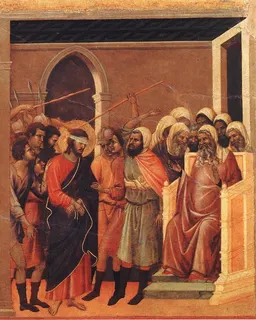
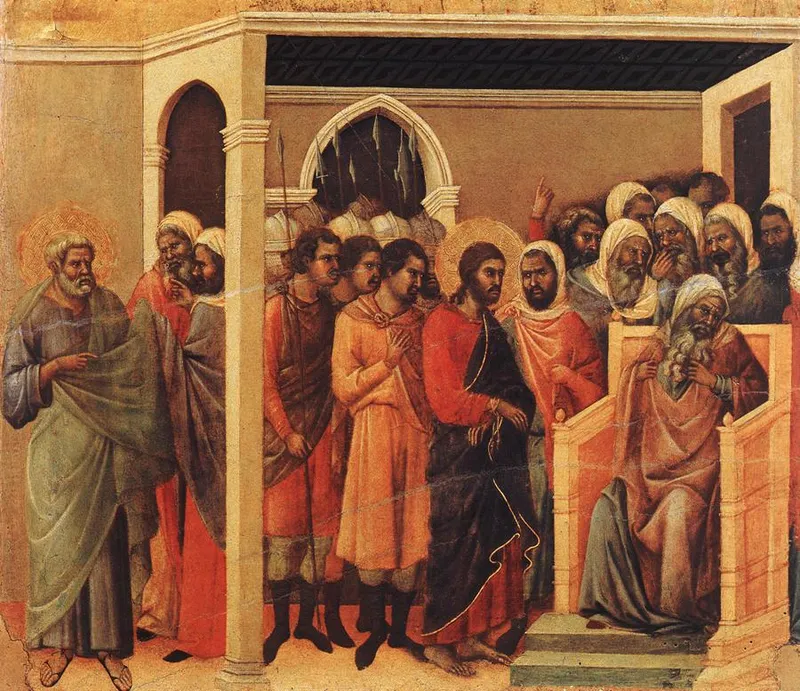
They lead Him to Caiaphas, where the scribes and the elders were assembled (v. 57) - a nighttime gathering already bent on a verdict. Matthew tells us the proceeding is a sham from the start: the chief priests, and elders, and all the council, sought false witness against Jesus, to put him to death (v. 59). They are not weighing evidence to find the truth; they have decided on death and are hunting for a pretext.
And the pretext will not come together: they found none: yea, though many false witnesses came, yet found they none (v. 60). The lies do not even agree with one another. At last two come forward and twist a true saying into a charge: This fellow said, I am able to destroy the temple of God, and to build it in three days (v. 61). Jesus had spoken of the temple of His body, raised on the third day; they hear only a threat against the sanctuary.
Through it all, Jesus held his peace (v. 63). He does not scramble to defend Himself against testimony that collapses on its own. The silence is itself a kind of dignity - and it fulfills the word that the Servant, oppressed and afflicted, opened not his mouth.
When the false witnesses fail, Caiaphas puts the question directly, and under the most solemn oath the law allowed: I adjure thee by the living God, that thou tell us whether thou be the Christ, the Son of God (v. 63). To adjure by the living God is to place a man under sacred obligation to answer truly. And here, to this question, Jesus breaks His silence. He will not defend Himself against lies, but He will not deny the truth of who He is.
Thou hast said (v. 64) - an affirmation, you have said it, yes. He confesses, under oath, before the highest court of His people, that He is the Christ, the Son of God. The whole Gospel has been moving toward this open declaration, and it comes not in triumph but in chains, before men who mean to kill Him for it. He had often hushed the crowds and even the demons who named Him; now, at the hour of His trial, with everything to lose, He says it plainly.
The confession costs Him His life - and He makes it anyway, because it is true.
He does not stop at Thou hast said. He adds a word that turns the trial upside down: nevertheless I say unto you, Hereafter shall ye see the Son of man sitting on the right hand of power, and coming in the clouds of heaven (v. 64). This is the language of Daniel 7, where one like the Son of man comes with the clouds of heaven to the Ancient of Days and receives a kingdom that shall not pass away (Dan. 7:13-14); and of Psalm 110, where the LORD says, Sit thou at my right hand (Ps. 110:1).
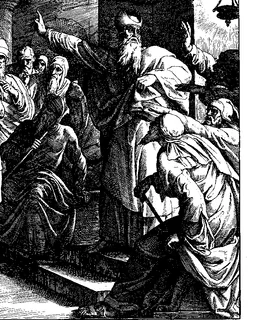
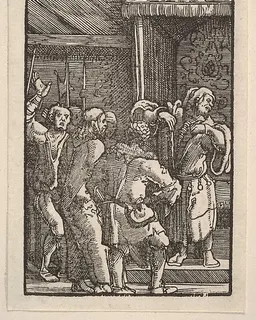
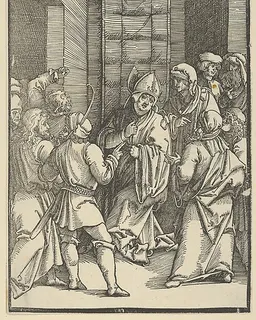
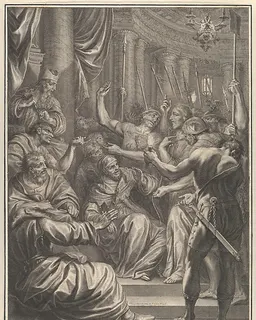
The prisoner tells His judges that the day is coming when the roles will be reversed - when they will see the One they are condemning seated at the right hand of power and coming in glory. The high priest understands exactly what He has claimed and reacts with theatrical horror: he rent his clothes, saying, He hath spoken blasphemy (v. 65), and the council answers, He is guilty of death (v. 66). Then comes the cruelty: they spit in his face, and buffeted him; and others smote him with the palms of their hands, Saying, Prophesy unto us, thou Christ, Who is he that smote thee? (vv. 67-68).
They mock the very office He has just confessed - the Christ, the Prophet - striking the face of the One who holds the armies of heaven in check.
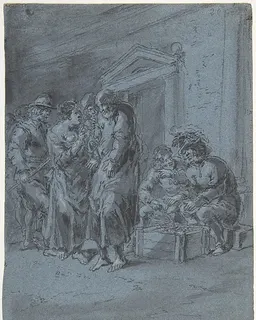
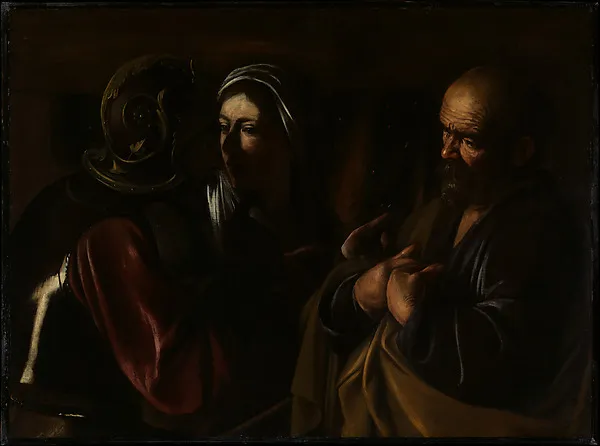
Matthew now cuts back to the courtyard, where Peter has been waiting to see the end (v. 58), and the contrast is devastating. Inside, the Lord confesses the truth though it costs Him His life; outside, His boldest disciple denies the truth to save his own skin. A servant girl - not a magistrate, not a soldier, only a damsel - says, Thou also wast with Jesus of Galilee (v. 69), and Peter caves: I know not what thou sayest (v. 70).
A second girl points him out; he denies with an oath, I do not know the man (v. 72). The third time the bystanders press him - thy speech bewrayeth thee, his Galilean accent gives him away - and Peter's collapse is total: he began to curse and to swear, saying, I know not the man (v. 74). The very disciple who swore he would die before denying now swears that he never knew the Lord at all.
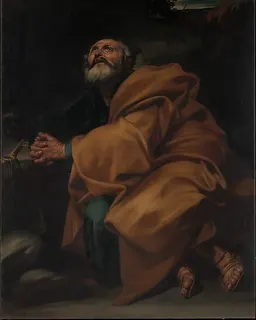
And immediately the cock crew. The sound undoes him. Peter remembered the word of Jesus… Before the cock crow, thou shalt deny me thrice. And he went out, and wept bitterly (v. 75). The chapter ends not on the council's verdict but on a strong man weeping in the dark - the measure of how far any of us can fall, and, read on into the Gospel, the first grief of a man who will be sought out and restored by the very Shepherd he denied.
Research trail
Sources & further study
These references support the historical, linguistic, manuscript, and contextual notes in this chapter. Scripture remains the primary text; external sources are provided so readers can inspect the research directly.
- Matthew 26 - Translators' NotesThe NET Bible's detailed footnotes on Matthew 26 - the value of the ointment and the thirty pieces of silver (vv. 7-16), the words over the bread and cup (vv. 26-28), the meaning of the cup Jesus prays over (v. 39), and the high priest's charge of blasphemy (vv. 63-66).
- Matthew 26 · Greek interlinear + lexiconThe Greek text of Matthew 26 word by word, with parsing and lexical entries - useful for diatheke (v. 28, the “testament” or covenant), for poterion (v. 39, the “cup”), and for thelema / thelo behind the contrast of wills in Gethsemane (v. 39).
- Matthew 26 ↔ Exodus 12 · Zechariah 13 · Jeremiah 31 · Daniel 7Traces the threads tying Matthew 26 to the rest of Scripture - the Passover of Exodus 12 behind the Supper (vv. 26-28), the smitten shepherd of Zechariah 13:7 (v. 31), the new covenant of Jeremiah 31:31-34, and the Son of man of Daniel 7:13 coming in the clouds (v. 64).
Where this echoes in Scripture
A Good Work for My Burial
- Zechariah 11:12-13So they weighed for my price thirty pieces of silver... a goodly price that I was prised at of them.The exact sum of verse 15 - the shepherd's wage weighed out in contempt, centuries beforehand.
- Exodus 21:32he shall give unto their master thirty shekels of silver.The price of a slave gored by an ox - the value Judas set on the Lord in verse 15.
- John 12:3Then took Mary a pound of ointment of spikenard, very costly, and anointed the feet of Jesus.John's account of the anointing of verses 6-13 - the same costly devotion poured out.
- Psalm 41:9mine own familiar friend, in whom I trusted, which did eat of my bread, hath lifted up his heel against me.The betrayal of verses 14-16 foreseen - the trusted friend who turns.
- Mark 14:8-9She hath done what she could: she is come aforehand to anoint my body to the burying.The parallel to verses 12-13 - the woman's deed told wherever the gospel is preached.
This Is My Blood of the New Testament
- Exodus 24:8Behold the blood of the covenant, which the LORD hath made with you concerning all these words.The covenant blood of Sinai that verse 28 reaches back to - now the new testament in His blood.
- Jeremiah 31:31-34I will make a new covenant... I will forgive their iniquity, and I will remember their sin no more.The new covenant promised, sealed in the cup of verse 28 - sins remembered no more.
- 1 Corinthians 11:23-26This cup is the new testament in my blood... ye do shew the Lord's death till he come.Paul's handing-on of the Supper of verses 26-28 - the Church keeping it still.
- 1 Corinthians 5:7For even Christ our passover is sacrificed for us.The Passover of verse 17 fulfilled - Christ Himself the Lamb of the feast.
- Isaiah 53:12he bare the sin of many, and made intercession for the transgressors.The Servant who bears the sin of many - behind “shed for many” in verse 28.
Not As I Will, But As Thou Wilt
- Zechariah 13:7smite the shepherd, and the sheep shall be scattered: and I will turn mine hand upon the little ones.The prophecy Jesus quotes in verse 31 - the Shepherd smitten, the flock scattered.
- Hebrews 5:7-8in the days of his flesh... with strong crying and tears... learned he obedience by the things which he suffered.The garden of verses 38-39 read by the apostle - the Son learning obedience through suffering.
- Isaiah 51:17thou hast drunk at the hand of the LORD the cup of his fury... and wrung them out.The cup of judgment behind the cup of verse 39 - the cup Jesus prays over and drinks.
- John 18:11the cup which my Father hath given me, shall I not drink it?The settled obedience of verses 39-42 - the cup received from the Father's hand.
- Matthew 6:10Thy kingdom come. Thy will be done in earth, as it is in heaven.The prayer Jesus taught, prayed back in the garden - “thy will be done” (v. 42).
More Than Twelve Legions of Angels
- John 18:11Put up thy sword into the sheath: the cup which my Father hath given me, shall I not drink it?John's account of verse 52 - the sword sheathed, the cup accepted.
- John 10:17-18No man taketh it from me, but I lay it down of myself. I have power to lay it down.The truth behind verses 53-54 - His life is freely laid down by His own will.
- 1 Peter 2:23who, when he was reviled, reviled not again... but committed himself to him that judgeth righteously.The restraint of verses 52-53 - power held back, the cause entrusted to the Father.
- Psalm 41:9mine own familiar friend, in whom I trusted... hath lifted up his heel against me.The betrayer of verses 47-49 - the trusted friend who gives the kiss.
- Isaiah 53:7he was oppressed, and he was afflicted, yet he opened not his mouth.The willing silence of the One who could call legions yet does not (vv. 53-54).
Thou Hast Said · The Son of Man Coming in the Clouds
- Daniel 7:13-14one like the Son of man came with the clouds of heaven... his dominion is an everlasting dominion.The vision Jesus claims in verse 64 - the Son of man coming in the clouds to reign.
- Psalm 110:1The LORD said unto my Lord, Sit thou at my right hand, until I make thine enemies thy footstool.The right hand of power Jesus names in verse 64 - the enthroned Lord at God's right hand.
- Isaiah 53:7he was oppressed, and he was afflicted, yet he opened not his mouth.The silence of verse 63 - the Servant who answers nothing to the false charges.
- John 21:15-17Simon, son of Jonas, lovest thou me?... Feed my sheep.The mercy beyond verse 75 - the denier sought out and restored by the risen Lord.
- Luke 22:61-62And the Lord turned, and looked upon Peter... And Peter went out, and wept bitterly.The parallel to verses 74-75 - the look of Christ, and Peter's bitter tears.