Matthew 6
People in this chapter
Matthew 6 sits at the heart of the Sermon on the Mount, and it is held together by a single word the chapter teaches us to say: Father. Jesus takes the three great acts of devotion every faithful person knew - almsgiving, prayer, and fasting - and in each He draws the same sharp line. There are those who do these things to be seen of men, who sound a trumpet before their giving and love to pray standing in the synagogues and in the corners of the streets; and Jesus says of them, plainly, They have their reward. The applause they wanted is the whole of what they get.
Against this He sets the hidden life: give so that your left hand does not know what your right hand does; enter into thy closet and shut the door; anoint your head and wash your face when you fast - and then thy Father which seeth in secret himself shall reward thee openly (vv. 4, 6, 18).1
Tap any highlighted phrase to jump to the commentary that unpacks it.
Matthew 6:1-6Thy Father Which Seeth in Secret
1Take heed that ye do not your alms before men, to be seen of them: otherwise ye have no reward of your Father which is in heaven. 2Therefore when thou doest thine alms, do not sound a trumpet before thee, as the hypocrites do in the synagogues and in the streets, that they may have glory of men. Verily I say unto you, They have their reward. 3But when thou doest alms, let not thy left hand know what thy right hand doeth: 4That thine alms may be in secret: and thy Father which seeth in secret himself shall reward thee openly. 5And when thou prayest, thou shalt not be as the hypocrites are: for they love to pray standing in the synagogues and in the corners of the streets, that they may be seen of men. Verily I say unto you, They have their reward. 6But thou, when thou prayest, enter into thy closet, and when thou hast shut thy door, pray to thy Father which is in secret; and thy Father which seeth in secret shall reward thee openly.
Jesus opens with a warning that governs everything to follow: Take heed that ye do not your alms before men, to be seen of them (v. 1). The danger He names is the motive behind the giving. There is a way of giving that turns a good deed into a performance - and He paints it with a vivid, almost comic image: do not sound a trumpet before thee… that they may have glory of men (v. 2).
Whether the trumpet was literal or a figure for any drawing of attention, the point is plain: some arrange their charity so that everyone will notice. And Jesus calls such people, here and through the chapter, hypocrites - a word that meant a stage-actor, one who plays a part before an audience. That is exactly the problem. The almsgiver who performs for the crowd has made the crowd his god and his judge. His religion has become theatre.1
Over the showy giver Jesus pronounces a verdict that lands like a closing door: Verily I say unto you, They have their reward (v. 2). It is not that they get nothing; it is that they get exactly and only what they were after. They wanted the admiration of people, and they have it - in full, paid out, with nothing owing. But that is the whole of it. There is no further account with the Father, because they were never giving to Him.
The phrase recurs like a refrain - of the alms-givers, of those who love to pray… that they may be seen of men (v. 5), and later of those who disfigure their faces to be seen fasting. Each time the meaning is the same and the warning sharpens: a reward sought from people is a reward received from people, and there it ends. The chapter quietly forces a question on every act of devotion - whose praise are you actually working for?
Because that is the wage you will be paid, and no other.
Against the trumpet Jesus sets a startling instruction: let not thy left hand know what thy right hand doeth: that thine alms may be in secret (vv. 3-4). It is a deliberate exaggeration, and a beautiful one. He pictures a giving so unselfconscious that one hand could not report to the other - generosity with no eye on its own reflection, no mental ledger of credit earned. The same pattern then governs prayer: enter into thy closet, and when thou hast shut to thy door, pray to thy Father which is in secret (v. 6).
The closet was the inner storeroom, the one room of an ordinary house with no window on the street - the most private place a person had. Jesus does not forbid public prayer outright; He is naming where the heart of prayer belongs. It belongs behind a shut door, where there is no one to impress and nothing to gain but God Himself. And to both the hidden gift and the hidden prayer He attaches the same promise: the Father which seeth in secret will reward it - and reward it openly.
Matthew 6:7-15Our Father Which Art in Heaven
7But when ye pray, use not vain repetitions, as the heathen do: for they think that they shall be heard for their much speaking. 8Be not ye therefore like unto them: for your Father knoweth what things ye have need of, before ye ask him. 9After this manner therefore pray ye: Our Father which art in heaven, Hallowed be thy name. 10Thy kingdom come. Thy will be done in earth, as it is in heaven. 11Give us this day our daily bread. 12And forgive us our debts, as we forgive our debtors. 13And lead us not into temptation, but deliver us from evil: For thine is the kingdom, and the power, and the glory, for ever. Amen. 14For if ye forgive men their trespasses, your heavenly Father will also forgive you: 15But if ye forgive not men their trespasses, neither will your Father forgive your trespasses.
Before He gives the prayer, Jesus clears away a false idea of how prayer works: use not vain repetitions, as the heathen do: for they think that they shall be heard for their much speaking (v. 7). The error is to imagine that prayer is a matter of volume - that God must be worn down, informed, or impressed by sheer quantity of words, as if heaven were a reluctant official to be badgered into action.
Against that He sets a reason that changes the whole posture of prayer: your Father knoweth what things ye have need of, before ye ask him (v. 8). This is a striking thing to say right before teaching people to ask. If the Father already knows, why pray at all? Because prayer was never about supplying God with information or overcoming His reluctance. It is a child speaking to a Father who already loves and already knows - which means prayer can be honest, unhurried, and short.
We pray because we are already heard.
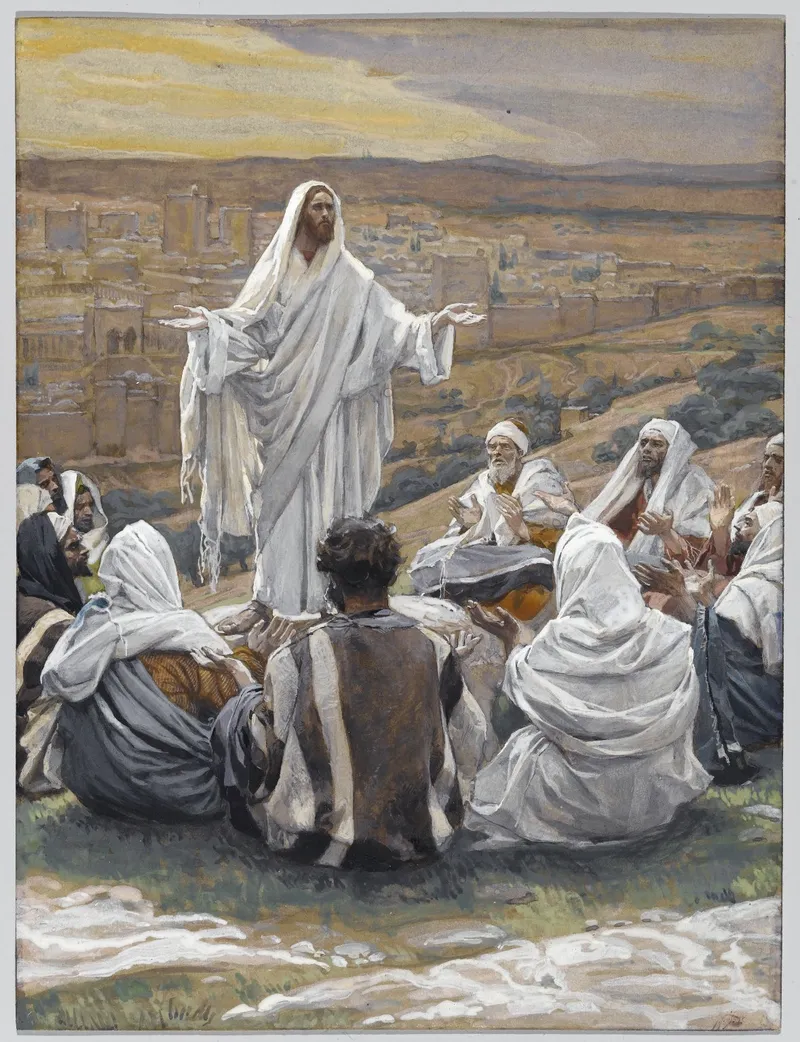
Then comes the prayer, and its first two words set the key for everything: Our Father which art in heaven, Hallowed be thy name (v. 9). Before a single request is made, the prayer does two things at once. It draws near - Our Father - daring to address the Maker of all things in the language of family, as a child speaks to a parent. And it bows - which art in heaven, Hallowed be thy name - never letting the nearness slide into casualness.
He is Father; He is also in heaven, and His name is to be hallowed, treated as holy, set apart. The order of the petitions follows from this. The first three concern God: that His name be hallowed, His kingdom come, His will be done in earth, as it is in heaven (v. 10). Only then does the prayer turn to us - our bread, our debts, our testing. Jesus teaches His people to want God's honor and reign before they ask for their own needs, and to ask for their own needs as children of a Father who is already glad to give.
The prayer's turn toward human need is deliberately modest: Give us this day our daily bread (v. 11). It asks for bread - the plainest necessity - and for this day, the bread of today, the one day's portion of a child who trusts the Father for tomorrow. There is an echo of the wilderness here, where Israel gathered manna each morning and was forbidden to hoard it, learning day by day to depend on God.
To pray this line is to accept that same school of trust: to ask God for enough, today, and to come back tomorrow and ask again. It quietly refuses the anxious craving for surplus that the rest of the chapter will confront head-on. And it dignifies ordinary need - the Father who reigns over heaven and earth is not above being asked for daily bread. The prayer holds the vast and the small together: Thy kingdom come in one breath, give us this day our daily bread in the next.
Two petitions remain, and the first carries a weight Jesus refuses to let us miss: And forgive us our debts, as we forgive our debtors (v. 12). Sin is pictured as a debt - something owed that we cannot repay - and the asking is bound, by a small and unsettling word, to our own conduct: as we forgive. Then comes the plea for protection: lead us not into temptation, but deliver us from evil, and the prayer rises into praise: For thine is the kingdom, and the power, and the glory, for ever. Amen (v. 13).
But Jesus will not let the forgiveness petition pass without underlining it. Alone of all the lines, He stops and repeats it: For if ye forgive men their trespasses, your heavenly Father will also forgive you: But if ye forgive not men their trespasses, neither will your Father forgive your trespasses (vv. 14-15). The words are stark, and they are meant to be. Jesus does not soften them or resolve them into a tidy formula; He lets them stand as He spoke them.
The point is inescapable: a heart that has truly received mercy cannot hold mercy back from others, and one that withholds forgiveness has not understood the forgiveness it asks for.
Matthew 6:16-24Where Your Treasure Is · Ye Cannot Serve God and Mammon
16Moreover when ye fast, be not, as the hypocrites, of a sad countenance: for they disfigure their faces, that they may appear unto men to fast. Verily I say unto you, They have their reward. 17But thou, when thou fastest, anoint thine head, and wash thy face; 18That thou appear not unto men to fast, but unto thy Father which is in secret: and thy Father, which seeth in secret, shall reward thee openly. 19Lay not up for yourselves treasures upon earth, where moth and rust doth corrupt, and where thieves break through and steal: 20But lay up for yourselves treasures in heaven, where neither moth nor rust doth corrupt, and where thieves do not break through nor steal: 21For where your treasure is, there will your heart be also. 22The light of the body is the eye: if therefore thine eye be single, thy whole body shall be full of light. 23But if thine eye be evil, thy whole body shall be full of darkness. If therefore the light that is in thee be darkness, how great is that darkness! 24No man can serve two masters: for either he will hate the one, and love the other; or else he will hold to the one, and despise the other. Ye cannot serve God and mammon.
Jesus completes the triad of devotion - giving, praying, and now fasting - with the same warning in the same shape: when ye fast, be not, as the hypocrites, of a sad countenance: for they disfigure their faces, that they may appear unto men to fast (v. 16). There were those who made their fasting unmistakable, putting on a haggard look so that everyone would know and admire their piety. Of them Jesus says once more, They have their reward - the notice they wanted, and nothing further.
Then the instruction reverses the spectacle entirely: anoint thine head, and wash thy face; that thou appear not unto men to fast (vv. 17-18). Anointing the head and washing the face were ordinary signs of a normal, even festive day. Jesus says, in effect: when you fast, look like any other day - hide it. Let it be a matter between you and God, thy Father which is in secret. With this third example the pattern is complete and unmistakable: every act of devotion is to be done for the Father's eyes, and the same promise crowns each one - the Father who seeth in secret shall reward thee openly.
From hidden devotion Jesus turns to the heart's deepest investment: Lay not up for yourselves treasures upon earth, where moth and rust doth corrupt, and where thieves break through and steal: but lay up for yourselves treasures in heaven (vv. 19-20). The contrast is between two kinds of wealth, sorted by what can happen to them. Earthly treasure is by nature perishable and exposed - moth eats the fine garment, rust corrodes the stored metal, thieves dig through the wall and carry it off.
Whatever its present glitter, it is always one disaster away from being gone. Heavenly treasure is named by everything that cannot touch it: neither moth nor rust… nor thieves. Jesus does not pause to itemize what such treasure consists of; the weight of His words falls on the contrast itself - the fragile against the secure, the losable against the lasting. He is exposing the folly of pouring a life into what cannot keep. And the command is personal and active: lay up for yourselves - you are storing, right now, somewhere.
The only question is where.
Between the treasure and the masters Jesus sets a small parable of the eye: The light of the body is the eye: if therefore thine eye be single, thy whole body shall be full of light. But if thine eye be evil, thy whole body shall be full of darkness (vv. 22-23). The eye is the lamp through which light enters; if it is sound and clear - single, undivided, looking straight - the whole person is filled with light.
If it is diseased or grasping - an evil eye, an expression that in that world meant a greedy, envious, stingy outlook - then the whole person is filled with darkness. Placed where it is, the saying speaks directly to the matter of treasure. How you look at the world, what your eye fastens on and craves, determines whether your inner life is full of light or full of shadow. A heart fixed on what perishes darkens the whole of a person.
And Jesus adds the gravest line: if therefore the light that is in thee be darkness, how great is that darkness! - a warning against the self-deception that mistakes its own greed for clear sight.
The section ends with a verdict that admits no compromise: No man can serve two masters: for either he will hate the one, and love the other; or else he will hold to the one, and despise the other. Ye cannot serve God and mammon (v. 24). Jesus says it plainly: divided service is a fiction. The word He uses is serve as a slave serves - and a slave belongs to one owner, body and will.
Mammon is wealth personified - money treated as a master, a rival lord with a claim on the heart. In any real contest of loyalty, one master will be loved and the other despised. This is why the chapter has dwelt so long on treasure and the eye: the question of money is finally a question of lordship. A person will orbit, in the end, whatever he treasures most. And Jesus forces the choice into the open - God or mammon.
One of them will be served.
Matthew 6:25-34Seek Ye First the Kingdom of God
25Therefore I say unto you, Take no thought for your life, what ye shall eat, or what ye shall drink; nor yet for your body, what ye shall put on. Is not the life more than meat, and the body than raiment? 26Behold the fowls of the air: for they sow not, neither do they reap, nor gather into barns; yet your heavenly Father feedeth them. Are ye not much better than they? 27Which of you by taking thought can add one cubit unto his stature? 28And why take ye thought for raiment? Consider the lilies of the field, how they grow; they toil not, neither do they spin: 29And yet I say unto you, That even Solomon in all his glory was not arrayed like one of these. 30Wherefore, if God so clothe the grass of the field, which to day is, and to morrow is cast into the oven, shall he not much more clothe you, O ye of little faith? 31Therefore take no thought, saying, What shall we eat? or, What shall we drink? or, Wherewithal shall we be clothed? 32(For after all these things do the Gentiles seek:) for your heavenly Father knoweth that ye have need of all these things. 33But seek ye first the kingdom of God, and his righteousness; and all these things shall be added unto you. 34Take therefore no thought for the morrow: for the morrow shall take thought for the things of itself. Sufficient unto the day is the evil thereof.
Having exposed money as a rival master, Jesus turns to its great companion - anxiety - and the therefore ties the two together: because you cannot serve God and mammon, take no thought for your life, what ye shall eat, or what ye shall drink; nor yet for your body, what ye shall put on (v. 25). The phrase means do not be consumed with anxious worry. And His first argument is a question of proportion: Is not the life more than meat, and the body than raiment? The God who gave you the greater gift - life itself, a body - can surely be trusted for the lesser things that sustain them.
Then He points outward, to the sky: Behold the fowls of the air: for they sow not, neither do they reap, nor gather into barns; yet your heavenly Father feedeth them (v. 26). The birds run no farms and keep no storehouses, yet they are fed by your heavenly Father. And here is the hinge of the whole argument: Are ye not much better than they? If the Father feeds the birds, who do not bear His image, how much more will He provide for His own children.
He even exposes how useless the worry is: Which of you by taking thought can add one cubit unto his stature? (v. 27). Anxiety cannot add a single thing; it only steals the present.
From the birds Jesus turns to the flowers, with the same logic and a deeper beauty: Consider the lilies of the field, how they grow; they toil not, neither do they spin: and yet I say unto you, That even Solomon in all his glory was not arrayed like one of these (vv. 28-29). The wildflowers do no work to clothe themselves - they neither labour in the field nor spin thread - and yet they are dressed in a splendour that outshines the richest king Israel ever had.
The point presses home with a sharp comparison: if God so clothe the grass of the field, which to day is, and to morrow is cast into the oven, shall he not much more clothe you, O ye of little faith? (v. 30). The grass is here today and gone tomorrow, fuel for the fire - and even this short-lived thing God arrays in glory. How much more, then, will He clothe people made to live forever in His sight.
Twice now Jesus has reasoned the same way - are ye not much better, shall he not much more - building the case that the Father's evident care for lesser things is a pledge of His greater care for us. And He names the real root of worry: O ye of little faith. Anxiety, at bottom, is a trust problem - a forgetting of whose children we are.
Jesus now draws the contrast that exposes what anxiety really is: Therefore take no thought, saying, What shall we eat? or, What shall we drink? or, Wherewithal shall we be clothed? (For after all these things do the Gentiles seek:) (vv. 31-32). To live consumed by these questions - food, drink, clothing - is to live like those who do not know the Father at all, for whom the world really is a place of scarcity to be grasped at and hoarded.
But His people are not orphans scrabbling for survival. The reason He gives is the same truth that opened the prayer, now applied to every want: your heavenly Father knoweth that ye have need of all these things. Earlier He said the Father knoweth what things ye have need of, before ye ask him (v. 8); here that knowledge becomes the cure for fear. The Father is not unaware of your needs, and He is not indifferent to them.
He knows - and He is a Father. The anxious heart secretly believes it must carry its own needs alone because no one else is paying attention. Jesus says Someone is. The One who feeds the birds and clothes the grass knows exactly what you need, and counts you worth far more.
The whole chapter narrows to one command and one promise, and then a final word about time. But seek ye first the kingdom of God, and his righteousness; and all these things shall be added unto you (v. 33). This is the verse the chapter has been building toward from the start. Everything Jesus has taught - the hidden giving, the closet prayer, the treasure in heaven, the single eye, the one Master - gathers into a single ordering of life: put God's reign and God's righteousness first, ahead of every other pursuit.
And the promise attached is that all these things - the food, drink, and clothing the anxious chase after - will be added, given as the natural provision of a Father to children whose hearts are set on Him. Then Jesus speaks tenderly to the tyranny of tomorrow: Take therefore no thought for the morrow: for the morrow shall take thought for the things of itself. Sufficient unto the day is the evil thereof (v. 34). Worry is so often borrowing - dragging tomorrow's troubles into today, where they cannot be solved and only crush.
Each day has enough of its own; the Father gives grace one day at a time, just as He gives daily bread. So the chapter that began with a Father who sees in secret ends with a Father who knows our needs and provides - and the command to seek Him first, and let tomorrow keep its own cares.
Research trail
Sources & further study
These references support the historical, linguistic, manuscript, and contextual notes in this chapter. Scripture remains the primary text; external sources are provided so readers can inspect the research directly.
- Matthew 6 - Translators' NotesThe NET Bible's detailed footnotes on Matthew 6 - the meaning of doing alms “to be seen” (vv. 1-4), the textual history of the closing doxology in verse 13, the rare word rendered “daily” in verse 11, and the agricultural images of the birds and lilies in verses 26-30.
- Matthew 6 · Greek interlinear + parsingThe Greek text of Matthew 6 word by word, with parsing and lexical links - useful for the address Pater hemon (v. 9, “Our Father”), the much-discussed epiousios (v. 11, “daily”), the verb zeteo (v. 33, “seek first”), and merimnao (vv. 25-34, “take no thought”).
- Matthew 6 ↔ the Old Testament and the EpistlesTraces the threads tying Matthew 6 to the rest of Scripture - the Father who hears in secret and the daily bread of the wilderness, the forgiveness petition (v. 12) read beside forgiving one another… even as God for Christ's sake hath forgiven you (Eph. 4:32), and take no thought (vv. 25-34) beside casting all your care upon him (1 Pet. 5:7).
Where this echoes in Scripture
Thy Father Which Seeth in Secret
- Matthew 5:16Let your light so shine before men, that they may see your good works, and glorify your Father which is in heaven.The other side of verses 1-4 - good works are to be seen, and their aim is the Father's glory.
- 1 Samuel 16:7the LORD seeth not as man seeth; for man looketh on the outward appearance, but the LORD looketh on the heart.The Father who seeth in secret (vv. 4, 6) - God's gaze reaches past the performance to the heart.
- Romans 8:15ye have received the Spirit of adoption, whereby we cry, Abba, Father.The access to God as Father (vv. 4, 6) named as the gift of the Spirit through Christ.
- Colossians 3:23whatsoever ye do, do it heartily, as to the Lord, and not unto men.The cure for the trumpet of verse 2 - an audience of One, the Lord alone.
Our Father Which Art in Heaven
- Luke 11:1-4When ye pray, say, Our Father which art in heaven, Hallowed be thy name. Thy kingdom come.Luke's account of the same prayer (vv. 9-13), given when a disciple asked, Lord, teach us to pray.
- Exodus 16:4the people shall go out and gather a certain rate every day... that I may prove them.The wilderness manna behind daily bread (v. 11) - God's people learning to depend on Him one day at a time.
- Matthew 18:23-35shouldest not thou also have had compassion on thy fellowservant, even as I had pity on thee?The forgiveness saying of verses 12, 14-15 told as a parable - the forgiven servant who would not forgive.
- Ephesians 4:32forgiving one another, even as God for Christ's sake hath forgiven you.The mercy of verse 12 traced to its source - we forgive because we have been forgiven in Christ.
- Galatians 4:6God hath sent forth the Spirit of his Son into your hearts, crying, Abba, Father.The address Our Father (v. 9) as the Spirit's gift - the cry of the adopted child.
Where Your Treasure Is · Ye Cannot Serve God and Mammon
- Luke 12:33-34provide yourselves... a treasure in the heavens that faileth not... For where your treasure is, there will your heart be also.The same teaching as verses 19-21 - treasure laid up where nothing can reach it.
- Colossians 3:1-2Set your affection on things above, not on things on the earth.The heart directed toward the lasting treasure of verses 20-21 - affection set above.
- 1 Timothy 6:9-10the love of money is the root of all evil: which while some coveted after, they have erred from the faith.The peril of serving mammon (v. 24) - what happens to the heart that makes money its master.
- 1 Peter 1:4an inheritance incorruptible, and undefiled, and that fadeth not away, reserved in heaven for you.The treasure in heaven of verse 20 - the inheritance no moth, rust, or thief can touch.
- Joshua 24:15choose you this day whom ye will serve... but as for me and my house, we will serve the LORD.The undivided choice Jesus forces in verse 24 - one master, given the whole of a life.
Seek Ye First the Kingdom of God
- Luke 12:22-31Consider the ravens... Consider the lilies how they grow... seek ye the kingdom of God; and all these things shall be added unto you.Luke's parallel to verses 25-33 - the same birds, the same lilies, the same command to seek the kingdom.
- 1 Peter 5:7Casting all your care upon him; for he careth for you.The cure for the anxiety of verses 25-34 - handing every care to the Father who cares.
- Philippians 4:6-7Be careful for nothing; but in every thing by prayer and supplication... let your requests be made known unto God.The apostolic echo of take no thought (v. 25) - anxiety answered by prayer and the peace of God.
- Psalm 37:25I have been young, and now am old; yet have I not seen the righteous forsaken, nor his seed begging bread.The Father's provision promised in verses 26-33 - His own are not abandoned to want.
- 1 Corinthians 1:30Christ Jesus, who of God is made unto us wisdom, and righteousness, and sanctification, and redemption.The righteousness sought first (v. 33) - given to us in Christ, who is Himself made unto us righteousness.