Matthew 18
People in this chapter
The disciples come to Jesus with a question about rank: Who is the greatest in the kingdom of heaven? (v. 1). It is a strikingly worldly question to bring to such a King, and He answers it in a way no one expected. He calls a little child, sets the child in the midst of them, and says: Except ye be converted, and become as little children, ye shall not enter into the kingdom of heaven. Whosoever therefore shall humble himself as this little child, the same is greatest in the kingdom of heaven (vv. 3-4).
Greatness in this kingdom is measured by the lowliness of a child - small, dependent, without rank to protect. And the One the world overlooks becomes the very picture of who belongs: whoso shall receive one such little child in my name receiveth me (v. 5). From there Jesus turns sharply to warn against causing such little ones to stumble.1
Tap any highlighted phrase to jump to the commentary that unpacks it.
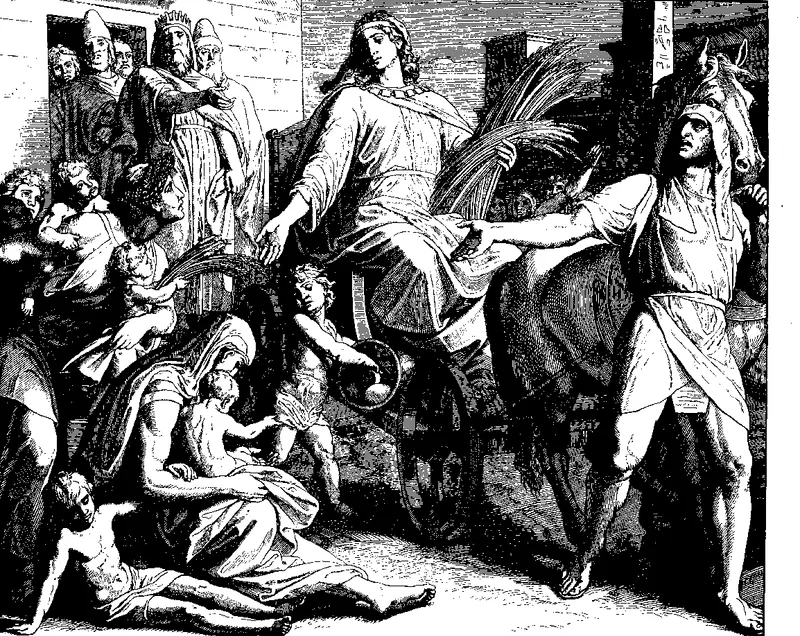
Matthew 18:1-6Except Ye Become as Little Children
1At the same time came the disciples unto Jesus, saying, Who is the greatest in the kingdom of heaven? 2And Jesus called a little child unto him, and set him in the midst of them, 3And said, Verily I say unto you, Except ye be converted, and become as little children, ye shall not enter into the kingdom of heaven. 4Whosoever therefore shall humble himself as this little child, the same is greatest in the kingdom of heaven. 5And whoso shall receive one such little child in my name receiveth me. 6But whoso shall offend one of these little ones which believe in me, it were better for him that a millstone were hanged about his neck, and that he were drowned in the depth of the sea.
The chapter opens with a question that reveals more than the disciples intend: At the same time came the disciples unto Jesus, saying, Who is the greatest in the kingdom of heaven? (v. 1). It is, on its face, a worldly question dressed in spiritual clothing - asking who ranks highest rather than what the kingdom is, or how one enters it. The very framing assumes that the kingdom of heaven works like every other kingdom they knew, with a ladder of importance to climb and a top rung worth fighting over.
Mark records that they had in fact been arguing along the road about exactly this. So the question is not abstract; it grows out of rivalry, out of the quiet jockeying for position that goes on among people who follow a leader and wonder where they stand. Jesus answers it with an object lesson so simple a child could grasp it - because a child is the lesson. He is about to overturn the whole scale by which they have been measuring greatness.2
Jesus answers not with a sentence but with a person: And Jesus called a little child unto him, and set him in the midst of them (v. 2). The placement matters - the child is set in the midst, at the center of a circle of grown men debating rank, the very spot the disciples each privately wanted. Then comes the word that reorders everything: Except ye be converted, and become as little children, ye shall not enter into the kingdom of heaven (v. 3).
Note that He does not merely say the childlike are greatest; He says that without becoming like a child one does not enter at all. This is not advanced spirituality for the few; it is the entrance requirement for everyone. And the thing to see is what a child meant in that world. A child had no status, no legal standing, no power, nothing to bargain with - the child was wholly dependent, received everything as a gift, and had no rank to defend.
That is precisely the point. To become as little children is not to be childish or naive; it is to abandon the whole project of self-importance, to come empty-handed and dependent, receiving the kingdom rather than earning a place in it.
Then Jesus answers the disciples' actual question, but turns it inside out: Whosoever therefore shall humble himself as this little child, the same is greatest in the kingdom of heaven (v. 4). They had asked who is greatest; He tells them - and the answer is the one who stops grasping at greatness. The path up, in this kingdom, runs downward. The word rendered humble himself means to make oneself low, to take the bottom place willingly.
It is a humbling freely chosen, the deliberate laying-down of one's claim to rank. This cuts against the deepest grain of the human heart, which is forever measuring itself against others and reaching for the higher seat. Jesus says the truly great in God's kingdom are those who have been freed from that whole anxious comparison - who can take the low place, serve the overlooked, and receive their worth as a gift rather than seize it as a prize.
And He grounds it in welcome: whoso shall receive one such little child in my name receiveth me (v. 5). To honor the small and the insignificant for His sake is to honor Him; the way we treat those who can do nothing for us is the truest measure of where our hearts have actually gone.
Having lifted the little one up as the model of the kingdom, Jesus turns with sudden severity to those who would harm such a one: But whoso shall offend one of these little ones which believe in me, it were better for him that a millstone were hanged about his neck, and that he were drowned in the depth of the sea (v. 6). To offend here means to cause to stumble, to trip someone into sin or to shipwreck a fragile faith.
The little ones which believe are not only children by age but all the small and dependent ones of the kingdom - the new, the weak, the easily wounded believer. And the image Jesus reaches for is violent and unforgettable. A millstone was a great wheel of stone, far too heavy for a man to lift; hung about the neck and cast into deep water, it would carry a person straight to the bottom with no hope of rising.
Jesus says such a death - sudden, irreversible, terrible - would be better than the fate awaiting one who causes a little believer to fall. It is a startling thing to hear from the same mouth that just blessed the child. But it is the other side of the same love. Precisely because the little ones are so precious to Him, He guards them with a ferocity that should make anyone tremble who would treat a vulnerable soul carelessly.
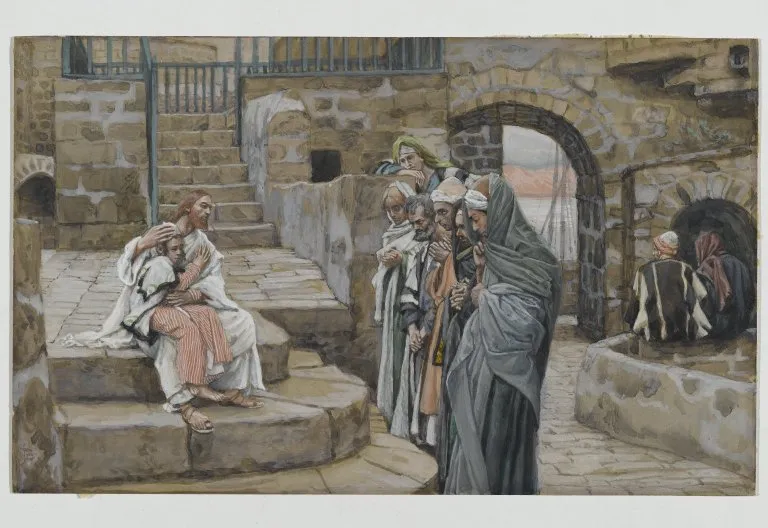
Matthew 18:7-14He Seeketh That Which Is Gone Astray
7Woe unto the world because of offences! for it must needs be that offences come; but woe to that man by whom the offence cometh! 8Wherefore if thy hand or thy foot offend thee, cut them off, and cast them from thee: it is better for thee to enter into life halt or maimed, rather than having two hands or two feet to be cast into everlasting fire. 9And if thine eye offend thee, pluck it out, and cast it from thee: it is better for thee to enter into life with one eye, rather than having two eyes to be cast into hell fire. 10Take heed that ye despise not one of these little ones; for I say unto you, That in heaven their angels do always behold the face of my Father which is in heaven. 11For the Son of man is come to save that which was lost. 12How think ye? if a man have an hundred sheep, and one of them be gone astray, doth he not leave the ninety and nine, and goeth into the mountains, and seeketh that which is gone astray? 13And if so be that he find it, verily I say unto you, he rejoiceth more of that sheep, than of the ninety and nine which went not astray. 14Even so it is not the will of your Father which is in heaven, that one of these little ones should perish.
Jesus widens the warning of verse 6 into a lament over the whole world: Woe unto the world because of offences! for it must needs be that offences come; but woe to that man by whom the offence cometh! (v. 7). The word offences - stumbling-blocks, traps that trip the soul into sin - runs all through this passage. Jesus acknowledges a sober reality: in a fallen world such stumbling-blocks are unavoidable; it must needs be that offences come. But that necessity does not excuse anyone who becomes the cause of them.
The woe falls twice - once on the world full of snares, and once, more pointedly, on the person by whom the offence cometh. It is one thing to live in a world where temptation exists; it is another, and a fearful thing, to be the one who lays the trap, who leads another into ruin. Jesus is pressing the same concern He raised over the little ones: the immense seriousness of what we may do to another person's soul.
The path of the disciple is not only to avoid stumbling oneself but never to be the reason another stumbles.
Then Jesus turns the warning inward with shocking force: Wherefore if thy hand or thy foot offend thee, cut them off, and cast them from thee… And if thine eye offend thee, pluck it out, and cast it from thee (vv. 8-9). The language is deliberately extreme, and it is meant to be felt before it is parsed. The hand, the foot, the eye are among the most precious and useful things a person has - and Jesus names them precisely because the point is the costliness of dealing with sin.
If even something that valuable, that close, that much a part of you is dragging you toward ruin, it is better to lose it than to let it carry the whole self into destruction. He is not commanding literal mutilation; the sin lives in the heart, not in the limb, and a blind man can lust and a handless man can sin. He is using the most vivid image available to teach a principle we are endlessly tempted to soften: that some things must be cut off entirely, not merely managed or trimmed back.
A treasured habit, a relationship that pulls you under, an appetite you keep half-feeding - if it is genuinely dragging you away from life, the call is not to negotiate with it but to be rid of it. It is better for thee to enter into life maimed than to keep everything intact and be lost. The stakes Jesus attaches - everlasting fire, hell fire - are why the surgery is worth it.
Jesus returns to the little ones, now with tenderness rather than warning: Take heed that ye despise not one of these little ones; for I say unto you, That in heaven their angels do always behold the face of my Father which is in heaven (v. 10). To despise is to think little of, to look down on, to treat as beneath one's notice - exactly the reflex of people preoccupied with who is greatest.
Jesus forbids it, and gives a staggering reason: these overlooked ones are not overlooked in heaven. Their angels do always behold the face of my Father. Whatever the full picture, the meaning is unmistakable - the smallest, least impressive believer is the object of heaven's constant attention, watched over in the very presence of God. The ones the world passes by have an audience in the highest court of all. And then verse 11 states the deep ground of the whole section: For the Son of man is come to save that which was lost (v. 11).
Here is why the little ones must not be despised and why offending them is so grave: they are exactly the kind of people Jesus came for. His entire mission bends toward the lost, the small, the straying. To despise them is to set oneself against the very purpose for which He came.2
Now Jesus tells a parable that opens a window straight into the heart of God: How think ye? if a man have an hundred sheep, and one of them be gone astray, doth he not leave the ninety and nine, and goeth into the mountains, and seeketh that which is gone astray? (v. 12). The arithmetic is, by ordinary reckoning, backwards. The ninety and nine are the responsible majority, the bulk of the flock, plainly worth more than a single wandering animal.
A shepherd thinking only of the ledger would cut his losses and keep the ninety-nine safe. But this shepherd does the opposite: he leaves the ninety and nine and goes up into the rough country after the one. He does not wait at the fold hoping the lost sheep finds its own way back; he goes out and seeketh it. And when he finds it, the response is not relief but joy - he rejoiceth more of that sheep, than of the ninety and nine which went not astray (v. 13).
This is not because the ninety-nine matter less, but because something lost and then found awakens a particular gladness. The parable overturns the disciples' whole scale of value once more. They had been ranking the great; Jesus shows them a God who runs after the one. The straying, the small, the wandered-off - the very ones easy to write off - are the ones the Shepherd will leave everything to find.1
Jesus draws the parable to its point, and it lands with great weight: Even so it is not the will of your Father which is in heaven, that one of these little ones should perish (v. 14). Everything in the section has been building here. The fierce guarding of the little ones (v. 6), the warning against despising them (v. 10), the seeking shepherd (vv. 12-13) - all of it flows from this: the Father does not will that even one of these small ones be lost.
Notice the words carefully. He calls them these little ones - the same dependent, easily-overlooked ones the whole chapter has been about - and He names the heart of God toward them not as indifference, nor as a willingness to let a few slip through, but as an active unwillingness that any should perish. The God of this chapter is not standing back, content with the ninety-nine. He is the God who goes to the mountains after the one.
And the pastoral force is unmistakable: if it is not the Father's will that one little one perish, then it cannot be the will of those who follow Him to shrug off, despise, or give up on a single straying soul. The care of heaven sets the standard for the care of the church.
Matthew 18:15-20There Am I in the Midst of Them
15Moreover if thy brother shall trespass against thee, go and tell him his fault between thee and him alone: if he shall hear thee, thou hast gained thy brother. 16But if he will not hear thee, then take with thee one or two more, that in the mouth of two or three witnesses every word may be established. 17And if he shall neglect to hear them, tell it unto the church: but if he neglect to hear the church, let him be unto thee as an heathen man and a publican. 18Verily I say unto you, Whatsoever ye shall bind on earth shall be bound in heaven: and whatsoever ye shall loose on earth shall be loosed in heaven. 19Again I say unto you, That if two of you shall agree on earth as touching any thing that they shall ask, it shall be done for them of my Father which is in heaven. 20For where two or three are gathered together in my name, there am I in the midst of them.
Jesus now turns to what happens when one believer wrongs another, and the first thing to notice is the direction He sends the offended party: Moreover if thy brother shall trespass against thee, go and tell him his fault between thee and him alone (v. 15). The instinct of the wounded heart is to do nearly anything but this - to nurse the grievance in silence, or to broadcast it to others, or to let the relationship quietly die.
Jesus cuts across all of that. Go - take the initiative; do not wait for the offender to come to you. And go alone, privately, between thee and him, so that the matter is kept small and the other's dignity is guarded. The aim is named plainly and it is not victory but recovery: if he shall hear thee, thou hast gained thy brother. The whole point of the confrontation is to gain the brother - to win him back, not to win the argument.
This is the same heart as the seeking shepherd, now applied to a fractured relationship: the goal is restoration, the recovery of the one who has gone wrong. Privacy serves that goal; it gives repentance and reconciliation the best possible room to happen, away from the hardening glare of an audience.
If the private appeal fails, Jesus lays out a measured, widening path: But if he will not hear thee, then take with thee one or two more, that in the mouth of two or three witnesses every word may be established. And if he shall neglect to hear them, tell it unto the church: but if he neglect to hear the church, let him be unto thee as an heathen man and a publican (vv. 16-17).
The striking thing about this sequence is its restraint and its patience. It does not leap to exposure or punishment; it escalates only as far as it must, and at every stage the door back to reconciliation stays open. The one or two more are drawn in not to gang up but to help - the principle of multiple witnesses, rooted in the law, guards against a single person's misreading and lends weight to the appeal.
Only if that too is refused does the matter come before the gathered community, the church. And even the final step - let him be unto thee as an heathen man and a publican - should be read in the light of how Jesus Himself treated heathens and publicans: not with contempt, but as those still to be sought and won. The whole process is the patient pursuit of a straying brother carried as far as it can go, the love that will not give up easily, structured so that pride has every chance to yield before the breach becomes final.
The text lays out this path; it leaves the working-out of its details to those who must walk it.
Joined to this comes a solemn word: Verily I say unto you, Whatsoever ye shall bind on earth shall be bound in heaven: and whatsoever ye shall loose on earth shall be loosed in heaven (v. 18). The language of binding and loosing is weighty and has been pondered deeply across the centuries; the wise course is to let the passage say what it says without forcing it past its own words. In its setting here, the saying invests the decisions of the gathered community with real seriousness - what is settled among Jesus' people in His name is not a matter of mere earthly opinion but carries a correspondence with heaven.
The same words were spoken earlier to Peter (Matt. 16:19); here they are spoken to the wider body acting together. Then Jesus adds a promise about united prayer: if two of you shall agree on earth as touching any thing that they shall ask, it shall be done for them of my Father which is in heaven (v. 19). The agreement in view is not the mechanical matching of two requests but the deep accord of hearts genuinely bowed before God together.
The thread running through both verses is the same: when Jesus' people gather and act and pray in His name, heaven is involved. What exactly the binding and loosing comprehends, and how the authority is held, the text does not spell out - and it is better pondered than pinned down.
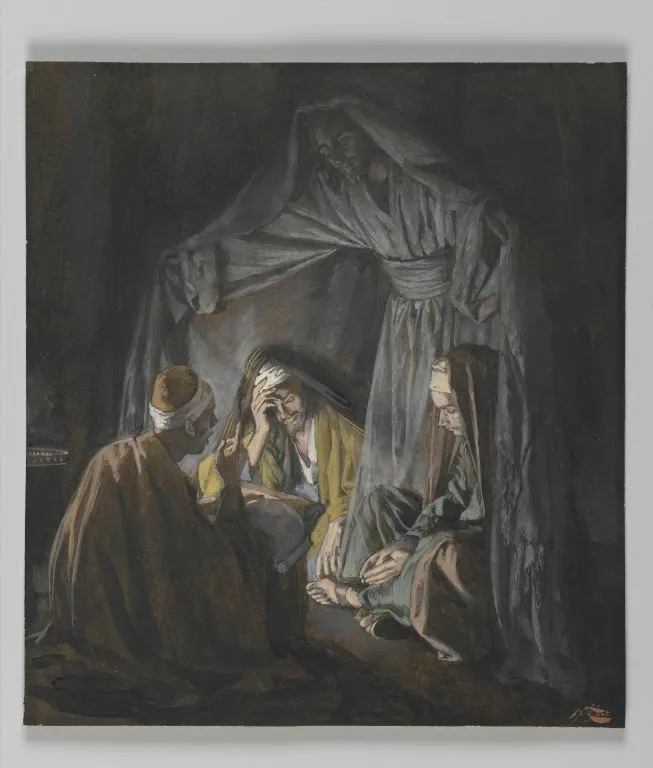
Matthew 18:21-35Until Seventy Times Seven
21Then came Peter to him, and said, Lord, how oft shall my brother sin against me, and I forgive him? till seven times? 22Jesus saith unto him, I say not unto thee, Until seven times: but, Until seventy times seven. 23Therefore is the kingdom of heaven likened unto a certain king, which would take account of his servants. 24And when he had begun to reckon, one was brought unto him, which owed him ten thousand talents. 25But forasmuch as he had not to pay, his lord commanded him to be sold, and his wife, and children, and all that he had, and payment to be made. 26The servant therefore fell down, and worshipped him, saying, Lord, have patience with me, and I will pay thee all. 27Then the lord of that servant was moved with compassion, and loosed him, and forgave him the debt. 28But the same servant went out, and found one of his fellowservants, which owed him an hundred pence: and he laid hands on him, and took him by the throat, saying, Pay me that thou owest. 29And his fellowservant fell down at his feet, and besought him, saying, Have patience with me, and I will pay thee all. 30And he would not: but went and cast him into prison, till he should pay the debt. 31So when his fellowservants saw what was done, they were very sorry, and came and told unto their lord all that was done. 32Then his lord, after that he had called him, said unto him, O thou wicked servant, I forgave thee all that debt, because thou desiredst me: 33Shouldest not thou also have had compassion on thy fellowservant, even as I had pity on thee? 34And his lord was wroth, and delivered him to the tormentors, till he should pay all that was due unto him. 35So likewise shall my heavenly Father do also unto you, if ye from your hearts forgive not every one his brother their trespasses.
Peter, having heard all of this about seeking back the straying brother, asks what feels like a generous question: Lord, how oft shall my brother sin against me, and I forgive him? till seven times? (v. 21). It is worth pausing on how reasonable Peter sounds. The common teaching of his day suggested forgiving a repeat offender perhaps three times; Peter more than doubles it and offers seven - a full, round, generous number. He likely expected to be commended for his largeness of heart.
But the question itself betrays the very thing Jesus is uprooting in this chapter: it is still counting. To ask how oft is to assume there is a limit, a number after which one is released from forgiving and free to retaliate. Peter is looking for the ceiling. Jesus' answer removes the ceiling altogether: I say not unto thee, Until seven times: but, Until seventy times seven (v. 22). The point of the enormous number is not to set a higher quota - as though one should keep a ledger up to four hundred and ninety and then stop.
It is to make the keeping of the ledger impossible. By the time you have forgiven seventy times seven, you have long since lost count - which is exactly the idea. Forgiveness in the kingdom is not a finite allowance to be spent down; it is the abandoning of the whole accounting.2
To show why, Jesus tells a parable, and its power lies entirely in its numbers: Therefore is the kingdom of heaven likened unto a certain king, which would take account of his servants. And when he had begun to reckon, one was brought unto him, which owed him ten thousand talents (vv. 23-24). The sum is staggering, and it is meant to be. A single talent was an immense amount - many years' wages for a laborer.
Ten thousand talents was a figure so vast it strained the imagination, more than the annual revenue of whole provinces, a debt no individual could ever conceivably repay. Jesus deliberately chooses an impossible number. The servant's situation is hopeless; he had not to pay (v. 25), and the law's remedy - the selling of himself, his wife, his children, and all he had - would not begin to cover it. So he does the only thing left: The servant therefore fell down, and worshipped him, saying, Lord, have patience with me, and I will pay thee all (v. 26).
It is a desperate, even unrealistic, promise - he could never pay it all, not in many lifetimes. He is a man utterly without resources, pleading for mercy he has no way to earn. And that helplessness is precisely the picture Jesus is painting of every one of us before God. The debt is not small and manageable; it is infinite and unpayable. There is nothing to do but fall down and ask for mercy.3
What the king does next is the hinge of the whole parable: Then the lord of that servant was moved with compassion, and loosed him, and forgave him the debt (v. 27). The servant had asked only for patience - for more time to pay. What he receives is incomparably more: not an extension but a cancellation, the entire impossible debt simply wiped away. And the spring of it is named - the lord was moved with compassion. The forgiveness does not arise from the servant's ability to repay, which is nil, nor from his rather hollow promise, but from the sheer mercy of the king.
He loosed him - set him free - and forgave him the debt entirely. In a single sentence a man crushed under a weight he could never lift is made completely free. This is the heart of the gospel set in a story: a debtor with nothing, before a Lord with everything, who chooses compassion over accounting and releases the whole sum. Everything that follows in the parable - and everything Jesus is teaching Peter about forgiveness - flows from this one astonishing act.
The servant has just been forgiven the unforgivable. What he does with that is the test of whether he understood it at all.
Then the parable turns, and the turn is grotesque: But the same servant went out, and found one of his fellowservants, which owed him an hundred pence: and he laid hands on him, and took him by the throat, saying, Pay me that thou owest (v. 28). The contrast in the numbers is the whole point. A hundred pence - a hundred denarii - was a real sum, about a hundred days' wages, not nothing; but set beside ten thousand talents it is a vanishing triviality, the difference between pocket change and a national debt.
And the forgiven servant, fresh from having an unpayable fortune wiped away, seizes his fellow by the throat over this pittance. The echo is exact and damning: the fellowservant fell down at his feet, and besought him, saying, Have patience with me, and I will pay thee all (v. 29) - almost word for word the plea the first servant had just made to the king. But where the king answered with compassion, the servant answers with prison: he would not: but went and cast him into prison, till he should pay the debt (v. 30).
He demands from another the very patience he had been shown, and refuses it. The horror of the scene is meant to land. A man drowning in mercy will not spare a few drops for someone else. It is monstrous precisely because we recognize it - how easily the forgiven become the unforgiving the moment the debt owed to us is in view.
The other servants are appalled, and they bring the matter to the king: So when his fellowservants saw what was done, they were very sorry, and came and told unto their lord all that was done (v. 31). The king's response is fierce, and the reason he gives is the moral center of the parable: O thou wicked servant, I forgave thee all that debt, because thou desiredst me: Shouldest not thou also have had compassion on thy fellowservant, even as I had pity on thee? (vv. 32-33).
The logic is inescapable. The servant's sin is not merely hardness toward his fellow; it is hardness after having received boundless mercy - the refusal to extend the very thing that had saved him. Even as I had pity on thee: the mercy received was meant to become the pattern of mercy given. And then the terrible end: And his lord was wroth, and delivered him to the tormentors, till he should pay all that was due unto him (v. 34).
Jesus tells the story as He tells it, and lets its weight stand. He does not pause to resolve every question it raises about how mercy and judgment hold together. He presses one thing: the forgiven who will not forgive places himself, somehow, back under the very debt that had been cancelled. The parable is not a tidy formula to be systematized; it is a warning to be felt, and Jesus means for it to unsettle.
Research trail
Sources & further study
These references support the historical, linguistic, manuscript, and contextual notes in this chapter. Scripture remains the primary text; external sources are provided so readers can inspect the research directly.
- Matthew 18 ↔ Luke 15 · Luke 19 · Ephesians 4 · Colossians 2Traces the threads tying Matthew 18 to the rest of Scripture - the shepherd leaving the ninety and nine (vv. 12-13) read beside the parable of the lost sheep (Luke 15:4-7) and the One come to seek and to save that which was lost (Luke 19:10), and the forgiven servant who will not forgive (vv. 23-35) read against forgiving one another… even as God for Christ's sake hath forgiven you (Eph. 4:32).
- Matthew 18 - Translators' NotesThe NET Bible's detailed footnotes on Matthew 18 - the question of greatness and the child set in the midst (vv. 1-4), the textual note at verse 11, the staggering size of the ten thousand talents against the hundred pence (vv. 24, 28), and the much-discussed “seventy times seven” of verse 22.
- Matthew 18 · Greek interlinear + lexiconThe Greek text of Matthew 18 word by word, with parsing and lexical links - useful for strapho (v. 3, “be converted,” to turn), for tapeinoo (v. 4, “humble himself”), for the contrast between the myrioi talanta and the hekaton denaria in the parable (vv. 24, 28), and for apo ton kardion (v. 35, “from your hearts”).
Where this echoes in Scripture
Except Ye Become as Little Children
- Matthew 20:26-28whosoever will be great among you, let him be your minister... the Son of man came not to be ministered unto, but to minister.The same reversal as verse 4 - greatness measured by lowly service, taught and embodied by Jesus.
- Philippians 2:7-8made himself of no reputation, and took upon him the form of a servant... he humbled himself, and became obedient unto death.The humbling of verse 4 lived out fully - the King who took the lowest place of all.
- Mark 9:33-35they had disputed among themselves, who should be the greatest... If any man desire to be first, the same shall be last of all.The argument behind the disciples' question in verse 1 - rivalry over rank along the road.
- Matthew 19:14Suffer little children, and forbid them not, to come unto me: for of such is the kingdom of heaven.The child held up again as the picture of who belongs (vv. 2-4) - the kingdom for the small.
- 1 Peter 5:6Humble yourselves therefore under the mighty hand of God, that he may exalt you in due time.The way up that runs through the way down (v. 4) - the humble are the ones God lifts.
He Seeketh That Which Is Gone Astray
- Luke 19:10For the Son of man is come to seek and to save that which was lost.The mission of verse 11 stated in full - the seeking, saving heart of Jesus toward the lost.
- Luke 15:4-7what man of you, having an hundred sheep, if he lose one of them, doth not leave the ninety and nine... until he find it?The parable of verses 12-13 told more fully - the shepherd who goes after the one and rejoices.
- John 10:11I am the good shepherd: the good shepherd giveth his life for the sheep.The Shepherd of verses 12-14 named - the One who not only seeks the sheep but dies for them.
- Ezekiel 34:11-12I, even I, will both search my sheep, and seek them out... so will I seek out my sheep.The promise behind the parable (vv. 12-13) - God Himself pledging to seek out His scattered flock.
- Matthew 5:29-30if thy right eye offend thee, pluck it out... if thy right hand offend thee, cut it off.The same call to radical dealing with sin as verses 8-9 - cut off whatever drags you toward ruin.
There Am I in the Midst of Them
- Matthew 28:20Teaching them to observe all things whatsoever I have commanded you: and, lo, I am with you alway, even unto the end of the world.The promise of verse 20 carried to its fullest - the abiding presence of Christ with His gathered people.
- Matthew 1:23they shall call his name Emmanuel, which being interpreted is, God with us.The name behind the promise of verse 20 - the One whose very title is “God with us.”
- Galatians 6:1if a man be overtaken in a fault, ye which are spiritual, restore such an one in the spirit of meekness.The aim of verses 15-17 - not exposure but gentle restoration of the one who has stumbled.
- Deuteronomy 19:15at the mouth of two witnesses, or at the mouth of three witnesses, shall the matter be established.The principle Jesus draws on in verse 16 - multiple witnesses to establish a matter justly.
- Luke 17:3If thy brother trespass against thee, rebuke him; and if he repent, forgive him.The same pattern as verse 15 - the direct, restorative approach to a brother's wrong.
Until Seventy Times Seven
- Colossians 2:13-14having forgiven you all trespasses; blotting out the handwriting of ordinances that was against us... nailing it to his cross.The ten thousand talents cancelled (v. 27) - the record of our debt blotted out at the cross.
- Ephesians 4:32be ye kind one to another, tenderhearted, forgiving one another, even as God for Christ’s sake hath forgiven you.The summons the parable presses (v. 35) - forgive others by the measure you have been forgiven.
- Matthew 6:14-15if ye forgive men their trespasses, your heavenly Father will also forgive you: but if ye forgive not men their trespasses, neither will your Father forgive your trespasses.The same bond as verse 35 - the forgiven who refuse to forgive cut themselves off from mercy.
- Colossians 3:13forbearing one another, and forgiving one another... even as Christ forgave you, so also do ye.The pattern beneath “seventy times seven” (v. 22) - Christ's forgiveness as the measure of ours.
- Luke 7:47Her sins, which are many, are forgiven; for she loved much: but to whom little is forgiven, the same loveth little.The heart of the parable (vv. 32-33) - the depth of mercy received shapes the love that flows out.