



Matthew 5
People in this chapter
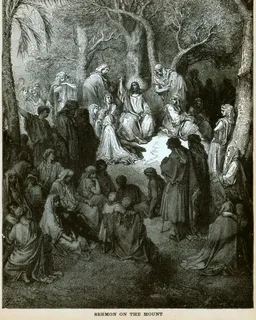
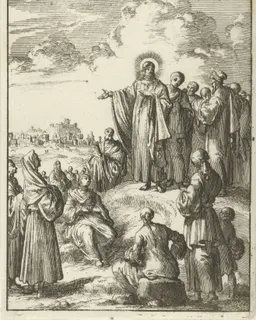
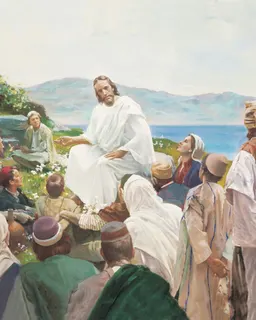
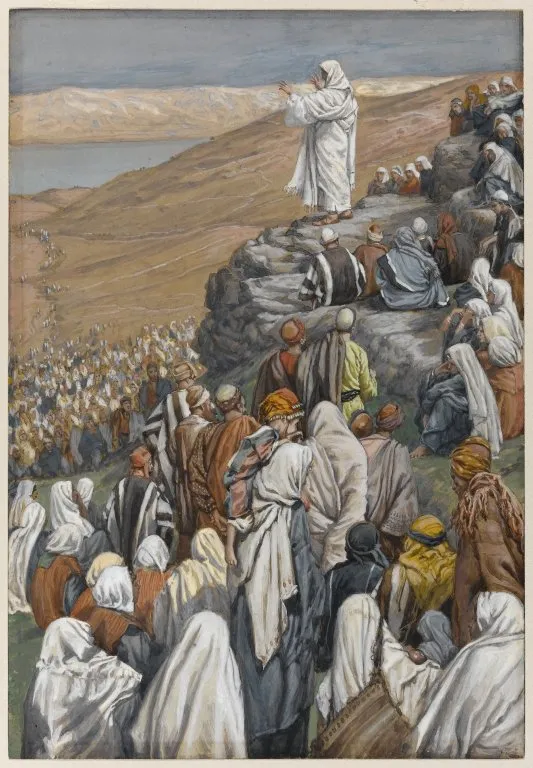
Crowds have been gathering from Galilee and the Decapolis, from Jerusalem and beyond Jordan, drawn by a teacher who heals every sickness and preaches the kingdom of heaven at hand. Now seeing the multitudes, he went up into a mountain: and when he was set, his disciples came unto him (v. 1). Every detail of that sentence is freighted. He goes up into a mountain - the place where, long before, the law was given amid fire and cloud.
He sits down, which in that world is the posture of the authoritative teacher, the rabbi taking his seat to instruct. And He opens his mouth to deliver what follows. This is no casual aside; it is a King ascending the height to announce, with full authority, the life and shape of His kingdom.1
Tap any highlighted phrase to jump to the commentary that unpacks it.

Matthew 5:1-16Blessed Are the Poor in Spirit
1And seeing the multitudes, he went up into a mountain: and when he was set, his disciples came unto him: 2And he opened his mouth, and taught them, saying, 3Blessed are the poor in spirit: for theirs is the kingdom of heaven. 4Blessed are they that mourn: for they shall be comforted. 5Blessed are the meek: for they shall inherit the earth. 6Blessed are they which do hunger and thirst after righteousness: for they shall be filled. 7Blessed are the merciful: for they shall obtain mercy. 8Blessed are the pure in heart: for they shall see God. 9Blessed are the peacemakers: for they shall be called the children of God. 10Blessed are they which are persecuted for righteousness’ sake: for theirs is the kingdom of heaven.
Before a word of teaching is spoken, the scene itself is a sermon. And seeing the multitudes, he went up into a mountain: and when he was set, his disciples came unto him (v. 1). He goes up into a mountain - and a careful reader hears an echo. It was on a mountain that the law was once given, amid thunder and smoke, through Moses. Now another goes up the height, and what He gives from it will be the law's own heart laid bare.
He sits down, the settled posture of the master teacher taking his seat to instruct with authority; the disciples gather close, the crowds press in behind. And then the deliberate phrase: he opened his mouth, and taught them. It marks a solemn, weighty beginning - proclamation of the weightiest kind. Everything in the verse says the same thing: here is One who teaches out of an authority all His own, where the scribes only quoted others.1
The blessings begin, and the very first one sets the key for all the rest: Blessed are the poor in spirit: for theirs is the kingdom of heaven (v. 3). The poor in spirit are those who know their own spiritual bankruptcy - who stand before God empty-handed, with nothing to offer and no claim to press, aware that they cannot save or supply themselves. To such, astonishingly, belongs the kingdom: to the ones who have come to the end of their own resources.
From there the blessings flow: they that mourn shall be comforted (v. 4) - those who feel the weight of sin and loss and a broken world, not shielding themselves from it; the meek shall inherit the earth (v. 5) - the gentle and unassertive, who do not grasp and force, receive at last what the grasping never keep; and they which do hunger and thirst after righteousness shall be filled (v. 6) - those whose deepest craving is to be right with God and to see right done.
Each beatitude pairs a present condition the world pities with a future the world cannot give.
The second cluster turns from inward need to outward life. Blessed are the merciful: for they shall obtain mercy (v. 7) - those who deal gently with the failing and forgive the indebted find that the mercy they extend returns to them. Blessed are the pure in heart: for they shall see God (v. 8) - purity here is a single, undivided heart, one wholly given to God and not split between Him and idols, and to the clear-eyed comes the highest gift imaginable, to see God. Blessed are the peacemakers: for they shall be called the children of God (v. 9) - those who actively make peace, mending what is torn between people, and in doing so bear the family likeness of the God of peace.
And then the note that the rest of the chapter will not let the hearer forget: Blessed are they which are persecuted for righteousness' sake (v. 10). The kingdom belongs even to those who suffer for doing right - indeed theirs is the kingdom of heaven, the same promise that crowned the very first beatitude, so that the whole list is bracketed, beginning and end, by the kingdom itself.
11Blessed are ye, when men shall revile you, and persecute you, and shall say all manner of evil against you falsely, for my sake. 12Rejoice, and be exceeding glad: for great is your reward in heaven: for so persecuted they the prophets which were before you. 13Ye are the salt of the earth: but if the salt have lost his savour, wherewith shall it be salted? it is thenceforth good for nothing, but to be cast out, and to be trodden under foot of men. 14Ye are the light of the world. A city that is set on an hill cannot be hid. 15Neither do men light a candle, and put it under a bushel, but on a candlestick; and it giveth light unto all that are in the house. 16Let your light so shine before men, that they may see your good works, and glorify your Father which is in heaven.
The eighth beatitude widens, and the address turns suddenly personal: Blessed are ye, when men shall revile you, and persecute you, and shall say all manner of evil against you falsely, for my sake (v. 11). Notice the shift from they to ye - Jesus is now speaking straight to His own. And notice the crucial qualifier: falsely, for my sake. This is the blessing on slander and opposition borne specifically for His sake, for loyalty to Him and His righteousness.
The response He commands is almost shocking: Rejoice, and be exceeding glad (v. 12) - because great is your reward in heaven, and because such treatment places the disciple in the noblest of company: so persecuted they the prophets which were before you. To be opposed for righteousness is to stand in the same line as Isaiah and Jeremiah and all the faithful before them. The world's rejection, rightly received, turns out to be a strange confirmation that one truly belongs to the kingdom just described.
Having described the kingdom's people, Jesus tells them what they are for: Ye are the salt of the earth: but if the salt have lost his savour, wherewith shall it be salted? it is thenceforth good for nothing, but to be cast out, and to be trodden under foot of men (v. 13). Salt in that world did two things - it preserved food from rot, and it gave flavour. To call His disciples the salt of the earth is to say they are meant to be a preserving, savouring presence in a decaying world, holding back corruption and lending savour to life around them.
But salt that has gone flat is worse than useless; it cannot even be re-salted, and is fit only to be thrown out and walked on. The warning is pointed: a disciple who loses the very quality that makes him a disciple - who blends so fully into the surrounding decay that nothing distinctive remains - forfeits his usefulness. Salt does its work by being unmistakably itself, rubbed into what it is sent to preserve.
The second image matches the first: Ye are the light of the world. A city that is set on an hill cannot be hid (v. 14). Light exists to be seen and to make other things visible; it cannot do its work in concealment. So Jesus presses the obvious: Neither do men light a candle, and put it under a bushel, but on a candlestick; and it giveth light unto all that are in the house (v. 15).
No one lights a lamp only to smother it under a basket; the whole point is to set it high, where it fills the room. A disciple's life, then, is meant to be public the way a hilltop city is public - simply unhideable, visible by its very nature. And the aim of that visibility is named with care in the next verse, where the light is shown to point past itself: it shines so that others, seeing your good works, are drawn to glorify your Father which is in heaven. The brightness is borrowed; the glory goes home to its source.


Matthew 5:17-26I Am Not Come to Destroy, but to Fulfil
17Think not that I am come to destroy the law, or the prophets: I am not come to destroy, but to fulfil. 18For verily I say unto you, Till heaven and earth pass, one jot or one tittle shall in no wise pass from the law, till all be fulfilled. 19Whosoever therefore shall break one of these least commandments, and shall teach men so, he shall be called the least in the kingdom of heaven: but whosoever shall do and teach them, the same shall be called great in the kingdom of heaven. 20For I say unto you, That except your righteousness shall exceed the righteousness of the scribes and Pharisees, ye shall in no case enter into the kingdom of heaven.
Jesus anticipates the charge before anyone can make it: Think not that I am come to destroy the law, or the prophets: I am not come to destroy, but to fulfil (v. 17). His teaching presses so far past the customary readings that a listener might suspect He is setting the old Scriptures aside. He says the opposite. He has not come to tear down the law, or the prophets - a phrase that means the whole of the Hebrew Scriptures - but to fulfil them, to bring them to the fullness they were always reaching toward.
And He underlines it with a vivid image: Till heaven and earth pass, one jot or one tittle shall in no wise pass from the law, till all be fulfilled (v. 18). The jot is the smallest letter of the Hebrew alphabet; the tittle is a tiny stroke that distinguishes one letter from another. Not even the least pen-mark of God's word will simply fall away unfulfilled. Far from loosening the law, He honours it down to its smallest detail - and warns that how a person treats even one of these least commandments (v. 19) registers in the kingdom.
Here the text simply stands: Jesus claims to be the law's fulfilment - its deepest meaning come alive - and the reader is left to weigh what kind of person could rightly say such a thing.
Then comes the verse that sets up everything to follow: For I say unto you, That except your righteousness shall exceed the righteousness of the scribes and Pharisees, ye shall in no case enter into the kingdom of heaven (v. 20). This would have landed like a thunderclap. The scribes and Pharisees were the acknowledged experts in keeping the law, scrupulous about every external observance; if anyone had righteousness to spare, surely it was they.
Yet Jesus says a righteousness merely matching theirs will not even get a person through the door. The reason emerges in the six sayings that follow. The Pharisaic righteousness He has in view is largely a matter of outward conformity - the hand kept from murder, the body kept from adultery - while leaving the heart untouched. The righteousness Jesus requires reaches all the way in, to the anger behind the murder and the look behind the adultery.
It is a different depth altogether - the law written inward, on the heart. And precisely because it goes that deep, it sets a standard no amount of careful external observance can reach. The verse hangs there as both summons and exposure, and the rest of the chapter will show just how high the bar truly is.
21Ye have heard that it was said by them of old time, Thou shalt not kill; and whosoever shall kill shall be in danger of the judgment: 22But I say unto you, That whosoever is angry with his brother without a cause shall be in danger of the judgment: and whosoever shall say to his brother, Raca, shall be in danger of the council: but whosoever shall say, Thou fool, shall be in danger of hell fire. 23Therefore if thou bring thy gift to the altar, and there rememberest that thy brother hath ought against thee; 24Leave there thy gift before the altar, and go thy way; first be reconciled to thy brother, and then come and offer thy gift. 25Agree with thine adversary quickly, whiles thou art in the way with him; lest at any time the adversary deliver thee to the judge, and the judge deliver thee to the officer, and thou be cast into prison. 26Verily I say unto thee, Thou shalt by no means come out thence, till thou hast paid the uttermost farthing.
Now the pattern begins, and the first instance shows exactly what the deeper righteousness means. Ye have heard that it was said by them of old time, Thou shalt not kill… But I say unto you, That whosoever is angry with his brother without a cause shall be in danger of the judgment (vv. 21-22). The commandment against murder everyone honoured. Jesus does not soften it; He follows it down to its root. Murder begins long before the blow - in the contempt that flares into anger, that spits out Raca (an Aramaic term of scorn, roughly “empty-head”), that hisses Thou fool. The escalating phrases - the judgment… the council… hell fire - press the point that what the world treats as a small thing, the cutting word, the held grudge, God weighs with terrible seriousness.
The hand that never strikes is not innocent if the heart seethes with contempt. This is what it means for righteousness to exceed the Pharisees': it refuses to call a man righteous merely because he has kept his hands clean while his heart wishes his brother were not there.1
Having traced murder back to its source, Jesus turns the teaching toward action - and the action is reconciliation. Therefore if thou bring thy gift to the altar, and there rememberest that thy brother hath ought against thee; leave there thy gift before the altar, and go thy way; first be reconciled to thy brother, and then come and offer thy gift (vv. 23-24). The scene is striking. A worshipper stands at the very altar, gift in hand, in the act of approaching God - and remembers a broken relationship, a brother with a grievance.
Jesus says: stop. Leave the gift right there and go make it right first. Worship offered while a wound is left festering between you and another is worship interrupted; the horizontal and the vertical cannot be separated. And He adds an urgent, practical word: Agree with thine adversary quickly, whiles thou art in the way with him (v. 25). Settle the matter while there is still time, before it hardens past mending and the cost comes due.
The deeper righteousness moves the feet toward the person wronged; it actively pursues peace.
Matthew 5:27-37The Heart Behind the Act
27Ye have heard that it was said by them of old time, Thou shalt not commit adultery: 28But I say unto you, That whosoever looketh on a woman to lust after her hath committed adultery with her already in his heart. 29And if thy right eye offend thee, pluck it out, and cast it from thee: for it is profitable for thee that one of thy members should perish, and not that thy whole body should be cast into hell. 30And if thy right hand offend thee, cut it off, and cast it from thee: for it is profitable for thee that one of thy members should perish, and not that thy whole body should be cast into hell.
The second saying follows the same path as the first, from the act to the heart that gives it birth. Ye have heard that it was said… Thou shalt not commit adultery: but I say unto you, That whosoever looketh on a woman to lust after her hath committed adultery with her already in his heart (vv. 27-28). Just as murder was traced back to anger, adultery is traced back to the look that feeds on another person - the deliberate, cultivated desire.
The faithfulness God asks for requires a heart and an eye that are wholly kept. Then come the words that have arrested readers for two thousand years: if thy right eye offend thee, pluck it out… if thy right hand offend thee, cut it off (vv. 29-30). The language is deliberately violent - and deliberately figurative, for blinding or maiming oneself does not cure a heart, and the same hand and eye remain on the other side of the body.
What the hyperbole conveys is the deadly seriousness of sin and the radical decisiveness it demands: better to lose what feels as precious and as near as your own eye or hand than to let it drag thy whole body into ruin. Whatever keeps feeding the wandering heart must be dealt with ruthlessly, not negotiated with.
31It hath been said, Whosoever shall put away his wife, let him give her a writing of divorcement: 32But I say unto you, That whosoever shall put away his wife, saving for the cause of fornication, causeth her to commit adultery: and whosoever shall marry her that is divorced committeth adultery. 33Again, ye have heard that it hath been said by them of old time, Thou shalt not forswear thyself, but shalt perform unto the Lord thine oaths: 34But I say unto you, Swear not at all; neither by heaven; for it is God’s throne: 35Nor by the earth; for it is his footstool: neither by Jerusalem; for it is the city of the great King. 36Neither shalt thou swear by thy head, because thou canst not make one hair white or black. 37But let your communication be, Yea, yea; Nay, nay: for whatsoever is more than these cometh of evil.
The third saying touches one of the tenderest places in human life, and it must be heard as a defense of the wronged. It hath been said, Whosoever shall put away his wife, let him give her a writing of divorcement: but I say unto you, That whosoever shall put away his wife, saving for the cause of fornication, causeth her to commit adultery (vv. 31-32). In that world, a man could dismiss his wife with relative ease, handing her a certificate and leaving her without protection or place.
Jesus presses behind the legal permission to the seriousness of the bond itself. Marriage, in His teaching, is not a contract to be dissolved at a husband's convenience; the casual putting away of a wife does her a grave wrong and tears apart what was joined. The force of His words falls on the one tempted to discard a spouse lightly - He is raising the dignity and permanence of the covenant, and standing protectively over the vulnerable party.
This is a high and tender word about how seriously God takes the joining of two lives, and how carefully that bond is to be guarded.1
The fourth saying turns to the matter of oaths and, underneath it, to plain truthfulness. Ye have heard that it hath been said… Thou shalt not forswear thyself, but shalt perform unto the Lord thine oaths: but I say unto you, Swear not at all (vv. 33-34). A whole system had grown up around swearing - one might swear by heaven, by earth, by Jerusalem, by one's own head, with the unspoken assumption that some oaths bound more tightly than others, leaving wiggle room in the lesser ones.
Jesus cuts through the entire apparatus. He points out that every such oath secretly reaches back to God anyway - heaven is God's throne, earth his footstool, Jerusalem the city of the great King, and even one's head is not one's own to command, since thou canst not make one hair white or black (vv. 34-36). The remedy lies beyond better oaths - in having no need of them: let your communication be, Yea, yea; Nay, nay; for whatsoever is more than these cometh of evil (v. 37).
The disciple is to be so transparently honest that a bare yes or no can simply be trusted. Where truthfulness is total, the elaborate machinery of swearing becomes pointless - a person's plain word is already as good as a vow.
Matthew 5:38-48Love Your Enemies
38Ye have heard that it hath been said, An eye for an eye, and a tooth for a tooth: 39But I say unto you, That ye resist not evil: but whosoever shall smite thee on thy right cheek, turn to him the other also. 40And if any man will sue thee at the law, and take away thy coat, let him have thy cloak also. 41And whosoever shall compel thee to go a mile, go with him twain. 42Give to him that asketh thee, and from him that would borrow of thee turn not thou away.
The fifth saying confronts the deep human instinct to repay hurt with hurt. Ye have heard that it hath been said, An eye for an eye, and a tooth for a tooth: but I say unto you, That ye resist not evil: but whosoever shall smite thee on thy right cheek, turn to him the other also (vv. 38-39). The old rule, an eye for an eye, was originally a limit on vengeance - it kept punishment from outrunning the offense, forbidding a life taken for a tooth knocked out.
But it had curdled into a sense of personal entitlement to get even. Jesus cuts the whole instinct off at the root. The disciple is not to meet evil with answering evil, trading blow for blow. The examples that follow are deliberately concrete and arresting: turning the other cheek to one who has struck you; letting a man who sues for your coat have your cloak as well (v. 40); going a second mile with one who has forced you to walk a first (v. 41); giving freely to the one who asks and not turning away the would-be borrower (v. 42).
These are vivid pictures of a heart freed from the reflex of retaliation - one that absorbs an insult and answers grasping with open-handed generosity. The cycle of getting-even ends in the disciple, who refuses to pass the blow along.
One of these examples would have carried a sharp political edge for Jesus' first hearers. And whosoever shall compel thee to go a mile, go with him twain (v. 41). The word translated compel describes the right of a soldier - in that day, an occupying Roman soldier - to press a civilian into service, commandeering him to carry a load for a set distance. It was a galling, humiliating imposition, a daily reminder of who held power.
And Jesus says: when forced to go one mile, go twain - two. The instruction is startling. It refuses both the option of furious resistance and the option of seething, resentful compliance. Instead it transforms the whole transaction: the disciple who walks the second mile freely is no longer merely a victim of compulsion but a free agent doing good, who has taken back his own soul from the bitterness the imposition was designed to breed.
This is the inner freedom the kingdom gives - a person so unowned by resentment that he can answer even coerced service with surprising, disarming generosity, and in doing so witness to a different kingdom entirely. The point is not passivity; it is a freedom that overcomes evil by refusing to be conformed to it.
43Ye have heard that it hath been said, Thou shalt love thy neighbour, and hate thine enemy. 44But I say unto you, Love your enemies, bless them that curse you, do good to them that hate you, and pray for them which despitefully use you, and persecute you; 45That ye may be the children of your Father which is in heaven: for he maketh his sun to rise on the evil and on the good, and sendeth rain on the just and on the unjust. 46For if ye love them which love you, what reward have ye? do not even the publicans the same? 47And if ye salute your brethren only, what do ye more than others? do not even the publicans so? 48Be ye therefore perfect, even as your Father which is in heaven is perfect.
The sixth and last saying reaches the summit of the whole sequence. Ye have heard that it hath been said, Thou shalt love thy neighbour, and hate thine enemy. But I say unto you, Love your enemies, bless them that curse you, do good to them that hate you, and pray for them which despitefully use you, and persecute you (vv. 43-44). The command to love one's neighbour stood written in the law; the addition and hate thine enemy was a human gloss that drew the circle of love tight and left enemies outside it.
Jesus shatters the boundary. Love is to reach the very people who curse, hate, and persecute - in costly action: bless… do good… pray for them. And He gives the deepest possible reason: That ye may be the children of your Father which is in heaven: for he maketh his sun to rise on the evil and on the good, and sendeth rain on the just and on the unjust (v. 45). This is the heart of God laid open.
His common kindnesses - sunlight, rain, the daily mercies that make life possible - fall on everyone alike, the grateful and the godless, the friend and the foe. To love only those who love us back is no more than the tax-collectors manage (vv. 46-47); but to love the undeserving is to bear the family likeness of a Father whose generosity knows no such limits. The reach of a disciple's love is meant to mirror the reach of God's own.
And so the chapter arrives at its astonishing final word: Be ye therefore perfect, even as your Father which is in heaven is perfect (v. 48). The little word therefore ties it directly to what came just before - to the all-embracing love of a Father who sends sun and rain on the evil and the good. To be perfect here is to be complete, whole, undivided - specifically in love that excludes no one, as the Father's love excludes no one.
The standard is breathtaking, and it is meant to be felt as such. It is the true shape of the life the kingdom is calling forth - the child growing up into the likeness of the Father. Held next to verse 20's righteousness that exceeds, this closing line completes the chapter's great work: it lifts the standard to the very character of God Himself, far past anything self-effort can reach, and so leaves the hearer reaching upward - toward the Father whose perfect love is held out as both the pattern to grow into and the gift to receive.
Research trail
Sources & further study
These references support the historical, linguistic, manuscript, and contextual notes in this chapter. Scripture remains the primary text; external sources are provided so readers can inspect the research directly.
- Matthew 5 - Translators' NotesThe NET Bible's detailed footnotes on Matthew 5 - the setting of the sermon on the mountain (v. 1), the difficult term Raca (v. 22), the much-debated exception clause in the saying on divorce (v. 32), and the force of the call to be perfect as the Father is perfect (v. 48).
- Matthew 5 · Greek interlinear + lexiconThe Greek text of Matthew 5 word by word, with parsing and lexical entries side by side - useful for makarios (vv. 3-11, the “blessed” of the Beatitudes), for pleroo (v. 17, “to fulfil”), and for teleios (v. 48, the “perfect” to which the chapter rises).
- Matthew 5 ↔ Psalms · Isaiah · the Law and the ProphetsTraces the threads tying the Sermon on the Mount back through Scripture - the meek who inherit the earth (v. 5; Ps. 37:11), the comfort of those who mourn (v. 4; Isa. 61:2), and the older words Jesus cites and deepens, from Thou shalt not kill to Thou shalt love thy neighbour (vv. 21, 43).
Where this echoes in Scripture
Blessed Are the Poor in Spirit
- Luke 6:20-23Blessed be ye poor: for yours is the kingdom of God... Blessed are ye that hunger now: for ye shall be filled.Luke's parallel to the Beatitudes of verses 3-12 - the same blessings on the same kind of people.
- Psalm 37:11But the meek shall inherit the earth; and shall delight themselves in the abundance of peace.The promise Jesus draws on in verse 5 - the earth as the inheritance of the meek.
- Isaiah 61:1-3to comfort all that mourn... to give unto them beauty for ashes, the oil of joy for mourning.The comfort promised to mourners in verse 4 - the prophetic hope Jesus takes up.
- John 8:12I am the light of the world: he that followeth me shall not walk in darkness, but shall have the light of life.The light His disciples are (v. 14) is His first of all - theirs by reflection.
- 1 Peter 2:12having your conversation honest among the Gentiles... they may by your good works, which they shall behold, glorify God.Verse 16 lived out - good works seen, and the glory going to God.
I Am Not Come to Destroy, but to Fulfil
- Romans 10:4For Christ is the end of the law for righteousness to every one that believeth.Where the law was always pointing - the goal and fullness Jesus claims in verse 17.
- Luke 24:44all things must be fulfilled, which were written in the law of Moses, and in the prophets, and in the psalms, concerning me.The risen Christ on the same theme as verse 17 - the Scriptures fulfilled in Him.
- 1 John 3:15Whosoever hateth his brother is a murderer: and ye know that no murderer hath eternal life abiding in him.The teaching of verses 21-22 carried forward - hatred named as murder of the heart.
- Jeremiah 31:33I will put my law in their inward parts, and write it in their hearts; and will be their God, and they shall be my people.The inward righteousness verse 20 requires - the law written on the heart, as the prophet foretold.
- Ephesians 4:26Be ye angry, and sin not: let not the sun go down upon your wrath.The urgency of verses 23-25 echoed - settle the quarrel quickly, before it festers.
The Heart Behind the Act
- Job 31:1I made a covenant with mine eyes; why then should I think upon a maid?The guarded eye of verse 28 lived out long before - a covenant made with one's own gaze.
- Malachi 2:16For the LORD, the God of Israel, saith that he hateth putting away... therefore take heed to your spirit.The seriousness of the marriage bond behind verses 31-32 - God's own regard for it.
- James 5:12swear not... but let your yea be yea; and your nay, nay; lest ye fall into condemnation.The teaching of verses 34-37 repeated almost word for word - the plain word that needs no oath.
- Jeremiah 17:10I the LORD search the heart, I try the reins, even to give every man according to his ways.The God who sees behind the act - the One who can require the inward righteousness of this whole section.
- Ezekiel 36:26A new heart also will I give you, and a new spirit will I put within you... I will take away the stony heart.The heart Jesus requires is the heart God promises to give - the inward change behind verses 27-37.
Love Your Enemies
- Romans 12:19-21Avenge not yourselves... If thine enemy hunger, feed him... Be not overcome of evil, but overcome evil with good.The refusal of retaliation in verses 38-42 carried into apostolic teaching - good answering evil.
- Luke 23:34Then said Jesus, Father, forgive them; for they know not what they do.The love-your-enemies of verse 44 lived out by the One who taught it - from the cross.
- Romans 5:8-10while we were yet sinners, Christ died for us... when we were enemies, we were reconciled to God by the death of his Son.The enemy-love of verses 44-45 shown toward us - we were the enemies He loved.
- Leviticus 19:18Thou shalt not avenge, nor bear any grudge... but thou shalt love thy neighbour as thyself: I am the LORD.The command Jesus cites and widens in verses 43-44 - the love now stretched even to the enemy.
- Romans 8:29For whom he did foreknow, he also did predestinate to be conformed to the image of his Son.The perfection of verse 48 as a work God brings about - His children grown into the likeness of the Son.