Luke 23
People in this chapter
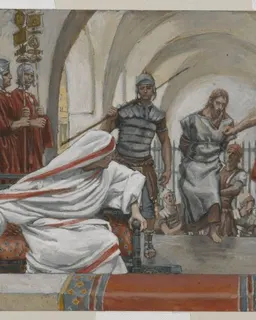
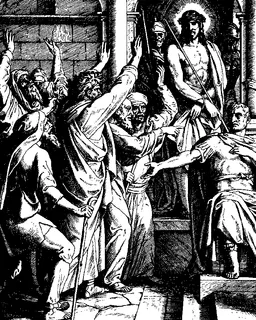
Luke has brought the long night of arrest and questioning to its end; now it is morning, and the whole council rises and leads Jesus to Pilate, the Roman governor, the only man with power to put Him to death. The charge they bring is political, framed to alarm Rome: We found this fellow perverting the nation, and forbidding to give tribute to Caesar, saying that he himself is Christ a King.
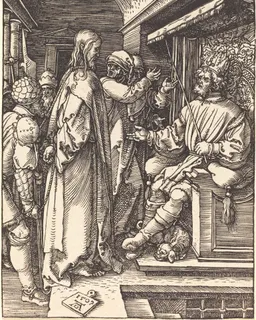
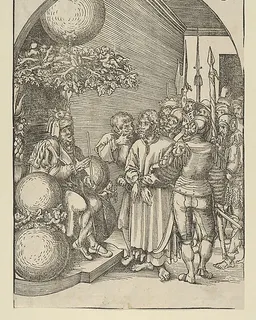
Pilate puts the one question that matters to an empire: Art thou the King of the Jews? Jesus answers, Thou sayest it - affirming the title without playing the part of a rebel.
And Pilate, after examining Him, reaches the verdict that will echo through the whole chapter: I find no fault in this man (v. 4). It is the first of several declarations of innocence, and from the first they are overruled.1
Tap any highlighted phrase to jump to the commentary that unpacks it.
Luke 23:1-7I Find No Fault in This Man
1And the whole multitude of them arose, and led him unto Pilate. 2And they began to accuse him, saying, We found this fellow perverting the nation, and forbidding to give tribute to Caesar, saying that he himself is Christ a King. 3And Pilate asked him, saying, Art thou the King of the Jews? And he answered him and said, Thou sayest it. 4Then said Pilate to the chief priests and to the people, I find no fault in this man. 5And they were the more fierce, saying, He stirreth up the people, teaching throughout all Jewry, beginning from Galilee to this place. 6When Pilate heard of Galilee, he asked whether the man were a Galilaean. 7And as soon as he knew that he belonged unto Herod’s jurisdiction, he sent him to Herod, who himself also was at Jerusalem at that time.
The council had condemned Jesus on a charge of blasphemy, but blasphemy meant nothing to a Roman court, so the accusation is recast for Pilate's ears in terms an empire takes seriously: We found this fellow perverting the nation, and forbidding to give tribute to Caesar, saying that he himself is Christ a King (v. 2). Every clause is calculated to sound like sedition - stirring up the people, refusing taxes, claiming a throne. And every clause twists the truth.
He had not forbidden tribute; only days before He had said, Render therefore unto Caesar the things which be Caesar's (Luke 20:25). He had not raised a rebellion; He had healed and taught. The charge is built to force a Roman execution out of a Jewish quarrel, and it works precisely because it is plausible. This is how the innocent are most often destroyed: by a true word bent just far enough to kill, plausible where a naked lie would not be.1
Pilate cuts straight to the one charge that concerns Rome: Art thou the King of the Jews? (v. 3). Jesus answers, Thou sayest it - a reply that affirms the title without seizing the meaning Pilate fears. He does not deny that He is a King; He will not pretend He is the kind of king who raises swords against Caesar. The answer is the truth held at exactly the right angle: yes, but not as you imagine.
And Pilate, hearing it, draws the only honest conclusion: I find no fault in this man (v. 4). The governor of Judea, no friend of Jesus and no seeker after righteousness, examines the prisoner and pronounces Him innocent.
That verdict is the spine of the whole chapter. Luke will let it be spoken again, and again, and a fourth time by a soldier at the cross - and every time it is spoken, the machinery of death rolls on regardless. The innocence of Jesus is not in doubt to anyone in the story. It is simply overruled.
Pilate's verdict only makes the accusers louder: they were the more fierce, saying, He stirreth up the people, teaching throughout all Jewry, beginning from Galilee to this place (v. 5). It is a telling charge to fasten on, because in one sense it is true - He had indeed taught from Galilee to Jerusalem, and crowds had indeed gathered. They name the breadth of His ministry as if it were a crime; the very thing that drew the multitudes and gave sight to the blind is filed as evidence of unrest.
And the word Galilee gives Pilate his escape. A Galilean fell under Herod's authority, and Herod happened to be in Jerusalem for the feast. Pilate, glad to be rid of a case he has already judged and does not want to own, sends Jesus across the city to another man's court (vv. 6-7).
It is the first of his attempts to keep his hands clean while letting the thing proceed: a maneuver to avoid the decision his verdict demands. He has the authority to release an innocent man and the verdict to justify it. What he lacks is the will.
Luke 23:8-12Herod and Pilate Made Friends
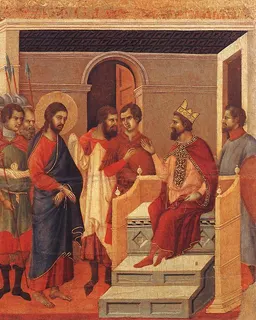
8And when Herod saw Jesus, he was exceeding glad: for he was desirous to see him of a long season, because he had heard many things of him; and he hoped to have seen some miracle done by him. 9Then he questioned with him in many words; but he answered him nothing. 10And the chief priests and scribes stood and vehemently accused him. 11And Herod with his men of war set him at nought, and mocked him, and arrayed him in a gorgeous robe, and sent him again to Pilate. 12And the same day Pilate and Herod were made friends together: for before they were at enmity between themselves.
Herod is glad to see Jesus - but for the worst of reasons. He had wanted to meet Him of a long season, not to hear Him or follow Him, but because he hoped to have seen some miracle done by him (v. 8). To Herod, the Son of God is a curiosity, a performer who might be made to entertain the court. This is the same Herod who had murdered John the Baptist to save face at a banquet; he comes to Jesus craving a spectacle.
And Jesus gives him nothing: he questioned with him in many words; but he answered him nothing (v. 9). The silence is its own kind of answer.
Jesus had spoken freely to those who genuinely sought - to a thief at the very end of the chapter He will speak the deepest word of all - but to the man who wants only a show, there is nothing to say. A heart that comes to God for amusement, demanding signs while refusing to listen, will often find heaven silent.
Denied his spectacle, Herod turns from curiosity to contempt: Herod with his men of war set him at nought, and mocked him, and arrayed him in a gorgeous robe, and sent him again to Pilate (v. 11). The phrase set him at nought means to treat as nothing, to count worthless - and there is a terrible irony in soldiers reckoning the Author of life as nothing. The gorgeous robe is a cruel joke, dressing the supposed King in finery to laugh at the claim.
Yet Luke, who alone records this scene, lets us see what the mockers cannot: the One they crown in jest really is a King, and the very mockery fulfills the pattern of the Suffering Servant, despised and rejected of men.
Then comes the chapter's bleakest aside: the same day Pilate and Herod were made friends together: for before they were at enmity between themselves (v. 12). Two rulers who had been enemies are reconciled - over the shared business of disposing of Jesus. The world can find a strange unity in turning against the innocent.
Luke 23:13-25I Have Found No Cause of Death in Him
13And Pilate, when he had called together the chief priests and the rulers and the people, 14Said unto them, Ye have brought this man unto me, as one that perverteth the people: and, behold, I, having examined him before you, have found no fault in this man touching those things whereof ye accuse him: 15No, nor yet Herod: for I sent you to him; and, lo, nothing worthy of death is done unto him. 16I will therefore chastise him, and release him. 17(For of necessity he must release one unto them at the feast.) 18And they cried out all at once, saying, Away with this man, and release unto us Barabbas: 19(Who for a certain sedition made in the city, and for murder, was cast into prison.) 20Pilate therefore, willing to release Jesus, spake again to them. 21But they cried, saying, Crucify him, crucify him. 22And he said unto them the third time, Why, what evil hath he done? I have found no cause of death in him: I will therefore chastise him, and let him go. 23And they were instant with loud voices, requiring that he might be crucified. And the voices of them and of the chief priests prevailed. 24And Pilate gave sentence that it should be as they required. 25And he released unto them him that for sedition and murder was cast into prison, whom they had desired; but he delivered Jesus to their will.
Jesus comes back from Herod no more guilty than He went, and Pilate gathers the rulers and the people to say so plainly: I, having examined him before you, have found no fault in this man touching those things whereof ye accuse him: No, nor yet Herod... nothing worthy of death is done unto him (vv. 14-15). This is now the second and third time the verdict has been pronounced, and Pilate even enlists Herod as a witness for the defense: two courts, two acquittals. By every standard of justice the case is over.
And then Pilate says the words that undo everything: I will therefore chastise him, and release him (v. 16). There is no therefore in it. If the man is innocent, why chastise him at all?
Pilate is trying to buy off the crowd with a lesser cruelty, to scourge an innocent man as a concession so he need not free him outright. It is the fatal compromise - the attempt to satisfy injustice partway, to do a little wrong so as to avoid a confrontation. That door, once opened, does not stop at scourging.
The crowd will not take the bargain. To Pilate's offer they answer with a name and a roar: Away with this man, and release unto us Barabbas (v. 18) - and Luke pauses to tell us exactly who Barabbas is: a man imprisoned for a certain sedition made in the city, and for murder (v. 19).
The irony is total and deliberate. Jesus is charged with stirring up sedition though He raised no sword; Barabbas actually did it, and shed blood besides. The crowd is offered the choice between a man falsely accused of insurrection and a man truly guilty of it - and chooses the murderer.
Pilate, willing to release Jesus, tries once more, but the answer hardens into the cry that has echoed down the centuries: Crucify him, crucify him (v. 21). There is something here past mere miscarriage of justice; it is a preference, a settled choosing of darkness over light. Offered the Author of life, they ask for the taker of it. And the substitution at the visible level - the guilty man walks free because the innocent will die - quietly mirrors the deeper exchange the whole chapter is about.
A third time Pilate protests: Why, what evil hath he done? I have found no cause of death in him (v. 22). Three times now an innocent verdict; three times overruled. The end comes by sheer volume: they were instant with loud voices, requiring that he might be crucified. And the voices of them and of the chief priests prevailed (v. 23). A louder case, where a better one had already been made and dismissed.
And Pilate gave sentence that it should be as they required (v. 24) - a chilling line, for it makes the crowd the real judge and the judge a mere clerk recording their verdict. He released... Barabbas... but he delivered Jesus to their will (v. 25).
Pilate keeps no clean hands in this, whatever he may wash. To know the right, to declare it three times, and then to hand the innocent over because the shouting would not stop - that is not neutrality, it is its own guilt. The strongest man in the province bends to the loudest voices, and the truth he himself spoke four times over is buried under the noise.
Luke 23:26-43Father, Forgive Them · To Day Shalt Thou Be With Me in Paradise
26And as they led him away, they laid hold upon one Simon, a Cyrenian, coming out of the country, and on him they laid the cross, that he might bear it after Jesus. 27And there followed him a great company of people, and of women, which also bewailed and lamented him. 28But Jesus turning unto them said, Daughters of Jerusalem, weep not for me, but weep for yourselves, and for your children. 29For, behold, the days are coming, in the which they shall say, Blessed are the barren, and the wombs that never bare, and the paps which never gave suck. 30Then shall they begin to say to the mountains, Fall on us; and to the hills, Cover us. 31For if they do these things in a green tree, what shall be done in the dry? 32And there were also two other, malefactors, led with him to be put to death. 33And when they were come to the place, which is called Calvary, there they crucified him, and the malefactors, one on the right hand, and the other on the left. 34Then said Jesus, Father, forgive them; for they know not what they do. And they parted his raiment, and cast lots. 35And the people stood beholding. And the rulers also with them derided him, saying, He saved others; let him save himself, if he be Christ, the chosen of God. 36And the soldiers also mocked him, coming to him, and offering him vinegar, 37And saying, If thou be the king of the Jews, save thyself. 38And a superscription also was written over him in letters of Greek, and Latin, and Hebrew, THIS IS THE KING OF THE JEWS. 39And one of the malefactors which were hanged railed on him, saying, If thou be Christ, save thyself and us. 40But the other answering rebuked him, saying, Dost not thou fear God, seeing thou art in the same condemnation? 41And we indeed justly; for we receive the due reward of our deeds: but this man hath done nothing amiss. 42And he said unto Jesus, Lord, remember me when thou comest into thy kingdom. 43And Jesus said unto him, Verily I say unto thee, To day shalt thou be with me in paradise.
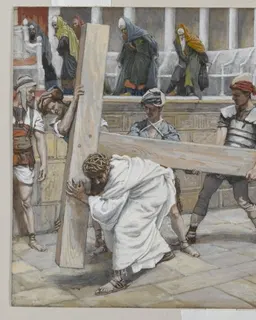
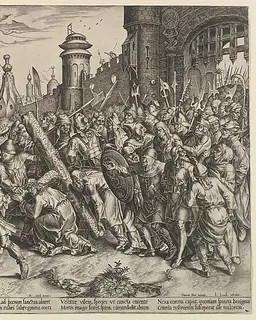
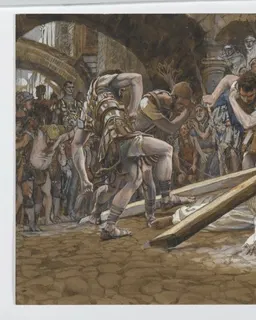
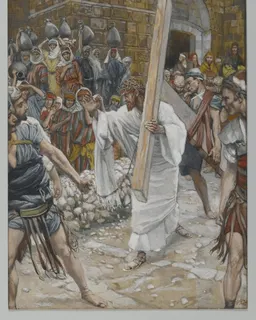
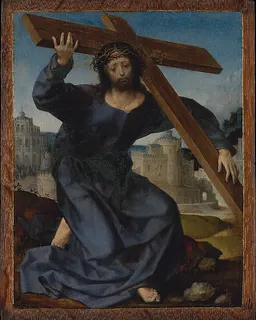
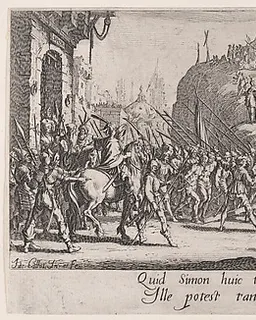
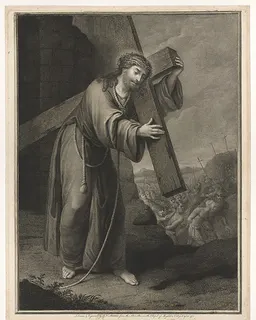
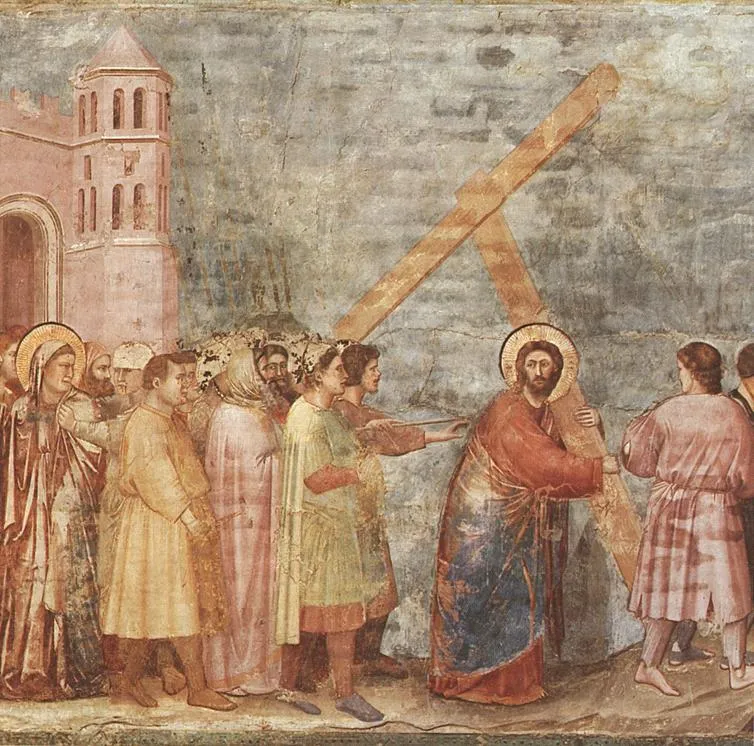
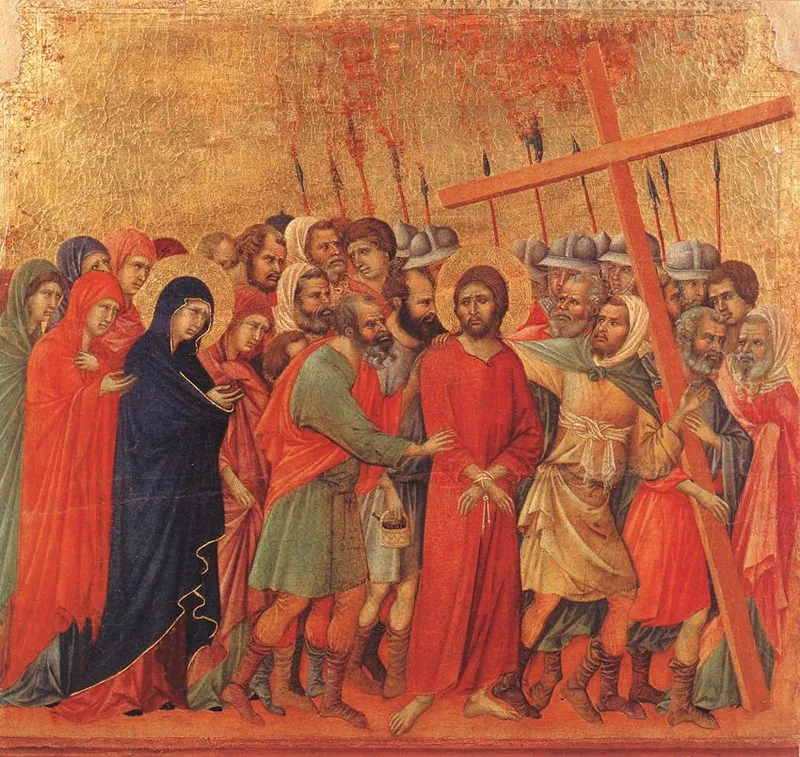
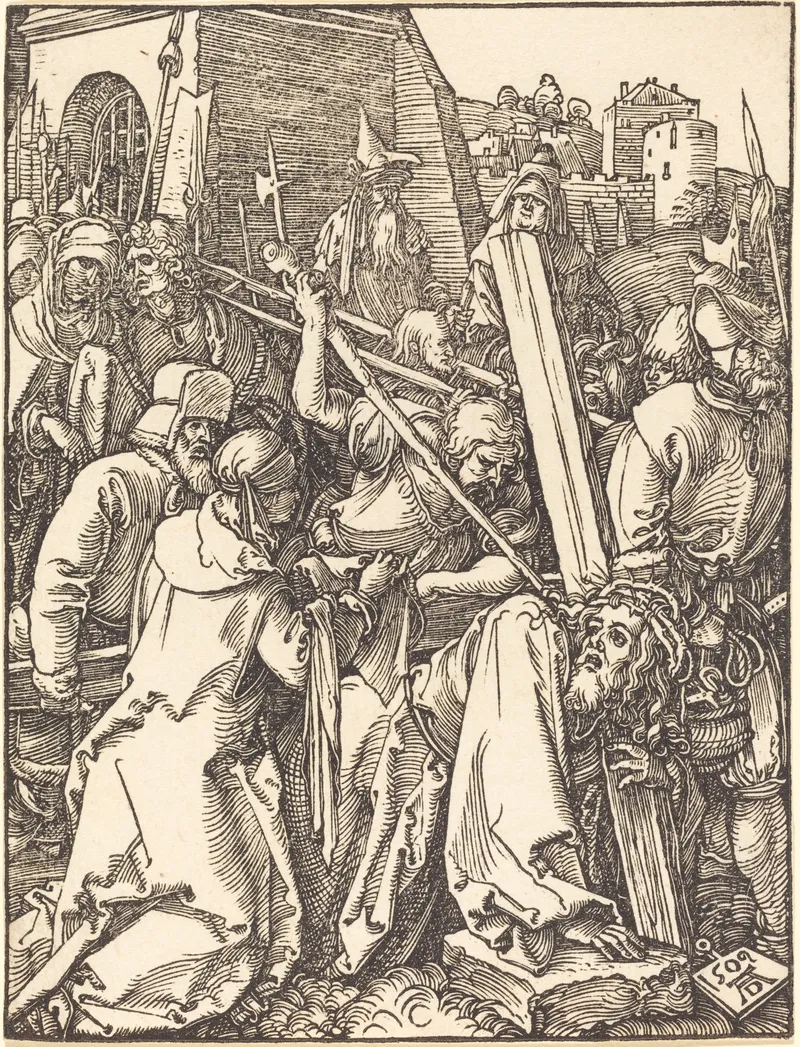
On the road to the place of death, a stranger is swept into the story: they laid hold upon one Simon, a Cyrenian, coming out of the country, and on him they laid the cross, that he might bear it after Jesus (v. 26). Simon was a passer-by from North Africa, in Jerusalem perhaps for the feast, with no part in any of this until a soldier's hand fell on his shoulder.
He did not volunteer; the cross was laid on him. And yet the picture is unforgettable - a man carrying the cross after Jesus, walking the road of suffering directly behind Him.
Jesus had said that whoever would follow Him must take up his cross daily, and follow me (Luke 9:23), and here, on the worst morning of the world, one man is doing it literally, bearing the weight a step behind the Lord. Sometimes the call of God arrives not as a grand summons but as an interruption - an inconvenient burden laid on us as we are merely passing through, an assignment to carry someone else's weight the last hard stretch of the way.
A crowd of women follows, weeping for Him - and Jesus, on His way to be crucified, turns His thoughts away from His own agony to theirs: Daughters of Jerusalem, weep not for me, but weep for yourselves, and for your children (v. 28). It is an astonishing redirection. The Man bearing the heaviest sorrow in the scene comforts the mourners and warns them of a grief still to come.
He foresees the days of devastation that will fall upon the city - days so terrible that Blessed are the barren will sound like a mercy, and people will cry to the mountains, Fall on us (vv. 29-30).
Then He sets it all under a single haunting proverb: For if they do these things in a green tree, what shall be done in the dry? (v. 31). A green, living tree does not readily burn; a dry, dead one is fuel for the fire. If such suffering falls on the innocent and living - on Him, the green tree - what will come upon the guilty and unrepentant, the dry? Even on the way to His own execution, His concern runs outward, toward others and their need to turn before the day of reckoning.
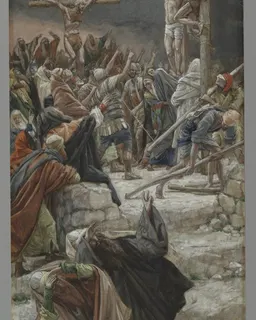
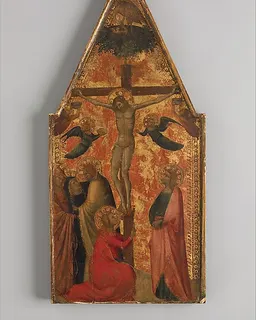
Now Luke states the central fact of all history with terrible plainness: when they were come to the place, which is called Calvary, there they crucified him, and the malefactors, one on the right hand, and the other on the left (vv. 32-33). He does not linger over the physical horror; the Gospels never do. The fact is set down almost starkly - there they crucified him - and the weight is left to fall on the reader.
And note the company chosen for Him: not a quiet, dignified death, but execution between two condemned criminals, fulfilling to the letter the word that He would be numbered with the transgressors (Isa. 53:12).
At the very moment of being lifted up, He is reckoned among the guilty, placed in the middle as though He were the worst of the three. The King whom the wise men sought, the One the angels announced, hangs on a Roman gibbet between two thieves - and that, Scripture insists, is exactly where He had come to be.
His first word from the cross is a prayer for the men who put Him there (v. 34, taken up in the Christ Connection below), and then the mockery begins, coming in three waves and circling one taunt. The rulers deride Him: He saved others; let him save himself, if he be Christ, the chosen of God (v. 35). The soldiers join, offering Him vinegar and jeering, If thou be the king of the Jews, save thyself (v. 37).
And a placard fixed above Him reads, in three languages so all could read it, THIS IS THE KING OF THE JEWS (v. 38) - meant as the charge against Him, but standing as unwitting truth.
Notice what the mockers cannot see: their jeer, He saved others; let him save himself, names the whole reason He will not come down. He could come down; He stays, because saving others and sparing Himself are, on this day, mutually exclusive.
The taunt is, without their knowing it, the deepest statement of the gospel in the chapter: He stays on the cross so that the others may be saved.
The two crucified men become a parting of the ways, the whole human response to Christ drawn in miniature on either side of Him. One railed on him, saying, If thou be Christ, save thyself and us (v. 39) - demanding rescue on his own terms, mocking even at the threshold of death.
The other rebukes him, and his few words are a model of what turning to God looks like. First the fear of God: Dost not thou fear God, seeing thou art in the same condemnation? (v. 40). Then honest confession of his own guilt: we indeed justly; for we receive the due reward of our deeds (v. 41). Then a clear sight of Jesus' innocence: but this man hath done nothing amiss - one more voice, the unlikeliest of all, added to the chapter's chorus declaring Him guiltless.
And then, with nothing in his hands and no time left to amend his life, the plea: Lord, remember me when thou comest into thy kingdom (v. 42). He cannot point to a single good work; he can only ask. He sees, somehow, that this dying Man between two crosses has a kingdom, and casts himself wholly on His mercy. It is faith stripped down to its barest essential - a guilty man trusting the only One who can help.
Luke 23:44-56The Veil Rent · Certainly This Was a Righteous Man
44And it was about the sixth hour, and there was a darkness over all the earth until the ninth hour. 45And the sun was darkened, and the veil of the temple was rent in the midst. 46And when Jesus had cried with a loud voice, he said, Father, into thy hands I commend my spirit: and having said thus, he gave up the ghost. 47Now when the centurion saw what was done, he glorified God, saying, Certainly this was a righteous man. 48And all the people that came together to that sight, beholding the things which were done, smote their breasts, and returned. 49And all his acquaintance, and the women that followed him from Galilee, stood afar off, beholding these things. 50And, behold, there was a man named Joseph, a counsellor; and he was a good man, and a just: 51(The same had not consented to the counsel and deed of them;) he was of Arimathaea, a city of the Jews: who also himself waited for the kingdom of God. 52This man went unto Pilate, and begged the body of Jesus. 53And he took it down, and wrapped it in linen, and laid it in a sepulchre that was hewn in stone, wherein never man before was laid. 54And that day was the preparation, and the sabbath drew on. 55And the women also, which came with him from Galilee, followed after, and beheld the sepulchre, and how his body was laid. 56And they returned, and prepared spices and ointments; and rested the sabbath day according to the commandment.
At midday the light fails: it was about the sixth hour, and there was a darkness over all the earth until the ninth hour. And the sun was darkened (vv. 44-45). For three hours, from noon to mid-afternoon, the world goes dark at the very time the sun should be at its height. Creation itself seems to recoil from what is being done to its Maker.
The prophets had spoken of the day of the LORD as a day when He would cause the sun to go down at noon and darken the earth in the clear day (Amos 8:9); here that strange darkness falls over Calvary.
Luke does not explain it, and it resists explaining - it is a sign, a veiling, as though heaven drew a curtain over the suffering of the Son. The darkness is not the end of the story, but it marks the depth of the hour. The light of the world hangs dying, and the world's own light goes out in answer.
Out of that darkness comes the last word: when Jesus had cried with a loud voice, he said, Father, into thy hands I commend my spirit: and having said thus, he gave up the ghost (v. 46). The words are borrowed from a psalm Israel knew by heart - Into thine hand I commit my spirit (Ps. 31:5) - the evening prayer a faithful Israelite might say before sleep, here made the prayer before death.
Notice that He does not slip away exhausted; He cried with a loud voice, and then deliberately commends His spirit and releases it. His life is not so much taken from Him as laid down.
And notice the first word: Father. The mockery, the nails, the darkness, the silence of God through three black hours - none of it has shaken the relation that has held from eternity. He dies as He lived, with His face toward the Father, entrusting Himself to the One into whose hands He has now placed His spirit. It is the purest act of trust in all of Scripture: a Son, in the dark, giving Himself back to His Father, sure of being received.
A Roman officer has been standing guard through it all, and what he has seen breaks something open in him: when the centurion saw what was done, he glorified God, saying, Certainly this was a righteous man (v. 47). It is the chapter's last and most unexpected verdict of innocence - and it comes from a Gentile soldier, a professional of crucifixion who had surely watched many men die, and never one like this.
The dignity of Jesus, the prayer for His enemies, the promise to the thief, the manner of His dying - it adds up, for this hardened man, to a confession that glorifies God.
The crowd, too, is shaken; they go home beating their breasts (v. 48), the gesture of grief and dawning guilt. And His own people - His acquaintance, and the faithful women who had followed Him from Galilee - stand afar off, beholding (v. 49). The same women will be the first to the tomb. At the cross, when the disciples have largely scattered, it is the women who keep watch to the end and a foreign soldier who speaks the truth: this was a righteous man.
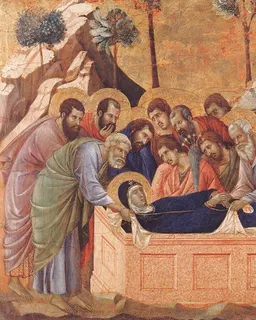
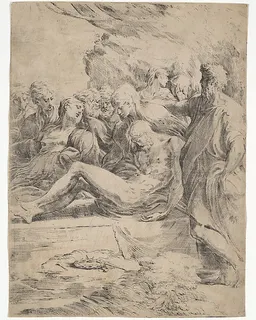
Then a man steps out of the shadows of the very council that condemned Jesus: a man named Joseph, a counsellor; and he was a good man, and a just - who had not consented to the counsel and deed of them - a man of Arimathaea who waited for the kingdom of God (vv. 50-51). He goes to Pilate and begged the body of Jesus (v. 52), an act of quiet courage that openly aligns him, now, with a crucified and disgraced man.
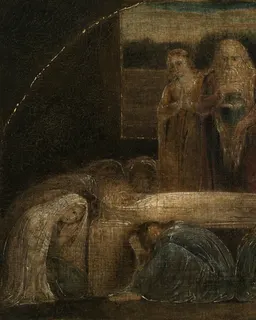
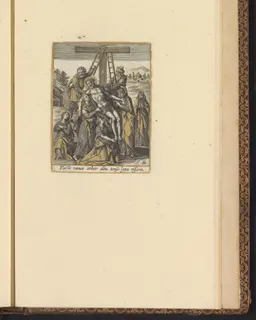
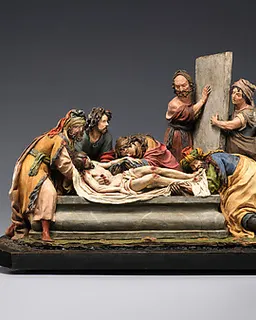
He takes the body down, wraps it in linen, and lays it in a sepulchre that was hewn in stone, wherein never man before was laid (v. 53) - a new, unused tomb, a small dignity given to the body of the Lord.
The detail that no one had ever lain there matters; the tomb that will soon be famously empty is shown to be wholly His. It was the preparation, and the sabbath was drawing on (v. 54) - the clock of the holy day is already running, which is why what comes next is so tender and so constrained.
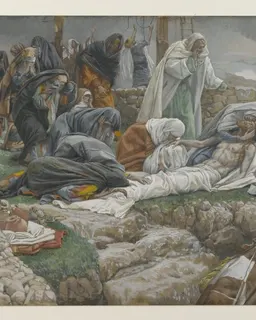
The chapter ends not with a flourish but with the faithful, ordinary love of a few women: the women also, which came with him from Galilee, followed after, and beheld the sepulchre, and how his body was laid. And they returned, and prepared spices and ointments; and rested the sabbath day according to the commandment (vv. 55-56). They mark the place; they go home; they prepare what is needed to anoint a body properly, the last service love can render to the dead.
And then - this is the quiet beauty of the closing line - they rested the sabbath day according to the commandment. Even with their grief raw and their task half-done, they keep the sabbath. Devotion does not abandon obedience.
But the spices they prepare hold a secret the women do not yet know: they are getting ready for a burial that will never need finishing. They will come to the tomb at the first light after the sabbath, ointments in hand - and find the stone rolled away. The chapter closes on a held breath, on prepared spices and a sealed tomb and a sabbath of waiting, with the whole weight of the next morning hanging unspoken in the air.
Research trail
Sources & further study
These references support the historical, linguistic, manuscript, and contextual notes in this chapter. Scripture remains the primary text; external sources are provided so readers can inspect the research directly.
- Luke 23 - Translators' NotesThe NET Bible's detailed footnotes on Luke 23 - the political shape of the charges before Pilate (vv. 2-5), the much-discussed placement of the comma in verse 43, the rending of the temple veil (v. 45), and the centurion's confession (v. 47).
- Luke 23 · Greek interlinear, parsing & lexiconThe Greek text of Luke 23 word by word, with parsing and lexical links - useful for aphes (v. 34, “forgive”), for paradeisos (v. 43, “paradise”), and for the centurion's dikaios (v. 47, “righteous”).
- Luke 23 ↔ Isaiah 53 · Psalm 22 · Psalm 31Traces the threads tying Luke 23 to the rest of Scripture - the silent, innocent Sufferer numbered with the transgressors (Isa. 53:12), the parted garments and casting of lots (Ps. 22:18), and the dying words into thy hands I commend my spirit (Ps. 31:5).
Where this echoes in Scripture
I Find No Fault in This Man
- Isaiah 53:7he was oppressed, and he was afflicted, yet he opened not his mouth: he is brought as a lamb to the slaughter.The silent, innocent Sufferer of the prophets - set beside the prisoner Pilate cannot fault (vv. 3-4).
- Luke 20:25Render therefore unto Caesar the things which be Caesar's, and unto God the things which be God's.Jesus' own words on tribute - exposing how the charge of verse 2 twists the truth.
- John 18:36My kingdom is not of this world: if my kingdom were of this world, then would my servants fight.The sense of the answer Thou sayest it (v. 3) - a King, but not the rebel Rome feared.
- 1 Peter 1:19with the precious blood of Christ, as of a lamb without blemish and without spot.Why His innocence matters - the spotless Lamb whose offering can be counted for the guilty.
- Exodus 12:5Your lamb shall be without blemish, a male of the first year.The Passover lamb that had to be faultless - the pattern behind the fault-less One of verses 4 and 22.
Herod and Pilate Made Friends
- Isaiah 53:3He is despised and rejected of men; a man of sorrows, and acquainted with grief.The despised and rejected Servant - the pattern Herod's mockery fulfills (v. 11).
- Isaiah 50:6I gave my back to the smiters... I hid not my face from shame and spitting.The shame and mockery foretold - lived out as Herod sets Jesus at nought (v. 11).
- Luke 9:9And Herod said, John have I beheaded: but who is this... And he desired to see him.Herod's long-standing curiosity (v. 8) - the same craving for a spectacle, never for the truth.
- Acts 4:27For of a truth against thy holy child Jesus... both Herod, and Pontius Pilate, with the Gentiles, and the people of Israel, were gathered together.The unlikely alliance of verse 12 - enemies joined against the innocent One.
- Psalm 2:2The kings of the earth set themselves, and the rulers take counsel together, against the LORD, and against his anointed.Rulers making common cause against the Anointed - Herod and Pilate reconciled (v. 12).
I Have Found No Cause of Death in Him
- Isaiah 53:5-6he was wounded for our transgressions... and the LORD hath laid on him the iniquity of us all.The exchange Barabbas' release pictures (v. 25) - the innocent bearing the guilt of others.
- 1 Peter 3:18Christ also hath once suffered for sins, the just for the unjust, that he might bring us to God.The just for the unjust - the heart of the substitution acted out in verses 18-25.
- Acts 3:14But ye denied the Holy One and the Just, and desired a murderer to be granted unto you.The apostles' own summary of this scene - the Just One refused, the murderer chosen (vv. 18-19).
- 2 Corinthians 5:21For he hath made him to be sin for us, who knew no sin; that we might be made the righteousness of God in him.The deepest meaning of the swap - the sinless One in the place of the guilty.
- Matthew 27:24he took water, and washed his hands before the multitude, saying, I am innocent of the blood of this just person.Pilate's attempt at clean hands - over against the guilt of delivering Jesus to their will (v. 25).
Father, Forgive Them · To Day Shalt Thou Be With Me in Paradise
- Isaiah 53:12he was numbered with the transgressors; and he bare the sin of many, and made intercession for the transgressors.Fulfilled exactly - crucified between two criminals (v. 33) and praying for His killers (v. 34).
- Luke 6:27-28Love your enemies... pray for them which despitefully use you.The teaching lived out from the cross - Father, forgive them (v. 34).
- Luke 9:23If any man will come after me, let him deny himself, and take up his cross daily, and follow me.Pictured literally in Simon bearing the cross after Jesus (v. 26).
- Ephesians 2:8-9by grace are ye saved through faith; and that not of yourselves: it is the gift of God: not of works.The thief's salvation in a sentence (vv. 42-43) - grace received, not works performed.
- Romans 10:13For whosoever shall call upon the name of the Lord shall be saved.The thief calling on the Lord at the last hour (v. 42) - and being saved.
The Veil Rent · Certainly This Was a Righteous Man
- Psalm 31:5Into thine hand I commit my spirit: thou hast redeemed me, O LORD God of truth.The psalm on Jesus' lips at the last (v. 46) - the prayer of trust made the prayer before death.
- Hebrews 10:19-20Having therefore... boldness to enter into the holiest by the blood of Jesus, by a new and living way... through the veil, that is to say, his flesh.The meaning of the rent veil (v. 45) - the way into God's presence opened by His death.
- Amos 8:9I will cause the sun to go down at noon, and I will darken the earth in the clear day.The strange midday darkness foretold - the sun failing over Calvary (vv. 44-45).
- Matthew 27:54Truly this was the Son of God.The centurion's confession in Matthew's account - beside Luke's Certainly this was a righteous man (v. 47).
- Isaiah 53:9And he made his grave with the wicked, and with the rich in his death.The rich man's new tomb (vv. 50-53) - the burial of the Servant foretold.