John 8
People in this chapter
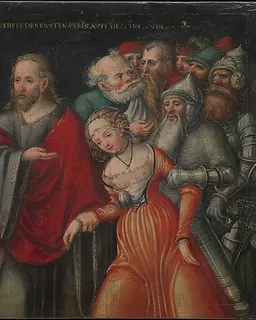
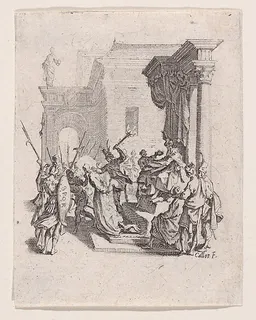
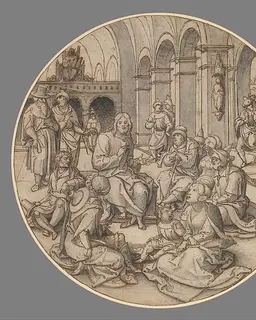
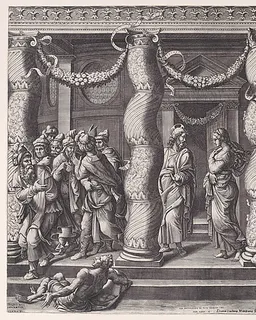
John 8 begins before dawn and ends with a near-stoning, and the whole long span is one rising answer to a single question the crowd keeps throwing at Jesus: Who art thou? (v. 25). It opens in the temple court at first light, with Jesus seated and teaching, when the scribes and Pharisees break in dragging a woman taken in adultery, in the very act (v. 4). They set her in the midst and quote the law: Moses in the law commanded us, that such should be stoned: but what sayest thou? The question is bait.
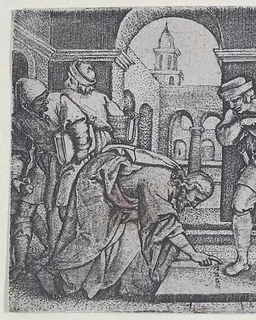
This they said, tempting him, that they might have to accuse him (v. 6). Jesus stoops and writes on the ground, then rises with a sentence that turns the trial back on the accusers: He that is without sin among you, let him first cast a stone at her (v. 7).1
Tap any highlighted phrase to jump to the commentary that unpacks it.
John 8:1-5Taken in the Very Act
1Jesus went unto the mount of Olives. 2And early in the morning he came again into the temple, and all the people came unto him; and he sat down, and taught them. 3And the scribes and Pharisees brought unto him a woman taken in adultery; and when they had set her in the midst, 4They say unto him, Master, this woman was taken in adultery, in the very act. 5Now Moses in the law commanded us, that such should be stoned: but what sayest thou?
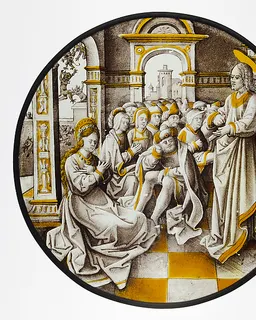
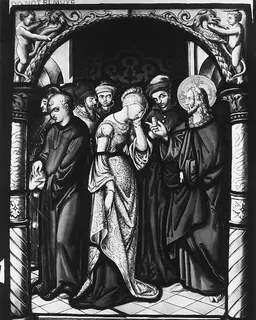
The scene is set with care. Jesus is in the temple court at first light, seated - the posture of a teacher - with the people gathered around Him, when the scribes and Pharisees break in dragging a woman taken in adultery, in the very act (v. 4). They set her in the midst, exposed before the whole crowd, and frame their question as a point of law: Moses in the law commanded us, that such should be stoned: but what sayest thou? (v. 5).
But the woman is not really their concern; she is a tool. John tells us plainly what they are after: This they said, tempting him, that they might have to accuse him (v. 6). The trap has two jaws. If Jesus says stone her, He contradicts the mercy He has been preaching and hands them a charge of cruelty - and possibly collides with Roman law, which reserved capital sentences to itself. If He says let her go, they can accuse Him of setting aside the law of Moses.
One revealing silence hangs over the whole proceeding: the law they cite required both guilty parties to be judged, yet the man is nowhere to be seen. The woman has been singled out, shamed, and weaponized. Her accusers care nothing for the righteousness they claim to defend.1
John 8:6-9He That Is Without Sin
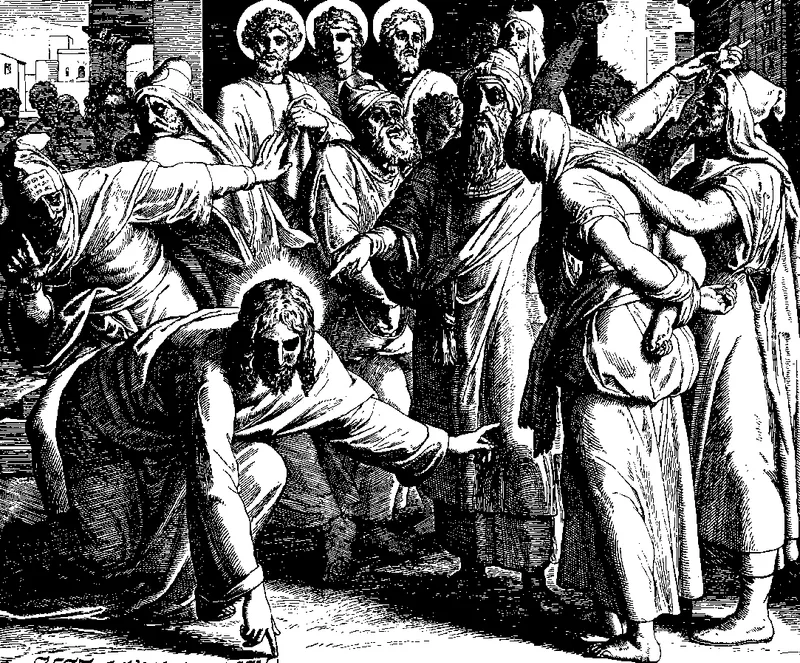
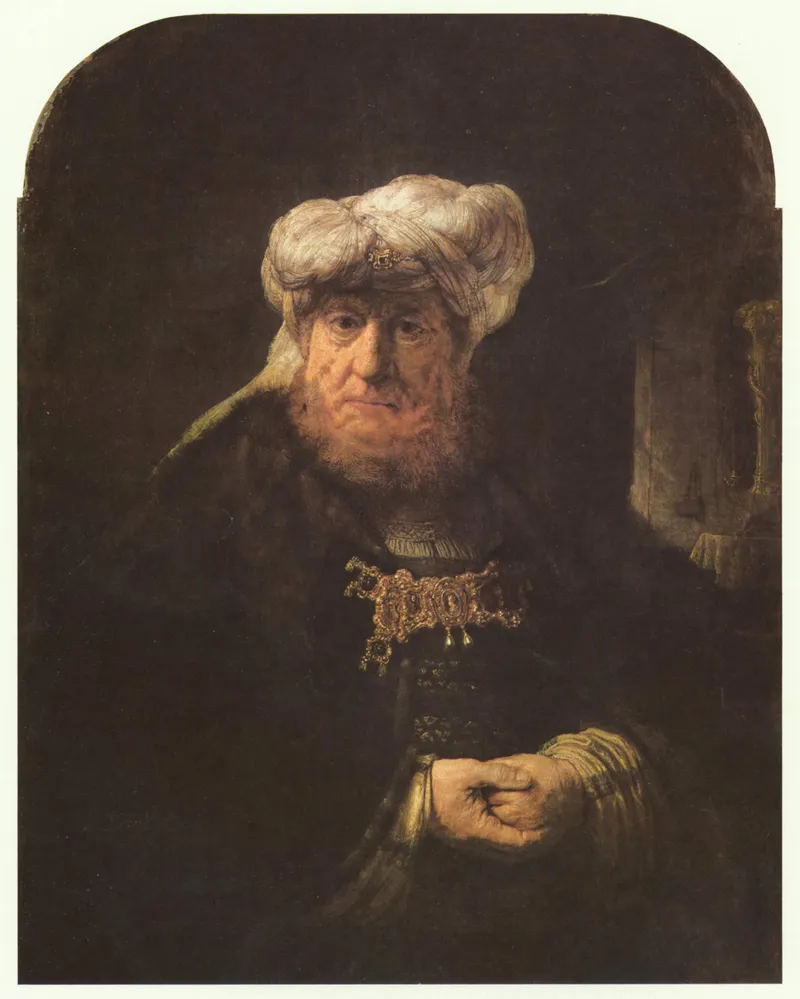
6This they said, tempting him, that they might have to accuse him. But Jesus stooped down, and with his finger wrote on the ground, as though he heard them not. 7So when they continued asking him, he lifted up himself, and said unto them, He that is without sin among you, let him first cast a stone at her. 8And again he stooped down, and wrote on the ground. 9And they which heard it, being convicted by their own conscience, went out one by one, beginning at the eldest, even unto the last: and Jesus was left alone, and the woman standing in the midst.
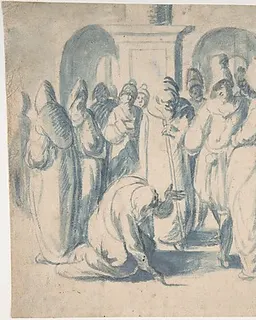
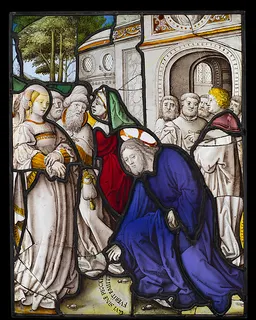
Jesus does not take the bait on its own terms. He stooped down, and with his finger wrote on the ground, as though he heard them not (v. 6). The Gospels record no other moment of Jesus writing, and they do not tell us what He wrote - the silence is part of the scene's weight, and centuries of readers have wondered. What matters is what the gesture does. He refuses to be hurried; He lets the demand hang while the accusers continued asking him (v. 7).
The unhurried stooping turns the pressure back, so that the people pressing the question begin to feel the strangeness of their own zeal. When at last He rises, He answers by handing the law back to them sharpened: He that is without sin among you, let him first cast a stone at her. The law of Moses did call for witnesses to cast the first stones - and Jesus accepts that, then adds one condition that no one in the circle can meet.
He does not say the sin is no sin. He says that the hand reaching for a stone had better be a clean one.2
The sentence lands like a key turning. He that is without sin among you, let him first cast a stone at her (v. 7) - and then He again… stooped down, and wrote on the ground (v. 8), refusing to stand over them and watch them squirm. What follows is one of the quietest, most devastating verses in the Gospels: they which heard it, being convicted by their own conscience, went out one by one, beginning at the eldest, even unto the last (v. 9).
The word does its work from the inside. Each man, asked silently whether his own hand is clean, knows the answer, and goes. There is a poignant detail in the order: the eldest leave first. It is not the young and reckless who feel their guilt most, but those who have lived longest and accumulated the most to remember; age has taught them how much they have to be forgiven. The crowd that came to condemn dissolves under a single honest question.
And when it is over, only two are left - the one person in the court actually without sin, and the one He has every right, by the law just cited, to judge.
John 8:10-11Neither Do I Condemn Thee
10When Jesus had lifted up himself, and saw none but the woman, he said unto her, Woman, where are those thine accusers? hath no man condemned thee? 11She said, No man, Lord. And Jesus said unto her, Neither do I condemn thee: go, and sin no more.
Now the only sinless one is the only one left who could throw a stone - and He does not. Woman, where are those thine accusers? hath no man condemned thee? She said, No man, Lord. And Jesus said unto her, Neither do I condemn thee: go, and sin no more (vv. 10-11). Everything hangs on holding both halves of that last sentence together. Neither do I condemn thee - the threat of death is lifted, the accusing voices are gone, she is not crushed.
But the very next breath is go, and sin no more - her life is not left where it was. He does not minimize what she has done or pretend it did not matter; sin is still the word He uses for it. Nor does He grind her into the ground for it. He releases her and calls her upward, in the same breath. Mercy here is not permission; it is a door opened into a changed life.
The world tends to offer one or the other - condemnation without hope, or acceptance without any summons to change. Jesus refuses the split. He gives her both grace and truth, and sends her out under the weight and the freedom of go, and sin no more.
John 8:12-16I Am the Light of the World
12Then spake Jesus again unto them, saying, I am the light of the world: he that followeth me shall not walk in darkness, but shall have the light of life. 13The Pharisees therefore said unto him, Thou bearest record of thyself; thy record is not true. 14Jesus answered and said unto them, Though I bear record of myself, yet my record is true: for I know whence I came, and whither I go; but ye cannot tell whence I come, and whither I go. 15Ye judge after the flesh; I judge no man. 16And yet if I judge, my judgment is true: for I am not alone, but I and the Father that sent me.
Jesus speaks again to the crowd, and what He says is staggering in its plainness: I am the light of the world: he that followeth me shall not walk in darkness, but shall have the light of life (v. 12). Notice the shape of the claim. He says I am the light - and not of a village or a nation but of the world. Light is what makes seeing possible; it reveals what is really there, shows the path, drives back the dark in which people stumble and lose their way.
To follow Him, He says, is to walk in that light and never again be left feeling in the dark about the deepest things. There may be an unspoken backdrop here: at the feast of Tabernacles great lamps were lit in the temple court, and in that very place Jesus says the lamps point to Him. The contrast He draws is absolute - light or darkness, sight or stumbling, the path lit or lost. And the gift He offers is the light of life: a light that is itself alive and life-giving, the radiance of the One in whom was life; and the life was the light of men (John 1:4).
The Pharisees fasten on a legal technicality: Thou bearest record of thyself; thy record is not true (v. 13). A man who testifies only about himself, they argue, cannot be trusted - a single witness proves nothing. Jesus answers on two levels at once. First, His self-witness is in fact reliable, because He alone knows His own origin and destiny: I know whence I came, and whither I go; but ye cannot tell whence I come, and whither I go (v. 14).
They are judging a man whose beginning and end they cannot even locate; He comes from the Father and returns to the Father, and that knowledge gives His testimony a ground theirs lacks. Ye judge after the flesh (v. 15) - by appearances, by surface, by what the eye can measure - and surface judgment is exactly what cannot reach Him. The irony is sharp: the men confident they can assess His credentials do not even know where He is from. The whole exchange circles the question that drives the chapter - who He is and where He comes from - and they are asking it from the outside, by the flesh, while the answer stands in front of them speaking.
John 8:17-20The Father That Sent Me
17It is also written in your law, that the testimony of two men is true. 18I am one that bear witness of myself, and the Father that sent me beareth witness of me. 19Then said they unto him, Where is thy Father? Jesus answered, Ye neither know me, nor my Father: if ye had known me, ye should have known my Father also. 20These words spake Jesus in the treasury, as he taught in the temple: and no man laid hands on him; for his hour was not yet come.
Then Jesus meets the legal objection on its own ground. Their law required two witnesses to establish a matter: the testimony of two men is true (v. 17). Very well, He says - there are two: I am one that bear witness of myself, and the Father that sent me beareth witness of me (v. 18). The Son testifies, and the Father testifies with Him; the case rests on two voices that agree. This is why His judgment, when He renders it, is sound: I am not alone, but I and the Father that sent me (v. 16).
The Pharisees, missing it entirely, ask Where is thy Father? (v. 19) - as though demanding the second witness be produced in the dock. Jesus' reply exposes how deep their blindness runs: Ye neither know me, nor my Father: if ye had known me, ye should have known my Father also. To know the Son is to know the Father; to be ignorant of the one is to be ignorant of the other. The two are so bound together that you cannot have the Father while refusing the Son.
And John adds the quiet, ominous note that frames the whole hostile scene: all this was said openly in the treasury, as he taught in the temple: and no man laid hands on him; for his hour was not yet come (v. 20). The danger is already in the air; the timing is not theirs to set.
John 8:21-25I Am From Above
21Then said Jesus again unto them, I go my way, and ye shall seek me, and shall die in your sins: whither I go, ye cannot come. 22Then said the Jews, Will he kill himself? because he saith, Whither I go, ye cannot come. 23And he said unto them, Ye are from beneath; I am from above: ye are of this world; I am not of this world. 24I said therefore unto you, that ye shall die in your sins: for if ye believe not that I am he, ye shall die in your sins. 25Then said they unto him, Who art thou? And Jesus saith unto them, Even the same that I said unto you from the beginning.
The tone darkens. I go my way, and ye shall seek me, and shall die in your sins: whither I go, ye cannot come (v. 21). This is among the most sobering sentences Jesus speaks. There is a seeking that comes too late - a looking for Him after the door has shut, when the chance offered is no longer in hand. To die in your sins is to die still carrying the very thing He came to take away, unforgiven and unfree, because the One who could have lifted it was refused.
His hearers, as so often in this Gospel, hear the words on the flattest possible level: Will he kill himself? (v. 22), they ask, supposing He means some place suicides go where they cannot follow. They cannot rise above the surface, and that inability is itself the warning - the same flesh-bound judgment that could not tell whence He came now cannot tell whither He goes. Yet even in the severity there is mercy, for He says it as a warning, not a verdict.
He tells them they will die in their sins precisely so that they need not - the door is still open while He is still speaking.
Jesus names the gulf between Himself and them in the plainest terms: Ye are from beneath; I am from above: ye are of this world; I am not of this world (v. 23). The contrast is about origin and belonging. They are from beneath - bound to this world, measuring everything by it, unable to see past it. He is from above - come from the Father, not produced by this world or owned by it. This is why they keep missing Him: they are trying to fit a heavenly reality into earthly categories, and it will not go.
And on this turns the most pointed line yet: if ye believe not that I am he, ye shall die in your sins (v. 24). Everything hangs on believing that I am he. Believing who He is. The phrase He uses, I am he, will return at the chapter's climax in even barer form, and it carries an echo the careful listener begins to catch. The line between life and death is drawn precisely here: at the recognition, or the refusal, of His identity.2
John 8:26-30Lifted Up the Son of Man
26I have many things to say and to judge of you: but he that sent me is true; and I speak to the world those things which I have heard of him. 27They understood not that he spake to them of the Father. 28Then said Jesus unto them, When ye have lifted up the Son of man, then shall ye know that I am he, and that I do nothing of myself; but as my Father hath taught me, I speak these things. 29And he that sent me is with me: the Father hath not left me alone; for I do always those things that please him. 30As he spake these words, many believed on him.
Worn down, they finally ask the question the whole chapter has been pressing: Who art thou? (v. 25). It is the right question, asked in exasperation. Jesus answers that He has been telling them all along and that the proof is still to come: When ye have lifted up the Son of man, then shall ye know that I am he (v. 28). The phrase lifted up is one this Gospel uses with deliberate double meaning - lifted up on a cross, and lifted up in being exalted; the very act by which He is killed is the act by which He is shown to be who He says.
So the answer to Who art thou? will be written, in the end, on the cross. There the world will see the Son of man raised, doing nothing of myself but only what my Father hath taught me, never abandoned - he that sent me is with me: the Father hath not left me alone; for I do always those things that please him (v. 29). And remarkably, even in this hard exchange, the seed lands: As he spake these words, many believed on him (v. 30).
The same words that hardened some softened others. The light that exposes is also the light that draws.
John 8:31-33Ye Shall Know the Truth
31Then said Jesus to those Jews which believed on him, If ye continue in my word, then are ye my disciples indeed; 32And ye shall know the truth, and the truth shall make you free. 33They answered him, We be Abraham’s seed, and were never in bondage to any man: how sayest thou, Ye shall be made free?
Jesus turns to the ones who have just begun to believe and tells them what believing must become: If ye continue in my word, then are ye my disciples indeed; and ye shall know the truth, and the truth shall make you free (vv. 31-32). The key word is continue. A first flush of faith is a beginning; the real disciple is the one who abides in His word, who keeps living inside His teaching.
And the promise attached is enormous: such people will know the truth, and that truth will make them free. Truth, in this Gospel, is reality as God knows it, and finally it is a Person - Jesus will soon say I am… the truth (John 14:6). To know the truth is to know Him; and to know Him is to be set free. Free from what? The crowd assumes He means political bondage and bristles - but Jesus has a deeper captivity in view, one that grand pedigree cannot touch.
The freedom He offers reaches the captivity every human being carries, ancestry or no.2
John 8:34-36Free Indeed
34Jesus answered them, Verily, verily, I say unto you, Whosoever committeth sin is the servant of sin. 35And the servant abideth not in the house for ever: but the Son abideth ever. 36If the Son therefore shall make you free, ye shall be free indeed.
The hearers are offended at the very idea that they are not already free: We be Abraham's seed, and were never in bondage to any man: how sayest thou, Ye shall be made free? (v. 33). It is a strange boast - this is the nation that had been slaves in Egypt and captives in Babylon - but they are speaking of an inner sense of dignity, of belonging to the chosen line, and they assume that settles the matter.
Jesus exposes a slavery they have not reckoned with: Verily, verily, I say unto you, Whosoever committeth sin is the servant of sin (v. 34). The word rendered servant is the word for a slave, one owned and not free to leave. This is the bondage no bloodline can break. Sin is a master that holds its servants, and habitual sin is the chain. Then He sets two figures side by side: the servant abideth not in the house for ever: but the Son abideth ever (v. 35).
A slave has no permanent place in the household and can be sent away; the Son belongs there always - and only the Son has the standing to bring a slave permanently in. The freedom they need can only be given, and only by One with the authority to give it.
John 8:37-40If Ye Were Abraham's Children
37I know that ye are Abraham’s seed; but ye seek to kill me, because my word hath no place in you. 38I speak that which I have seen with my Father: and ye do that which ye have seen with your father. 39They answered and said unto him, Abraham is our father. Jesus saith unto them, If ye were Abraham’s children, ye would do the works of Abraham. 40But now ye seek to kill me, a man that hath told you the truth, which I have heard of God: this did not Abraham.
John 8:41-44Of Your Father the Devil
41Ye do the deeds of your father. Then said they to him, We be not born of fornication; we have one Father, even God. 42Jesus said unto them, If God were your Father, ye would love me: for I proceeded forth and came from God; neither came I of myself, but he sent me. 43Why do ye not understand my speech? even because ye cannot hear my word. 44Ye are of your father the devil, and the lusts of your father ye will do. He was a murderer from the beginning, and abode not in the truth, because there is no truth in him. When he speaketh a lie, he speaketh of his own: for he is a liar, and the father of it.
Now the dispute over fatherhood breaks fully open. They claim Abraham; Jesus grants the bloodline and denies the likeness: I know that ye are Abraham's seed; but ye seek to kill me… If ye were Abraham's children, ye would do the works of Abraham (vv. 37, 39). Descent and resemblance are not the same thing. A true child of Abraham would act like Abraham - would welcome the word of God, not plot the death of the man who speaks it.
Their murderous intent gives them away: this did not Abraham (v. 40). When they shift their claim higher - we have one Father, even God (v. 41) - Jesus answers with the same test of likeness: If God were your Father, ye would love me: for I proceeded forth and came from God (v. 42). You can tell whose child a person truly is by whom they resemble and whom they love; and their refusal to love the One sent from God reveals a different paternity.
Hence the hardest words in the chapter: Ye are of your father the devil… He was a murderer from the beginning, and abode not in the truth… he is a liar, and the father of it (v. 44). This is not a slur on a people; it is a statement about origin and allegiance. Murder and lying - the very things being aimed at Jesus - are the family traits of the one whose lineage is traced by what one loves and does.
John 8:45-47Hear God's Words
45And because I tell you the truth, ye believe me not. 46Which of you convinceth me of sin? And if I say the truth, why do ye not believe me? 47He that is of God heareth God’s words: ye therefore hear them not, because ye are not of God.
The section closes with a question that strips the argument to its root: Which of you convinceth me of sin? And if I say the truth, why do ye not believe me? (v. 46). It is a question no one else who ever lived could stand to ask. He throws His whole life open - can anyone here name a single sin in it? - and the silence is its own answer. So the problem cannot be in Him or in His message; it can only be in them.
And because I tell you the truth, ye believe me not (v. 45) - a terrible inversion, where truth itself becomes the reason for unbelief. Jesus names the cause plainly: He that is of God heareth God's words: ye therefore hear them not, because ye are not of God (v. 47). The ability to hear and receive God's word is bound up with belonging to God; those who are His recognize His voice, and those who turn from it show where they belong.
This circles back to where the section began: only those who continue in his word come to know the truth and are made free. To refuse the word is to stay in the dark, and in the bondage, by choice.
John 8:48-51He Shall Never See Death
48Then answered the Jews, and said unto him, Say we not well that thou art a Samaritan, and hast a devil? 49Jesus answered, I have not a devil; but I honour my Father, and ye do dishonour me. 50And I seek not mine own glory: there is one that seeketh and judgeth. 51Verily, verily, I say unto you, If a man keep my saying, he shall never see death.
Out of arguments, the crowd turns to insult: Say we not well that thou art a Samaritan, and hast a devil? (v. 48). To call Him a Samaritan was to deny He was a true son of the covenant at all; to say He hath a devil was to credit His words to an unclean spirit. Jesus does not return the insult. I have not a devil; but I honour my Father, and ye do dishonour me (v. 49).
Where they impugn His honour, He points away from Himself entirely: I seek not mine own glory: there is one that seeketh and judgeth (v. 50). This is a thread running through the whole chapter - He does nothing of himself, seeks not His own glory, leaves the judgment to the Father. The irony is bitter: the men accusing Him of being demon-possessed are the ones acting out the works of their father… a murderer from the beginning, while the One they slander is honouring His Father with every word.
And He will not be drawn down to their level. He answers the slander with a promise so large it stops them cold.
John 8:52-55Whom Makest Thou Thyself?
52Then said the Jews unto him, Now we know that thou hast a devil. Abraham is dead, and the prophets; and thou sayest, If a man keep my saying, he shall never taste of death. 53Art thou greater than our father Abraham, which is dead? and the prophets are dead: whom makest thou thyself? 54Jesus answered, If I honour myself, my honour is nothing: it is my Father that honoureth me; of whom ye say, that he is your God: 55Yet ye have not known him; but I know him: and if I should say, I know him not, I shall be a liar like unto you: but I know him, and keep his saying.
The promise is this: Verily, verily, I say unto you, If a man keep my saying, he shall never see death (v. 51). It is breathtaking, and the crowd seizes on it as final proof of madness: Now we know that thou hast a devil. Abraham is dead, and the prophets… whom makest thou thyself? (vv. 52-53). Their objection is reasonable on its face - the greatest men who ever lived all died; who is this to promise that His followers will not?
But they have mistaken His meaning, hearing only the death of the body. Jesus is speaking of a death deeper than the grave, the death that truly ends a person, the second death from which His word delivers. The one who keeps His saying may close his eyes in the grave like Abraham, yet shall never see death in the final sense, because death has lost its power over him. This is the same promise the whole Gospel makes - he that liveth and believeth in me shall never die (John 11:26).
And their own question, flung in scorn, is exactly the right one: whom makest thou thyself? Who do you claim to be, to say such a thing? In a moment, He will tell them.
John 8:56-59Before Abraham Was, I Am
56Your father Abraham rejoiced to see my day: and he saw it, and was glad. 57Then said the Jews unto him, Thou art not yet fifty years old, and hast thou seen Abraham? 58Jesus said unto them, Verily, verily, I say unto you, Before Abraham was, I am. 59Then took they up stones to cast at him: but Jesus hid himself, and went out of the temple, going through the midst of them, and so passed by.
Jesus presses past the insult to a claim about Abraham himself that lands like a thunderclap: Your father Abraham rejoiced to see my day: and he saw it, and was glad (v. 56). Abraham - dead two thousand years - somehow saw the day of Jesus and rejoiced over it. The patriarch they invoke as their father was, Jesus says, looking forward with gladness to Him. Across the centuries Abraham had glimpsed the coming of the One in whom all families of the earth would be blessed (Gen. 12:3), and the sight made him glad.
The crowd hears it on the flattest level and scoffs at the arithmetic: Thou art not yet fifty years old, and hast thou seen Abraham? (v. 57). They suppose He means the two of them met. But Jesus has not said He saw Abraham; He has said Abraham saw His day - and now He will say the thing that explains how a man long dead could have seen the day of one standing before them not yet fifty.
The answer is that the One before them is not bounded by those fifty years at all. He reaches back before Abraham was ever born.
Then comes the sentence the whole chapter has been climbing toward, set apart by the solemn verily, verily: Before Abraham was, I am (v. 58). Hear the exact grammar, because everything is in it. He does not say before Abraham was, I was - which would already be an astonishing claim to pre-existence. He says I am. Abraham was - he came to be, he had a beginning, he lived and died. Jesus simply is - present tense, with no beginning, the One who already is before anything else came to be.
And the words He chooses are the very words God spoke to Moses at the burning bush: I AM THAT I AM… I AM hath sent me unto you (Exod. 3:14)3. He takes the divine name - the name of the God who simply is, eternal and self-existent - and lays it upon Himself, in the temple, in the hearing of all. There is no mistaking what He has done, and His hearers do not mistake it: Then took they up stones to cast at him (v. 59).
They reach for stones because, in their ears, He has just spoken the name of God over Himself - in their judgment, blasphemy, a thing the law punished by stoning. Whatever else one says about this verse, the reaction settles what the crowd understood Him to claim. He let the words stand exactly as the gravest claim a man could make. And then, His hour not yet come, Jesus hid himself, and went out of the temple, going through the midst of them, and so passed by - the stones never thrown, the cross still ahead, in its appointed time and not theirs.2
Research trail
Sources & further study
These references support the historical, linguistic, manuscript, and contextual notes in this chapter. Scripture remains the primary text; external sources are provided so readers can inspect the research directly.
- John 8 - Translators' NotesThe NET Bible's detailed footnotes on John 8 - the setting of the scene the traditional text places at verses 1-11, the force of the present-tense I am against the past-tense was of Abraham in verse 58, and the meaning of bondage and freedom in verses 33-36.
- John 8 · Greek interlinearThe Greek text of John 8 word by word, with parsing and lexical links - useful for the repeated egō eimi (“I am,” vv. 12, 24, 28, 58), for alētheia (“truth,” vv. 32, 40, 44-46), and for ontōs eleutheroi (“free indeed,” v. 36).
- John 8 ↔ Exodus 3 · John 1 · Romans 6Traces the threads tying John 8 to the rest of Scripture - the I am of verse 58 read beside I AM THAT I AM (Exod. 3:14), the light of the world of verse 12 beside the light that shines in darkness (John 1:4-9), and the freedom of verses 32-36 beside being freed from the servitude of sin (Rom. 6:17-18).
Where this echoes in Scripture
Neither Do I Condemn Thee
- John 1:14, 17the Word was made flesh... full of grace and truth... grace and truth came by Jesus Christ.The two words held together in verse 11 - grace and truth, named at the Gospel's opening as what Jesus brings.
- Romans 2:1thou art inexcusable, O man, whosoever thou art that judgest: for wherein thou judgest another, thou condemnest thyself.The conscience that emptied the circle in verse 9 - the judge who condemns himself in judging another.
- Romans 8:1There is therefore now no condemnation to them which are in Christ Jesus.The word of verse 11 made permanent - no condemnation for those who are His.
- John 3:17God sent not his Son into the world to condemn the world; but that the world through him might be saved.The reason He does not condemn her (v. 11) - He came to save.
- Psalm 130:3-4If thou, LORD, shouldest mark iniquities, O Lord, who shall stand? But there is forgiveness with thee.The question behind the empty circle (v. 9) - if sin were counted, no accuser could stand either.
The Father That Sent Me
- John 1:4-9In him was life; and the life was the light of men. And the light shineth in darkness... That was the true Light.The light of verse 12 named at the Gospel's opening - the life that is the light of men, shining in the dark.
- John 9:5As long as I am in the world, I am the light of the world.The same claim repeated (v. 12) - spoken just before He opens the eyes of a man born blind.
- Isaiah 9:2The people that walked in darkness have seen a great light.The hope behind verse 12 - a great light promised to those walking in darkness.
- Isaiah 49:6I will also give thee for a light to the Gentiles, that thou mayest be my salvation unto the end of the earth.The servant given as a light to the world (v. 12) - salvation reaching to the ends of the earth.
- Revelation 21:23the city had no need of the sun... for the glory of God did lighten it, and the Lamb is the light thereof.Where the light of verse 12 leads - the city whose lamp is the Lamb.
Lifted Up the Son of Man
- Exodus 3:14And God said unto Moses, I AM THAT I AM... thus shalt thou say unto the children of Israel, I AM hath sent me unto you.The name behind the repeated “I am he” (vv. 24, 28) - the name God spoke to Moses at the bush.
- Isaiah 43:10that ye may know and believe me... I am he: before me there was no God formed, neither shall there be after me.The LORD's own “I am he,” with belief as the issue - echoed in verse 24.
- John 3:14-15as Moses lifted up the serpent in the wilderness, even so must the Son of man be lifted up.The “lifting up” of verse 28 - the cross as the place all who believe are healed.
- John 12:32And I, if I be lifted up from the earth, will draw all men unto me.The same word as verse 28 - the lifting up that draws, explained by John as His death.
- John 3:36He that believeth on the Son hath everlasting life: and he that believeth not the Son shall not see life.The two ends of verse 24 - life by believing, and not seeing life by refusing.
Hear God's Words
- John 14:6I am the way, the truth, and the life: no man cometh unto the Father, but by me.The truth that frees, named in person (v. 32) - the truth that is Himself.
- Romans 6:17-18ye were the servants of sin... Being then made free from sin, ye became the servants of righteousness.The bondage of verse 34 and the freedom of verse 36 - freed from sin to serve righteousness.
- Romans 8:2the law of the Spirit of life in Christ Jesus hath made me free from the law of sin and death.The freedom the Son gives (v. 36) - release from the law of sin and death.
- 2 Corinthians 3:17where the Spirit of the Lord is, there is liberty.The same liberty as verses 32-36 - freedom found where the Lord's Spirit is.
- 1 John 3:8-10He that committeth sin is of the devil... In this the children of God are manifest, and the children of the devil.The two paternities of verses 41-44 - children of God and of the devil told apart by what they do.
Before Abraham Was, I Am
- Exodus 3:14And God said unto Moses, I AM THAT I AM... I AM hath sent me unto you.The divine name Jesus takes upon Himself in verse 58 - the name of the God who simply is.
- John 1:1, 14In the beginning was the Word... and the Word was God... And the Word was made flesh, and dwelt among us.What verse 58 says with His own mouth - the Word who was God, before all things, now in the flesh.
- Isaiah 44:6I am the first, and I am the last; and beside me there is no God.The LORD's self-naming behind the “I am” of verse 58 - the first and the last.
- Genesis 12:3in thee shall all families of the earth be blessed.The promise Abraham rejoiced to see (v. 56) - the blessing of all nations, fulfilled in Christ.
- John 11:25-26I am the resurrection, and the life... whosoever liveth and believeth in me shall never die.The promise of verse 51 in fuller form - the one who believes shall never truly die.