John 7
People in this chapter
After the bread of life had emptied the crowds in Galilee, the Feast of Tabernacles draws near and the scene shifts to Jerusalem. The chapter opens with friction inside Jesus' own family: His brethren therefore said unto him, Depart hence, and go into Judaea… If thou do these things, shew thyself to the world (vv. 3-4). It is a dare dressed as advice - and John adds the quiet, sad note that explains it: For neither did his brethren believe in him (v. 5).
Jesus answers that His time is not yet come, and then goes up to the feast not openly, but as it were in secret (v. 10). The festival city is already buzzing about Him: some said, He is a good man: others said, Nay; but he deceiveth the people (v. 12) - yet no one speaks of Him openly, for fear.1
Tap any highlighted phrase to jump to the commentary that unpacks it.
John 7:1-13As It Were in Secret
1After these things Jesus walked in Galilee: for he would not walk in Jewry, because the Jews sought to kill him. 2Now the Jews’ feast of tabernacles was at hand. 3His brethren therefore said unto him, Depart hence, and go into Judaea, that thy disciples also may see the works that thou doest. 4For there is no man that doeth any thing in secret, and he himself seeketh to be known openly. If thou do these things, shew thyself to the world. 5For neither did his brethren believe in him. 6Then Jesus said unto them, My time is not yet come: but your time is alway ready. 7The world cannot hate you; but me it hateth, because I testify of it, that the works thereof are evil. 8Go ye up unto this feast: I go not up yet unto this feast: for my time is not yet full come. 9When he had said these words unto them, he abode still in Galilee.
The chapter opens under threat - he would not walk in Jewry, because the Jews sought to kill him (v. 1) - and into that danger His own family pushes Him toward the spotlight. Depart hence, and go into Judaea… If thou do these things, shew thyself to the world (vv. 3-4). On the surface it sounds like sensible career advice: a man with a following should go where the crowds are and make His name.
But John strips the advice of its disguise with a single, devastating line: For neither did his brethren believe in him (v. 5). Those closest to Him by blood were not yet His by faith. There is real comfort hidden here for anyone whose nearest relations do not believe - the Lord Himself walked that road. And there is a warning, too: physical nearness to Jesus is not the same as trust in Him. His brethren could share His table and His name and still stand outside His kingdom, urging Him to do the very thing He had refused the crowds and the devil alike - to turn His glory into a public performance.1
Jesus answers with a word that governs all four Gospels of John: My time is not yet come: but your time is alway ready (v. 6). Throughout this Gospel He moves by an appointed hour, not by the demands of the crowd or the impatience of His kin; again and again men try to seize Him, because his hour was not yet come (v. 30). His brethren can come and go as they please - your time is alway ready - because nothing hangs on their movements.
Everything hangs on His. And He names the deeper reason the world will not simply welcome a public display: me it hateth, because I testify of it, that the works thereof are evil (v. 7). The world had no quarrel with His brethren; it has a quarrel with Him precisely because His light exposes the dark. To show Himself to the world on the world's terms, as a spectacle, would not win the world - it would only hasten its rage.
So He sends them up and stays behind: I go not up yet unto this feast: for my time is not yet full come (v. 8).
10But when his brethren were gone up, then went he also up unto the feast, not openly, but as it were in secret. 11Then the Jews sought him at the feast, and said, Where is he? 12And there was much murmuring among the people concerning him: for some said, He is a good man: others said, Nay; but he deceiveth the people. 13Howbeit no man spake openly of him for fear of the Jews.
He does go up - in His own time and in His own way: not openly, but as it were in secret (v. 10). This is not contradiction but timing; He refuses the grand public arrival His brethren demanded, and slips into the city quietly so that the day and the manner of His unveiling remain His to choose. Meanwhile the feast hums with His name. The Jews sought him… Where is he? (v. 11), and beneath the surface runs much murmuring among the people (v. 12).
The crowd has already split into the two camps the whole chapter will trace: some said, He is a good man: others said, Nay; but he deceiveth the people. Notice that neither verdict is neutral - you cannot file Jesus under “harmless.” He is either the good man God sent or a deceiver leading the nation astray, and the crowd feels the size of the question. Yet fear keeps the debate underground: no man spake openly of him for fear of the Jews (v. 13).
The murmuring in corners, the question no one dares ask aloud - this is a city that knows something enormous is among them and is afraid to say it.
John 7:14-24My Doctrine Is Not Mine, But His That Sent Me
14Now about the midst of the feast Jesus went up into the temple, and taught. 15And the Jews marvelled, saying, How knoweth this man letters, having never learned? 16Jesus answered them, and said, My doctrine is not mine, but his that sent me. 17If any man will do his will, he shall know of the doctrine, whether it be of God, or whether I speak of myself. 18He that speaketh of himself seeketh his own glory: but he that seeketh his glory that sent him, the same is true, and no unrighteousness is in him.
When the feast is half over He steps from secrecy into the most public place in Israel - Jesus went up into the temple, and taught (v. 14) - and the learned are immediately thrown: How knoweth this man letters, having never learned? (v. 15). The objection is about credentials. In their world authority came through the recognized schools, by sitting at the feet of a named rabbi and receiving a chain of tradition; a teacher's weight rested on whose disciple he had been.
Jesus had passed through none of it, and yet He handled the Scriptures with a mastery that exposed the experts. So they cannot dismiss the teaching as ignorant - it is plainly not - and they cannot place it, because it arrived without their stamp of approval. The very thing that unsettles them ought to have been a clue: here was depth that no human academy could account for. They were looking for a paper trail; the answer was that the words came from somewhere higher than any school.2
His reply to the credential question reframes the whole nature of His teaching: My doctrine is not mine, but his that sent me (v. 16). He does not claim to have surpassed the rabbis at their own game; He claims to be delivering a message that originates with the One who sent Him. Then He gives the key that unlocks it - and it is not the key the scholars expected: If any man will do his will, he shall know of the doctrine, whether it be of God, or whether I speak of myself (v. 17).
The path to knowing whether His teaching is divine is to be willing to do God's will, and in that willingness understanding opens. Obedience is the doorway to certainty. The honest heart that genuinely wants God's will, and leans toward it, comes to recognize the voice of God when it hears it. And He supplies a test anyone can apply: He that speaketh of himself seeketh his own glory: but he that seeketh his glory that sent him, the same is true (v. 18).
Self-appointed teachers angle for their own reputation; the true messenger spends himself on the honor of the One who sent him. By that measure Jesus stands clear - everything He does points away from Himself to the Father.
19Did not Moses give you the law, and yet none of you keepeth the law? Why go ye about to kill me? 20The people answered and said, Thou hast a devil: who goeth about to kill thee? 21Jesus answered and said unto them, I have done one work, and ye all marvel. 22Moses therefore gave unto you circumcision; (not because it is of Moses, but of the fathers;) and ye on the sabbath day circumcise a man. 23If a man on the sabbath day receive circumcision, that the law of Moses should not be broken; are ye angry at me, because I have made a man every whit whole on the sabbath day? 24Judge not according to the appearance, but judge righteous judgment.
Now He presses the point home with the very Law they boast in: Did not Moses give you the law, and yet none of you keepeth the law? Why go ye about to kill me? (v. 19). They prize the Law of Moses; they are plotting to break its plainest command against murder - on the One who kept it perfectly. The crowd recoils, Thou hast a devil (v. 20), but Jesus reasons with them anyway, reaching back to one work that still rankled: a man healed on the sabbath (the lame man of John 5).
His argument is patient and exact. The Law itself commands circumcision on the eighth day, and if that day falls on the sabbath, they perform it without scruple, mending one part of a man so that the law of Moses should not be broken (v. 23). How then can they be furious that He made a man every whit whole on the sabbath day? If a sign of the covenant cut into one member is lawful on the sabbath, how much more the healing of a whole man.
The closing sentence is the lesson behind every dispute in the chapter: Judge not according to the appearance, but judge righteous judgment (v. 24). They were judging by surfaces - His lack of a diploma, the day of the week - and missing the substance. He asks them to look past the appearance to the truth of what stands before them.
John 7:25-36The Officers Sent to Take Him
25Then said some of them of Jerusalem, Is not this he, whom they seek to kill? 26But, lo, he speaketh boldly, and they say nothing unto him. Do the rulers know indeed that this is the very Christ? 27Howbeit we know this man whence he is: but when Christ cometh, no man knoweth whence he is. 28Then cried Jesus in the temple as he taught, saying, Ye both know me, and ye know whence I am: and I am not come of myself, but he that sent me is true, whom ye know not. 29But I know him: for I am from him, and he hath sent me. 30Then they sought to take him: but no man laid hands on him, because his hour was not yet come. 31And many of the people believed on him, and said, When Christ cometh, will he do more miracles than these which this man hath done?
The people of Jerusalem turn the question over in public now. They know He is the hunted man - Is not this he, whom they seek to kill? (v. 25) - and they cannot square His bold open teaching with the rulers' strange silence: Do the rulers know indeed that this is the very Christ? (v. 26). For a moment they brush against the truth. But they talk themselves out of it with a popular theory: we know this man whence he is: but when Christ cometh, no man knoweth whence he is (v. 27).
They think they have Jesus filed - the carpenter's son from Nazareth, origins known - and a folk belief that the Messiah would appear mysteriously, from nowhere, lets them rule Him out. It is a recurring tragedy in this chapter: people defeat themselves with their own certainties. They are so sure they know where He is from that they miss where He is really from. Jesus answers their assumption with a cry that pulls the rug from under it: Ye both know me, and ye know whence I am - yes, you know my town - and I am not come of myself, but he that sent me is true, whom ye know not (v. 28).
They know the village; they do not know the Sender. Their whole confidence rested on knowing the surface while being blind to the source.
His words sharpen into a claim no one could miss: But I know him: for I am from him, and he hath sent me (v. 29). He does not merely teach about God at second hand; He comes from God and knows Him directly. That is more than the crowd will bear, and the reflex is violence: Then they sought to take him (v. 30). But here John drops in the quiet refrain that governs the whole Gospel: but no man laid hands on him, because his hour was not yet come. Not their restraint, not His escape - an appointed hour, fixed by the Father, that no human hand could move ahead of schedule.
He is never the victim of circumstance; He walks through a murderous crowd untouched because the time is not yet. And in the very same breath, faith is breaking out: many of the people believed on him (v. 31). They reason from the evidence in front of them - When Christ cometh, will he do more miracles than these which this man hath done? The same signs that hardened some softened others. The works were plain; what divided the crowd was not the evidence but the heart that weighed it.
32The Pharisees heard that the people murmured such things concerning him; and the Pharisees and the chief priests sent officers to take him. 33Then said Jesus unto them, Yet a little while am I with you, and then I go unto him that sent me. 34Ye shall seek me, and shall not find me: and where I am, thither ye cannot come. 35Then said the Jews among themselves, Whither will he go, that we shall not find him? will he go unto the dispersed among the Gentiles, and teach the Gentiles? 36What manner of saying is this that he said, Ye shall seek me, and shall not find me: and where I am, thither ye cannot come?
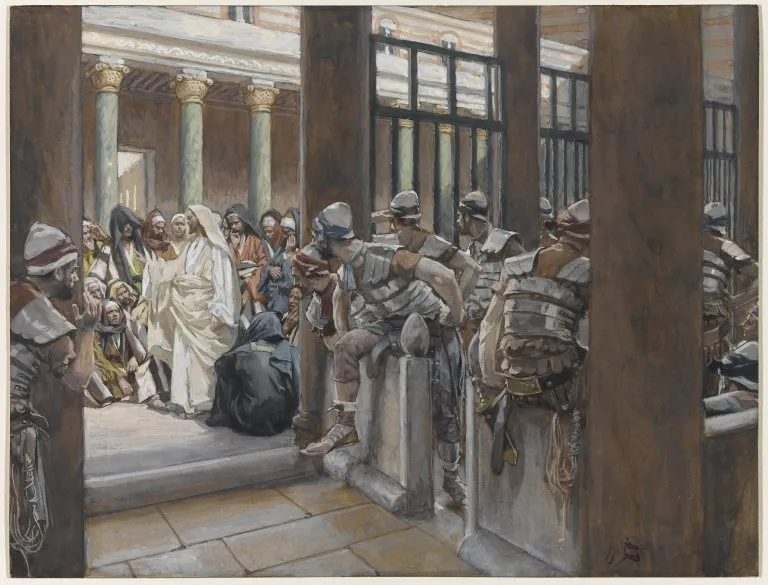
The leaders move from murmuring to machinery: the Pharisees and the chief priests sent officers to take him (v. 32). Against the threat of arrest Jesus does not flinch; He answers with a riddle that is also a warning: Yet a little while am I with you, and then I go unto him that sent me. Ye shall seek me, and shall not find me: and where I am, thither ye cannot come (vv. 33-34).
The window for finding Him is not endless. He is going back to the Father, and a day is coming when those who would not receive Him will seek and not find - not because God is unwilling, but because they refused the One they had while they had Him. There is a solemn urgency in it: opportunity has a season. The leaders, true to the pattern of the chapter, hear only on the flat literal surface: Whither will he go… will he go unto the dispersed among the Gentiles? (v. 35).
They guess He means a journey to the scattered Jews abroad - and, all unknowing, brush against a truth larger than they intend, for the gospel would indeed go out to the nations. But they cannot grasp the real meaning, because where I am, thither ye cannot come speaks of the Father's presence, and the way there is the very One they are trying to seize. They debate His travel plans and miss that He is telling them how to be saved.
John 7:37-39If Any Man Thirst, Let Him Come Unto Me
37In the last day, that great day of the feast, Jesus stood and cried, saying, If any man thirst, let him come unto me, and drink. 38He that believeth on me, as the scripture hath said, out of his belly shall flow rivers of living water. 39(But this spake he of the Spirit, which they that believe on him should receive: for the Holy Ghost was not yet given; because that Jesus was not yet glorified.)
Everything in the chapter has been building to this. The Feast of Tabernacles carried a daily ceremony in which a priest drew water from the pool of Siloam in a golden pitcher and poured it out beside the altar, while the people sang the prophet's words, with joy shall ye draw water out of the wells of salvation (Isa. 12:3). It was a remembrance of the water God gave from the rock in the desert and a prayer for the rains that life depended on.
In the last day, that great day of the feast (v. 37) - with that imagery fresh in every mind - Jesus does something startling. He stood and cried: not the seated, measured voice of a rabbi, but a public shout that everyone could hear. And He puts Himself in the place the ceremony pointed toward: If any man thirst, let him come unto me, and drink. All this water poured out, all this longing remembered - the real well is standing in the temple court, and He is calling the thirsty to come to Him.1
Notice the width of the invitation: if any man. Not the qualified, not the religious, not the deserving - any man who thirsts. The only requirement is the thirst itself, the honest awareness of need. He does not call the satisfied, the self-sufficient, or those who imagine they lack nothing; He calls the parched, and He bids them come and drink. Then He says what such drinking does: He that believeth on me, as the scripture hath said, out of his belly shall flow rivers of living water (v. 38).
The blessing does not stop at the one who drinks. What is received as a draught for one's own thirst becomes rivers - flowing, plural, moving outward - pouring through the believer to others. This is the abundance Scripture had promised, water in the desert, streams in the wilderness, a spring that does not fail. To come to Christ thirsty is not merely to be filled; it is to become a channel through which life runs to a thirsty world.
We are not left to guess what the “living water” means, because John pauses the narrative to tell us plainly: But this spake he of the Spirit, which they that believe on him should receive: for the Holy Ghost was not yet given; because that Jesus was not yet glorified (v. 39). It is one of the rare moments when the Gospel writer steps in to interpret his own account, and it settles the image past dispute.
The water that flows from the believer is the Holy Spirit, given to all who believe on Jesus. John also marks the timing with care: the Spirit was not yet given in this fuller, indwelling sense - because that Jesus was not yet glorified. The gift waited on the work. Only after the cross, the rising, and the return to the Father would the promised Spirit be poured out, as Jesus would later tell the disciples: It is expedient for you that I go away: for if I go not away, the Comforter will not come unto you; but if I depart, I will send him unto you (John 16:7).
So the great cry of verse 37 is a promise reaching forward to that day. The thirst is met now in coming to Christ; the rivers flow once He is glorified and sends the Spirit He pledged.
John 7:40-53Never Man Spake Like This Man
40Many of the people therefore, when they heard this saying, said, Of a truth this is the Prophet. 41Others said, This is the Christ. But some said, Shall Christ come out of Galilee? 42Hath not the scripture said, That Christ cometh of the seed of David, and out of the town of Bethlehem, where David was? 43So there was a division among the people because of him. 44And some of them would have taken him; but no man laid hands on him.
The great cry lands, and the crowd fractures along the fault line it has followed all chapter. Of a truth this is the Prophet, say some - the long-awaited prophet like Moses. This is the Christ, say others, going further still. But a third group throws up an objection drawn from Scripture itself: Shall Christ come out of Galilee? Hath not the scripture said, That Christ cometh of the seed of David, and out of the town of Bethlehem? (vv. 41-42).
The irony is sharp and deliberate. They are exactly right about the prophecy - the Messiah would come of David's line and be born in Bethlehem (Mic. 5:2) - and exactly wrong about the man, for that is precisely where Jesus was born. Their Scripture was sound; their information was thin, and they would not pause to check it. So they reason themselves out of the truth with a half-fact. John names the result plainly: So there was a division among the people because of him (v. 43).
This is the verdict the whole chapter has been pressing toward. Wherever Jesus is truly heard, He does not leave a crowd at ease; He splits it. Men would have taken him; but no man laid hands on him (v. 44) - the appointed hour holding firm once more.
45Then came the officers to the chief priests and Pharisees; and they said unto them, Why have ye not brought him? 46The officers answered, Never man spake like this man. 47Then answered them the Pharisees, Are ye also deceived? 48Have any of the rulers or of the Pharisees believed on him? 49But this people who knoweth not the law are cursed.
Now comes one of the quiet marvels of the Gospel. The officers, dispatched to make an arrest, return to their superiors empty-handed - and their only explanation is a confession: Never man spake like this man (v. 46). They had been sent to seize Him; instead His words seized them. They cannot lay a hand on Him because something in His speech disarmed the very errand they came on. These are not disciples or seekers but temple police, hardened men with a job to do, and even they could not deny that they had heard a voice unlike any other.
The Pharisees answer not with argument but with contempt: Are ye also deceived? Have any of the rulers or of the Pharisees believed on him? (vv. 47-48). It is the appeal to social pressure - surely none of the important people believe, so neither should you - and then the sneer at the crowd: this people who knoweth not the law are cursed (v. 49). The leaders are sure their learning and standing put them above being taken in.
But the officers had stumbled onto the truth their masters refused: His word stands alone, and no honest hearer comes away from it unmoved.
50Nicodemus saith unto them, (he that came to Jesus by night, being one of them,) 51Doth our law judge any man, before it hear him, and know what he doeth? 52They answered and said unto him, Art thou also of Galilee? Search, and look: for out of Galilee ariseth no prophet. 53And every man went unto his own house.
Then one voice rises inside the council itself. Nicodemus - the man who had come to Jesus by night back in John 3, here named again as one of them - speaks a careful, lawful word: Doth our law judge any man, before it hear him, and know what he doeth? (v. 51). It is not yet a confession of faith, but it is a man of conscience reminding his colleagues of their own Law: condemnation before a hearing is no justice at all.
The very thing Jesus had pressed in verse 24 - judge righteous judgment - now surfaces from a member of their own court. Their response shows how little they want to hear it: Art thou also of Galilee? Search, and look: for out of Galilee ariseth no prophet (v. 52). They answer a fair question with a jeer and a sweeping claim that is not even true - prophets had in fact come from the north. And so the great feast-day chapter ends not in resolution but in scattering: every man went unto his own house (v. 53).
The crowd disperses divided, the leaders dig in, and one cautious man has spoken for fairness. The question Jesus raised hangs unanswered over the emptying city - the question every reader is now left holding.
Research trail
Sources & further study
These references support the historical, linguistic, manuscript, and contextual notes in this chapter. Scripture remains the primary text; external sources are provided so readers can inspect the research directly.
- John 7 - Translators' NotesThe NET Bible's detailed footnotes on John 7 - the Feast of Tabernacles setting and its water ceremony behind verses 37-38, the unbelief of Jesus' brethren (v. 5), the meaning of “letters” in verse 15, the dispute over whether the Christ could come from Galilee (vv. 41-42, 52), and the punctuation question in verses 37-38 about where one sentence ends and the next begins.
- John 7 · Greek interlinearThe Greek text of John 7 word by word, with parsing and Strong's numbers - useful for hudor zon (v. 38, the “living water” that means flowing, life-giving water), for the verb dipsao (v. 37, “if any man thirst”), and for didache (v. 16, the “doctrine” that Jesus says is not His own but the Father's).
- John 7 ↔ John 4 · Isaiah 55 · Revelation 22 · Isaiah 12Traces the threads tying John 7 to the rest of Scripture - the living-water invitation of verses 37-39 read alongside Jesus and the woman at the well (John 4:10-14), the prophet's call Ho, every one that thirsteth, come ye to the waters (Isa. 55:1), the festival song with joy shall ye draw water out of the wells of salvation (Isa. 12:3), and the closing invitation of the whole Bible, let him that is athirst come (Rev. 22:17).
Where this echoes in Scripture
As It Were in Secret
- John 1:11He came unto his own, and his own received him not.The unbelief that reaches even His brethren in verse 5 - the One His own would not receive.
- Psalm 69:8I am become a stranger unto my brethren, and an alien unto my mother's children.A psalm long read of the Messiah - the estrangement of verse 5, foretold.
- Mark 3:21when his friends heard of it, they went out to lay hold on him: for they said, He is beside himself.The same doubt from those nearest Him as in verses 3-5 - misunderstood by His own.
- John 10:18No man taketh it from me, but I lay it down of myself.Why His time is His own (v. 6) - He moves by appointment, not by the crowd's demand.
- Acts 1:14these all continued with one accord in prayer and supplication… with his brethren.The end of the story begun in verse 5 - His brethren, once unbelieving, among the praying church.
My Doctrine Is Not Mine, But His That Sent Me
- John 12:49I have not spoken of myself; but the Father which sent me, he gave me a commandment, what I should say.The same claim as verse 16 - the Son delivering, not inventing, the Father's word.
- John 8:28I do nothing of myself; but as my Father hath taught me, I speak these things.Verse 16 again - His teaching received from the Father and faithfully given.
- James 1:22But be ye doers of the word, and not hearers only, deceiving your own selves.The principle of verse 17 - that doing God's will is the path into knowing it.
- Deuteronomy 18:18I will raise them up a Prophet… and will put my words in his mouth; and he shall speak unto them all that I shall command him.The Prophet who speaks God's words, not his own - the pattern Jesus claims in verse 16.
- John 5:8-9Jesus saith unto him, Rise, take up thy bed, and walk… and on the same day was the sabbath.The “one work” of verse 21 - the sabbath healing still provoking their anger.
The Officers Sent to Take Him
- John 8:42I proceeded forth and came from God; neither came I of myself, but he sent me.The claim of verses 28-29 - Jesus come from the Father, not of Himself.
- John 14:6I am the way, the truth, and the life: no man cometh unto the Father, but by me.The meaning behind “where I am, thither ye cannot come” (v. 34) - the only way to the Father.
- Isaiah 55:6Seek ye the LORD while he may be found, call ye upon him while he is near.The urgency of verse 34 - a season for seeking that will not last forever.
- Micah 5:2But thou, Bethlehem Ephratah… out of thee shall he come forth… whose goings forth have been from of old.Behind the “whence” debate (v. 27) - the Christ's origin both earthly and from everlasting.
- Amos 8:11-12they shall… run to and fro to seek the word of the LORD, and shall not find it.The warning of verse 34 - a famine of the word for those who would not hear it in time.
If Any Man Thirst, Let Him Come Unto Me
- John 4:13-14the water that I shall give him shall be in him a well of water springing up into everlasting life.The same living water offered at the well - now cried aloud to all in verses 37-38.
- Isaiah 55:1Ho, every one that thirsteth, come ye to the waters… come ye, buy… without money and without price.The prophet's open call to the thirsty - answered in person in verse 37.
- Revelation 22:17let him that is athirst come. And whosoever will, let him take the water of life freely.The Bible's last invitation - the same thirst, the same free water as verse 37.
- Isaiah 44:3I will pour water upon him that is thirsty… I will pour my spirit upon thy seed.The promise behind verse 39 - the living water named as the outpoured Spirit.
- Isaiah 12:3Therefore with joy shall ye draw water out of the wells of salvation.The song of the feast's water ceremony - fulfilled by the One crying in verse 37.
Never Man Spake Like This Man
- Matthew 7:28-29the people were astonished at his doctrine: for he taught them as one having authority, and not as the scribes.The same wonder the officers confess in verse 46 - a word unlike any other.
- John 6:68Lord, to whom shall we go? thou hast the words of eternal life.Peter's verdict on the words that drew the officers in verse 46 - words of life.
- Micah 5:2But thou, Bethlehem Ephratah… out of thee shall he come forth… that is to be ruler in Israel.The prophecy the crowd cites in verse 42 - right about Bethlehem, wrong that Jesus was not born there.
- John 3:1-2There was a man of the Pharisees, named Nicodemus… the same came to Jesus by night.The man who speaks for a fair hearing in verses 50-51 - first met coming by night.
- Luke 12:51Suppose ye that I am come to give peace on earth? I tell you, Nay; but rather division.The division of verse 43 - the inevitable effect of His word on every hearer.