Acts 1
People in this chapter
Acts opens with a risen Lord still in the room. Jesus walked out of the tomb alive - flesh and bone, eating fish, teaching for forty days about the kingdom of God. The disciples touch His wounds. Luke wrote one Gospel about what Jesus began to do; this second book is what He keeps doing.1 Then a promise: Ye shall receive power, after that the Holy Ghost is come upon you.
Tap any highlighted phrase to jump to the commentary that unpacks it.
Acts 1:1-3Prologue: The Risen Lord Appears
1The former treatise have I made, O Theophilus, of all that Jesus began both to do and teach, 2Until the day in which he was taken up, after that he through the Holy Ghost had given commandments unto the apostles whom he had chosen: 3To whom also he shewed himself alive after his passion by many infallible proofs, being seen of them forty days, and speaking of the things pertaining to the kingdom of God:
One word in verse 1 carries the weight of the whole book: began. Luke calls his Gospel the account of all that Jesus began to do and teach1 - which quietly says the rest is still being written. The cross and the empty tomb were not the last chapter; they were the end of volume one. What you are about to read is what the same Jesus keeps doing once He is no longer walking the roads of Galilee, but reigning. His absence does not shrink His work. It widens it.
Forty days. It is a number heavy with biblical weight - the flood lasted forty days, Israel wandered forty years in the wilderness, Jesus fasted forty days in the desert. These are not idle gaps in the story. They mark spaces where God remakes His people. For forty days the disciples are being remade by the sight of the risen Lord. They are learning to see the rabbi from Galilee as the one whose kingdom is cosmic, whose authority flows through heaven and earth.
Acts 1:4-8The Promise of the Spirit
4And, being assembled together with them, commanded them that they should not depart from Jerusalem, but wait for the promise of the Father, which, saith he, ye have heard of me. 5For John truly baptized with water; but ye shall be baptized with the Holy Ghost not many days hence. 6When they therefore were come together, they asked of him, saying, Lord, wilt thou at this time restore again the kingdom to Israel? 7And he said unto them, It is not for you to know the times or the seasons, which the Father hath put in his own power. 8But ye shall receive power, after that the Holy Ghost is come upon you: and ye shall be witnesses unto me both in Jerusalem, and in all Judaea, and in Samaria, and unto the uttermost part of the earth.
Jesus commands them to stay - here in Jerusalem, in the city where they have just watched Him be executed, in the very place most dangerous to them. Not to run, not to hide, not to go back to their old trades. Staying is obedience. The resurrection power they have seen is about to become their own, and they will need it in that very city.
The disciples ask the deeply human question: "Wilt thou at this time restore again the kingdom to Israel?" They are still thinking of kingdoms as borders and armies, as thrones and tributaries. They are still hoping for the kind of power that can be pointed at on a map. Jesus does not answer their specific question. He redirects it. That kind of power is not yours to know about. But this kind of power - the power to speak my name from city to city, from nation to nation, the power to heal and forgive and multiply - that is for you, and it is coming soon.
The mission geography is spelled out before any miracle happens2. Jerusalem, Judaea, Samaria, the uttermost parts of the earth. The gospel does not stay put. It spreads outward in concentric circles, from the familiar to the foreign, from the comfortable to the dangerous. The disciples will soon see this pattern play out in their own lives - persecution scattering them, spreading the seed far from home.
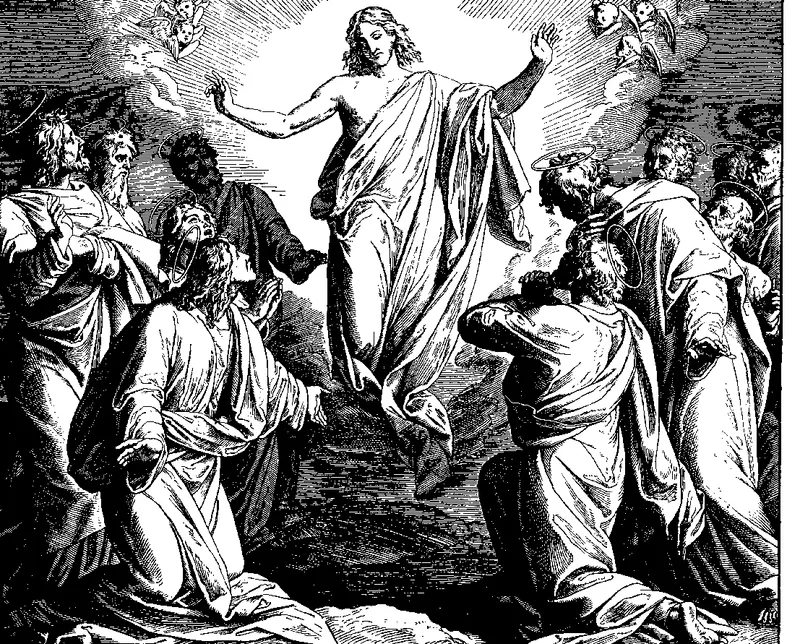
Acts 1:9-11Watching Him Go
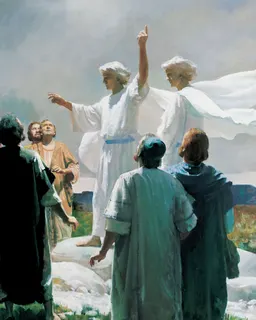
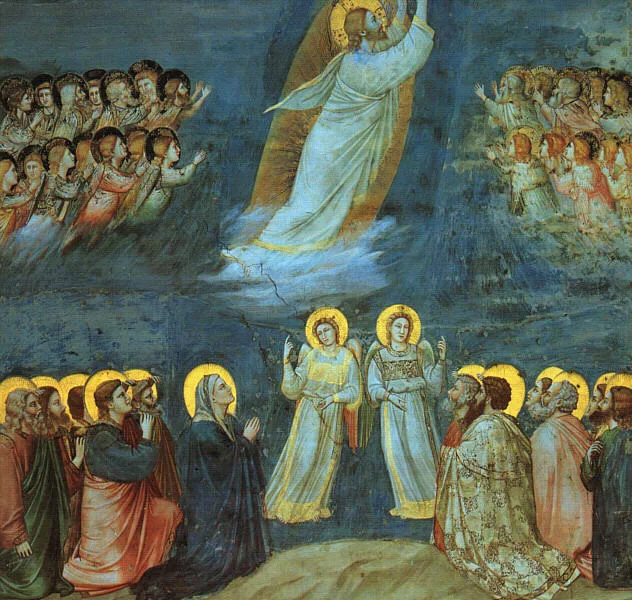
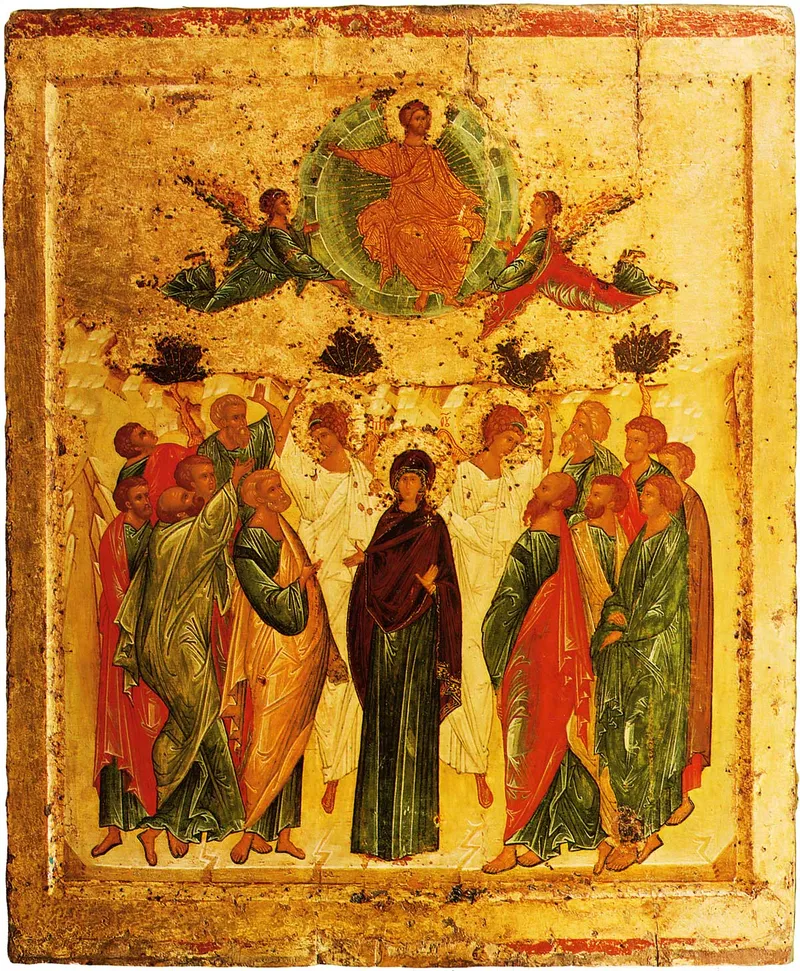
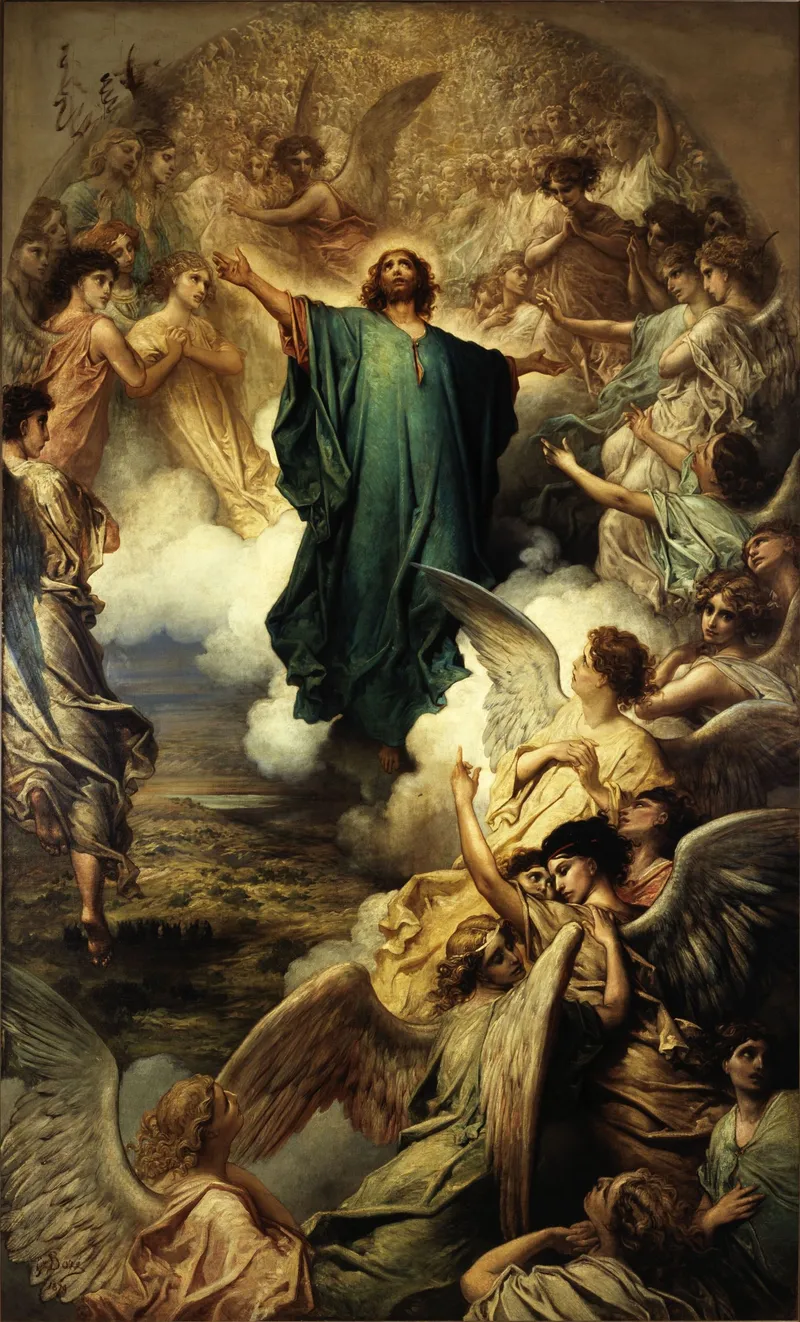
9And when he had spoken these things, while they beheld, he was taken up; and a cloud received him out of their sight. 10And while they looked stedfastly toward heaven as he went up, behold, two men stood by them in white apparel; 11Which also said, Ye men of Galilee, why stand ye gazing up into heaven? this same Jesus, which is taken up from you into heaven, shall so come in like manner as ye have seen him go into heaven.
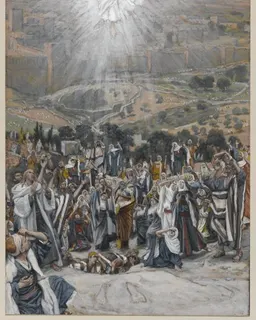
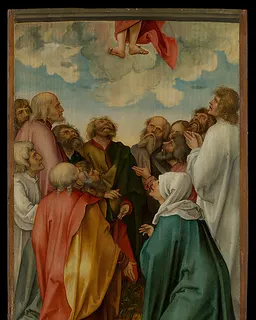
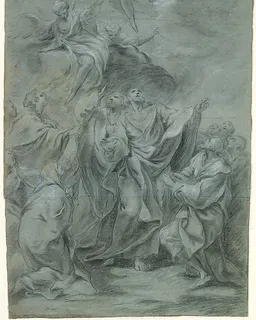
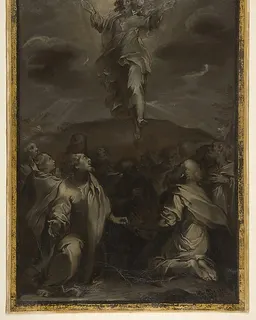
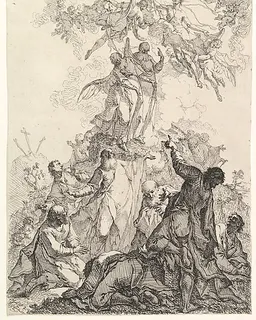
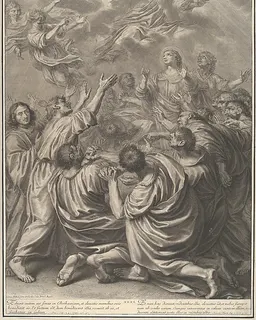
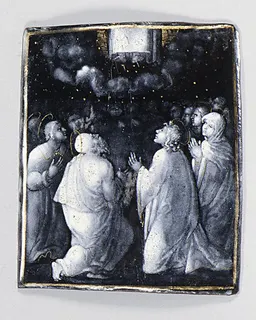
The ascension3 is a public event: it happens while they behold, in broad daylight, in the presence of many witnesses - not a private rapture, not a trance or a vision. A cloud receives Him out of their sight - and the cloud, in Jewish thought, is the sign of God's presence, the place where heaven and earth meet. Jesus is taken up to be exalted, to sit at the right hand of the Father, to intercede for all who believe.
You would have stood there too, neck craned, watching the last of Him fade. It is the most natural thing in the world. So the angels do not scold; they redirect. The point is not to keep your eyes pinned on the spot in the sky where He vanished. He told you He would come back. Until then, your hope walks forward on the ground - toward the city, toward the waiting, toward the people who have not yet heard. The looking up was never meant to last.
Acts 1:12-14The Upper Room Gathering
12Then returned they unto Jerusalem from the mount called Olivet, which is from Jerusalem a sabbath day’s journey. 13And when they were come in, they went up into an upper room, where abode both Peter, and James, and John, and Andrew, Philip, and Thomas, Bartholomew, and Matthew, James the son of Alphaeus, and Simon Zelotes, and Judas the brother of James. 14These all continued with one accord in prayer and supplication, with the women, and Mary the mother of Jesus, and with his brethren.
Of all the places to wait, they climb back up to the upper room - by old tradition the same room where they last ate with Him before the soldiers came. Think what that space holds for them now: the bread, the cup, the towel, the prediction that one of them would betray Him, and the empty place where that man used to sit. They do not flee the memory. They settle into it and pray.
They have a command - stay in Jerusalem - but no timetable for the promise. The Spirit has not fallen. So they wait inside the very room where it all came apart.
The names are listed - Peter, James, John, Andrew, Philip, Thomas, Bartholomew, Matthew, James the younger, Simon the Zealot, Judas the brother of James. No divisions. No one stepping forward to claim leadership in the absence of Jesus. And notice who is there: not just the apostles, but the women, including Mary the mother of Jesus herself. The church at its beginning is a fellowship, not a hierarchy. They are knit together in prayer.
Acts 1:15-26The Restoration of the Twelve
15And in those days Peter stood up in the midst of the disciples, and said, (the number of names together were about an hundred and twenty,) 16Men and brethren, this scripture must needs have been fulfilled, which the Holy Ghost by the mouth of David spake before concerning Judas, which was guide to them that took Jesus. 20For it is written in the book of Psalms, Let his habitation be desolate, and let no man dwell therein: and his bishoprick let another take. 21Wherefore of these men which have companied with us all the time that the Lord Jesus went in and out among us, 22Beginning from the baptism of John, unto that same day that he was taken up from us, must one be ordained to be a witness with us of his resurrection.
Peter stands up and speaks. There is no hesitation, no debate about whether leadership matters. The apostles understand that the witness of the twelve - the symbolic completion of the twelve tribes of Israel - is important for the church's authority and message. The vacancy left by Judas' betrayal cannot simply be accepted. It must be filled. But by whom?
The criterion is clear and uncompromising: the replacement must have been with Jesus from the beginning. From John's baptism all the way through the resurrection - a firsthand witness, not a latecomer or a friend of a friend. This is apostolic discernment, not democracy.
23And they appointed two, Joseph called Barsabas, who was surnamed Justus, and Matthias. 24And they prayed, and said, Thou, Lord, which knowest the hearts of all men, shew whether of these two thou hast chosen, 25That he may take part of this ministry and apostleship, from which Judas by transgression fell, that he might go to his own place. 26And they gave forth their lots; and the lot fell upon Matthias; and he was numbered with the eleven apostles.
Watch how the choice is actually made. No campaign speeches, no show of hands for a favorite. They lay the decision in front of the One who knows the hearts of all men, and then they cast lots. To us that can sound like flipping a coin. In Israel it was the opposite of leaving things to chance - it was a way of handing the verdict to God and trusting He governs even the toss. The lot is a confession: we do not trust our own read on these two men. We trust Yours.
Acts 1The Stage Is Set
The chapter closes with a company waiting. One hundred twenty souls in Jerusalem, obedient to the command of the risen Jesus. They could have scattered back to their old trades; instead they hold together, pray, and fill out the twelve. The promise hangs over the whole room: the Holy Ghost is coming, and the gospel with Him to the ends of the earth. But not yet. For now there is only an upper room, a praying company, and a city that does not know what is about to land on it.
If the power Jesus promised had come that very day, if Pentecost had arrived on the heels of the ascension, the disciples might have attributed it to their excitement, their certainty, their emotional fervor. Instead, they wait. They are told to wait. The waiting teaches them that the power belongs to God. It comes from outside them, from above them, from the Father through the Spirit. When the power finally does come - when the sound like a rushing mighty wind fills the house, when the flames of fire sit on each head, when they speak in languages they never learned - they will know beyond any doubt: this is God.
This is His doing.
Research trail
Sources & further study
These references support the historical, linguistic, manuscript, and contextual notes in this chapter. Scripture remains the primary text; external sources are provided so readers can inspect the research directly.
- Luke 1:1 ↔ Acts 1:1 - Gospel and Acts ContinuitySide-by-side comparison showing how Luke links his Gospel to Acts as a seamless two-part narrative.
- Apostolic Witness in the Hellenistic WorldArchaeological context for the apostles' testimony across the Mediterranean world in the first century.
- The AscensionTheological entry examining the resurrection to heavenly exaltation and apostolic witness in Acts.
Where this echoes in Scripture
The Promise of the Spirit
- John 16:7It is expedient for you that I go away: for if I go not away, the Comforter will not come unto you.Jesus' own reason that His departure (vv. 9-11) is the condition for the Spirit promised in verses 4-5.
- Luke 24:49tarry ye in the city of Jerusalem, until ye be endued with power from on high.The same command to wait for power that He repeats in verses 4 and 8.
- Joel 2:28I will pour out my spirit upon all flesh; and your sons and your daughters shall prophesy.The promise of the Father (v. 4) Peter will quote at Pentecost, now coming on all who believe.
- Isaiah 49:6I will also give thee for a light to the Gentiles, that thou mayest be my salvation unto the end of the earth.The reach of the witness in verse 8 - Jerusalem to the uttermost part of the earth - foretold of the Servant.
Watching Him Go
- 1 Thessalonians 4:16the Lord himself shall descend from heaven with a shout... and the dead in Christ shall rise first.The return the angels promise in verse 11 - in like manner as ye have seen him go.
- Daniel 7:13-14one like the Son of man came with the clouds of heaven... and there was given him dominion, and glory, and a kingdom.The cloud that receives Him in verse 9 is the chariot of an enthronement, not a curtain hiding a defeat.
- Hebrews 9:24Christ is... entered... into heaven itself, now to appear in the presence of God for us.Where the ascension of verses 9-11 leads - the right hand of the Father, interceding.
- Philippians 3:20For our conversation is in heaven; from whence also we look for the Saviour, the Lord Jesus Christ.The forward-leaning posture the angels press on the disciples in verse 11.
The Restoration of the Twelve
- 1 Corinthians 3:11For other foundation can no man lay than that is laid, which is Jesus Christ.The witnesses of verses 21-22 build on Christ; the foundation under the apostles is the One they testify to.
- Proverbs 16:33The lot is cast into the lap; but the whole disposing thereof is of the LORD.Why the lot of verse 26 is an act of trust - the Lord governs its fall, removing all chance.
- Psalm 109:8Let his days be few; and let another take his office.The line Peter cites in verse 20 to justify filling Judas's place.
- Luke 6:13he called unto him his disciples: and of them he chose twelve, whom also he named apostles.The original twelve Jesus chose, now restored to full number by Matthias.