John 5
People in this chapter
After a feast of the Jews, Jesus goes up to Jerusalem, and the scene opens at a pool near the sheep market called, in the Hebrew tongue, Bethesda, ringed by five porches (vv. 1-2). In those porches lies a great multitude of impotent folk, of blind, halt, withered, waiting for the moving of the water (v. 3). Among them is a man who has carried his infirmity thirty and eight years (v. 5). Jesus, knowing how long he has lain there, asks him, Wilt thou be made whole? The man does not answer with hope; he answers with the logic of his defeat: I have no man, when the water is troubled, to put me into the pool (v. 7).
Jesus does not wait for him to find the words. He speaks: Rise, take up thy bed, and walk (v. 8) - and immediately the man is whole, and takes up his bed, and walks.1
Tap any highlighted phrase to jump to the commentary that unpacks it.
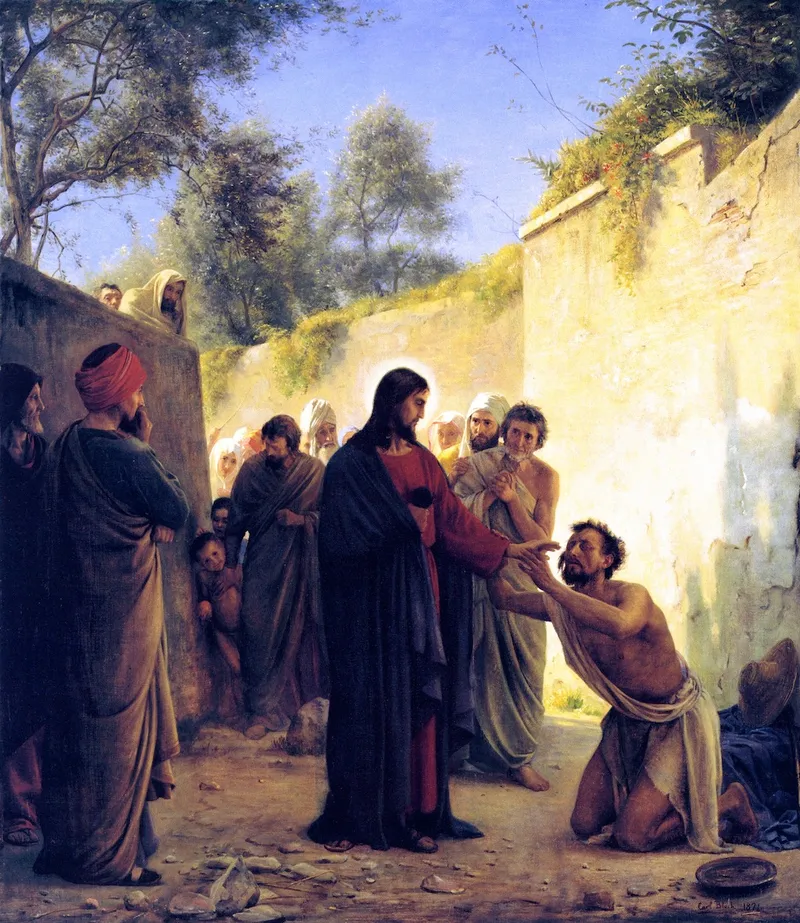
John 5:1-16Rise, Take Up Thy Bed, and Walk
1After this there was a feast of the Jews; and Jesus went up to Jerusalem. 2Now there is at Jerusalem by the sheep market a pool, which is called in the Hebrew tongue Bethesda, having five porches. 3In these lay a great multitude of impotent folk, of blind, halt, withered, waiting for the moving of the water. 4For an angel went down at a certain season into the pool, and troubled the water: whosoever then first after the troubling of the water stepped in was made whole of whatsoever disease he had. 5And a certain man was there, which had an infirmity thirty and eight years. 6When Jesus saw him lie, and knew that he had been now a long time in that case, he saith unto him, Wilt thou be made whole? 7The impotent man answered him, Sir, I have no man, when the water is troubled, to put me into the pool: but while I am coming, another steppeth down before me. 8Jesus saith unto him, Rise, take up thy bed, and walk. 9And immediately the man was made whole, and took up his bed, and walked: and on the same day was the sabbath.
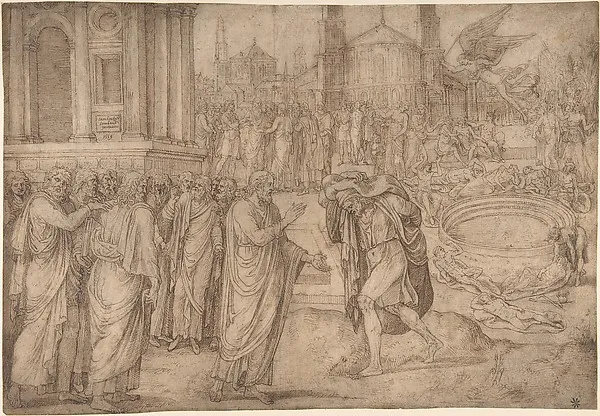
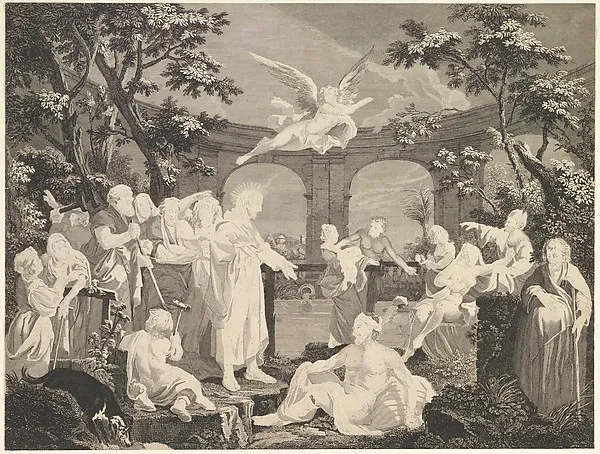
The scene is fixed with the precision of someone who had stood there: a pool by the sheep market, called in the Hebrew tongue Bethesda, having five porches (v. 2), and in those porches a great multitude of impotent folk, of blind, halt, withered, waiting for the moving of the water (v. 3). The name has often been heard as “house of mercy,” and yet little mercy reaches the people gathered there. They are waiting on the stirring of the water, and the one who reaches it first is made whole - which means the weakest, the slowest, the most alone are exactly the ones who never get in.
It is the harshest possible setting for the sick: healing offered on terms that the truly helpless can never meet. Into that crowd of the overlooked Jesus walks, and He goes not to the most promising case but to a man who has been there longest and has the least.1
The man has carried his infirmity thirty and eight years (v. 5) - longer than many in that crowd had been alive. His suffering has had time to become his whole world; it is the thing he expects, the thing he plans around, the thing he no longer fights. So when Jesus asks Wilt thou be made whole? (v. 6) the question lands oddly, almost as if it cannot be serious. And the man's reply proves how deep the resignation runs: he does not say yes, he explains why nothing ever changes - I have no man, when the water is troubled, to put me into the pool: but while I am coming, another steppeth down before me (v. 7).
He has stopped hoping and started accounting for his defeat. The question Jesus asks is the one such a man can no longer ask himself: do you still want to be well, or have you made peace with this? Mercy here begins by refusing to let the old assumption stand unchallenged.
Jesus does not argue the man out of his excuse, and He does not carry him to the water. He speaks: Rise, take up thy bed, and walk (v. 8) - and the response is instantaneous: immediately the man was made whole, and took up his bed, and walked (v. 9). The pool, the stirring, the race to the edge - all of it is bypassed. The thing the man could never get from the system that had failed him for thirty-eight years comes to him in a sentence.
There is no ritual, no condition, no waiting on the right moment; the word itself does the work, and the proof is a man walking who could not stand. John ends the verse with the detail that will turn the whole chapter: and on the same day was the sabbath. The healing is total and the timing is, to the man's accusers, the problem.
10The Jews therefore said unto him that was cured, It is the sabbath day: it is not lawful for thee to carry thy bed. 11He answered them, He that made me whole, the same said unto me, Take up thy bed, and walk. 12Then asked they him, What man is that which said unto thee, Take up thy bed, and walk? 13And he that was healed wist not who it was: for Jesus had conveyed himself away, a multitude being in that place. 14Afterward Jesus findeth him in the temple, and said unto him, Behold, thou art made whole: sin no more, lest a worse thing come unto thee. 15The man departed, and told the Jews that it was Jesus, which had made him whole. 16And therefore did the Jews persecute Jesus, and sought to slay him, because he had done these things on the sabbath day.
Notice what the man's questioners see and do not see. A man who has not walked in thirty-eight years is walking - and their first words are rebuke: It is the sabbath day: it is not lawful for thee to carry thy bed (v. 10). The healing itself does not register; only the carried mat, only the broken rule. The man's defense is artless and exactly right: He that made me whole, the same said unto me, Take up thy bed, and walk (v. 11).
The one with power to heal surely has authority to direct the healed. But the logic that should have opened their eyes only hardens them, and their question is not who can do such a work? but what man is that which said unto thee, Take up thy bed? They are hunting a lawbreaker, not seeking a healer. It is a sobering picture of how a settled framework can look straight at the work of God and see only an infraction.
Jesus seeks the man out again, this time in the temple, and adds a word to the gift: Behold, thou art made whole: sin no more, lest a worse thing come unto thee (v. 14). The sentence has to be read carefully. Jesus does not announce that the man's thirty-eight years were punishment for some particular sin - elsewhere in this same Gospel He flatly rejects that arithmetic, where neither a man nor his parents had sinned that he was born blind.
What He does is warn that there is a loss deeper than a withered body, and that physical wholeness is not the deepest wholeness a person needs. The man has been given his life back; Jesus presses him not to spend it heedlessly. There is something worse than thirty-eight years by a pool, and a healed body is no protection against it. The grace that reached him at the pool comes now with a summons to live in its light.
John 5:17-18My Father Worketh Hitherto, and I Work
17But Jesus answered them, My Father worketh hitherto, and I work. 18Therefore the Jews sought the more to kill him, because he not only had broken the sabbath, but said also that God was his Father, making himself equal with God.
To the charge of sabbath-breaking Jesus gives an answer that does not so much defend the healing as raise the stakes immeasurably: My Father worketh hitherto, and I work (v. 17). The reasoning beneath it is old and unanswerable. God rested from creating on the seventh day, yes - but God did not cease to sustain what He had made. Rain still falls on the sabbath, children are still born on the sabbath, the world is held in being on the sabbath as on every other day; the Father's upholding work never stops.
Jesus places His own action inside that ceaseless divine work: as the Father has gone on working all along, so do I. The healing of a helpless man is a continuation of God's mercy, the very kind of thing the Father has been doing without pause since the beginning. It is a claim that aligns His work, on this disputed day, directly and openly with the working of God.
The crucial thing is that His hearers understand Him - and the Gospel says so in the plainest words. Therefore the Jews sought the more to kill him, because he not only had broken the sabbath, but said also that God was his Father, making himself equal with God (v. 18). They do not accuse Him of a vague piety or a teacher's overstatement. They hear in my Father - spoken as no one in Israel spoke it, claiming the Father's own unceasing work as His own - a man setting himself on a level with God, and for that they reach for stones.
The text does not present this as a misunderstanding to be corrected. Jesus does not say, “You have taken me wrongly; I meant no such thing.” In the verses that follow He does the opposite: He takes up exactly the theme of His oneness with the Father and expands it. The reader is meant to weigh both halves of what stands written here - that He called God His Father in a way His hearers heard as making himself equal with God, and that He went on, unretracting, to say more.
John 5:19-30The Son Quickeneth Whom He Will
19Then answered Jesus and said unto them, Verily, verily, I say unto you, The Son can do nothing of himself, but what he seeth the Father do: for what things soever he doeth, these also doeth the Son likewise. 20For the Father loveth the Son, and sheweth him all things that himself doeth: and he will shew him greater works than these, that ye may marvel. 21For as the Father raiseth up the dead, and quickeneth them; even so the Son quickeneth whom he will. 22For the Father judgeth no man, but hath committed all judgment unto the Son: 23That all men should honour the Son, even as they honour the Father. He that honoureth not the Son honoureth not the Father which hath sent him.
Far from retreating from what His hearers heard, Jesus opens it wider - and the first thing He says sounds, at a glance, like a denial of it: The Son can do nothing of himself, but what he seeth the Father do (v. 19). But read on, and the sense is the opposite of weakness. The Son does nothing on His own initiative because He is in perfect, unbroken accord with the Father: what things soever he doeth, these also doeth the Son likewise. Whatever the Father does, the Son does - the same works.
A rival or a mere creature might act apart from God; the Son cannot, because there is no daylight between His will and the Father's. And the bond is one of love: the Father loveth the Son, and sheweth him all things that himself doeth (v. 20). This is a Son shown all things, working in flawless union with the One who sends Him. The “can do nothing of himself” is the measure of how completely the Son is one with the Father, not a limit on His power.
Then Jesus names the works that prove the claim, and they are works no creature shares: For as the Father raiseth up the dead, and quickeneth them; even so the Son quickeneth whom he will (v. 21). To raise the dead and to give life are, in all of Scripture, the prerogatives of God alone - and Jesus assigns them to the Son in the same breath as the Father, and adds the startling words whom he will. The Son gives life by His own choosing, as the Father does.
And to this He joins judgment: the Father judgeth no man, but hath committed all judgment unto the Son (v. 22). The two greatest divine acts - to make alive and to judge - are placed in the Son's hands. The God who alone gives life and who alone is judge of all has given both to the Son to exercise. These are not the credentials of a great prophet; they are the works of God, now done by the One who said He works as the Father works.
And Jesus states the purpose of it with a clarity that leaves no escape: That all men should honour the Son, even as they honour the Father. He that honoureth not the Son honoureth not the Father which hath sent him (v. 23). This is the sharpest point in the discourse. The honour due to God is now declared to be the honour due to the Son - the very honour given to the Father, even as. More than that, the two are made inseparable: there is no honouring of the Father that bypasses the Son.
To withhold honour from the Son is, by Jesus' own word, to fail to honour the Father who sent Him. Devotion that means to reach God while declining the Son does not, on this teaching, reach God at all. The God His hearers thought they were defending against Him cannot, He says, be truly honoured apart from Him. It is the plainest possible answer to verse 18: yes, He is to be honoured as God is honoured.
24Verily, verily, I say unto you, He that heareth my word, and believeth on him that sent me, hath everlasting life, and shall not come into condemnation; but is passed from death unto life. 25Verily, verily, I say unto you, The hour is coming, and now is, when the dead shall hear the voice of the Son of God: and they that hear shall live. 26For as the Father hath life in himself; so hath he given to the Son to have life in himself; 27And hath given him authority to execute judgment also, because he is the Son of man. 28Marvel not at this: for the hour is coming, in the which all that are in the graves shall hear his voice, 29And shall come forth; they that have done good, unto the resurrection of life; and they that have done evil, unto the resurrection of damnation. 30I can of mine own self do nothing: as I hear, I judge: and my judgment is just; because I seek not mine own will, but the will of the Father which hath sent me.
Now the giving of life comes down to the single hearer: He that heareth my word, and believeth on him that sent me, hath everlasting life, and shall not come into condemnation; but is passed from death unto life (v. 24). Every clause is weighty. The believer hath it, present tense, already; he shall not come into condemnation; he is passed, a thing already done, from death unto life. And the hinge of all of it is hearing the word of the Son and believing the One who sent Him; the two are named together as a single act, so that to receive the Son's word is to believe the Father.
Then Jesus presses it further: the hour is coming, and now is, when the dead shall hear the voice of the Son of God: and they that hear shall live (v. 25). The dead hearing a voice and living - it begins even now, as the spiritually dead hear His word and pass into life, the very thing happening in front of them whenever someone believes.
Jesus grounds this in the deepest possible reason: For as the Father hath life in himself; so hath he given to the Son to have life in himself (v. 26). The Father is the uncreated source of all life, life that depends on nothing outside itself - and that same self-possessed life the Father has given the Son to have in himself. The Son is no mere conduit through which life is passed along; life is His own to give.
And lest anyone think the “hour” of verse 25 is only a figure for spiritual awakening, Jesus widens it to its furthest reach: Marvel not at this: for the hour is coming, in the which all that are in the graves shall hear his voice, and shall come forth (vv. 28-29). The same voice that healed a man at a pool and that raises the spiritually dead will one day reach every grave, and the dead will rise - some unto the resurrection of life, some unto the resurrection of damnation. The verdict turns on whether His word was heard and believed.
He closes by sounding again the note of verse 19: I can of mine own self do nothing… I seek not mine own will, but the will of the Father (v. 30) - His judgment is just precisely because it is perfectly one with the Father's.
John 5:31-47They Are They Which Testify of Me
31If I bear witness of myself, my witness is not true. 32There is another that beareth witness of me; and I know that the witness which he witnesseth of me is true. 33Ye sent unto John, and he bare witness unto the truth. 34But I receive not testimony from man: but these things I say, that ye might be saved. 35He was a burning and a shining light: and ye were willing for a season to rejoice in his light. 36But I have greater witness than that of John: for the works which the Father hath given me to finish, the same works that I do, bear witness of me, that the Father hath sent me.
Having made the claim, Jesus now meets it on His hearers' own legal ground. Their law held that a matter must be established by more than one witness - If I bear witness of myself, my witness is not true (v. 31), He grants; a man's unsupported word for himself proves nothing. So He calls witnesses. The first is the one they themselves had sent to investigate: Ye sent unto John, and he bare witness unto the truth (v. 33).
The Baptist had pointed away from himself to Jesus, and they had, for a time, been glad to hear him. Yet Jesus will not rest His case on a human voice: I receive not testimony from man: but these things I say, that ye might be saved (v. 34). He names John not because He needs the endorsement but because they had once honoured John - He is meeting them where their own attention had already gone, that they might be saved.
His word about the Baptist is tender and a little sorrowful: He was a burning and a shining light: and ye were willing for a season to rejoice in his light (v. 35). John had been a true light - burning, costly to himself, and shining, giving real illumination - and the people had been drawn to him, crowding to the Jordan, glad of him. But notice the phrase for a season. Their gladness had not lasted; the enthusiasm that ran out to hear John had cooled before it ever followed John's witness through to its object.
They had enjoyed the light without walking by it. It is a quietly searching observation about a certain kind of religious excitement: real while it lasts, genuinely stirred, and yet seasonal - warmed by the messenger without ever arriving at the One the messenger came to announce. The first witness, then, they had heard and admired and not believed.
The second witness is greater, and it does not depend on anyone's testimony at all: I have greater witness than that of John: for the works which the Father hath given me to finish, the same works that I do, bear witness of me, that the Father hath sent me (v. 36). The works themselves are evidence - a man whole after thirty-eight years is an argument no speaker is needed to make. And the point Jesus draws from them is precise: they show that the Father hath sent me. Deeds that only God could do, done by Him openly, testify whose he is and whence He comes.
Throughout this Gospel the works are offered exactly so - believe the works: that ye may know, and believe, that the Father is in me, and I in him. The healing his accusers had turned into a charge is, rightly read, a witness from the Father Himself, written in a restored body walking through Jerusalem.
37And the Father himself, which hath sent me, hath borne witness of me. Ye have neither heard his voice at any time, nor seen his shape. 38And ye have not his word abiding in you: for whom he hath sent, him ye believe not. 39Search the scriptures; for in them ye think ye have eternal life: and they are they which testify of me. 40And ye will not come to me, that ye might have life. 41I receive not honour from men. 42But I know you, that ye have not the love of God in you. 43I am come in my Father’s name, and ye receive me not: if another shall come in his own name, him ye will receive. 44How can ye believe, which receive honour one of another, and seek not the honour that cometh from God only? 45Do not think that I will accuse you to the Father: there is one that accuseth you, even Moses, in whom ye trust. 46For had ye believed Moses, ye would have believed me: for he wrote of me. 47But if ye believe not his writings, how shall ye believe my words?
The third witness is the Father Himself: And the Father himself, which hath sent me, hath borne witness of me (v. 37). But here Jesus turns the indictment back on His hearers. They have not received that witness - Ye have neither heard his voice at any time, nor seen his shape. And ye have not his word abiding in you: for whom he hath sent, him ye believe not (vv. 37-38). They pride themselves on knowing God, yet the proof that God's word does not truly abide in them is laid bare in this: when the One whom God sent stands before them, they do not believe Him.
The Father's witness and the Son are bound together - to reject the sent One is to show that the Father's word was never really at home within. The failure is about a heart in which God's word does not abide, and so cannot recognize God's Son - even though evidence stands before them in abundance.
Before naming the last witness, Jesus lays bare the root of their unbelief: it lies in the heart, not in a shortage of evidence. I receive not honour from men (v. 41), He says - He is not angling for their applause - but I know you, that ye have not the love of God in you (v. 42). That is the true diagnosis: an absence of love for God. He sets the two side by side: I am come in my Father's name, and ye receive me not: if another shall come in his own name, him ye will receive (v. 43).
The One who comes bearing the Father's name they refuse; a self-appointed figure flattering their expectations they would gladly take in. And He puts His finger on why: How can ye believe, which receive honour one of another, and seek not the honour that cometh from God only? (v. 44). Faith was impossible for them so long as the opinion of one another mattered more than the verdict of God. It circles back to verse 23, where the honour due the Father was declared due the Son: men who live for honour one of another will not give that honour to the One sent in the Father's name, because they have stopped seeking the honour that comes from God at all.
The fourth witness is the one they would have least expected to be turned against them - the Scriptures themselves. Search the scriptures; for in them ye think ye have eternal life: and they are they which testify of me (v. 39). They searched the sacred writings with great care, believing life was to be found in them - and they were not wrong that life was there. Their error was to stop at the page and miss its subject: the Scriptures everywhere testify of Him, and yet ye will not come to me, that ye might have life (v. 40).
They had the signpost and refused the destination. Then comes the sharpest stroke of all. The very Moses in whom they trusted, whom they were sure stood on their side against this sabbath-breaker, is the one who accuses them: had ye believed Moses, ye would have believed me: for he wrote of me (v. 46). To believe Moses truly was to be led to Christ; to reject Christ was to prove they had never really believed Moses.
If ye believe not his writings, how shall ye believe my words? (v. 47). The witnesses are complete, and every one of them - John, the works, the Father, the Scriptures - points the same direction.2
Research trail
Sources & further study
These references support the historical, linguistic, manuscript, and contextual notes in this chapter. Scripture remains the primary text; external sources are provided so readers can inspect the research directly.
- John 5 - Translators' NotesThe NET Bible's detailed footnotes on John 5 - the textual question over the stirring of the pool and verse 4, the force of making himself equal with God in verse 18, the legal sense of “witness” and “testimony” through verses 31-40, and the charge that Moses himself accuses those who will not believe (vv. 45-47).
- John 5 ↔ Daniel 12 · Deuteronomy 19 · the prophetsTraces the threads tying John 5 to the rest of Scripture - the resurrection of the just and the unjust (vv. 28-29) read alongside many of them that sleep in the dust of the earth shall awake (Dan. 12:2), the requirement of two or three witnesses behind verses 31-39 (Deut. 19:15), and Moses writing of Christ (v. 46).
- John 5 · Greek interlinear + parsingThe Greek text of John 5 word by word, with parsing and lexical links - useful for the verb zoopoieo (vv. 21, “quickeneth,” to make alive), for isos (v. 18, the “equal” His hearers heard Him claim), and for the legal vocabulary of witness and judgment that runs through verses 30-47.
Where this echoes in Scripture
Rise, Take Up Thy Bed, and Walk
- John 9:1-3who did sin, this man, or his parents, that he was born blind? ... Neither hath this man sinned, nor his parents.Jesus rejects the simple equation of suffering with a person's sin - the backdrop for reading His warning in verse 14 carefully.
- Mark 2:9-11Whether is it easier to say... thy sins be forgiven thee; or to say, Arise, and take up thy bed, and walk?The same command as verse 8 - a word of authority that heals the body and points past it.
- Isaiah 35:6Then shall the lame man leap as an hart, and the tongue of the dumb sing.The prophets' sign of God come to save - the lame made whole, as at Bethesda in verses 8-9.
- John 7:23are ye angry at me, because I have made a man every whit whole on the sabbath day?Jesus' own later word on the conflict of verse 16 - a man made whole, and the sabbath made the grievance.
- Exodus 20:8-10Remember the sabbath day, to keep it holy... in it thou shalt not do any work.The command behind the accusation of verse 10 - and the question of what kind of work the sabbath forbids.
My Father Worketh Hitherto, and I Work
- John 10:30-33I and my Father are one. Then the Jews took up stones again to stone him... because that thou, being a man, makest thyself God.The same claim and the same reaction as verses 17-18 - oneness with the Father, heard as a man making himself God.
- John 1:1In the beginning was the Word, and the Word was with God, and the Word was God.The opening note of this Gospel, sounded again in verses 17-18 - the Son with God and equal to God.
- Philippians 2:6Who, being in the form of God, thought it not robbery to be equal with God.The apostle's word for what verse 18 records His hearers concluding - equality with God, in the very term isos.
- Genesis 2:2-3And on the seventh day God ended his work... and he rested on the seventh day from all his work.The sabbath rest that lies behind verse 17 - the rest from creating, even as the Father's sustaining work goes on.
- John 14:9he that hath seen me hath seen the Father; and how sayest thou then, Shew us the Father?The nearness claimed in verses 17-18 stated again - to see the Son is to see the Father.
The Son Quickeneth Whom He Will
- John 11:25I am the resurrection, and the life: he that believeth in me, though he were dead, yet shall he live.The life-giving authority of verses 21 and 28-29 spoken in person - the Son who raises the dead.
- Daniel 12:2many of them that sleep in the dust of the earth shall awake, some to everlasting life, and some to shame and everlasting contempt.The two resurrections of verses 28-29 - the rising of the just and the unjust foretold by the prophet.
- 1 Samuel 2:6The LORD killeth, and maketh alive: he bringeth down to the grave, and bringeth up.The act of verse 21 named as God's own - to make alive and to raise - now given to the Son.
- Hebrews 1:6And let all the angels of God worship him.The honour of verse 23 carried through - the Son worshipped as the Father is.
- Revelation 5:13Blessing, and honour, and glory, and power, be unto him that sitteth upon the throne, and unto the Lamb for ever and ever.The vision of verse 23 fulfilled - the Son honoured together with the Father by every creature.
They Are They Which Testify of Me
- Luke 24:27And beginning at Moses and all the prophets, he expounded unto them in all the scriptures the things concerning himself.The risen Christ doing what verse 39 declares - showing that all the Scriptures testify of Him.
- Deuteronomy 18:15The LORD thy God will raise up unto thee a Prophet from the midst of thee, of thy brethren, like unto me; unto him ye shall hearken.Part of what it means that Moses wrote of Christ (v. 46) - the promised prophet to come.
- Deuteronomy 19:15at the mouth of two witnesses, or at the mouth of three witnesses, shall the matter be established.The law of witness behind verses 31-39 - why Jesus calls John, the works, the Father, and the Scriptures.
- John 1:29Behold the Lamb of God, which taketh away the sin of the world.The Baptist's witness Jesus appeals to in verses 33-35 - a burning and a shining light pointing to Him.
- John 10:25the works that I do in my Father's name, they bear witness of me.The witness of the works named again, as in verse 36 - deeds that show the Father sent Him.