Exodus 20
People in this chapter
Exodus 20 is the moment three million people stand at the base of a mountain wrapped in smoke and thunder, and hear the voice of God speak directly to them - to all Israel at once, with no priestly intermediary. The Ten Commandments are the heart of God's covenant with His people, the shape of a life lived in covenant friendship with God and with each other.
Tap any highlighted phrase to jump to the commentary that unpacks it.
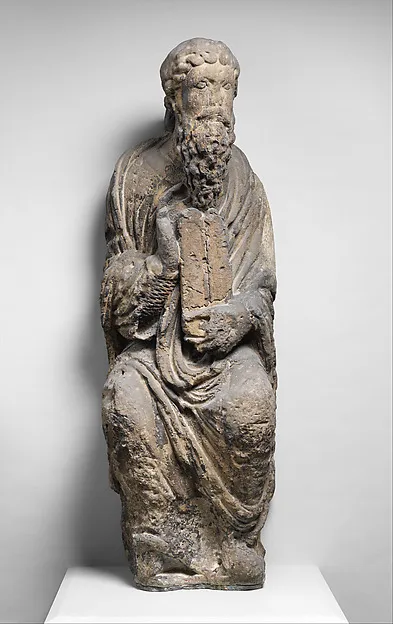
Exodus 20:1-2The Voice of God
1And God spake all these words, saying, 2I am the LORD thy God, which have brought thee out of the land of Egypt, out of the house of bondage.
God does not send a prophet. He does not write on paper. He speaks directly to all Israel - the text says His voice was heard by the entire nation. This is the only place in scripture where God addresses a whole people at once with the full weight of His presence. No mediator. No filter. For a moment, there is only one voice and three million listeners12.
Exodus 20:3-7Toward God
3Thou shalt have no other gods before me. 4Thou shalt not make unto thee any graven image, or any likeness of any thing that is in heaven above, or that is in the earth beneath, or that is in the water under the earth: 5Thou shalt not bow down thyself to them, nor serve them: for I the LORD thy God am a jealous God, visiting the iniquity of the fathers upon the children unto the third and fourth generation of them that hate me; 6And shewing mercy unto thousands of them that love me, and keep my commandments. 7Thou shalt not take the name of the LORD thy God in vain; for the LORD will not hold him guiltless that taketh his name in vain.
The Decalogue begins with a claim: I am the LORD thy God. You belong to Me. Therefore - as a consequence - you will have no other gods. This flows from a relationship already established. Israel has one God because covenant loyalty is the whole shape of what Israel is3.
To take God's name in vain is to invoke His name while being false to the relationship His name represents - to use His authority to cover your own lies, or to swear an oath and break it. To bear God's name is to carry His reputation. Every time you speak as His, you either honor Him or you betray Him.
Exodus 20:8-11Rest
8Remember the sabbath day, to keep it holy. 9Six days shalt thou labour, and do all thy work: 10But the seventh day is the sabbath of the LORD thy God: in it thou shalt not do any work, thou, nor thy son, nor thy daughter, thy manservant, nor thy maidservant, nor thy cattle, nor thy stranger that is within thy gates: 11For in six days the LORD made heaven and earth, the sea, and all that in them is, and rested the seventh day: wherefore the LORD blessed the sabbath day, and hallowed it.
Notice the command: not “create a Sabbath” but “remember” it. God has already made Sabbath holy. Your work is to keep it - to set it apart, to refuse to fill it with the usual noise. And notice the reach: your servants, your animals, even the foreigner in your gates gets the command to rest. Sabbath is the only commandment that protects the weak as an absolute, before any argument.
Exodus 20:12-14Life and Household
12Honour thy father and thy mother: that thy days may be long upon the land which the LORD thy God giveth thee. 13Thou shalt not kill. 14Thou shalt not commit adultery.
This is the boundary between the vertical and the horizontal - the fifth commandment. Honoring father and mother is the hinge. You learn to honor God by first honoring the authorities and elderhood He has placed over you. And notice the promise: that thy days may be long. The promise is a statement about how creation works. A society that honors its elders lives well. A society that discards them fractures.
Exodus 20:15-17Trust and Desire
15Thou shalt not steal. 16Thou shalt not bear false witness against thy neighbour. 17Thou shalt not covet thy neighbour’s house, thou shalt not covet thy neighbour’s wife, nor his manservant, nor his maidservant, nor his ox, nor his ass, nor any thing that is thy neighbour’s.
Theft is a violation of trust and boundary. When you steal from your neighbor, you announce that your need is more real than their ownership, your desire more legitimate than their labor. You unmake the fabric of community. Notice it comes before coveting - the inner desire comes after the outer act.
To bear false witness is to use speech - the highest human faculty - for the destruction of your neighbor. Truth-telling is the foundation of law, commerce, and covenant. Once people stop believing each other's words, nothing holds.
Exodus 20:18-21Terrified by Grace
18And all the people saw the thunderings, and the lightnings, and the noise of the trumpet, and the mountain smoking: and when the people saw it, they removed, and stood afar off. 19And they said unto Moses, Speak thou with us, and we will hear: but let not God speak with us, lest we die. 20And Moses said unto the people, Fear not: for God is come to prove you, and that his fear may be before your faces, that ye sin not. 21And the people stood afar off, and Moses drew near unto the thick darkness where God was.
The people do not hear the words and nod along. They hear the voice and they are terrified. Thunder, lightning, the mountain shaking - all the signs of divine presence at its most overwhelming. The experience is physically disorienting. And their response is immediate and human: we cannot do this. We need someone to go between us.
The fear is not imaginary. The law is holy, and the people are not. To stand in the presence of absolute holiness aware of your own corruption is to sense, rightly, that you are in danger. The people are not wrong to be afraid. They are experiencing the truth: they cannot obey perfectly, and a holy God cannot overlook sin. This is why they need a mediator.
Moses tells them not to be afraid, but also that the fear is good - that God's fear should be “before your faces, that ye sin not.” This is the fear of reverence: the healthy awareness that you stand before Someone holy, and that awareness changes how you live.
Exodus 20:22-26How to Approach
22And the LORD said unto Moses, Thus thou shalt say unto the children of Israel, Ye have seen that I have talked with you from heaven. 23Ye shall not make with me gods of silver, neither shall ye make unto you gods of gold. 24An altar of earth thou shalt make unto me, and shalt sacrifice thereon thy burnt offerings, and thy peace offerings, thy sheep, and thine oxen: in all places where I record my name I will come unto thee, and I will bless thee. 25And if thou wilt make me an altar of stone, thou shalt not build it of hewn stone: for if thou lift up thy tool upon it, thou hast polluted it. 26Neither shalt thou go up by steps unto mine altar, that thy nakedness be not discovered thereon.
After the terror, the provision. God gives His people the way forward: an altar. The material is earth - simple, unmade by human craft. The purpose is twofold: burnt offerings (for atonement) and peace offerings (for fellowship). The broken people can approach the holy God, but only through an intermediary - the death of a substitute.
The altar must not be built of hewn stone - stone shaped by a tool. It must be natural. This means: do not try to improve on what God ordains. You cannot make yourself fit for God through your own craftsmanship, your own virtue-building, your own effort. What is offered must be simple and unadorned.
Steps would expose the priest's nakedness - his vulnerability, his shame. The approach to God is built on trust, not performance. The very design of the altar says: you come without pretense, without covering, aware of your own exposure, and God meets you there.
Research trail
Sources & further study
These references support the historical, linguistic, manuscript, and contextual notes in this chapter. Scripture remains the primary text; external sources are provided so readers can inspect the research directly.