John 1
People in this chapter
The Gospel according to John opens before Bethlehem, before the manger, in eternity: In the beginning was the Word, and the Word was with God, and the Word was God (v. 1). The other Gospels begin with a genealogy or a manger; John begins before the manger, before time, before there was a single created thing. And he makes the most far-reaching claim a sentence can hold: the Word was with God, and the Word was God - near to God and Himself divine, and through Him everything that exists came to be.
All things were made by him; and without him was not any thing made that was made (v. 3). In Him is life, and that life is the light of men (v. 4), shining in a darkness that has never managed to put it out.1
Tap any highlighted phrase to jump to the commentary that unpacks it.
John 1:1-18The Word Was Made Flesh
1In the beginning was the Word, and the Word was with God, and the Word was God. 2The same was in the beginning with God. 3All things were made by him; and without him was not any thing made that was made. 4In him was life; and the life was the light of men. 5And the light shineth in darkness; and the darkness comprehended it not.
John echoes Genesis: In the beginning. Genesis tells how creation began. John says that when it began, the Word already was. Jesus did not begin at Bethlehem; He existed before anything was made.
Three phrases tell us who He is. The Word existed in the beginning, lived with God in close fellowship, and was God. John holds His closeness to God and His divinity together. Verse 2 repeats the point: Jesus is eternal, divine, and present with God before creation.
John moves from who the Word is to what He gives: life and light. In him was life; and the life was the light of men (v. 4). Life has its source in Him, including the deep and lasting life people were made to receive. That life reveals truth, shows the way, and pushes back darkness.
Verse 5 says the light shineth: it keeps shining. Comprehended can mean both understood and overcome. The darkness did not recognize the light, and it could not defeat it. People may fail to understand Jesus, but no darkness can put out His light.
6There was a man sent from God, whose name was John. 7The same came for a witness, to bear witness of the Light, that all men through him might believe. 8He was not that Light, but was sent to bear witness of that Light. 9That was the true Light, which lighteth every man that cometh into the world. 10He was in the world, and the world was made by him, and the world knew him not. 11He came unto his own, and his own received him not. 12But as many as received him, to them gave he power to become the sons of God, even to them that believe on his name: 13Which were born, not of blood, nor of the will of the flesh, nor of the will of man, but of God.
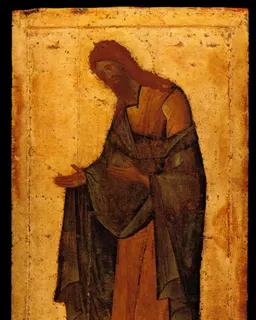
After describing the eternal Word, John introduces a human messenger: There was a man sent from God, whose name was John (v. 6). John the Baptist came to bear witness to the Light so others might believe. The Gospel is clear: He was not that Light (v. 8).
A faithful witness points beyond himself. John directs people toward Christ. He is the man who was sent; Jesus is the true Light (v. 9). John is a lamp helping people see. Christ is the source of the light.
The One who made the world entered it, yet the world knew him not (v. 10). He came to His own people, prepared for centuries to recognize Him, but his own received him not (v. 11). The darkness of verse 5 has entered the human story.
Rejection is not the end. All who receive Christ and believe on His name are given power to become the sons of God (v. 12). This invitation reaches beyond nation and bloodline. Verse 13 calls it a birth of God. It is not inherited or produced by effort; it is God's gift. The Word through whom people were made welcomes them into God's family.
14And the Word was made flesh, and dwelt among us, (and we beheld his glory, the glory as of the only begotten of the Father,) full of grace and truth. 15John bare witness of him, and cried, saying, This was he of whom I spake, He that cometh after me is preferred before me: for he was before me. 16And of his fulness have all we received, and grace for grace. 17For the law was given by Moses, but grace and truth came by Jesus Christ. 18No man hath seen God at any time; the only begotten Son, which is in the bosom of the Father, he hath declared him.
Verse 14 is the Prologue's great turning point: the Word was made flesh, and dwelt among us. The Word who made all things entered real human life, with a body, face, and voice. The eternal Word stepped into time and lived within His creation. His glory is revealed through His real humanity.
John testifies, we beheld his glory, full of grace and truth. Verse 18 says the unseen God is made known by the Son, who is nearest to the Father. The Greek word translated “declared” gives us “exegesis,” meaning explanation. Jesus makes the Father known. To learn what God is like, look at Jesus.
Verse 16 says, of his fulness have all we received, and grace for grace. Jesus is full of grace and truth, and His abundance overflows to us. Grace for grace has several possible meanings. The simplest picture is grace upon grace, one gift following another like waves on the shore.
Verse 17 places this gift within the Bible's larger story. The law given through Moses was God's true gift. In Jesus, the grace and truth it pointed toward arrive in fulness. John now gives the eternal Word His human name: Jesus Christ. Through Him, grace and truth have come near.
John 1:19-34Behold the Lamb of God
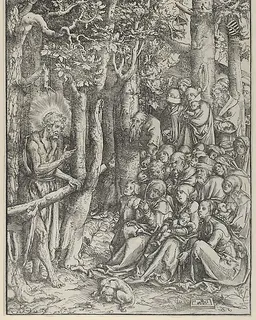
19And this is the record of John, when the Jews sent priests and Levites from Jerusalem to ask him, Who art thou? 20And he confessed, and denied not; but confessed, I am not the Christ. 21And they asked him, What then? Art thou Elias? And he saith, I am not. Art thou that prophet? And he answered, No. 22Then said they unto him, Who art thou? that we may give an answer to them that sent us. What sayest thou of thyself? 23He said, I am the voice of one crying in the wilderness, Make straight the way of the Lord, as said the prophet Esaias.
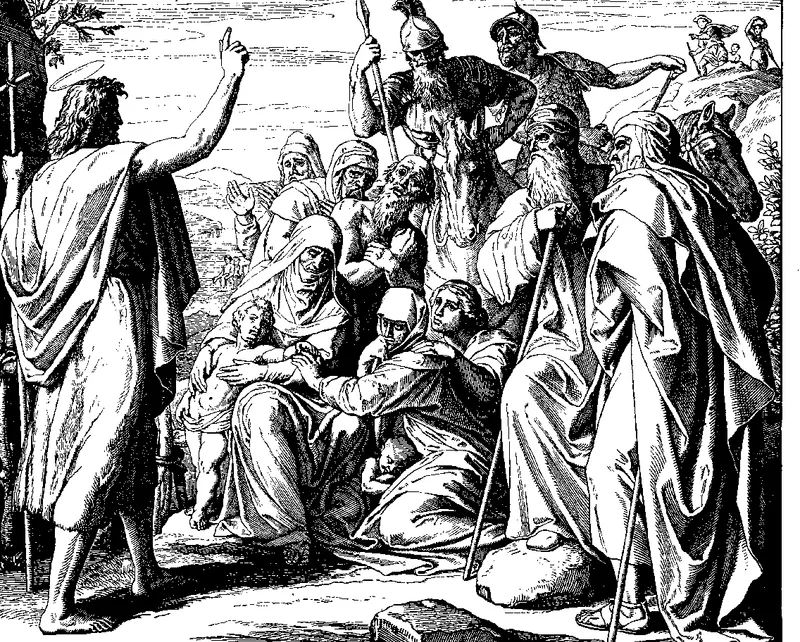
Priests and Levites ask John, Who art thou? (v. 19). He answers, I am not the Christ. Asked whether he is Elias or the promised prophet, he replies, I am not… No (vv. 20–21). Even with crowds around him, John refuses titles that are not his.
Instead, he quotes Isaiah: I am the voice of one crying in the wilderness, Make straight the way of the Lord (v. 23). A voice serves its message. John is the herald, preparing the road and announcing the Lord. His humility comes from knowing his calling and the One he serves.
24And they which were sent were of the Pharisees. 25And they asked him, and said unto him, Why baptizest thou then, if thou be not that Christ, nor Elias, neither that prophet? 26John answered them, saying, I baptize with water: but there standeth one among you, whom ye know not; 27He it is, who coming after me is preferred before me, whose shoe’s latchet I am not worthy to unloose. 28These things were done in Bethabara beyond Jordan, where John was baptizing.
The questioners ask why John baptizes if he is not the Christ, Elias, or the promised prophet. John answers, I baptize with water: but there standeth one among you, whom ye know not (v. 26). His baptism calls Israel to repentance and prepares the people. The long-awaited One is already among them, still unrecognized.
John says he is unworthy to loosen this Man's sandal strap, a task for a low household servant (v. 27). Jesus would call John the greatest man born of women. Yet John's greatness appears in his humility: he wants Christ, not himself, to be known.
29The next day John seeth Jesus coming unto him, and saith, Behold the Lamb of God, which taketh away the sin of the world. 30This is he of whom I said, After me cometh a man which is preferred before me: for he was before me. 31And I knew him not: but that he should be made manifest to Israel, therefore am I come baptizing with water.
Seeing Jesus, John gives the witness his life prepared him to give: Behold the Lamb of God, which taketh away the sin of the world (v. 29). Behold means “look there.” Jesus is the Lamb God provides. Take away can picture lifting a burden and carrying it off. This Lamb bears the world's sin.
The One who came after John was before him (v. 30). Jesus appeared later in John's ministry but existed before him, like the Word of verse 1. John knew the Christ because God revealed Him. His task was to baptize, wait for God's sign, and then point to Jesus.
32And John bare record, saying, I saw the Spirit descending from heaven like a dove, and it abode upon him. 33And I knew him not: but he that sent me to baptize with water, the same said unto me, Upon whom thou shalt see the Spirit descending, and remaining on him, the same is he which baptizeth with the Holy Ghost. 34And I saw, and bare record that this is the Son of God.
John explains God's sign: I saw the Spirit descending from heaven like a dove, and it abode upon him (v. 32). God had told John to watch for the One on whom the Spirit would descend and remain. He would baptize with the Holy Ghost (v. 33).
Abode matters: the Spirit came to stay upon Jesus. The Spirit rests on the Lamb while John watches. Seeing the promised sign, John can testify, this is the Son of God (v. 34). He began by saying, I am not the Christ. He ends by naming Jesus as the Lamb and Son of God.
John 1:35-51We Have Found the Messias
35Again the next day after John stood, and two of his disciples; 36And looking upon Jesus as he walked, he saith, Behold the Lamb of God! 37And the two disciples heard him speak, and they followed Jesus. 38Then Jesus turned, and saw them following, and saith unto them, What seek ye? They said unto him, Rabbi, (which is to say, being interpreted, Master,) where dwellest thou? 39He saith unto them, Come and see. They came and saw where he dwelt, and abode with him that day: for it was about the tenth hour.
John points to Jesus: Behold the Lamb of God! (v. 36). Two disciples respond by following Him. Jesus asks His first question in this Gospel: What seek ye? (v. 38). He asks what they truly want, not simply where they are walking.
They answer, Rabbi… where dwellest thou? They want to remain with Him. Jesus replies, Come and see (v. 39). Faith in John often begins this way: draw near, look, and spend time with Jesus. The disciples come, see, and stay. Their search begins to find its answer in His presence.
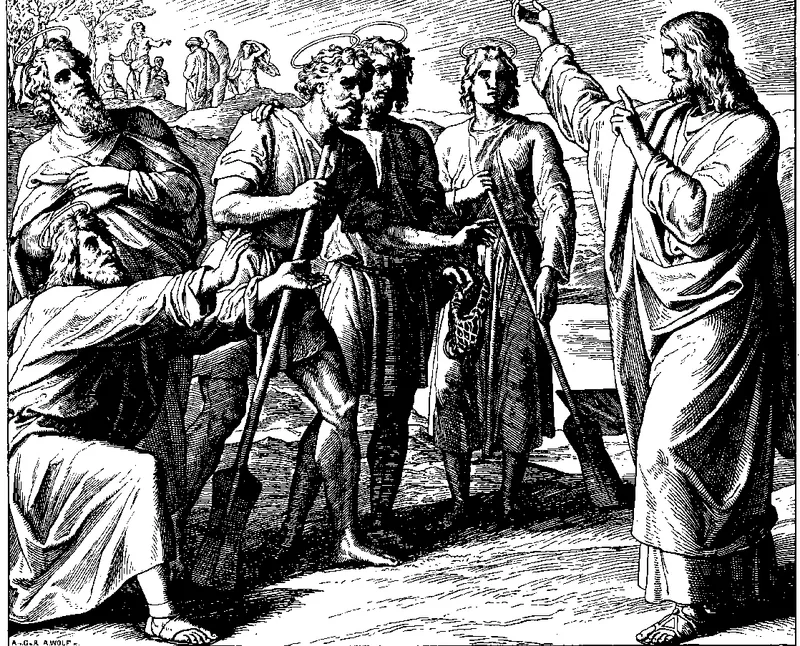
40One of the two which heard John speak, and followed him, was Andrew, Simon Peter’s brother. 41He first findeth his own brother Simon, and saith unto him, We have found the Messias, which is, being interpreted, the Christ. 42And he brought him to Jesus. And when Jesus beheld him, he said, Thou art Simon the son of Jona: thou shalt be called Cephas, which is by interpretation, A stone.
Andrew spends the day with Jesus, then finds his brother Simon: We have found the Messias (v. 41). Messias means Christ, the promised Anointed One. Andrew does not wait to understand everything. He shares what he has found and brings Simon to Jesus.
That simple invitation changes history. Jesus looks at Simon and says, Thou shalt be called Cephas, meaning a stone (v. 42). He sees who Simon is and what he can become. This pattern runs through John 1: someone meets Jesus, then invites someone else. Andrew is never as famous as Peter, but his quiet faithfulness brings Peter to Christ.
43The day following Jesus would go forth into Galilee, and findeth Philip, and saith unto him, Follow me. 44Now Philip was of Bethsaida, the city of Andrew and Peter. 45Philip findeth Nathanael, and saith unto him, We have found him, of whom Moses in the law, and the prophets, did write, Jesus of Nazareth, the son of Joseph. 46And Nathanael said unto him, Can there any good thing come out of Nazareth? Philip saith unto him, Come and see.
Jesus finds Philip and says, Follow me (v. 43). Philip finds Nathanael and says they have found the One described by Moses and the prophets. Jesus belongs to Scripture's long story and fulfills its hope.
Nathanael asks, Can there any good thing come out of Nazareth? (v. 46). Nazareth was small and unimpressive, and he nearly dismisses Jesus because of His hometown. Philip does not argue. He repeats Jesus' invitation: Come and see. The skeptic is free to look for himself. Nathanael takes that honest step, and it changes him.
47Jesus saw Nathanael coming to him, and saith of him, Behold an Israelite indeed, in whom is no guile! 48Nathanael saith unto him, Whence knowest thou me? Jesus answered and said unto him, Before that Philip called thee, when thou wast under the fig tree, I saw thee. 49Nathanael answered and saith unto him, Rabbi, thou art the Son of God; thou art the King of Israel.
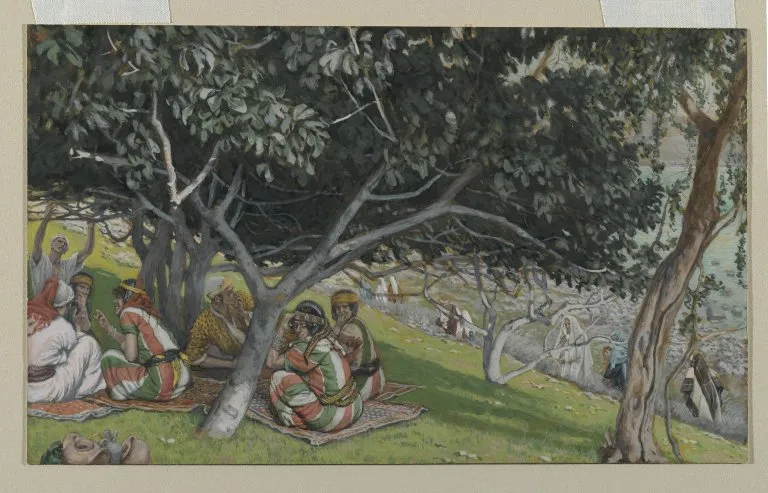
Jesus calls Nathanael an Israelite indeed, in whom is no guile (v. 47): an honest man without deceit. When Nathanael asks how Jesus knows him, Jesus answers, when thou wast under the fig tree, I saw thee (v. 48).
John never says what happened there. It may have been a place of prayer or thought, but Nathanael understands. Jesus knew him before Philip called him. The skeptic now confesses, thou art the Son of God; thou art the King of Israel (v. 49). Nathanael came to see Jesus and discovered that Jesus had already seen him.
50Jesus answered and said unto him, Because I said unto thee, I saw thee under the fig tree, believest thou? thou shalt see greater things than these. 51And he saith unto him, Verily, verily, I say unto you, Hereafter ye shall see heaven open, and the angels of God ascending and descending upon the Son of man.
Jesus promises Nathanael greater things than the sign under the fig tree. He reaches back to Jacob's dream: ye shall see heaven open, and the angels of God ascending and descending upon the Son of man (v. 51).
In Genesis 28, Jacob slept with a stone for a pillow and dreamed of a ladder joining earth and heaven. He called that place the house of God and the gate of heaven. Jesus places Himself at the center of the picture. The angels move upon the Son of man. He is the meeting place between heaven and earth. John 1 begins with the Word beside God and ends with heaven open through Him.
Research trail
Sources & further study
These references support the historical, linguistic, manuscript, and contextual notes in this chapter. Scripture remains the primary text; external sources are provided so readers can inspect the research directly.
- John 1 ↔ Genesis 1 · Exodus 40 · Isaiah 40 · Genesis 28Traces the threads tying John 1 to the rest of Scripture - In the beginning (v. 1) read against Genesis 1:1, the glory that dwelt among us (v. 14) against the glory filling the tabernacle (Exod. 40:34), the voice of one crying in the wilderness (v. 23) against Isaiah 40:3, and the angels on the Son of man (v. 51) against Jacob's ladder (Gen. 28:12).
- John 1 · Greek interlinear + lexiconThe Greek text of John 1 word by word, with parsing and lexical links - useful for logos (v. 1, the “Word”), eskenosen (v. 14, “dwelt” - literally “tented” or “tabernacled” among us), monogenes (vv. 14, 18, “only begotten”), and amnos (v. 29, the “Lamb” of God).
- John 1 - Translators' NotesThe NET Bible's detailed footnotes on John 1 - the force of was and was with God in verse 1, the meaning of comprehended in verse 5 (grasp or overcome), the verb “tabernacled” behind dwelt among us in verse 14, and the much-discussed phrase grace for grace in verse 16.
Where this echoes in Scripture
The Word Was Made Flesh
- Genesis 1:1-3In the beginning God created the heaven and the earth... And God said, Let there be light: and there was light.The opening John deliberately echoes (v. 1) - creation by the word of God, and light spoken into the dark.
- Exodus 40:34Then a cloud covered the tent of the congregation, and the glory of the LORD filled the tabernacle.The glory dwelling in the tent - the picture behind “dwelt among us” and “we beheld his glory” (v. 14).
- Colossians 1:16-17by him were all things created... and he is before all things, and by him all things consist.The claim of verse 3 said again - all things made by Him, and He before all things.
- Hebrews 1:3the brightness of his glory, and the express image of his person, and upholding all things by the word of his power.The glory beheld in verse 14 and the unseen God declared in verse 18 - the Son who shows the Father.
- Philippians 2:6-7being in the form of God... made himself of no reputation, and took upon him the form of a servant.The Word made flesh (v. 14) - the One who was God taking the form of a servant.
Behold the Lamb of God
- Isaiah 40:3The voice of him that crieth in the wilderness, Prepare ye the way of the LORD, make straight in the desert a highway for our God.The prophecy John claims as his own identity (v. 23) - the voice that clears the road for the coming Lord.
- Isaiah 53:6-7the LORD hath laid on him the iniquity of us all... he is brought as a lamb to the slaughter.The suffering servant behind “the Lamb of God” (v. 29) - the one who bears the iniquity of all.
- Genesis 22:8My son, God will provide himself a lamb for a burnt offering: so they went both of them together.The promise answered in verse 29 - the Lamb that God Himself provides.
- 1 Corinthians 5:7For even Christ our passover is sacrificed for us.The Passover lamb named as Christ - the sacrifice John points to in verse 29.
- Revelation 5:6-9a Lamb as it had been slain... for thou wast slain, and hast redeemed us to God by thy blood.The Lamb of verse 29 at the end of the story - slain, and worshiped for redeeming a world by His blood.
We Have Found the Messias
- Genesis 28:12a ladder set up on the earth... and behold the angels of God ascending and descending on it.Jacob's dream that Jesus claims as fulfilled in Himself (v. 51) - the meeting place of heaven and earth.
- John 14:6I am the way, the truth, and the life: no man cometh unto the Father, but by me.The open ladder of verse 51 named plainly - the one way between God and us.
- Psalm 2:7Thou art my Son; this day have I begotten thee.The title Nathanael confesses in verse 49 - the Son of God, the anointed King.
- Isaiah 9:6-7the government shall be upon his shoulder... Of the increase of his government and peace there shall be no end, upon the throne of David.The King of Israel of verse 49 - the promised ruler on David's throne.
- John 4:29Come, see a man, which told me all things that ever I did: is not this the Christ?The same “come and see” that draws people to Jesus (vv. 39, 46) - the invitation to meet Him for oneself.