Genesis 1
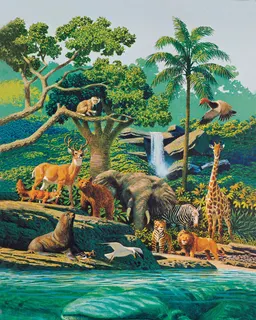
Genesis 1 opens with God bringing a world into order by His word. The first three days shape a place for life; the next three fill it with lights, creatures, and people. Its repeated refrain - God speaks, it comes to be, and He calls it good - presents creation as deliberate, ordered, and blessed.
Tap any highlighted phrase to jump to the commentary that unpacks it.
Genesis 1:1-2The Beginning
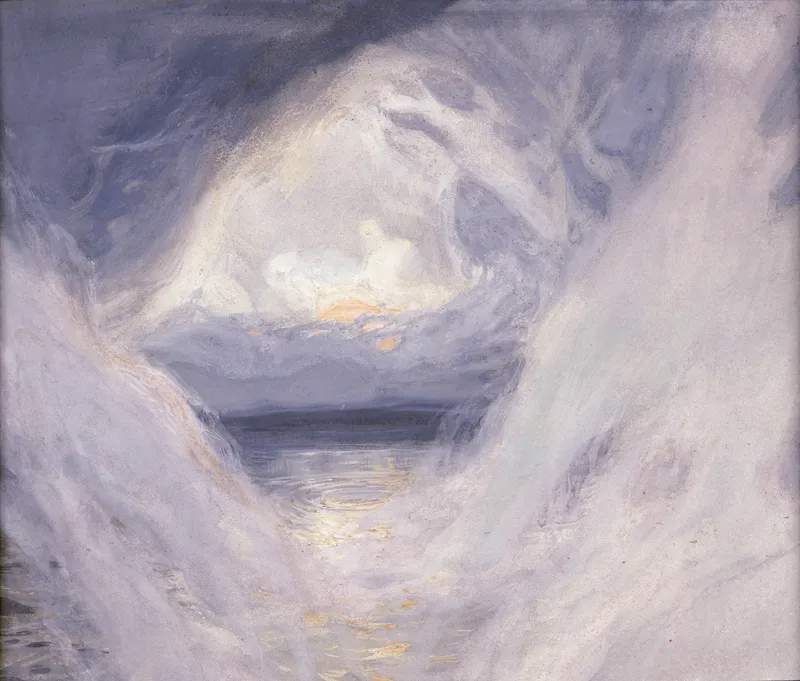
1In the beginning God created the heaven and the earth. 2And the earth was without form, and void; and darkness was upon the face of the deep. And the Spirit of God moved upon the face of the waters.
Genesis begins with God. The chapter uses bara', “create,” and asah, “make,” for His work. Neither verb by itself settles every question about process. The opening announces the Creator who brings heaven and earth into being.
The world is unformed and unfilled, yet God's Spirit is already present over the waters, attending a creation not yet ready for life.
Creation Day 1 · Genesis 1:3-5Light
3And God said, Let there be light: and there was light. 4And God saw the light, that it was good: and God divided the light from the darkness. 5And God called the light Day, and the darkness he called Night. And the evening and the morning were the first day.
God brings light, distinguishes it from darkness, and later gives sun and moon their work.
Creation Day 2 · Genesis 1:6-8The Expanse
6And God said, Let there be a firmament in the midst of the waters, and let it divide the waters from the waters. 7And God made the firmament, and divided the waters which were under the firmament from the waters which were above the firmament: and it was so. 8And God called the firmament Heaven. And the evening and the morning were the second day.
Creation Day 3 · Genesis 1:9-13Dry Land and Green
9And God said, Let the waters under the heaven be gathered together unto one place, and let the dry land appear: and it was so. 10And God called the dry land Earth; and the gathering together of the waters called he Seas: and God saw that it was good.
By day three, dry land appears and the world is fit for life. Later deliverance stories return to dry ground through water.
11And God said, Let the earth bring forth grass, the herb yielding seed, and the fruit tree yielding fruit after his kind, whose seed is in itself, upon the earth: and it was so. 12And the earth brought forth grass, and herb yielding seed after his kind, and the tree yielding fruit, whose seed was in itself, after his kind: and God saw that it was good. 13And the evening and the morning were the third day.
Creation Day 4 · Genesis 1:14-19Lights to Rule
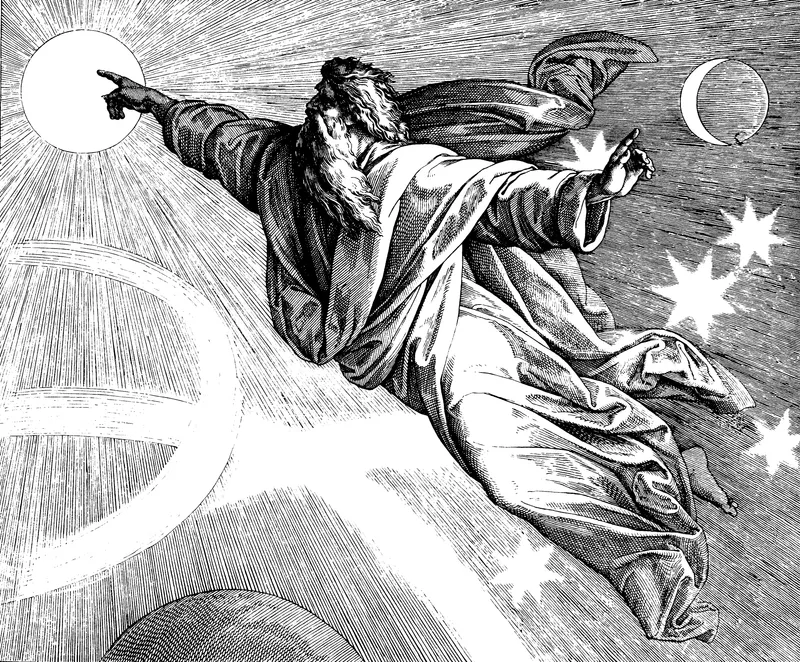
14And God said, Let there be lights in the firmament of the heaven to divide the day from the night; and let them be for signs, and for seasons, and for days, and years: 15And let them be for lights in the firmament of the heaven to give light upon the earth: and it was so. 16And God made two great lights; the greater light to rule the day, and the lesser light to rule the night: he made the stars also. 17And God set them in the firmament of the heaven to give light upon the earth, 18And to rule over the day and over the night, and to divide the light from the darkness: and God saw that it was good. 19And the evening and the morning were the fourth day.
Sun, moon, and stars are created lights for days, seasons, and years. God alone is Creator.
Creation Day 5 · Genesis 1:20-23Fish and Birds
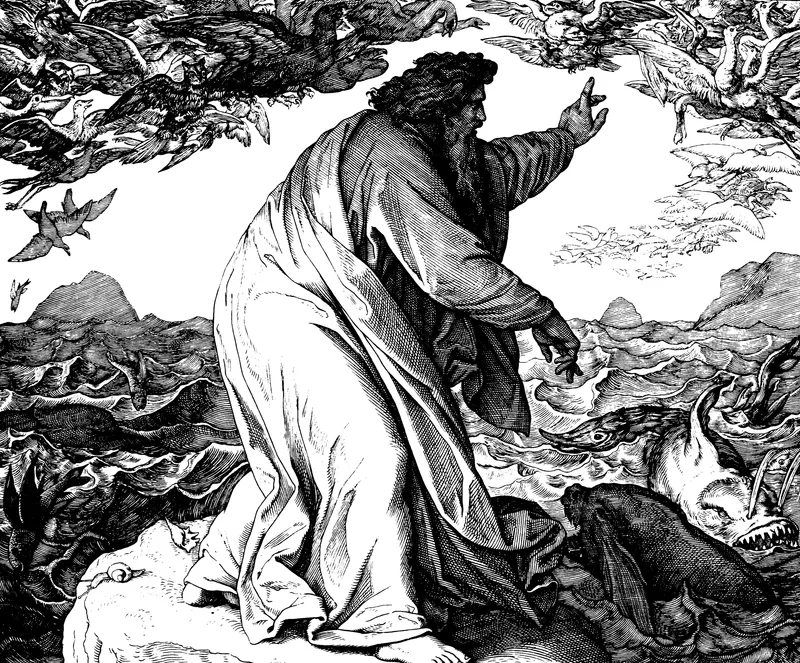
20And God said, Let the waters bring forth abundantly the moving creature that hath life, and fowl that may fly above the earth in the open firmament of heaven. 21And God created great whales, and every living creature that moveth, which the waters brought forth abundantly, after their kind, and every winged fowl after his kind: and God saw that it was good. 22And God blessed them, saying, Be fruitful, and multiply, and fill the waters in the seas, and let fowl multiply in the earth. 23And the evening and the morning were the fifth day.
Creation Day 6 · Genesis 1:24-25Land Animals
24And God said, Let the earth bring forth the living creature after his kind, cattle, and creeping thing, and beast of the earth after his kind: and it was so. 25And God made the beast of the earth after his kind, and cattle after their kind, and every thing that creepeth upon the earth after his kind: and God saw that it was good.
Creation Day 6 · Genesis 1:26-28Made in God's Image
26And God said, Let us make man in our image, after our likeness: and let them have dominion over the fish of the sea, and over the fowl of the air, and over the cattle, and over all the earth, and over every creeping thing that creepeth upon the earth. 27So God created man in his own image, in the image of God created he him; male and female created he them. 28And God blessed them, and God said unto them, Be fruitful, and multiply, and replenish the earth, and subdue it: and have dominion over the fish of the sea, and over the fowl of the air, and over every living thing that moveth upon the earth.
God makes male and female in His image, giving every person dignity and responsibility to represent His rule within the world He made.
Creation Day 6 · Genesis 1:29-31Very Good
29And God said, Behold, I have given you every herb bearing seed, which is upon the face of all the earth, and every tree, in the which is the fruit of a tree yielding seed; to you it shall be for meat. 30And to every beast of the earth, and to every fowl of the air, and to every thing that creepeth upon the earth, wherein there is life, I have given every green herb for meat: and it was so. 31And God saw every thing that he had made, and, behold, it was very good. And the evening and the morning were the sixth day.
God supplies creation's needs and calls the whole world very good. He delights in the physical world He made.
Creation Day 7 · Genesis 2:1-3Rest
1 2he rested 3God blessed the seventh daysanctified itcreated and made
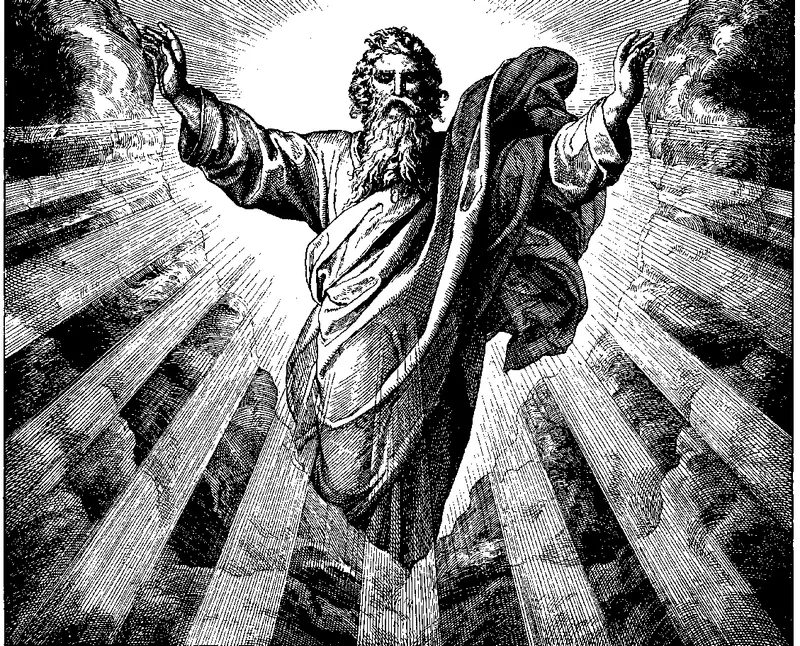
God completes creation and rests. Genesis blesses and sanctifies the seventh day, giving rest a place within the goodness of creation.
Research trail
Sources & further study
These references support the historical, linguistic, manuscript, and contextual notes in this chapter. Scripture remains the primary text; external sources are provided so readers can inspect the research directly.
- Enuma Elish, Tablet I (K.5419c)A Neo-Assyrian clay tablet preserving part of the Babylonian creation epic from the broader ancient Near Eastern cultural world.
- Creation Stories in the BibleSBL overview placing Genesis 1 alongside Mesopotamian and Egyptian creation accounts.
- Genesis 1 · Hebrew + Jewish commentaryHebrew text with Rashi, Ibn Ezra, Ramban side-by-side - useful for the bara' and asah question.
Where this echoes in Scripture
The Beginning
- John 1:1-3In the beginning was the Word… all things were made by him; and without him was not any thing made that was made.John deliberately echoes Genesis 1:1 - the Word who speaks creation into being is Christ.
- Hebrews 11:3Through faith we understand that the worlds were framed by the word of God.Creation by speech, received by faith.
- Colossians 1:16For by him were all things created, that are in heaven, and that are in earth.Paul names the Christ behind every "and God said."
- Psalm 33:6, 9By the word of the Lord were the heavens made… he spake, and it was done.The Psalmist celebrates the same pattern - divine speech, instant creation.
- Revelation 21:1I saw a new heaven and a new earth: for the first heaven and the first earth were passed away.The Bible bookends - first creation; new creation.