Psalms 33
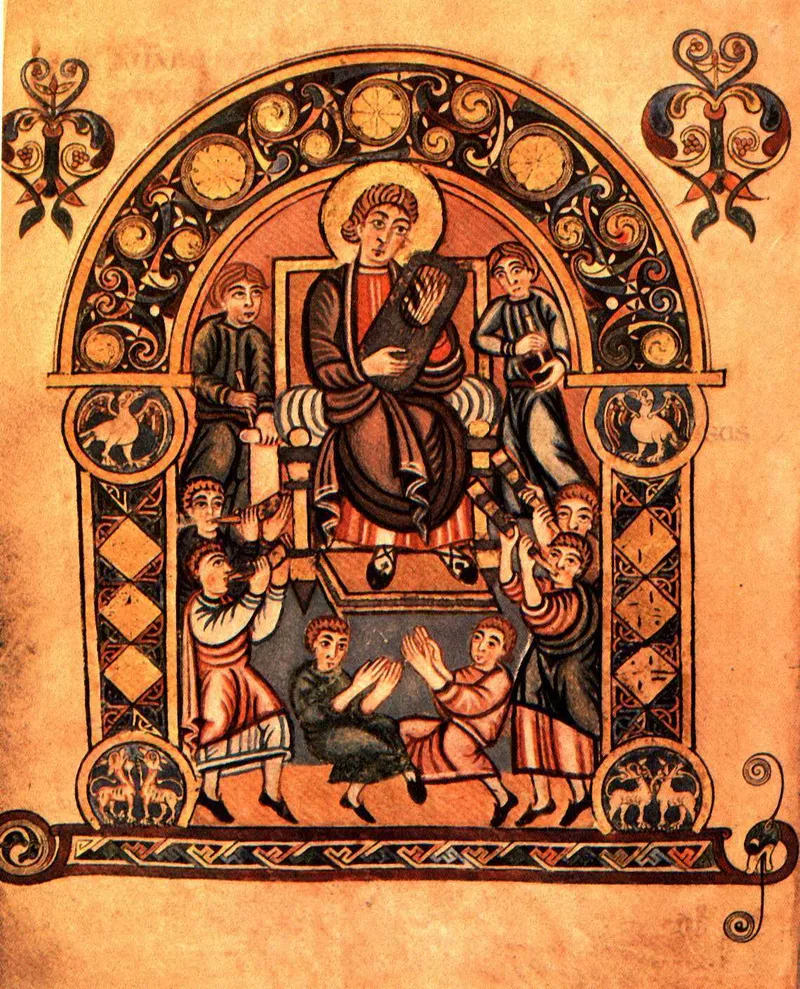
Psalm 33 is a hymn of praise, and it opens the way a great piece of music opens - with a summons to play. Rejoice in the LORD, O ye righteous… Sing unto him a new song; play skilfully with a loud noise.1 It calls for harps and a ten-stringed instrument, for skill and for volume, for a song that is new - not because the old songs were worn out, but because every fresh mercy deserves a fresh response.
And then, having called for the music, the psalm spends the rest of its length telling us what the music is about. It is about a God whose word is utterly reliable, whose works are done in truth, and whose goodness fills the whole earth.
Tap any highlighted phrase to jump to the commentary that unpacks it.
Psalm 33:1-5Sing Unto Him a New Song
1Rejoice in the LORD, O ye righteous: for praise is comely for the upright. 2Praise the LORD with harp: sing unto him with the psaltery and an instrument of ten strings. 3Sing unto him a new song; play skilfully with a loud noise. 4For the word of the LORD is right; and all his works are done in truth. 5He loveth righteousness and judgment: the earth is full of the goodness of the LORD.
The psalm opens like the tuning of an orchestra. Rejoice in the LORD, O ye righteous: for praise is comely for the upright. Praise is not described as a duty grimly owed but as something comely - beautiful, fitting, the thing that suits an upright heart the way a fine garment suits the one it was made for.
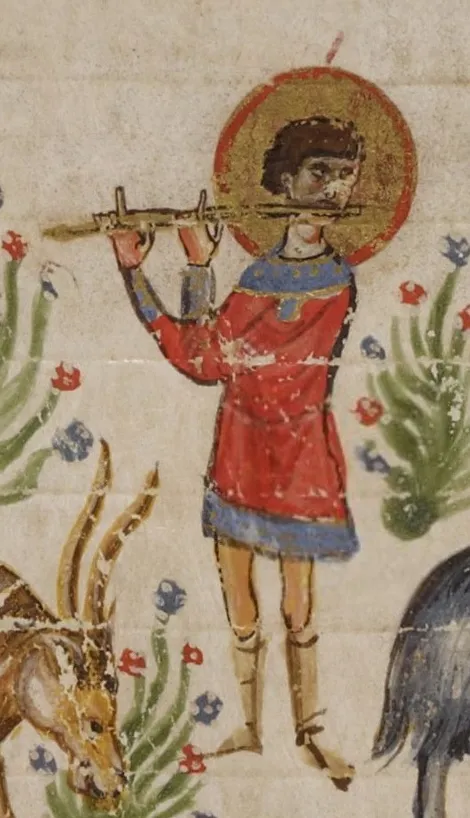
And then the music is called up by name: the harp, the psaltery, the instrument of ten strings. This is no whispered devotion. It asks for instruments, for craft, for volume - play skilfully with a loud noise. Notice that it asks for both at once: skilfully and loud. The praise is to be poured out with everything in us - the trained hand and the full voice together, neither sloppy enthusiasm nor cold precision, but the whole self offered well.
And above all it asks for a new song. Not because the old songs have failed, but because the mercies of God keep arriving fresh, and each new mercy calls for a music that has never been sung before. There is always, the psalm insists, a new reason to sing - and the one whose heart is right reaches for the instrument.
Then the psalm gives the ground of all this gladness, and the ground is the character of God's word: For the word of the LORD is right; and all his works are done in truth. Here is why praise is comely - because the One we praise is utterly trustworthy in what He says and does. His word is right: straight, true, aligned with justice, never crooked or capricious. And His works match His word - they are done in truth, so that there is no gap between what God says and what God does.
We praise rulers warily, because their words and their deeds so often diverge; we learn to read between the lines. With God there is nothing to read between. The word is right and the works are true, and the two are one.
This is the bedrock the whole psalm is built on. Everything that follows - the heavens made by a word, the nations governed by a counsel, the eye that watches over the faithful - rests on this first claim: that the God who speaks can be believed, all the way down.
The first movement closes with a line that opens out like a window: He loveth righteousness and judgment: the earth is full of the goodness of the LORD. First the psalm tells us what God loves - righteousness and judgment, the right ordering of things, fairness, the setting-straight of what is bent. This is not a God who is indifferent to how the world goes; He has loves and commitments, and they run toward justice.
And then comes the sweeping observation that the whole earth bears witness to His goodness: the earth is full of it. Look anywhere, the psalm says, and you will find the fingerprints of a generous God - in the harvest and the rain, in the ordinary mercies that hold a life together, in the sheer overflowing abundance of a world that did not have to be this good.
The line is an invitation to a way of seeing. The faithless eye sees the earth as a closed system of blind forces; the eye trained by this psalm sees the same earth and finds it full - brimming, saturated, crowded with the goodness of the One who made it and loves what is right.
Psalm 33:6-12By the Word of the LORD
6By the word of the LORD were the heavens made; and all the host of them by the breath of his mouth. 7He gathereth the waters of the sea together as an heap: he layeth up the depth in storehouses. 8Let all the earth fear the LORD: let all the inhabitants of the world stand in awe of him. 9For he spake, and it was done; he commanded, and it stood fast. 10The LORD bringeth the counsel of the heathen to nought: he maketh the devices of the people of none effect. 11The counsel of the LORD standeth for ever, the thoughts of his heart to all generations. 12Blessed is the nation whose God is the LORD; and the people whom he hath chosen for his own inheritance.
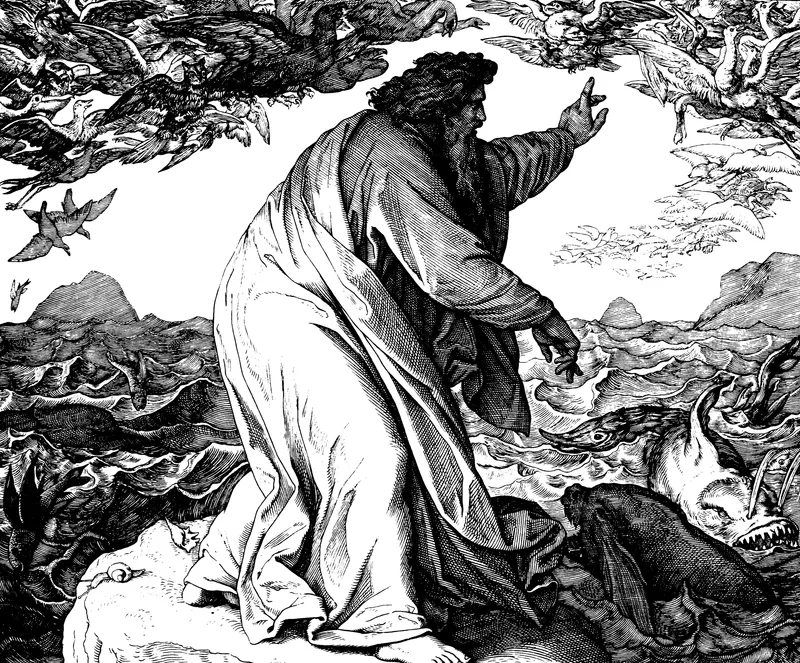
Now the psalm rises to its great theme, and it does so with breathtaking economy: By the word of the LORD were the heavens made; and all the host of them by the breath of his mouth. Stop and feel the picture. The heavens - the whole arching sky - and all the host of them, every star past counting, the entire shining multitude overhead. And by what were they made? By a word.
The poet does not describe God labouring, hammering, wrestling raw stuff into shape; he describes God speaking, and the stars answering. The making is as effortless as breath - the heavens come into being by the breath of his mouth, the way a word rides out on the air when a person speaks.
This is the echo of the opening of Genesis, where again and again God said… and it was so.2 The psalm takes that pattern and turns it into worship. We should let the wonder of it land before we reach for any conclusion: the immensity of the night sky, the sheer scale of all the host of it - and behind it all, not a machine or a blind force, but a voice. The universe is, at its root, the expression of a God who speaks.
Verse 9 says the same thing again, but now stripped down to its barest, most concussive form: For he spake, and it was done; he commanded, and it stood fast. Two clauses, four short verbs, and the entire doctrine of God's power is in them. He spake - and the result is instant: it was done. Not he laboured, not he attempted, not after long effort it was achieved - he spake, and the thing simply was.
And then the second verb gives the result staying power: he commanded, and it stood fast. What God brings about does not flicker into being and wobble away; it stands - it holds, it is firm. There is a settledness to creation precisely because it rests on the command of God.
Think how far this is from the way we accomplish anything - with tools and toil and trial and error, our results always partial, always crumbling at the edges. God speaks, and it is done; God commands, and it stands. The verse is not trying to satisfy our curiosity about how the world was made. It is trying to make us fear - Let all the earth fear the LORD, the previous verse said - to stand in awe before a power whose mere word is enough.
The psalm now turns the same truth from creation to history, and the turn is seamless: the word that made the stars also governs the nations. The LORD bringeth the counsel of the heathen to nought: he maketh the devices of the people of none effect. The counsel of the LORD standeth for ever, the thoughts of his heart to all generations. Set the two counsels side by side. There is the counsel of the heathen - the grand plans of nations and kings, the strategies of the powerful - and the psalm watches it come to nought. The devices of the people, all their scheming, are made of none effect. History is littered with the wreckage of empires that were certain of their permanence.
And then, against all that rubble, stands a single immovable thing: the counsel of the LORD standeth for ever. What He purposes does not expire with a generation or collapse with a regime; the thoughts of his heart reach to all generations. The same steadiness we saw in creation - it stood fast - is here at work in the long unrolling of the centuries. The nations plan and the plans dissolve; God purposes, and the purpose holds.
This is meant as deep comfort to people who feel small under the weight of forces they cannot control: the last word does not belong to the schemers. It belongs to the One whose counsel stands.
From the sweep of all nations the psalm narrows to one happy exception: Blessed is the nation whose God is the LORD; and the people whom he hath chosen for his own inheritance. Among all the peoples whose counsel comes to nought, there is a people whose blessedness rests on something no army can supply - the LORD Himself is their God. Notice where the blessing is located. Not in wealth, not in might, not in the size of the host (the very next verses will say no king is saved by a great army).
The blessing is in belonging: the LORD is theirs, and - more wonderful still - they are his, the people He has chosen for his own inheritance.
There is something staggering in that image. An inheritance is a treasure, the thing one most wants to keep and pass on; and the psalm dares to say that a people can be God's inheritance, His own cherished possession. The relationship runs both ways: He is their God, and they are His treasured portion. That - not resources, not power - is what makes a people blessed.
And the door of that blessing is not closed; the whole psalm has just summoned all the earth to fear Him and all the inhabitants of the world to stand in awe. The God who chooses a people for His own is calling the nations to come and be His.
Psalm 33:13-22The Eye of the LORD
13The LORD looketh from heaven; he beholdeth all the sons of men. 14From the place of his habitation he looketh upon all the inhabitants of the earth. 15He fashioneth their hearts alike; he considereth all their works. 16There is no king saved by the multitude of an host: a mighty man is not delivered by much strength. 17An horse is a vain thing for safety: neither shall he deliver any by his great strength. 18Behold, the eye of the LORD is upon them that fear him, upon them that hope in his mercy; 19To deliver their soul from death, and to keep them alive in famine. 20Our soul waiteth for the LORD: he is our help and our shield. 21For our heart shall rejoice in him, because we have trusted in his holy name. 22Let thy mercy, O LORD, be upon us, according as we hope in thee.
Having lifted our eyes to the heavens, the psalm now reverses the gaze: the God who made the host of heaven is looking back. The LORD looketh from heaven; he beholdeth all the sons of men. From the place of his habitation he looketh upon all the inhabitants of the earth. The repetition is deliberate - looketh… beholdeth… looketh - pressing on us the relentless attentiveness of God. Not a single one of the sons of men is outside His view; not one of all the inhabitants of the earth escapes His notice.
And it goes deeper than the surface of our doings: He fashioneth their hearts alike; he considereth all their works. He is not merely an observer of behaviour; He is the maker of the very hearts He watches. He formed them, and He understands them from the inside - He considereth, weighs, takes in the full meaning of all their works.
There is a solemnity here, but for the faithful there is also enormous comfort: to be seen, fully and truly, by the One who made you. The God of this psalm is not so vast that the individual is lost to Him. The same God whose word flung out the galaxies bends His attention to the heart of each human being He has fashioned.
Then the psalm punctures, very deliberately, the things people actually trust in. There is no king saved by the multitude of an host: a mighty man is not delivered by much strength. An horse is a vain thing for safety: neither shall he deliver any by his great strength. In the ancient world these were the visible guarantees of security - a large army, personal strength, the warhorse that was the tank of its day. The psalm names them one by one and declares each one insufficient.
The great army does not, of itself, save the king. The strong man's muscle does not, in the end, deliver him. The horse, for all its power, is a vain thing for safety - literally a lie, a false hope, something that promises a security it cannot actually give.
This is not a claim that armies and strength are worthless; it is a claim about where ultimate safety is and is not found. Everything visible that we pile up against our fears - resources, power, the sheer multitude of our defences - turns out to be a hollow guarantee if that is where our final trust rests.
The psalm is clearing the ground. It is knocking away every false floor so that we will put our weight on the only thing that holds.
And here is where the weight belongs: Our soul waiteth for the LORD: he is our help and our shield. For our heart shall rejoice in him, because we have trusted in his holy name. Over against the horse that cannot save and the army that cannot deliver, the psalm sets a single posture - waiting. Our soul waiteth for the LORD. To wait, in the Scriptures, is not passive idleness; it is active, expectant trust - the leaning of the whole self upon God to do what no army or strength can do.
And the psalm names what He is to those who wait: he is our help and our shield. Help for the need we cannot meet ourselves; a shield for the danger we cannot fend off ourselves. Then comes the joy - our heart shall rejoice in him - not because the trouble is already gone, but because we have trusted in his holy name. The gladness flows from the trusting itself, from having staked everything on a God whose name can bear the weight.
This is the answer to verses 16 and 17. They cannot deliver; He can. They are a vain thing for safety; He is our shield. The soul that has stopped trusting in horses and started waiting on the LORD has found the one ground that does not give way.
Research trail
Sources & further study
These references support the historical, linguistic, manuscript, and contextual notes in this chapter. Scripture remains the primary text; external sources are provided so readers can inspect the research directly.
- Psalm 33 - Translators' NotesThe NET Bible's detailed footnotes on Psalm 33 - the “new song” and the call to skilful playing in verses 1-3, the creation-by-speech of verses 6 and 9, the contrast of the nations' failed counsel with the LORD's enduring counsel in verses 10-11, and the watching eye of verse 18.
- Psalm 33 ↔ Genesis 1 · John 1 · Colossians 1 · Hebrews 1Traces the verbal threads tying Psalm 33's by the word of the LORD were the heavens made back to the repeated and God said… and it was so of Genesis 1, and forward to the New Testament's “In the beginning was the Word… all things were made by him” (John 1) and “by him were all things created” (Colossians 1, Hebrews 1).
- Psalm 33 · Hebrew + classical Jewish commentaryThe Hebrew text of Psalm 33 with Rashi, Ibn Ezra, Radak, and other classical commentators side by side - useful for the spoken-word verb dabar (v. 6, “word, utterance”), for ruach as the breath of his mouth (v. 6), and for the steadfast chesed that fills the earth (v. 5) and grounds the soul's hope (vv. 18, 22).
Where this echoes in Scripture
Sing Unto Him a New Song
- Psalm 96:1O sing unto the LORD a new song: sing unto the LORD, all the earth.The same summons to a new song (v. 3) - the fresh music every fresh mercy calls for.
- Psalm 19:1The heavens declare the glory of God; and the firmament sheweth his handywork.The earth full of God's goodness (v. 5) - creation itself bearing constant witness.
- Lamentations 3:22-23It is of the LORD's mercies that we are not consumed... they are new every morning.The chesed of verse 5 - the steadfast love that fills the earth and arrives fresh each day.
- Revelation 5:9And they sung a new song, saying, Thou art worthy to take the book.The new song of verse 3 carried to its end - the song of the redeemed before the throne.
By the Word of the LORD
- Genesis 1:3And God said, Let there be light: and there was light.The pattern behind verses 6 and 9 - God speaks, and it is so.
- John 1:1-3In the beginning was the Word... All things were made by him; and without him was not any thing made that was made.The word by which the heavens were made (v. 6), unveiled as a Person.
- Hebrews 11:3Through faith we understand that the worlds were framed by the word of God.The very claim of verse 6 - the worlds framed by the word of God.
- Proverbs 19:21There are many devices in a man's heart; nevertheless the counsel of the LORD, that shall stand.The devices brought to nought against the counsel that stands (vv. 10-11).
The Eye of the LORD
- Psalm 147:10-11He delighteth not in the strength of the horse... The LORD taketh pleasure in them that fear him, in those that hope in his mercy.The same contrast as verses 17-18 - the vain horse against the eye that rests on those who hope.
- Proverbs 21:31The horse is prepared against the day of battle: but safety is of the LORD.The warhorse of verse 17 - a vain thing for safety, because safety belongs to the LORD.
- Psalm 34:15The eyes of the LORD are upon the righteous, and his ears are open unto their cry.The watching eye of verse 18 - turned toward the faithful in care, not condemnation.
- 1 Peter 3:12For the eyes of the Lord are over the righteous, and his ears are open unto their prayers.The eye of the LORD (v. 18) carried into the New Testament's promise to the faithful.