Learn of Christ
BibleStudyArtResources
Get the app
Loading study guide…

Art for this chapter

How artists have pictured John 2

See all 13 →
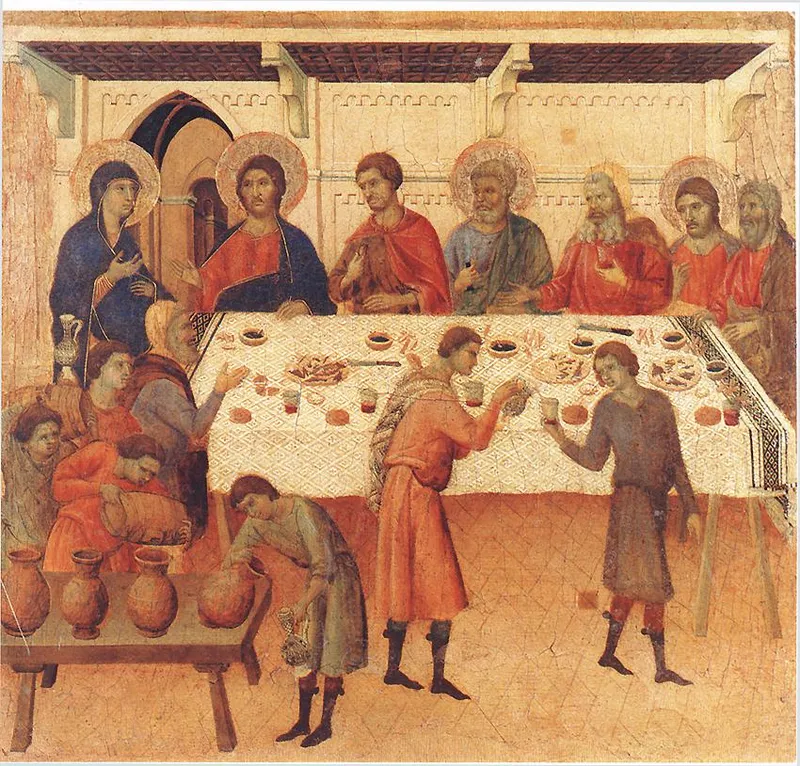
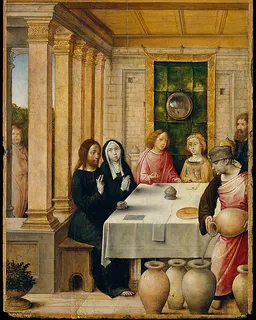
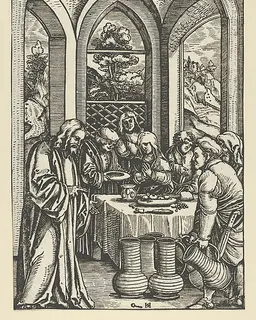
Wedding at Cana by Duccio di Buoninsegna

Wedding at Cana

Duccio di Buoninsegna · 1311

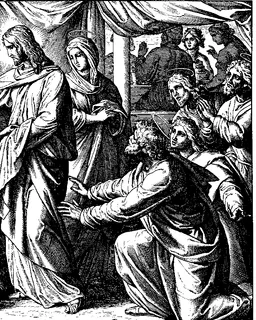
The Wedding at Cana by Julius Schnorr von Carolsfeld

The Wedding at Cana

Julius Schnorr von Carolsfeld · 1860

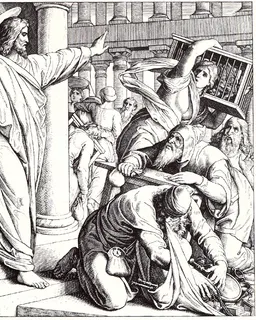
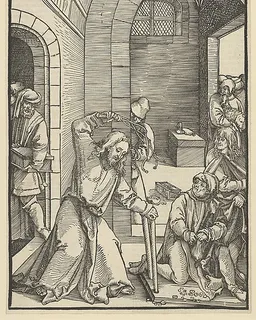
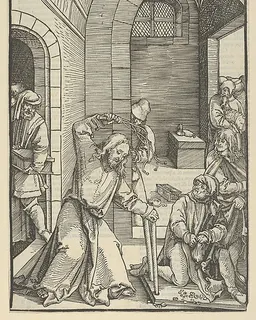
Jesus Cleanses the Temple by Julius Schnorr von Carolsfeld

Jesus Cleanses the Temple

Julius Schnorr von Carolsfeld · 1860

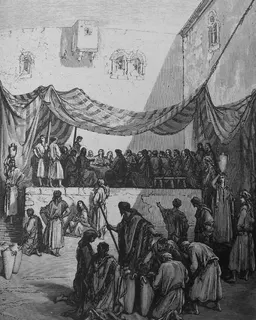
Marriage at Cana by Gustave Doré

Marriage at Cana

Gustave Doré · 1866

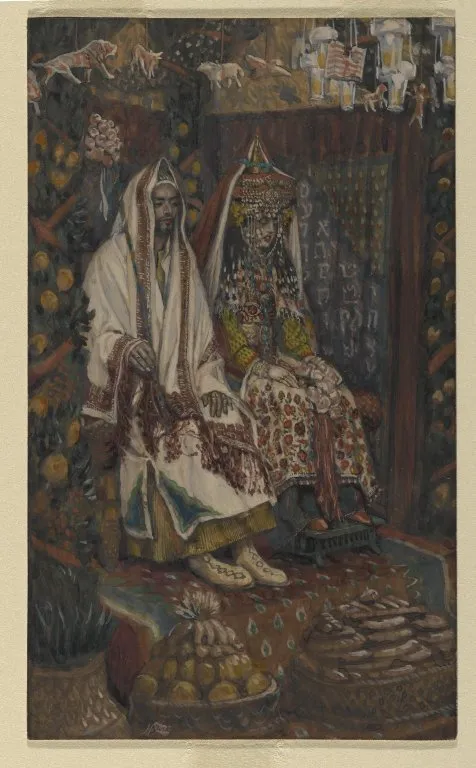
The Marriage Feast of Cana by James Tissot

The Marriage Feast of Cana

James Tissot · 1886

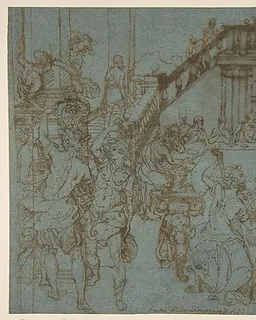
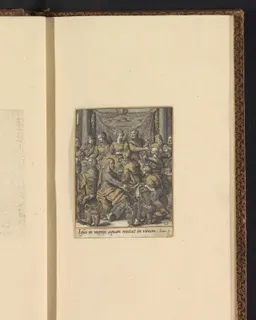
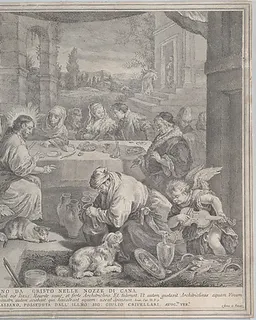
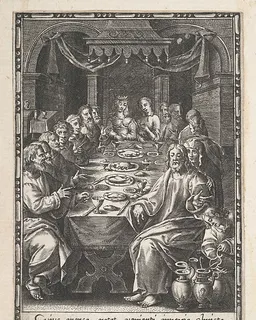
Bruiloft te Kana by Adriaen Collaert

Bruiloft te Kana

Adriaen Collaert · 1580

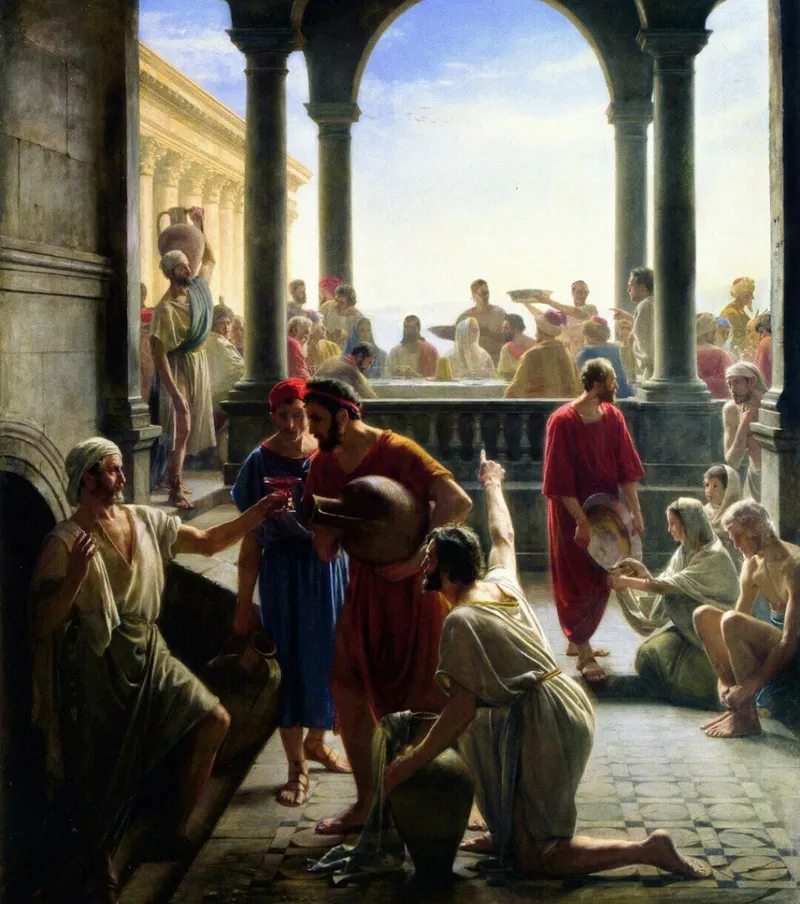
The Wedding at Cana by Carl Heinrich Bloch

The Wedding at Cana

Carl Heinrich Bloch · 1870

Casting Out the Money Changers by Carl Heinrich Bloch

Casting Out the Money Changers

Carl Heinrich Bloch · 1875

+5 more →
Previous

John

Chapter 2 of 21

Next

Learn of Christ

Free Bible study for everyone. No account. No ads.

Study

  • Read the Bible
  • Study Plans
  • Topics

Learn

  • Questions
  • Blog
  • Resources
  • About

More

  • Privacy
  • Terms

© 2026 Learn of Christ

Made with faith, freely given.

John 2

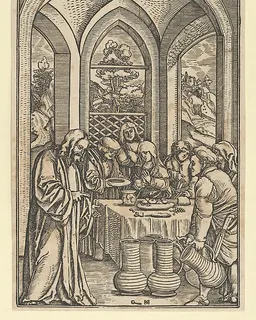
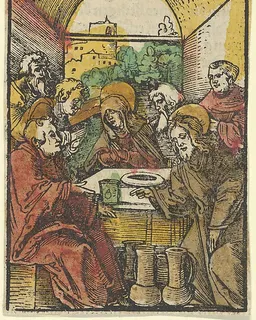
John gives the wedding at Cana the place of honour: it is the beginning of miracles (v. 11), the first of the signs by which, all through this Gospel, Jesus will manifest His glory. The scene is ordinary and warm - a village wedding, His mother present, Jesus and His disciples among the guests - and into it falls a quiet disaster: they wanted wine. To run out of wine at a wedding was no small thing; it meant shame for the host and a feast cut short. Mary brings the need to her Son without spelling out a demand: They have no wine (v. 3). His answer sounds, at first hearing, like a refusal - Woman, what have I to do with thee? mine hour is not yet come - yet she turns to the servants with perfect confidence and gives the instruction that the whole Gospel turns on: Whatsoever he saith unto you, do it (v. 5).3

What follows is not a patched-over emergency but an outpouring. Six stone waterpots, set there for the rites of purifying, are filled to the brim, and the water drawn out is wine - so good that the governor of the feast, not knowing where it came from, calls the bridegroom and says, thou hast kept the good wine until now (v. 10). The best is saved for last; the rites of washing give way to the wine of gladness; and the disciples, watching, begin to believe. After a brief descent to Capernaum (v. 12), the chapter moves to Jerusalem and the Passover, and the mood shifts entirely.2

In the temple courts Jesus finds the trade of sacrifice turned into a market - oxen and sheep and doves sold, money changers seated at their tables. He makes a scourge of small cords and drives them out, overturning the tables and pouring out the coins, with a word that names the whole offense: make not my Father's house an house of merchandise (v. 16). His disciples remember the psalm, The zeal of thine house hath eaten me up. And when the authorities demand a sign to justify Him, He answers with words they cannot yet read: Destroy this temple, and in three days I will raise it up (v. 19). They think of the great building forty-six years in construction; John tells us what Jesus meant - he spake of the temple of his body (v. 21). The chapter ends with many believing at the sight of His miracles, and with a sober line about the One who saw straight through them: he knew what was in man (v. 25).

Tap any highlighted phrase to jump to the commentary that unpacks it.
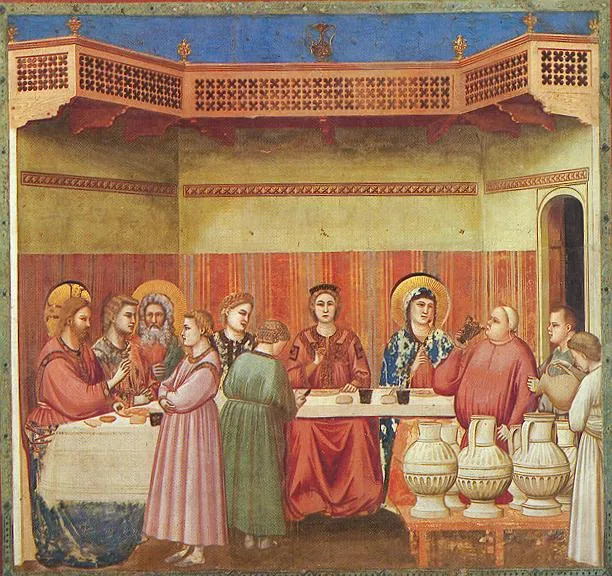
Marriage at Cana
John 2 · This Beginning of MiraclesMarriage at CanaGiotto di Bondone · 1305
· · ·

John 2:1-11This Beginning of Miracles

John 2:1-5

1And the third day there was a marriage in Cana of Galilee; and the mother of Jesus was there: 2And both Jesus was called, and his disciples, to the marriage. 3And when they wanted wine, the mother of Jesus saith unto him, They have no wine. 4Jesus saith unto her, Woman, what have I to do with thee? mine hour is not yet come. 5His mother saith unto the servants, Whatsoever he saith unto you, do it.

The scene could hardly be more ordinary, and that is part of its weight. And the third day there was a marriage in Cana of Galilee; and the mother of Jesus was there: and both Jesus was called, and his disciples, to the marriage (vv. 1-2). A village wedding, family and friends, a feast that in that culture might run for days - and Jesus is simply a guest at it, with His mother and the handful of men who had begun to follow Him. Then the quiet crisis: when they wanted wine - that is, when the wine ran out. To us this sounds like a minor inconvenience; in that world it was a real disgrace. Hospitality was a sacred duty, a wedding was the great celebration of a household, and to fail of wine before the feast was over was to shame the bride and groom in front of the whole village. Into that small, human embarrassment the mother of Jesus speaks: They have no wine (v. 3). She does not give orders or spell out what she wants. She simply lays the need before her Son and leaves it with Him - which is its own kind of faith.3

Jesus' answer sounds abrupt to a modern ear: Woman, what have I to do with thee? mine hour is not yet come (v. 4). It helps to hear it as His first hearers would have. To address a woman as Woman was not cold or rude; it was an ordinary, respectful form of address - the same word He will use from the cross when He tenderly gives her into the care of the beloved disciple, Woman, behold thy son (John 19:26). And the phrase what have I to do with thee is a known idiom, a way of saying, in effect, “your concern and mine are not the same here.” The point is the line that follows: mine hour is not yet come. All through this Gospel the hour is the appointed time of His suffering and glory, the climax His whole mission moves toward, and it is set by the Father, not by family wishes. So Jesus is not refusing His mother so much as gently marking that what He does, and when, answers to the Father's timing. And what she does next shows she has understood Him perfectly - she does not argue, she simply makes ready for Him to act.

Mary turns from her Son to the servants and gives the only instruction anyone gives in the whole scene: Whatsoever he saith unto you, do it (v. 5). It is worth pausing on the confidence in it. She has just been told, in effect, that this is not hers to direct - and her response is not to push, but to trust. She does not know what He will do or how; she simply assumes He will act, and tells the servants to be ready to do whatever He says, however strange it might sound. And in a moment it will sound strange indeed: He will tell grown men to fill enormous jars with water at a feast that needs wine. Her words are the hinge of the miracle, and they are also, without straining the text at all, the plainest description of what it means to follow Him that the Gospel offers. Faith, here, is not first understanding and then obeying; it is obeying the word of Christ before you can see where it leads, on the strength of who He is.

John 2:6-11

6And there were set there six waterpots of stone, after the manner of the purifying of the Jews, containing two or three firkins apiece. 7Jesus saith unto them, Fill the waterpots with water. And they filled them up to the brim. 8And he saith unto them, Draw out now, and bear unto the governor of the feast. And they bare it. 9When the ruler of the feast had tasted the water that was made wine, and knew not whence it was: (but the servants which drew the water knew;) the governor of the feast called the bridegroom, 10And saith unto him, Every man at the beginning doth set forth good wine; and when men have well drunk, then that which is worse: but thou hast kept the good wine until now. 11This beginning of miracles did Jesus in Cana of Galilee, and manifested forth his glory; and his disciples believed on him.

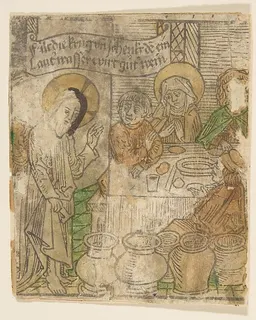
Notice exactly which vessels Jesus uses: six waterpots of stone, after the manner of the purifying of the Jews, containing two or three firkins apiece (v. 6). These were not wine jars or table pitchers; they were the great stone jars kept for the rites of ceremonial washing - water for the cleansing of hands and vessels before the meal. Each held two or three firkins, so that the six together held something near a hundred and twenty or a hundred and eighty gallons. The detail is not incidental. When Jesus says, Fill the waterpots with water… Draw out now, and bear unto the governor of the feast (vv. 7-8), He takes the water set apart for the old rites of purification and turns it into the wine of a wedding feast - and an enormous quantity of it. The servants do exactly as Mary said: they fill the jars up to the brim and carry the impossible cupful to the steward. They are the only ones besides Jesus who know what has happened, and they know it because they obeyed.

The governor of the feast - the steward charged with the food and drink - tastes the cup and does not know what the servants know. When the ruler of the feast had tasted the water that was made wine, and knew not whence it was… he called the bridegroom, and saith unto him, Every man at the beginning doth set forth good wine; and when men have well drunk, then that which is worse: but thou hast kept the good wine until now (vv. 9-10). His remark is half a compliment and half a puzzled protest: everyone serves the good wine first, while palates are sharp, and brings out the lesser wine once the guests are merry and less discerning. This bridegroom has done it backwards - the best has come last. He does not know the half of what he is saying. The wine is not merely good; it has appeared out of water meant for washing, by a word. And the pattern he names without understanding - the good wine until now - turns out to be the very shape of how God works in this Gospel: the best is not behind us but ahead, kept and saved and brought out at the appointed time.

Then John steps in and tells us, in one sentence, exactly how to read everything we have just watched: This beginning of miracles did Jesus in Cana of Galilee, and manifested forth his glory; and his disciples believed on him (v. 11). Three things are pressed together here. First, this is the beginning - the first of the signs that will run through the whole Gospel, each one a window onto who He is. Second, the sign manifested forth his glory: the turning of water into wine was not chiefly about rescuing a party but about showing, to those with eyes to see, the glory of the One performing it. Third, the disciples believed on him - the sign did its work, drawing the first followers deeper into trust. John's word sign matters: a sign points beyond itself. The wine is wonderful in its own right, but it is also a finger pointing - at the abundance, the gladness, the glory that have come near in this Man. The disciples saw past the wine to the Person, and believed.1

Christ Connection - The Glory Manifested at the Feast
John opened his Gospel with a claim almost too large to take in: In the beginning was the Word… And the Word was made flesh, and dwelt among us, (and we beheld his glory, the glory as of the only begotten of the Father,) full of grace and truth (John 1:1, 14). Now, at Cana, that glory is no longer only declared - it is manifested forth, brought out where eyes can see it: This beginning of miracles did Jesus in Cana of Galilee, and manifested forth his glory; and his disciples believed on him (v. 11). And see how it is manifested. Not in thunder, not in judgment, but in the wine of a wedding - in abundance, in celebration, in joy poured out beyond all need. The prophets had pictured the age of God's salvation as exactly such a feast: in this mountain shall the LORD of hosts make unto all people a feast of fat things, a feast of wines on the lees (Isa. 25:6)2; and the Lord Himself will liken the kingdom to a wedding, The kingdom of heaven is like unto a certain king, which made a marriage for his son (Matt. 22:2). The water set apart for the old rites of washing becomes the wine of the new gladness - the good wine until now (v. 10), the best kept not for the beginning but for the end. This is the glory of the Word made flesh, breaking out at a wedding: the joy of the kingdom has drawn near in Him, and there is more of it, and better, than anyone expected.
Christ Connection - Whatsoever He Saith Unto You, Do It
The only counsel anyone gives in the whole Cana scene comes from the mother of Jesus, and she gives it not to her Son but to the servants: Whatsoever he saith unto you, do it (v. 5). It is hard to imagine a simpler rule for the Christian life. The servants did not understand why they were filling washing-jars with water at a feast that needed wine; they could not have foreseen what would come of it. They simply did what He said - filled them up to the brim - and the miracle came through their obedience. That is the pattern the Lord Himself presses again and again. If ye love me, keep my commandments (John 14:15); Why call ye me, Lord, Lord, and do not the things which I say? (Luke 6:46); and at the end, whatsoever I command you is the substance of discipleship (John 15:14). Wisdom here is not first seeing the whole plan and then consenting to it; it is doing the word of Christ before the reason is clear, on the strength of who He is. The servants drew out wine because they obeyed; and the deepest things He gives are still, so often, drawn out only on the far side of a simple do it.
Only the servants knew where the wine had come from - but the servants which drew the water knew (v. 9) - and they knew because they had done the strange, unglamorous thing Jesus told them to do. Fill the waterpots with water is not a command that explains itself. Hauling water to the brim of six great jars, at a feast that needed wine, must have felt pointless while they were doing it. The understanding came afterward, in the doing. That is worth carrying, because most of us want the reverse: we want to see how an act of obedience will pay off before we will undertake it, and we hold back from the plain next thing - the apology, the act of service, the habit of prayer, the open hand - until we can see the wine. Cana says: do the filling. Take the one clear thing Christ has set in front of you this week - the duty you already know, however ordinary - and do it to the brim, before you can see what will come of it. The servants who obeyed were the ones who saw the miracle from the inside. Obedience is very often the doorway through which understanding finally walks.

John 2:12He Went Down to Capernaum

John 2:12

12After this he went down to Capernaum, he, and his mother, and his brethren, and his disciples: and they continued there not many days.

A single quiet verse links the wedding to the journey up to Jerusalem: After this he went down to Capernaum, he, and his mother, and his brethren, and his disciples: and they continued there not many days (v. 12). It is the kind of line a reader can pass over, but it does real work. One goes down to Capernaum because the town sits on the shore of the Sea of Galilee, low against the lake, while Cana lies in the hills; the geography is exact. Capernaum will become the home base of much of Jesus' Galilean ministry, the town He so often returns to. And the little company named here - he, and his mother, and his brethren, and his disciples - shows the gathering that now travels with Him: family and followers together, at this early stage still close around Him. The stay is brief, not many days, because the Passover is at hand and His face is set toward Jerusalem. The verse is a hinge, turning us from the joy of the feast to the zeal of the temple.

Christ Connection - He Dwelt Among Us
It is easy to hurry past a verse like this, but it is worth lingering on what it shows. Between the glory manifested at the wedding and the zeal that will blaze in the temple, the Word made flesh simply went down to Capernaum… and they continued there not many days (v. 12) - ordinary days, a lakeside town, His mother and brethren and disciples close around Him. This is the texture of the great word John spoke at the outset: the Word was made flesh, and dwelt among us (John 1:14). To dwell among us did not mean only the high moments and the signs; it meant the unremarkable stretches too - the journeys, the shared roof, the days that left no story behind them except that He was there with His own. The One through whom all things were made (John 1:3) walked the road down to a fishing town and stayed a few days with His family. The glory that flashed out at Cana belongs to the same Lord who lived these quiet, in-between days - and that is its own kind of good news for lives mostly made of such days.

John 2:13-25Destroy This Temple

John 2:13-17

13And the Jews' passover was at hand, and Jesus went up to Jerusalem. 14And found in the temple those that sold oxen and sheep and doves, and the changers of money sitting: 15And when he had made a scourge of small cords, he drove them all out of the temple, and the sheep, and the oxen; and poured out the changers' money, and overthrew the tables; 16And said unto them that sold doves, Take these things hence; make not my Father's house an house of merchandise. 17And his disciples remembered that it was written, The zeal of thine house hath eaten me up.

The setting shifts from a Galilean wedding to the heart of Israel's worship: And the Jews' passover was at hand, and Jesus went up to Jerusalem (v. 13). At Passover the city swelled with pilgrims, all needing animals to sacrifice and the proper coinage to pay the temple dues. So a trade had grown up in the temple courts: those that sold oxen and sheep and doves, and the changers of money sitting (v. 14). On its face the system was convenient, even necessary - a pilgrim from far away could hardly drive a lamb hundreds of miles, and foreign coins had to be exchanged. But something had gone badly wrong. The outer courts of the Father's house, the one place where the nations were meant to be able to draw near, had been turned into a noisy market, worship crowded out by commerce, devotion mixed up with profit. Jesus goes up to keep the feast and finds the house of God doing a brisk trade. What He does next is deliberate.

Jesus does not file a complaint or open a debate. And when he had made a scourge of small cords, he drove them all out of the temple, and the sheep, and the oxen; and poured out the changers' money, and overthrew the tables (v. 15). The act is physical, public, and unmistakable. He makes the whip Himself, from cords lying to hand; He drives out the animals; He sends the coins of the money changers scattering across the pavement and tips over their tables. To the sellers of doves - the offering of the poor, who could not afford a lamb - He speaks rather than overturns, but the word is just as firm: Take these things hence; make not my Father's house an house of merchandise (v. 16). Notice the claim folded into the rebuke. He calls the temple my Father's house - not our Father's, not the house of God in general, but His Father's, with a nearness no one else assumed. The cleansing is an act of authority over the holiest place in the nation, and it is done out of a son's jealousy for his father's honour.

The disciples, watching, reach for Scripture to make sense of what they are seeing: And his disciples remembered that it was written, The zeal of thine house hath eaten me up (v. 17). The line is from the psalms - the zeal of thine house hath eaten me up; and the reproaches of them that reproached thee are fallen upon me (Ps. 69:9)2 - the cry of a sufferer consumed by his devotion to God's house and bearing reproach for it. The disciples see that cry coming true in front of them. The word zeal means a burning, consuming earnestness; and eaten me up says it is not a mild concern but a fire that takes hold of the whole person. What looked, perhaps, like sudden anger, the disciples recognize as something deeper and older: a holy jealousy for the honour of God, the kind that the Scriptures had long foretold would mark the one who truly loved the Father's house. And the psalm they quote is one steeped in suffering - a hint, this early, that this zeal will cost Him.

John 2:18-22

18Then answered the Jews and said unto him, What sign shewest thou unto us, seeing that thou doest these things? 19Jesus answered and said unto them, Destroy this temple, and in three days I will raise it up. 20Then said the Jews, Forty and six years was this temple in building, and wilt thou rear it up in three days? 21But he spake of the temple of his body. 22When therefore he was risen from the dead, his disciples remembered that he had said this unto them; and they believed the scripture, and the word which Jesus had said.

The authorities do not deny the disorder in the courts; they challenge His right to act: What sign shewest thou unto us, seeing that thou doest these things? (v. 18). It is a fair question on its own terms - by what authority does this Galilean clear the temple? But the demand for a sign runs all through this Gospel, and the answer Jesus gives is one they cannot possibly read at the time: Destroy this temple, and in three days I will raise it up (v. 19). They hear it as a boast about the building and find it absurd: Forty and six years was this temple in building, and wilt thou rear it up in three days? (v. 20). Herod's great reconstruction had been underway for nearly half a century; the idea that anyone could raise it in three days was plainly impossible. They are not wrong about the stones. They are simply hearing the wrong temple. The sign He offers for His authority over the Father's house is not a wonder He will perform on demand, but the deepest sign of all - and He has just spoken it, veiled, in front of them.3

John will not let the riddle stand unexplained, so he tells us plainly what Jesus meant: But he spake of the temple of his body (v. 21). The temple in Jerusalem was the place where God was understood to dwell among His people, where heaven and earth met, where atonement was made - and Jesus points to His own body as the true such place, the real meeting of God and man. Destroy this temple, and in three days I will raise it up is therefore the first clear word in this Gospel of His death and resurrection: His body will be torn down, and on the third day He will raise it again. At the time, no one grasps it - not even His own. But John adds the moment the meaning broke in: When therefore he was risen from the dead, his disciples remembered that he had said this unto them; and they believed the scripture, and the word which Jesus had said (v. 22). It was the resurrection that unlocked the saying. Standing on the far side of the empty tomb, the disciples looked back and understood - the sign He had promised had been given, exactly as He said.

Christ Connection - The Temple of His Body
The cleansing and the riddle belong together, and read text-first they say something the disciples only understood much later. Jesus clears the temple as a son jealous for his father's honour - make not my Father's house an house of merchandise (v. 16) - and then, asked for His authority, points past the building to Himself: Destroy this temple, and in three days I will raise it up… But he spake of the temple of his body (vv. 19, 21). The temple was the place where God dwelt among His people, where heaven and earth met, where sacrifice was offered and atonement made. All of that Jesus draws into His own person. He is the true meeting-place of God and man - the One in whom, as the apostle would later write, dwelleth all the fulness of the Godhead bodily (Col. 2:9). And here, at the very start of the Gospel, He speaks for the first time of His death and resurrection: the sanctuary of His body will be destroyed and on the third day raised. John even tells us when His followers grasped it: When therefore he was risen from the dead, his disciples remembered that he had said this unto them; and they believed the scripture, and the word which Jesus had said (v. 22). It is striking that John places the resurrection foretold this early - before the miracles multiply, before the crowds, before the cross is anywhere in sight. The whole story, He is telling us, was always moving toward a tomb that could not hold Him. I lay down my life, that I might take it again… I have power to lay it down, and I have power to take it again (John 10:17-18). The temple made with hands pointed forward; the true temple stood among them, and would be raised.

John 2:23-25

23Now when he was in Jerusalem at the passover, in the feast day, many believed in his name, when they saw the miracles which he did. 24But Jesus did not commit himself unto them, because he knew all men, 25And needed not that any should testify of man: for he knew what was in man.

The chapter ends on a note that is easy to miss and quietly profound. Now when he was in Jerusalem at the passover, in the feast day, many believed in his name, when they saw the miracles which he did (v. 23). On the surface this sounds like good news - many believed. But John immediately adds a careful qualification: But Jesus did not commit himself unto them, because he knew all men, and needed not that any should testify of man: for he knew what was in man (vv. 24-25). There is a faith that is real and a faith that is shallow, and the difference is not always visible from outside. This crowd believed when they saw the miracles - a faith built on spectacle, which can evaporate as quickly as it formed. And Jesus, John tells us, was not taken in. He did not commit himself - did not entrust Himself - to a belief he knew to be thin, because He could see exactly what it rested on. He knew what was in man; He did not need anyone to inform Him about a person, for He read the heart directly. The line lands as both comfort and warning: comfort, that He is never deceived by appearances and knows us truly; warning, that a faith stirred only by wonders is not yet the faith that He will entrust Himself to.

Christ Connection - He Knew What Was in Man
The chapter closes with a claim about Jesus that the whole Gospel will keep confirming: he knew all men… and needed not that any should testify of man: for he knew what was in man (vv. 24-25). To read the human heart directly - not by report, not by inference, but immediately - is something Scripture again and again ascribes to God alone. I the LORD search the heart, I try the reins (Jer. 17:10); thou, even thou only, knowest the hearts of all the children of men (1 Kings 8:39). And here that searching knowledge is simply, plainly, Jesus' own. He will show it throughout this Gospel - telling Nathanael what he was doing under the fig tree (John 1:48), telling the woman at the well all that she ever did (John 4:29), knowing from the beginning who they were that believed not (John 6:64). The crowds' shallow, spectacle-fed belief could not fool Him, because nothing in a person is hidden from Him. For the reader this cuts two ways. It unsettles every attempt to wear a faith we do not have, for He sees what our belief actually rests on. And it steadies the heart that is honestly His, for the One who knows the worst in us - and is never deceived - is the very One who came to dwell among us and lay down His life. To be fully known by Him and still loved is the ground we stand on.
The crowd at the feast believed in his name, when they saw the miracles (v. 23) - and Jesus, who knew what was in man, did not entrust Himself to a faith He could see was thin. That is a searching place to end, because it asks each of us a question we would rather not face: what is my faith actually resting on? A belief propped up only by good feelings, dramatic answers, and seasons when God is obviously near is a belief that tends to fail in the dark, when the wonders stop. So the work this week is honest and inward. Ask the Lord, who already reads your heart and is not deceived, to show you where your trust in Him is built on spectacle rather than on Him - and then deliberately practise trusting Him in the ordinary and the unanswered: keep the prayer, keep the obedience, keep the worship on the flat days when nothing is happening and no sign is in sight. He knows what is in you already; there is nothing to hide. The aim is not to perform a deeper faith for Him, but to let the One who knows you completely build a real one - the kind to which He gladly commits Himself.
· · ·

Thought this guide would help someone?

Further study

  1. 1.
    John 2 · Greek interlinear word-by-wordBible Hub
    The Greek text of John 2 set word by word beneath the English - useful for the verbs of verse 11 (phaneroo, “manifested forth,” and doxa, “glory”), for arche (“beginning”) and semeion (“sign,” rendered “miracle”), and for the two temple words of verses 14-21, hieron (the temple courts) and naos (the sanctuary Jesus applies to His own body).
  2. 2.
    John 2 ↔ Psalm 69 · Isaiah 25 · Genesis 1Intertextual Bible
    Traces the threads tying John 2 to the rest of Scripture - the wedding wine of abundance read beside the prophets' feast of wines on the lees (Isa. 25:6); the temple cleansing read beside the zeal of thine house hath eaten me up (Ps. 69:9); and the beginning of miracles read beside the Gospel's own opening, In the beginning was the Word (John 1:1).
  3. 3.
    John 2 - Translators' NotesNET Bible
    The NET Bible's detailed footnotes on John 2 - the address Woman in verse 4 and the idiom behind what have I to do with thee, the capacity of the stone waterpots in verse 6, the meaning of sign in this Gospel, and the forty-six years of the temple's building in verse 20.
Where this echoes in Scripture13

This Beginning of Miracles

  • John 1:14And the Word was made flesh, and dwelt among us, (and we beheld his glory, the glory as of the only begotten of the Father,) full of grace and truth.The glory declared in the prologue is the glory now manifested at Cana (v. 11).
  • Isaiah 25:6And in this mountain shall the LORD of hosts make unto all people a feast of fat things, a feast of wines on the lees.The prophets pictured God’s salvation as a feast of abundant wine - the gladness that breaks out at Cana.
  • John 15:14Ye are my friends, if ye do whatsoever I command you.The pattern of verse 5 - the friend of Christ is the one who does whatsoever He says.
  • Psalm 104:14-15that he may bring forth food out of the earth; and wine that maketh glad the heart of man.Wine as God’s gift of gladness - the gift poured out in abundance at the wedding.
  • Matthew 22:2The kingdom of heaven is like unto a certain king, which made a marriage for his son.The kingdom likened to a wedding feast - the joy whose firstfruits appear at Cana.

He Went Down to Capernaum

  • Matthew 4:13And leaving Nazareth, he came and dwelt in Capernaum, which is upon the sea coast.Capernaum, the lakeside town of verse 12, became the centre of Jesus’ Galilean ministry.
  • John 7:5For neither did his brethren believe in him.The brethren who travel with Him here (v. 12) did not yet believe - a quiet note John will return to.
  • Mark 2:1And again he entered into Capernaum after some days; and it was noised that he was in the house.The town Jesus repeatedly returns to - the base named in passing here.

Destroy This Temple

  • Psalm 69:9For the zeal of thine house hath eaten me up; and the reproaches of them that reproached thee are fallen upon me.The Scripture the disciples remembered (v. 17) - a consuming jealousy for God’s house, fulfilled in Christ.
  • Colossians 2:9For in him dwelleth all the fulness of the Godhead bodily.Why His body is the true temple (v. 21) - the fulness of God dwelling in Him.
  • John 10:17-18I lay down my life, that I might take it again... I have power to lay it down, and I have power to take it again.The death and resurrection foretold in verse 19 - the temple of His body torn down and raised.
  • Jeremiah 17:10I the LORD search the heart, I try the reins, even to give every man according to his ways.The searching knowledge of the heart (v. 25) that Scripture ascribes to God - here, Jesus’ own.
  • 1 Corinthians 3:16Know ye not that ye are the temple of God, and that the Spirit of God dwelleth in you?The temple language of verse 21 carried forward - the true temple is the risen Christ, and His people in Him.
John · Chapter 2