Mark 2
People in this chapter
Mark 2 gathers a series of moments in which the authority of Jesus runs straight up against the boundaries everyone took for granted - and quietly redraws them. It opens back in Capernaum, in a house so crowded that there was no room to receive them, no, not so much as about the door. Four men carrying a paralyzed friend cannot get near, so they go up and break open the roof and let him down into the middle of the room.
Jesus looks at what they have done and sees something the scribes will miss entirely: When Jesus saw their faith, He speaks - and His first word is not about the man's body at all. Son, thy sins be forgiven thee.1
Tap any highlighted phrase to jump to the commentary that unpacks it.
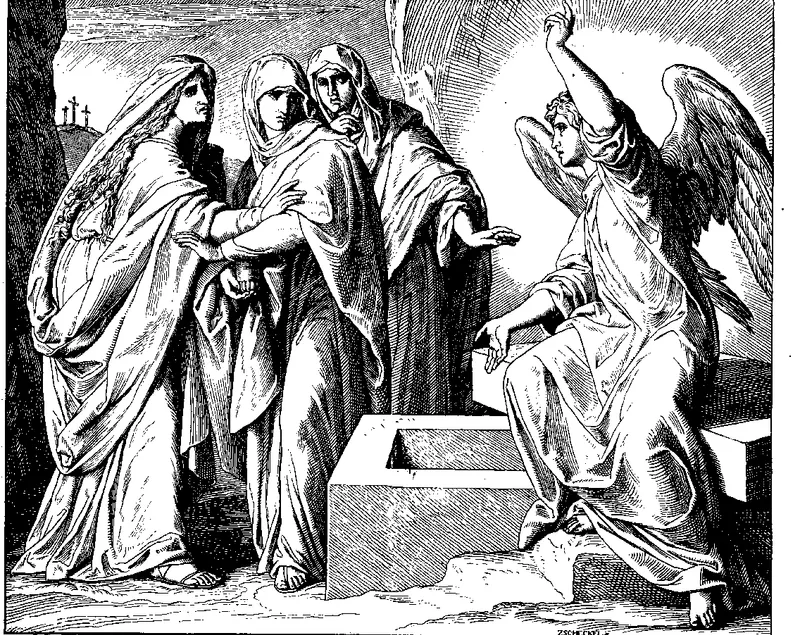
Mark 2:1-12The Son of Man Hath Power to Forgive Sins
1And again he entered into Capernaum after some days; and it was noised that he was in the house. 2And straightway many were gathered together, insomuch that there was no room to receive them, no, not so much as about the door: and he preached the word unto them. 3And they come unto him, bringing one sick of the palsy, which was borne of four. 4And when they could not come nigh unto him for the press, they uncovered the roof where he was: and when they had broken it up, they let down the bed wherein the sick of the palsy lay. 5When Jesus saw their faith, he said unto the sick of the palsy, Son, thy sins be forgiven thee. 6But there were certain of the scribes sitting there, and reasoning in their hearts, 7Why doth this man thus speak blasphemies? who can forgive sins but God only?
Jesus is back in Capernaum, and word that He is in the house empties the town into one doorway: there was no room to receive them, no, not so much as about the door (v. 2). Into this jam four men come bringing one sick of the palsy (v. 3), and finding the way blocked, they do something almost comically determined - they go up onto the flat roof, dig through it, and lower their friend on his pallet right down into the middle of the room (v. 4).
Mark does not tell us a word the paralyzed man says; he tells us what his friends did. And the next line turns on exactly that: When Jesus saw their faith (v. 5). Faith here is not a private feeling locked inside one heart; it is visible, it has dirt under its fingernails, it is four men refusing to let a crowd be the last word. They believed Jesus could help, and they would not be turned back - and Jesus saw it.
It is worth lingering on how He responds to the faith of the carriers, not only the carried. Some of the most important help a person ever receives comes because someone else would not give up on getting them to Christ.1
What Jesus says first is not what anyone in that room came for: Son, thy sins be forgiven thee (v. 5). They lowered the man for his legs; Jesus speaks first to his soul. The address is tender - Son - and the gift is the deepest one a human being can be given. Mark does not say the paralysis was caused by the man's sin; Jesus simply goes to the root need before the surface one.
There is a quiet order here worth noticing. Bodies matter to Jesus, and He will heal this body in a moment. But the separation between a person and God is the wound beneath the wound, and that is the one He treats first. To the watching scribes the words are not a comfort but an alarm, because they understand instantly what kind of claim has just been made. No prophet, no priest, no teacher in Israel stood up and declared a person's sins forgiven on his own word.
That was God's to give. The whole drama of the next several verses comes from the fact that everyone in the room knows it.
The scribes do not speak aloud; they are reasoning in their hearts (v. 6), and their reasoning is razor-sharp: Why doth this man thus speak blasphemies? who can forgive sins but God only? (v. 7). It is important to say plainly that, on the theology, they are right. In the Scriptures of Israel forgiveness of sins is a divine prerogative - the LORD is the One who says, I, even I, am he that blotteth out thy transgressions (Isa. 43:25)2.
A mere man who claims to forgive sins he was not himself wronged by is either blaspheming or is something far more than a man. The scribes have the premise exactly correct; what they have wrong is the conclusion about who is standing in front of them. This is the hinge of the whole scene, and it is why Jesus does not say, “You misunderstand - I only meant to encourage him.” He does not soften or retract.
He accepts their premise - only God forgives sins - and then sets out to show that He holds that very authority.
8And immediately when Jesus perceived in his spirit that they so reasoned within themselves, he said unto them, Why reason ye these things in your hearts? 9Whether is it easier to say to the sick of the palsy, Thy sins be forgiven thee; or to say, Arise, and take up thy bed, and walk? 10But that ye may know that the Son of man hath power on earth to forgive sins, (he saith to the sick of the palsy,) 11I say unto thee, Arise, and take up thy bed, and go thy way into thine house. 12And immediately he arose, took up the bed, and went forth before them all; insomuch that they were all amazed, and glorified God, saying, We never saw it on this fashion.
Jesus, perceiving in his spirit what they were thinking, puts a piercing question to them: Whether is it easier to say to the sick of the palsy, Thy sins be forgiven thee; or to say, Arise, and take up thy bed, and walk? (vv. 8-9). The brilliance of the question is that the two are not equally testable. Anyone can say “your sins are forgiven,” because no bystander can check it; the words make no visible difference in the room.
To say “rise and walk” to a paralyzed man is far riskier, because everyone will know at once whether the speaker has the power he claims. So Jesus stakes the invisible claim on the visible one. He will do the thing that can be verified in order to authenticate the thing that cannot. The logic is plain: if His word can raise a paralyzed body with a sentence, then His word can be trusted when it pardons a soul.
The healing is not the point; it is the proof of the point. But that ye may know that the Son of man hath power on earth to forgive sins (v. 10) - that ye may know is the whole reason the miracle happens at all.
The title Jesus chooses is loaded: the Son of man. It can sound like a humble way of saying simply “a human being,” and it carries that note. But it also reaches back to a vision in Daniel, where one like the Son of man comes with the clouds of heaven and is given dominion, and glory, and a kingdom that shall not pass away (Dan. 7:13-14)2. By naming Himself this way while exercising the authority to forgive, Jesus quietly fuses the two: the One who looks like an ordinary man in a crowded house is the One to whom God grants everlasting dominion.
And He locates that authority precisely: power on earth to forgive sins. Not only in heaven, at the last judgment, in some far-off court - but on earth, here, now, in this room, to this man on this pallet. Then He proves it: Arise, and take up thy bed (v. 11), and immediately he arose, took up the bed, and went forth before them all (v. 12). The verdict of the crowd is awe directed God-ward: they were all amazed, and glorified God, saying, We never saw it on this fashion.
The word rendered power in the Son of man hath power on earth to forgive sins (v. 10) is the Greek exousia - which means both the right to do a thing and the ability to do it, authority and the power to enact it together. It is the same word the crowds had already used of Jesus' teaching, marvelling that He taught as one that had authority, and not as the scribes (Mark 1:22).
Here that authority is pressed to its furthest edge. Anyone may assert a right; Jesus demonstrates that the right is backed by power, raising the paralytic on the spot. The two cannot be separated in this scene: the claim to forgive (an authority only God holds) is sealed by the act of healing (a power only God supplies). Mark wants the reader to see that the word of Jesus is not empty - what He declares, He can perform.3
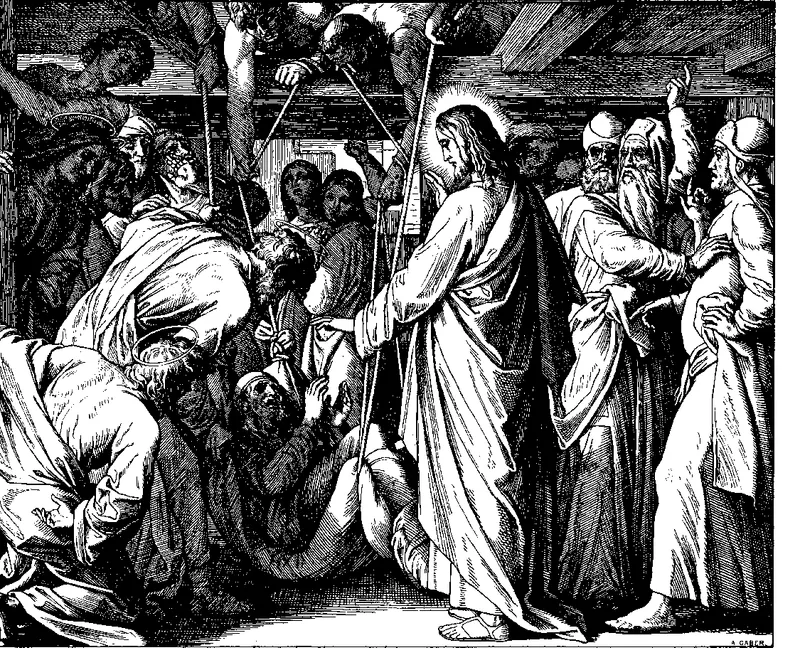
Mark 2:13-22I Came Not to Call the Righteous, but Sinners
13And he went forth again by the sea side; and all the multitude resorted unto him, and he taught them. 14And as he passed by, he saw Levi the son of Alphaeus sitting at the receipt of custom, and said unto him, Follow me. And he arose and followed him. 15And it came to pass, that, as Jesus sat at meat in his house, many publicans and sinners sat also together with Jesus and his disciples: for there were many, and they followed him. 16And when the scribes and Pharisees saw him eat with publicans and sinners, they said unto his disciples, How is it that he eateth and drinketh with publicans and sinners? 17When Jesus heard it, he saith unto them, They that are whole have no need of the physician, but they that are sick: I came not to call the righteous, but sinners to repentance.
Jesus is teaching by the sea when He passes a man at work: Levi the son of Alphaeus sitting at the receipt of custom (v. 14). The receipt of custom is a tax-booth, and that single detail tells a first-century reader almost everything. Tax-collectors gathered revenue for the occupying power, typically taking more than was owed and pocketing the difference; they were widely regarded as traitors and thieves, lumped together in one breath with “sinners.” They were not the people a respectable teacher recruited.
And to this man Jesus says two words: Follow me. No interview, no probation, no demand that he first clean up his life or repay what he has taken. The call comes to him as he is, sitting at the very booth that made him an outcast. And Mark records the response with the same economy: And he arose and followed him. Levi leaves the table where the money is - the most secure and most despised seat in town - and walks away from it at a word.
The call of Jesus does not wait for a person to become respectable; it reaches them in the middle of the life everyone else has written off.1
The scene moves to a meal: as Jesus sat at meat in his house, many publicans and sinners sat also together with Jesus and his disciples (v. 15). It is easy to miss how loaded a shared table was. To eat with someone, in that world, was to accept them, to declare a kind of fellowship and equality with them; it was not a neutral act. So when the scribes and Pharisees saw him eat with publicans and sinners, their question is not idle curiosity but an accusation: How is it that he eateth and drinketh with publicans and sinners? (v. 16).
A holy man, they assumed, keeps his distance from the unclean, lest their impurity rub off on him. Jesus reverses the logic entirely. He does not catch their defilement; His presence offers them healing. The room is full of exactly the people the religious establishment avoids - for there were many, and they followed him - and Jesus is at the center of it, not holding his nose but sharing bread. The table itself is His sermon.
Before He says a word in answer, the seating has already announced where He stands.
Jesus answers the accusation with an image and a mission statement: They that are whole have no need of the physician, but they that are sick: I came not to call the righteous, but sinners to repentance (v. 17). The picture is disarmingly simple. No one faults a doctor for spending his day among the ill; that is what a doctor is for. A physician who only visited healthy people would be no physician at all.
So Jesus, the great Physician, is found among the spiritually sick - not because He approves of the sickness, but because He has come to heal it. There is a gentle sting in the words too. When He says He did not come to call the righteous, He is not certifying the scribes as righteous; He is exposing the trap of thinking oneself well. The one barrier to His help is the illusion that you do not need it.
The tax-collectors and sinners at Levi's table knew they were sick; that knowledge is the doorway through which the Physician enters. And note the goal He names: not merely to keep sinners company, but to call them to repentance - to a real turning, a healing that changes the patient. He comes to the sick precisely in order to make them well.
18And the disciples of John and of the Pharisees used to fast: and they come and say unto him, Why do the disciples of John and of the Pharisees fast, but thy disciples fast not? 19And Jesus said unto them, Can the children of the bridechamber fast, while the bridegroom is with them? as long as they have the bridegroom with them, they cannot fast. 20But the days will come, when the bridegroom shall be taken away from them, and then shall they fast in those days. 21No man also seweth a piece of new cloth on an old garment: else the new piece that filled it up taketh away from the old, and the rent is made worse. 22And no man putteth new wine into old bottles: else the new wine doth burst the bottles, and the wine is spilled, and the bottles will be marred: but new wine must be put into new bottles.
A new question arrives, this time about fasting: Why do the disciples of John and of the Pharisees fast, but thy disciples fast not? (v. 18). Jesus answers, surprisingly, with a wedding: Can the children of the bridechamber fast, while the bridegroom is with them? (v. 19). The children of the bridechamber are the wedding guests, the friends of the groom; and no one mourns or fasts at a wedding feast. To fast while the celebration is in full swing, with the bridegroom right there in the room, would be to misread the moment entirely.
Jesus is saying that something has arrived which calls for joy, not mourning - and, more quietly, He is identifying Himself as the Bridegroom. In the prophets it was the LORD who was Israel's husband, who would rejoice over thee as the bridegroom rejoiceth over the bride (Isa. 62:5)2; now that joyful presence is standing in their midst. But the sentence carries a shadow as well as a sunrise: the days will come, when the bridegroom shall be taken away from them, and then shall they fast (v. 20).
The phrase taken away is gentle and grave at once - the first hint in Mark that this Bridegroom will be removed by force, and that the wedding joy will pass, for a time, through grief.
Jesus presses the point with two homely pictures: No man also seweth a piece of new cloth on an old garment… And no man putteth new wine into old bottles (vv. 21-22). The logic of both is the same. A patch of new, unshrunk cloth sewn onto a worn garment will pull away as it shrinks and the rent is made worse. New wine, still fermenting and expanding, poured into old, brittle wineskins (the bottles of that day were skins, not glass) will burst them as it swells, so that the wine is spilled, and the bottles will be marred. The point is not that the old is worthless, but that what Jesus is bringing cannot simply be stitched onto the old framework as one more religious practice.
The kingdom He is announcing - forgiveness given freely, the outcast called, the Physician at the sinners' table, the Bridegroom present - has a vitality the old containers cannot hold. Try to confine it to the old forms and one of two things happens: either the new is deadened, or the old structure tears apart under the pressure of it. New wine must be put into new bottles. Something genuinely new has come, and it asks not to be tamed and shrunk to fit, but to be received on its own terms - and to make all things new in the process.
Mark 2:23-28The Son of Man Is Lord of the Sabbath
23And it came to pass, that he went through the corn fields on the sabbath day; and his disciples began, as they went, to pluck the ears of corn. 24And the Pharisees said unto him, Behold, why do they on the sabbath day that which is not lawful? 25And he said unto them, Have ye never read what David did, when he had need, and was an hungred, he, and they that were with him? 26How he went into the house of God in the days of Abiathar the high priest, and did eat the shewbread, which is not lawful to eat but for the priests, and gave also to them which were with him? 27And he said unto them, The sabbath was made for man, and not man for the sabbath: 28Therefore the Son of man is Lord also of the sabbath.
The last scene unfolds in the grainfields: he went through the corn fields on the sabbath day; and his disciples began, as they went, to pluck the ears of corn (v. 23). (“Corn” in the King James English means grain - wheat or barley - not maize.) The act itself was permitted to the hungry; the law allowed a traveller to pluck grain by hand from a neighbour's field. The Pharisees' objection is not theft but timing: Behold, why do they on the sabbath day that which is not lawful? (v. 24).
In their reckoning, plucking and rubbing grain counted as a kind of harvesting and threshing, and so as forbidden sabbath work. Notice that the dispute is not over the fourth commandment itself, which Jesus never sets aside, but over the fence of rules that had been built around it - the long list of human definitions of what did and did not count as labour. The disciples were hungry and ate as they walked; the Pharisees saw only a rule broken.
The stage is set for Jesus to say what the sabbath was actually for.
Jesus answers first from Scripture itself: Have ye never read what David did, when he had need, and was an hungred… How he went into the house of God in the days of Abiathar the high priest, and did eat the shewbread, which is not lawful to eat but for the priests? (vv. 25-26). The story is from 1 Samuel 212: David, fleeing and hungry, was given the consecrated bread - the loaves set before the LORD that were reserved for the priests - and ate it, and gave it to his men, and Scripture does not condemn him for it.
Jesus' point is sharp. Even the most sacred ceremonial restriction bent before genuine human need, and the Scriptures the Pharisees revered record it without blame. Mercy and the preserving of life were never meant to be crushed under the letter of a regulation. The God who gave the law that set the bread apart did not count it a sin when that bread fed a starving man. If that was true of the shewbread, how much more of a handful of grain plucked by hungry disciples on the sabbath?
Jesus is not abolishing the law; He is reading it the way it was always meant to be read - as the servant of life, not its master.
Then comes the principle that reframes the whole question: The sabbath was made for man, and not man for the sabbath (v. 27). The sabbath was a gift - rest woven into the rhythm of creation, a day to be set free from toil, a mercy especially to the servant and the labourer and the ox. It was made for man, given to bless and restore human beings. The Pharisees had inverted this. They had turned the gift into a burden, and the day of rest into a day of anxious rule-keeping, until man existed to serve the sabbath rather than the other way around.
Jesus turns it right side up. The day was made to serve the person, not the person to serve the day. This does not empty the sabbath of meaning; it restores its meaning. A law that was given to lift a weight off people was never meant to become a heavier weight laid on them. Read rightly, the sabbath bends toward human flourishing - toward rest, mercy, and the meeting of real need - and that is exactly how Jesus and His hungry disciples are treating it as they walk through the fields.
Research trail
Sources & further study
These references support the historical, linguistic, manuscript, and contextual notes in this chapter. Scripture remains the primary text; external sources are provided so readers can inspect the research directly.
- Mark 2 - Translators' NotesThe NET Bible's detailed footnotes on Mark 2 - the scene of the roof opened over the crowded house (vv. 2-4), the force of the scribes' charge of blasphemy (vv. 6-7), the social standing of the tax-collectors at table (vv. 14-16), and the much-discussed reference to Abiathar the high priest in verse 26.
- Mark 2 ↔ Daniel 7 · 1 Samuel 21 · Hosea 6 · Isaiah 43Traces the threads tying Mark 2 to the rest of Scripture - the Son of man of verses 10 and 28 read alongside Daniel 7:13-14; David and the shewbread (vv. 25-26) drawn from 1 Samuel 21; the divine pardon of verse 7 set beside I, even I, am he that blotteth out thy transgressions (Isa. 43:25); and the bridegroom of verse 19 against the marriage imagery of the prophets.
- Mark 2 · Greek interlinear + lexiconThe Greek text of Mark 2 word by word with parsing and lexical links - useful for aphiemi (vv. 5, 7, 9, 10, the verb “to forgive,” literally to release or send away), for exousia (v. 10, the “power” or authority Jesus claims), and for the phrase kurios… tou sabbatou (v. 28, “Lord… of the sabbath”).
Where this echoes in Scripture
The Son of Man Hath Power to Forgive Sins
- Isaiah 43:25I, even I, am he that blotteth out thy transgressions for mine own sake, and will not remember thy sins.The premise the scribes reason from in verse 7 - that forgiving sins is the LORD's own prerogative.
- Daniel 7:13-14one like the Son of man came... and there was given him dominion, and glory, and a kingdom.The title Jesus claims in verse 10 - the Son of man given everlasting authority.
- Luke 7:48-50And he said unto her, Thy sins are forgiven... Thy faith hath saved thee; go in peace.The same authority of verses 5-10 exercised again - Jesus forgiving sins on His own word.
- Psalm 103:2-3Bless the LORD, O my soul... Who forgiveth all thine iniquities; who healeth all thy diseases.Forgiveness and healing joined as God's work - the two things Jesus does together in verses 5 and 11.
- Mark 1:22for he taught them as one that had authority, and not as the scribes.The authority (exousia) of verse 10 already marked in His teaching - a word that carries power.
I Came Not to Call the Righteous, but Sinners
- 1 Timothy 1:15Christ Jesus came into the world to save sinners; of whom I am chief.The mission Jesus names in verse 17 stated plainly - He came for sinners, not the self-assured.
- Luke 15:1-7This man receiveth sinners, and eateth with them... joy shall be in heaven over one sinner that repenteth.The table of verses 15-17 expanded - the shepherd seeking the lost, heaven's joy over the found.
- Isaiah 62:5as the bridegroom rejoiceth over the bride, so shall thy God rejoice over thee.The bridegroom imagery of verse 19 - the LORD's joy over His people, taken up by Jesus Himself.
- John 3:29He that hath the bride is the bridegroom: but the friend of the bridegroom... rejoiceth greatly.John the Baptist naming Jesus the Bridegroom - the same claim Jesus makes in verses 19-20.
- 2 Corinthians 5:17if any man be in Christ, he is a new creature: old things are passed away; behold, all things are become new.The newness of the new wine in verse 22 - a freshness that cannot be confined to the old.
The Son of Man Is Lord of the Sabbath
- 1 Samuel 21:1-6So the priest gave him hallowed bread: for there was no bread there but the shewbread.The account Jesus appeals to in verses 25-26 - sacred bread given to meet David's hunger.
- Exodus 20:8-10Remember the sabbath day, to keep it holy... the seventh day is the sabbath of the LORD thy God.The day Jesus claims lordship over in verse 28 - the LORD's own sabbath, given as a sign.
- Matthew 11:28-30Come unto me, all ye that labour and are heavy laden, and I will give you rest.The rest the Lord of the sabbath (v. 28) offers in person - the goal the day always pointed toward.
- Hebrews 4:9-10There remaineth therefore a rest to the people of God... he that is entered into his rest, he also hath ceased from his own works.The deeper rest behind the sabbath of verse 27 - entered by ceasing from our works and trusting His.
- Hosea 6:6For I desired mercy, and not sacrifice; and the knowledge of God more than burnt offerings.The principle beneath verses 25-27 - mercy and human need over the letter of ritual rule.