Hosea 6
People in this chapter
After chapters of accusation, Hosea 6 opens on a surprising sound: the people calling one another home. Come, and let us return unto the LORD: for he hath torn, and he will heal us; he hath smitten, and he will bind us up (v. 1). They have grasped something true and deep about the God they have wounded - that the very hand that struck them is the hand that can make them whole, that His tearing was never the end of the story.
And they reach for the highest hope they know: After two days will he revive us: in the third day he will raise us up, and we shall live in his sight (v. 2). It is the language of life out of death, of being brought back up into the light of His face.1
Tap any highlighted phrase to jump to the commentary that unpacks it.
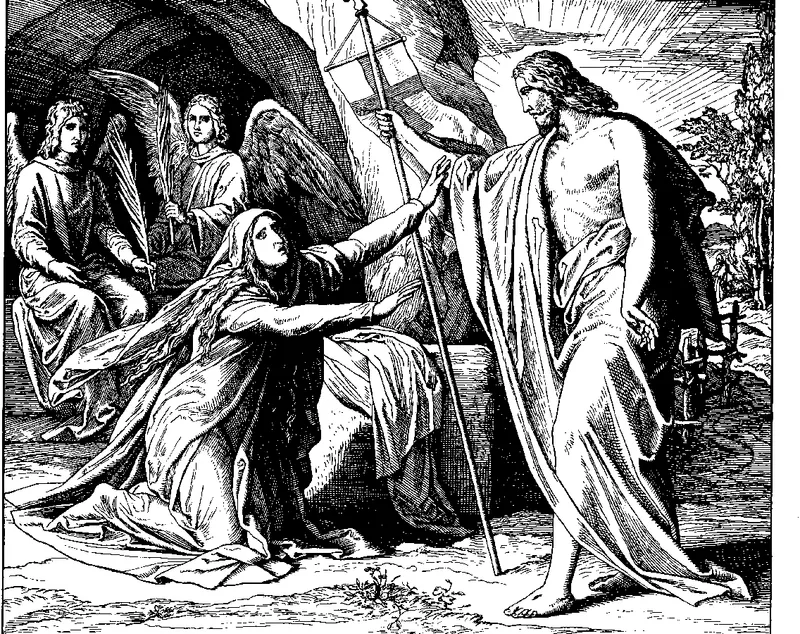
Hosea 6:1-3Come, and Let Us Return
1Come, and let us return unto the LORD: for he hath torn, and he will heal us; he hath smitten, and he will bind us up. 2After two days will he revive us: in the third day he will raise us up, and we shall live in his sight. 3Then shall we know, if we follow on to know the LORD: his going forth is prepared as the morning; and he shall come unto us as the rain, as the latter and former rain unto the earth.
The chapter opens on a sound the book has been longing for - the people turning toward home and calling one another with them: Come, and let us return unto the LORD (v. 1). And the reason they give for hope is striking in its depth: for he hath torn, and he will heal us; he hath smitten, and he will bind us up. They do not pretend the wound came from nowhere. They name it: the LORD tore, the LORD smote.
But they have grasped the thing that makes return possible at all - that the hand which struck is the only hand that can heal, and that His wounding was never meant as the last word. The image is of a physician, or of a parent who disciplines and then binds up the scrape. A lesser hope would say, “He has torn us, so He is finished with us.” This hope says the opposite: He tore so that He might heal.
To return to the One who wounded you, trusting that He means to make you whole - this is the heart of repentance, and it is exactly what the chapter calls for.1
Then their hope rises to its height: After two days will he revive us: in the third day will he raise us up, and we shall live in his sight (v. 2). The expression after two days… in the third day is a Hebrew way of saying “soon, and certainly” - a short, sure span, not a long wait. But the words chosen to fill it are the words of resurrection: revive us, raise us up, and the goal of it all, we shall live in his sight. The people picture their restoration as nothing less than being brought back from the dead and set on their feet again in the light of God's face.
It is the boldest thing they could have said about what the LORD's healing would be - new life altogether, the boldest possible restoration. And the phrasing - death, then a short certain interval, then being raised on the third day to live before God - carries a cadence the Scriptures will sound again at the very center of the gospel.2
The third verse turns the people's hope into a resolve and a promise: Then shall we know, if we follow on to know the LORD (v. 3). The doubled word know is deliberate. Knowing the LORD here is the deep, relational knowing of someone walked with and loved - and it is something one must follow on to gain, pressing forward, pursuing Him over time rather than settling for a single bright moment. And to those who do, two images of certainty are held out.
First: his going forth is prepared as the morning - His coming is as sure and as unstoppable as the sunrise, which no darkness can finally hold back. Second: he shall come unto us as the rain, as the latter and former rain unto the earth - reliable as the seasonal rains that a farmer's whole life depends on, the early rain that softens the ground for planting and the late rain that swells the grain for harvest.
The promise is that God is not fickle even when His people are; His coming to those who pursue Him is as faithful as sunrise and as the rains in their season.
Hosea 6:4-6Your Goodness Is as a Morning Cloud · I Desired Mercy
4O Ephraim, what shall I do unto thee? O Judah, what shall I do unto thee? for your goodness is as a morning cloud, and as the early dew it goeth away. 5Therefore have I hewed them by the prophets; I have slain them by the words of my mouth: and thy judgments are as the light that goeth forth. 6For I desired mercy, and not sacrifice; and the knowledge of God more than burnt offerings.
The reader braces for God to answer the people's prayer with welcome - and instead the LORD breaks out in grief. O Ephraim, what shall I do unto thee? O Judah, what shall I do unto thee? (v. 4). It is the cry of a wounded love at the end of its options, a question that aches rather than threatens: what is there left to do with a people like this? And the reason follows in one of the most quietly devastating images in all the prophets: your goodness is as a morning cloud, and as the early dew it goeth away. Their goodness - the very loyalty and love they have just been professing in verses 1-3 - is real for a moment and then simply evaporates.
A morning cloud looks substantial at dawn; the dew lies thick and bright on the grass. But the sun climbs and within an hour both are gone without a trace. That is what their devotion keeps doing. The turning never lasts past the cool of the morning. The grief of the verse is not that they are cold but that they are fickle - warm and gone, again and again. God is not asking for a brighter morning.
He is asking for something that does not burn off by noon.1
Verse 5 looks back over how the LORD has labored with this fickle people: Therefore have I hewed them by the prophets; I have slain them by the words of my mouth: and thy judgments are as the light that goeth forth. The picture in hewed is of cutting, even hacking - the rough work of a stonecutter shaping resistant stone, or a woodsman felling timber. The instrument was the prophetic word: the LORD sent prophet after prophet, and their words came down like blows meant to break what was hard and reshape it.
I have slain them by the words of my mouth - the word of God, faithfully spoken, cuts to the death of the old self so that something true can live. And the result, when it lands, is light: thy judgments are as the light that goeth forth, clear and exposing as the dawn. There is mercy in this severity. The hewing was the work of a God who would rather wound His people with the truth than lose them to a comfortable lie.
The same word that tears, as in verse 1, is the word that heals - and here we see the tool He has been using all along: the mouths of His prophets.
Now comes the line the whole chapter has been climbing toward, and one of the most important sentences in all the Scriptures: For I desired mercy, and not sacrifice; and the knowledge of God more than burnt offerings (v. 6). Here, at last, is what God has wanted all along - stated so plainly it cannot be mistaken. Sacrifice and burnt offerings were God's own appointment; what He desired was ritual carried by a living heart, the outward act flowing from inward loyalty.
What He desired - the deepest wish of His heart - is mercy: the word is chesed, the loyal, covenant-keeping love that shows itself in kindness to others, the faithfulness that does not evaporate like the morning dew. And alongside it, the knowledge of God - not information about Him but the relational knowing of verse 3, walking with Him and loving Him. A people fluent at the altar but empty of mercy, busy with offerings but strangers to the God they offer them to, have given Him the shell and kept back the thing He actually wanted.
Sacrifice without mercy is an empty hand held out; ritual without the knowledge of God is motion without meaning. This single verse holds the heart of true religion, and the prophets, the Psalms, and the Gospels will all return to it.
Hosea 6:7-11They Like Men Have Transgressed the Covenant
7But they like men have transgressed the covenant: there have they dealt treacherously against me. 8Gilead is a city of them that work iniquity, and is polluted with blood. 9And as troops of robbers wait for a man, so the company of priests murder in the way by consent: for they commit lewdness. 10I have seen an horrible thing in the house of Israel: there is the whoredom of Ephraim, Israel is defiled. 11Also, O Judah, he hath set an harvest for thee, when I returned the captivity of my people.
Against the bright prayer that opened the chapter, the LORD now lays the hard reality underneath it: But they like men have transgressed the covenant: there have they dealt treacherously against me (v. 7). The single word treacherously is the wound at the heart of the whole book. This is the language of a broken marriage, of a faith betrayed - a beloved's unfaithfulness, the wound that cuts deepest of all. The covenant was a bond of loyal love, and they have broken it the way one breaks a vow that was supposed to be unbreakable.
The little phrase like men has been read in more than one way - perhaps “as Adam did,” recalling the first breaking of trust in the garden, or perhaps “in the ordinary human way,” treating sacred promises as casually as people break their everyday word. Either way the charge stands: the people who in verse 1 said let us return are the same people who have dealt treacherously against the very God they claim to seek.
This is why their goodness evaporates like dew. The morning prayer and the broken covenant belong to the same people - and the LORD sees both.2
The catalogue of treachery now turns specific and dark. Gilead is a city of them that work iniquity, and is polluted with blood (v. 8) - a whole city stained, its streets marked with violence. And then the most shocking charge of all: And as troops of robbers wait for a man, so the company of priests murder in the way by consent: for they commit lewdness (v. 9). The very people set apart to teach the knowledge of God - the priests - are likened to a gang of highwaymen lying in ambush.
Those who should have led the people in mercy and the knowledge of God instead band together to do violence, by consent, in open agreement, on the roads where they should have been guiding pilgrims toward God. The corruption has reached the very office meant to cure it. Then the LORD names His grief over the whole nation: I have seen an horrible thing in the house of Israel: there is the whoredom of Ephraim, Israel is defiled (v. 10).
The word horrible is strong - something that makes one shudder. And the deepest horror is the contrast the chapter has built: this is the same Israel that sang he hath torn, and he will heal us; this is what was hiding beneath the morning prayer. Religion fluent in the words of returning, and underneath it bloodshed, betrayal, and a priesthood turned predator.
The chapter ends on a line that is brief, difficult, and not without hope: Also, O Judah, he hath set an harvest for thee, when I returned the captivity of my people (v. 11). On its hardest edge, he hath set an harvest for thee can mean a reaping of judgment - Judah, too, will gather the crop her own treachery has sown, for what a people plants they will surely harvest. The southern kingdom is not exempt from the charges leveled at the north.
Yet the verse will not close in unrelieved darkness. The last clause turns toward restoration: when I returned the captivity of my people - a glimpse, even here, of the day the LORD reverses His people's fortunes and brings the exiles home. The same God who appoints a harvest of consequences is the God who has it in His heart to return the captivity of His people, to gather them again. So the chapter that began with let us return ends with the LORD Himself promising, in the end, to be the One who returns them.
The healing of verse 1 is not abandoned; it waits, sure as the morning, beyond the harvest.
Research trail
Sources & further study
These references support the historical, linguistic, manuscript, and contextual notes in this chapter. Scripture remains the primary text; external sources are provided so readers can inspect the research directly.
- Hosea 6 - Translators' NotesThe NET Bible's detailed footnotes on Hosea 6 - the healing-after-wounding imagery of verse 1, the “two days… third day” idiom of verse 2, the fleeting “morning cloud” of verse 4, and the difficult phrase “like men” in verse 7 describing how the covenant was broken.
- Hosea 6 · Hebrew + classical Jewish commentaryThe Hebrew text of Hosea 6 with Rashi, Ibn Ezra, and other classical commentators side by side - useful for chesed (v. 6, the “mercy” God desires above sacrifice, covenant-love and loyal-kindness), for yada (vv. 3, 6, “to know” the LORD), and for the much-discussed after two days… in the third day of verse 2.
- Hosea 6 ↔ Matthew 9 & 12 · 1 Corinthians 15 · Luke 24Traces the threads tying Hosea 6 to the rest of Scripture - I desired mercy, and not sacrifice (v. 6) quoted by Jesus to the Pharisees (Matt. 9:13) and over His disciples in the grainfield (Matt. 12:7), and the third-day reviving of verse 2 read alongside the gospel announcement that Christ rose again the third day according to the scriptures (1 Cor. 15:4; Luke 24:46).
Where this echoes in Scripture
Come, and Let Us Return
- Deuteronomy 32:39I kill, and I make alive; I wound, and I heal: neither is there any that can deliver out of my hand.The very confession behind verse 1 - the God who wounds is the God who heals and gives life.
- Job 5:18For he maketh sore, and bindeth up: he woundeth, and his hands make whole.The physician-image of verse 1 - the same hand that strikes is the hand that binds up.
- 1 Corinthians 15:3-4Christ died for our sins... and that he rose again the third day according to the scriptures.The third-day reviving of verse 2 - the cadence the gospel sounds at its center.
- Luke 24:46Thus it behoved Christ to suffer, and to rise from the dead the third day.The risen Lord on the pattern of verse 2 - suffering, then raised on the third day.
- Joel 2:23he hath given you the former rain moderately, and he will cause to come down for you the rain, the former rain, and the latter rain.The latter and former rain of verse 3 - the LORD's coming as faithful as the seasons.
Your Goodness Is as a Morning Cloud · I Desired Mercy
- Matthew 9:13Go ye and learn what that meaneth, I will have mercy, and not sacrifice: for I am not come to call the righteous, but sinners to repentance.Jesus quoting verse 6 to the Pharisees - mercy over ritual, defending His welcome of sinners.
- Matthew 12:7But if ye had known what this meaneth, I will have mercy, and not sacrifice, ye would not have condemned the guiltless.Jesus quoting verse 6 a second time - the verse that exposes a pitiless precision about ritual.
- 1 Samuel 15:22Hath the LORD as great delight in burnt offerings and sacrifices, as in obeying the voice of the LORD? Behold, to obey is better than sacrifice.The same truth as verse 6 - the heart God seeks behind the offering, not the offering alone.
- Micah 6:8what doth the LORD require of thee, but to do justly, and to love mercy, and to walk humbly with thy God?The heart of verse 6 echoed by another prophet - mercy and walking with God above sacrifice.
- Psalm 51:16-17For thou desirest not sacrifice... The sacrifices of God are a broken spirit: a broken and a contrite heart, O God, thou wilt not despise.The same valuation as verse 6 - the contrite heart over the burnt offering.
They Like Men Have Transgressed the Covenant
- Hosea 11:8How shall I give thee up, Ephraim? how shall I deliver thee, Israel?... mine heart is turned within me, my repentings are kindled together.The same grieving love behind verses 4 and 11 - a God who will not finally give up His people.
- Luke 1:78-79the dayspring from on high hath visited us, To give light to them that sit in darkness and in the shadow of death.The sunrise of God's coming promised in verse 3 (“as the morning”) - the dawn that has a name.
- Jeremiah 31:33I will put my law in their inward parts, and write it in their hearts... and they shall all know me, from the least of them unto the greatest.The cure for a covenant broken “like men” (v. 7) and for goodness that evaporates - the knowledge of God written within.
- Galatians 6:7Be not deceived; God is not mocked: for whatsoever a man soweth, that shall he also reap.The harvest set for Judah in verse 11 - a people gathers the crop its own treachery has sown.
- Malachi 2:7For the priest's lips should keep knowledge, and they should seek the law at his mouth: for he is the messenger of the LORD of hosts.The standard the priests of verse 9 betrayed - those meant to keep the knowledge of God turned predator.