Deuteronomy 32
People in this chapter
Moses is about to die, barred from the land. He gathers Israel for one last thing - a song. It traces their whole story with God in miniature: a wilderness where He carried them like an eagle bears its young, a comfort that bred forgetting, then judgment, then mercy. The first thing it says of God is that He is a Rock. His work is perfect. His ways are just. Everything else turns on that fixed point.1
Tap any highlighted phrase to jump to the commentary that unpacks it.
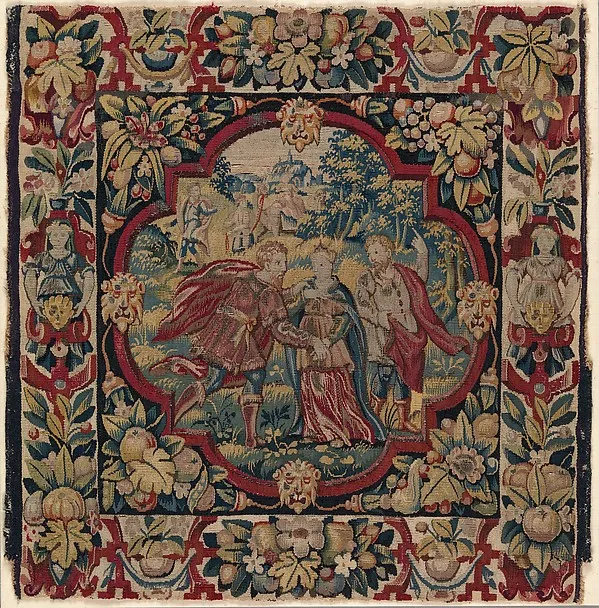
Deuteronomy 32:1-3"Give ear, O heavens"
1Give ear, O ye heavens, and I will speak; and hear, O earth, the words of my mouth. 2My doctrine shall drop as the rain, my speech shall distil as the dew, as the small rain upon the tender herb, and as the showers upon the grass: 3Because I will publish the name of the LORD: ascribe ye greatness unto our God.
Moses calls on the heavens and the earth themselves as witnesses to this song. This is cosmic testimony, meant to fall like rain and dew on tender ground. And the point of it all is to publish God's name, to declare His greatness: the song is a proclamation of who God is.
Deuteronomy 32:4"The Rock, his work is perfect"
4He is the Rock, his work is perfect: for all his ways are judgment: a God of truth and without iniquity, just and right is he.
This is the foundation of everything that follows in the song. God is not capricious. His work is perfect. His ways are judgment - meaning they are righteous, measured, fair. This is stated as axiom before the story of Israel's failure even begins. The Rock does not shift. His character is not negotiable.
Deuteronomy 32:8-14The Eagle and the Wilderness
8When the Most High divided to the nations their inheritance, when he separated the sons of Adam, he set the bounds of the people according to the number of the children of Israel. 9For the LORD’s portion is his people; Jacob is the lot of his inheritance.
While other nations were assigned to other gods (implied in the polytheistic worldview), Israel is the Lord's own portion. This is the covenant relationship in one sentence: of all peoples on earth, Israel belongs to God, and God claims them.
10He found him in a desert land, and in the waste howling wilderness; he led him about, he instructed him, he kept him as the apple of his eye.
11As an eagle stirreth up her nest, fluttereth over her young, spreadeth abroad her wings, taketh them, beareth them on her wings:
This image appears also in Exodus 19:4, spoken at Sinai: "Ye have seen what I did unto the Egyptians, and how I bare you on eagles' wings." The eagle does not force its young to fly; it bears them up, teaches them, holds them safe as they learn. This is God's method with Israel in the wilderness - tenderness that teaches strength.
12So the LORD alone did lead him, and there was no strange god with him. 13He made him ride on the high places of the earth, that he might eat the increase of the fields; and he made him to suck honey out of the rock, and oil out of the flinty rock; 14Butter of kine, and milk of sheep, with fat of lambs, and rams of the breed of Bashan, and goats, with the fat of kidneys of wheat; and thou didst drink the pure blood of the grape.
The inventory of provision is almost overwhelming - honey from the rock, oil from stone, the richest meats, wine in abundance. God is lavish. The wilderness served to teach dependence on a God whose provision exceeds what the human eye can produce.
Deuteronomy 32:15-18"Jeshurun waxed fat, and kicked"
15But Jeshurun waxed fat, and kicked: thou art waxen fat, thou art grown thick, thou art covered with fatness; then he forsook God which made him, and lightly esteemed the Rock of his salvation.
Comfort is not innocent. When Israel could rest and no longer had to depend on the Rock for daily bread, they forgot the Rock. This is the Bible's recurring pattern: security that breeds self-sufficiency, self-sufficiency that breeds ingratitude, ingratitude that breeds idolatry. "Lightly esteemed" carries disdain - a deliberate turning away, a decision to treat lightly what once meant everything.
16They provoked him to jealousy with strange gods, with abominations provoked they him to anger. 17They sacrificed unto devils, not to God; to gods whom they knew not, to new gods that came newly up, whom your fathers feared not. 18Of the Rock that begat thee thou art unmindful, and hast forgotten God that formed thee.
The metaphor is almost tender despite the accusation. God begat them, brought them into being. And they unmindfully forgot Him. The tragedy lies in their ability to forget so completely someone who had been intimate with them.
Deuteronomy 32:19-24"I will provoke them to jealousy"
19And when the LORD saw it, he abhorred them, because of the provoking of his sons, and of his daughters. 20And he said, I will hide my face from them, I will see what their end shall be: for they are a very froward generation, children in whom is no faith.
To hide God's face is the deepest curse in Hebrew prayer. It is the experience of abandonment, the severance of relationship. But notice: it comes after saying "I will see what their end shall be." God is not truly absent; He is watching. His withdrawal is purposeful - part of a plan to draw them back.
21They have moved me to jealousy with that which is not God; they have provoked me to anger with their vanities: and I will move them to jealousy with those which are not a people; I will provoke them to anger with a foolish nation.
Paul quotes this exact verse in Romans 10:19, and his argument hinges on it. The "foolish nation" Paul refers to are the Gentiles - people who had no covenant with God, no law, no promises. Yet through the Gentiles' inclusion in Christ, the Jewish people would be provoked to jealousy and return. Paul is saying: God's judgment on Israel was a tool in service of mercy, always pointing toward restoration.
22For a fire is kindled in mine anger, and shall burn unto the lowest hell, and shall consume the earth with her increase, and set on fire the foundations of the mountains. 23I will heap mischiefs upon them; I will spend mine arrows upon them. 24They shall be burnt with hunger, and devoured with burning heat, and with bitter destruction: I will also send the teeth of beasts upon them, with the poison of serpents of the dust.
Deuteronomy 32:25-27"The sword without, and terror within"
25The sword without, and terror within, shall destroy both the young man and the virgin, the suckling also with the man of gray hairs. 26I said, I would scatter them into corners, I would make the remembrance of them to cease from among men: 27Were it not that I feared the wrath of the enemy, lest their adversaries should behave themselves strangely, and lest they should say, Our hand is high, and the LORD hath not done all this.
The judgment language is fierce and concrete. But notice verse 27: even in His anger, God does not permit complete destruction. Why? Not because Israel deserves it, but because the world might misinterpret it - might think the adversaries had won by their own might. God's restrain of His own judgment is for the sake of His glory among the nations. Even the wrath serves mercy.
Deuteronomy 32:39-42"I live forever"
39See now that I, even I, am he, and there is no god with me: I kill, and I make alive; I wound, and I heal: neither is there any that can deliver out of my hand.
God claims authority over life and death, wounding and healing, in absolute terms. He is not subject to other forces or other gods. And crucially, He claims to do both: the destruction and the restoration belong to Him equally. His purposes are unified; His judgment and mercy serve one goal.
40For I lift up my hand to heaven, and say, I live for ever. 41If I whet my glittering sword, and mine hand take hold on judgment; I will render vengeance to mine enemies, and will reward them that hate me. 42I will make mine arrows drunk with blood, and my sword shall devour flesh; and that with the blood of the slain and of the captives, from the beginning of revenges upon the enemy.
This is God taking an oath - swearing by Himself, because there is no greater authority. "I live forever" is the foundation of every other promise. His judgment of enemies is just. His vengeance is the other side of His faithfulness - He will not let evil have the last word.
43Rejoice, O ye nations, with his people: for he will avenge the blood of his servants, and will render vengeance to his adversaries, and will be merciful unto his land, and to his people.
The song does not end in isolation. It ends with an invitation to the nations to rejoice with God's people. Paul quotes this verse in Romans 15:10 as proof that the inclusion of the Gentiles was part of God's plan from the beginning. The song that traced Israel's failure turns outward, inviting all peoples into the joy of God's vindication.
The same God who whets the sword in verse 41 holds out an open hand in verse 43. The older Hebrew of this last line goes further than “merciful”: it says He will atone for His land and His people - cover them, make them clean, deal with the very guilt the song spent forty verses exposing. So the Rock who said I kill, and I make alive keeps both halves of His own word right to the end.
The wound and the healing come from one hand. And the hand that wins the last word is the one extended in mercy.
Deuteronomy 32:44-47"Set your hearts unto all the words"
44And Moses came and spake all the words of this song in the ears of the people, he, and Hoshea the son of Nun. 45And Moses made an end of speaking all these words to all Israel: 46And he said unto them, Set your hearts unto all the words which I testify among you this day, which ye shall command your children to observe to do, all the words of this law. 47For it is not a vain thing for you; because it is your life: and through this thing ye shall prolong your days in the land, whither ye go over Jordan to possess it.
Moses asks for the heart - a deliberate turning of the whole self toward these words. The song was never given to be sung once and shelved. It is built to echo down the generations: parents handing it to children, the story of God's faithfulness and the people's wandering working its way into a family's memory until it shapes how they see everything.
This is stunning. The law - the words, the covenant, the whole weight of Torah - is your life. To turn from it is to turn from life itself. To embrace it is to choose life. Moses is showing them the anatomy of how to live.
Research trail
Sources & further study
These references support the historical, linguistic, manuscript, and contextual notes in this chapter. Scripture remains the primary text; external sources are provided so readers can inspect the research directly.
- Deuteronomy 32Open-access source text and rabbinic commentary on the Song of Moses, the Lord's justice, and Israel's covenant unfaithfulness.
- Songs and Witness Functions in Ancient TreatiesComparative study of how ancient Near Eastern treaties included songs and witness invocations [res:ancient-near-east-treaty-songs-witness-function] to bind parties to covenant terms.
Where this echoes in Scripture
"Give ear, O heavens"
- Isaiah 55:10-11as the rain cometh down... so shall my word be that goeth forth out of my mouth: it shall not return unto me void.The image of verse 2 - God's word falling like rain, and never failing to do its work.
- Psalm 19:1-2The heavens declare the glory of God; and the firmament sheweth his handywork.The heavens and earth summoned as witnesses in verse 1 - creation itself testifying to God.
- Deuteronomy 30:19I call heaven and earth to record this day against you, that I have set before you life and death.The same courtroom summons - heaven and earth called to witness the covenant.
"The Rock, his work is perfect"
- 1 Corinthians 10:4they drank of that spiritual Rock that followed them: and that Rock was Christ.The Rock of verse 4 named in person - the One from whom the living water flowed in the wilderness.
- Psalm 18:2The LORD is my rock, and my fortress, and my deliverer; my God, my strength, in whom I will trust.The same image David builds a life on - God as the immovable rock and refuge.
- 1 Peter 2:6-8Behold, I lay in Sion a chief corner stone, elect, precious... the stone which the builders disallowed, the same is made the head of the corner.The rejected-stone reversal spelled out - the Rock cast aside becomes the cornerstone of the whole building.
- Matthew 7:24-25whosoever heareth these sayings of mine, and doeth them... built his house upon a rock.The carry of verse 4 - a life founded on the Rock stands when the storm hits.
The Eagle and the Wilderness
- Exodus 19:4how I bare you on eagles' wings, and brought you unto myself.The same eagle image spoken at Sinai - verse 11 retold from the day the covenant was given.
- Zechariah 2:8he that toucheth you toucheth the apple of his eye.The tenderness of verse 10 - God guards His people as the most delicate part of Himself.
- Deuteronomy 8:2-3the LORD thy God led thee these forty years in the wilderness... that he might make thee know that man doth not live by bread only.The wilderness of verse 10 as a schoolroom - the dry place where dependence on God is learned.
- Isaiah 40:31they that wait upon the LORD shall renew their strength; they shall mount up with wings as eagles.The eagle of verse 11 turned into promise - strength to rise given to those who wait on God.
"Jeshurun waxed fat, and kicked"
- Deuteronomy 8:11-14when thou hast eaten and art full... then thine heart be lifted up, and thou forget the LORD thy God.The exact danger of verse 15 named in advance - fullness that breeds forgetting.
- Hosea 13:6according to their pasture, so were they filled; they were filled, and their heart was exalted; therefore have they forgotten me.Jeshurun's pattern repeated - the well-fed heart that grows proud and lets God slip.
- Revelation 3:17thou sayest, I am rich... and knowest not that thou art wretched, and miserable, and poor.The self-sufficiency of verse 15 in the church age - comfort masking a forgotten need for God.
"The sword without, and terror within"
- Romans 10:19I will provoke you to jealousy by them that are no people, and by a foolish nation I will anger you.Paul quotes verse 21 directly - the “no-people” God uses to provoke Israel are the Gentiles.
- Romans 11:11through their fall salvation is come unto the Gentiles, for to provoke them to jealousy.The strategy of verse 21 traced to its end - the mercy shown outsiders is meant to draw the wanderers home.
- Romans 15:8-9Jesus Christ was a minister of the circumcision... that the Gentiles might glorify God for his mercy.The wideness of mercy hinted in verse 21 - Christ confirms the promises to Israel and gathers the nations too.
- Ezekiel 36:22-23I do not this for your sakes... but for mine holy name... and the heathen shall know that I am the LORD.The logic of verse 27 - God restrains and acts for the sake of His name among the nations, not because His people earned it.
"I live forever"
- Romans 15:10Rejoice, ye Gentiles, with his people.Paul quotes verse 43 directly - the nations called to share the joy of God's vindicated people.
- 1 Samuel 2:6The LORD killeth, and maketh alive: he bringeth down to the grave, and bringeth up.Hannah's song echoes verse 39 - the one hand that holds both death and life.
- Isaiah 45:5I am the LORD, and there is none else, there is no God beside me.The claim of verse 39 - the living God who alone holds power, with no rival beside Him.
- Hebrews 10:30Vengeance belongeth unto me, I will recompense, saith the Lord.Verse 41 carried into the New Testament - judgment left in God's hands, not ours.
"Set your hearts unto all the words"
- Deuteronomy 6:6-7these words... shall be in thine heart: and thou shalt teach them diligently unto thy children.The command behind verse 46 - bind these words to the heart and pass them to the next generation.
- Psalm 78:4-7shewing to the generation to come the praises of the LORD... that they might set their hope in God.The aim of verse 46 - telling the story so the children to come will trust God too.
- John 6:63the words that I speak unto you, they are spirit, and they are life.Verse 47 carried forward - the word of God held out not as a burden but as life itself.