Deuteronomy 6
People in this chapter
On the edge of the land, Moses hands a people four words to carry through their whole history. Hear, O Israel: The Lord our God is one Lord. This is the Shema, recited morning and evening, the prayer Jesus called the first and greatest commandment. What follows it is a command to love - the Lord your God, with all your heart, all your soul, all your might.1
Tap any highlighted phrase to jump to the commentary that unpacks it.
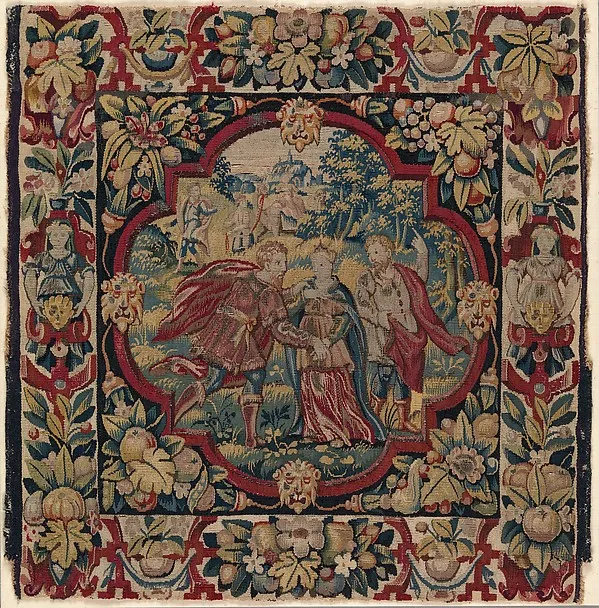
Deuteronomy 6:1-3The Purpose of the Law
1Now these are the commandments, the statutes, and the judgments, which the LORD your God commanded to teach you, that ye might do them in the land whither ye go to possess it: 2That thou mightest fear the LORD thy God, to keep all his statutes and his commandments, which I command thee, thou, and thy son, and thy son’s son, all the days of thy life; and that thy days may be prolonged. 3Hear therefore, O Israel, and observe to do it; that it may be well with thee, and that ye may increase mightily, as the LORD God of thy fathers hath promised thee, in the land that floweth with milk and honey.
The law is given so that Israel might fear the Lord - a word that means reverence, awe, the kind of worship that flows from knowing what is true about God. The purpose of every statute is formation: to shape a people who remember the One who brought them out of Egypt. Everything flows from relationship23.
Deuteronomy 6:4-6The Shema - Hear, O Israel
4Hear, O Israel: The LORD our God is one LORD:
Israel has prayed this line morning and evening for more than three thousand years; it is the first thing a Jewish child learns and, by long custom, the last words a dying believer speaks. The opening word is a command - Hear - and the rest is a confession the whole nation makes together. The Lord is their God, and He is one. When the psalmist sings of loving Him, when Proverbs roots wisdom in the fear of Him, when the prophets plead with a people to remember the God who carried them out of Egypt, they are all sounding this same note.
One Lord, and Israel is His.
5And thou shalt love the LORD thy God with all thine heart, and with all thy soul, and with all thy might.
Here is the surprise at the center of the law: it opens with love. Centuries on, Jesus will single out this one line and call it the first and greatest commandment, the hinge the rest of the law swings on. Love the Lord your God - with everything you are.
Heart, soul, might - three ways of saying the same thing: all of you. The Hebrew names the inner faculties of a person one by one and then asks for every one of them. The commandment leaves no quiet corner unclaimed, no part of you parked safely outside the covenant. It wants the whole of you, and it says so.
6And these words, which I command thee this day, shall be in thine heart:
The words are to move into the deepest part of a person: the heart, the place where will and desire live. God's words are to become part of your interior landscape, so that when you face a choice, His voice sounds familiar - the voice of the One you have loved and who has loved you.
Deuteronomy 6:6-9Binding God's Words Into Daily Life
6And these words, which I command thee this day, shall be in thine heart:
The words move from heart to household. Parents are to teach them to children "when thou sittest in thine house, and when thou walkest by the way, and when thou liest down, and when thou risest up." Faith is conversation woven into the fabric of daily life - at the breakfast table, on the way to work, before sleep, the first thing in the morning. The Shema lives in every day, all the time, the ordinary hours where belief becomes flesh.
7And thou shalt teach them diligently unto thy children, and shalt talk of them when thou sittest in thine house, and when thou walkest by the way, and when thou liest down, and when thou risest up. 8And thou shalt bind them for a sign upon thine hand, and they shall be as frontlets between thine eyes.
Now the words reach the body and the building. Bind them on your hand, so the work your hands do is shaped by them; wear them as frontlets between your eyes, so they sit in your line of sight all day; write them on the doorframe, so you brush past them coming and going. Israel took this literally. Homes carried mezuzot on the doorpost - small cases holding the Shema - and you touched them every time you crossed the threshold. Faith had a place in the house, a feel under the fingers, a spot on the wall you could not miss.
Deuteronomy 6:10-12The Test That Prosperity Brings
10And it shall be, when the LORD thy God shall have brought thee into the land which he sware unto thy fathers, to Abraham, to Isaac, and to Jacob, to give thee great and goodly cities, which thou buildedst not, 11And houses full of all good things, which thou filledst not, and wells digged, which thou diggedst not, vineyards and olive trees, which thou plantedst not; when thou shalt have eaten and be full; 12Then beware lest thou forget the LORD, which brought thee forth out of the land of Egypt, from the house of bondage.
The picture is vivid and startling. Israel will enter a land they didn't build - with cities already standing, houses already full of goods, wells already dug, vineyards and olive trees already planted. They will eat and be full. They will enjoy the fruits of labor that was not theirs. This is mercy. This is grace. But it is also the most dangerous moment in Israel's story.
Hardship, paradoxically, keeps you close to God. When you cry out from hunger or danger, you cannot pretend you are self-sufficient. But plenty whispers a different temptation: I am self-sufficient. The goods around me came from reasonable causes - good soil, hard work, favorable weather. God feels less urgent when the pantry is full. The danger is that you will simply forget, letting the Lord fade into the background of an ordinary, prosperous life.
Deuteronomy 6:13-15Fear the Lord and Keep His Commandments
13Thou shalt fear the LORD thy God, and serve him, and shalt swear by his name. 14Ye shall not go after other gods, of the gods of the people which are round about you; 15(For the LORD thy God is a jealous God among you) lest the anger of the LORD thy God be kindled against thee, and destroy thee from off the face of the earth.
The word returns: fear the Lord - with a fear that shapes your life, your oaths, your choice of whom to serve. This is where the warning becomes urgent. The gods of Canaan are constantly present, always offering another way, another loyalty, another source of blessing.
Even your promises belong to Him. To swear by His name, and no other, is to stake your word on the Lord alone - the way a person points to the highest authority they trust when they want to be believed. Israel is to reach for one name only. The covenant is exclusive, and it runs all the way down to how you give your word.
16Ye shall not tempt the LORD your God, as ye tempted him in Massah.
Massah was the place where Israel argued with Moses and demanded water, testing God: "Is the Lord among us or not?" (Exodus 17:7). To "tempt" God means to put Him to the test - to demand a sign, to act as though His word is insufficient unless He proves Himself again. It is the sin of doubt dressed up as a request for reassurance.
Deuteronomy 6:20-22When Your Son Asks
20And when thy son asketh thee in time to come, saying, What mean the testimonies, and the statutes, and the judgments, which the LORD our God hath commanded you? 21Then thou shalt say unto thy son, We were Pharaoh’s bondmen in Egypt; and the LORD brought us out of Egypt with a mighty hand: 22And the LORD shewed signs and wonders, great and sore, upon Egypt, upon Pharaoh, and upon all his household, before our eyes:
Notice the answer Moses puts in the parent's mouth. The child wants to know what all these rules mean, and the reply is a memory: we were Pharaoh's bondmen, and the Lord brought us out. The statutes only make sense once you have heard the story underneath them - a God who caught the sound of slaves crying, broke open Egypt, and carried a people to a land He had promised. Keep His ways and you are living like someone who knows what your God has done.
Deuteronomy 6:23-25Our Righteousness
23And he brought us out from thence, that he might bring us in, to give us the land which he sware unto our fathers. 24And the LORD commanded us to do all these statutes, to fear the LORD our God, for our good always, that he might preserve us alive, as it is at this day. 25And it shall be our righteousness, if we observe to do all these commandments before the LORD our God, as he hath commanded us.
Research trail
Sources & further study
These references support the historical, linguistic, manuscript, and contextual notes in this chapter. Scripture remains the primary text; external sources are provided so readers can inspect the research directly.
- Deuteronomy 6 - The ShemaHebrew and medieval Jewish commentaries on Israel's central daily prayer, with tefillin and mezuzah practice.
- Shema (Hear, O Israel)Open-access entry on the Shema as Israel's foundational confession of monotheism.
- Tefillin and Mezuzah - Artifacts and ArchaeologyArchaeological specimens of ancient tefillin and mezuzah boxes from Second Temple period, fulfilling Deuteronomy 6:6-9.
Where this echoes in Scripture
The Shema - Hear, O Israel
- Mark 12:29-30Hear, O Israel; The Lord our God is one Lord: And thou shalt love the Lord thy God with all thy heart.Jesus quotes the Shema of verses 4-5 and names it the first and greatest commandment.
- Matthew 4:4Man shall not live by bread alone, but by every word that proceedeth out of the mouth of God.In the wilderness Jesus answers the tempter from this same book (echoing Deut. 8:3).
- Matthew 4:10Thou shalt worship the Lord thy God, and him only shalt thou serve.The undivided love the Shema asks for (v. 5), held firm against the final temptation; cf. Deut. 6:13.
- Joshua 22:5love the Lord your God, and to walk in all his ways... and to serve him with all your heart and with all your soul.The Shema's “all your heart, all your soul” (v. 5) carried into the life of the people.
Fear the Lord and Keep His Commandments
- Exodus 17:7he called the name of the place Massah... because they tempted the Lord, saying, Is the Lord among us, or not?The Massah of verse 16 - Israel demanding a sign instead of trusting the God who led them.
- Matthew 4:6-7It is written again, Thou shalt not tempt the Lord thy God.Jesus turns back the temptation to test God by quoting verse 16 word for word.
- Psalm 95:8-9Harden not your heart, as in the provocation, and as in the day of temptation in the wilderness: when your fathers tempted me.The wilderness testing of verse 16 held up as the warning Israel must never repeat.
- 1 Corinthians 10:9Neither let us tempt Christ, as some of them also tempted, and were destroyed of serpents.The sin of verse 16 named again for a new people - the same testing, the same danger.