Deuteronomy 7
People in this chapter
As Israel stands at the Jordan, about to enter the land, Moses speaks a word of both commissioning and warning. God is about to drive out seven nations - Hittites, Girgashites, Amorites, Canaanites, Perizzites, Hivites, Jebusites - each greater and mightier than Israel. The Lord will deliver them into Israel's hands; the task will be ruthless, total destruction. And yet beneath this military command lies something more tender: a covenant rooted in God's free love, sworn to their fathers long ago, with nothing of Israel's strength or number to explain it.
Tap any highlighted phrase to jump to the commentary that unpacks it.
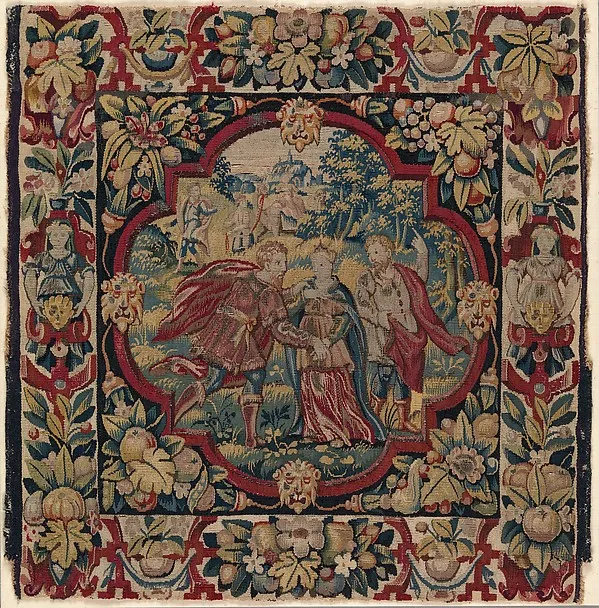
Deuteronomy 7:1-2The Seven Nations
1When the LORD thy God shall bring thee into the land whither thou goest to possess it, and hath cast out many nations before thee, the Hittites, and the Girgashites, and the Amorites, and the Canaanites, and the Perizzites, and the Hivites, and the Jebusites, seven nations greater and mightier than thou; 2And when the LORD thy God shall deliver them before thee; thou shalt smite them, and utterly destroy them; thou shalt make no covenant with them, nor shew mercy unto them:
The Hebrew word cherem means “devoted to destruction” - sacred destruction, set apart for the Lord as an instrument of His judgment. This is God's right as judge of all nations, executed in a particular hour and place, a response to iniquity that had reached its measure (Genesis 15:16). In the New Testament, Paul tells us the warfare of the church is “not against flesh and blood, but against principalities, against powers” (Ephesians 6:12).
The church wages war against the spiritual forces that enslave and deceive, through “the weapons of our warfare are not carnal, but mighty through God to the pulling down of strong holds” (2 Corinthians 10:4).
Deuteronomy 7:3-5No Covenant, No Intermarriage
3Neither shalt thou make marriages with them; thy daughter thou shalt not give unto his son, nor his daughter shalt thou take unto thy son. 4For they will turn away thy son from following me, that they may serve other gods: so will the anger of the LORD be kindled against you, and destroy thee suddenly. 5But thus shall ye deal with them; ye shall destroy their altars, and break down their images, and cut down their groves, and burn their graven images with fire.
Intermarriage with the pagan nations is forbidden because of spiritual danger. A wife who follows other gods will draw the household after her; a son married into an idolatrous family will be tutored out of covenant faithfulness. The warning is painfully practical: love for a spouse or child can become the door through which the whole family walks away from the God who called them. Throughout Israel's history this became reality - Solomon's foreign wives turned his heart toward strange gods (1 Kings 11:4), and the same pattern repeats across the generations.
The physical destruction of altars and images is part of the larger work of purification. Idols are focal points of spiritual power and covenant compromise - something far more dangerous than inert stone. By destroying them, Israel removes the visible reminders and access points of false worship from the land they are inheriting as God's sanctuary.
Deuteronomy 7:6-8Chosen by Love, Not by Merit
6For thou art an holy people unto the LORD thy God: the LORD thy God hath chosen thee to be a special people unto himself, above all people that are upon the face of the earth. 7The LORD did not set his love upon you, nor choose you, because ye were more in number than any people; for ye were the fewest of all people: 8But because the LORD loved you, and because he would keep the oath which he had sworn unto your fathers, hath the LORD brought you out with a mighty hand, and redeemed you out of the house of bondmen, from the hand of Pharaoh king of Egypt.
At the moment of entry into Canaan, Israel is numerically weak - fewer than any of the seven nations. God's choice was made before Israel had size or strength to offer in exchange - He set His love upon them simply because He loved them. This pattern runs through Scripture: God's love reaches toward the weak and the few, not only the mighty and many.
Election is never arbitrary or momentary. It rests on covenant. God swore an oath to Abraham, Isaac, and Jacob - and the fulfillment of that oath in the deliverance from Egypt and the gift of the land is the proof of His faithfulness. Israel's identity is rooted in a promise made generations before they were born.
Deuteronomy 7:9-11Covenant Faithfulness and Blessing
9Know therefore that the LORD thy God, he is God, the faithful God, which keepeth covenant and mercy with them that love him and keep his commandments to a thousand generations; 10And repayeth them that hate him to their face, to destroy them: he will not be slack to him that hateth him, he will repay him to his face. 11Thou shalt therefore keep the commandments, and the statutes, and the judgments, which I command thee this day, to do them.
God is faithful - He keeps covenant, He keeps mercy. The promise extends “to a thousand generations” of those who love Him. God's faithfulness is wedded to His holiness. To those who love Him and keep His commandments, He is merciful beyond measure. To those who hate Him, He is a consuming fire. The covenant is bilateral: God's steadfast love calls for a response. They are to keep the commandments as the natural response of gratitude and love, the way you say “thank you” to a God who already holds you.
Deuteronomy 7:12-16The Blessings of Obedience
12Wherefore it shall come to pass, if ye hearken to these judgments, and keep, and do them, that the LORD thy God shall keep unto thee the covenant and the mercy which he sware unto thy fathers: 13And he will love thee, and bless thee, and multiply thee: he will also bless the fruit of thy womb, and the fruit of thy land, thy corn, and thy wine, and thine oil, the increase of thy kine, and the flocks of thy sheep, in the land which he sware unto thy fathers to give thee. 14Thou shalt be blessed above all people: there shall not be male or female barren among you, or among your cattle. 15And the LORD will take away from thee all sickness, and will put none of the evil diseases of Egypt, which thou knowest, upon thee; but will lay them upon all them that hate thee. 16And thou shalt consume all the people which the LORD thy God shall deliver thee; thine eye shall have no pity upon them: neither shalt thou serve their gods; for that will be a snare unto thee.
Obedience is the pathway to blessing. When Israel hearkens to God's judgments - when they keep the covenant - they position themselves to receive the mercy and faithfulness He has sworn to give. The blessings are concrete and temporal: fertility, abundance, health, victory in battle. God works through the material world, through bodies and land and crops.
Israel will be blessed “above all people.” None shall be barren. The diseases of Egypt - which came upon the Egyptians as judgment for their idolatry and cruelty - will not touch Israel. This is covenant promise: a covenant people flourish when they keep covenant.
The instruction to not pity the peoples of Canaan is part of the same ruthlessness we saw in verses 1-2. Mercy toward the nations would be misplaced - it would blunt the judgment God is executing and would expose Israel to the very spiritual seduction they are called to resist. The hardness Moses counsels here is the necessary clarity of war, the kind of decisive action that keeps Israel from being seduced by what they spare.
Deuteronomy 7:17-19Do Not Fear
17If thou shalt say in thine heart, These nations are more than I; how can I dispossess them? 18Thou shalt not be afraid of them: but shalt well remember what the LORD thy God did unto Pharaoh, and unto all Egypt; 19The great temptations which thine eyes saw, and the signs, and the wonders, and the mighty hand, and the stretched out arm, whereby the LORD thy God brought thee out: so shall the LORD thy God do unto all the people of whom thou art afraid.
Fear is a real temptation. Looking at the seven nations - greater and mightier, already fortified in the land - Israel naturally asks, “How can we possibly overcome this?” The question is human realism; it is also the moment of decision. Will Israel trust what God has shown them, or will they trust their eyes?
The antidote to fear is memory. Remember what God did to Egypt. Every plague, every miracle, every step of deliverance - Egypt, the world's superpower at that hour, was undone by the hand of God. The God who broke Egypt can break the seven nations. The God who parted the Red Sea can part the Jordan. Faith is simply letting your memory of God's past faithfulness inform your trust in His present power.
Deuteronomy 7:20-24Driven Out Little by Little
20Moreover the LORD thy God will send the hornet among them, until they that are left, and hide themselves from thee, be destroyed. 21Thou shalt not be affrighted at them: for the LORD thy God is among you, a mighty God and terrible. 22And the LORD thy God will put out those nations before thee by little and little: thou mayest not consume them at once, lest the beasts of the field increase upon thee. 23But the LORD thy God shall deliver them unto thee, and shall destroy them with a mighty destruction, until they be destroyed. 24And he shall deliver their kings into thine hand, and thou shalt destroy their name from under heaven: there shall no man be able to stand before thee, until thou have destroyed them.
This is a profound word. God could drive out all the nations at once - He is almighty. But He will do it “little by little.” Why? “Lest the beasts of the field increase upon thee.” If the land were suddenly emptied of all human inhabitants, the wild animals would multiply and become a plague. The pace of Israel's victory must match the pace of their ability to occupy and steward. God's patience with the conquest is wisdom. He knows the speed at which His people can absorb what He is giving them.
The image of “hornet" - perhaps literal, perhaps metaphorical for terror and confusion - is a reminder that God fights for His people through many means, not always visible or dramatic. Sometimes the enemy falls to the sword; sometimes to sickness, confusion, or panic that makes them abandon their strongholds.
The promise is absolute: there shall be no man able to stand before Israel in battle. This assurance rests on obedience, on faithful covenant-keeping, and on trusting that God goes before them.
Deuteronomy 7:25-26The Snare of Plundered Idols
25The graven images of their gods shall ye burn with fire: thou shalt not desire the silver or gold that is on them, nor take it unto thee, lest thou be snared therein: for it is an abomination to the LORD thy God. 26Neither shalt thou bring an abomination into thine house, lest thou be a cursed thing like it: but thou shalt utterly detest it, and thou shalt utterly abhor it; for it is a cursed thing.
This is a nearly tragic warning. Israel is called not only to destroy the idols but to not desire the precious metals adorning them. There is a snare hidden in every idol: beauty, wealth, artistry. A golden calf is genuinely beautiful. A carved image is genuinely skillful. If Israel covets the materials used in idol-making, they may be tempted to preserve parts of the idols, or to fashion new idols, or simply to let the veneration of beautiful objects - even if repurposed - draw their hearts back to false gods.
The snare is this: the appearance of value in something God calls an abomination.
God calls Israel to “utterly detest” and “utterly abhor” the idols - outright hatred, not the grudging distance of a polite observer. Because anything that turns the human heart from the living God is worthy of hatred, no matter how beautiful the wrapping.
Research trail
Sources & further study
These references support the historical, linguistic, manuscript, and contextual notes in this chapter. Scripture remains the primary text; external sources are provided so readers can inspect the research directly.