Matthew 9
People in this chapter
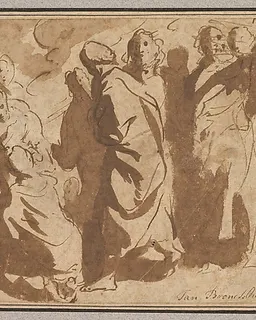
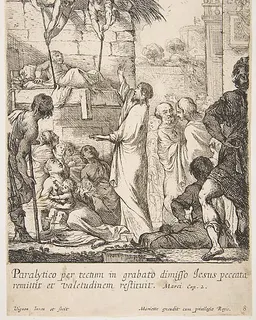
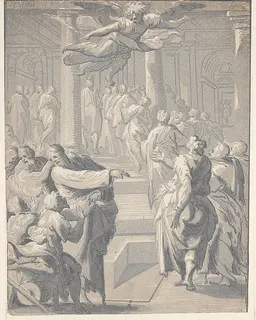
Matthew 9 reads like a string of miracles, but underneath it is one steady question: by what authority does this Man act, and who must He be to act this way? It opens with a paralytic carried to Jesus and let down before Him. And Jesus seeing their faith said unto the sick of the palsy; Son, be of good cheer; thy sins be forgiven thee (v. 2). The words land like a thunderclap, because everyone present knows that the forgiveness of sins is God's to give.
The scribes say so under their breath - This man blasphemeth (v. 3) - and they have the principle exactly right. What they do not yet see is the One standing in front of them.1
Tap any highlighted phrase to jump to the commentary that unpacks it.
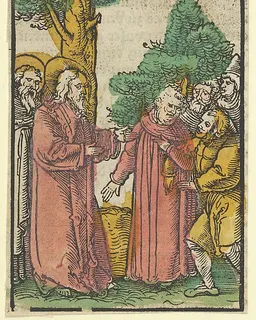
Matthew 9:1-8Thy Sins Be Forgiven Thee
1And he entered into a ship, and passed over, and came into his own city. 2And, behold, they brought to him a man sick of the palsy, lying on a bed: and Jesus seeing their faith said unto the sick of the palsy; Son, be of good cheer; thy sins be forgiven thee. 3And, behold, certain of the scribes said within themselves, This man blasphemeth. 4And Jesus knowing their thoughts said, Wherefore think ye evil in your hearts? 5For whether is easier, to say, Thy sins be forgiven thee; or to say, Arise, and walk? 6But that ye may know that the Son of man hath power on earth to forgive sins, (then saith he to the sick of the palsy,) Arise, take up thy bed, and go unto thine house. 7And he arose, and departed to his house. 8But when the multitudes saw it, they marvelled, and glorified God, which had given such power unto men.
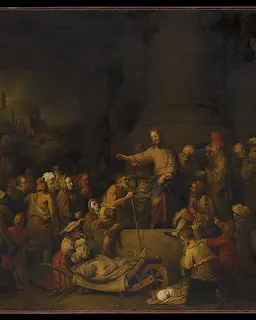
The scene is spare and vivid. Jesus has come back across the lake to his own city - Capernaum, His base in Galilee - and at once a man is brought to Him, helpless, lying on a bed, unable to walk and unable even to come on his own. He is carried by others, and the first thing the text says Jesus notices is not the paralysis but the trust behind it: Jesus seeing their faith said unto the sick of the palsy; Son, be of good cheer; thy sins be forgiven thee (v. 2).
Two things are striking. First, their faith - the faith of the friends who carried him - is what Jesus sees and honors; the man is borne to Christ on the conviction of others, and that conviction is not wasted. Second, and far more startling, Jesus speaks past the obvious need. The man came to be healed of his body; Jesus addresses something deeper first. Son, be of good cheer; thy sins be forgiven thee. The word Son is warm and personal, a fatherly word; and the gift Jesus gives before the healing is pardon.
He treats the deepest paralysis as the one that does not show - the weight of sin upon a soul - and He lifts it first.1
The reaction is immediate and unspoken: And, behold, certain of the scribes said within themselves, This man blasphemeth (v. 3). It is worth pausing to say plainly that, as far as the principle goes, the scribes are right. They are the experts in the law, and they know what every faithful Israelite knew: that the forgiveness of sins is God's alone to give. The parallel in Mark puts the question they were silently asking into words - why doth this man thus speak blasphemies? who can forgive sins but God only? (Mark 2:7).
To pronounce a person's sins forgiven is to claim something no prophet, no priest, no rabbi ever claimed for himself; it is to step into a place reserved for God. The scribes have the rule exactly correct. Their error is in the conclusion they leap to from it. They assume that because only God forgives sins, the Man before them must be a blasphemer. They have not reckoned with the other possibility - the one the whole chapter is pressing - that the One who speaks God's word of pardon may speak it because the authority to do so truly rests with Him.
Jesus does not retreat from the claim, nor does He argue it abstractly. He reads their hearts - itself a quiet sign - and poses a question: Wherefore think ye evil in your hearts? For whether is easier, to say, Thy sins be forgiven thee; or to say, Arise, and walk? (vv. 4-5). The question is sharper than it first appears. In one sense it is easier to say thy sins be forgiven thee, because no one can see whether anything happened; forgiveness leaves no visible mark, and a false claim could not be exposed on the spot.
To say Arise, and walk is harder, because everyone will know at once whether the word carried power. So Jesus stakes the unseen claim on the seen one. He will do the thing that can be checked in order to vouch for the thing that cannot. If His word can raise a paralyzed man to his feet in front of the whole crowd, then His word to forgive sins is not empty either. The visible miracle becomes the credential of the invisible pardon.
Then comes the demonstration: But that ye may know that the Son of man hath power on earth to forgive sins, (then saith he to the sick of the palsy,) Arise, take up thy bed, and go unto thine house. And he arose, and departed to his house (vv. 6-7). The proof is total and immediate. The man who was carried in now carries his own bed out; the very mat that bore his helplessness becomes the trophy of his healing.
And notice the precise reason Jesus gives for the miracle: that ye may know that the Son of man hath power on earth to forgive sins. The healing is deliberately framed as evidence of the authority to pardon. The crowd's response is awe: when the multitudes saw it, they marvelled, and glorified God, which had given such power unto men (v. 8). They do not yet grasp all that they have witnessed - they speak of power given… unto men - but they are right to glorify God, for God's own prerogative has just been exercised in their sight.
What the scribes feared as blasphemy, the crowds rightly received as cause to praise.
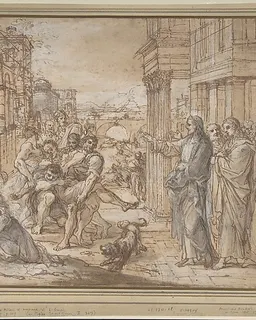
Matthew 9:9-17I Am Not Come to Call the Righteous, but Sinners
9And as Jesus passed forth from thence, he saw a man, named Matthew, sitting at the receipt of custom: and he saith unto him, Follow me. And he arose, and followed him. 10And it came to pass, as Jesus sat at meat in the house, behold, many publicans and sinners came and sat down with him and his disciples. 11And when the Pharisees saw it, they said unto his disciples, Why eateth your Master with publicans and sinners? 12But when Jesus heard that, he said unto them, They that be whole need not a physician, but they that are sick. 13But go ye and learn what that meaneth, I will have mercy, and not sacrifice: for I am not come to call the righteous, but sinners to repentance. 14Then came to him the disciples of John, saying, Why do we and the Pharisees fast oft, but thy disciples fast not? 15And Jesus said unto them, Can the children of the bridechamber mourn, as long as the bridegroom is with them? but the days will come, when the bridegroom shall be taken from them, and then shall they fast. 16No man putteth a piece of new cloth unto an old garment, for that which is put in to fill it up taketh from the garment, and the rent is made worse. 17Neither do men put new wine into old bottles: else the bottles break, and the wine runneth out, and the bottles perish: but they put new wine into new bottles, and both are preserved.
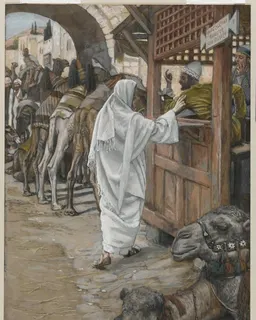
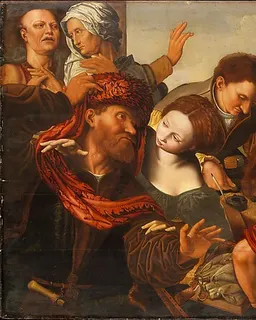
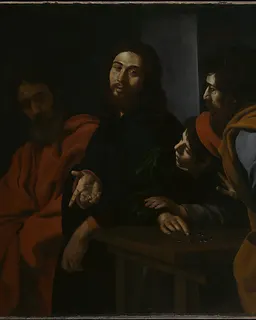
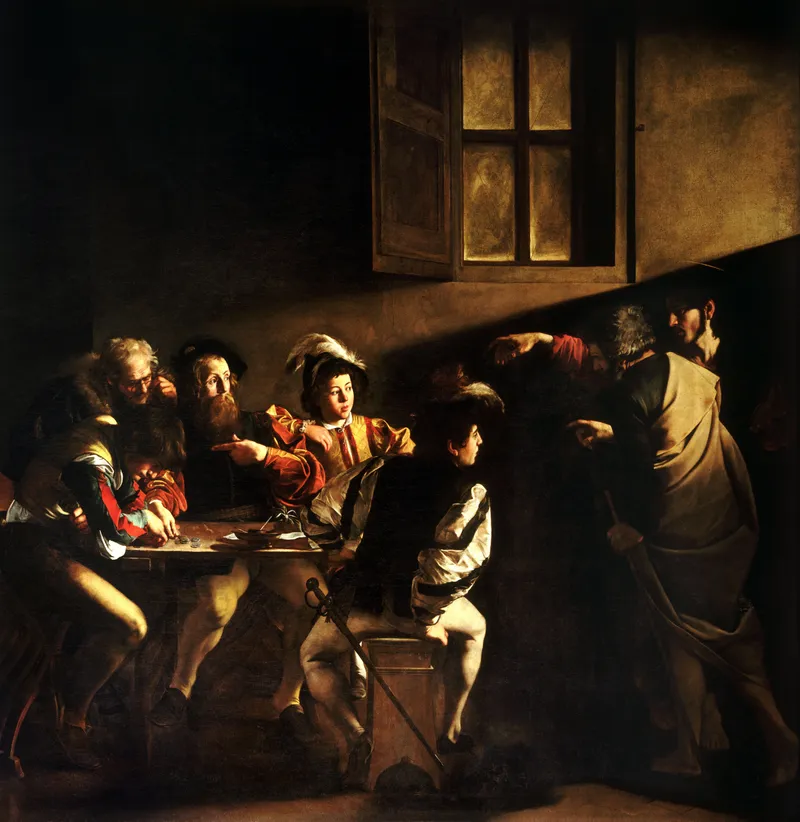
The next scene happens almost in passing, and that is part of its power. And as Jesus passed forth from thence, he saw a man, named Matthew, sitting at the receipt of custom: and he saith unto him, Follow me. And he arose, and followed him (v. 9). Matthew is a publican - a tax-collector - seated at his toll booth, the place where he gathered duties for Rome from his own people. It is hard to overstate how despised such men were.
A tax-collector was seen as a traitor twice over: a collaborator with the occupying power, and, in common reputation, an extortioner who lined his own pockets by overcharging. He was lumped together in the same breath with open sinners; he was barred from much of religious life. This is the man Jesus singles out and calls with a single, unconditional word: Follow me. There is no probationary period, no demand that Matthew first clean up his life or prove his sincerity.
The call comes first, and the man rises and leaves the booth behind. That this very Matthew is, by long tradition, the writer of the Gospel we are reading gives the scene a quiet poignancy - the despised tax-collector became the one who set down for us the words I am not come to call the righteous, but sinners.1
The calling leads straight to a table. And it came to pass, as Jesus sat at meat in the house, behold, many publicans and sinners came and sat down with him and his disciples (v. 10). To share a meal in that world was to share fellowship, to declare a kind of solidarity; one did not eat with just anyone. So when Jesus reclines at a table crowded with tax-collectors and people of openly bad reputation, He is making a statement everyone present can read.
The Pharisees certainly read it, and they are scandalized: Why eateth your Master with publicans and sinners? (v. 11). It is worth hearing the question fairly. The Pharisees prized holiness and feared the contamination of bad company, and that concern was not, in itself, frivolous. What they could not imagine was a holiness that moves toward the unclean to heal, a holiness that proves itself contagious in the direction of cleansing. Jesus brings them His wholeness.
The table of sinners is the very form His mission takes.
Jesus' answer is one of the great sentences of the Gospel: They that be whole need not a physician, but they that are sick. But go ye and learn what that meaneth, I will have mercy, and not sacrifice: for I am not come to call the righteous, but sinners to repentance (vv. 12-13). The image is simple and disarming. A physician is found among the sick - that is the whole point of being a physician.
To fault Jesus for keeping company with sinners is like faulting a doctor for being in the sick-room. Then He sends the Pharisees back to their own Scriptures with a gentle rebuke: go ye and learn what that meaneth - a phrase a teacher would use with a student who had missed the lesson. The text He points them to is the prophet's word: I will have mercy, and not sacrifice. God does not despise the sacrifices He Himself commanded; the prophet means that mercy is the heart of the matter, the thing the sacrifices were always meant to serve.
And the closing line names His mission outright: I am not come to call the righteous, but sinners to repentance. The plain truth is that the only people Jesus can help are the ones who know they are sick. The door He opens is grace held out to the undeserving - and the only ones shut out are those too sure of themselves to walk through it.
A different group now approaches with an honest question. Then came to him the disciples of John, saying, Why do we and the Pharisees fast oft, but thy disciples fast not? (v. 14). It is a fair question; fasting was a mark of serious devotion, and John's followers and the Pharisees both practiced it. Jesus answers with an image of joy: Can the children of the bridechamber mourn, as long as the bridegroom is with them? (v. 15).
A wedding is no place for mourning; while the bridegroom is present, the guests rejoice. Jesus is the Bridegroom, and His presence among His disciples is a wedding feast - the time for gladness, not grief. Then a shadow crosses the words: but the days will come, when the bridegroom shall be taken from them, and then shall they fast. The phrase taken from them is the first soft hint in this chapter of the cross to come.
There will be a time of mourning - the days of His being taken away - and fasting will fit those days. But the point stands: the rhythms of devotion are not lifeless rules; they answer to what God is actually doing. While the Bridegroom is here, joy is the only fitting response.
Jesus presses the point home with two homely pictures: No man putteth a piece of new cloth unto an old garment, for that which is put in to fill it up taketh from the garment, and the rent is made worse. Neither do men put new wine into old bottles: else the bottles break, and the wine runneth out, and the bottles perish: but they put new wine into new bottles, and both are preserved (vv. 16-17).
The bottles are wineskins - containers of sewn hide. New wine is still fermenting and expanding; pour it into an old, brittle skin already stretched to its limit, and the skin will burst and both wine and skin are lost. Likewise a patch of unshrunk cloth, sewn onto a worn garment, will pull and tear when it shrinks, ruining the very thing it was meant to mend. The lesson is about what Jesus is bringing. What He carries is genuinely new, fresh and living, and it asks for hearts and lives supple enough to hold it.
The question the parables put to the disciples of John, to the Pharisees, and to every later reader is whether we will let ourselves be made new to receive what He gives, or whether we will try to fit Him into the rigid shape of what we already are - and lose Him in the bursting.
Matthew 9:18-26Thy Faith Hath Made Thee Whole
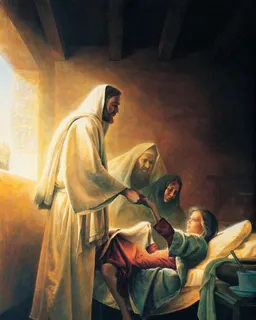
18While he spake these things unto them, behold, there came a certain ruler, and worshipped him, saying, My daughter is even now dead: but come and lay thy hand upon her, and she shall live. 19And Jesus arose, and followed him, and so did his disciples. 20And, behold, a woman, which was diseased with an issue of blood twelve years, came behind him, and touched the hem of his garment: 21For she said within herself, If I may but touch his garment, I shall be whole. 22But Jesus turned him about, and when he saw her, he said, Daughter, be of good comfort; thy faith hath made thee whole. And the woman was made whole from that hour. 23And when Jesus came into the ruler’s house, and saw the minstrels and the people making a noise, 24He said unto them, Give place: for the maid is not dead, but sleepeth. And they laughed him to scorn. 25But when the people were put forth, he went in, and took her by the hand, and the maid arose. 26And the fame hereof went abroad into all that land.
A man of standing now breaks through the crowd in desperation. While he spake these things unto them, behold, there came a certain ruler, and worshipped him, saying, My daughter is even now dead: but come and lay thy hand upon her, and she shall live (v. 18). He is a ruler - from the parallels, a leader of the synagogue, a man of dignity and position - and yet he falls down before Jesus and worshipped him. Grief has stripped away every barrier of pride or propriety.
His words are remarkable for their faith: not perhaps she might live, but come and lay thy hand upon her, and she shall live. He believes that the touch of Jesus can reach even past the boundary of death - that what is already lost is still within this Man's reach. And Jesus answers the way He so often does, without a speech: And Jesus arose, and followed him, and so did his disciples (v. 19).
He simply gets up and goes. The Lord who can forgive sins and raise the paralyzed now turns His steps toward a house of death because a broken father asked Him to.
On the way, the story is interrupted by another, quieter need. And, behold, a woman, which was diseased with an issue of blood twelve years, came behind him, and touched the hem of his garment: for she said within herself, If I may but touch his garment, I shall be whole (vv. 20-21). Her suffering is long - twelve years - and it carried more than physical misery: such a flow of blood rendered her ceremonially unclean, and so she had likely lived those twelve years cut off from ordinary fellowship, untouchable, unable even to draw near without making others unclean by contact.
This is why she comes behind him and reaches only for the hem - the tassel at the edge of His garment. She does not dare ask openly; she will not presume to be seen. But her faith is real and daring all the same: If I may but touch his garment, I shall be whole. She believes that healing is so abundant in Him that even the edge of His clothing, even a touch He might not notice, would be enough.
And she is not wrong about His power - though, as the next verse shows, He will not let her stay hidden.
Jesus will not take a healing from her in secret; He stops to give her Himself. But Jesus turned him about, and when he saw her, he said, Daughter, be of good comfort; thy faith hath made thee whole. And the woman was made whole from that hour (v. 22). He turns, He sees her, and He speaks - and the first word is tender: Daughter. The woman who had not been touched in twelve years, who tried to take her healing and slip away unseen, is named with a word of belonging.
Be of good comfort, He tells her - do not be afraid that you have presumed too far. Then He names the channel of her healing: thy faith hath made thee whole. It was not magic in the fabric of His robe; it was her faith laying hold of Him, and His power answering. The same word, whole, that she had said to herself - I shall be whole - He now pronounces over her as fact: she was made whole from that hour. Notice that He turned aside for her in the middle of an urgent errand to a dying child.
The Lord on His way to raise the dead still has time to stop, to look, and to call one trembling, overlooked woman Daughter.
Jesus reaches the ruler's house, and the scene is one of loud, settled grief. And when Jesus came into the ruler's house, and saw the minstrels and the people making a noise, he said unto them, Give place: for the maid is not dead, but sleepeth. And they laughed him to scorn (vv. 23-24). The minstrels and the noisy crowd are the customary mourners; their presence is proof that everyone there has accepted the child as gone.
Into this Jesus speaks a startling word: the maid is not dead, but sleepeth. The mourners' response is not reverence but ridicule - they laughed him to scorn - for they know death when they see it. Jesus is renaming death from His own vantage: He speaks from a vantage the mourners cannot yet see. To the One with power over it, the girl's death is no more final than sleep is final - a state from which she can be roused.
What looks to the mourners like an irreversible end looks to Jesus like a sleeper waiting to be woken. The scorn of the crowd only sharpens the contrast: they are certain of death's finality; He is about to undo it with the ease of waking a child.
The miracle itself is told with breathtaking restraint. But when the people were put forth, he went in, and took her by the hand, and the maid arose. And the fame hereof went abroad into all that land (vv. 25-26). The noisy crowd is sent out; this is not done for spectacle. Jesus goes in, and He simply took her by the hand. There is no incantation, no struggle, no great display - only the touch of His hand and the result: the maid arose. By the law, to touch a corpse was to be made unclean; but when Jesus takes the dead child by the hand, defilement does not pass to Him - life passes from Him to her.
The same hand the ruler had begged Him to lay on his daughter does exactly what the father believed it would. Death, which had silenced the house and drawn the mourners, gives way at the touch of the Lord of life. And the report cannot be contained: the fame hereof went abroad into all that land. A father's desperate faith, a quiet word, a hand on a dead girl - and a whole region learns that here is One at whose touch even death lets go.
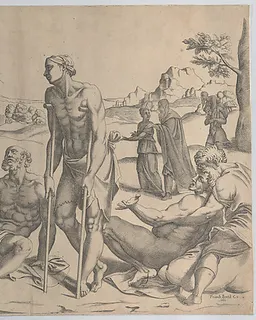
Matthew 9:27-38As Sheep Having No Shepherd
27And when Jesus departed thence, two blind men followed him, crying, and saying, Thou son of David, have mercy on us. 28And when he was come into the house, the blind men came to him: and Jesus saith unto them, Believe ye that I am able to do this? They said unto him, Yea, Lord. 29Then touched he their eyes, saying, According to your faith be it unto you. 30And their eyes were opened; and Jesus straitly charged them, saying, See that no man know it. 31But they, when they were departed, spread abroad his fame in all that country. 32As they went out, behold, they brought to him a dumb man possessed with a devil. 33And when the devil was cast out, the dumb spake: and the multitudes marvelled, saying, It was never so seen in Israel. 34But the Pharisees said, He casteth out devils through the prince of the devils. 35And Jesus went about all the cities and villages, teaching in their synagogues, and preaching the gospel of the kingdom, and healing every sickness and every disease among the people. 36But when he saw the multitudes, he was moved with compassion on them, because they fainted, and were scattered abroad, as sheep having no shepherd. 37Then saith he unto his disciples, The harvest truly is plenteous, but the labourers are few; 38Pray ye therefore the Lord of the harvest, that he will send forth labourers into his harvest.
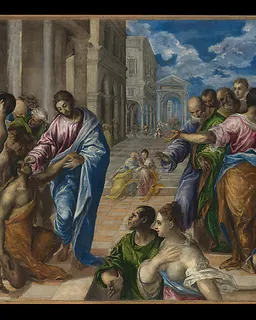
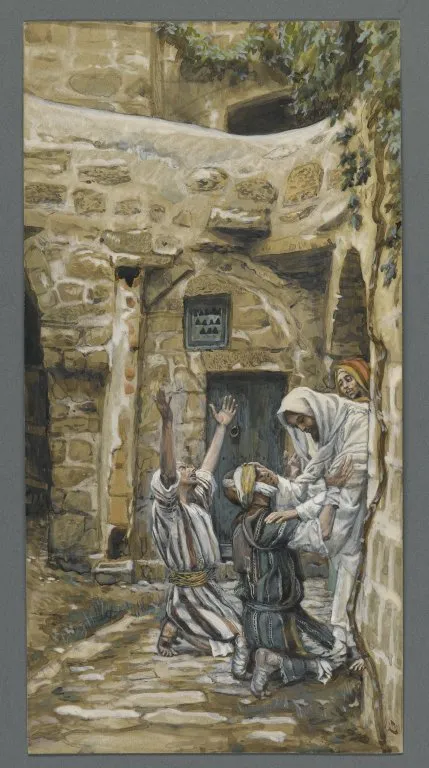
Two more sufferers now appeal to Jesus, and the title they use is significant. And when Jesus departed thence, two blind men followed him, crying, and saying, Thou Son of David, have mercy on us (v. 27). Son of David is a royal, Messianic title - it confesses Jesus as the promised heir of David's line, the long-awaited King. These blind men, who cannot see Him with their eyes, see with faith what the scribes and Pharisees would not: that this is the Messiah, and that mercy is His to give.
They follow Him persistently, crying out, until when he was come into the house, the blind men came to him: and Jesus saith unto them, Believe ye that I am able to do this? They said unto him, Yea, Lord (v. 28). Jesus draws their faith into the open with a direct question, and they answer plainly: Yea, Lord. Their confession is simple and total: yes, we believe you can. Before the miracle, He secures the faith; He wants them to know, and to say, what they are trusting Him for.
The healing answers their faith exactly. Then touched he their eyes, saying, According to your faith be it unto you. And their eyes were opened (vv. 29-30). The words according to your faith are worth weighing carefully. They do not mean that faith is a power in itself, as though strong enough believing could conjure a cure; the power is wholly in Christ, whose touch opens their eyes. Faith is the open hand that receives what He gives, the means by which His power is laid hold of.
Throughout this chapter the pattern repeats: the friends' faith carries the paralytic, the woman's faith reaches for the hem, the ruler's faith brings Jesus to the deathbed, and now the blind men's faith opens their eyes. Then comes a surprising turn: Jesus straitly charged them, saying, See that no man know it. But they, when they were departed, spread abroad his fame in all that country (vv. 30-31). Jesus sternly tells them to keep silent - He is wary of a fame built on wonders alone - yet the men, overflowing with what He has done, cannot contain it.
Their disobedience is the disobedience of joy; they have received their sight, and they will not be quiet about the One who gave it.
One more healing closes the series, and it draws out the chapter's deepest division. As they went out, behold, they brought to him a dumb man possessed with a devil. And when the devil was cast out, the dumb spake: and the multitudes marvelled, saying, It was never so seen in Israel (vv. 32-33). The man's silence is bound up with an evil spirit; when Jesus drives it out, the man speaks for the first time, and the crowds rightly recognize that they are seeing something unprecedented: It was never so seen in Israel. But the same act provokes the opposite reaction in the religious leaders: But the Pharisees said, He casteth out devils through the prince of the devils (v. 34).
Faced with a work that the crowds know could only come from God, they reach for the one explanation that lets them refuse Him - that His power comes from a dark source. It is a chilling moment, because it shows that evidence, on its own, does not produce faith. The same miracle that makes the crowds marvel hardens the leaders into slander. What a person does with Jesus is finally a matter of what they are willing to confess.
The chapter draws to its close by widening the lens from single miracles to the whole multitude, and then opening Jesus' heart. And Jesus went about all the cities and villages, teaching in their synagogues, and preaching the gospel of the kingdom, and healing every sickness and every disease among the people. But when he saw the multitudes, he was moved with compassion on them, because they fainted, and were scattered abroad, as sheep having no shepherd (vv. 35-36).
His ministry is summed up in three verbs - teaching, preaching, healing - and then the camera turns to what He sees in the people's faces. They are fainted, and… scattered abroad: harassed, worn down, aimless, like sheep with no one to lead them to pasture or guard them from harm. And the sight moves Him - not coolly, but at the deepest level. From that compassion comes His final word, which is not a miracle but a charge to pray: Then saith he unto his disciples, The harvest truly is plenteous, but the labourers are few; pray ye therefore the Lord of the harvest, that he will send forth labourers into his harvest (vv. 37-38).
The crowds are not a burden to be managed but a harvest ready to be gathered; the workers are what is needed. And the first response Jesus asks of His followers is to pray - to ask the Lord of the harvest to thrust laborers out into it.1
Research trail
Sources & further study
These references support the historical, linguistic, manuscript, and contextual notes in this chapter. Scripture remains the primary text; external sources are provided so readers can inspect the research directly.
- Matthew 9 - Translators' NotesThe NET Bible's detailed footnotes on Matthew 9 - the charge of blasphemy and the authority claimed in verses 2-6, the social weight of the tax-collector's calling and the table of sinners (vv. 9-13), and the wineskins image of verses 16-17.
- Matthew 9 · Greek interlinear + lexiconThe Greek text of Matthew 9 word by word with parsing and lexical links - useful for aphiemi (vv. 2, 5, 6, “to forgive”), for exousia (v. 6, the “power” or authority of the Son of man), and for splanchnizomai (v. 36, “moved with compassion”).
- Matthew 9 ↔ Hosea 6 · Ezekiel 34 · the Markan and Lukan parallelsTraces the threads tying Matthew 9 to the rest of Scripture - I will have mercy, and not sacrifice (v. 13) drawn from Hosea 6:6, the shepherdless sheep of verse 36 read against Ezekiel 34 and Numbers 27:17, and the chapter's healings set beside their parallels in Mark and Luke.
Where this echoes in Scripture
Thy Sins Be Forgiven Thee
- Mark 2:5-12Why doth this man thus speak blasphemies? who can forgive sins but God only?The fuller parallel to verses 2-8 - the same charge, the same proof, the same authority shown.
- Isaiah 43:25I, even I, am he that blotteth out thy transgressions for mine own sake, and will not remember thy sins.The prerogative the scribes knew belonged to God alone (v. 3) - the blotting out of sins.
- Psalm 103:3Who forgiveth all thine iniquities; who healeth all thy diseases.Forgiveness and healing joined in one breath, as Jesus joins them in verses 2-6.
- Acts 5:31Him hath God exalted... to give repentance to Israel, and forgiveness of sins.The authority claimed in verse 6 confessed by the apostles - Christ who gives forgiveness of sins.
- 1 John 1:9If we confess our sins, he is faithful and just to forgive us our sins, and to cleanse us from all unrighteousness.The pardon spoken to the paralytic (v. 2) held out to every one who comes.
I Am Not Come to Call the Righteous, but Sinners
- Hosea 6:6For I desired mercy, and not sacrifice; and the knowledge of God more than burnt offerings.The prophet's word Jesus sends the Pharisees to learn (v. 13) - mercy at the heart of God.
- 1 Timothy 1:15Christ Jesus came into the world to save sinners; of whom I am chief.The mission named in verse 13 confessed by the apostle - come for sinners, not the righteous.
- Luke 19:9-10For the Son of man is come to seek and to save that which was lost.Another tax-collector sought and saved - the calling of Matthew (v. 9) in another key.
- Romans 5:8God commendeth his love toward us, in that, while we were yet sinners, Christ died for us.The grace of verse 13 - the Physician coming to the sick while they were still sick.
- John 3:29He that hath the bride is the bridegroom... this my joy therefore is fulfilled.The Bridegroom of verse 15 - whose presence is a wedding, and whose friends rejoice.
Thy Faith Hath Made Thee Whole
- Mark 5:25-43Daughter, thy faith hath made thee whole... the damsel arose, and walked.The fuller parallel to verses 18-26 - the same two healings told with added detail.
- John 11:25I am the resurrection, and the life: he that believeth in me, though he were dead, yet shall he live.The authority shown in verse 25 named in person - the One who is Himself the life.
- Numbers 15:38-39bid them that they make them fringes in the borders of their garments... that ye may look upon it, and remember.The hem or fringe the woman touched in faith (v. 20) - the tassel at the edge of the garment.
- 1 Thessalonians 4:14them also which sleep in Jesus will God bring with him.Death renamed as sleep (v. 24) - the very language the apostle uses of those who die in Christ.
- Luke 8:54And he put them all out, and took her by the hand, and called, saying, Maid, arise.The raising of verse 25 in the parallel - the hand taken, the dead child roused to life.
As Sheep Having No Shepherd
- Ezekiel 34:5, 23they were scattered, because there is no shepherd... I will set up one shepherd over them, and he shall feed them.The shepherdless sheep of verse 36 - and the LORD's promise of the one Shepherd He would send.
- Numbers 27:17that the congregation of the LORD be not as sheep which have no shepherd.The very phrase of verse 36 - Moses' prayer that the people not be left shepherdless.
- John 10:11I am the good shepherd: the good shepherd giveth his life for the sheep.The Shepherd-heart of verse 36 named in person - the One the scattered sheep were waiting for.
- Luke 10:2The harvest truly is great, but the labourers are few: pray ye therefore the Lord of the harvest.The charge of verses 37-38 repeated - the plentiful harvest and the plea for laborers.
- Isaiah 35:5Then the eyes of the blind shall be opened, and the ears of the deaf shall be unstopped.The blind given sight and the mute given speech (vv. 30, 33) - the promised signs of God's coming.