



Luke 10
People in this chapter
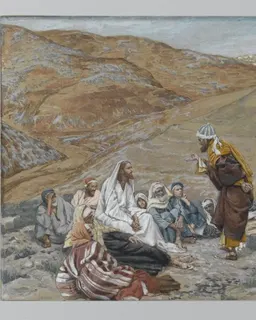
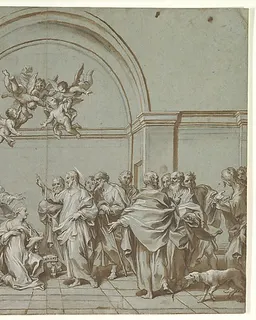
After the road to Jerusalem has begun in earnest, the Lord widens the work: He appointed other seventy also, and sent them two and two before his face into every city and place, whither he himself would come (v. 1). They go ahead of Him as heralds clearing the way for a king. The charge is urgent and the picture vivid: The harvest truly is great, but the labourers are few: pray ye therefore the Lord of the harvest, that he would send forth labourers into his harvest (v. 2).
They travel light and exposed - as lambs among wolves, carrying neither purse, nor scrip, nor shoes - bearing one message into every house that will receive it: The kingdom of God is come nigh unto you. Where they are welcomed, peace rests; where they are refused, even the dust is shaken off. And over the towns that saw His mighty works and would not turn, He pronounces woe.1
Tap any highlighted phrase to jump to the commentary that unpacks it.
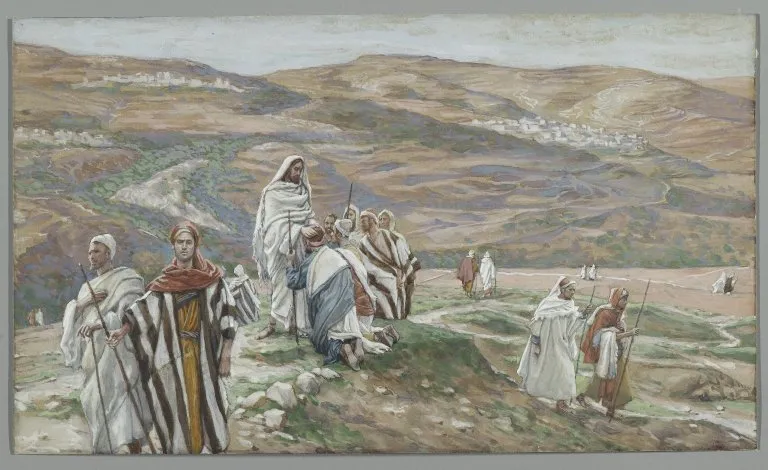
Luke 10:1-16The Harvest Truly Is Great, but the Labourers Are Few
1After these things the LORD appointed other seventy also, and sent them two and two before his face into every city and place, whither he himself would come. 2Therefore said he unto them, The harvest truly is great, but the labourers are few: pray ye therefore the Lord of the harvest, that he would send forth labourers into his harvest. 3Go your ways: behold, I send you forth as lambs among wolves. 4Carry neither purse, nor scrip, nor shoes: and salute no man by the way. 5And into whatsoever house ye enter, first say, Peace be to this house. 6And if the son of peace be there, your peace shall rest upon it: if not, it shall turn to you again. 9And heal the sick that are therein, and say unto them, The kingdom of God is come nigh unto you.
The number is deliberate and generous: the Lord appointed other seventy also (v. 1). The word other sets them beside the twelve already sent in the previous chapter - the work of the kingdom reaches out through a far wider company than the twelve. Seventy was a resonant number in Israel: the seventy elders set over the people with Moses, on whom the Spirit rested, and in the old reckoning the seventy nations of the earth.
Whether the reader hears the elders or the nations, the point is the same - the harvest is meant for everyone, and the labourers are many more than the Twelve. They are sent two and two, never alone: for companionship on a hard road, for the strength of a shared witness, for the steadying of one another. And they go before his face into every city and place, whither he himself would come - not as replacements for Jesus but as heralds running ahead of a king, preparing the towns for His arrival.
To go before His face is to go in His name, and to go expecting that He Himself is coming behind.1
Before He describes the danger, Jesus names the scale of the need and the right response to it: The harvest truly is great, but the labourers are few: pray ye therefore the Lord of the harvest, that he would send forth labourers into his harvest (v. 2). The image of harvest is one of urgency and joy together - grain ripe and waiting, a window of time, a gladness in the gathering - but also of a shortage that should drive the workers to their knees.
Notice the order. The first command to people being sent as labourers is to pray for labourers. The harvest is not theirs and the workers are not theirs to conscript; both belong to the Lord of the harvest. The work is His, the field is His, the increase is His. So the messengers are taught at the outset that mission begins not in strategy or zeal but in asking God to do what only He can do - to thrust workers out into His own field.
And the prayer is not a way of escaping the work; the very ones told to pray for labourers are themselves being sent. To pray this prayer honestly is to make oneself available to be its answer.
Then the charge turns stark: Go your ways: behold, I send you forth as lambs among wolves (v. 3). It is a startling thing to say to those you love. A lamb among wolves has no natural defence; its only safety is the shepherd. Jesus does not pretend the errand is safe, and He does not arm them against the danger - instead He strips them down: Carry neither purse, nor scrip, nor shoes (v. 4).
No money, no travelling bag, no spare sandals. They are to depend on the hospitality of those they serve and, beneath that, on the God who sends them. Salute no man by the way is not rudeness but urgency - the elaborate roadside greetings of the East could consume hours, and the harvest will not wait. Their message is peace and nearness: into whatsoever house ye enter, first say, Peace be to this house (v. 5), and where there is a son of peace to receive it, the blessing rests; where there is not, it returns unspent.
They heal the sick and announce the one great word: The kingdom of God is come nigh unto you (v. 9). The reign of God is not a distant rumour; in the coming of these messengers, and of the One behind them, it has drawn near enough to touch.
10But into whatsoever city ye enter, and they receive you not, go your ways out into the streets of the same, and say, 11Even the very dust of your city, which cleaveth on us, we do wipe off against you: notwithstanding be ye sure of this, that the kingdom of God is come nigh unto you. 13Woe unto thee, Chorazin! woe unto thee, Bethsaida! for if the mighty works had been done in Tyre and Sidon, which have been done in you, they had a great while ago repented, sitting in sackcloth and ashes. 15And thou, Capernaum, which art exalted to heaven, shalt be thrust down to hell. 16He that heareth you heareth me; and he that despiseth you despiseth me; and he that despiseth me despiseth him that sent me.
The same nearness that is good news to those who receive it becomes a verdict on those who refuse it. Where a city will not receive the messengers, they are to wipe off even its dust - a prophetic sign that they leave nothing of that place clinging to them - yet they still announce the unchanged fact: be ye sure of this, that the kingdom of God is come nigh unto you (v. 11). The kingdom drew near to them too; that is precisely why their refusal is so grave.
Then Jesus turns to the towns of His own ministry and grieves over them: Woe unto thee, Chorazin! woe unto thee, Bethsaida! (v. 13). These were not pagan strongholds but the very places that had seen His mighty works up close, and still would not turn. He measures them against Tyre and Sidon - Gentile cities long held up as bywords for judgment - and says even they would have repented in sackcloth and ashes had they seen what these towns saw.
Capernaum, His own base, exalted to heaven in privilege, will be thrust down (v. 15). The principle is sobering and runs straight through Scripture: the greater the light a person or place receives, the greater the account for what they do with it. To have the kingdom come near and shrug is the most dangerous thing of all.
Luke 10:17-24Rejoice, Because Your Names Are Written in Heaven
17And the seventy returned again with joy, saying, Lord, even the devils are subject unto us through thy name. 18And he said unto them, I beheld Satan as lightning fall from heaven. 19Behold, I give unto you power to tread on serpents and scorpions, and over all the power of the enemy: and nothing shall by any means hurt you. 20Notwithstanding in this rejoice not, that the spirits are subject unto you; but rather rejoice, because your names are written in heaven.
The seventy come home elated: Lord, even the devils are subject unto us through thy name (v. 17). Their wonder is real and right - they have seen the powers of darkness give way, and they are careful to name the reason: it was through thy name, never their own. Jesus meets their joy with a flash of revelation: I beheld Satan as lightning fall from heaven (v. 18). In their small victories in the villages He sees the larger thing of which they are a part - the toppling of the enemy's usurped dominion, sudden and decisive as lightning.
Their casting out of demons is not an isolated marvel; it is a local sign of a kingdom advancing and a tyrant falling. Then He confirms the authority He has given: Behold, I give unto you power to tread on serpents and scorpions, and over all the power of the enemy: and nothing shall by any means hurt you (v. 19). The serpents and scorpions stand for the whole hostile power arrayed against them; under His commission, that power cannot finally harm those who are His.
It is a staggering promise - and yet, in the very next breath, He tells them it is not the thing to set their hearts on.
Here is the hinge of the whole scene, and one of the most important corrections Jesus ever gives His own: Notwithstanding in this rejoice not, that the spirits are subject unto you; but rather rejoice, because your names are written in heaven (v. 20). He does not deny their power or scold their gladness; He redirects it. There is a real danger in spiritual success - that the thrill of what one can do in His name quietly replaces the wonder of who one is to Him.
Power can feed pride; power can be lost; power says something about your usefulness. But to have your name written in heaven is to be known, claimed, and kept by God Himself - and that does not rise and fall with your effectiveness. It is the difference between rejoicing in your gifts and rejoicing in your belonging. The image of names written in heaven runs all through Scripture: the book of life in which God keeps the record of His own.
Jesus is teaching the seventy - and every disciple after them - that the steadiest joy, the joy that survives both triumph and failure, is we are His, and He has written our names down. Strip away every power and every result, and that joy remains untouched.
21In that hour Jesus rejoiced in spirit, and said, I thank thee, O Father, Lord of heaven and earth, that thou hast hid these things from the wise and prudent, and hast revealed them unto babes: even so, Father; for so it seemed good in thy sight. 22All things are delivered to me of my Father: and no man knoweth who the Son is, but the Father; and who the Father is, but the Son, and he to whom the Son will reveal him. 23And he turned him unto his disciples, and said privately, Blessed are the eyes which see the things that ye see: 24For I tell you, that many prophets and kings have desired to see those things which ye see, and have not seen them; and to hear those things which ye hear, and have not heard them.
For once we are shown the inner gladness of Jesus: In that hour Jesus rejoiced in spirit (v. 21). What stirs His joy is not the spectacle of power but the Father's way of giving Himself away - I thank thee, O Father, Lord of heaven and earth, that thou hast hid these things from the wise and prudent, and hast revealed them unto babes. The chapter has just commended a lawyer for answering rightly, so this is no contempt for the mind.
It is a warning about a particular posture - the self-sufficiency of the wise and prudent, those so confident in their own understanding that they have no room to receive. The things of God come as gift, not as conquest; they are grasped by those humble enough to take them like children, with open and empty hands. So the seventy, ordinary and untrained, see what scholars and the powerful missed. Jesus adds, even so, Father; for so it seemed good in thy sight - resting wholly in the Father's good pleasure, content that this is how the Father has chosen to work.
Then He turns privately to His own: Blessed are the eyes which see the things that ye see (v. 23). Prophets and kings longed to see this day and did not; the disciples are standing in the very hour those saints strained toward across the centuries. The privilege is immense, and it has come to babes.
Luke 10:25-37Who Is My Neighbour? · The Good Samaritan
25And, behold, a certain lawyer stood up, and tempted him, saying, Master, what shall I do to inherit eternal life? 26He said unto him, What is written in the law? how readest thou? 27And he answering said, Thou shalt love the Lord thy God with all thy heart, and with all thy soul, and with all thy strength, and with all thy mind; and thy neighbour as thyself. 28And he said unto him, Thou hast answered right: this do, and thou shalt live. 29But he, willing to justify himself, said unto Jesus, And who is my neighbour?
A lawyer - an expert in the law of Moses - rises with a test: Master, what shall I do to inherit eternal life? (v. 25). Jesus, as He often does, throws the question back to the man's own expertise: What is written in the law? how readest thou? (v. 26). The lawyer answers superbly, joining two commands into one: Thou shalt love the Lord thy God with all thy heart, and with all thy soul, and with all thy strength, and with all thy mind; and thy neighbour as thyself (v. 27).
It is exactly right, and Jesus says so: Thou hast answered right: this do, and thou shalt live (v. 28). But notice the weight that lands on this do. The man knows the answer; the question is whether he will live it. And here the conversation turns, for the lawyer is not finished: willing to justify himself, he asks, And who is my neighbour? (v. 29). That little phrase - willing to justify himself - exposes the heart of the question.
He wants a definition with an edge to it, a boundary that tells him where his obligation stops and whom he is free to pass by. He is looking for the limit of love. Jesus will give him a story that erases the limit altogether.2
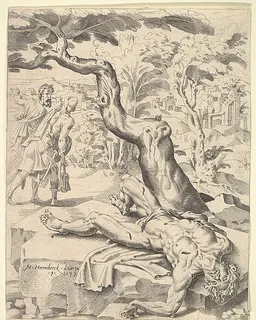
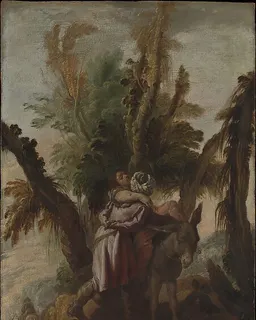
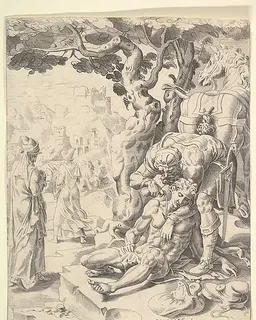
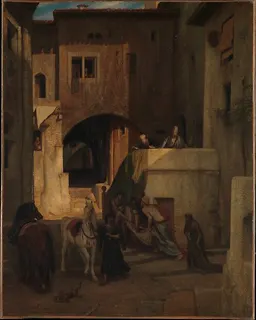
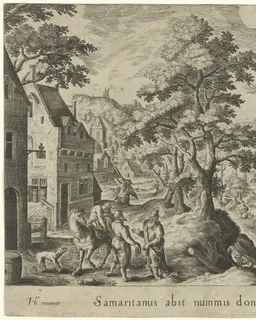
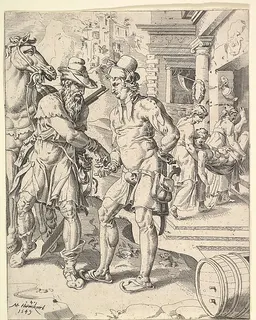
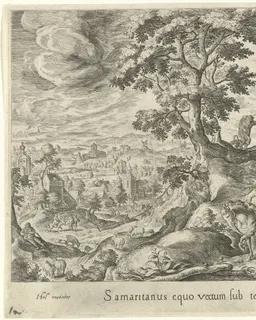
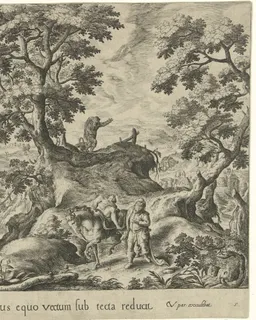
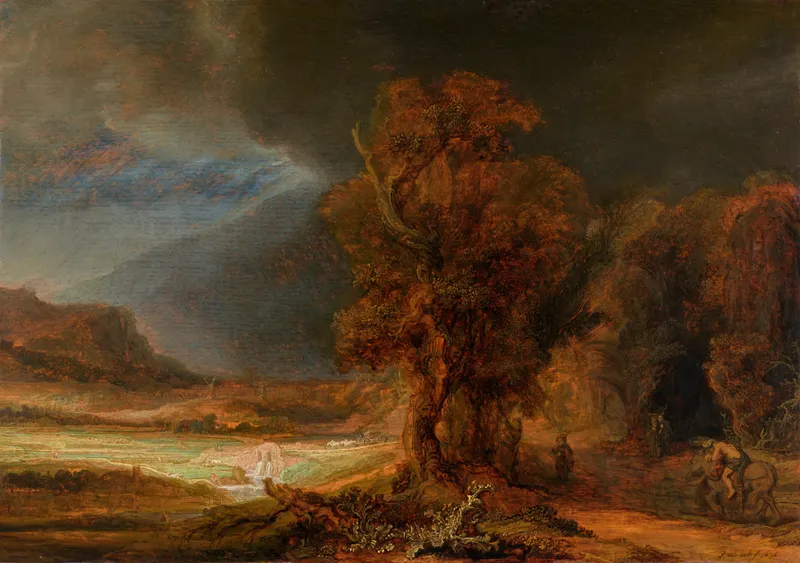
30And Jesus answering said, A certain man went down from Jerusalem to Jericho, and fell among thieves, which stripped him of his raiment, and wounded him, and departed, leaving him half dead. 31And by chance there came down a certain priest that way: and when he saw him, he passed by on the other side. 32And likewise a Levite, when he was at the place, came and looked on him, and passed by on the other side. 33But a certain Samaritan, as he journeyed, came where he was: and when he saw him, he had compassion on him, 34And went to him, and bound up his wounds, pouring in oil and wine, and set him on his own beast, and brought him to an inn, and took care of him. 35And on the morrow when he departed, he took out two pence, and gave them to the host, and said unto him, Take care of him; and whatsoever thou spendest more, when I come again, I will repay thee.
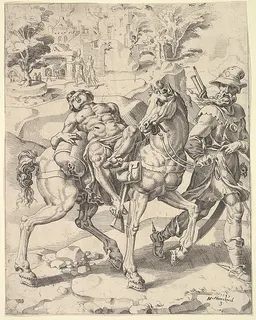
The story is told with terrible economy: A certain man went down from Jerusalem to Jericho, and fell among thieves, which stripped him of his raiment, and wounded him, and departed, leaving him half dead (v. 30). The road down to Jericho was a notorious seventeen-mile descent through lonely, rocky country - a place real travellers feared. The man is left with no clothes to mark his nationality and no voice to plead his case; half dead, he is simply a human being in desperate need.
Then come the two who should most have helped: a certain priest… passed by on the other side (v. 31), and likewise a Levite… came and looked on him, and passed by on the other side (v. 32). These are the men of the temple, the professionals of religion, the very ones whose lives were given to the worship of God. The Levite even draws near and looks - he sees the need plainly - and still crosses the road.
Jesus offers no excuse for them, and we should resist supplying one; whatever reasons they might have given themselves, the verdict of the story is that they saw a dying man and chose distance. Religion that knows all the right things about God can still walk past a bleeding neighbour on the other side of the road. The lawyer wanted to know where the duty to love runs out; the priest and Levite show what it looks like to decide it runs out exactly where it costs something.
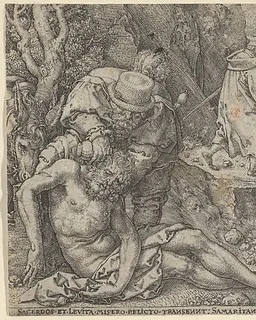
Then comes the figure no one in the lawyer's world would have chosen as the hero: But a certain Samaritan, as he journeyed, came where he was: and when he saw him, he had compassion on him (v. 33). Samaritans and Jews despised one another; to Jesus' hearers, “a good Samaritan” would have sounded like a contradiction. That is exactly why Jesus chooses him. The Samaritan sees the same wounded man the priest and Levite saw, but the seeing moves him to the depths, and the compassion turns at once into costly action.
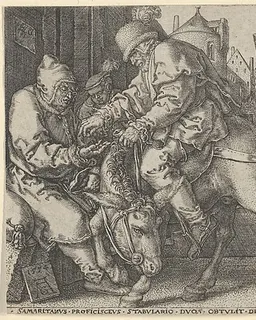
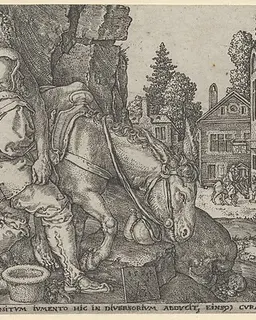
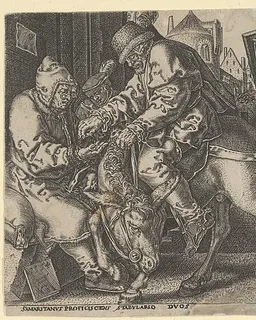
Watch how much he does: he went to him - he crossed the road the others crossed away on; he bound up his wounds, pouring in oil and wine, spending his own supplies as medicine; he set him on his own beast, going on foot himself; he brought him to an inn, and took care of him through the night. And he does not stop at the emergency: on the morrow he pays the innkeeper two pence - about two days' wages - and pledges an open-ended debt: whatsoever thou spendest more, when I come again, I will repay thee (v. 35).
He gives his time, his goods, his money, his comfort, and his promise to return. Mercy here is not a feeling that pities from a safe distance; it is a man emptying his pockets and his schedule for a stranger who can never repay him, and who, were the roles reversed, might well have despised him. This is the love the law commanded, shown by the last person anyone expected, and withheld by the first people anyone would have asked.
36Which now of these three, thinkest thou, was neighbour unto him that fell among the thieves? 37And he said, He that shewed mercy on him. Then said Jesus unto him, Go, and do thou likewise.
Jesus closes by turning the lawyer's question completely around. The man had asked, who is my neighbour? - expecting a category, a list of who qualifies. Jesus asks instead, Which now of these three, thinkest thou, was neighbour unto him that fell among the thieves? (v. 36). The question is no longer whom must I love? but which one acted as a neighbour? - and the answer cannot be dodged. The lawyer cannot even bring himself to say the word “Samaritan”; he answers, He that shewed mercy on him (v. 37).
And there Jesus has him, for the man has just confessed that being a neighbour is defined not by who a person is but by the mercy he shows. The command lands like a hammer: Go, and do thou likewise. Not go and define your neighbour more carefully, but go and be one. The whole attempt to find love's limit collapses; there is no boundary to draw, because the question was never who is near enough to me to deserve my love - it is whether I will draw near to whoever lies wounded in my path.
The neighbour is the man in need, and the neighbour is also the one who has mercy on him. Love, Jesus says, is a road to be crossed.
Luke 10:38-42One Thing Is Needful · Mary and Martha
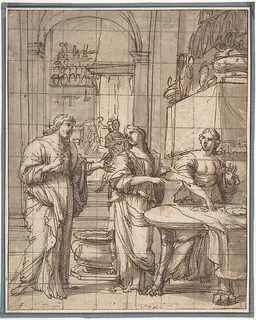
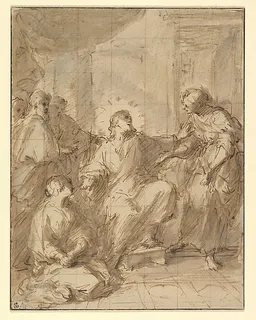
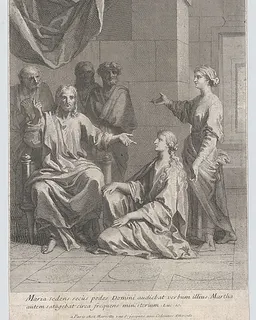
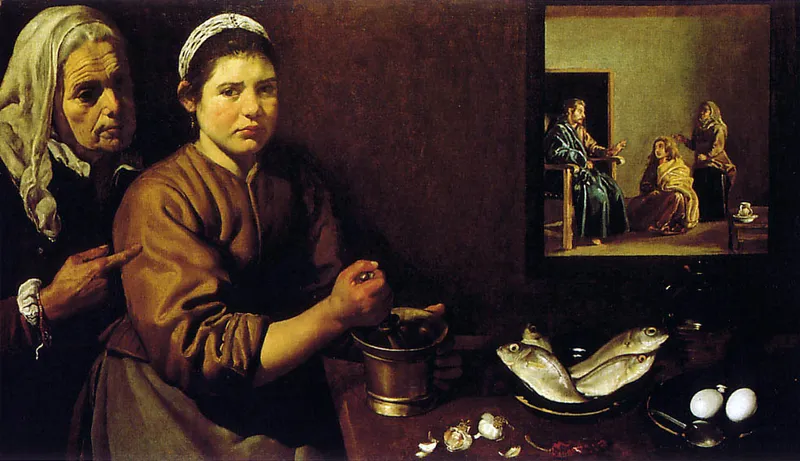
38Now it came to pass, as they went, that he entered into a certain village: and a certain woman named Martha received him into her house. 39And she had a sister called Mary, which also sat at Jesus’ feet, and heard his word. 40But Martha was cumbered about much serving, and came to him, and said, Lord, dost thou not care that my sister hath left me to serve alone? bid her therefore that she help me. 41And Jesus answered and said unto her, Martha, Martha, thou art careful and troubled about many things: 42But one thing is needful: and Mary hath chosen that good part, which shall not be taken away from her.
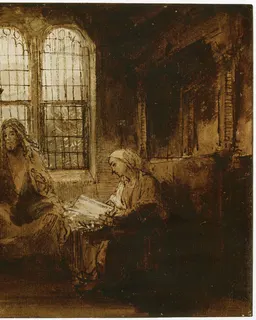
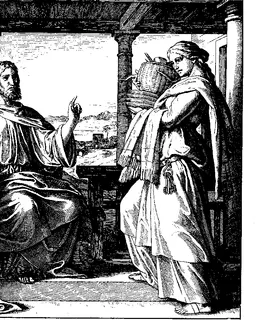
The chapter ends in a quiet house, and the scene is gentle, not harsh. A certain woman named Martha received him into her house (v. 38) - the verb is one of welcome; Martha is the hospitable one who opens her door to Jesus and His company, and that is a genuinely good thing. Her sister Mary also sat at Jesus' feet, and heard his word (v. 39). To sit at a teacher's feet was the posture of a disciple, the place where a student learned - and that Mary, a woman, takes it without rebuke is itself quietly remarkable.
Meanwhile Martha was cumbered about much serving (v. 40). The word translated cumbered carries the sense of being pulled in every direction, dragged about, weighed down by the press of tasks. Her serving is real service - she is working for Jesus - but it has become a burden that distracts her from Jesus, and the strain finally spills over. She comes to Him with a complaint that is half about her sister and half a reproach to the Lord Himself: Lord, dost thou not care that my sister hath left me to serve alone? bid her therefore that she help me. It is worth feeling the honesty of it.
Martha is not lazy or irreverent; she is overwhelmed, and her overwhelm has begun to curdle into resentment and to question whether the Lord even cares. That is what distraction does, even good and busy distraction: it crowds out the One being served and leaves us frayed, comparing, and faintly accusing.2
Jesus answers with tenderness, not reproach - the doubled name is the language of affection and gentle appeal: Martha, Martha, thou art careful and troubled about many things (v. 41). He sees her clearly and names the real trouble: not the serving itself, but the care and the inner turmoil that have come to fill her - troubled about many things. Her problem is not that she is doing too much but that she is anxious and scattered, her heart divided among countless concerns.
Then comes the still centre of the whole chapter: But one thing is needful: and Mary hath chosen that good part, which shall not be taken away from her (v. 42). Against the many things that trouble Martha, Jesus sets one thing that is truly necessary. Mary has chosen it - to sit at His feet and hear His word, to be present to Him before being busy for Him. Service done for Him is good and needed, and someone must prepare the meal.
What He gently corrects is the ordering of the heart - the assumption that the doing must come first and that sitting and listening is the luxury that can wait. Jesus reverses it. The one thing needful is to attend to Him; everything else, including all our service, is meant to flow from that and not to crowd it out. And He adds a quiet promise: what Mary has chosen shall not be taken away from her. The dishes will be cleared and forgotten; the meal will be eaten and gone; but what is received by sitting at His feet endures.
Of all that fills a life, this one thing lasts.
Research trail
Sources & further study
These references support the historical, linguistic, manuscript, and contextual notes in this chapter. Scripture remains the primary text; external sources are provided so readers can inspect the research directly.
- Luke 10 - Translators' NotesThe NET Bible's detailed footnotes on Luke 10 - the sending of the seventy (or seventy-two) in verses 1-16, the road from Jerusalem down to Jericho and the half-dead traveller (vv. 30-35), and the textual and grammatical questions in the saying about the one thing needful (vv. 41-42).
- Luke 10 · Greek interlinear + lexiconThe Greek text of Luke 10 word by word, with parsing and lexical entries - useful for plesion (vv. 27, 29, 36, the “neighbour” the chapter redefines), for splagchnizomai (v. 33, the Samaritan's gut-deep “compassion”), and for the verb behind Martha being “cumbered” with serving (v. 40).
- Luke 10 ↔ Leviticus 19 · Isaiah 53 · John 1 · Revelation 21Traces the threads tying Luke 10 to the rest of Scripture - the command to love the neighbour (v. 27) reaching back to thou shalt love thy neighbour as thyself (Lev. 19:18), the names written in heaven (v. 20) read beside the book of life (Rev. 21:27), and the mutual knowing of Father and Son (v. 22) read alongside he hath declared him (John 1:18).
Where this echoes in Scripture
The Harvest Truly Is Great, but the Labourers Are Few
- Matthew 9:37-38The harvest truly is plenteous, but the labourers are few; Pray ye therefore the Lord of the harvest, that he will send forth labourers into his harvest.The same call as verse 2 - a great harvest, few workers, and the command to pray the Lord of the harvest for more.
- Numbers 11:16-17Gather unto me seventy men of the elders of Israel... and I will take of the spirit which is upon thee, and will put it upon them.The seventy of verse 1 echo the seventy elders on whom the Spirit rested - the work of God shared beyond one leader.
- Matthew 10:40He that receiveth you receiveth me, and he that receiveth me receiveth him that sent me.The chain of verse 16 - to receive the sent one is to receive the Sender, all the way up to the Father.
- Acts 13:51But they shook off the dust of their feet against them, and came unto Iconium.The sign of verse 11 carried out - the dust shaken off where the kingdom's nearness is refused.
- John 6:38I came down from heaven, not to do mine own will, but the will of him that sent me.The other end of verse 16 - the Son Himself sent by the Father, doing not His own will but His.
Rejoice, Because Your Names Are Written in Heaven
- Philippians 4:3help those women which laboured with me in the gospel... whose names are in the book of life.The joy of verse 20 named - the labourers' names kept in the book of life.
- Revelation 21:27there shall in no wise enter into it any thing that defileth... but they which are written in the Lamb's book of life.The end of the promise in verse 20 - only those whose names are written enter the city of God.
- John 1:18No man hath seen God at any time; the only begotten Son, which is in the bosom of the Father, he hath declared him.The mutual knowing of verse 22 - the Father made known through the Son alone.
- John 14:9he that hath seen me hath seen the Father; and how sayest thou then, Shew us the Father?The Son revealing the Father (v. 22) - to see Jesus is to see the One who sent Him.
- 1 Peter 1:10-12Of which salvation the prophets have enquired and searched diligently... which things the angels desire to look into.The blessing of verses 23-24 - what prophets longed to see, the disciples now behold.
Who Is My Neighbour? · The Good Samaritan
- Leviticus 19:18thou shalt love thy neighbour as thyself: I am the LORD.The command the lawyer quotes in verse 27 - the ancient law of love that the parable refuses to let him narrow.
- Luke 7:13And when the Lord saw her, he had compassion on her, and said unto her, Weep not.The same gut-deep compassion as verse 33 - the very mercy of the Lord, here shown by the Samaritan.
- Isaiah 53:5But he was wounded for our transgressions... and with his stripes we are healed.The deeper note many hear in verses 33-34 - the One who bound up the wounds of those left half dead.
- 1 John 3:17-18whoso hath this world's good, and seeth his brother have need... let us not love in word... but in deed and in truth.The lesson of verse 37 - love proven not in feeling or speech but in costly action toward the one in need.
- James 2:15-16If a brother or sister be naked, and destitute of daily food... notwithstanding ye give them not those things... what doth it profit?The priest and Levite's failure named (vv. 31-32) - mercy that sees the need and does nothing is no mercy at all.
One Thing Is Needful · Mary and Martha
- Matthew 11:28-29Come unto me, all ye that labour and are heavy laden, and I will give you rest... learn of me.The invitation to every Martha (vv. 40-42) - the cumbered and heavy-laden called to rest and learn at His feet.
- Psalm 27:4One thing have I desired of the LORD... to behold the beauty of the LORD, and to enquire in his temple.The one thing needful of verse 42 - the single desire to be in the presence of the Lord above all else.
- John 6:63the words that I speak unto you, they are spirit, and they are life.Why Mary's choice is the good part (v. 39) - the word she sits to hear is spirit and life.
- Luke 8:35they found the man... sitting at the feet of Jesus, clothed, and in his right mind.The same disciple's posture as verse 39 - healed and whole, sitting at the feet of Jesus to hear Him.
- Philippians 3:8I count all things but loss for the excellency of the knowledge of Christ Jesus my Lord.The good part that shall not be taken away (v. 42) - the one thing worth counting all else loss to gain.