Luke 11
People in this chapter
The chapter opens with the disciples watching: as he was praying in a certain place, when he ceased, one of his disciples said unto him, Lord, teach us to pray, as John also taught his disciples (v. 1). They had seen something in His praying that made them want what He had. And the answer Jesus gives is the prayer the church has prayed ever since: When ye pray, say, Our Father which art in heaven, Hallowed be thy name. Thy kingdom come. Thy will be done, as in heaven, so in earth. Give us day by day our daily bread. And forgive us our sins; for we also forgive every one that is indebted to us. And lead us not into temptation; but deliver us from evil (vv. 2-4).
It moves from God's name and kingdom and will down to bread and pardon and protection - the whole of a life laid before a Father.1
Tap any highlighted phrase to jump to the commentary that unpacks it.
Luke 11:1-4Lord, Teach Us to Pray
1And it came to pass, that, as he was praying in a certain place, when he ceased, one of his disciples said unto him, Lord, teach us to pray, as John also taught his disciples. 2And he said unto them, When ye pray, say, Our Father which art in heaven, Hallowed be thy name. Thy kingdom come. Thy will be done, as in heaven, so in earth. 3Give us day by day our daily bread. 4And forgive us our sins; for we also forgive every one that is indebted to us. And lead us not into temptation; but deliver us from evil.
It is worth noticing what prompts this whole chapter. The disciples do not ask Jesus to teach them to preach, or to heal, or to argue with their critics. They ask, Lord, teach us to pray (v. 1) - and they ask it precisely because they have been watching Him pray. Something in how He prayed made them want what He had. Luke alone tells us that the request came when he ceased, as if the disciples had stood by until He was finished and then could hold the question no longer.
They mention John, who had given his followers a way to pray, and they want the same from their Master. The answer Jesus gives is short - a few lines - but those few lines have shaped the prayers of His people ever since. He does not hand them a technique for getting things out of God. He hands them a pattern that begins by naming God as Father and ends by asking to be kept from evil.2 Everything about a healthy prayer life is folded into it.
The order of the prayer is itself a lesson. It opens with God: Our Father which art in heaven, Hallowed be thy name. Thy kingdom come. Thy will be done, as in heaven, so in earth (v. 2). First the address - Our Father - the relationship in which everything else is spoken. Then three petitions that are all about God before they are about us: that His name be hallowed, held holy and revered; that His kingdom come, His reign breaking into a world that does not yet bow; that His will be done on earth as it already is in heaven.
To pray this way is to be reoriented before a single personal request is made. We come asking that God be honored, that His purposes advance, that His will and not ours prevail. The little phrase as in heaven, so in earth sets the standard: heaven is the place where God's will is done gladly and completely, and the prayer asks that earth - and the one praying - come to look more like that.
Only after God's name, kingdom, and will does the prayer turn to the one praying, and when it does, it asks for very ordinary things: Give us day by day our daily bread (v. 3). Simply bread - and bread for the day. The phrase day by day teaches a particular posture toward God: daily dependence rather than self-sufficiency. It echoes the manna in the wilderness, gathered each morning and not hoarded, so that Israel had to trust God again with every sunrise.
To ask for daily bread is to admit that we do not hold our own lives in our hands - that the next meal, the next breath, the strength for the next day, all come from a Father who gives. There is freedom in it. We are not asked to secure our whole future in one anxious grasp; we are asked to receive today from His hand, and to come back tomorrow and ask again.
The prayer moves from bread to a deeper hunger: And forgive us our sins; for we also forgive every one that is indebted to us. And lead us not into temptation; but deliver us from evil (v. 4). We need pardon as surely as we need food, and we are taught to ask for it plainly - to name our sins and seek their forgiveness. And the request comes joined to a striking clause: for we also forgive every one that is indebted to us. The one who asks God to cancel his debts is to be, himself, a canceller of debts.
The forgiveness we receive and the forgiveness we extend are bound together; a heart clutching its grievances against others is strangely at odds with a heart pleading for mercy from God. The prayer then ends looking ahead to danger: lead us not into temptation; but deliver us from evil. It is a humble admission - we do not trust our own strength to stand - and a plea for the Father to keep us, to steer us clear of the testing that would overthrow us and to rescue us from the evil that means us harm.
Luke 11:5-13Ask, and It Shall Be Given You
5And he said unto them, Which of you shall have a friend, and shall go unto him at midnight, and say unto him, Friend, lend me three loaves; 6For a friend of mine in his journey is come to me, and I have nothing to set before him? 7And he from within shall answer and say, Trouble me not: the door is now shut, and my children are with me in bed; I cannot rise and give thee. 8I say unto you, Though he will not rise and give him, because he is his friend, yet because of his importunity he will rise and give him as many as he needeth. 9And I say unto you, Ask, and it shall be given you; seek, and ye shall find; knock, and it shall be opened unto you. 10For every one that asketh receiveth; and he that seeketh findeth; and to him that knocketh it shall be opened. 11If a son shall ask bread of any of you that is a father, will he give him a stone? or if he ask a fish, will he for a fish give him a serpent? 12Or if he shall ask an egg, will he offer him a scorpion? 13If ye then, being evil, know how to give good gifts unto your children: how much more shall your heavenly Father give the Holy Spirit to them that ask him?
Having taught them the words of prayer, Jesus now teaches them the heart of it with a small, almost comic story: Which of you shall have a friend, and shall go unto him at midnight, and say unto him, Friend, lend me three loaves…? (v. 5). The scene is vivid - a traveler has arrived unexpectedly, the cupboard is bare, and hospitality demands bread the host does not have. So at midnight he goes pounding on a neighbor's door.
The neighbor's reply is exactly what a tired man would say: Trouble me not: the door is now shut, and my children are with me in bed; I cannot rise and give thee (v. 7). And then the turn: Though he will not rise… because he is his friend, yet because of his importunity he will rise and give him as many as he needeth (v. 8). The point is not that God is a reluctant sleeper who must be badgered.
The point runs the other way. If even a grudging neighbor will finally answer persistent asking, how much more will a willing Father respond to His children? The story clears away a false picture of God so that the promise that follows can land.
Out of that story comes one of the great promises of the Gospel: Ask, and it shall be given you; seek, and ye shall find; knock, and it shall be opened unto you. For every one that asketh receiveth; and he that seeketh findeth; and to him that knocketh it shall be opened (vv. 9-10). Three pictures stack up, and they intensify. To ask is simply to make the request. To seek is to put effort and movement behind it, to look.
To knock is to keep standing at the door, pressing, refusing to drift away. Together they describe a prayer that is not a single half-hearted wish but a settled, persistent reaching toward God. And to each, a promise is fastened: asking receives, seeking finds, knocking is answered with an opened door. This is not a guarantee that God hands over whatever we name - the very next verses will show a Father who gives good gifts, not harmful ones.
It is the assurance that the Father is not deaf, not stingy, not slow to His children. The door is one we are invited to keep knocking at, in confidence that it opens.
Jesus now grounds the promise in something every listener understands - a parent's instinct: If a son shall ask bread of any of you that is a father, will he give him a stone? or if he ask a fish, will he for a fish give him a serpent? Or if he shall ask an egg, will he offer him a scorpion? (vv. 11-12). The questions answer themselves. No decent father, asked for bread, hands his child a stone; asked for a fish, a serpent; asked for an egg, a scorpion.
The pairs are pointed - a stone resembles a loaf, a serpent a fish, a coiled scorpion an egg - so the contrast is between the good thing wanted and the harmful thing that merely looks like it. Then the argument lands with full force: If ye then, being evil, know how to give good gifts unto your children: how much more shall your heavenly Father give… (v. 13). Even flawed human parents, with all their selfishness, know how to give their children good things.
The reasoning is from the lesser to the greater: if we, being evil, give good gifts, how much more will the Father, who is good without measure, give good gifts to those who ask Him. The whole teaching on prayer rests here - on the goodness of the Father.
Luke 11:14-28If I with the Finger of God Cast Out Devils
14And he was casting out a devil, and it was dumb. And it came to pass, when the devil was gone out, the dumb spake; and the people wondered. 15But some of them said, He casteth out devils through Beelzebub the chief of the devils. 16And others, tempting him, sought of him a sign from heaven. 17But he, knowing their thoughts, said unto them, Every kingdom divided against itself is brought to desolation; and a house divided against a house falleth. 18If Satan also be divided against himself, how shall his kingdom stand? because ye say that I cast out devils through Beelzebub. 19And if I by Beelzebub cast out devils, by whom do your sons cast them out? therefore shall they be your judges. 20But if I with the finger of God cast out devils, no doubt the kingdom of God is come upon you. 21When a strong man armed keepeth his palace, his goods are in peace: 22But when a stronger than he shall come upon him, and overcome him, he taketh from him all his armour wherein he trusted, and divideth his spoils. 23He that is not with me is against me: and he that gathereth not with me scattereth. 24When the unclean spirit is gone out of a man, he walketh through dry places, seeking rest; and finding none, he saith, I will return unto my house whence I came out. 25And when he cometh, he findeth it swept and garnished. 26Then goeth he, and taketh to him seven other spirits more wicked than himself; and they enter in, and dwell there: and the last state of that man is worse than the first. 27And it came to pass, as he spake these things, a certain woman of the company lifted up her voice, and said unto him, Blessed is the womb that bare thee, and the paps which thou hast sucked. 28But he said, Yea rather, blessed are they that hear the word of God, and keep it.
A miracle of plain mercy - a man freed from a spirit that had silenced him, so that the dumb spake (v. 14) - provokes two ugly responses. Some… said, He casteth out devils through Beelzebub the chief of the devils (v. 15), and others, tempting him, sought of him a sign from heaven (v. 16). The first response is the more poisonous: unable to deny the deliverance, they assign it to the devil. Jesus answers their charge with cold logic: Every kingdom divided against itself is brought to desolation… If Satan also be divided against himself, how shall his kingdom stand? (vv. 17-18).
If casting out demons were Satan's own work, Satan would be at war with himself, dismantling his own dominion - which is absurd. Then He turns their words back on them: if I by Beelzebub cast out devils, by whom do your sons cast them out? (v. 19). Their own people practiced exorcism; would they call that satanic too? The charge collapses under its own weight. To free a captive from the enemy is not the enemy's work - it is the enemy's defeat.
Having dismantled the slander, Jesus gives the deliverance its true meaning: But if I with the finger of God cast out devils, no doubt the kingdom of God is come upon you (v. 20). The phrase the finger of God is loaded. It reaches back to Egypt, where Pharaoh's own magicians, unable to match the plagues, confessed, This is the finger of God (Exod. 8:19)1. It is the direct, unmistakable working of God's own power.
So Jesus is saying that these deliverances are not tricks and not the devil's doing - they are God Himself acting, here, in person. And that has an enormous consequence: the kingdom of God is come upon you. The reign of God is not merely being announced as a future hope; it is breaking in now, in these very acts. Where Jesus casts out the powers of darkness by the finger of God, there the kingdom has arrived and the rule of the enemy is being overthrown.
The miracle the crowd watched was not a sideshow. It was the kingdom of God touching down in front of them - and they were being asked to recognize it.
Jesus pictures what is really happening with a short, striking image: When a strong man armed keepeth his palace, his goods are in peace: But when a stronger than he shall come upon him, and overcome him, he taketh from him all his armour wherein he trusted, and divideth his spoils (vv. 21-22). The strong man armed is the enemy, guarding his house; the people held captive under his power are his goods. So long as no one stronger appears, his hold is secure.
But a stronger than he has now come - and He does not merely raid the house; He overpowers its keeper, strips him of all his armour wherein he trusted, and frees the captives as spoils. This is what the crowd saw when the dumb man spoke: the strong man overcome by a stronger. And it leaves no room for neutrality: He that is not with me is against me: and he that gathereth not with me scattereth (v. 23).
In a contest like this - the kingdom of God against the kingdom of darkness - there is no fence to sit on. To stand apart from the One who frees the captives is, in the end, to stand with the one who held them.
Jesus adds a sober warning about a deliverance left empty: When the unclean spirit is gone out of a man, he walketh through dry places, seeking rest; and finding none, he saith, I will return unto my house whence I came out. And when he cometh, he findeth it swept and garnished. Then goeth he, and taketh to him seven other spirits more wicked than himself; and they enter in, and dwell there: and the last state of that man is worse than the first (vv. 24-26).
The picture is unsettling. A man is freed; the room of his life is cleaned out and tidied - swept and garnished - but it is left empty. Cleared but unoccupied, it is wide open to return, and the spirit comes back with seven worse than itself. The lesson is plain and searching. It is not enough to be rid of an old evil; the swept house must be filled - given to a new and rightful Master.
A heart merely reformed, emptied of one sin but not surrendered to God, is dangerously vacant. This is why the chapter has just pressed the gift of the Spirit (v. 13) and will now bless those who keep the word: the freed life must not be left empty but handed over to God to fill.
A voice breaks in from the crowd, full of warm admiration: a certain woman of the company lifted up her voice, and said unto him, Blessed is the womb that bare thee, and the paps which thou hast sucked (v. 27). It is a lovely thing to say - a blessing on the mother who bore such a Son. But Jesus gently redirects it: Yea rather, blessed are they that hear the word of God, and keep it (v. 28).
He does not deny the blessing; He widens it and reaches its true center. The deepest blessedness is not a matter of physical nearness to Jesus, not even the unique honor of having borne Him. It is open to anyone - and it lies in hearing the word of God and keeping it. Notice both verbs. Not merely hearing, which many do and forget, but keeping - holding it fast, obeying it, letting it shape a life.
This is the answer to the empty swept house of the verses just before: the blessed are those whose lives are filled with the word of God, heard and kept. Blessedness is not about proximity or pedigree; it is about a heart that receives what God says and lives by it.
Luke 11:29-36A Greater Than Solomon, a Greater Than Jonas
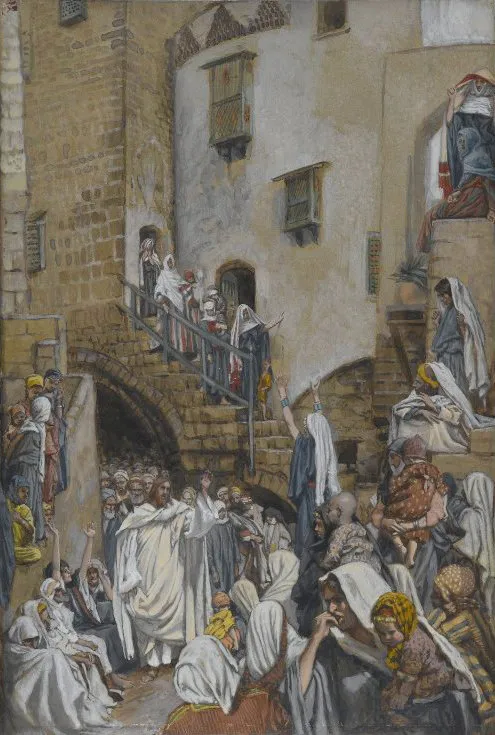
29And when the people were gathered thick together, he began to say, This is an evil generation: they seek a sign; and there shall no sign be given it, but the sign of Jonas the prophet. 30For as Jonas was a sign unto the Ninevites, so shall also the Son of man be to this generation. 31The queen of the south shall rise up in the judgment with the men of this generation, and condemn them: for she came from the utmost parts of the earth to hear the wisdom of Solomon; and, behold, a greater than Solomon is here. 32The men of Nineve shall rise up in the judgment with this generation, and shall condemn it: for they repented at the preaching of Jonas; and, behold, a greater than Jonas is here. 33No man, when he hath lighted a candle, putteth it in a secret place, neither under a bushel, but on a candlestick, that they which come in may see the light. 34The light of the body is the eye: therefore when thine eye is single, thy whole body also is full of light; but when thine eye is evil, thy body also is full of darkness. 35Take heed therefore that the light which is in thee be not darkness. 36If thy whole body therefore be full of light, having no part dark, the whole shall be full of light, as when the bright shining of a candle doth give thee light.
The crowds, who had asked for a sign from heaven (v. 16), now press the demand, and Jesus answers with a hard word: This is an evil generation: they seek a sign; and there shall no sign be given it, but the sign of Jonas the prophet (v. 29). The problem is not that God hides Himself; He had just freed a man with a word before their eyes. The problem is a heart that demands ever more proof while refusing the evidence already given - a sign-seeking that is really a way of not believing.
So Jesus promises them only one sign: the sign of Jonas. Jonah himself was a sign to the men of Nineveh, a preacher sent from outside who called them to repent - and there is more in it still, for Jonah was three days in the belly of the great fish before he came up to preach, a foreshadowing of the Son of man's own death and rising.1 The one sign that will finally be given to this generation is the greatest of all, but it will mean nothing to hearts set on never believing.
Jesus then summons two unlikely witnesses from the past to testify against the present: The queen of the south shall rise up in the judgment… for she came from the utmost parts of the earth to hear the wisdom of Solomon… The men of Nineve shall rise up in the judgment… for they repented at the preaching of Jonas (vv. 31-32). The contrast is devastating. The queen of Sheba traveled an enormous distance just to hear Solomon's wisdom; the people of Nineveh, a pagan city, repented at the preaching of one reluctant prophet.
These outsiders responded to far less - and they will stand up at the judgment to condemn a generation that has been given far more and will not respond. For twice Jesus says the words that are the point of the whole passage: a greater than Solomon is here… a greater than Jonas is here (vv. 31-32). Greater than the wisest king, greater than the prophet whose word turned a city - and standing right in front of them.
If Sheba came so far for Solomon, and Nineveh turned at Jonah, what should this generation do, with One greater than both speaking to them directly?
From signs and witnesses Jesus turns to the inner condition that decides whether a person will see at all: No man, when he hath lighted a candle, putteth it in a secret place… but on a candlestick, that they which come in may see the light (v. 33). The light is meant to be seen; the failure is never in the light. Then He moves inward: The light of the body is the eye: therefore when thine eye is single, thy whole body also is full of light; but when thine eye is evil, thy body also is full of darkness (v. 34).
The eye is the lamp through which light enters; a single eye - clear, sound, undivided, generous - lets the whole person be filled with light, while an evil eye - clouded, grasping, divided - leaves the whole person in the dark. So everything depends on the condition of the eye. And the warning follows: Take heed therefore that the light which is in thee be not darkness (v. 35). There is a terrible possibility - that what a person trusts as light is in fact darkness; that the inner eye is so corrupted it can no longer tell the difference.
This is exactly the failure of those who watched Jesus and called His work satanic. The light shone; their eye was not single; and so they sat in the dark while the lamp blazed in front of them.
Luke 11:37-54Woe Unto You - Judgment and the Love of God
37And as he spake, a certain Pharisee besought him to dine with him: and he went in, and sat down to meat. 38And when the Pharisee saw it, he marvelled that he had not first washed before dinner. 39And the Lord said unto him, Now do ye Pharisees make clean the outside of the cup and the platter; but your inward part is full of ravening and wickedness. 40Ye fools, did not he that made that which is without make that which is within also? 41But rather give alms of such things as ye have; and, behold, all things are clean unto you. 42But woe unto you, Pharisees! for ye tithe mint and rue and all manner of herbs, and pass over judgment and the love of God: these ought ye to have done, and not to leave the other undone. 43Woe unto you, Pharisees! for ye love the uppermost seats in the synagogues, and greetings in the markets. 44Woe unto you, scribes and Pharisees, hypocrites! for ye are as graves which appear not, and the men that walk over them are not aware of them. 45Then answered one of the lawyers, and said unto him, Master, thus saying thou reproachest us also. 46And he said, Woe unto you also, ye lawyers! for ye lade men with burdens grievous to be borne, and ye yourselves touch not the burdens with one of your fingers. 47Woe unto you! for ye build the sepulchres of the prophets, and your fathers killed them. 48Truly ye bear witness that ye allow the deeds of your fathers: for they indeed killed them, and ye build their sepulchres. 49Therefore also said the wisdom of God, I will send them prophets and apostles, and some of them they shall slay and persecute: 50That the blood of all the prophets, which was shed from the foundation of the world, may be required of this generation; 51From the blood of Abel unto the blood of Zacharias, which perished between the altar and the temple: verily I say unto you, It shall be required of this generation. 52Woe unto you, lawyers! for ye have taken away the key of knowledge: ye entered not in yourselves, and them that were entering in ye hindered. 53And as he said these things unto them, the scribes and the Pharisees began to urge him vehemently, and to provoke him to speak of many things: 54Laying wait for him, and seeking to catch something out of his mouth, that they might accuse him.
A Pharisee invites Jesus to dinner and is privately scandalized when his guest does not perform the ritual washing before the meal: he marvelled that he had not first washed before dinner (v. 38). Jesus seizes the moment to expose the deeper problem the washing only symbolized: Now do ye Pharisees make clean the outside of the cup and the platter; but your inward part is full of ravening and wickedness (v. 39). It is a piercing image.
They scrub the outside of the dish until it gleams while the inside - the part that actually touches the food - is filthy. So it is with a religion of surfaces: the outward life polished and respectable, the inner life full of ravening, full of greed and grasping. Then His question goes to the root: did not he that made that which is without make that which is within also? (v. 40). The God who made the outside made the inside too, and He cares about both - indeed He cares first about the inside, which the outside cannot hide from Him.
The remedy is not more scrubbing of the surface but a changed heart, shown in mercy: give alms of such things as ye have; and, behold, all things are clean unto you (v. 41).
Now come the woes, and the first cuts to the center: woe unto you, Pharisees! for ye tithe mint and rue and all manner of herbs, and pass over judgment and the love of God (v. 42). It is a portrait of skewed priorities. They were scrupulous about the tiniest matters - counting out a tithe even on garden herbs like mint and rue - while neglecting the weightiest things of all: judgment (justice toward others) and the love of God. And Jesus does not dismiss the small things: these ought ye to have done, and not to leave the other undone. The tithing of herbs was not wrong; making it the sum of religion while ignoring justice and love was a catastrophe.
The next woes press further: they love the uppermost seats in the synagogues, and greetings in the markets (v. 43) - religion turned into a hunt for status and recognition; and they are like unmarked graves that defile those who unknowingly walk over them (v. 44) - a corruption hidden under a respectable surface, harming people who never suspect it. Each woe peels back the same disease: an outward show of devotion covering an inward absence of the love of God.
A lawyer - an expert in the Law - objects that Jesus is now insulting his class too: Master, thus saying thou reproachest us also (v. 45). Jesus does not soften; He turns to them directly. Woe unto you also, ye lawyers! for ye lade men with burdens grievous to be borne, and ye yourselves touch not the burdens with one of your fingers (v. 46). They had buried the people under a mountain of regulations while lifting none of the weight themselves - teachers who crush rather than help.
Woe unto you! for ye build the sepulchres of the prophets, and your fathers killed them (vv. 47-48): they honor dead prophets with fine tombs while sharing the very spirit of the fathers who killed them - for they will do the same to the prophets and apostles still to be sent (vv. 49-51). And then the gravest charge of all: Woe unto you, lawyers! for ye have taken away the key of knowledge: ye entered not in yourselves, and them that were entering in ye hindered (v. 52).
Entrusted with the Scriptures that point to God, they had so buried them under their own traditions that they neither entered the truth themselves nor let others in. They held the key - and used it to lock the door. No wonder the scene ends with them laying wait for him… that they might accuse him (v. 54): the light had exposed them, and they hated it.
Research trail
Sources & further study
These references support the historical, linguistic, manuscript, and contextual notes in this chapter. Scripture remains the primary text; external sources are provided so readers can inspect the research directly.
- Luke 11 ↔ Exodus 8 · Jonah · 1 Kings 10 · 2 Chronicles 24Traces the threads tying Luke 11 to the rest of Scripture - the finger of God (v. 20) from Exodus 8:19; the sign of Jonas (vv. 29-32) from the book of Jonah; the queen who came to hear Solomon's wisdom (v. 31) from 1 Kings 10; and the blood of Zacharias (v. 51) from 2 Chronicles 24:20-21.
- Luke 11 - Translators' NotesThe NET Bible's detailed footnotes on Luke 11 - the form of the prayer in verses 2-4, the difficult word for the friend's “importunity” in verse 8, the meaning of “the finger of God” in verse 20, the single (“sound”) eye of verse 34, and the herbs and woes of verses 42-52.
- Luke 11 · Greek interlinear + lexiconThe Greek text of Luke 11 word by word, with parsing and lexicon links - useful for the present-tense imperatives aiteō, zēteō, and krouō in verse 9 (“ask… seek… knock”), for daktulos theou in verse 20 (“the finger of God”), and for anaideia in verse 8, the “importunity” or shamelessness of the friend at midnight.
Where this echoes in Scripture
Lord, Teach Us to Pray
- Matthew 6:9-13After this manner therefore pray ye: Our Father which art in heaven, Hallowed be thy name...The fuller form of the same prayer Jesus gives in verses 2-4 - the pattern He teaches His disciples.
- Galatians 4:6God hath sent forth the Spirit of his Son into your hearts, crying, Abba, Father.The cry of verse 2 given to us - the Spirit teaching the redeemed to say what Jesus taught: Father.
- Exodus 16:4the people shall go out and gather a certain rate every day... that I may prove them.The daily dependence behind “daily bread” (v. 3) - manna gathered fresh each morning, not hoarded.
- Matthew 6:14-15For if ye forgive men their trespasses, your heavenly Father will also forgive you.The clause of verse 4 unfolded - the forgiveness we receive bound to the forgiveness we extend.
- John 20:17I ascend unto my Father, and your Father; and to my God, and your God.Why we may say “Our Father” (v. 2) - the risen Christ makes His Father ours.
Ask, and It Shall Be Given You
- Matthew 7:7-11Ask, and it shall be given you... how much more shall your Father which is in heaven give good things to them that ask him?The parallel promise - where Luke names “the Holy Spirit” (v. 13), Matthew says “good things.”
- John 14:16I will pray the Father, and he shall give you another Comforter, that he may abide with you for ever.The gift of verse 13 promised by Jesus Himself - the Spirit the Father gives to those who ask.
- Luke 18:1-8that men ought always to pray, and not to faint... shall not God avenge his own elect, which cry day and night unto him?The same lesson as the friend at midnight (vv. 5-8) - persistent prayer to a Father far better than a grudging judge.
- James 1:17Every good gift and every perfect gift is from above, and cometh down from the Father of lights.The goodness behind verses 11-13 - the Father who gives only good gifts to His children.
- Acts 2:33having received of the Father the promise of the Holy Ghost, he hath shed forth this.Verse 13 fulfilled - the risen Christ pouring out the Spirit the Father gives to those who ask.
If I with the Finger of God Cast Out Devils
- Exodus 8:19Then the magicians said unto Pharaoh, This is the finger of God.The phrase of verse 20 - “the finger of God” as the direct, unmistakable working of God's own power.
- 1 John 3:8For this purpose the Son of God was manifested, that he might destroy the works of the devil.The stronger man's mission (vv. 21-22) - Christ come to overthrow the works of the enemy.
- Colossians 1:13Who hath delivered us from the power of darkness, and hath translated us into the kingdom of his dear Son.The captives carried off as spoils (v. 22) - rescued from darkness into the kingdom of the Son.
- Luke 8:21My mother and my brethren are these which hear the word of God, and do it.The same blessedness as verse 28 - nearness to Jesus measured by hearing and keeping the word.
- James 1:22But be ye doers of the word, and not hearers only, deceiving your own selves.The two verbs of verse 28 - not merely hearing the word of God but keeping it.
A Greater Than Solomon, a Greater Than Jonas
- Matthew 12:40For as Jonas was three days and three nights in the whale's belly; so shall the Son of man be three days and three nights in the heart of the earth.The sign of Jonas (vv. 29-30) named plainly - the death and rising of the Son of man.
- 1 Kings 10:1-7when the queen of Sheba heard of the fame of Solomon... she came to prove him with hard questions.The queen of the south of verse 31 - who crossed the earth to hear the wisdom of Solomon.
- Jonah 3:5So the people of Nineveh believed God, and proclaimed a fast, and put on sackcloth.The men of Nineveh of verse 32 - a pagan city that repented at the preaching of one prophet.
- Colossians 2:3In whom are hid all the treasures of wisdom and knowledge.Why He is “a greater than Solomon” (v. 31) - the One in whom all wisdom is found.
- Matthew 6:22-23The light of the body is the eye: if therefore thine eye be single, thy whole body shall be full of light.The parallel to verses 34-35 - the single eye that fills the body with light.
Woe Unto You - Judgment and the Love of God
- Micah 6:8what doth the LORD require of thee, but to do justly, and to love mercy, and to walk humbly with thy God?The weightier matters of verse 42 - justice and the love of God that outward religion had crowded out.
- Matthew 23:25-28ye make clean the outside of the cup and of the platter, but within they are full of extortion and excess.The fuller set of woes - the clean cup and the whited surface of verses 39 and 44.
- 1 Samuel 16:7man looketh on the outward appearance, but the LORD looketh on the heart.The truth behind verses 39-40 - the God who made the inside cares first about the inside.
- John 5:39Search the scriptures... they are they which testify of me.Why taking away “the key of knowledge” (v. 52) is so grave - the Scriptures point to Christ.
- Revelation 3:7he that hath the key of David, he that openeth, and no man shutteth; and shutteth, and no man openeth.Over against the locked door of verse 52 - Christ who holds the key and opens what no one can shut.