Matthew 12
People in this chapter
The quiet collision between Jesus and the religious authorities now breaks into the open, and it breaks over the sabbath. His disciples, walking through a grain field and hungry, pluck the ears of corn and eat - and the Pharisees are scandalised: Behold, thy disciples do that which is not lawful to do upon the sabbath day (v. 2). Jesus answers not with a loophole but with a series of claims that climb steadily higher: David ate the holy bread when in need; the priests “profane” the sabbath in the temple and are blameless; mercy outweighs sacrifice; and then the summit - in this place is one greater than the temple (v. 6), For the Son of man is Lord even of the sabbath day (v. 8).
When He heals a withered hand in the synagogue, He states the principle without flinching: it is lawful to do well on the sabbath days (v. 12). His enemies respond by plotting His death.1
Tap any highlighted phrase to jump to the commentary that unpacks it.
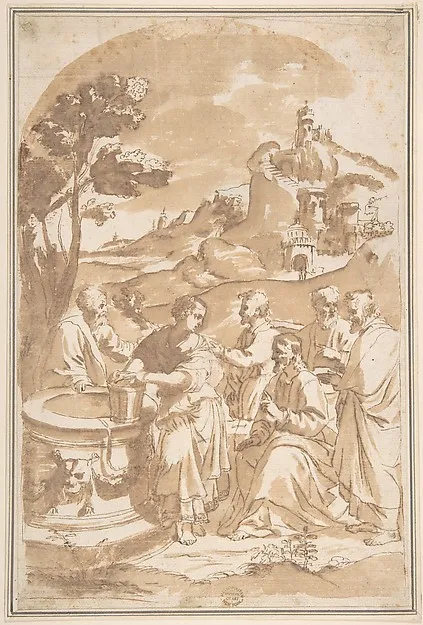
Matthew 12:1-14Lord Even of the Sabbath Day
1At that time Jesus went on the sabbath day through the corn; and his disciples were an hungred, and began to pluck the ears of corn, and to eat. 2But when the Pharisees saw it, they said unto him, Behold, thy disciples do that which is not lawful to do upon the sabbath day. 3But he said unto them, Have ye not read what David did, when he was an hungred, and they that were with him; 4How he entered into the house of God, and did eat the shewbread, which was not lawful for him to eat, neither for them which were with him, but only for the priests? 5Or have ye not read in the law, how that on the sabbath days the priests in the temple profane the sabbath, and are blameless? 6But I say unto you, That in this place is one greater than the temple. 7But if ye had known what this meaneth, I will have mercy, and not sacrifice, ye would not have condemned the guiltless. 8For the Son of man is Lord even of the sabbath day.
The scene is ordinary enough: Jesus and His disciples crossing a grain field on the sabbath, and the disciples, hungry, plucking the ears of corn and eating as they go (v. 1). The law itself permitted a traveller to pluck grain by hand from a neighbour's standing field (Deut. 23:25); the only question the Pharisees raise is the day. Behold, thy disciples do that which is not lawful to do upon the sabbath day (v. 2).
Their objection rests not on the written law of Moses but on the elaborate fence built around it - the human rulings that classed even plucking and rubbing a few heads of grain as a form of forbidden “work.” This is the heart of the whole dispute. The sabbath had been given as a gift, a weekly rest woven into creation itself; but it had been turned into a burden, a thicket of prohibitions in which a hungry man could be condemned for feeding himself.
Jesus does not break the sabbath. He answers, rather, by reaching back into their own Scriptures to show what the sabbath was always for.1
His first answer is a precedent they cannot dispute: Have ye not read what David did, when he was an hungred… how he entered into the house of God, and did eat the shewbread, which was not lawful for him to eat… but only for the priests? (vv. 3-4). The story stands in 1 Samuel 21:1-62. The shewbread was the holy bread set continually before the LORD, reserved by law for the priests alone; yet when David and his men came famished, the priest gave it to them, and Scripture records no condemnation.
Why? Because a true reading of the law had always understood that human need, real and pressing, is not overridden by ceremonial restriction - mercy is not a violation of holiness but its truest expression. Jesus adds a second case from the law itself: on the sabbath days the priests in the temple profane the sabbath, and are blameless (v. 5). The priests work hardest of all on the sabbath, offering the doubled sacrifices the law commands; their “labour” in God's service is no sin.
The sabbath was never a law against doing good; it was a rest oriented toward God, and the work of worship and the relief of need both belong inside it, not against it.
Then Jesus says something that lifts the whole argument off the ground: in this place is one greater than the temple. But if ye had known what this meaneth, I will have mercy, and not sacrifice, ye would not have condemned the guiltless (vv. 6-7). The temple was the holiest place in Israel, the dwelling of God's presence among His people - and Jesus says that something greater than the temple is standing here.
He quotes Hosea's word that God had already spoken through the prophets: I will have mercy, and not sacrifice (Hos. 6:6). The line does not abolish sacrifice; it sets the priorities straight. God has always valued a heart bent toward mercy above the mechanics of ritual correctness. The Pharisees had inverted this. So zealous for the form of the sabbath, they had become blind to the people the sabbath was meant to bless, and so they condemned the guiltless - men who had done no wrong.
It is a sobering possibility: that one can be meticulous about religion and, in the very name of that religion, stand against the mercy of God.
9And when he was departed thence, he went into their synagogue: 10And, behold, there was a man which had his hand withered. And they asked him, saying, Is it lawful to heal on the sabbath days? that they might accuse him. 11And he said unto them, What man shall there be among you, that shall have one sheep, and if it fall into a pit on the sabbath day, will he not lay hold on it, and lift it out? 12How much then is a man better than a sheep? Wherefore it is lawful to do well on the sabbath days. 13Then saith he to the man, Stretch forth thine hand. And he stretched it forth; and it was restored whole, like as the other. 14Then the Pharisees went out, and held a council against him, how they might destroy him.
In the synagogue the dispute turns from grain to a man - a man which had his hand withered (v. 10), his hand shrivelled and useless, perhaps the loss of his livelihood. And the watching authorities ask their cold, calculating question: Is it lawful to heal on the sabbath days? - not out of any care for the man, but that they might accuse him. Jesus exposes the inconsistency with a homely example: if one of their own sheep fell into a pit on the sabbath, they would not hesitate to haul it out.
How much then is a man better than a sheep? (v. 12). If compassion is owed to a trapped animal, how much more to a suffering man made in God's image? Then He lays down the principle that governs the whole chapter: Wherefore it is lawful to do well on the sabbath days. Doing good is never a breach of God's day; it is the very thing God's day is for. And He acts on it - Stretch forth thine hand… and it was restored whole, like as the other (v. 13).
The contrast at the end is stark and tragic: the man's hand is restored to wholeness, and in the same hour the Pharisees go out and take counsel how they might destroy him (v. 14). On the sabbath of rest and mercy, one party gives life and the other plots death.
Matthew 12:15-21Behold My Servant · A Bruised Reed Shall He Not Break
15But when Jesus knew it, he withdrew himself from thence: and great multitudes followed him, and he healed them all; 16And charged them that they should not make him known: 17That it might be fulfilled which was spoken by Esaias the prophet, saying, 18Behold my servant, whom I have chosen; my beloved, in whom my soul is well pleased: I will put my spirit upon him, and he shall shew judgment to the Gentiles. 19He shall not strive, nor cry; neither shall any man hear his voice in the streets. 20A bruised reed shall he not break, and smoking flax shall he not quench, till he send forth judgment unto victory. 21And in his name shall the Gentiles trust.
When Jesus knows that the authorities are now plotting His death, He does not confront them or call down judgment. He withdrew himself from thence: and great multitudes followed him, and he healed them all (v. 15). The detail is quiet but telling. He withdraws - not from fear, but because His hour has not yet come, and because His way is not the way of public spectacle and confrontation. And as He goes He keeps healing, all who come; and He charged them that they should not make him known (v. 16).
This restraint - the refusal to advertise, the unwillingness to be made into the kind of Messiah the crowds wanted - runs all through Matthew. It is not modesty for its own sake. Matthew tells us exactly what it is: the fulfilment of an ancient portrait of God's Servant, drawn centuries before. That it might be fulfilled which was spoken by Esaias the prophet (v. 17). What looks like mere withdrawal is in fact the very character the prophets had promised the chosen One would have.
Here Matthew lifts the longest single quotation of the Old Testament in his whole Gospel - the opening of the first of Isaiah's Servant Songs (Isa. 42:1-4)2. Behold my servant, whom I have chosen; my beloved, in whom my soul is well pleased: I will put my spirit upon him, and he shall shew judgment to the Gentiles (v. 18). Every phrase rings. The Servant is God's chosen one, His beloved, the One in whom God's soul takes delight - the very words the Father spoke aloud over the Jordan when the Spirit descended on Jesus: This is my beloved Son, in whom I am well pleased (Matt. 3:17).
The Servant is anointed with God's own spirit, and His mission reaches beyond Israel: he shall shew judgment to the Gentiles. The word judgment here means more than verdicts handed down; it means the establishing of true justice, God's right order, brought at last to the nations who sat in darkness. The astonishing thing is the manner of it. The world expects justice to arrive with armies, noise, and force. Isaiah's Servant brings it another way entirely.
The prophecy describes a strength that does not announce itself: He shall not strive, nor cry; neither shall any man hear his voice in the streets (v. 19). The Servant will not wrangle and shout, will not force His cause by clamour or self-promotion - which is exactly why Jesus withdraws and silences those He heals. Then comes the line the whole quotation exists to hold up: A bruised reed shall he not break, and smoking flax shall he not quench, till he send forth judgment unto victory (v. 20).
A reed already crushed, bent and splitting, is worth nothing; the natural thing is to snap it and throw it away. A wick of flax that has burned down to a smoking ember, its flame all but gone, is the natural thing to pinch out. But the Servant does neither. He does not finish off what is nearly broken; He does not snuff out the last faint glow. Instead He tends it - until, in the end, He brings judgment unto victory, justice fully and finally established.
The picture is of a gentleness that is also unstoppable. He is tender with the weak, and that very tenderness does not fail or falter until His cause has triumphed. And in his name shall the Gentiles trust (v. 21) - the bruised and the barely-burning, from every nation, learning to hope in Him.
Matthew 12:22-37By the Spirit of God · By Thy Words Thou Shalt Be Justified
22Then was brought unto him one possessed with a devil, blind, and dumb: and he healed him, insomuch that the blind and dumb both spake and saw. 23And all the people were amazed, and said, Is not this the son of David? 24But when the Pharisees heard it, they said, This fellow doth not cast out devils, but by Beelzebub the prince of the devils. 25And Jesus knew their thoughts, and said unto them, Every kingdom divided against itself is brought to desolation; and every city or house divided against itself shall not stand: 26And if Satan cast out Satan, he is divided against himself; how shall then his kingdom stand? 27And if I by Beelzebub cast out devils, by whom do your children cast them out? therefore they shall be your judges. 28But if I cast out devils by the Spirit of God, then the kingdom of God is come unto you.
A man is brought to Jesus who is possessed with a devil, blind, and dumb - cut off from sight and from speech - and Jesus heals him so completely that the blind and dumb both spake and saw (v. 22). The crowds draw the natural conclusion: Is not this the son of David? (v. 23) - the Messiah. But the Pharisees, unable to deny the miracle and unwilling to accept its meaning, reach for the only explanation left to them: This fellow doth not cast out devils, but by Beelzebub the prince of the devils (v. 24).
They concede the power is real; they simply assign it to hell. Jesus answers first with plain logic: Every kingdom divided against itself is brought to desolation (v. 25). If Satan were casting out Satan, his kingdom would be tearing itself apart - an absurdity. And He turns their charge back on them: their own followers also cast out demons; do they call that the work of the devil? Therefore they shall be your judges (v. 27).
The accusation collapses under its own weight. The Pharisees are not reasoning toward truth; they are reasoning away from a conclusion they have already refused.
Having dismantled the charge, Jesus states what His exorcisms actually mean: But if I cast out devils by the Spirit of God, then the kingdom of God is come unto you (v. 28). This is the heart of it. The casting out of demons is not a sideshow; it is the kingdom of God breaking into enemy-held territory. Where the Spirit of God drives out the powers of darkness, there the reign of God has arrived.
Then Jesus gives a small parable to explain the victory: how can one enter into a strong man's house, and spoil his goods, except he first bind the strong man? (v. 29). The “strong man” is Satan, holding his captives like goods in a guarded house. No one plunders that house until the strong man is first bound - and that is precisely what Jesus is doing. Every freed captive is proof that the stronger One has come and tied up the strong man.
And so He draws the line that admits no neutral ground: He that is not with me is against me; and he that gathereth not with me scattereth abroad (v. 30). In the face of the kingdom arriving, there is no standing aside. One is either gathered to Him or scattered away from Him.
29Or else how can one enter into a strong man’s house, and spoil his goods, except he first bind the strong man? and then he will spoil his house. 30He that is not with me is against me; and he that gathereth not with me scattereth abroad. 31Wherefore I say unto you, All manner of sin and blasphemy shall be forgiven unto men: but the blasphemy against the Holy Ghost shall not be forgiven unto men. 32And whosoever speaketh a word against the Son of man, it shall be forgiven him: but whosoever speaketh against the Holy Ghost, it shall not be forgiven him, neither in this world, neither in the world to come. 34O generation of vipers, how can ye, being evil, speak good things? for out of the abundance of the heart the mouth speaketh. 35A good man out of the good treasure of the heart bringeth forth good things: and an evil man out of the evil treasure bringeth forth evil things. 37For by thy words thou shalt be justified, and by thy words thou shalt be condemned.
Now comes the gravest saying in the chapter, and it must be read exactly as Jesus gives it, with great care and no over-reaching. All manner of sin and blasphemy shall be forgiven unto men: but the blasphemy against the Holy Ghost shall not be forgiven unto men (v. 31). The first half is breathtakingly wide: all manner of sin and blasphemy - every kind - is forgivable. That is the gospel's open door, and it is flung wide here before any warning is added.
Then the exception: there is one posture that, while it is held, cannot be forgiven - the blasphemy against the Holy Ghost. What is it? The passage tells us by its setting. The Pharisees have just watched the Spirit of God free a man from darkness with their own eyes, and they have called that undeniable work the work of Satan. That is the blasphemy in view: not a moment of doubt, not a careless or angry word, not a season of struggle, but the deliberate, clear-eyed, hardened decision to look straight at the unmistakable work of God's Spirit and name it evil - to call light darkness because one has resolved not to come to the light.
Jesus even distinguishes it from speaking against Himself: whosoever speaketh a word against the Son of man, it shall be forgiven him (v. 32). A person may misjudge Jesus and later repent. But to set oneself, knowingly and finally, against the very Spirit who convicts and draws and saves - that is to bar the only door through which forgiveness ever comes.1
A word of comfort belongs here, because this verse has frightened many tender souls who never needed to fear it. The very people Jesus warns are men hardened against Him - settled, deliberate, defiant, calling God's work the devil's to their own faces. The anxious believer who lies awake terrified that some past word or thought has placed them beyond forgiveness is, by that very fear, showing the opposite of the hardened heart Jesus describes.
A heart truly closed against the Spirit does not grieve over sin or long to be received; it has stopped caring. The ache to come back, the dread of being shut out, the sorrow over having offended God - these are themselves the Spirit's own work in a soul, the stirring of a flame not yet quenched. The bruised reed of verse 20 is not broken; the smoking flax is not put out. If you fear you have sinned past the reach of grace, that fear is evidence that grace is still at work in you, and that the door Jesus calls wide - all manner of sin and blasphemy shall be forgiven - stands open for you.
The sin that is not forgiven is the sin that, by its nature, will not come to be forgiven; the soul that wants to come has not committed it.
Jesus then traces all this speech - the Pharisees' venomous charge, and every word any of us speaks - back to its source: the heart. Either make the tree good, and his fruit good; or else make the tree corrupt, and his fruit corrupt: for the tree is known by his fruit (v. 33). Words are fruit, and fruit reveals the tree. So He says it plainly to His accusers: O generation of vipers, how can ye, being evil, speak good things? for out of the abundance of the heart the mouth speaketh (v. 34).
What fills the heart eventually spills out of the mouth; speech is the overflow of the inner life. A good man out of the good treasure of the heart bringeth forth good things (v. 35) - the store within determines what comes out. And then the weighty conclusion: every idle word that men shall speak, they shall give account thereof in the day of judgment. For by thy words thou shalt be justified, and by thy words thou shalt be condemned (vv. 36-37).
This is not a doctrine of salvation by careful talking. It is the truth that words are reliable witnesses to the heart. Even the idle word - the careless, off-guard, unconsidered word - testifies truly to what a person is, because it slips out before the mask can be set in place. The Pharisees thought their hostile words a defense of God; Jesus says those very words convict them. What we say, in the end, tells the truth about who we are.
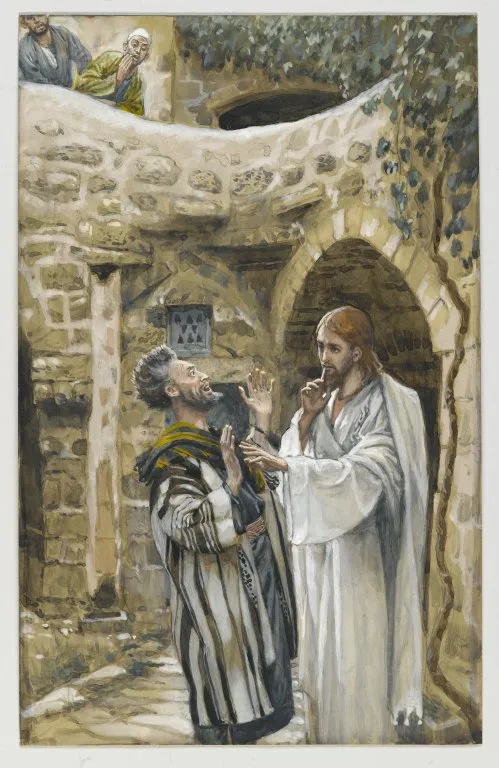
Matthew 12:38-50The Sign of Jonah · A Greater Than Solomon Is Here
38Then certain of the scribes and of the Pharisees answered, saying, Master, we would see a sign from thee. 39But he answered and said unto them, An evil and adulterous generation seeketh after a sign; and there shall no sign be given to it, but the sign of the prophet Jonas: 40For as Jonas was three days and three nights in the whale’s belly; so shall the Son of man be three days and three nights in the heart of the earth. 41The men of Nineveh shall rise in judgment with this generation, and shall condemn it: because they repented at the preaching of Jonas; and, behold, a greater than Jonas is here. 42The queen of the south shall rise up in the judgment with this generation, and shall condemn it: for she came from the uttermost parts of the earth to hear the wisdom of Solomon; and, behold, a greater than Solomon is here.
The scribes and Pharisees - the very men who have just watched Him heal the blind and mute - now ask, Master, we would see a sign from thee (v. 38). It is a telling demand. They have seen sign upon sign and called them Satan's; now they ask for a sign as though none had been given. Jesus refuses the request on its own terms: An evil and adulterous generation seeketh after a sign; and there shall no sign be given to it, but the sign of the prophet Jonas (v. 39).
The hunger for a spectacular proof, in people who have already hardened against the truth in front of them, is itself a symptom of unbelief; a heart determined not to believe will never be argued into faith by wonders. So He gives them one sign only, and it is the deepest of all: as Jonas was three days and three nights in the whale's belly; so shall the Son of man be three days and three nights in the heart of the earth (v. 40).
Jonah, swallowed into the deep and given back alive on the third day, was a living foreshadowing. The one sign Jesus will give this generation is His own death and resurrection - the Son of man buried in the heart of the earth and raised again.2
Then Jesus summons two unlikely witnesses from the past to testify against the present: The men of Nineveh shall rise in judgment with this generation, and shall condemn it: because they repented at the preaching of Jonas; and, behold, a greater than Jonas is here (v. 41). Nineveh was a pagan city, Israel's enemy; yet at the preaching of one reluctant prophet, the whole city repented. And, behold, a greater than Jonas is here - a greater preacher, with a greater message, stands before a people who will not repent at all.
The second witness is a queen: The queen of the south shall rise up in the judgment… for she came from the uttermost parts of the earth to hear the wisdom of Solomon; and, behold, a greater than Solomon is here (v. 42). The queen of Sheba crossed a vast distance, at great cost, simply to hear Solomon's wisdom (1 Kings 10:1-10). A greater than Solomon is here - Wisdom itself in person - and the people who need not travel a step to hear Him will not listen.
The logic is searching: a pagan city and a foreign queen, with far less light, responded with far more faith. The greater the revelation a person is given, the greater the responsibility - and the more dreadful the refusal.
43When the unclean spirit is gone out of a man, he walketh through dry places, seeking rest, and findeth none. 44Then he saith, I will return into my house from whence I came out; and when he is come, he findeth it empty, swept, and garnished. 45Then goeth he, and taketh with himself seven other spirits more wicked than himself, and they enter in and dwell there: and the last state of that man is worse than the first. Even so shall it be also unto this wicked generation. 46While he yet talked to the people, behold, his mother and his brethren stood without, desiring to speak with him. 48But he answered and said unto him that told him, Who is my mother? and who are my brethren? 49And he stretched forth his hand toward his disciples, and said, Behold my mother and my brethren! 50For whosoever shall do the will of my Father which is in heaven, the same is my brother, and sister, and mother.
Jesus tells a small, unsettling parable about an unclean spirit that goes out of a man, wanders through dry places, seeking rest, and findeth none, and then returns to find its old house empty, swept, and garnished - tidied and unoccupied (vv. 43-44). Finding the room cleaned but empty, it brings seven other spirits more wicked than himself, and the last state of that man is worse than the first (v. 45). The warning is pointed, and Jesus aims it: Even so shall it be also unto this wicked generation. A house merely swept clean is not safe; an empty heart is an invitation.
It is not enough to be rid of an old evil; the room must be filled with a new and rightful Tenant. A reformation that only tidies the outside, without surrender to God, leaves the door open for worse than before. This generation had been swept by John's preaching and Jesus' ministry, stirred and cleaned on the surface - but if they would not receive the One who alone could fill the house, their end would be worse than their beginning.
The lesson outlasts that generation: moral self-improvement that leaves the heart untenanted by God is not security but danger.
The chapter ends with a quiet scene that opens onto something vast. As Jesus teaches, word comes that his mother and his brethren stood without, desiring to speak with him (v. 46). His reply startles: Who is my mother? and who are my brethren? (v. 48). It is not a slight against His family - He loved them, and from the cross would entrust His mother to a disciple's care. It is a redefinition of family around something deeper than blood.
And he stretched forth his hand toward his disciples, and said, Behold my mother and my brethren! (v. 49). Then the line that holds the whole thing: For whosoever shall do the will of my Father which is in heaven, the same is my brother, and sister, and mother (v. 50). The family of God is not bounded by lineage, nationality, or natural kinship; it is composed of all who do the Father's will.
To belong to Jesus is not a matter of descent but of doing - of taking the Father's will as one's own. And the warmth of the words should not be missed: He calls those who do the Father's will brother, and sister, and mother - the closest names there are. The same Jesus who has just stood against hardened hearts now opens His arms and names every obedient heart His own family.
Research trail
Sources & further study
These references support the historical, linguistic, manuscript, and contextual notes in this chapter. Scripture remains the primary text; external sources are provided so readers can inspect the research directly.
- Matthew 12 - Translators' NotesThe NET Bible's detailed footnotes on Matthew 12 - the sabbath-law background of the grainfield dispute (vv. 1-8), the meaning of “I will have mercy, and not sacrifice” (v. 7), the long Isaiah citation (vv. 18-21), and the difficult sayings on the unforgivable sin (vv. 31-32) and the returning unclean spirit (vv. 43-45).
- Matthew 12 ↔ Isaiah 42 · 1 Samuel 21 · Jonah · 1 Kings 10Traces the threads tying Matthew 12 to the rest of Scripture - the Servant Song quoted at length (vv. 18-21 ↔ Isa. 42:1-4), David and the shewbread (vv. 3-4 ↔ 1 Sam. 21:1-6), the sign of Jonah (v. 40 ↔ Jonah 1:17), and the queen who came for Solomon's wisdom (v. 42 ↔ 1 Kings 10:1-10).
- Matthew 12 · Greek interlinear + lexiconThe Greek text of Matthew 12 word by word with parsing and lexical entries - useful for kurios tou sabbatou (“Lord of the sabbath,” v. 8), for kalamon suntetrimmenon (the “bruised reed” of v. 20), and for blasphēmia (the “blasphemy” of vv. 31-32).
Where this echoes in Scripture
Lord Even of the Sabbath Day
- 1 Samuel 21:1-6So the priest gave him hallowed bread: for there was no bread there but the shewbread.The precedent Jesus cites in verses 3-4 - David and his men eating the holy bread in their need.
- Hosea 6:6For I desired mercy, and not sacrifice; and the knowledge of God more than burnt offerings.The word Jesus quotes in verse 7 - God's priority of mercy over ritual, which the Pharisees had missed.
- Mark 2:27The sabbath was made for man, and not man for the sabbath.The same dispute in Mark - the heart of verse 8, the day given as a gift for human good.
- Genesis 2:2-3And God blessed the seventh day, and sanctified it: because that in it he had rested from all his work.The origin of the sabbath that Jesus claims as Lord (v. 8) - the rest written into creation itself.
- Matthew 11:28-29Come unto me, all ye that labour and are heavy laden, and I will give you rest.The rest the sabbath foreshadowed (v. 8) held out in person by the Lord of the sabbath.
Behold My Servant · A Bruised Reed Shall He Not Break
- Isaiah 42:1-4Behold my servant, whom I uphold; mine elect, in whom my soul delighteth... a bruised reed shall he not break.The Servant Song Matthew quotes in full (vv. 18-21) - the gentle, Spirit-anointed One who brings justice to the nations.
- Matthew 3:16-17the Spirit of God descending... This is my beloved Son, in whom I am well pleased.The Father's voice and the Spirit's descent - the living confirmation of “my beloved, in whom my soul is well pleased” (v. 18).
- Isaiah 61:1The Spirit of the Lord GOD is upon me; because the LORD hath anointed me to preach good tidings unto the meek.The Spirit put upon the Servant (v. 18) - the anointing that bends His power toward the meek and broken.
- Matthew 11:28-29for I am meek and lowly in heart: and ye shall find rest unto your souls.The gentleness of the Servant of verse 20 spoken in His own voice - meek and lowly toward the weary.
- Isaiah 49:6I will also give thee for a light to the Gentiles, that thou mayest be my salvation unto the end of the earth.The Servant's reach to the nations (v. 21) - the One in whose name the Gentiles come to trust.
By the Spirit of God · By Thy Words Thou Shalt Be Justified
- Mark 3:28-30because they said, He hath an unclean spirit.Mark's account of the same warning - naming exactly what the blasphemy against the Spirit was (vv. 31-32).
- Colossians 2:15And having spoiled principalities and powers, he made a shew of them openly, triumphing over them in it.The binding of the strong man (v. 29) carried to its finish - Christ plundering the enemy's house.
- Luke 6:45for of the abundance of the heart his mouth speaketh.The same truth as verses 34-35 - speech as the overflow of the heart's hidden store.
- James 3:5-6the tongue is a little member, and boasteth great things... it defileth the whole body.The weight Jesus gives to words in verses 36-37 - the small tongue that reveals and shapes the whole life.
- 1 John 1:9If we confess our sins, he is faithful and just to forgive us our sins.The open door of verse 31 - the wide promise that all manner of sin is forgiven to those who come.
The Sign of Jonah · A Greater Than Solomon Is Here
- Jonah 1:17And Jonah was in the belly of the fish three days and three nights.The sign Jesus claims as His own (v. 40) - the prophet in the deep, foreshadowing the Son of man in the earth.
- 1 Corinthians 15:3-4how that Christ died for our sins... and that he rose again the third day according to the scriptures.The meaning of the sign of Jonah (v. 40) - the death and resurrection named as the heart of the gospel.
- 1 Kings 10:1-10the queen of Sheba heard of the fame of Solomon... she came to prove him with hard questions.The queen of the south of verse 42 - who crossed the world for wisdom less than the One now present.
- Matthew 7:21but he that doeth the will of my Father which is in heaven.The same measure as verse 50 - belonging to Jesus shown by doing the Father's will, not merely speaking.
- John 1:12But as many as received him, to them gave he power to become the sons of God.The widened family of verses 49-50 - kinship with God opened to all who receive and obey the Son.