Matthew 13
People in this chapter
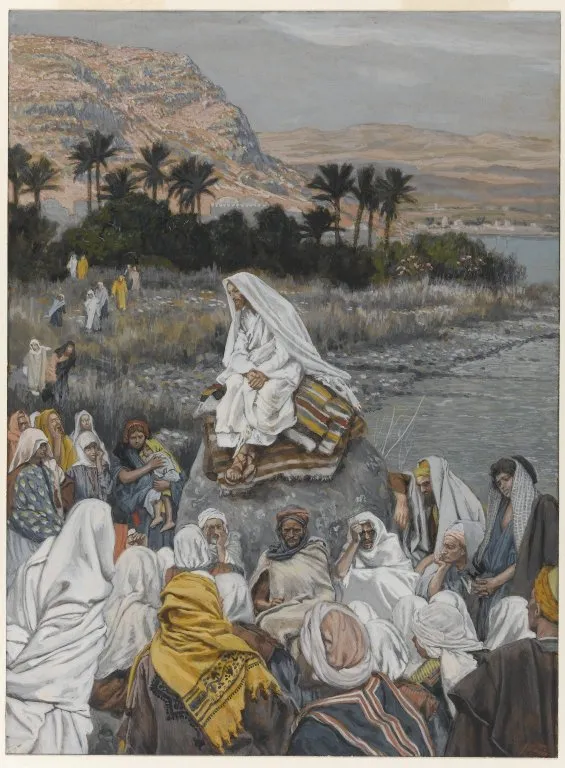
The chapter opens with a picture worth pausing over: The same day went Jesus out of the house, and sat by the sea side. And great multitudes were gathered together unto him, so that he went into a ship, and sat; and the whole multitude stood on the shore (vv. 1-2). The crowd is so large He teaches from a boat pushed off the beach, the water carrying His voice back to the people lining the shore.
And what He gives them is a whole gallery of pictures, each opening with the same words - The kingdom of heaven is like. A sower scattering seed; a field sown with tares; a mustard seed; hidden leaven; buried treasure; a pearl; a dragnet. Ordinary scenes from field and market and shore, every one of them a window into the kingdom of God.1
Tap any highlighted phrase to jump to the commentary that unpacks it.
Matthew 13:1-23A Sower Went Forth to Sow
1The same day went Jesus out of the house, and sat by the sea side. 2And great multitudes were gathered together unto him, so that he went into a ship, and sat; and the whole multitude stood on the shore. 3And he spake many things unto them in parables, saying, Behold, a sower went forth to sow; 4And when he sowed, some seeds fell by the way side, and the fowls came and devoured them up: 5Some fell upon stony places, where they had not much earth: and forthwith they sprung up, because they had no deepness of earth: 6And when the sun was up, they were scorched; and because they had no root, they withered away. 7And some fell among thorns; and the thorns sprung up, and choked them: 8But other fell into good ground, and brought forth fruit, some an hundredfold, some sixtyfold, some thirtyfold. 9Who hath ears to hear, let him hear.
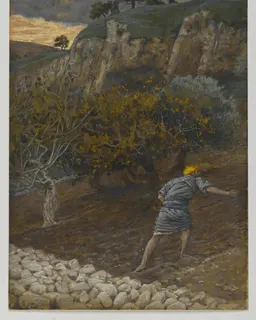
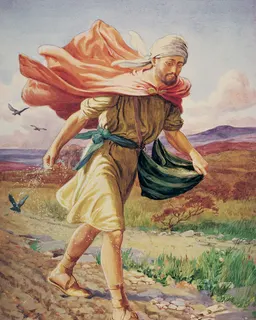
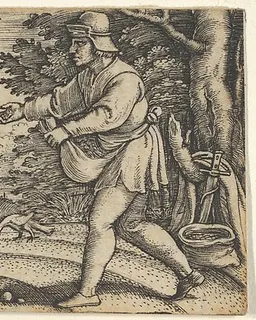
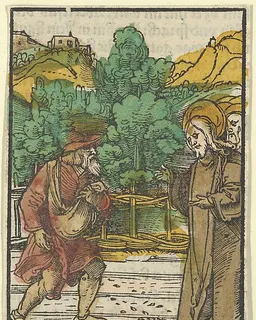
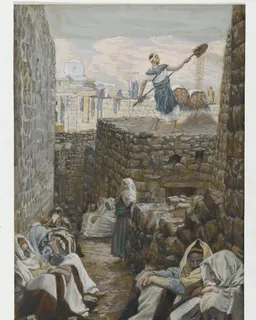
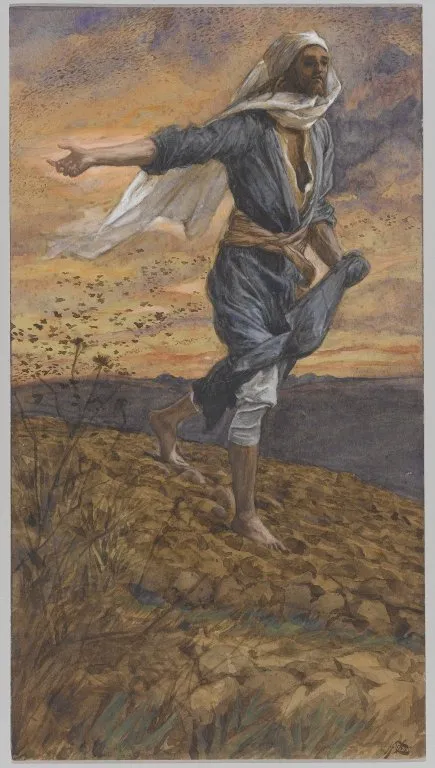
The first picture is the simplest and the deepest, and Jesus sets it up with a single word: Behold. A sower went forth to sow (v. 3). In the farming of that world a man walked his ground with a bag of seed and flung it by hand in wide arcs, and the seed fell wherever it fell - on the beaten footpath that crossed the field, on thin soil over hidden rock, among the roots of thorns not yet cleared, and on the good open ground.
Jesus traces all four. The seed on the way side never even sinks in; the birds take it (v. 4). The seed on stony places springs up fast precisely because it has no depth - and then the sun finds it, and with no root it withers in a day (vv. 5-6). The seed among thorns grows, but the thorns grow too and choke it (v. 7). Only the seed in good ground comes to fruit - and it comes in abundance, some an hundredfold, some sixtyfold, some thirtyfold (v. 8).
The whole weight of the parable rests on a fact easy to miss: in every case it is the same seed. The sower does not change his throw. What differs is the ground. And so the story ends not with explanation but with a summons that pries the listener open: Who hath ears to hear, let him hear (v. 9).
10And the disciples came, and said unto him, Why speakest thou unto them in parables? 11He answered and said unto them, Because it is given unto you to know the mysteries of the kingdom of heaven, but to them it is not given. 12For whosoever hath, to him shall be given, and he shall have more abundance: but whosoever hath not, from him shall be taken away even that he hath. 13Therefore speak I to them in parables: because they seeing see not; and hearing they hear not, neither do they understand. 14And in them is fulfilled the prophecy of Esaias, which saith, By hearing ye shall hear, and shall not understand; and seeing ye shall see, and shall not perceive: 15For this people’s heart is waxed gross, and their ears are dull of hearing, and their eyes they have closed; lest at any time they should see with their eyes and hear with their ears, and should understand with their heart, and should be converted, and I should heal them. 16But blessed are your eyes, for they see: and your ears, for they hear. 17For verily I say unto you, That many prophets and righteous men have desired to see those things which ye see, and have not seen them; and to hear those things which ye hear, and have not heard them.
The disciples are puzzled, and they ask plainly: Why speakest thou unto them in parables? (v. 10). Jesus' answer turns on a single contrast. It is given unto you to know the mysteries of the kingdom of heaven, but to them it is not given (v. 11). A parable is not a sugar-coating that makes the truth go down easy; it is a thing laid alongside that both shows and screens. To the one who comes wanting to understand, the picture opens like a door.
To the one whose heart is already shut, the same picture stays a riddle - they seeing see not; and hearing they hear not, neither do they understand (v. 13). Jesus reaches back to words spoken to Isaiah about a people whose heart is waxed gross, whose ears are dull, whose eyes are deliberately closed (v. 15). The closing did not begin with the parable; the parable meets a closing already there. There is real solemnity in this.
The same words that wake one person harden another, not because the words change but because of what they land on - the very lesson the sower was teaching about the seed and the soils. And then, tenderly, He turns to the Twelve: blessed are your eyes, for they see: and your ears, for they hear (v. 16). To be given understanding is sheer gift, and a thing to be glad of.1
18Hear ye therefore the parable of the sower. 19When any one heareth the word of the kingdom, and understandeth it not, then cometh the wicked one, and catcheth away that which was sown in his heart. This is he which received seed by the way side. 20But he that received the seed into stony places, the same is he that heareth the word, and anon with joy receiveth it; 21Yet hath he not root in himself, but dureth for a while: for when tribulation or persecution ariseth because of the word, by and by he is offended. 22He also that received seed among the thorns is he that heareth the word; and the care of this world, and the deceitfulness of riches, choke the word, and he becometh unfruitful. 23But he that received seed into the good ground is he that heareth the word, and understandeth it; which also beareth fruit, and bringeth forth, some an hundredfold, some sixty, some thirty.
Now Jesus does the rare thing of interpreting His own parable, and the key He hands over governs the whole chapter: the seed is the word of the kingdom (v. 19), and the four grounds are four kinds of hearing. The way side is the hearer who does not understand at all; the word never penetrates, and the wicked one snatches away what lay on the surface (v. 19). The stony ground is the hearer who receives the word anon with joy - gladly, quickly, all on the surface - but has no root in himself, so that when tribulation or persecution comes because of the word, he is offended and falls away (vv. 20-21).
The thorny ground is the saddest case, because the word does take and does grow - only the care of this world, and the deceitfulness of riches grow alongside it and choke it, so the man becomes unfruitful (v. 22). The thorns are not gross sins; they are anxiety and the lure of wealth, ordinary cares grown wild. Only the good ground both heareth the word, and understandeth it, and so beareth fruit (v. 23). Notice that genuine reception is described not as a feeling but as a hearing that takes root and bears - understanding that grows into fruit.
The seed was never in doubt. The whole question is what kind of ground we will be.2
Matthew 13:24-43Let Both Grow Together Until the Harvest
24Another parable put he forth unto them, saying, The kingdom of heaven is likened unto a man which sowed good seed in his field: 25But while men slept, his enemy came and sowed tares among the wheat, and went his way. 26But when the blade was sprung up, and brought forth fruit, then appeared the tares also. 27So the servants of the householder came and said unto him, Sir, didst not thou sow good seed in thy field? from whence then hath it tares? 28He said unto them, An enemy hath done this. The servants said unto him, Wilt thou then that we go and gather them up? 29But he said, Nay; lest while ye gather up the tares, ye root up also the wheat with them. 30Let both grow together until the harvest: and in the time of harvest I will say to the reapers, Gather ye together first the tares, and bind them in bundles to burn them: but gather the wheat into my barn.
The second parable answers a question the first might raise - if the good seed is being sown, why is the field so mixed? The kingdom of heaven is likened unto a man which sowed good seed in his field: but while men slept, his enemy came and sowed tares among the wheat (vv. 24-25). The tares are most likely darnel, a weed that looks almost exactly like wheat in the early blade and only declares itself when the heads form.
So the field grows up indistinguishable, and only later appeared the tares also (v. 26). The servants are alarmed and eager to act: Wilt thou then that we go and gather them up? (v. 28). The owner's answer is the heart of the parable: Nay; lest while ye gather up the tares, ye root up also the wheat with them (v. 29). The roots are tangled; a hasty purge would tear out the wheat along with the weeds.
So the word is patience: Let both grow together until the harvest (v. 30). There is restraint here that runs against every instinct - the owner is neither blind to the tares nor indifferent to them. He knows exactly what the enemy has done, and he has not abandoned justice. He has set a time for it. The separation is certain; it is simply not yet, and it is not the servants' to carry out.
31Another parable put he forth unto them, saying, The kingdom of heaven is like to a grain of mustard seed, which a man took, and sowed in his field: 32Which indeed is the least of all seeds: but when it is grown, it is the greatest among herbs, and becometh a tree, so that the birds of the air come and lodge in the branches thereof. 33Another parable spake he unto them; The kingdom of heaven is like unto leaven, which a woman took, and hid in three measures of meal, till the whole was leavened. 34All these things spake Jesus unto the multitude in parables; and without a parable spake he not unto them: 35That it might be fulfilled which was spoken by the prophet, saying, I will open my mouth in parables; I will utter things which have been kept secret from the foundation of the world.
Two short pictures now answer a different worry - not the mixed field, but the small beginning. The kingdom of heaven is like to a grain of mustard seed… which indeed is the least of all seeds: but when it is grown, it is the greatest among herbs, and becometh a tree, so that the birds of the air come and lodge in the branches thereof (vv. 31-32). The contrast is the whole point: the smallest of seeds becomes the largest of garden plants, big enough to shelter birds.
And the leaven makes the same point from the inside: the kingdom of heaven is like unto leaven, which a woman took, and hid in three measures of meal, till the whole was leavened (v. 33). A little leaven, hidden - the word is striking - works unseen through a great mass of dough until the whole batch is changed. Together the two pictures say one thing about the kingdom: it begins tiny and hidden, easy to despise, and yet it grows and spreads until it fills the field and the loaf.
Three measures is a large baking, enough to feed a crowd; the point is that the small, hidden working reaches all of it. To eyes that wanted the kingdom to come with armies and spectacle, this is bracing news - God's reign does not arrive that way. It arrives like seed and leaven, and it does not stop at the edges.
Matthew pauses the parables to tell us what they are: All these things spake Jesus unto the multitude in parables; and without a parable spake he not unto them: that it might be fulfilled which was spoken by the prophet, saying, I will open my mouth in parables; I will utter things which have been kept secret from the foundation of the world (vv. 34-35). The line is drawn from the Psalms, and it frames the whole chapter.
The parables are not Jesus making the kingdom obscure for its own sake; they are Jesus uttering what had been kept secret from the foundation of the world. Here is the paradox the chapter keeps turning over. A parable hides - they seeing see not - and yet a parable is, by Jesus' own account, an opening of the mouth, a bringing forth of long-kept secrets. Both are true at once. The mysteries of the kingdom are genuinely being disclosed, set out in the open air for a whole crowd to hear; and at the same time they remain veiled to the heart that will not receive them.
What was secret is now spoken aloud. Whether it lands as revelation or stays a riddle is decided, again, in the hearer.3
36Then Jesus sent the multitude away, and went into the house: and his disciples came unto him, saying, Declare unto us the parable of the tares of the field. 37He answered and said unto them, He that soweth the good seed is the Son of man; 38The field is the world; the good seed are the children of the kingdom; but the tares are the children of the wicked one; 39The enemy that sowed them is the devil; the harvest is the end of the world; and the reapers are the angels. 40As therefore the tares are gathered and burned in the fire; so shall it be in the end of this world. 41The Son of man shall send forth his angels, and they shall gather out of his kingdom all things that offend, and them which do iniquity; 42And shall cast them into a furnace of fire: there shall be wailing and gnashing of teeth. 43Then shall the righteous shine forth as the sun in the kingdom of their Father. Who hath ears to hear, let him hear.
In the house, away from the crowd, the disciples ask Him to explain the tares, and He gives the meaning piece by piece. He that soweth the good seed is the Son of man; the field is the world; the good seed are the children of the kingdom; but the tares are the children of the wicked one; the enemy… is the devil; the harvest is the end of the world; and the reapers are the angels (vv. 37-39).
Every part is named, and the parable opens into the largest possible frame: the whole world is the field, and history itself is the growing season before the harvest. This is where the chapter must be read with gravity and with restraint, letting Jesus' own words stand without straining them. He speaks of a real and final separation: The Son of man shall send forth his angels, and they shall gather out of his kingdom all things that offend, and them which do iniquity; and shall cast them into a furnace of fire: there shall be wailing and gnashing of teeth (vv. 41-42).
The images are sobering and are meant to be; Jesus does not soften them, and neither should we. Yet the parable is just as emphatic about the other side, and it ends there: Then shall the righteous shine forth as the sun in the kingdom of their Father (v. 43). The same harvest that removes what offends also reveals the children of the kingdom in glory. And the chapter's refrain returns, asking each hearer to take it to heart: Who hath ears to hear, let him hear.
Matthew 13:44-50Treasure, Pearl, and the Dragnet
44Again, the kingdom of heaven is like unto treasure hid in a field; the which when a man hath found, he hideth, and for joy thereof goeth and selleth all that he hath, and buyeth that field. 45Again, the kingdom of heaven is like unto a merchant man, seeking goodly pearls: 46Who, when he had found one pearl of great price, went and sold all that he had, and bought it.
Two more pictures come in quick succession, and they are twins. The kingdom of heaven is like unto treasure hid in a field; the which when a man hath found, he hideth, and for joy thereof goeth and selleth all that he hath, and buyeth that field (v. 44). And again: the kingdom of heaven is like unto a merchant man, seeking goodly pearls: who, when he had found one pearl of great price, went and sold all that he had, and bought it (vv. 45-46).
The two men come at the treasure from opposite directions. The first stumbles on it by accident, working an ordinary field; the second is a professional, deliberately seeking goodly pearls. One finds the kingdom when he was not looking; the other after a lifetime of searching. But the response is identical, and that is the point: each sold all that he had to gain the one thing. Notice too the note struck in the first parable - for joy thereof. This is not a grim, calculating sacrifice, the reluctant payment of a steep price.
The man sells everything gladly, because what he has found is worth incomparably more than what he gives up. That is the right reckoning. To the outsider it looks like he has lost everything; to the man himself it is the best trade he ever made. The kingdom is the one possession that makes parting with all the rest feel like gain.
47Again, the kingdom of heaven is like unto a net, that was cast into the sea, and gathered of every kind: 48Which, when it was full, they drew to shore, and sat down, and gathered the good into vessels, but cast the bad away. 49So shall it be at the end of the world: the angels shall come forth, and sever the wicked from among the just, 50And shall cast them into the furnace of fire: there shall be wailing and gnashing of teeth.
The last of this cluster returns to the shore where the chapter began. The kingdom of heaven is like unto a net, that was cast into the sea, and gathered of every kind: which, when it was full, they drew to shore, and sat down, and gathered the good into vessels, but cast the bad away (vv. 47-48). A dragnet is hauled through the water and sweeps up whatever is there - fish of every kind, the edible and the inedible together.
The sorting comes only when the net is full and drawn to land. The picture echoes the wheat and the tares, and Jesus draws the same lesson, plainly and soberly: So shall it be at the end of the world: the angels shall come forth, and sever the wicked from among the just, and shall cast them into the furnace of fire: there shall be wailing and gnashing of teeth (vv. 49-50). As with the tares, the chapter holds the line between now and then.
In the present age the net gathers all kinds; the kingdom's call goes out widely and draws in a mixed catch. The separating is real, but it belongs to the end and to the angels, not to us in the meantime. These are weighty words, and they ask to be received with the seriousness Jesus gives them - neither explained away nor pressed beyond what He says. The repeated image is meant to settle one thing in the hearer: the gathering is wide now, the sorting is certain later, and the time to become good ground, and good fish, is the present.
Matthew 13:51-52Things New and Old
51Jesus saith unto them, Have ye understood all these things? They say unto him, Yea, Lord. 52Then said he unto them, Therefore every scribe which is instructed unto the kingdom of heaven is like unto a man that is an householder, which bringeth forth out of his treasure things new and old.
The parables close with a question and a final picture. Jesus saith unto them, Have ye understood all these things? They say unto him, Yea, Lord (v. 51). The question matters, because understanding has been the whole burden of the chapter - the good ground both heareth the word, and understandeth it. The disciples claim they have understood, and Jesus gives them, in reply, one more comparison aimed squarely at them: Therefore every scribe which is instructed unto the kingdom of heaven is like unto a man that is an householder, which bringeth forth out of his treasure things new and old (v. 52).
A scribe was a trained keeper and teacher of the Scriptures, a man whose life was the old, written word. Jesus says that a scribe now instructed unto the kingdom becomes like a householder with a well-stocked storeroom, who can bring out both new and old as the household needs. The old is the law and the prophets, the long treasure of what God had already spoken; the new is the kingdom now breaking in, the mysteries Jesus has just been uttering.
The picture is not of discarding the old for the new. It is of a storeroom rich enough to hold both, and a wise steward who knows how to draw on each. The one who truly understands the kingdom does not throw away the Scriptures he was raised on; he finds them opened, fulfilled, and full of fresh treasure in the light of Christ.
Matthew 13:53-58Is Not This the Carpenter's Son?
53And it came to pass, that when Jesus had finished these parables, he departed thence. 54And when he was come into his own country, he taught them in their synagogue, insomuch that they were astonished, and said, Whence hath this man this wisdom, and these mighty works? 55Is not this the carpenter’s son? is not his mother called Mary? and his brethren, James, and Joses, and Simon, and Judas? 56And his sisters, are they not all with us? Whence then hath this man all these things? 57And they were offended in him. But Jesus said unto them, A prophet is not without honour, save in his own country, and in his own house. 58And he did not many mighty works there because of their unbelief.
The chapter that opened with seed scattered on every kind of ground ends with a vivid case of hard ground - and it is His own hometown. When he was come into his own country, he taught them in their synagogue, insomuch that they were astonished, and said, Whence hath this man this wisdom, and these mighty works? (v. 54). They cannot deny the wisdom or the works; both are plainly before them. But instead of opening to it, they trip over what they think they already know: Is not this the carpenter's son? is not his mother called Mary? and his brethren, James, and Joses, and Simon, and Judas? And his sisters, are they not all with us? (vv. 55-56).
Every question is a fact, and every fact becomes a stumbling block. They knew His family, His trade, the house He grew up in - and that very familiarity blinded them. The One they had watched grow up could not, surely, be more than they had always assumed. And they were offended in him (v. 57). It is the thorny and the wayside ground in human form: not ignorance of Jesus, but a settled, second-hand acquaintance that felt no need to look again.
Jesus answers their offence with a proverb that has the weight of long experience behind it: A prophet is not without honour, save in his own country, and in his own house (v. 57). The very nearness that should have given them the readiest welcome gave them instead the deepest blindness. Then comes one of the most arresting lines in the Gospels: he did not many mighty works there because of their unbelief (v. 58).
It is not that He could not; it is that their unbelief shut the door against the very thing they had just marvelled at. The mighty works are not magic performed on passive bystanders; they meet faith, and where there is no faith to meet, they are largely withheld. This is the lesson of the sower written into a single town. The seed had come to Nazareth as surely as anywhere - the wisdom and the works were right there in their synagogue - but the ground was packed hard with familiarity and assumption, and almost nothing took root.
Knowing about Jesus, even knowing Him for thirty years, is not the same as believing in Him. The chapter ends on that sober note, and it leaves the reader with the question the parables have been pressing all along: when the seed comes to you, what kind of ground will it find?
Research trail
Sources & further study
These references support the historical, linguistic, manuscript, and contextual notes in this chapter. Scripture remains the primary text; external sources are provided so readers can inspect the research directly.
- Matthew 13 - Translators' NotesThe NET Bible's detailed footnotes on Matthew 13 - the setting of the teaching from a boat (vv. 1-2), the meaning of the four soils and the rate of the harvest (vv. 8, 23), the difficult quotation of Isaiah in verses 14-15, and the imagery of the mustard seed and the leaven (vv. 31-33).
- Matthew 13 · Greek interlinear + word studyThe Greek text of Matthew 13 word by word, with parsing and lexicon links - useful for parabolē (vv. 3, 10, 34, the “parable” that is a thing laid alongside), for mustēria (v. 11, the “mysteries” of the kingdom now disclosed), and for the harvest and judgment vocabulary of verses 39-43.
- Matthew 13 ↔ Psalm 78 · Daniel 12 · Isaiah 6 · Philippians 3Traces the threads tying Matthew 13 to the rest of Scripture - the parables as the opening of what was kept secret from the foundation of the world (v. 35; Ps. 78:2), the righteous who shine forth as the sun (v. 43; Dan. 12:3), the seeing-but-not-perceiving of verse 14 read against Isaiah 6:9-10, and the treasure worth selling all (vv. 44-46) beside Paul counting all things loss (Phil. 3:7-8).
Where this echoes in Scripture
A Sower Went Forth to Sow
- Isaiah 55:10-11so shall my word be that goeth forth out of my mouth: it shall not return unto me void, but it shall accomplish that which I please.The seed that is the word of the kingdom (v. 19) - God's word going forth to do its work.
- Luke 8:18Take heed therefore how ye hear: for whosoever hath, to him shall be given.The summons of verse 9 sharpened - everything turns on how the word is heard.
- Isaiah 6:9-10Hear ye indeed, but understand not; and see ye indeed, but perceive not... lest they see with their eyes.The words behind verses 13-15 - seeing without perceiving, the closed heart that will not be healed.
- James 1:21receive with meekness the engrafted word, which is able to save your souls.The good ground of verse 23 - the word received and rooted, not merely heard.
- Colossians 1:6the gospel; Which is come unto you... and bringeth forth fruit, as it doth also in you.The hundredfold harvest of verse 8 - the word of the kingdom bearing fruit wherever it takes root.
Let Both Grow Together Until the Harvest
- 2 Peter 3:9The Lord is... longsuffering to us-ward, not willing that any should perish, but that all should come to repentance.The patience of verses 29-30 - why the harvest waits, and the field is left to grow.
- Daniel 12:3they that be wise shall shine as the brightness of the firmament; and they that turn many to righteousness as the stars.The promise of verse 43 - the righteous shining forth in the kingdom of their Father.
- Psalm 78:2I will open my mouth in a parable: I will utter dark sayings of old.The word fulfilled in verse 35 - the long-kept secrets now spoken aloud in parables.
- Matthew 25:31-32before him shall be gathered all nations: and he shall separate them one from another.The final separation of verses 41-43 - the Son of man gathering and sorting at the end.
- Ezekiel 17:23in the mountain of the height of Israel will I plant it... and it shall be a goodly cedar: and under it shall dwell all fowl.The image of verse 32 - the small planting that grows into a great tree sheltering the birds.
Treasure, Pearl, and the Dragnet
- Philippians 3:7-8I count all things but loss for the excellency of the knowledge of Christ Jesus my Lord.The trade of verses 44-46 - counting all things loss to gain the one surpassing treasure.
- Matthew 19:21sell that thou hast, and give to the poor, and thou shalt have treasure in heaven: and come and follow me.The call to sell all (vv. 44, 46) spoken to a real man - the treasure that asks everything.
- Proverbs 2:4-5If thou seekest her as silver, and searchest for her as for hid treasures; Then shalt thou understand the fear of the LORD.The merchant seeking goodly pearls (vv. 45-46) - the treasure found by those who search.
- Titus 2:14Who gave himself for us, that he might redeem us from all iniquity, and purify unto himself a peculiar people.The parable turned around - the One who gave all He had to purchase His people (vv. 44, 46).
- Matthew 25:32and he shall separate them one from another, as a shepherd divideth his sheep from the goats.The severing of verses 49-50 - the final sorting of the good from the bad at the end of the world.
Things New and Old
- Matthew 5:17Think not that I am come to destroy the law, or the prophets: I am not come to destroy, but to fulfil.The new and old held together (v. 52) - the gospel that fulfils rather than discards the law and the prophets.
- Luke 24:27beginning at Moses and all the prophets, he expounded unto them in all the scriptures the things concerning himself.The old treasure opened by the new (v. 52) - all the Scriptures read as pointing to Christ.
- Romans 3:21the righteousness of God without the law is manifested, being witnessed by the law and the prophets.The new attested by the old (v. 52) - the gospel witnessed beforehand in the law and the prophets.
- 2 Timothy 3:16-17All scripture is given by inspiration of God, and is profitable for doctrine... that the man of God may be perfect.The well-stocked storeroom of verse 52 - the whole of Scripture as the steward's treasure.
Is Not This the Carpenter's Son?
- John 1:11He came unto his own, and his own received him not.The rejection at Nazareth (vv. 54-57) writ large - the One who came to His own and was not received.
- Mark 6:5-6And he could there do no mighty work... And he marvelled because of their unbelief.The parallel to verse 58 - the works withheld at Nazareth, met by Jesus' own wonder at their unbelief.
- Psalm 118:22The stone which the builders refused is become the head stone of the corner.The offence of verse 57 in its largest frame - the rejected One who becomes the cornerstone.
- Isaiah 53:3He is despised and rejected of men... and we hid as it were our faces from him.The being offended of verse 57 - the long-foretold rejection of the One sent to His own.
- John 7:5For neither did his brethren believe in him.The hometown unbelief of verses 55-58 - even those closest to Jesus slow to receive Him.