Mark 6
People in this chapter
Mark 6 is built on a rhythm of rejection and mercy, and the two keep crashing into each other. It opens at home, in Nazareth, where Jesus teaches in the synagogue and the hometown crowd is astonished - but their astonishment curdles into offense. Is not this the carpenter, the son of Mary, the brother of James, and Joses, and of Juda, and Simon? and are not his sisters here with us? (v. 3). They cannot hold together the boy they remember and the prophet now speaking with such authority, so they take offense, and Jesus answers with the saying that has outlived the moment: A prophet is not without honour, but in his own country (v. 4).
The result is sobering: he could there do no mighty work… And he marvelled because of their unbelief (vv. 5-6).1
Tap any highlighted phrase to jump to the commentary that unpacks it.
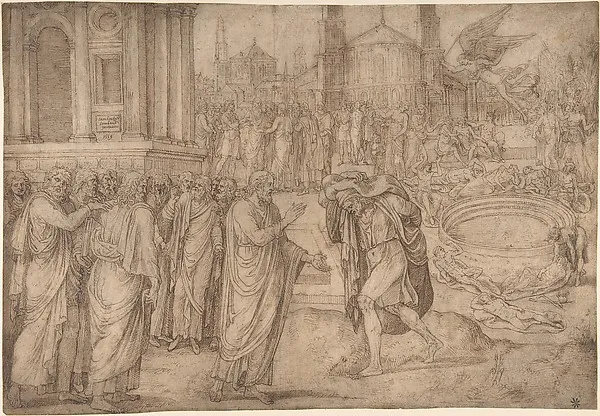
Mark 6:1-6Is Not This the Carpenter?
1And he went out from thence, and came into his own country; and his disciples follow him. 2And when the sabbath day was come, he began to teach in the synagogue: and many hearing him were astonished, saying, From whence hath this man these things? and what wisdom is this which is given unto him, that even such mighty works are wrought by his hands? 3Is not this the carpenter, the son of Mary, the brother of James, and Joses, and of Juda, and Simon? and are not his sisters here with us? And they were offended at him. 4But Jesus said unto them, A prophet is not without honour, but in his own country, and among his own kin, and in his own house. 5And he could there do no mighty work, save that he laid his hands upon a few sick folk, and healed them. 6And he marvelled because of their unbelief. And he went round about the villages, teaching.
Jesus comes back to his own country - Nazareth, the town where He was raised - and on the sabbath He teaches in the synagogue, the disciples with Him. The first reaction is right, even promising: many hearing him were astonished, saying, From whence hath this man these things? and what wisdom is this which is given unto him, that even such mighty works are wrought by his hands? (v. 2). They cannot deny the wisdom or the works; both are plainly there.
But notice the shape of their wonder. It is not, Who is this? - an open question that might lead to faith - but From whence hath this man these things?, a question already curling toward suspicion. They have decided in advance what He can be, and the wisdom in front of them does not fit the box. The same evidence that should have opened their hearts becomes, instead, a problem to be explained away. Astonishment is not yet faith; a person can marvel at Jesus and still refuse Him.1
Then the offense surfaces, and it comes dressed as familiarity: Is not this the carpenter, the son of Mary, the brother of James, and Joses, and of Juda, and Simon? and are not his sisters here with us? (v. 3). Every name they list is true, and every one of them is a wall. They knew the carpenter's shop; they knew His mother and brothers and sisters; they had watched Him grow up among them for years.
And that very knowledge is what defeats them - And they were offended at him. The word means they stumbled, tripped over Him as over a stone in a path they thought they knew. This is one of the most searching dangers in all the Gospels: that nearness can breed contempt, that the people with the most exposure to Jesus can be the ones least able to see Him. Jesus answers with the proverb that has long outlived the moment: A prophet is not without honour, but in his own country, and among his own kin, and in his own house (v. 4).
The circles tighten as He speaks - country, kin, house - until the coldest place of all is the closest one, home.
Mark records the result in a sentence that has troubled and instructed readers ever since: And he could there do no mighty work, save that he laid his hands upon a few sick folk, and healed them. And he marvelled because of their unbelief (vv. 5-6). Read the words exactly as they stand. The same hands that healed everywhere else still rest on a few of the sick here, and they are made well.
What blocked the mighty works was their faith, shut against Him - and the text ties the lack directly to their unbelief. All through the Gospel, mighty works and faith come as a pair: the bleeding woman who touches His garment, the friends who tear open a roof, the father who cries Lord, I believe; help thou mine unbelief - faith is the open hand that receives what Jesus gives. Where that hand is clenched shut by unbelief, the blessing finds no place to land.
Unbelief does not weaken Christ; it shuts the door against Him. And then comes the most arresting word in the passage: He marvelled. Elsewhere in the Gospels Jesus marvels at great faith; here, at home, He marvels at its absence. The wonder runs both ways, and the saddest miracle in Nazareth is the one that did not happen.
Mark 6:7-13Sent Two by Two
7And he called unto him the twelve, and began to send them forth by two and two; and gave them power over unclean spirits; 8And commanded them that they should take nothing for their journey, save a staff only; no scrip, no bread, no money in their purse: 9But be shod with sandals; and not put on two coats. 10And he said unto them, In what place soever ye enter into an house, there abide till ye depart from that place. 11And whosoever shall not receive you, nor hear you, when ye depart thence, shake off the dust under your feet for a testimony against them. Verily I say unto you, It shall be more tolerable for Sodom and Gomorrha in the day of judgment, than for that city. 12And they went out, and preached that men should repent. 13And they cast out many devils, and anointed with oil many that were sick, and healed them.
Out of the unbelief of Nazareth comes a widening of the work. And he called unto him the twelve, and began to send them forth by two and two; and gave them power over unclean spirits (v. 7). Two things stand out at once. First, He sends them by two and two - never alone. The mission of God is not a solitary heroism; it is carried by companions who can steady one another, bear witness together, and share the welcome and the rejection alike.
Second, what He gives them is not advice but power - authority over the very unclean spirits He Himself had been casting out. The Twelve do not generate this from within; it is delegated, handed down from Him. They go as those who carry an authority not their own, and that is the only kind of authority the messengers of Jesus ever carry. The scene quietly answers the offense of the previous verses: rejected in one town, the word of the kingdom now goes out through twelve more pairs of feet.
The travel instructions are striking for how little they permit: that they should take nothing for their journey, save a staff only; no scrip, no bread, no money in their purse: but be shod with sandals; and not put on two coats (vv. 8-9)1. No bag for provisions, no bread for the road, no coins, not even a change of clothes - a staff for the walk and the sandals on their feet, and nothing more.
The lightness is deliberate - a lesson pressed into the bones by experience: they are to go so unburdened that they must depend, day by day, on God's provision through the welcome of others. The lightness of the load is itself the sermon. Men who carry nothing must trust everything; messengers with empty hands are forced to lean on the One who sent them. And there is a dignity in it, too - they come as guests who bring only the gift of the gospel, and who will receive their bread as the fruit of that gift.
Jesus tells them what to do with both welcome and refusal. Where they are received, they are to stay put: In what place soever ye enter into an house, there abide till ye depart (v. 10) - no restless hunting for better lodging, no working the town for the most comfortable host, but contentment with the door that opened. And where they are not received, the instruction is sobering: shake off the dust under your feet for a testimony against them (v. 11).
The gesture was a vivid one - shaking off even the dust of a place that had refused the message, as though to carry nothing of its rejection forward. The gesture was solemn witness: the messengers had come, the word had been offered, and the responsibility now lay with the hearers. The weight Jesus attaches is heavy - It shall be more tolerable for Sodom and Gomorrha in the day of judgment, than for that city - for to turn away the kingdom freely offered is no small thing.
Then the simple summary of what the Twelve actually did: they went out, and preached that men should repent. And they cast out many devils, and anointed with oil many that were sick, and healed them (vv. 12-13). The errand is the same as the Master's - a call to turn, and hands that heal.
Mark 6:14-29The Death of John the Baptist
14And king Herod heard of him; (for his name was spread abroad:) and he said, That John the Baptist was risen from the dead, and therefore mighty works do shew forth themselves in him. 15Others said, That it is Elias. And others said, That it is a prophet, or as one of the prophets. 16But when Herod heard thereof, he said, It is John, whom I beheaded: he is risen from the dead. 17For Herod himself had sent forth and laid hold upon John, and bound him in prison for Herodias’ sake, his brother Philip’s wife: for he had married her. 18For John had said unto Herod, It is not lawful for thee to have thy brother’s wife. 19Therefore Herodias had a quarrel against him, and would have killed him; but she could not: 20For Herod feared John, knowing that he was a just man and an holy, and observed him; and when he heard him, he did many things, and heard him gladly.
The fame of Jesus reaches the palace, and the reactions sort people out. Some say it is Elias; others, a prophet, or as one of the prophets (v. 15). But Herod's answer comes from a different place entirely - from a guilty conscience: It is John, whom I beheaded: he is risen from the dead (v. 16). The grammar is telling. Herod does not say “John, who was beheaded,” as if it were a distant event; he says whom I beheaded, owning the deed in the same breath that he dreads its return.
Here is what a buried sin does to a soul: it does not stay buried. Herod hears of mighty works and his first thought is terror - the man he killed, come back. A clear conscience can hear of God's power and rejoice; a guilty one hears the same news and flinches, certain that judgment is walking toward it. Mark adds a detail that makes Herod more pitiable still: he had actually been drawn to John.
Herod feared John, knowing that he was a just man and an holy… and when he heard him, he did many things, and heard him gladly (v. 20). He liked listening to the truth. He simply would not obey it - and that gap, between hearing gladly and refusing to change, is where his ruin grew.
Mark now turns back to explain the dread, and the root of it is a single sentence John would not stop saying. Herod had taken Herodias' sake, his brother Philip's wife, and John had told him plainly: It is not lawful for thee to have thy brother's wife (vv. 17-18). It is worth weighing what that cost. John was no courtier flattering a king; he was a prophet who spoke the law of God to the most dangerous man in the region, knowing exactly what it might bring.
He did not soften it, did not excuse himself by saying it was none of his business, did not trade the truth for safety. And for that one persistent word he was seized and bound and shut in prison. This is the burden that has always come with speaking God's truth to power: the word that needs to be heard is often the word that gets the speaker punished. John's greatness, here, is a faithfulness that would not bend the truth to keep its head - he did no miracle, the next Gospel says, yet his courage before power is its own kind of wonder.
21And when a convenient day was come, that Herod on his birthday made a supper to his lords, high captains, and chief estates of Galilee; 22And when the daughter of the said Herodias came in, and danced, and pleased Herod and them that sat with him, the king said unto the damsel, Ask of me whatsoever thou wilt, and I will give it thee. 23And he sware unto her, Whatsoever thou shalt ask of me, I will give it thee, unto the half of my kingdom. 24And she went forth, and said unto her mother, What shall I ask? And she said, The head of John the Baptist. 25And she came in straightway with haste unto the king, and asked, saying, I will that thou give me by and by in a charger the head of John the Baptist. 26And the king was exceeding sorry; yet for his oath’s sake, and for their sakes which sat with him, he would not reject her. 27And immediately the king sent an executioner, and commanded his head to be brought: and he went and beheaded him in the prison, 28And brought his head in a charger, and gave it to the damsel: and the damsel gave it to her mother. 29And when his disciples heard of it, they came and took up his corpse, and laid it in a tomb.
The death itself unfolds with a terrible inevitability. At a birthday feast for the great men of Galilee, Herodias' daughter dances and pleases the king and his guests, and Herod, swollen with wine and the wish to impress, swears a reckless oath: Ask of me whatsoever thou wilt… unto the half of my kingdom (vv. 22-23). The grudge Herodias had nursed against John now finds its opening; coached by her mother, the girl asks for the prophet's head in a charger. What follows is a study in the cowardice of a powerful man.
And the king was exceeding sorry; yet for his oath's sake, and for their sakes which sat with him, he would not reject her (v. 26). He did not want to do it - and he did it anyway. He weighed a holy man's life against his own pride in front of his guests, and his reputation won. A foolish oath and the fear of looking weak before powerful people drove him to murder the very man he had heard gladly.
He would not reject her: he had the power to refuse and lacked the will. So the executioner goes, and the head is brought on a platter to the girl, and from the girl to her mother - a chain of dishonor passed hand to hand. Mark lets the horror stand plainly, without sensationalizing it, and ends with quiet dignity: John's disciples came and took up his corpse, and laid it in a tomb (v. 29).
The faithful are buried by the faithful, while the king sits trapped in a feast he has poisoned.
Mark 6:30-44Moved with Compassion
30And the apostles gathered themselves together unto Jesus, and told him all things, both what they had done, and what they had taught. 31And he said unto them, Come ye yourselves apart into a desert place, and rest a while: for there were many coming and going, and they had no leisure so much as to eat. 32And they departed into a desert place by ship privately. 33And the people saw them departing, and many knew him, and ran afoot thither out of all cities, and outwent them, and came together unto him. 34And Jesus, when he came out, saw much people, and was moved with compassion toward them, because they were as sheep not having a shepherd: and he began to teach them many things. 35And when the day was now far spent, his disciples came unto him, and said, This is a desert place, and now the time is far passed: 36Send them away, that they may go into the country round about, and into the villages, and buy themselves bread: for they have nothing to eat. 37He answered and said unto them, Give ye them to eat. And they say unto him, Shall we go and buy two hundred pennyworth of bread, and give them to eat? 38He saith unto them, How many loaves have ye? go and see. And when they knew, they say, Five, and two fishes.
The Twelve come back from their mission full of news - told him all things, both what they had done, and what they had taught (v. 30) - and Jesus' first response is to draw them aside: Come ye yourselves apart into a desert place, and rest a while: for there were many coming and going, and they had no leisure so much as to eat (v. 31). It is a tender and unexpected word from the One who has so much to do.
The crowds are pressing; there is hunger everywhere; the work is endless. And Jesus says rest. He knows His servants are not machines; He knows the danger of a life so crowded that there is no leisure so much as to eat. The Maker who built rest into the rhythm of creation builds it into the rhythm of discipleship too. So they get into a boat to find a quiet place - and the very next verses will show that the rest they sought was interrupted, that the crowds outran them.
But the instruction stands all the same: those who serve the Lord are also called, by the Lord Himself, to come apart and be restored.
The longed-for rest does not come. The people saw them departing… and ran afoot thither out of all cities, and outwent them (v. 33) - the crowd races around the lake on foot and is waiting on the far shore before the boat even lands. Here is the test of what is really in a person. Tired, hungry, His plans for quiet overturned by the very people who would not leave Him alone, Jesus might have been exasperated.
Instead: when he came out, saw much people, and was moved with compassion toward them, because they were as sheep not having a shepherd: and he began to teach them many things (v. 34). The interruption did not irritate Him; it moved Him. And what He saw was a need - sheep not having a shepherd, scattered, leaderless, unfed, milling about with no one to guide or guard them. That image runs deep in the Old Testament, where Israel's false shepherds fed themselves and let the flock wander, and where God promised to come and shepherd them Himself.
Jesus looks at this aimless crowd and sees exactly that lack - and the first thing His compassion does is teach them, for sheep without a shepherd are first of all sheep without guidance. Mercy here is a thing that gets to work.2
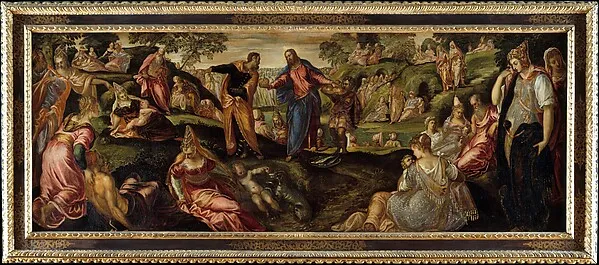
As the day wears on, the practical problem grows urgent, and Jesus presses it onto the disciples: Give ye them to eat (v. 37). They answer with arithmetic and despair - Shall we go and buy two hundred pennyworth of bread? - reckoning the cost of feeding such a multitude and finding it impossible. Then Jesus asks the question that reframes everything: How many loaves have ye? go and see (v. 38). The answer is almost comic in its smallness: Five, and two fishes. Against thousands of empty stomachs, five loaves and two fish are nothing - and that is precisely the point of the scene.
Jesus does not ask what they lack; He asks what they have. He takes the little that is actually in their hands and makes it the raw material of abundance. The disciples saw an impossible sum; Jesus saw five loaves and two fishes, and that was enough. The miracle does not begin with vast resources. It begins with the small, real thing offered up - and the One who can multiply it.
39And he commanded them to make all sit down by companies upon the green grass. 40And they sat down in ranks, by hundreds, and by fifties. 41And when he had taken the five loaves and the two fishes, he looked up to heaven, and blessed, and brake the loaves, and gave them to his disciples to set before them; and the two fishes divided he among them all. 42And they did all eat, and were filled. 43And they took up twelve baskets full of the fragments, and of the fishes. 44And they that did eat of the loaves were about five thousand men.
The miracle itself is told with great restraint. He had taken the five loaves and the two fishes, he looked up to heaven, and blessed, and brake the loaves, and gave them to his disciples to set before them (v. 41). Mark does not describe the multiplying; he simply shows the gestures - took, blessed, brake, gave - the same fourfold motion that will reappear at the table on the last night, and the bread keeps coming.
Notice that the food passes through the disciples' hands: Jesus gives it to them to set before the people, making the very men who said it was impossible the servants of the abundance. Then the quiet, staggering result: they did all eat, and were filled (v. 42) - truly filled. And the proof of the surplus is gathered up: twelve baskets full of the fragments (v. 43), one for each of the Twelve who had despaired of feeding anyone.
The God who fed Israel with manna in the wilderness has spread a table in the wilderness again; the Shepherd has fed His shepherdless sheep. About five thousand men ate, and there was more left at the end than the little there had been at the start.
Mark 6:45-56It Is I; Be Not Afraid
45And straightway he constrained his disciples to get into the ship, and to go to the other side before unto Bethsaida, while he sent away the people. 46And when he had sent them away, he departed into a mountain to pray. 47And when even was come, the ship was in the midst of the sea, and he alone on the land. 48And he saw them toiling in rowing; for the wind was contrary unto them: and about the fourth watch of the night he cometh unto them, walking upon the sea, and would have passed by them. 49But when they saw him walking upon the sea, they supposed it had been a spirit, and cried out: 50For they all saw him, and were troubled. And immediately he talked with them, and saith unto them, Be of good cheer: it is I; be not afraid.
After the feeding, Jesus moves with deliberate purpose. He constrained his disciples - the word is strong, almost “compelled” - to get into the boat and cross ahead of Him toward Bethsaida, while He Himself dismissed the crowds (v. 45). Then, alone at last, He does what the desire for rest earlier in the chapter had pointed toward: he departed into a mountain to pray (v. 46). It is worth pausing on. The One whose hands had just fed thousands, whose every moment was claimed by need, makes time to be alone with the Father on the mountain.
If the Son sought the quiet place to pray, the servant cannot do without it. Meanwhile the scene splits in two: when even was come, the ship was in the midst of the sea, and he alone on the land (v. 47). The disciples are out on the dark water; Jesus is on the shore in prayer. They seem, for the moment, entirely on their own - but the next verse shows that the One praying on the land has not lost sight of the ones straining on the sea.
The picture of the disciples is one many readers know from the inside: he saw them toiling in rowing; for the wind was contrary unto them (v. 48). They are doing exactly what Jesus told them to do - crossing the sea at His command - and yet the wind is dead against them, and they are worn out fighting it. Obedience did not buy them a calm passage. The first thing the verse tells us, though, is that he saw them. From the shore, in the dark, He saw their struggle; they were never out of His sight even when He was out of theirs.
He comes to them about the fourth watch of the night - the last and darkest stretch before dawn, somewhere between three and six in the morning, after hours of fruitless rowing. He does not come at the first sign of trouble but in the deepest part of the night, when their strength is nearly spent. And He comes walking upon the sea. The very water that defeats them is, to Him, a path. The waves that toss their little boat hold up His feet.
Mark adds a strange, much-pondered phrase - He would have passed by them - not to abandon them, but echoing the way God of old passed by to reveal His glory; this is a moment of unveiling, not desertion.
The disciples' reaction is sheer terror: when they saw him walking upon the sea, they supposed it had been a spirit, and cried out: for they all saw him, and were troubled (vv. 49-50). It is a strangely honest detail - the very thing that should have comforted them, the approach of their Lord, first frightens them out of their wits, because it comes in a form they cannot place. Into that fear Jesus speaks at once, and the words are the heart of the whole scene: Be of good cheer: it is I; be not afraid (v. 50).
Three short clauses, and each does its work. Be of good cheer - take courage, the dread is misplaced. It is I - the figure on the water is no ghost but your Lord. Be not afraid - the command that runs through Scripture wherever God draws near to frightened people. He does not first calm the sea; He first calms them, with His voice and His presence. The deepest comfort is not the change of circumstances but the nearness of the One who speaks - and the very middle clause, it is I, carries more than first appears, as the callout that follows will show.
51And he went up unto them into the ship; and the wind ceased: and they were sore amazed in themselves beyond measure, and wondered. 52For they considered not the miracle of the loaves: for their heart was hardened. 53And when they had passed over, they came into the land of Gennesaret, and drew to the shore. 54And when they were come out of the ship, straightway they knew him, 55And ran through that whole region round about, and began to carry about in beds those that were sick, where they heard he was. 56And whithersoever he entered, into villages, or cities, or country, they laid the sick in the streets, and besought him that they might touch if it were but the border of his garment: and as many as touched him were made whole.
Jesus climbs into the boat, and the wind ceased (v. 51) - the contrary gale that had worn them out all night simply stops the moment He is with them. And the disciples are sore amazed in themselves beyond measure, and wondered. But Mark adds a quietly devastating line of explanation: For they considered not the miracle of the loaves: for their heart was hardened (v. 52). They were amazed - and yet amazement had not deepened into understanding.
They had just watched five loaves feed five thousand, with twelve baskets to spare, that very afternoon. Had they truly taken in what that meant about who Jesus is, the sight of Him mastering the wind and the water would not have undone them so completely. The trouble named here is a hardened heart - a slowness to perceive, an inability to put together what they had plainly seen with what stood in front of them now.
It is a sobering word, because these are not Jesus' enemies; they are His chosen disciples, and even they struggle to read the signs. The chapter does not flatter its heroes. It shows that perceiving who Jesus is takes more than witnessing wonders; it takes a heart soft enough to let the wonders teach it.1
The chapter ends back among the crowds, on the shore at Gennesaret, and the contrast with Nazareth could hardly be sharper. Where His own town had no faith and so received no mighty work, here the people ran through that whole region round about, and began to carry about in beds those that were sick, where they heard he was (v. 55). They could not bring Him fast enough to the suffering; wherever He went - villages, or cities, or country - they laid the sick in the open streets and besought him that they might touch if it were but the border of his garment (v. 56).
It is the same humble, reaching faith as the woman earlier in the Gospel who touched the hem of His robe and was healed - now multiplied across a whole countryside. And the result is stated without limit: as many as touched him were made whole. No one who came in faith went away unhealed. The chapter that opened with a town too familiar to believe closes with regions full of people who believe enough simply to reach out - and find that the slightest touch of Him in faith is met with wholeness.
The Shepherd who fed the hungry and walked the waters is, to all who will come, the One whose very garment's edge is healing.
Research trail
Sources & further study
These references support the historical, linguistic, manuscript, and contextual notes in this chapter. Scripture remains the primary text; external sources are provided so readers can inspect the research directly.
- Mark 6 - Translators' NotesThe NET Bible's detailed footnotes on Mark 6 - the offense of the hometown crowd in verses 2-3, the instructions for the mission in verses 8-11, the bind of Herod's oath in verses 23-26, and the difficult note in verse 52 that the disciples' hearts were hardened.
- Mark 6 ↔ Ezekiel 34 · Psalm 23 · Job 9 · John 6Traces the threads tying Mark 6 to the rest of Scripture - the shepherdless sheep of verse 34 read against the shepherd God promises in Ezekiel 34 and the Shepherd of Psalm 23; the feeding of the five thousand read beside I am the bread of life (John 6:35); and the walking on the sea read with the One who treadeth upon the waves of the sea (Job 9:8).
- Mark 6 · Greek interlinear + lexiconThe Greek text of Mark 6 word by word, with parsing and lexical links - useful for splagchnizomai (v. 34, “moved with compassion,” the verb of gut-deep mercy) and for the plain ego eimi (v. 50, “it is I”) that Jesus speaks across the water.
Where this echoes in Scripture
Is Not This the Carpenter?
- John 1:10-11He was in the world, and the world was made by him, and the world knew him not. He came unto his own, and his own received him not.The refusal of verse 3 stated plainly - the One by whom all things were made, waved away by His own.
- Isaiah 53:3He is despised and rejected of men; a man of sorrows, and acquainted with grief... he was despised, and we esteemed him not.The reception at Nazareth foretold - the messenger of God esteemed as nothing by his own people.
- Psalm 118:22The stone which the builders refused is become the head stone of the corner.The carpenter refused in verse 3 - the rejected stone that proves to be the cornerstone.
- Luke 4:24-29No prophet is accepted in his own country... they... thrust him out of the city.The same proverb of verse 4, and the same hometown rejection carried to its edge.
- Hebrews 3:19So we see that they could not enter in because of unbelief.The principle behind verses 5-6 - unbelief shutting the door against what God would give.
Sent Two by Two
- Matthew 28:19-20Go ye therefore, and teach all nations... and, lo, I am with you alway, even unto the end of the world.The sending of verse 7 widened to all nations - the same delegated authority, the same abiding presence.
- John 20:21As my Father hath sent me, even so send I you.The pattern beneath verse 7 - the sent One now sending His own.
- Luke 10:1After these things the Lord appointed other seventy also, and sent them two and two before his face.The same practice as verse 7 - messengers sent in pairs, never to go alone.
- Acts 1:8Ye shall receive power, after that the Holy Ghost is come upon you: and ye shall be witnesses unto me.The power of verse 7 poured out on the whole church - witness in a strength not its own.
- Mark 1:15The time is fulfilled, and the kingdom of God is at hand: repent ye, and believe the gospel.The preaching of verse 12 - the Twelve carry the very call with which Jesus began.
The Death of John the Baptist
- Mark 1:2-3Behold, I send my messenger before thy face... The voice of one crying in the wilderness, Prepare ye the way of the Lord.John the forerunner - the one who goes before the Lord in witness, and here in death.
- 1 Kings 21:20Hast thou found me, O mine enemy? And he answered, I have found thee: because thou hast sold thyself to work evil.The prophet confronting a king's sin, as John confronts Herod in verse 18 - and the king's resentment.
- Matthew 14:9And the king was sorry: nevertheless for the oath’s sake, and them which sat with him at meat, he commanded it to be given her.The parallel account of verse 26 - a rash oath and the fear of men overruling conscience.
- Acts 7:52Which of the prophets have not your fathers persecuted? and they have slain them which shewed before of the coming of the Just One.The long pattern John completes - the prophets killed for the truth they spoke.
- Revelation 2:10Be thou faithful unto death, and I will give thee a crown of life.The promise behind John's faithfulness (vv. 18, 27) - the witness who keeps the truth though it costs his life.
Moved with Compassion
- Ezekiel 34:23And I will set up one shepherd over them, and he shall feed them, even my servant David... he shall be their shepherd.The promise behind verse 34 - the one true Shepherd God vowed to give the scattered, shepherdless flock.
- Psalm 23:1-2The LORD is my shepherd; I shall not want. He maketh me to lie down in green pastures.The Shepherd of verse 34 who feeds His sheep - here the crowd lies down on the green grass and wants for nothing.
- John 6:35I am the bread of life: he that cometh to me shall never hunger; and he that believeth on me shall never thirst.What the loaves of verses 41-42 point toward - the true bread that satisfies for ever.
- Numbers 11:13Whence should I have flesh to give unto all this people?... they weep unto me, saying, Give us flesh, that we may eat.The disciples’ despair of verse 37 foreshadowed - and the God who feeds a multitude in the wilderness.
- Mark 14:22And as they did eat, Jesus took bread, and blessed, and brake it, and gave to them, and said, Take, eat: this is my body.The same fourfold motion as verse 41 - took, blessed, brake, gave - carried to the table of the last night.
It Is I; Be Not Afraid
- Job 9:8Which alone spreadeth out the heavens, and treadeth upon the waves of the sea.What only God is said to do - the very thing Jesus does in verse 48, walking upon the sea.
- Psalm 77:19Thy way is in the sea, and thy path in the great waters, and thy footsteps are not known.The LORD's path through the deep - set beside the figure walking on the water in verse 48.
- Exodus 3:14And God said unto Moses, I AM THAT I AM... Thus shalt thou say unto the children of Israel, I AM hath sent me unto you.The divine name behind the it is I (egō eimi) of verse 50 - the reassurance that carries the echo of I AM.
- Psalm 107:28-29Then they cry unto the LORD in their trouble... He maketh the storm a calm, so that the waves thereof are still.The stilling of the wind in verse 51 - the LORD who quiets the storm for those at sea.
- Mark 5:27-28When she had heard of Jesus, came in the press behind, and touched his garment. For she said, If I may touch but his clothes, I shall be whole.The same reaching faith as the crowds at Gennesaret in verse 56 - healed by touching the border of His garment.